NEW YORK (AP) — The sudden death of Sen. Lindsey Graham, a top ally of President Donald Trump and one of Washington's best-known politicians, is renewing focus on the country's aging lawmakers.
Graham, who had turned 71 just two days before passing away on Saturday night, was far younger than many of his Senate colleagues and appeared to have been in good health. He suffered a tear in his aorta, according to a preliminary report from the medical examiner.
Click to Gallery
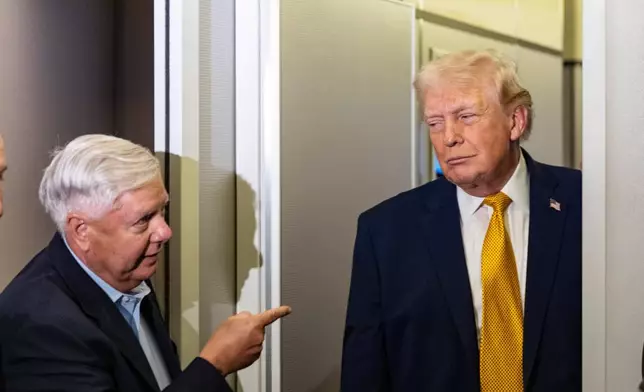
FILE - Sen. Lindsey Graham, R-S.C., left, gestures as President Donald Trump speaks with reporters while in flight on Air Force One, Jan. 4, 2026, as they were returning to Joint Base Andrews, Md. (AP Photo/Alex Brandon, File)
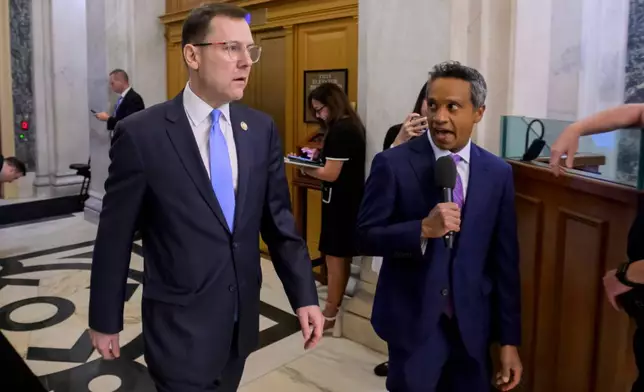
Rep. Tom Kean Jr., R-N.J., arrives for a vote at the Capitol, Tuesday, June 30, 2026, in Washington. (AP Photo/Rod Lamkey, Jr.)
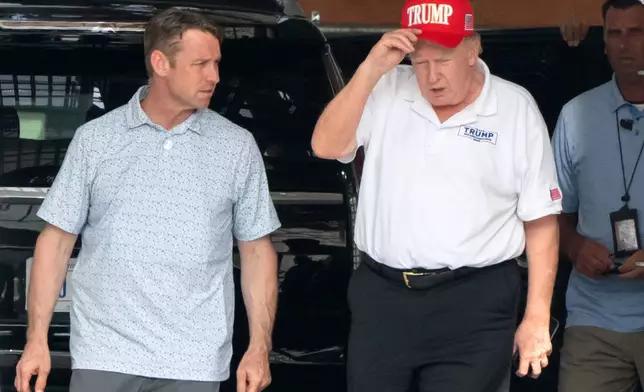
President Donald Trump, right, walks at the North Portico of the White House, Saturday, July 11, 2026, in Washington. (AP Photo/Mark Schiefelbein)
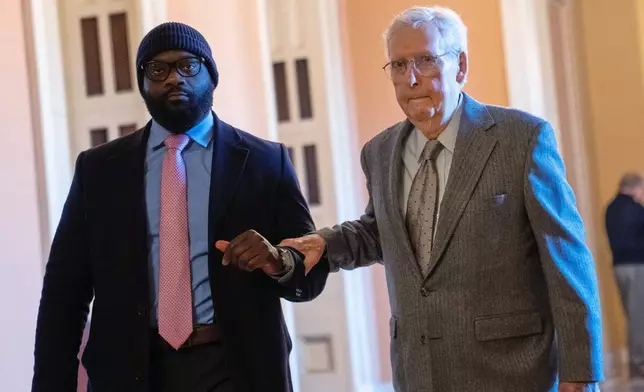
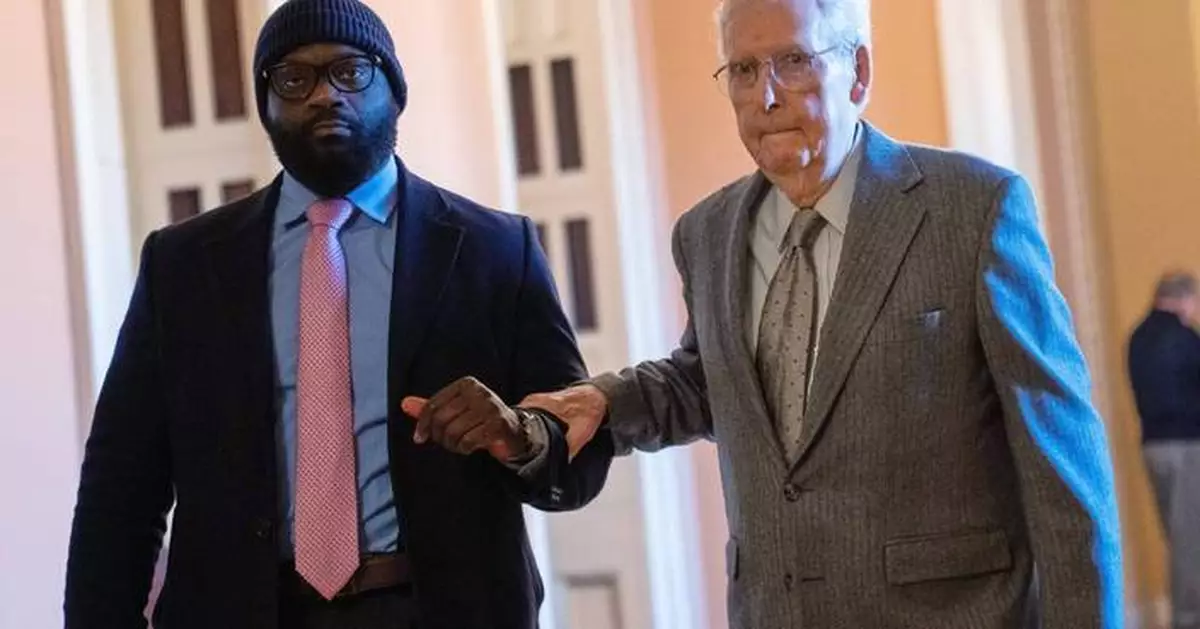
FILE - Sen. Mitch McConnell, R-Ky., right, walks through the Capitol, Jan. 15, 2026, in Washington. (AP Photo/Allison Robbert, File)
It was the second time in less than a month that emergency personnel were dispatched to the home of a U.S. senator. In early June, Mitch McConnell, the former Republican Senate leader, was hospitalized for undisclosed reasons.
After weeks of increasingly dire speculation about his health, he finally revealed on Sunday that he had fallen and suffered from mild pneumonia. He released a photo, complete with a copy of the day’s newspaper.
Graham’s death and McConnell’s hospitalization have come amid an ongoing reckoning about the nation’s aging leaders, two years after the disastrous presidential debate that sparked widespread panic among Democrats about then-President Joe Biden’s capacities and accusations of a cover-up.
Some politicians have continued to obscure details about their health challenges, asking for privacy despite their public positions, and fueling conspiracy theories.
“I think we need some transparency,” Sen. John Cornyn of Texas said Monday. “I wish Sen. McConnell and his team would have done that earlier, I think it would have resolved a lot of questions.”
McConnell, who at 84 is only the third-oldest member of the Senate, was admitted to the hospital on June 14 with barely any explanation. Aides said he was “receiving excellent care," but offered no details about his condition.
The dearth of information fueled a wave of speculation about his prognosis, with Laura Loomer, a Trump ally and conspiracy theorist, claiming on social media that a "high level source close to the White House” had told her he was “officially brain dead.”
But McConnell, who will retire from Congress at the end of January after serving as the longest-ever Senate leader, said in a statement that he is on the mend. He said a fall had led to his hospitalization and that he was “briefly unconscious" and treated for mild pneumonia.
“You all know how folks of my generation often hesitate to share the vulnerability that comes with growing older," he said. “Even in the public eye, I feel that same instinct – I can’t help it.”
That wasn't enough to put speculation to rest. On social media, many refused to believe the veracity of a photo his office released that included the front page of the “Sports” section of The Washington Post.
Conspiracy theories about McConnell’s health are “a symptom of our times," said Sen. Rand Paul, who is also from McConnell's home state of Kentucky. Paul said people should “give him a break.”
“People think they have a right to know everyone’s medical problems," he said, "but I don’t know, where does it begin and where does it end?”
The oldest person ever elected president has long offered only the rosiest picture of his health.
“Everything checked out PERFECTLY," he boasted after his last physical in May, adding that he took yet another cognitive test aimed at detecting early dementia and has “aced them all.”
His past medical reports have been criticized for offering limited detail and including statistics that some health professionals have viewed with skepticism.
When he first ran for president in 2016, Trump declined to release his health records, breaking with longtime precedent. He instead offered a four-paragraph note from his doctor declaring that he would be “the healthiest individual ever elected to the presidency.” Rep. Ronny Jackson, White House doctor during Trump's first term, later drew headlines when he extolled the president's “incredibly good genes."
When he was infected with COVID-19 in the midst of his 2020 reelection campaign, Trump's doctors and aides withheld key details of his treatment and tried to downplay the severity of his illness.
And after an attempted assassination at a Pennsylvania rally, Trump aides kept the public in the dark for days, declining to discuss the extent of his injuries or release medical records after assuring he was “fine.”
The obfuscation extends beyond the septuagenarian and octogenarian set. New Jersey Republican Rep. Tom Kean Jr. spent four months missing without explanation before he finally disclosed late last month that he had been in treatment for depression.
He said in a brief floor speech after his return that he had remained silent about his condition because he is a “private person by nature."
He won an uncontested primary during his absence, despite missing more than 100 votes in the House, and is running for reelection.
The approach stood in contrast to Sen. John Fetterman, a Pennsylvania Democrat, who disclosed his hospitalization for clinical depression the day after he was admitted to Walter Reed National Military Medical Center for treatment. He also suffered a stroke while running for office.
Biden's halting gait, frail appearance and frequent verbal stumbles eventually doomed his 2024 reelection campaign. After a debate in which he frequently lost his train of thought, he chose to withdraw from the race, sparking an unprecedented swap at the top of the Democratic ticket that ultimately paved the way for Trump's return to office.
Many others have refused to retire. California Sen. Dianne Feinstein, a Democrat, died in office in 2023 at the age of 90, after years of declining health, including a bout of shingles. Though she returned to the Senate after her illness, she appeared frail and confused at times. It was later revealed that her office had failed to disclose in real time that she had contracted encephalitis while recovering.
Longtime Republican Rep. Kay Granger of Texas spend the final months of her more than two decades in Congress suffering from “unforeseen health challenges” that made travel to Washington difficult.
Eleanor Holmes Norton, 88, the longtime House delegate for the District of Columbia, announced earlier this year that she would not run for reelection amid questions about her competency.

FILE - Sen. Lindsey Graham, R-S.C., left, gestures as President Donald Trump speaks with reporters while in flight on Air Force One, Jan. 4, 2026, as they were returning to Joint Base Andrews, Md. (AP Photo/Alex Brandon, File)
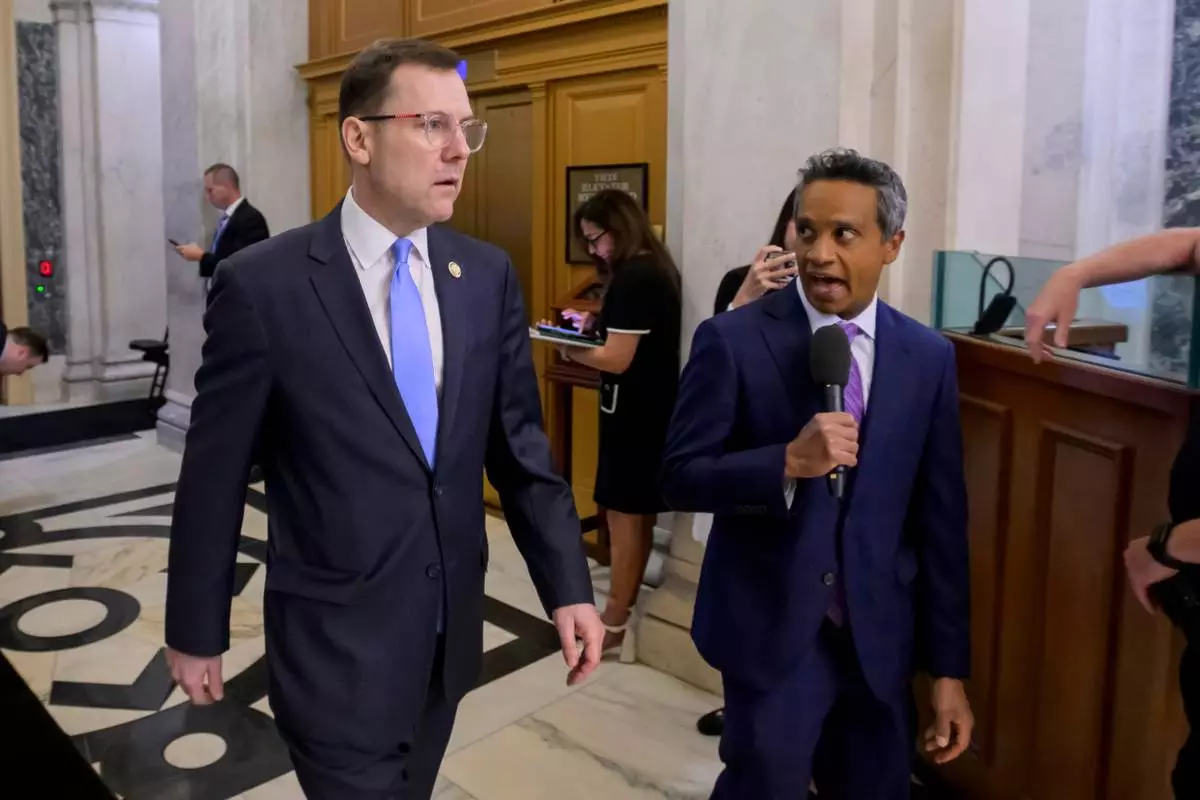
Rep. Tom Kean Jr., R-N.J., arrives for a vote at the Capitol, Tuesday, June 30, 2026, in Washington. (AP Photo/Rod Lamkey, Jr.)
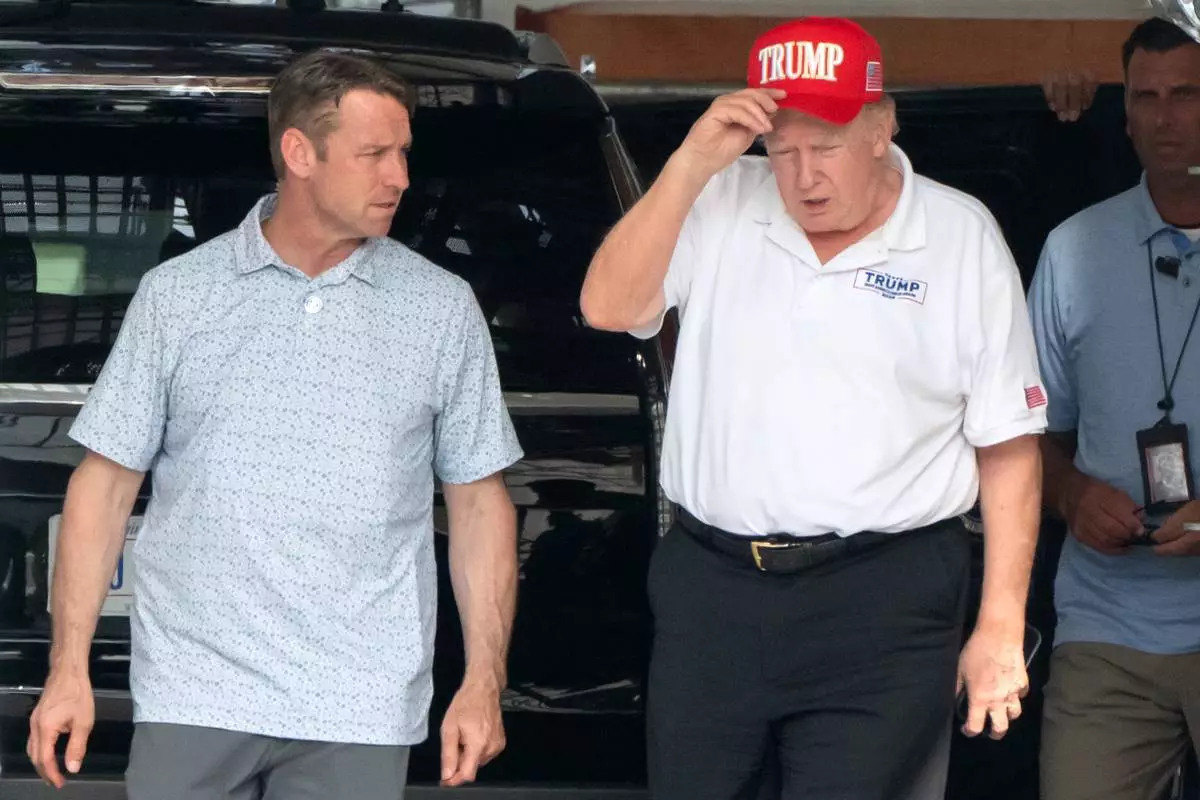
President Donald Trump, right, walks at the North Portico of the White House, Saturday, July 11, 2026, in Washington. (AP Photo/Mark Schiefelbein)
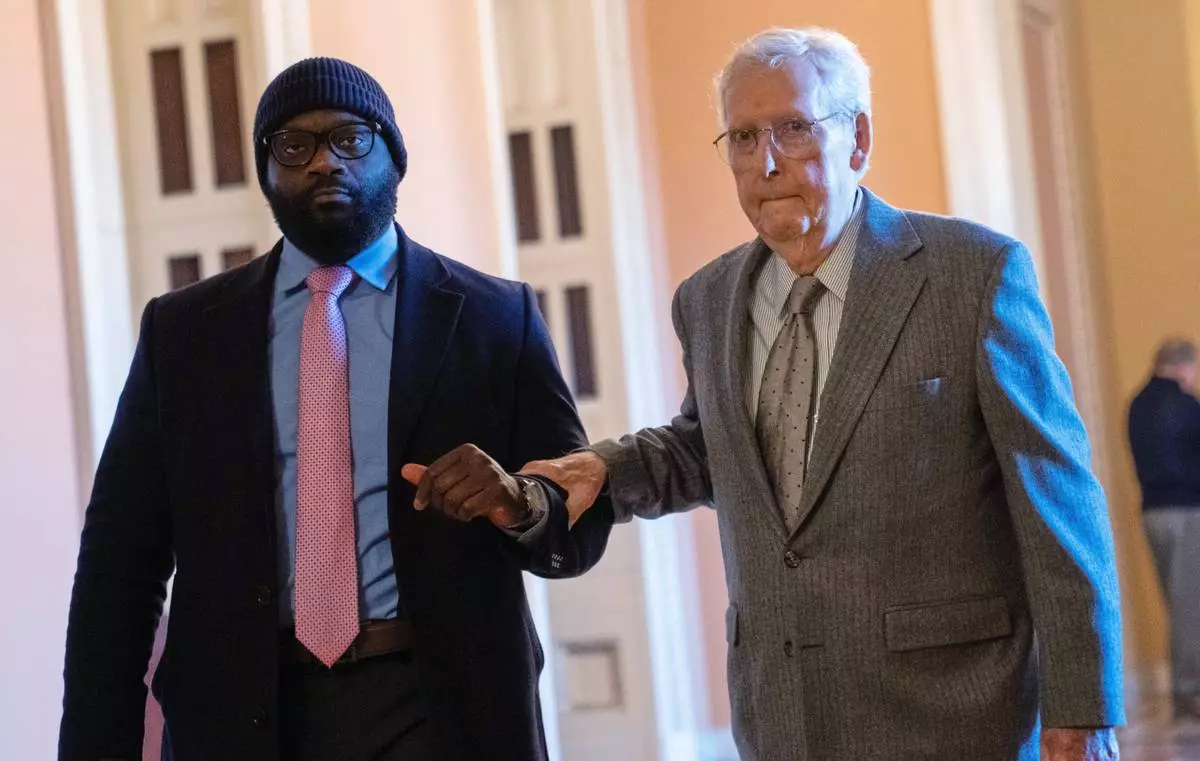
FILE - Sen. Mitch McConnell, R-Ky., right, walks through the Capitol, Jan. 15, 2026, in Washington. (AP Photo/Allison Robbert, File)

FLAGSTAFF, Ariz. (AP) — Serious injuries and medical conditions disrupt people's daily routines and can impact their confidence and sense of identity. Elite athletes know the challenges from an injury that sidelines them from their sport, requires physical rehabilitation and leaves their ability to return to competition in doubt.
The process that top athletes go through to heal physically, mentally and emotionally highlights what a recovery might demand of athletes at all levels, as well as people experiencing chronic pain, recuperating from surgery or facing other setbacks. Because progress is rarely linear, patience and the ability to reset expectations can be as valuable as perseverance, consistency and motivation, according to experts.
“Sport has always mimicked life," said Ross Flowers, a sports and performance psychologist in Los Angeles. "You’re going to face challenges, bumps and bruises. You got to figure out how to work through them and overcome them.”
Here’s what some sports psychologists and former athletes say about confronting the unknown and coming through injuries:
Fans are accustomed to watching athletes compete at the Olympics, the World Cup and other sporting events with broken bones, torn ligaments and dislocated joints. Comeback stories like Alpine skier Lindsey Vonn 's, after multiple injuries and another serious injury this year at the Winter Olympics, are an enduring element of sports.
While discomfort is expected during intense training, and pushing through pain becomes more critical during competition, even seasoned competitors need to know when to listen to their bodies, experts say.
“There’s a relationship with pain and understanding how to work with it, if it’s possible to work through it, but also knowing how to back off of it so the pain does not persist," Flowers said, adding that training to the point of physical fatigue or in conditions that build endurance is the sweet spot for improvement.
Liv Paxton, 28, learned this lesson firsthand after dealing with shin splints, quadricep strains and a partially torn Achilles tendon. As a runner at Winthrop University and the College of William & Mary, she pushed herself until her body forced her to stop. Since recovering from Achilles surgery, she said she has a better understanding of when to slow down.
“I’m so much better about keeping in tune with my body,” Paxton said, explaining that she prioritizes eating and sleeping well. “That’s not something that I focused on in college. I just thought I was bulletproof.”
Injuries can happen suddenly or develop from a nagging but manageable nuisance into a debilitating condition over time. Whether it’s a soccer player sidelined after a collision or a worker who can’t stand after months of chronic back pain, the outcome is similar: a forced pause and learning to heal once pushing through pain no longer works.
“So how do we know our limits? It is definitely an experimental process,” said Lisa Miller, a health and sport sciences professor who teaches at the online American Public University System from her home in Columbus, Ohio. “We have plenty of athletes who still don’t know. But we have also had more examples of athletes saying this is too much, I’m burned out and I’m going to take a break, bringing much more attention to the psychological side of sport.”
Honestly assessing whether an injury is affecting daily life and long-term well-being is part of recognizing one's physical limits. Miller said she has seen athletes of all levels return to competition thinking they are ready to excel, but not all can or do.
Tennis great Serena Williams made the difficult decision to withdraw from a doubles match this month because of a knee injury.
Even after bones heal and surgeries succeed, experts say recovery can mean coming to terms with what injuries have changed and giving yourself permission to grieve those losses.
Former Baltimore Ravens cornerback Kyle Arrington, who is now a community activist in Maryland, spent nearly two decades with every hour of his day organized around football. After a severe concussion ended his career, that structure disappeared almost overnight.
“I knew what everything looked like year in and year out for the past almost 20 years,” said Arrington, who was a Super Bowl champion during his tenure with the New England Patriots. “To have that stripped away in a blink of an eye was a real upheaval.”
Grief and depression are common after season- or career-ending injuries and other life-altering experiences. People making a physical recovery may also mourn lost friendships, missed opportunities, unmet goals and a sense of purpose. The emotional pain can be especially acute when someone’s self-identity rested on excelling in a sport or a professional role.
Arrington, 39, said his post-concussion retirement took him to a dark place. He credits family and friends with helping him through the transition; with their encouragement, he committed to healing mentally, emotionally and spiritually. Arrington said he now puts his energy toward the E.V.O.L.V.E. Foundation, which he founded to mentor young people.
Experts say a support system can help people stay grounded when they have to make major medical and career decisions.
“Having a team around you is incredibly important to get good advice, be objective, but also positively push you, not just for your sport and your performance, but for life,” Flowers said.
Sports psychologists say recovery often turns a corner when people stop trying to reclaim the past and begin building a new future.
American freestyle skier Jamie MoCrazy, who at the 2013 Winter X-Games became the first woman to land a double backflip during a slopestyle ski run, confronted that reality after a traumatic brain injury left her in a coma at age 22. For her, recovery meant letting go of elite competition and accepting a new future.
“I realized that I didn’t want to compete if I wasn’t at the level that I had previously been competing,” said MoCrazy, 33, who is now a motivational speaker and lives in Salt Lake City.
She still chased the exhilaration she got from sports. Few things compare to the applause, trophies and recognition, but public speaking gives her a taste of that adrenaline.
“I take some deep breaths and then walk out on stage,” she said. “That’s the closest of a mimic for me.”
Former professional boxer Patricia Alcivar, 46, also had to rethink her next steps after suffering injuries that included a hyperextended elbow, broken toes and multiple stitches above her eye. She now runs marathons and climbs mountains to stay active. She said despite the physical challenges boxing put her through, she wouldn't change the experience.
“I will never regret boxing because it taught me that I am a fighter inside and outside the ring,” Alcivar said, adding that climbing Utah's Mount Superior was the first time she felt equally challenged. She recalls smiling during an arduous hike up Mount Kilimanjaro in Tanzania because “nobody’s punching me in the face. Nobody’s trying to kill me.”
When returning to the life you had before isn't possible, experts recommend exploring goals and sources of meaning that could become the foundation for a new sense of identity.
“There is hope that something else can replace this,” Miller said. "And when we can find that daily rejuvenation of hope, we can also find new sources of happiness as well.”
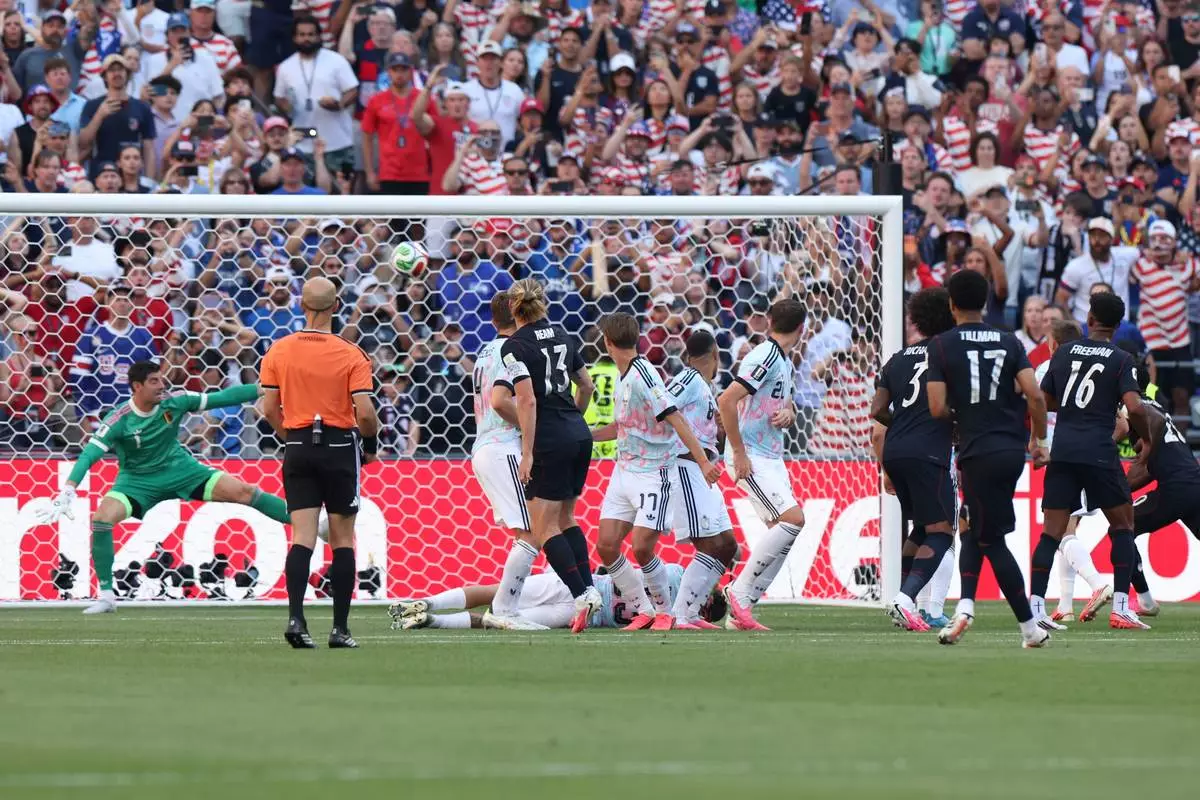
United States' Malik Tillman (17) scores his team's first goal during the World Cup round of 16 soccer match between the United States and Belgium in Seattle, Monday, July 6, 2026. (AP Photo/Maddy Grassy)