Few garden plants attract as much admiration as roses. They’re as beautiful in the garden as they are in a vase, and their flowers are almost universally a symbol of love.
Unfortunately, they don’t always grow without challenges. Wilting, infestations and infections are not uncommon. And none are more dreaded than the often-deadly black spot disease.
Click to Gallery
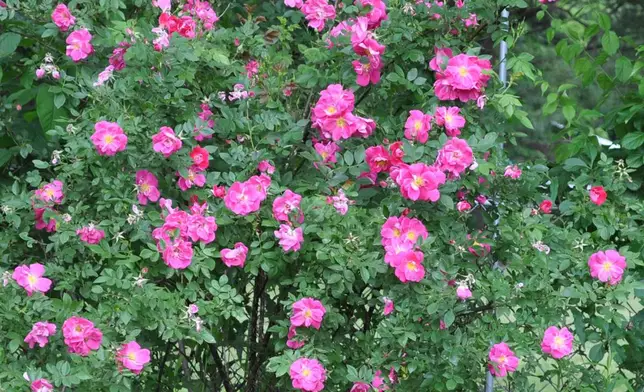
FILE - William Baffin roses, one of the Canadian Explorer series of black spot resistant varieties, appear in New Paltz, N.Y., on May 30, 2012. (AP Photo/Lee Reich, File)
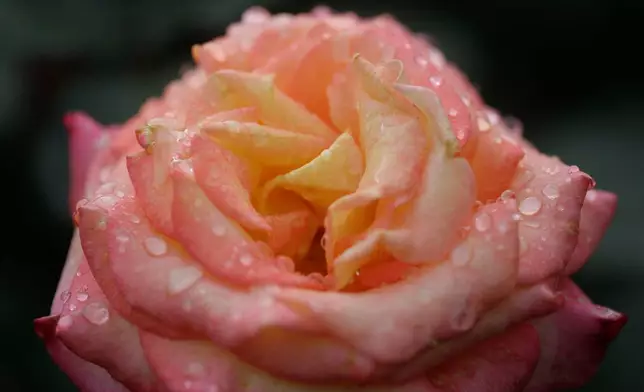
FILE - Rain drops bead on a rose at the International Rose Test Garden in Portland, Ore., on Sept. 20, 2010. (AP Photo/Rick Bowmer, File)
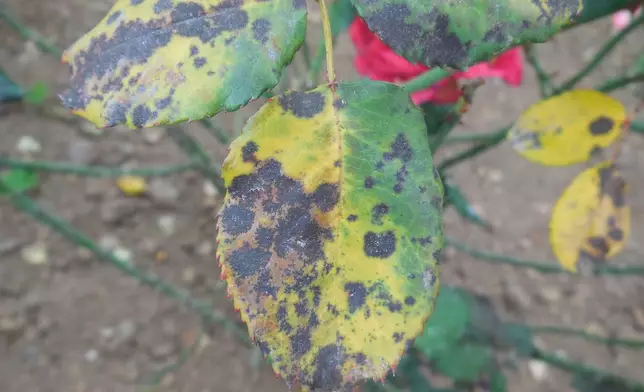
Symptoms of Black Spot disease appear on a rose plant in Tamil Nadu, India on Aug. 6, 2018. (Dr. Parthasarathy Seethapathy/Amrita School of Agricultural Sciences/Bugwood.org)
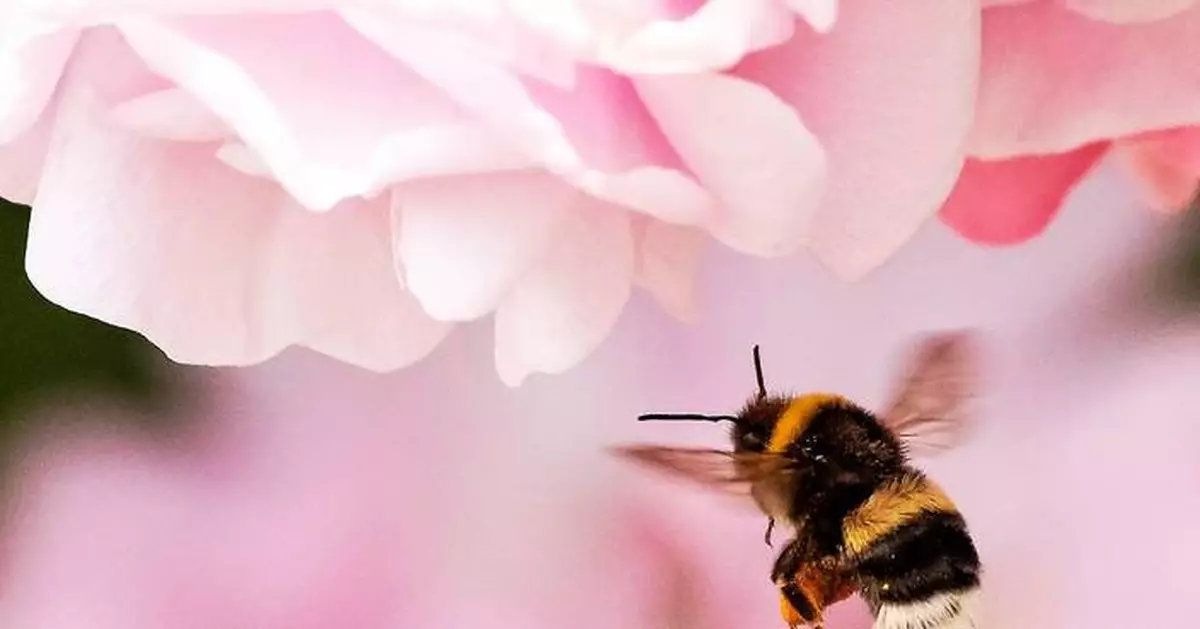
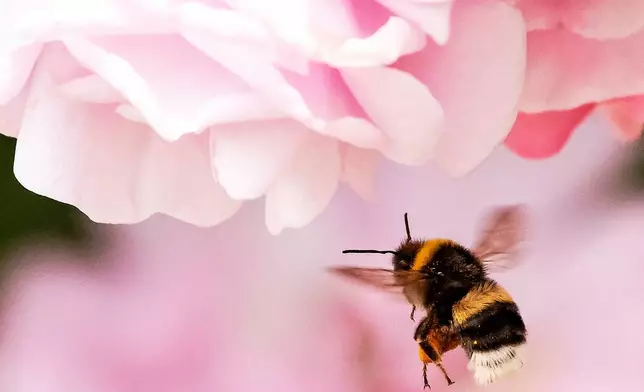
FILE - A bumblebee lands on a rose blossom at a horticultural exhibition in Erfurt, Germany, on June 8, 2018. (AP Photo/Jens Meyer, File)
Although there is no cure for black spot, it can be effectively managed — and future growth protected — with a bit of vigilance.
Caused by the fungus Diplocarpon rosae, black spot disease causes telltale black spots on foliage. Left unchecked, the often-fatal infection will diminish blooms and severely weaken plants, which increases their susceptibility to other diseases, pest infestations and winter injury.
If your plant is affected, prune away all infected leaves and branches and rake all fallen plant parts from the soil. Then, place the debris in a sealed bag and dispose of it in the trash; leaving it on the soil will lead to reinfection. Avoid doing this when the weather is humid, as spores spread rapidly when exposed to moisture.
There are many fungicides indicated for the prevention and treatment of black spot.
The most effective contain the chemical mancozeb. After cleaning up around the plants, apply the fungicide according to the package directions (probably three applications spaced 10 days apart). The fungicide should stop disease progression, and keeping the ground clear of affected leaves will prevent spores from making themselves at home in the soil, where they would otherwise reinfect the plants.
Alternatively, Neem oil and copper fungicide are among the most environmentally friendly treatments for black spot. Apply after cleaning up around plants, as above, and take care to follow package directions carefully.
Next spring, when leaf buds begin to open, apply a preventive fungicide, such as Neem oil, copper or one containing the active ingredient potassium bicarbonate.
Spraying a solution of 1 tablespoon each of baking soda and ultrafine horticultural oil diluted in a gallon of water can also be a preventive against black spot and other fungal and mildew diseases. Don’t be tempted to use more baking soda than recommended, however. Its salt content can injure plants if overused.
Planting onions or tomatoes near roses will also help discourage black spot fungal infections.
Following best practices can go a long way, too: Space plants sufficiently to allow light and air to circulate between plants and into inner branches. Water deeply only once a week (less during rainy periods) using a soaker hose, which directs water straight to roots and keeps foliage dry. Overhead sprinklers and other methods that wet leaves encourage the growth of fungal diseases such as powdery mildew, in addition to black spot.
Selecting resistant varieties, especially in humid conditions, is the best way to avoid the disease. Shrub roses such as those in the Knockout and Oso Easy families, are among the most immune, but there are some cultivars of other species that offer varying degrees of resistance, too. When shopping for plants, you’ll find resistance information on labels and catalog descriptions.
Jessica Damiano writes regular gardening columns for The Associated Press. She publishes the Weekly Dirt Newsletter. Sign up here for weekly gardening tips and advice.
For more AP gardening stories, go to https://apnews.com/hub/gardening.
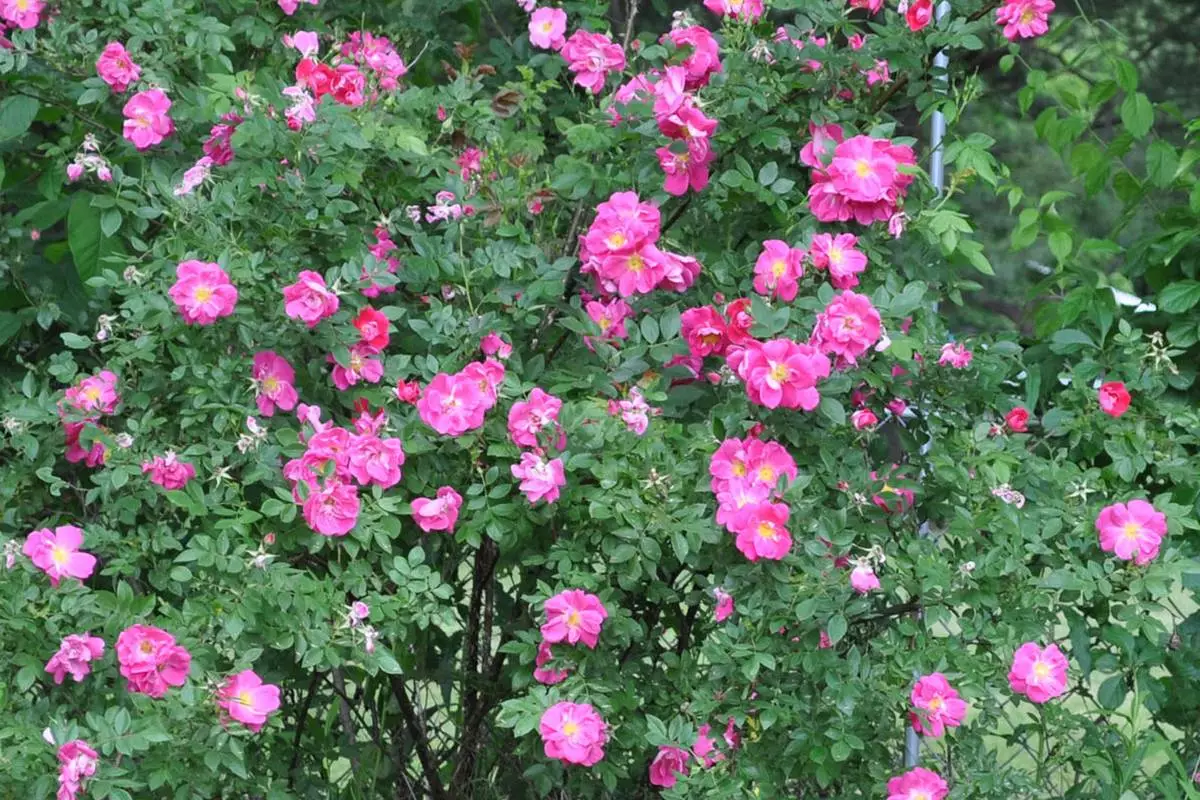
FILE - William Baffin roses, one of the Canadian Explorer series of black spot resistant varieties, appear in New Paltz, N.Y., on May 30, 2012. (AP Photo/Lee Reich, File)
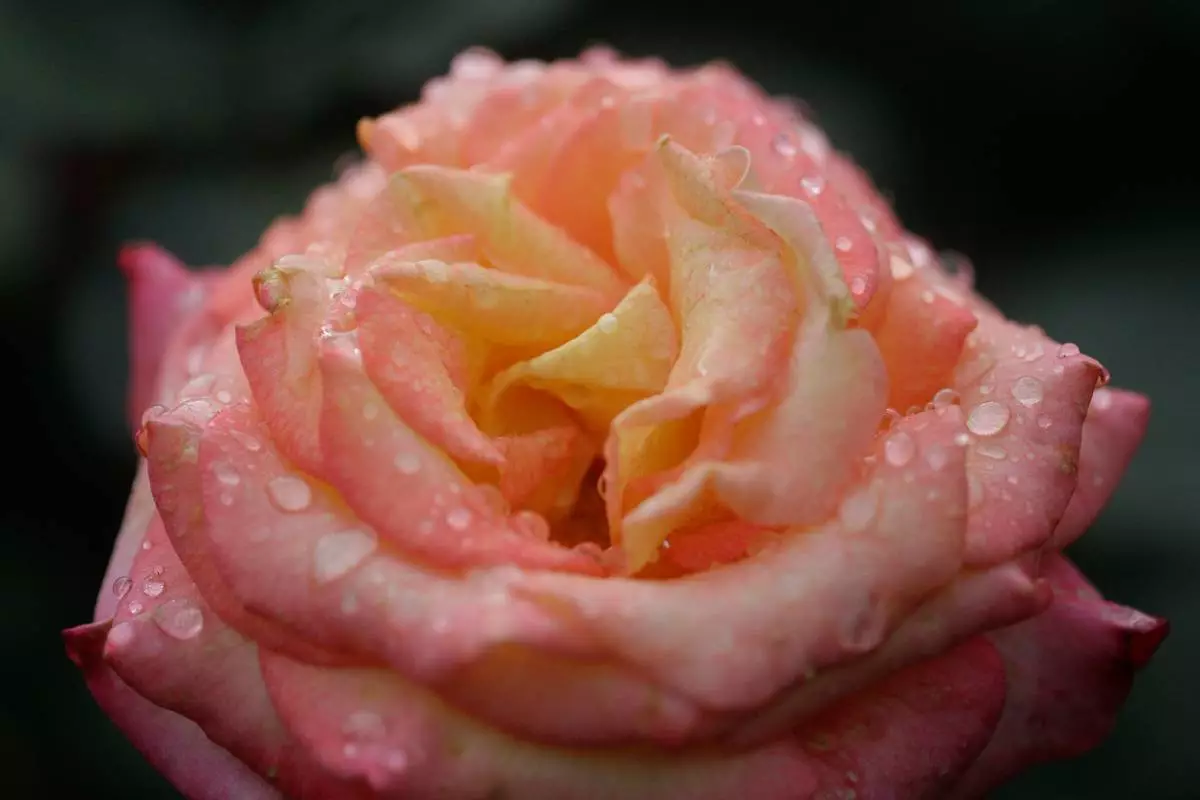
FILE - Rain drops bead on a rose at the International Rose Test Garden in Portland, Ore., on Sept. 20, 2010. (AP Photo/Rick Bowmer, File)
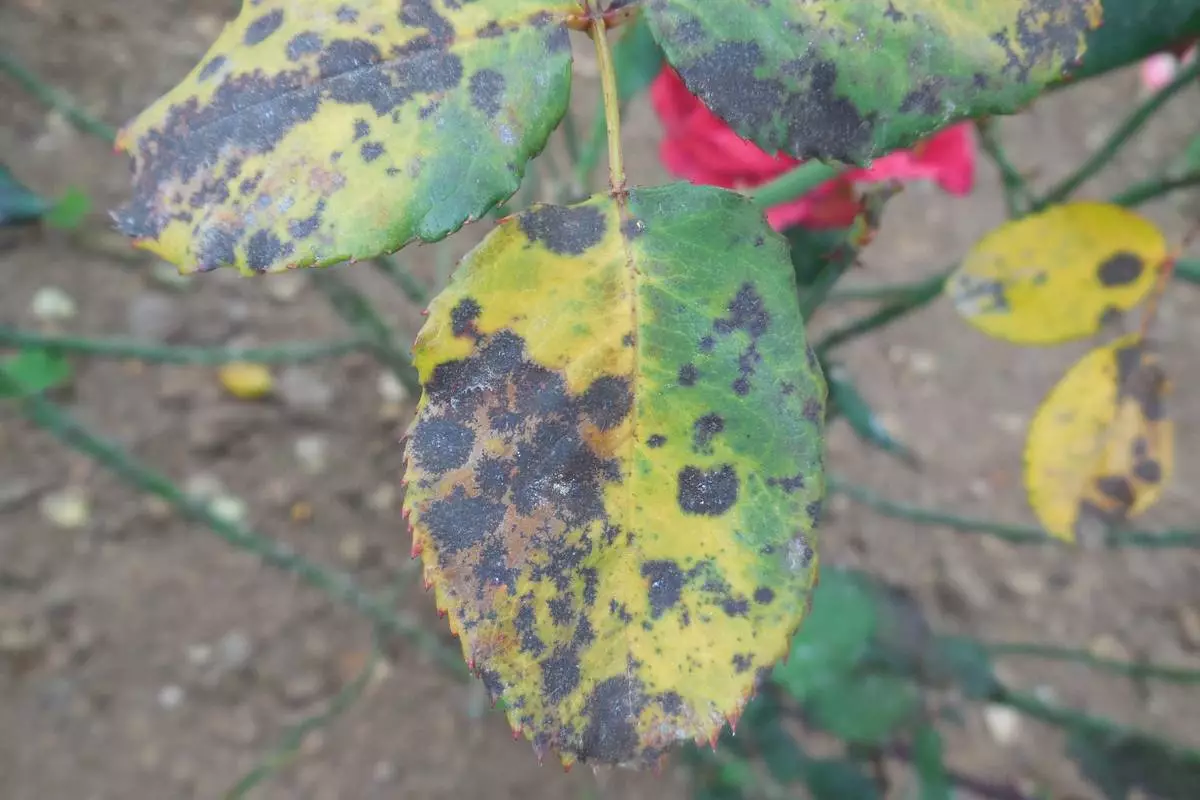
Symptoms of Black Spot disease appear on a rose plant in Tamil Nadu, India on Aug. 6, 2018. (Dr. Parthasarathy Seethapathy/Amrita School of Agricultural Sciences/Bugwood.org)
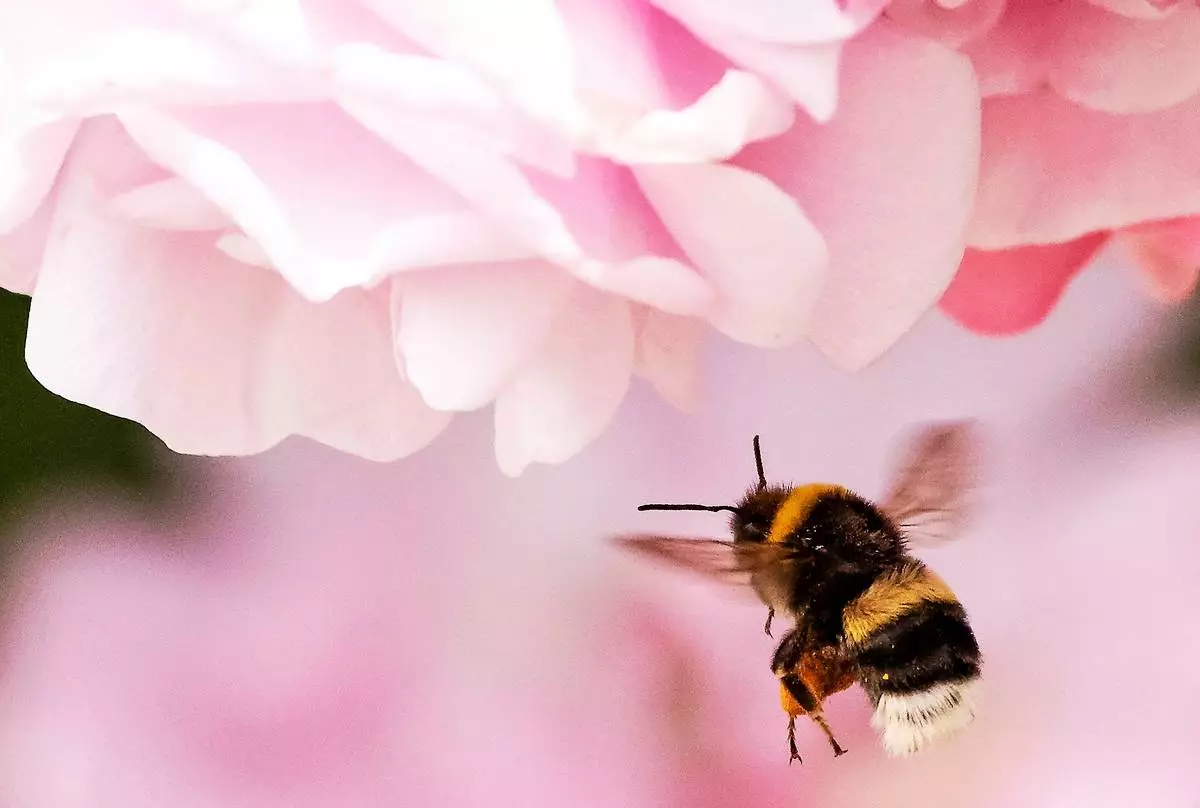
FILE - A bumblebee lands on a rose blossom at a horticultural exhibition in Erfurt, Germany, on June 8, 2018. (AP Photo/Jens Meyer, File)
Weeks after the end of a historic term, Supreme Court Justices Elena Kagan and Amy Coney Barrett will make a rare appearance before Congress on Tuesday at 10 a.m. ET. The justices could face wide-ranging questions as the high court seeks millions of dollars to beef up security amid a rise in threats to the judiciary.
Down the street, U.S. President Donald Trump will welcome new Iraqi Prime Minister Ali al-Zaidi to the White House after strongly backing the political novice’s bid for office. Iraq has been under pressure to disarm Iran-backed militias that attacked U.S. bases and diplomatic facilities after the U.S. and Israel instigated the Iran war.
The U.S. launched more strikes on Iran early Tuesday, hours after Trump vowed to reinstate an American blockade of Iranian ports and charge ships 20% of their cargo for safe passage through the Strait of Hormuz. Iran responded with more attacks on Middle East allies, leaving the ceasefire deal in tatters and under the threat of all-out war. The U.S. military said it will resume its naval blockade on Tuesday at 4 p.m. ET.
The Latest:
Reaction has been swift and severe to the issue of subpoenas to five New York Times journalists who reported on security questions involving Trump’s new Qatari-gifted Air Force One.
“The subpoenas are an extraordinary escalation in President Trump’s efforts to threaten and intimidate independent news organizations and have a chilling effect on the work of journalists across the country,” said Jodie Ginsberg, CEO of the Committee to Protect Journalists.
The White House Correspondents Association holds its rescheduled dinner celebrating the First Amendment in less than two weeks, with Trump planning to attend. The first was scuttled when a shooter opened fire in what prosecutors say was an attempt to kill the president.
“The WHCA condemns any act of intimidation against journalists, including attempts to pressure them into revealing sources,” said a statement from the group’s president, Weijia Jiang.
▶ Read more
Security is central to the court’s budget request of $228 million — roughly 10% more than the last fiscal year.
Nearly $15 million of that would go to expanding personal protection for justices, with six more agents for each.
Another $2 million would fund more Supreme Court police officers and an off-site residential security post to speed emergency responses.
The U.S. Marshals Service reported 564 threats to the hundreds of federal judges around the country during the last fiscal year, and justices have not been immune: Barrett’s security detail had to defuse a fake 911 call at her house, and her sister was the victim of a bomb threat. A would-be assassin was arrested near the home of Justice Brett Kavanaugh.
Chief Justice John Roberts has condemned the threats, saying it’s “dangerous, and it’s got to stop.”
The White House will have reasons to rejoice in the June release consumer price index, as prices fell 0.4% on a monthly basis in large part because of tumbling oil prices tied to the now deteriorated ceasefire with Iran.
But prices still rose 3.5% over the past 12 months, well above the Federal Reserve’s inflation target of 2%.
And the monthly decline could be short-lived, with oil prices jumping again as fighting intensifies in the Middle East.
Prices for the global benchmark of brent crude oil have risen nearly 8% in the past five days of trading to about $81 a barrel on Tuesday, a sign that inflation could soon pick up again as the American public begins to focus on the November midterm elections.
The U.S. military’s Central Command said it struck several areas in Iran, targeting “coastal defense systems, missile and drone sites and maritime capabilities.” Iran acknowledged the strikes, but provided no immediate casualty or damage assessments.
“These strikes will continue imposing a heavy cost on Iranian forces and degrade their ability to attack innocent civilians and commercial shipping in the Strait of Hormuz,” the U.S. military said.
Moments after the military announced the new strikes, Trump called it “another major attack” and said the U.S. was “putting the blockade back.”
Iran responded with attacks targeting Bahrain, Jordan and three tankers that traveled through the strait.
U.S. Central Command said on social media that it “will enforce the blockade against vessels transiting to or from Iranian ports and coastal areas” beginning Tuesday at 4 p.m. EDT., and will “support traffic flow through regional waters for all vessels not violating the blockade.”
A notice to mariners released Monday by the U.S. military warned of using force if ships don’t comply. It also said the military will let through humanitarian shipments.
The statement follows Trump declaring that the U.S. would be reinstating the naval blockade and charging a 20% toll on eligible cargo.
“We’re protecting a very rich portion of the world,” Trump said. “We’re spending money. And so, what we’ve done is, we are going to be reimbursed for protection.”
Capt. Tim Hawkins, a spokesman for U.S. Central Command, would not say whether the military would be collecting tolls, and referred questions to the White House.
The president posted on social media that he would be “making a Speech to the Nation” at 9 p.m. EDT on Thursday.
Trump appeared to refer to himself in the third person in the post.
He did not disclose the details of his planned speech, but the announcement comes after Trump said he would block Iran-related ships from traveling through the Strait of Hormuz and that the U.S. would charge a 20% fee on all cargo going through the waterway.
Asked in an interview with Hugh Hewitt what his Thursday address will be about, Trump made it sound like nothing out of the ordinary.
“It’s just going to be a speech like a lot of my speeches,” he said, without offering any more detail.
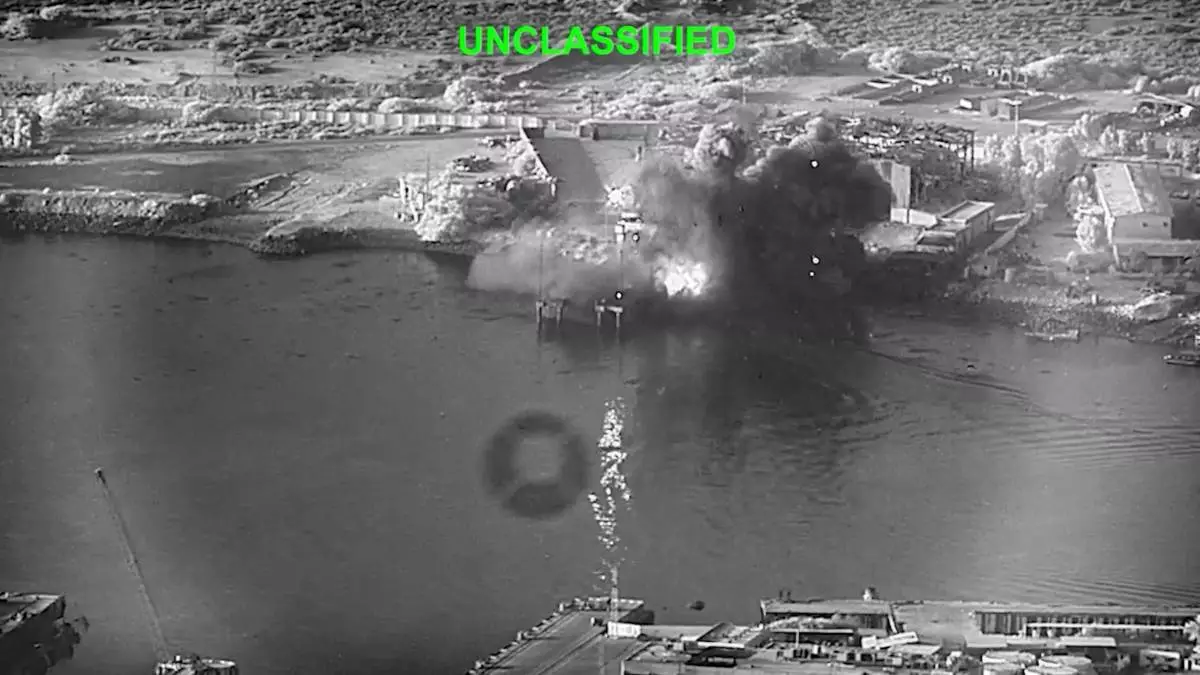
This image from video released by U.S. Central Command, shows an explosion at Bandar Abbas Naval Base, Iran, as three Corsair unmanned surface vessels, also called one-way attack surface drones, fired by the U.S. military, hit the port July 12, 2026. (U.S. Central Command via AP)
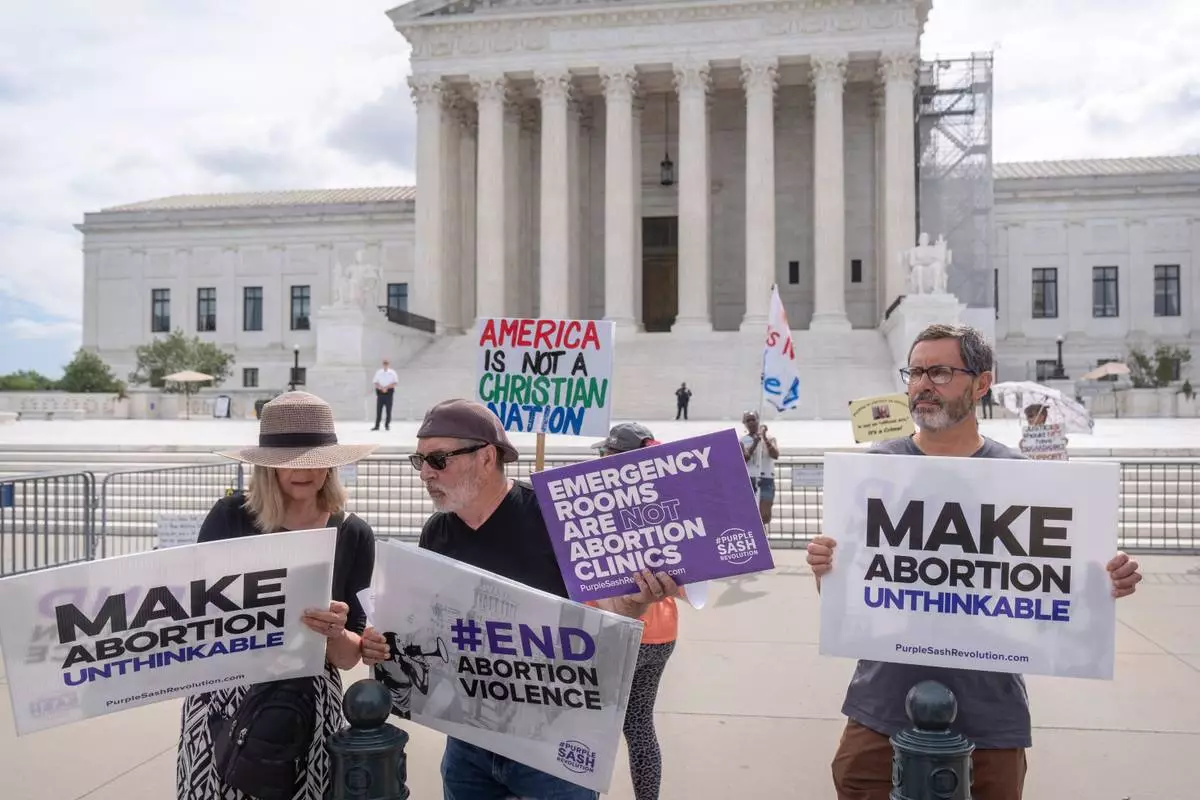
FILE - Katie Mahoney, left, and Rev. Patrick Mahoney, chief strategy officer for Stanton Healthcare, an Idaho-based pregnancy center that does not provide abortions, read the text of a Supreme Court decision outside the Supreme Court, June 27, 2024, in Washington. (AP Photo/Mark Schiefelbein, File)
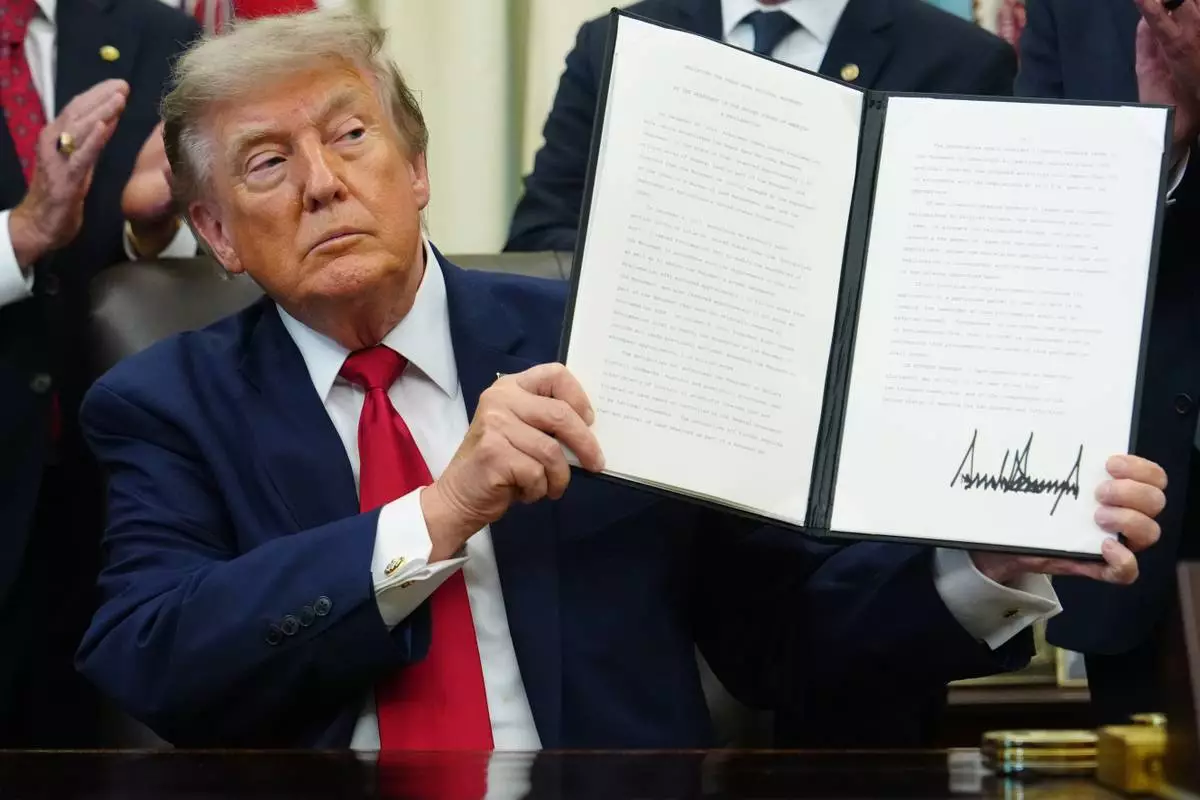
President Donald Trump holds a signed executive order modifying the Bears Ears National Monument in the Oval Office of the White House, Monday, July 13, 2026, in Washington. (AP Photo/Julia Demaree Nikhinson)