The so-called South China Sea "arbitration award" made a decade ago was the product of political manipulation rather than a genuine application of international law, according to China Global Television Network (CGTN) anchor Wang Guan.
On the 10th anniversary of the so-called South China Sea "arbitration award," 14 countries led by the United States and the Philippines issued a joint statement once again, using the "award" to apply pressure to China.
Wang said this playbook has been increasingly recognized by Asian countries, and that regional disputes should be resolved through dialogue among the countries directly concerned, rather than through externally driven "lawfare."
"If there is a territorial dispute, it should be resolved by the countries directly involved. Not outsourced to lawyers. Certainly not outsourced to geopolitics. Yet that's essentially what happened in 2016, when the Philippines, backed politically and legally by some Western powers, sought to use international arbitration in The Hague to undermine China's well-documented historical claims in the South China Sea -- even though the vast majority of countries including China had already declared, under Article 298 of UNCLOS, that disputes involving maritime delimitation and related issues would not be subject to compulsory arbitration," he said.
Wang said the South China Sea is playing a crucial part in global trade, refuting rumors that China restricts navigation in the sea area, as he instead pointed to the situation playing out in the Middle East as a result of the U.S. war on Iran.
"Another argument that now sounds even more ridiculous is the claim that China is somehow blocking freedom of passage in the South China Sea with its growing military presence. I mean, are people mistaking the South China Sea for the Strait of Hormuz? According to Reuters, after renewed U.S. attacks on Iran, only six commercial vessels transited the Strait of Hormuz in a single day, the lowest level in five weeks. That's what disrupted passage looks like," he said.
"Through the South China Sea, some 3.5 trillion U.S. dollars worth of trade passes through freely every year, roughly one-third of global maritime trade, that is according to U.S. think tank CSIS. See, the fear-mongering narrative gets old. Especially when there is a real bully, and a real neo-colonialist power, demonstrating what coercion actually looks like. That's why China, on its 10th anniversary, has once again rejected the so-called 'South China Sea arbitration' – what many in China see as nothing more than lawfare against China – and reaffirmed that these disputes should be resolved directly by China and our ASEAN partners," Wang said.
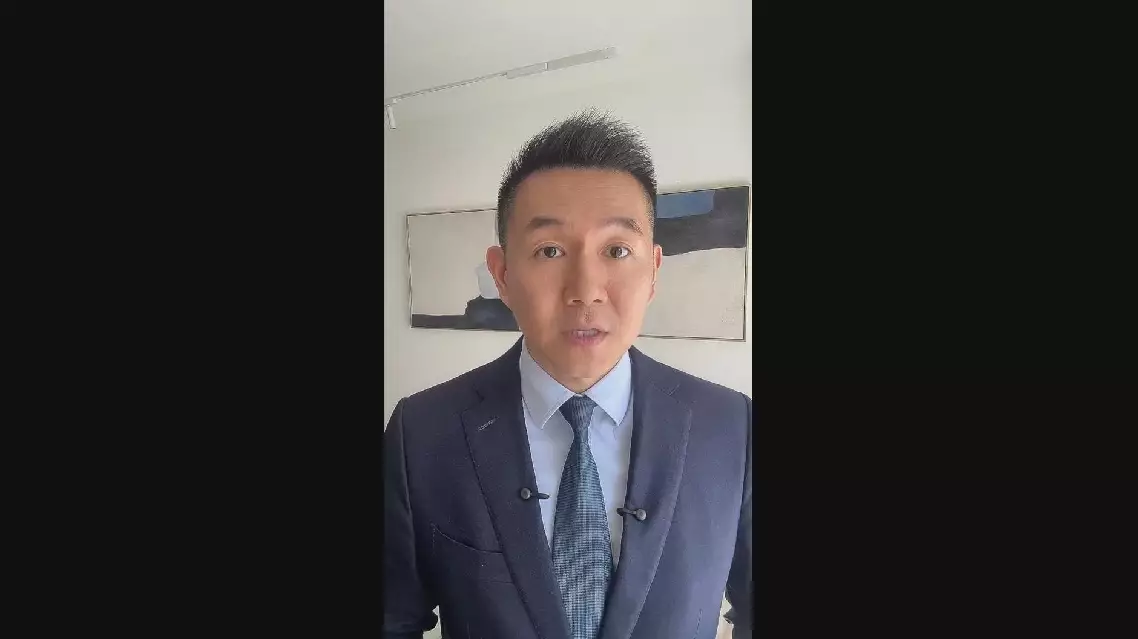
South China Sea "arbitration award" example of Western lawfare against China: CGTN anchor