MADRID (AP) — Thousands of people who travel every day between the southern tip of Spain and the British territory of Gibraltar will no longer have to cross a physical border, beginning on Wednesday.
The official opening at midnight on Tuesday — after a border fence was fully removed — allows a new freedom of movement under a historic treaty between the European Union and the United Kingdom. It came after years of post-Brexit wrangling.
Click to Gallery
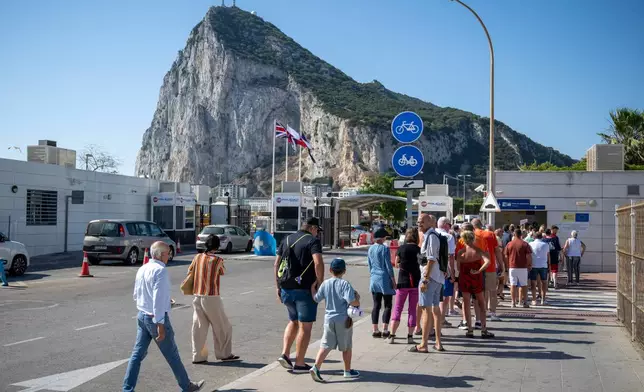
People queue to cross the border between Spain and Gibraltar, in La Linea de la Concepcion, Spain, Monday, July 6, 2026. (AP Photo/Marcos Moreno)
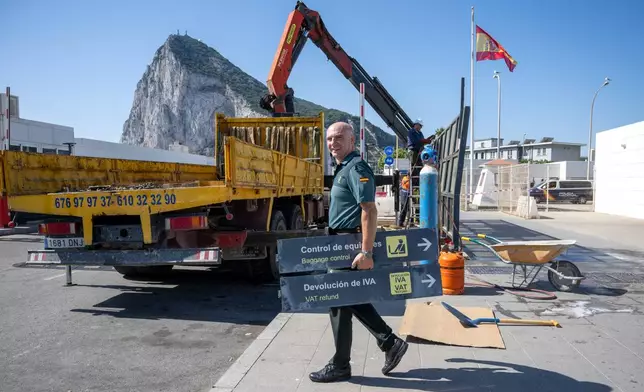
A Spanish Guardia Civil officer holds a sign during the dismantling of a border checkpoint that separated Spain from the disputed British overseas territory of Gibraltar in La Línea de la Concepción, Spain, Monday, July 6, 2026. (AP Photo/Marcos Moreno)
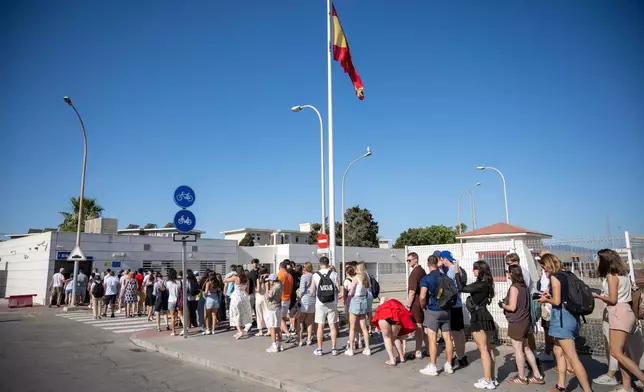
People queue to cross the border between Spain and Gibraltar, in La Linea de la Concepcion, Spain, Monday, July 6, 2026. (AP Photo/Marcos Moreno)
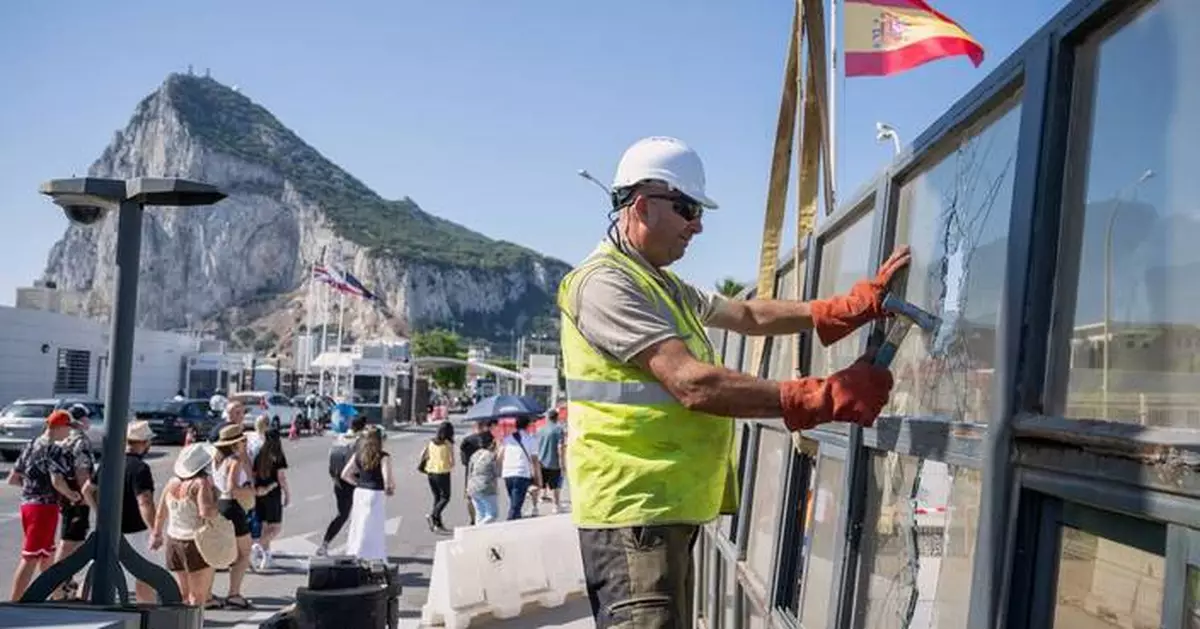
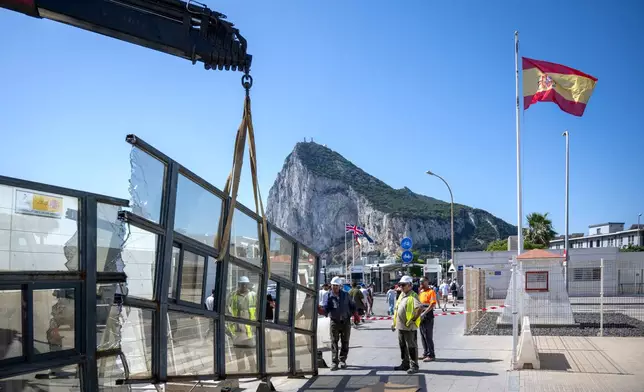
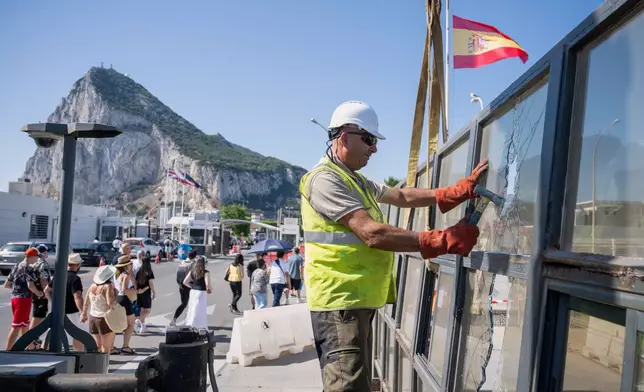
Against the backdrop of the Rock of Gibraltar, workers dismantle a Spanish border checkpoint that separated the disputed British overseas territory from Spain in La Línea de la Concepción, Spain, Monday, July 6, 2026. (AP Photo/Marcos Moreno)
Against the backdrop of the Rock of Gibraltar, workers dismantle a Spanish border checkpoint that separated the disputed British overseas territory from Spain in La Línea de la Concepción, Spain, Monday, July 6, 2026. (AP Photo/Marcos Moreno)
The contested British Overseas Territory of 38,000 people is perched at the southern end of the Iberian Peninsula, in a strategic location mere miles from Morocco where the Atlantic Ocean meets the Mediterranean Sea.
Soon after midnight, crowds crossed freely between Spain’s La Línea de Concepción and Gibraltar in both directions. Many wore Spanish soccer jerseys after Spain’s victory against France in the World Cup semifinal on Tuesday, adding to the celebratory mood.
“What you feel here is the brotherhood between the two people,” Gibraltar's Chief Minister Fabian Picardo told Spanish broadcaster RTVE.
When Britain left the EU in 2020, the relationship between Gibraltar and the bloc had been left unresolved.
Previous talks on a deal to ensure people and goods could keep flowing across the border had made halting progress. In 2025, the EU and U.K. announced an agreement on those issues, with the two sides and Gibraltar’s government signing a treaty Tuesday that eases border crossings.
The U.K.’s Foreign Office Minister Stephen Doughty said Tuesday that the agreement secured Gibraltar’s long-term economic future and interests.
Maroš Šefčovič, the EU’s trade representative, praised the agreement, too.
“It has taken four years of patient, complex negotiation, but the outcome speaks for itself,” Šefčovič said. “It is a very special feeling to see a fence come down.”
Without a deal, Gibraltar could have a faced a hard land border with full passport checks, posing economic risks for the territory deeply dependent on some 15,000 Spaniards — almost half of Gibraltar’s workforce — who cross the frontier every day for work.
Leisure visits by people crossing both sides of the border would have been affected, too.
“People who are visiting family in Spain, or whose Spanish family is visiting them in Gibraltar. Children who are going to football matches and extracurricular activities, either in Spain or in Gibraltar. They will be able to do that without having to worry about frontier queues,” Picardo told The Associated Press in an interview.
The deal in effect brings the territory into the EU’s Schengen free travel area. At Gibraltar’s airport and port, entry and exit checks will be conducted by both U.K. and Spanish border officials. The arrangement is similar to what’s in place at Eurostar train stations in London and Paris, where both British and French officials check passports.
Gibraltar was ceded to Britain in 1713, but Spain has maintained its sovereignty claim ever since. Relations between the two countries on the issue of Gibraltar have had their ups and downs over the centuries. The treaty that removed the border fence does not resolve the territory’s contested status.
In Britain’s 2016 Brexit referendum, 96% of voters in the Rock, as the territory is popularly known in English, supported remaining in the EU.
Travelers to Gibraltar from countries outside the Schengen area — including the U.K. — will have to contend with the EU Entry-Exit System, or EES, which was rolled out in Europe in April and replaced passport stamps with biometric data collected through photographs and digital fingerprints.
With the border fence gone, Gibraltar officials have set up live facial recognition cameras at entry points and throughout the territory.
Chief Minister Picardo said the territory will have many more CCTV cameras, and that it has increased its police presence as well as resources for customs and Coast Guard agencies.
“The fortress has become a digital fortress now,” Picardo said.
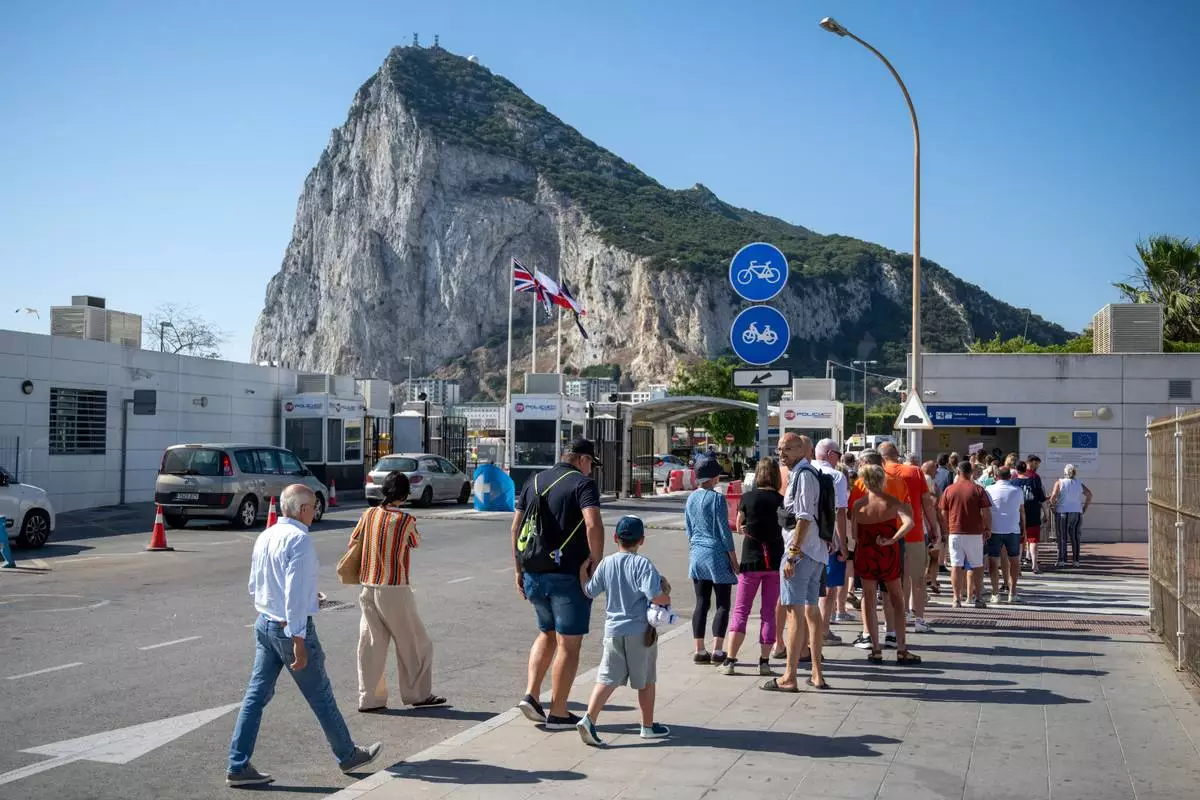
People queue to cross the border between Spain and Gibraltar, in La Linea de la Concepcion, Spain, Monday, July 6, 2026. (AP Photo/Marcos Moreno)
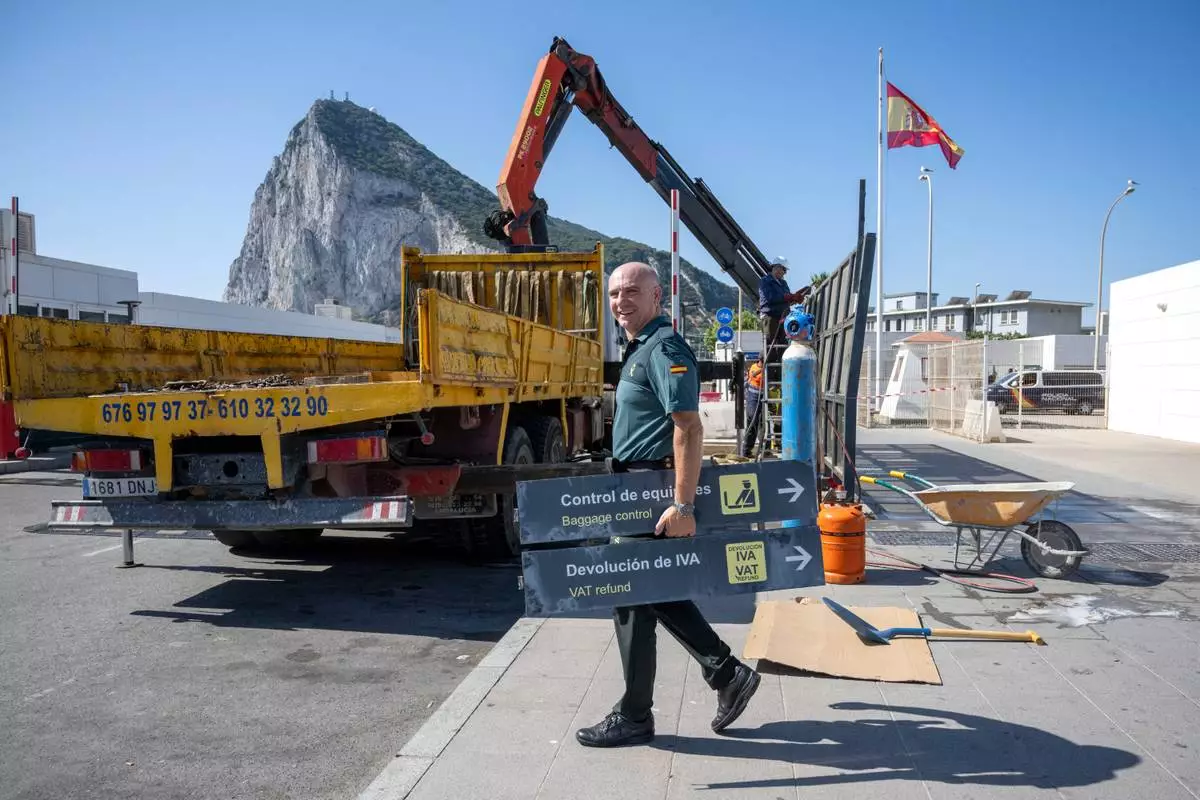
A Spanish Guardia Civil officer holds a sign during the dismantling of a border checkpoint that separated Spain from the disputed British overseas territory of Gibraltar in La Línea de la Concepción, Spain, Monday, July 6, 2026. (AP Photo/Marcos Moreno)
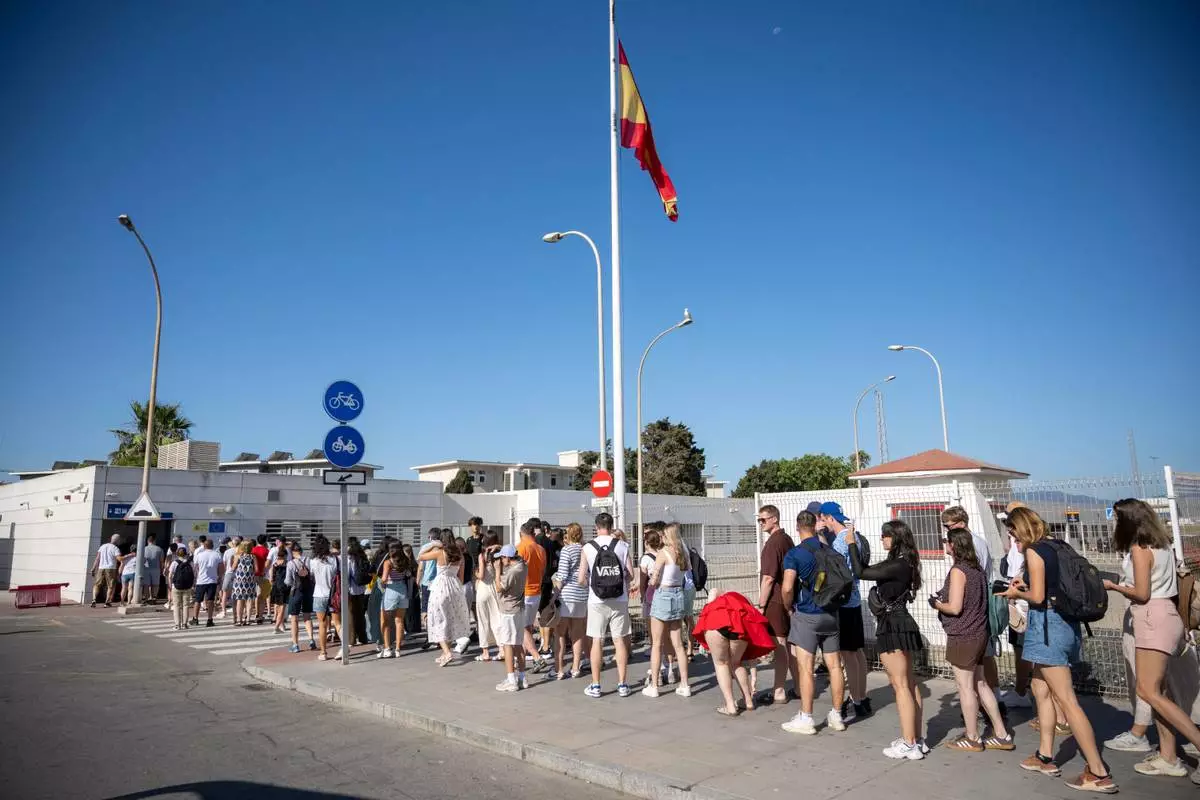
People queue to cross the border between Spain and Gibraltar, in La Linea de la Concepcion, Spain, Monday, July 6, 2026. (AP Photo/Marcos Moreno)
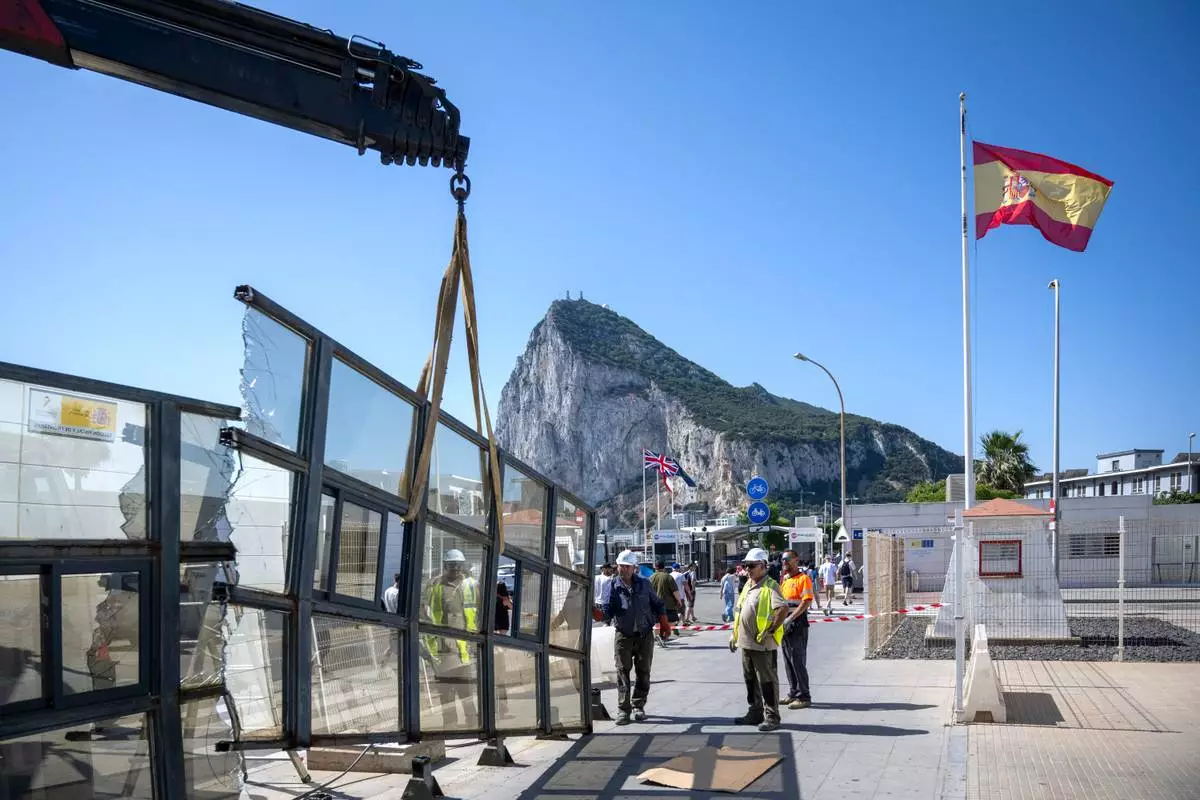
Against the backdrop of the Rock of Gibraltar, workers dismantle a Spanish border checkpoint that separated the disputed British overseas territory from Spain in La Línea de la Concepción, Spain, Monday, July 6, 2026. (AP Photo/Marcos Moreno)
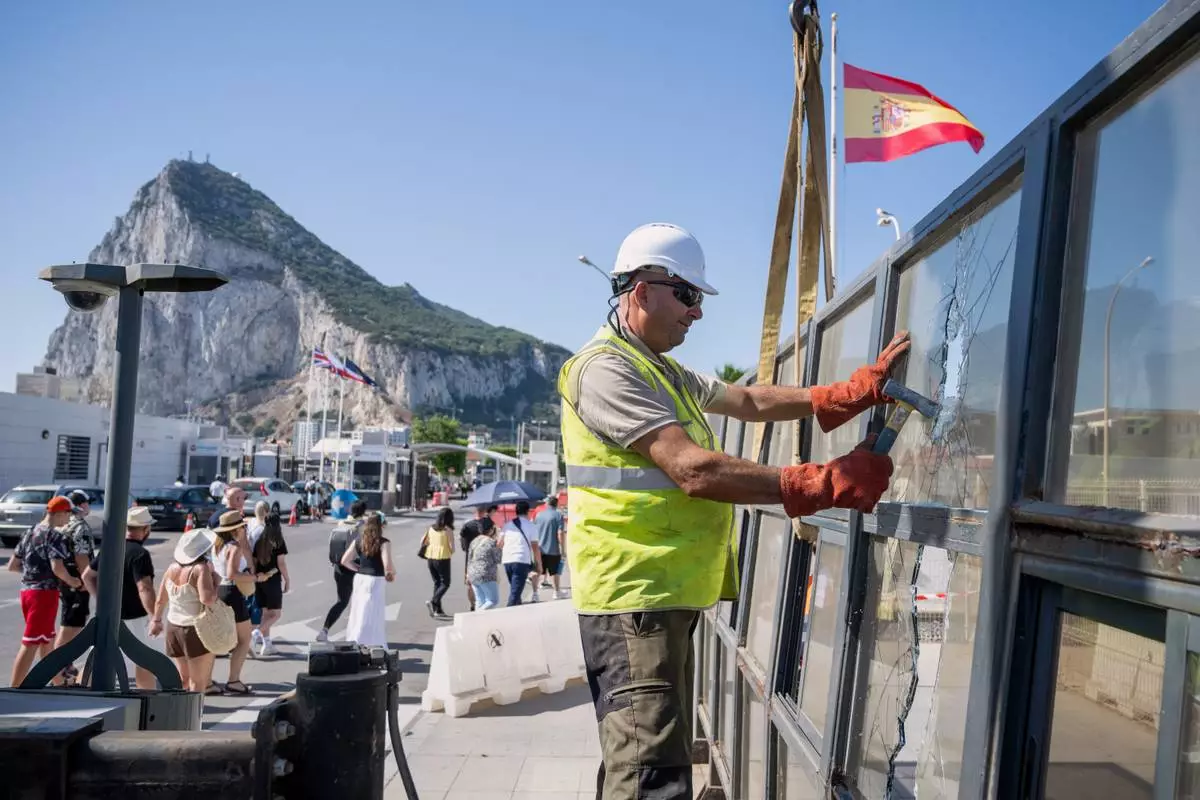
Against the backdrop of the Rock of Gibraltar, workers dismantle a Spanish border checkpoint that separated the disputed British overseas territory from Spain in La Línea de la Concepción, Spain, Monday, July 6, 2026. (AP Photo/Marcos Moreno)
NEW YORK (AP) — Maine Democrats are seizing on a new fatal shooting by Immigration and Customs Enforcement in their state, fighting to link Republican Sen. Susan Collins to the embattled federal agency — and to shift the conversation away from the unrelated scandal that threatens to undermine their strength in a high-stakes U.S. Senate race.
A federal immigration agent fatally shot a motorist just south of Maine's largest city on Monday, the second time in a week that ICE has used deadly force on American soil and at least the ninth death since President Donald Trump began his immigration crackdown. It was the first for Maine, a Democratic-led state with a relatively large immigrant population that Trump targeted earlier in the year immediately after two high-profile ICE shootings in Minnesota.
The agents involved in the Maine incident were not using body cameras, and the victim, a 26-year-old Colombian national, was not the target of their probe, officials said.
The shooting sparked a swift and aggressive backlash from Democrats, who are still reeling from the sexual assault allegation that forced their party's Senate nominee, Graham Platner, to quit the race late last week. Platner denied the allegation, which many former allies described as credible.
Democratic officials are scheduled to select a Platner replacement at a July 25 convention, leaving the party's nominee just a few months to try to unseat a longtime incumbent in a race seen as critical if Democrats are to win back control of the Senate.
In the immediate aftermath of the shooting, several would-be Collins' challengers descended upon the scene — and her office — to speak out.
Senate hopeful Democrat Nirav Shah, the former director of the Maine Center for Disease Control and Prevention director, drew a direct link from the shooting to the Republican senator's oversight of ICE's budget as chair the powerful Senate Appropriations Committee.
“She's got power, but she didn’t use it to rein in a rogue agency, and instead gave them a blank check to kill,” Shah said in a press conference outside Collins' office on Tuesday. “It is time to abolish this broken agency. It is time to fire the leadership that has let it run wild. And it is time to retire politicians like Susan Collins who have made this lawlessness possible."
Collins is in Washington this week for Senate business.
Phoebe Keller, a spokesperson for the Senate Appropriations Committee, said Collins worked to secure specific ICE “protections” in the federal spending bill signed into law at the end of April. They included $20 million for body cameras, $2 million for deescalation training and $20 million more for increased oversight of detention facilities.
At the time, Senate Democrats were demanding a series of reforms that would have required ICE agents to wear body cameras, restricted the use of face masks and banned enforcement actions near sensitive locations such as schools, hospitals and courthouses.
The Republican-controlled Senate ultimately rejected the reforms.
“While the investigation of the Biddeford shooting is not yet complete, it raises sufficient critical questions that I spoke with DHS Secretary Mullin last night and urged him to cease all non-urgent vehicle stops," Collins said in a brief statement Tuesday.
The ICE shooting and the immediate backlash in a state Trump lost by 7 points suggests that Collins may have only begun to answer tough questions about the situation and her role in funding the agency.
Democrats, who acknowledged that the Platner scandal likely makes their fight to defeat Collins more difficult, were nonetheless hopeful that the shooting will shift the conversation back to Collins' record. The Republican has represented the state in the Senate since 1997 and regularly touts her power as the Appropriations Committee chair as a reason to keep her in the Senate for another six years.
“This tragedy refocuses the conversation from Platner fallout to the real world impact of Susan Collins voting to give ICE tens of billions of dollars with zero reforms,” said Democratic strategist Josh Schwerin. "The impact will be real.”
Earlier this month, an ICE agent fatally shot a man in Houston after he attempted to evade arrest in his vehicle during an operation. In January, two people were shot and killed by federal officers within days of each other in Minnesota.
About 6 in 10 U.S. adults said earlier this year that Trump has “gone too far” in sending federal immigration agents into American cities, according to an AP-NORC poll. The poll suggested political independents were increasingly uncomfortable with Trump's tactics.
On Tuesday, the shooting dominated the political conversation on the ground in Maine.
The day after a vigil turned out hundreds in Portland, a group of several dozen protestors gathered near an ICE facility in Scarborough and condemned Collins for supporting legislation to expand funding for ICE. Protesters waved signs stating “Stop the murder” and “End this terror.”
“Does anyone here feel safer because this man was shot in cold blood?” said Kelli Brennan, co-president of the Maine State Nurses Association. “Does the senseless murder of this man make any of our lives better in any way?”
Former Maine Senate leader and logger by trade, Troy Jackson, now a candidate to replace Platner, declared “ICE out” at the Portland vigil and held an “Abolish ICE” sign at a protest outside Collins' office on Monday.
“Immigrant communities are living under constant threat from an agency that operates with cruelty and impunity,” Jackson said during an online progressive organizing meeting Monday night. “We need accountability and leaders who believe every person deserves dignity, safety and due process.”
Massachusetts Sen. Ed Markey, who was also in the organizing meeting, called the shooting “murder” and said “we must abolish ICE now.”
“This is the second person ICE has killed in less than a week, the latest attack from Trump’s masked, unaccountable thugs,” Markey said, noting he voted against the creation of ICE in 2003.
Less than a week after Platner's exit, however, he is still a part of the conversation — even if he is not the focus anymore.
“You poured your hearts, your time, and your energy into building this movement alongside another candidate than me. And I know that there’s real pain, anger, and disappointment. And I’m not going to try and minimize that,” Jackson said. “But look, this movement has always been bigger than one person."
He continued: "We can defeat Susan Collins and elect a senator who will never forget what side they’re on.”
AP writers Matt Brown in Washington and Bill Barrow in Atlanta contributed.
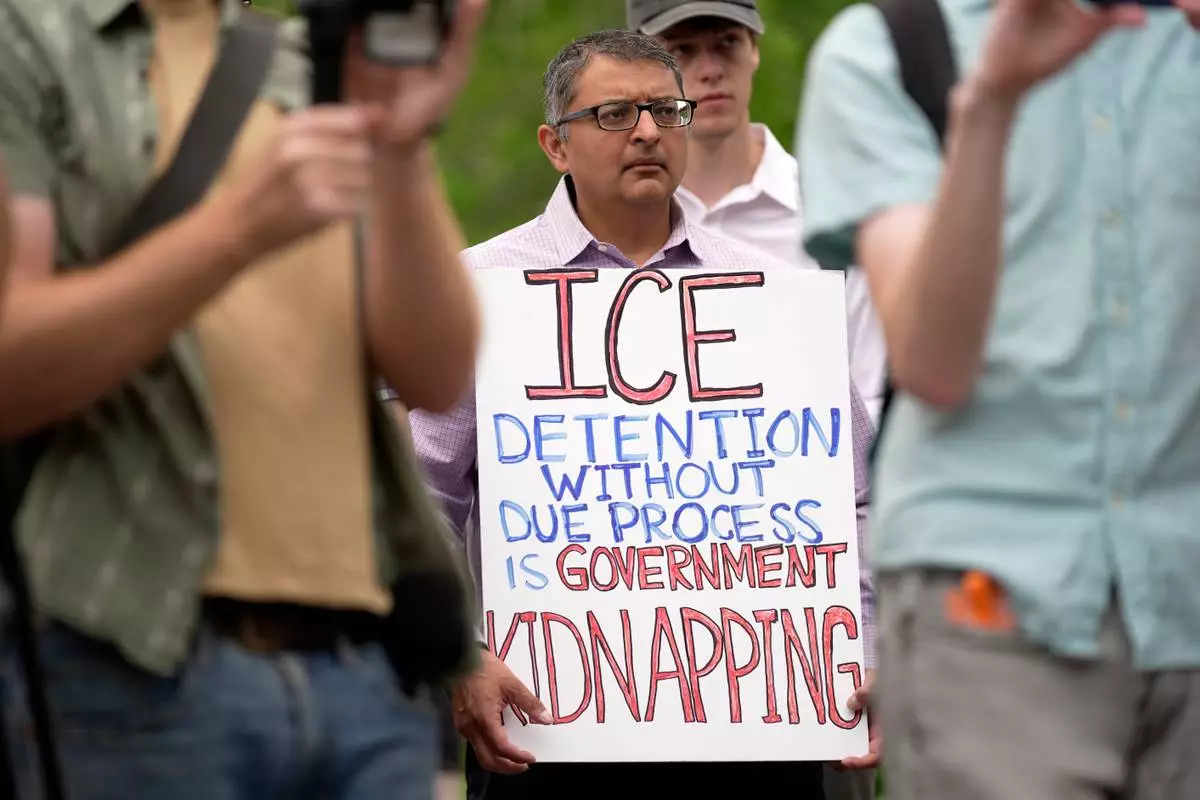
Dr. Nirav Shah, Democratic candidate for U.S. Senate, attends a protest outside a U.S. Immigration and Customs Enforcement facility Scarborough, Maine, one day after the shooting of Johan Sebastián Durán Guerrero, Tuesday, July 14, 2026. (AP Photo/Robert F. Bukaty) CORRECTION: Corrects ID to Johan Sebastián Durán Guerrero NOT Joan Sebastian Guerrero
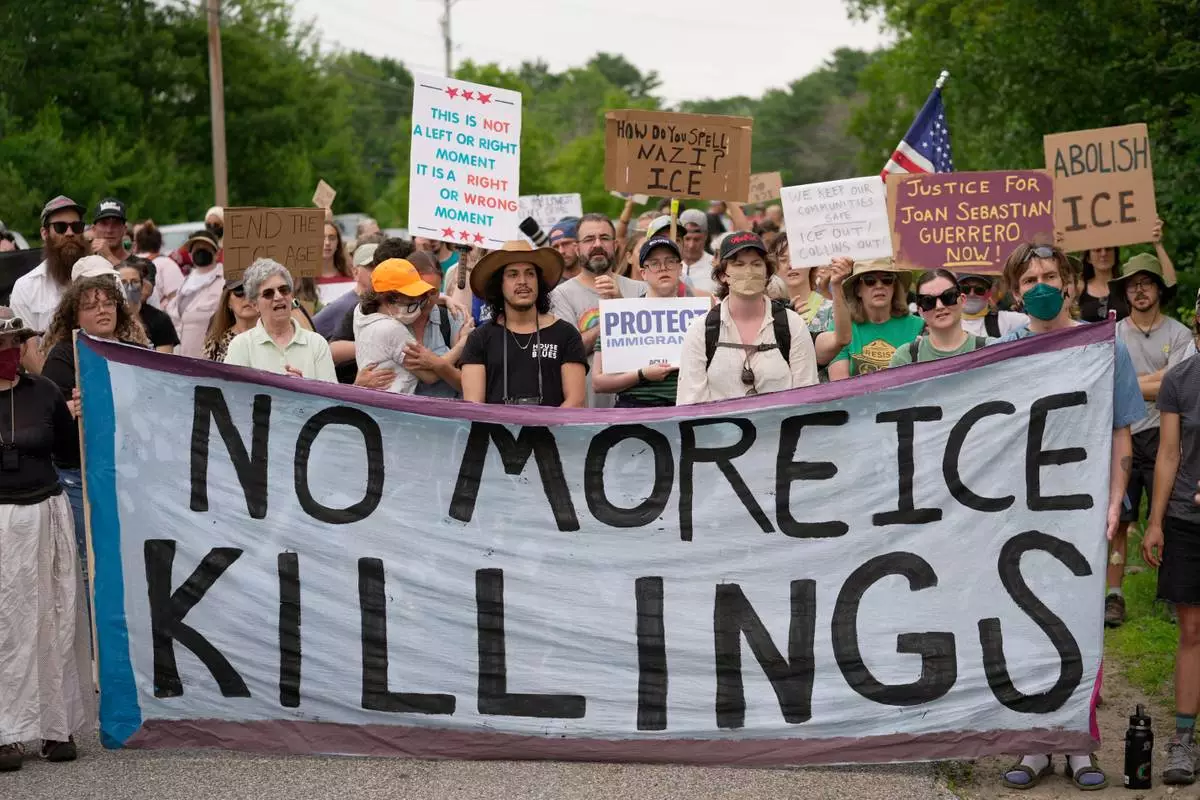
Protesters gather near a U.S. Immigration and Customs Enforcement facility Scarborough, Maine, one day after the shooting of Johan Sebastián Durán Guerrero, Tuesday, July 14, 2026. (AP Photo/Robert F. Bukaty) CORRECTION: Corrects ID to Johan Sebastián Durán Guerrero NOT Joan Sebastian Guerrero
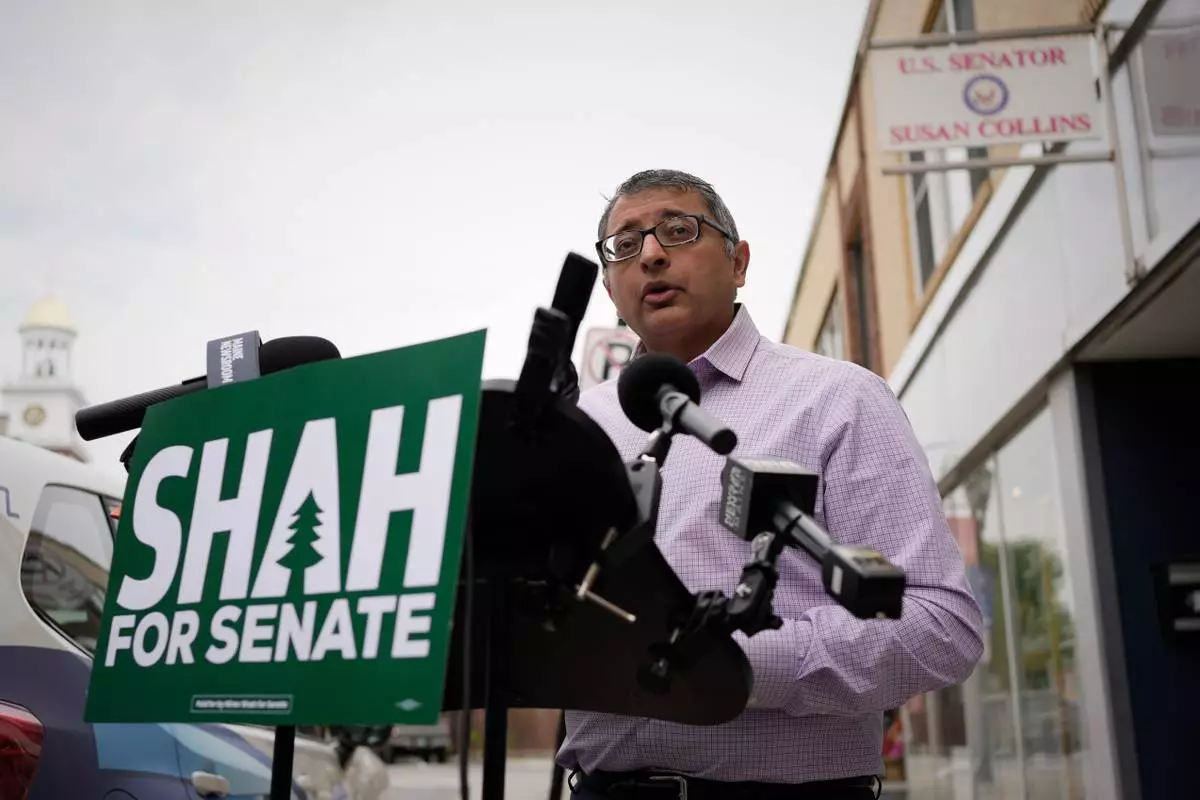
Dr. Nirav Shah, Democratic candidate for U.S. Senate, speaks to reporters outside an office for Sen. Susan Collins, R-Maine, a day after a shooting involving U.S. Immigration and Customs Enforcement, Tuesday, July 14, 2026 in Biddeford, Maine. (AP Photo/Robert F. Bukaty)