LOS ANGELES--(BUSINESS WIRE)--Jul 14, 2026--
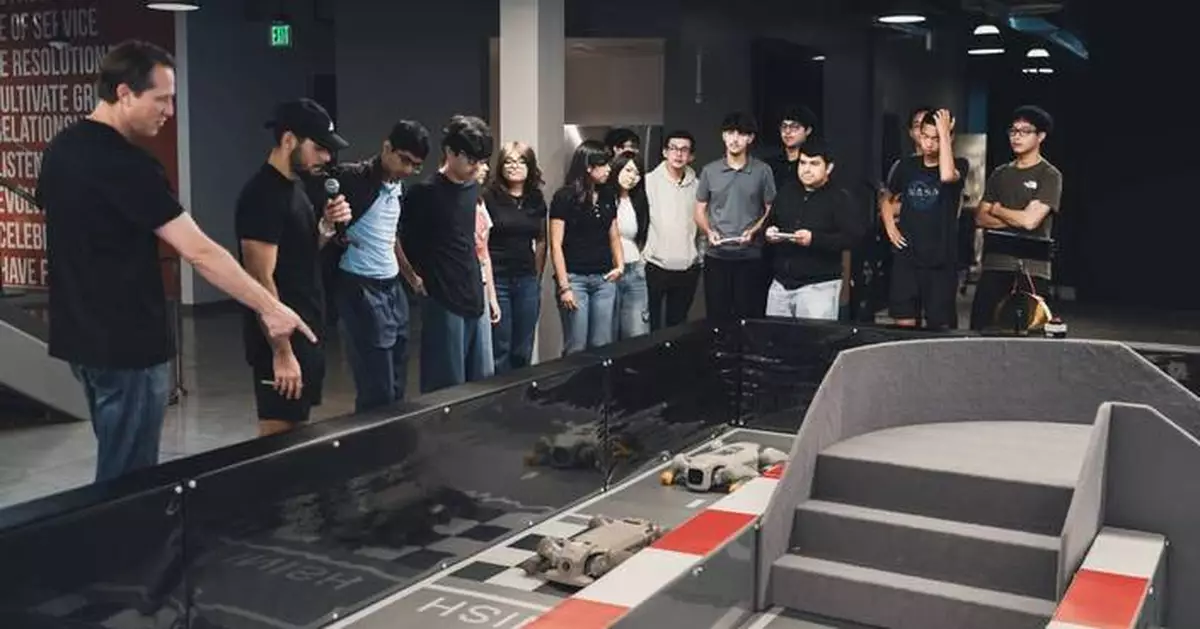
Faraday Future Intelligent Electric Inc. (NASDAQ: FFAI) (“Faraday Future”, “FF” or the “Company”), a California-based global Embodied AI (EAI) ecosystem company, announced today that it began its second week of three flagship demonstration robotics summer camps. The Company has partnered with two major public-school districts in Los Angeles — Lynwood Unified School District and El Segundo Unified School District, where FF’s new headquarters is located — to host these EAI robotics summer camps. At the same time, FF has officially launched its summer camp collaboration with Triple I, a U.S. full-service education institution, providing support and enablement across products, technology, curriculum content, and the broader education ecosystem.
This press release features multimedia. View the full release here: https://www.businesswire.com/news/home/20260714435417/en/
The FF summer program takes students from their first robot introduction to a live, autonomous system showcase in front of FF engineers and executives — all in a single week. And rather than working with toy kits or simulations alone, the students train on FF’s own robotics fleet: Navi, a customizable quadruped platform students build and personalize; Aegis, an industrial-grade quadruped capable of real torque and autonomous navigation; Master, a bipedal humanoid robot; and Futurist, the data platform that captures and trains on students' own movements. By the end of the week, every student has programmed, driven, and debugged real hardware — not simulations.
The students participated in classroom-style educational sessions, where they learned about topics such as open-source platforms, programmability, pre-programmed commands, robotic attachments (e.g., robotic arms), the newest technologies: ROS2, C++, Python, and an introduction to FF’s robots. They also participated in interactive games related to programming robotics. The program is structured as a five-day progressional learning environment, with days split into segments that are broken out as follows:
Day One opens with safety training and a "meet the fleet" briefing before students dive into their first coding lesson — sense-think-act logic on the Aegis platform — and a 3D-modeling lab where they design and print their own robot components.
Day Two advances into autonomy: students refresh core robotics concepts, run an AI-vision search mission, learn the physics of torque through a hands-on lesson, and write their first "Ghost Track” in a fully autonomous, hard-coded robot path.
Day Three shifts to mechanical engineering fundamentals, including a robot-arm and seesaw challenge, a lesson on the center of mass, and an introduction to Python programming.
Day Four moves into humanoid robotics and applied AI: bipedal safety and control, kinematics, telemetry, machine learning, and even training a robot's facial recognition and personality systems. A signature thread runs through every single day: a timed, scored robot racetrack challenge that each student runs twice per session.
By Day Five, students have accumulated a full week of their own performance data — and the closing day opens with a data-analytics lesson in which students calculate the mean, median, and variance of their own racetrack results, turning a week of friendly competition into a genuine statistics lesson. The week closes with an awards ceremony featuring remarks from FF’s leadership and other program leaders, the presentation of Certificates of Achievement, and a final racetrack award for the week's top performers.
“This interactive FF robotics camp with local high school students at our HQ is designed to give students a credible, hands-on introduction to the field of autonomous robotics — not as an abstraction, but as a full week of real engineering work on real machines and provides us a window to hear firsthand feedback of our robotics strategy as it will relate to students and future curriculum,” said Chris Chen, Co-CEO of FF AI-Robotics at FF. “We believe that education will become the first major scenario in the initial phase of the consumer robotics market as we move aggressively to build out our EAI education ecosystem.”
FF views education as one of the most important early large-scale application scenarios for consumer and institutional EAI robotics. Through a dual-entry strategy serving both B2B education institutions and B2C family learning, the Company aims to connect classroom-based instruction, hands-on robotics practice, continued learning at home, and the development of the next generation of EAI creators.
The Company is actively advancing robots from product showcases into real education scenarios, helping K-12 students, universities, education institutions, and innovation communities engage with, understand, and apply AI and embodied intelligence at an earlier stage. By integrating EAI Robotics products with education activities, the Company aims to provide students with a more intuitive and participatory AI learning experience, helping the next generation of AI Natives develop engineering thinking, creativity, and interdisciplinary collaboration skills.
ABOUT FARADAY FUTURE
Founded in 2014, Faraday Future (FF) is a U.S.-based Physical AI ecosystem company dedicated to reshaping the future of robotics and mobility solutions through AI innovation and technologies. FF focuses on two major product strategies within the Embodied AI (EAI) robotics business: EAI humanoid and bionic robots, and EAI automotive-focused robots. By building a “Four-Core Full-Stack AI” ecosystem of “EAI Brain, EAI Device, Industry Productivity Solutions and the Developer Platform, and EAI Data Factory ,” FF aims to create an evolutionary flywheel: scaled device delivery, data collection and training, continuous evolution of the EAI Brain, stronger product capability, and even larger-scale delivery and deployment. Through this flywheel, FF seeks to maximize its commercial value and lead to the advancement of Physical AI. For more information, please visit Faraday Future’s official website: https://www.ff.com/
FORWARD LOOKING STATEMENTS
This press release includes “forward looking statements” within the meaning of the safe harbor provisions of the United States Private Securities Litigation Reform Act of 1995. When used in this press release, the words “plan to,” “can,” “will,” “should,” “future,” “potential,” and variations of these words or similar expressions (or the negative versions of such words or expressions) are intended to identify forward-looking statements. These forward-looking statements, which include statements regarding potential future legal actions against alleged illegal market manipulation or similar improper activities, and FF’s entry into the embodied AI robotics market and robotics deliveries and development, involve a number of known and unknown risks, uncertainties, assumptions and other important factors, many of which are outside the Company’s control, which could cause actual results or outcomes to differ materially from those discussed in the forward-looking statements.
Important factors, that may affect actual results or outcomes include, among others: the Company’s ability to timely regain compliance with Nasdaq’s minimum bid requirement; the Company’s common stock will be suspended from trading on Nasdaq if it’s closing price is $0.10 or less for 10 consecutive trading days; the Company’s ability to continue as a going concern and improve its liquidity and financial position; the Company’s ability to pay its outstanding obligations, which it currently lacks; the availability of sufficient share capital to meet its current obligations and execute on its strategy, which the Company currently lacks; the agreement of stockholders to substantially increase the Company’s share capital, which could result in substantial additional dilution; the willingness of convertible debt investors to fund the Company while it lacks sufficient share capital for conversions; demand for the Company’s robotics products; the ability of B2B preorder companies to locate customers to purchase our robotics products, on which their nonbinding preorders substantially depend; competition in the robotics industry, which includes companies with far superior experience, funding and name recognition; the ability of the Company to build an EAI education ecosystem that serves both the B2C consumer market and the B2B institutional education market; the acceptance by teachers and students of the Company’s robotics products in the education market; the Company’s reliance on a single OEM for most of its robotics products; the Company’s ability to get the planned robotics products to comply with all applicable U.S. rules and regulations; the ability of the robotics OEM to timely supply robotics to the Company; tariff uncertainty for imported products, particularly from China; demand from automobile dealers for robotics products; the Company's ability to homologate FX vehicles for sale; the Company’s ability to secure the necessary funding to execute on the FX strategy, which is substantial; the Company’s ability to secure an occupancy certificate covering all of its Hanford facility; the Company's ability to remediate its material weaknesses in internal control over financial reporting and the risks related to the restatement of previously issued consolidated financial statements; the Company’s limited operating history and the significant barriers to growth it faces; the Company’s history of substantial losses and expectation of continued losses; the success of the Company’s payroll expense reduction plan; the Company’s ability to execute on its plans to develop and market its vehicles and the timing of these development programs; the Company’s estimates of the size of the markets for its vehicles and cost to bring those vehicles to market; the rate and degree of market acceptance of the Company’s vehicles; the Company’s ability to cover future warranty claims; the success of other competing manufacturers; the performance and security of the Company’s vehicles; current and potential litigation involving the Company; the Company’s ability to receive funds from, satisfy the conditions precedent of and close on the various financings described elsewhere by the Company; the result of future financing efforts, the failure of any of which could result in the Company seeking protection under the Bankruptcy Code; the Company’s indebtedness; the Company’s ability to use its “at-the-market” program; insurance coverage; general economic and market conditions impacting demand for the Company’s products; potential negative impacts of a reverse stock split; potential cost, headcount and salary reduction actions may not be sufficient or may not achieve their expected results; circumstances outside of the Company's control, such as natural disasters, climate change, health epidemics and pandemics, terrorist attacks, and civil unrest; risks related to the Company's operations in China; the success of the Company's remedial measures taken in response to the Special Committee findings; the Company’s dependence on its suppliers and contract manufacturer; the Company's ability to develop and protect its technologies; the Company's ability to protect against cybersecurity risks; and the ability of the Company to attract and retain employees, any adverse developments in existing legal proceedings or the initiation of new legal proceedings, and volatility of the Company’s stock price. You should carefully consider the foregoing factors and the other risks and uncertainties described in the “Risk Factors” section of the Company’s Form 10-Q for the quarter ended March 31, 2026, filed with the SEC on May 14, 2026, and Form 10-K filed with the SEC on March 31, 2026, and other documents filed by the Company from time to time with the SEC.
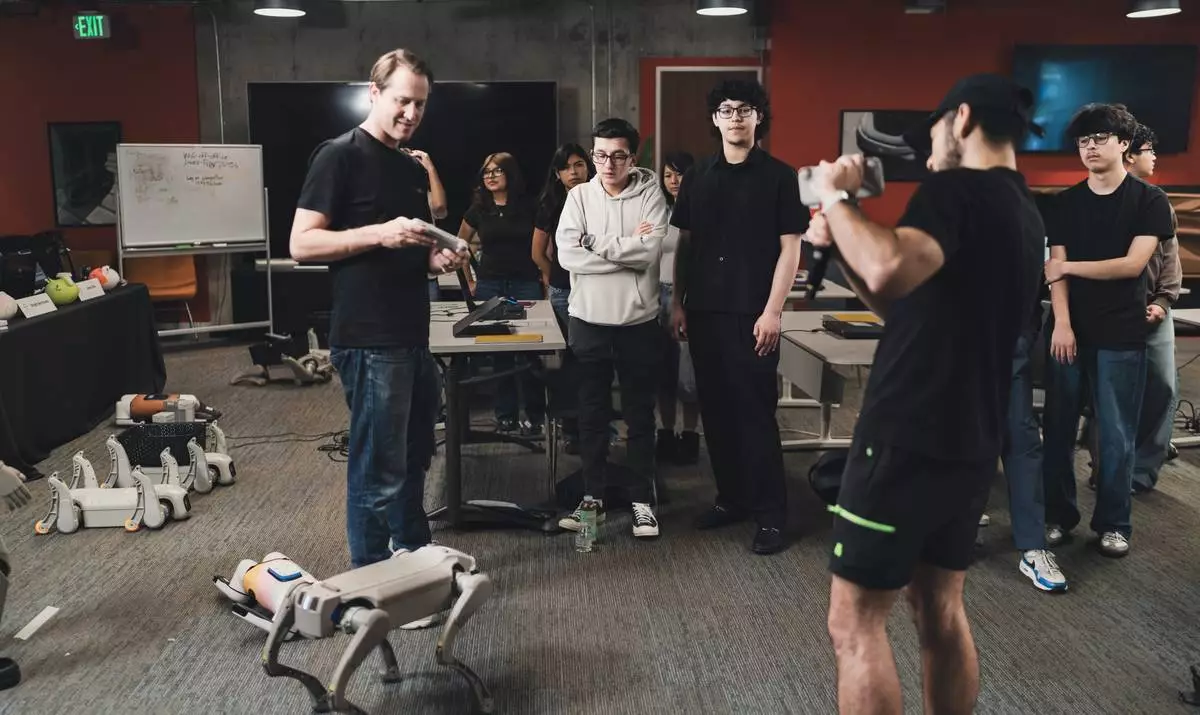
The three one week summer sessions of the FF AI-Robotics program are taught over a full five-day period and include students from Lynwood Unified School District and El Segundo Unified School District in Los Angeles.
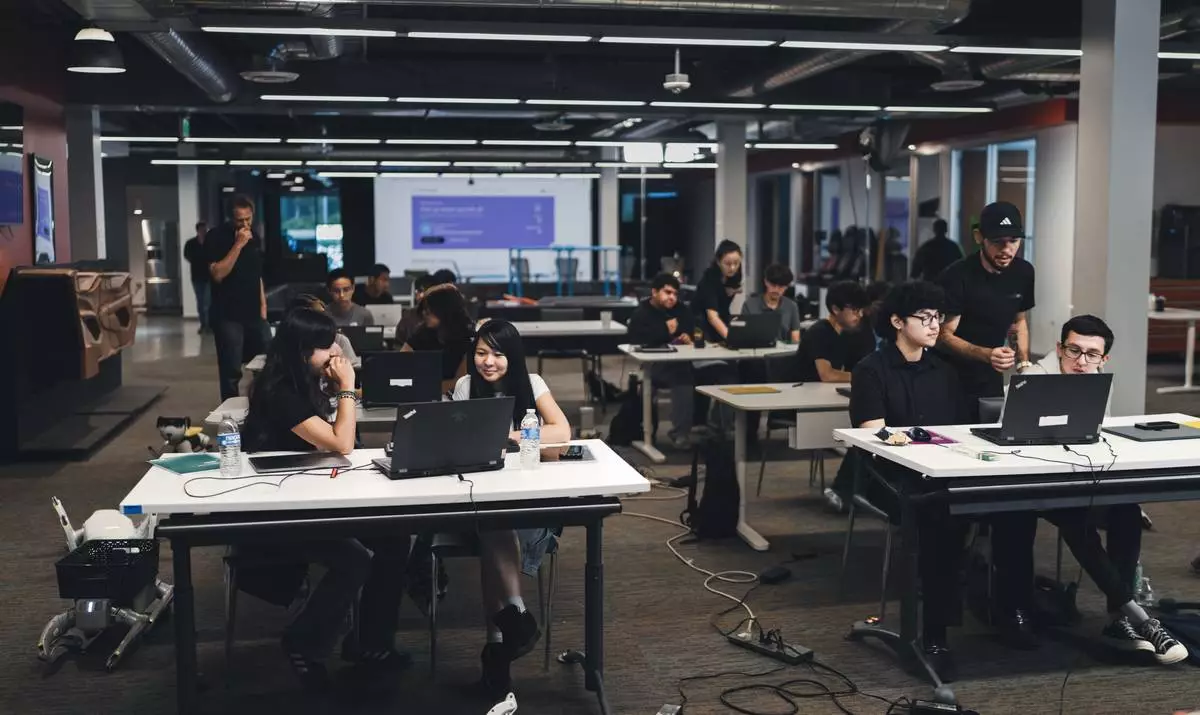
The students participated in valuable classroom discussions and hands-on interactive sessions with the latest robotics’ technologies that FF is leading.
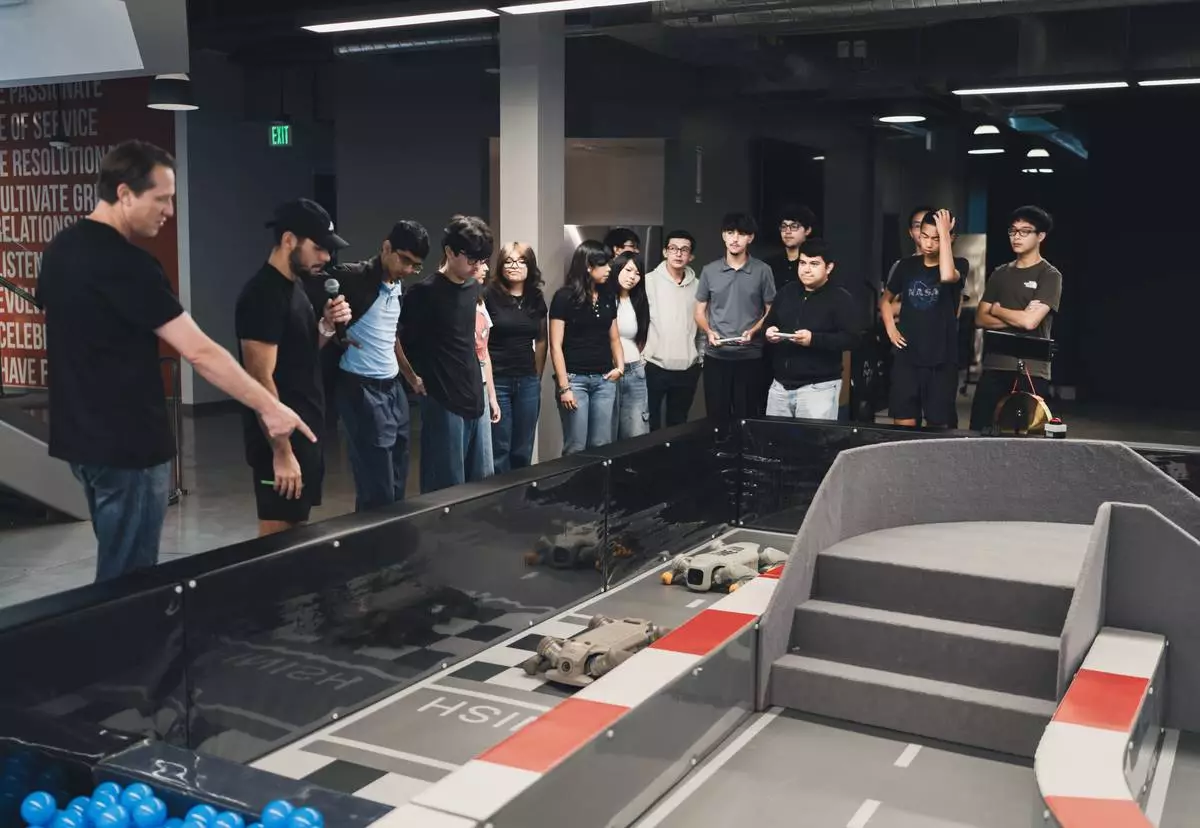
Faraday Future Launches Immersive FF Nexus Academy Summer Camps for Los Angeles Students, Advancing Its Embodied AI Robotics Education Strategy