Collaboration Provides Students Access To Xsolla’s Publishing Suite And Launcher, Bridging Academic Learning With Commercial Game Development Practices
KUALA LUMPUR, MALAYSIA - Media OutReach Newswire - 14 July 2026 - Xsolla, a leading global video game commerce company, today announced the signing of a Memorandum of Understanding (MoU) with Management and Science University (MSU), one of Malaysia's leading private universities, to strengthen collaboration between academia and the video games industry while providing students with access to professional publishing, monetization, and distribution technologies.
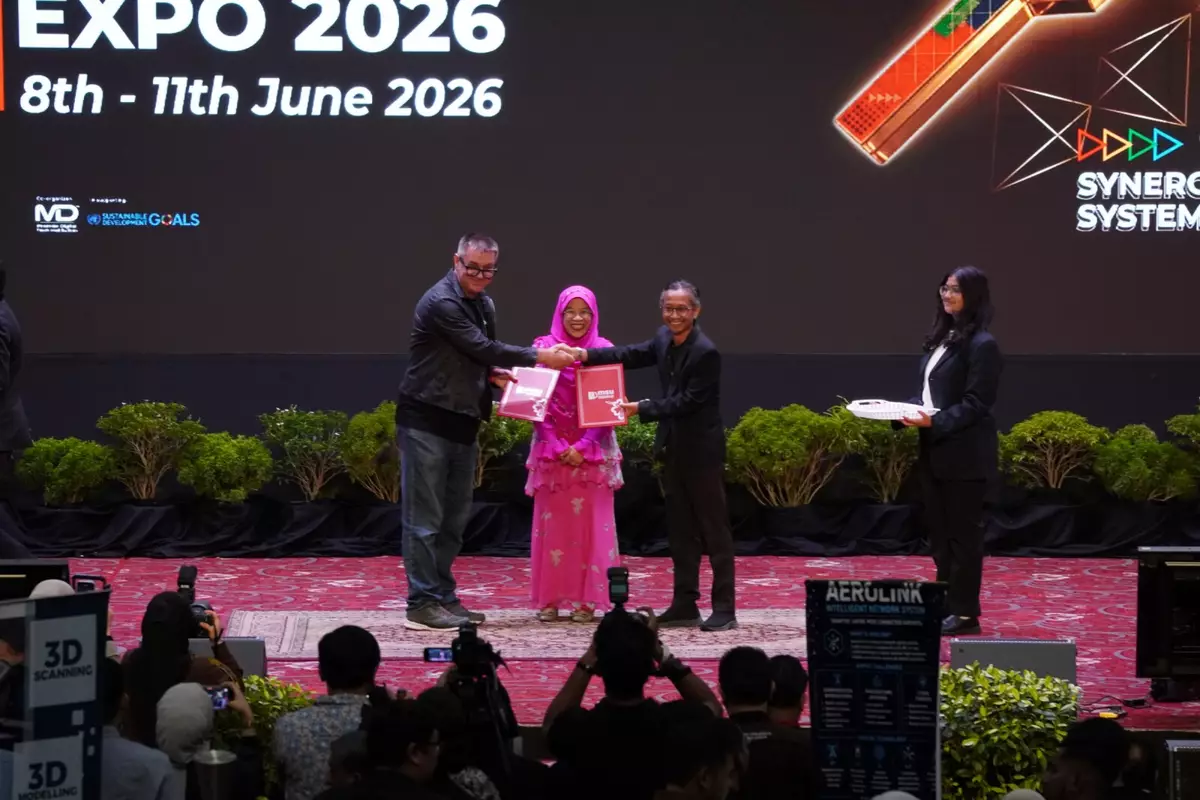
(From left) Mr. Florin Ursu, Vice President of Platform Quality & Stability, Xsolla KL Sdn Bhd, Professor Puan Sr (2). Mohd Shukri Ab Yajid, President & Founder, Management and Science University (MSU)
The partnership is designed to support knowledge exchange and talent development across game development, digital commerce, and game monetization. Through industry talks, guest lectures, best-practice sharing sessions, and collaborative educational initiatives, Xsolla and MSU will work together to provide students and faculty with direct exposure to current industry practices and commercial opportunities in the global games market.
As part of the collaboration, Xsolla will facilitate access to its end-to-end game commerce ecosystem across its payments, monetization and distribution platforms. Students will be able to integrate professional-grade publishing, monetization, payment, and distribution capabilities into their projects, helping bridge the gap between academic learning and commercial game development.
"Today's game developers need more than technical skills; they need to understand the complete business of bringing games to market," said Chris Hewish, President of Xsolla. "Our partnership with MSU gives students access to the technologies, workflows, and commercial infrastructure used throughout the industry, helping prepare the next generation of developers to successfully launch and grow their games on a global scale."
MSU is recognized as one of Malaysia's leading private universities and is ranked #597 in the QS World University Rankings 2026. Through strategic industry partnerships and experiential learning programs, the university continues to connect studios with real-world opportunities across Information Sciences, Engineering, Technology, and related disciplines.
In addition to educational initiatives, Xsolla will participate in selected MSU convocation activities by presenting industry awards to recognize outstanding graduates. Both organizations will continue to explore additional collaborative opportunities that support talent development, innovation, and growth within Malaysia's interactive entertainment ecosystem.
To learn more about the MoU signing between Xsolla and Management and Science University (MSU), visit: https://xsolla.pro/MSU
Hashtag: #Xsolla #ManagementAndScienceUniversity #MSU
https://xsolla.com
The issuer is solely responsible for the content of this announcement.
About Xsolla
Xsolla is a global commerce company that builds and provides all the things developers need to launch, grow, and monetize video games. Headquartered in Los Angeles, California, the company supports studios of every size, from indie to AAA, with solutions across direct-to-consumer commerce, intelligent payments, entertainment-based IP, and player engagement products. Xsolla helps developers fund, distribute, market, and monetize their games at scale. Trusted by more than 60% of the top 100 highest-grossing games, Xsolla operates as the merchant of record across 200+ geographies with access to over 1,000+ local payment methods worldwide. Grounded in a deep belief in the future of gaming, Xsolla is resolute in bringing opportunities together and unlocking growth for creators everywhere.
** This press release is distributed by Media OutReach Newswire through automated distribution system, for which the client assumes full responsibility. **
Scenario-based analysis shows AI will expand demand across office, industrial and retail
HONG KONG SAR - Media OutReach Newswire - 15 July 2026 - Artificial intelligence (AI) is set to fuel economic expansion and increase demand for commercial real estate across Asia Pacific (APAC), rather than displace it, according to a study by Cushman & Wakefield. The analysis, AI Impact: Regional Insights – Asia Pacific, noted that AI will act as a net positive force for both economic growth and real estate demand as the region strengthens its position as a global hub for production, services and innovation.
"There is a misconception that AI will reduce the need for physical space," said Dr. Dominic Brown, Head of International Research, APAC & EMEA, Cushman & Wakefield. "Our analysis shows the opposite – AI expands economic activity and that ultimately drives greater demand for real estate across sectors."
The APAC analysis is part of Cushman & Wakefield's global, multi-sector, scenario-based assessment of how AI adoption could reshape real estate fundamentals over the next decade. Rather than attempting to predict how AI itself evolves, the framework focuses on how firms respond to AI under different adoption, productivity and monetization scenarios and how those responses translate into macroeconomic outcomes, space demand and capital markets dynamics. These scenarios are also fully integrated into Cushman & Wakefield's "House View" forecasting process, incorporating broader macroeconomic factors such as monetary policy, trade dynamics and geopolitical risks.
Four Scenarios, Wide Range of Outcomes
Cushman & Wakefield's study models four distinct scenarios reflecting different paths for AI adoption, productivity and labor market outcomes:
- C&W Baseline — Gradual Adoption (50%): Moderate productivity gains support steady economic expansion. Demand holds up, with near-term softness in select sectors, as AI becomes additive over time.
- Productivity-Led Expansion (15% probability): Rapid AI adoption drives strong economic growth and job creation. Broad demand growth across sectors supports rent growth and rising values.
- AI Bust — Moderate Recession (25%): AI adoption falls short of expectations, contributing to a cyclical downturn. Demand weakens in the near term, with higher vacancies and rent pressure, followed by recovery.
- Dystopic/Displacement (5%): AI adoption proves more labor-substituting than expected, leading to higher unemployment. Demand remains weak for a more sustained period, with downside pressure on rents and values.
Under the baseline scenario, the APAC economy is projected to grow at around 3-4% annually through 2030, supported by AI-driven productivity gains and continued investment in infrastructure such as data centers and power.
"AI will be a critical force in sustaining APAC's long-term growth story," said Dr. Brown. "It will help offset demographic headwinds in some developed markets while accelerating productivity across emerging economies."
While AI will automate certain routine functions, the study indicates overall employment in APAC is expected to rise, with a projected net increase of 58.5 million jobs between 2026 and 2030 under the baseline scenario. However, this growth is likely to moderate over time as economies mature, alongside a shift toward higher-value, knowledge-based work.
AI Impact on Real Estate
From a commercial real estate perspective, AI is expected to be additive to demand, rather than a substitute for space as stronger economic output and business formation drive higher occupancy needs over time. This expansion will be accompanied by structural changes in how space is used as well as evolving investment strategies. Emerging asset classes, particularly data centers are expected to become increasingly central to portfolios.
Under the baseline scenario, core real estate returns are projected to stabilise at around 10%, supported by strong regional growth and evolving demand drivers.
- Office Market to be Transformed, Not Disrupted
Prime net absorption of office space is projected to reach 1.035 billion sq ft over the next decade under the baseline scenario. Demand will increasingly favour high-quality, flexible spaces in prime locations, particularly in talent-rich cities and environments designed for collaboration and innovation. This sustained flight to quality, already evident in recent years, is expected to accelerate further, widening gap between premium and lower-grade buildings.
- Logistics and Data Centers Lead AI-Driven Demand
The logistics and industrial sector is set to be one of the primary beneficiaries of AI adoption, with demand driven by automation, e-commerce growth and rising supply chain complexity. Prime net absorption is forecast to reach 2.542 billion sq ft by 2030 under the baseline scenario. Within this growth, data centers are emerging as critical infrastructure, with power availability becoming a key constraint in shaping both supply and investment decisions.
- Retail to Become More Polarised
Stronger income growth will support spending but the retail market is expected to split into clear winners and losers. High and low-end retail segments are likely to outperform, while mid-tier retail will face structural challenges, reflecting a more polarised consumer landscape.
While the overall outlook is positive, there are potential downside risks such as slower-than-expected AI productivity boost or labour market disruption, which could result in higher vacancy rates and downward pressure on rents.
"While the base case is constructive, the range of outcomes remains wide. Understanding the different scenarios is critical for both occupiers and investors as they plan for the next decade," said Dr. Brown.
About the Study
AI Impact on Commercial Real Estate: The Next 10 Years uses econometric models and a scenario-based framework integrated into Cushman & Wakefield's House View forecasts. The analysis traces AI's impact through a chain of transmission – from foundational drivers (regulation, power infrastructure, data center development) through AI adoption and productivity, macroeconomic outcomes, occupier demand, and real estate market response. Regional reports covering the U.S., EMEA, and Asia Pacific are available at cushmanwakefield.com.
Hashtag: #Cushman&Wakefield
The issuer is solely responsible for the content of this announcement.
About Cushman & Wakefield
Cushman & Wakefield (NYSE: CWK) is a leading global commercial real estate services firm for property owners and occupiers with approximately 53,000 employees in nearly 350 offices and 60 countries. In Greater China, a network of 23 offices serves local markets across the region. In 2025, the firm reported revenue of $10.3 billion across its core services of Valuation, Consulting, Project & Development Services, Capital Markets, Project & Occupier Services, Industrial & Logistics, Retail, and others. Built around the belief that Better never settles, the firm receives numerous industry and business accolades for its award-winning culture. For additional information, visit www.cushmanwakefield.com.hk or follow us on LinkedIn (https://www.linkedin.com/company/cushman-&-wakefield-greater-china).
** This press release is distributed by Media OutReach Newswire through automated distribution system, for which the client assumes full responsibility. **