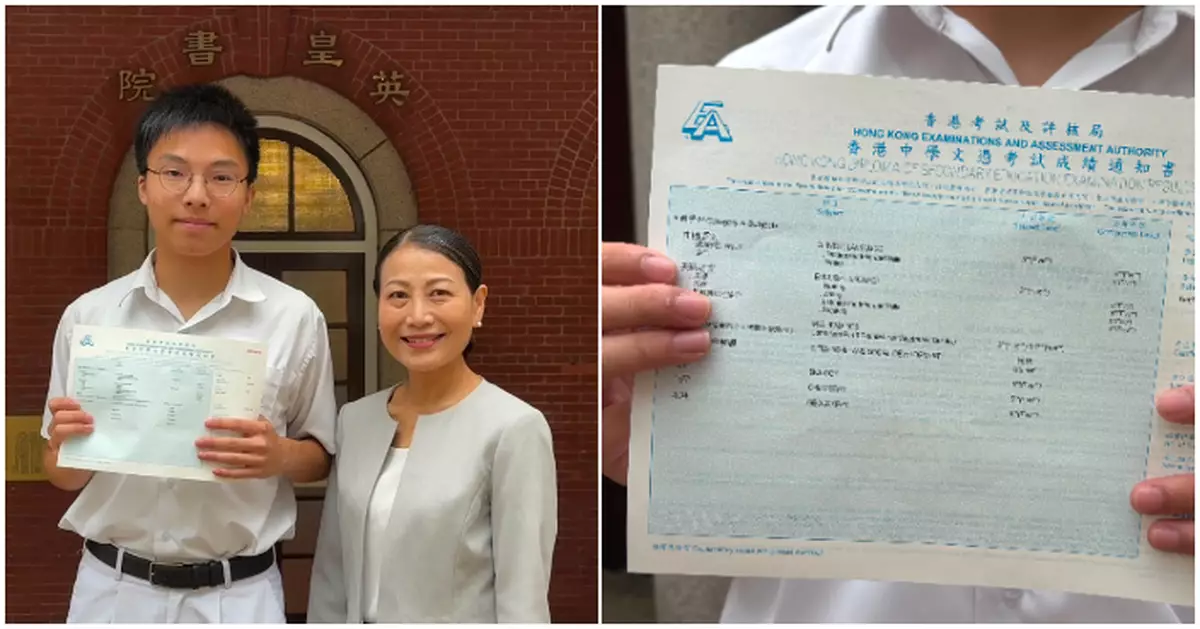
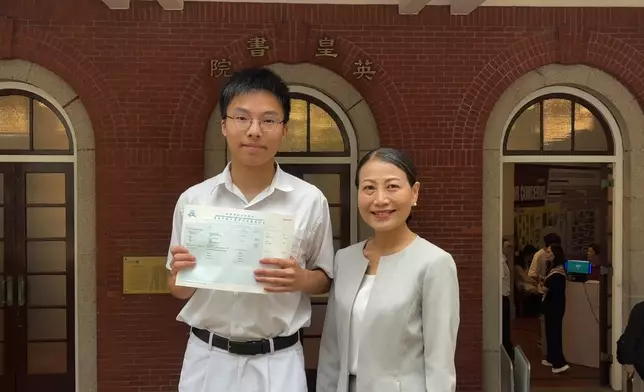
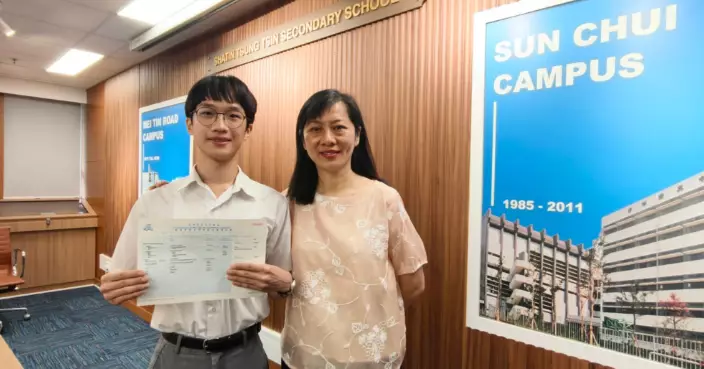
The 2026 HKDSE results were released today (July 15), with King’s College celebrating a super top scorer.
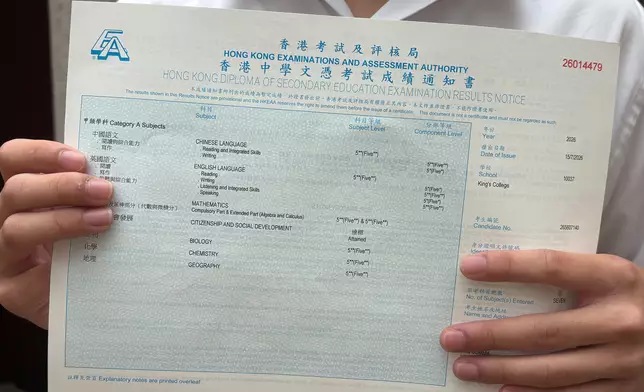
Ryan, who achieved 5** in both core subjects and three electives — Biology, Chemistry and Geography — admitted he was nervous the night before results day and even considered staying up to watch a football match, but ended up oversleeping after setting his alarm incorrectly. He described his final results, which far exceeded his expectations, as “a pleasant surprise; I really didn’t expect to do so well.”
Click to Gallery
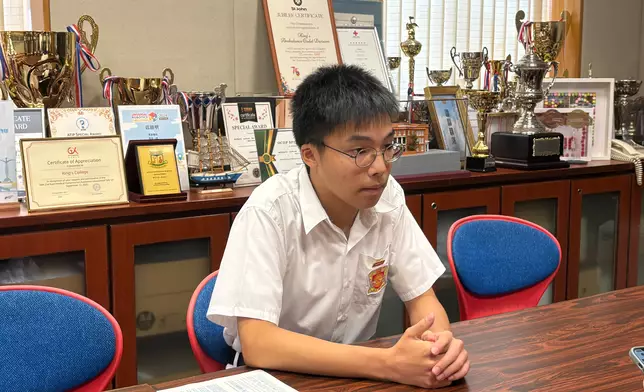
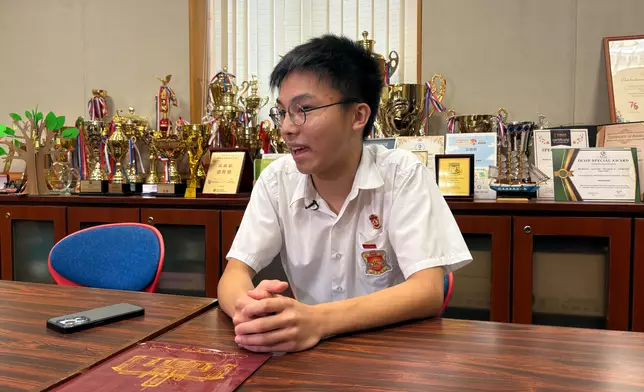
The super top scorer of King’s College, Ryan, Photo by Bastille Post
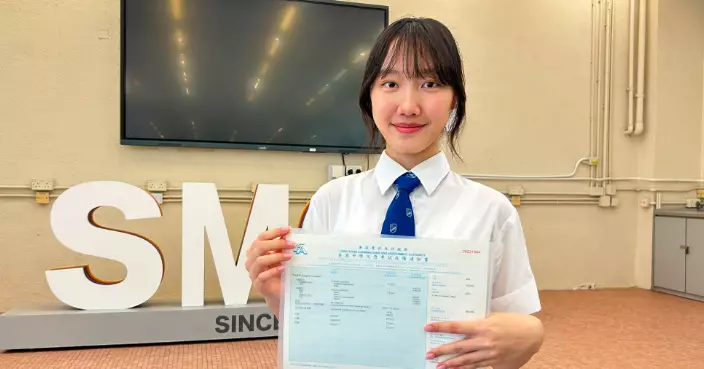
The DSE result of Ryan, Photo by Bastille Post
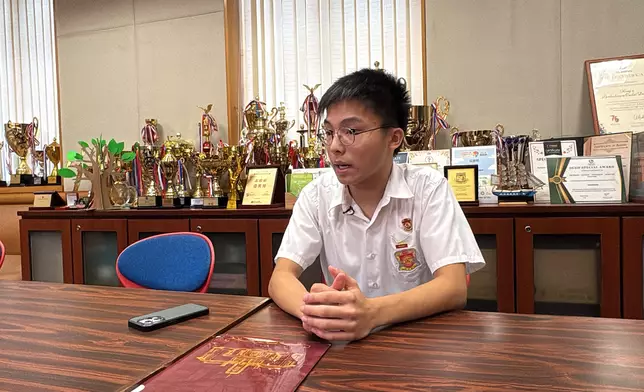
The super top scorer of King’s College, Ryan, Photo by Bastille Post
The super top scorer of King’s College, Ryan, Photo by Bastille Post
The super top scorer of King’s College, Ryan, Photo by Bastille Post
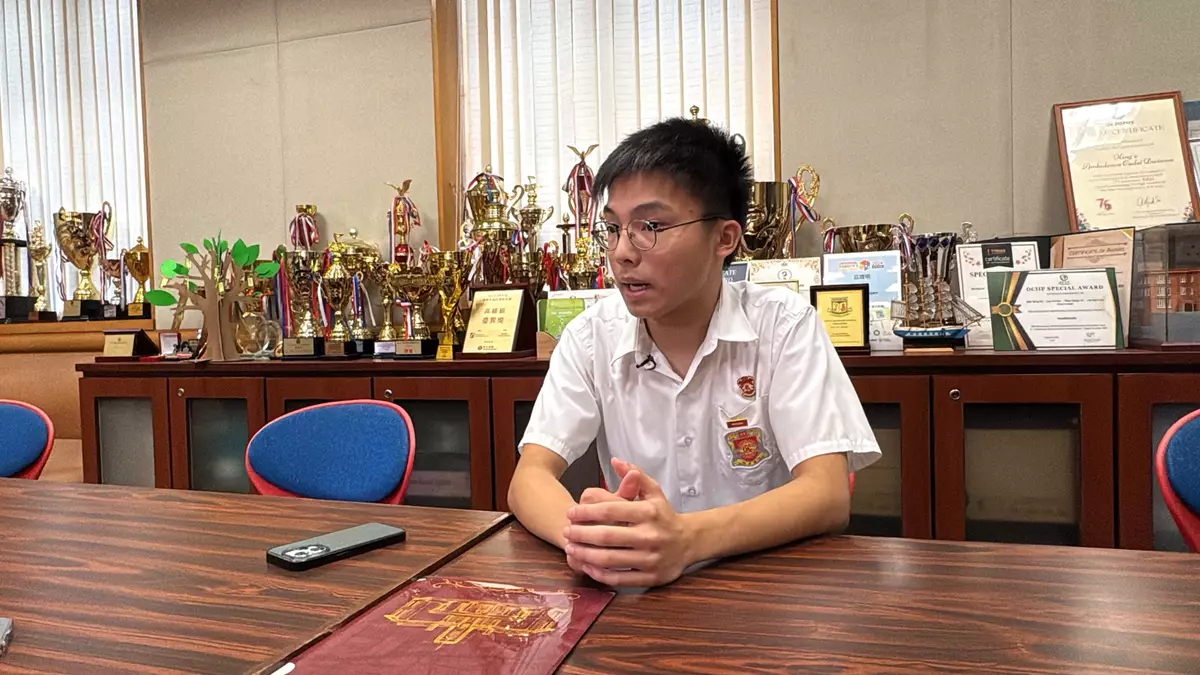
The super top scorer of King’s College, Ryan, Photo by Bastille Post
In Ryan's eyes, subject selection is important but not decisive. The key, he said, lies in “genuine interest and a willingness to learn.” He plans to pursue a medical-related degree and has decided to stay in Hong Kong, though he has not yet finalised which university to attend. He said he would discuss it with his family over the next couple of days and hopes to “contribute more to Hong Kong society” in the future. He mentioned that alumni working as doctors often return to school to share their experiences, which has made him feel that “helping others is meaningful.” His family has been supportive, emphasising that his choice should be based on his own interests.
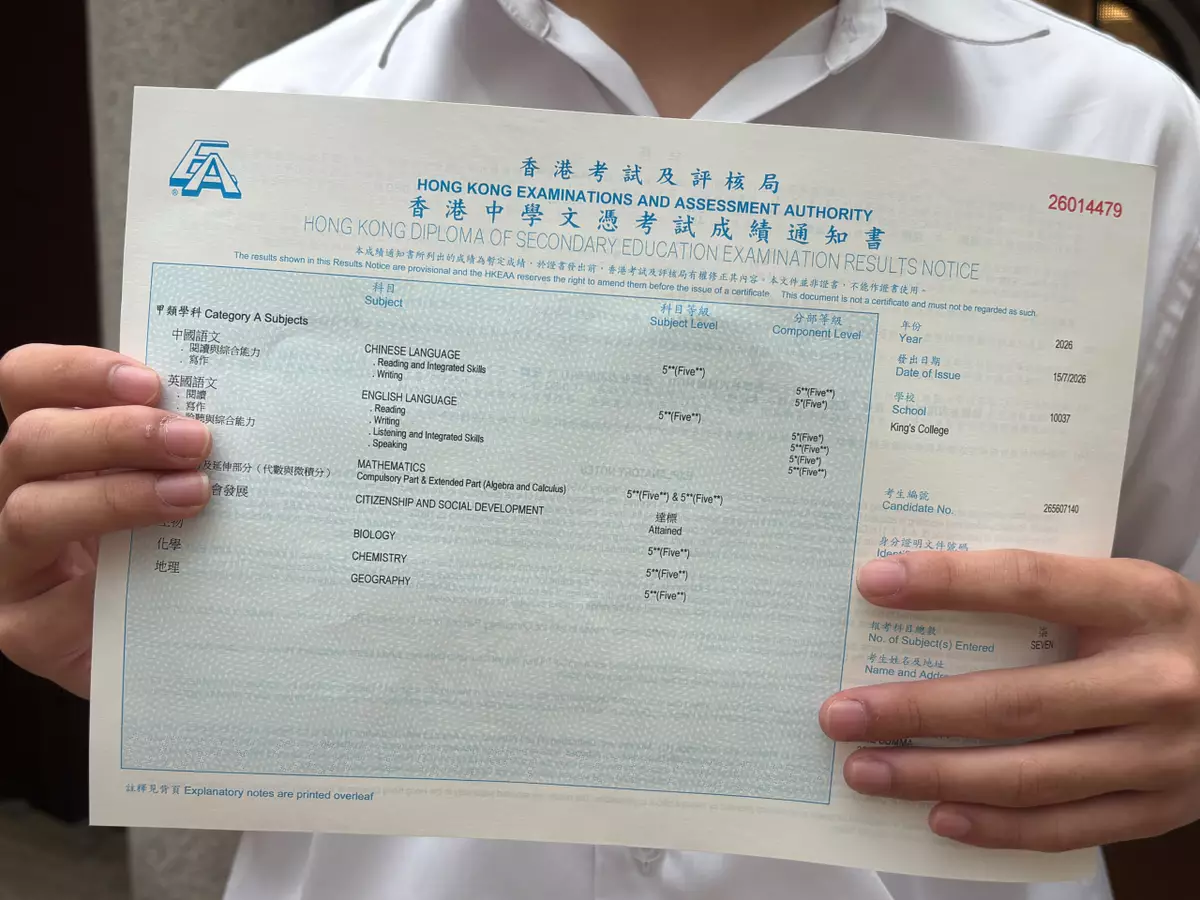
The DSE result of Ryan, Photo by Bastille Post
On choosing a university, Ryan said he would first compare which institution’s teaching approach suits him better. He plans to work in Hong Kong after graduation, acknowledging that the local healthcare system is understaffed, but noted that the government is gradually making changes, a situation he believes may improve in six years.
Commenting on the recent increase in public hospital accident and emergency charges, Ryan said the measure is reasonable and “can truly help those in greatest need” while discouraging non‑urgent cases from overusing emergency resources.
When asked about the incident in which a HKU medical school doctor shared patient information on social media, he said it reflected “a disregard for patient privacy and professional ethics,” stressing that patients’ privacy should never be made public.
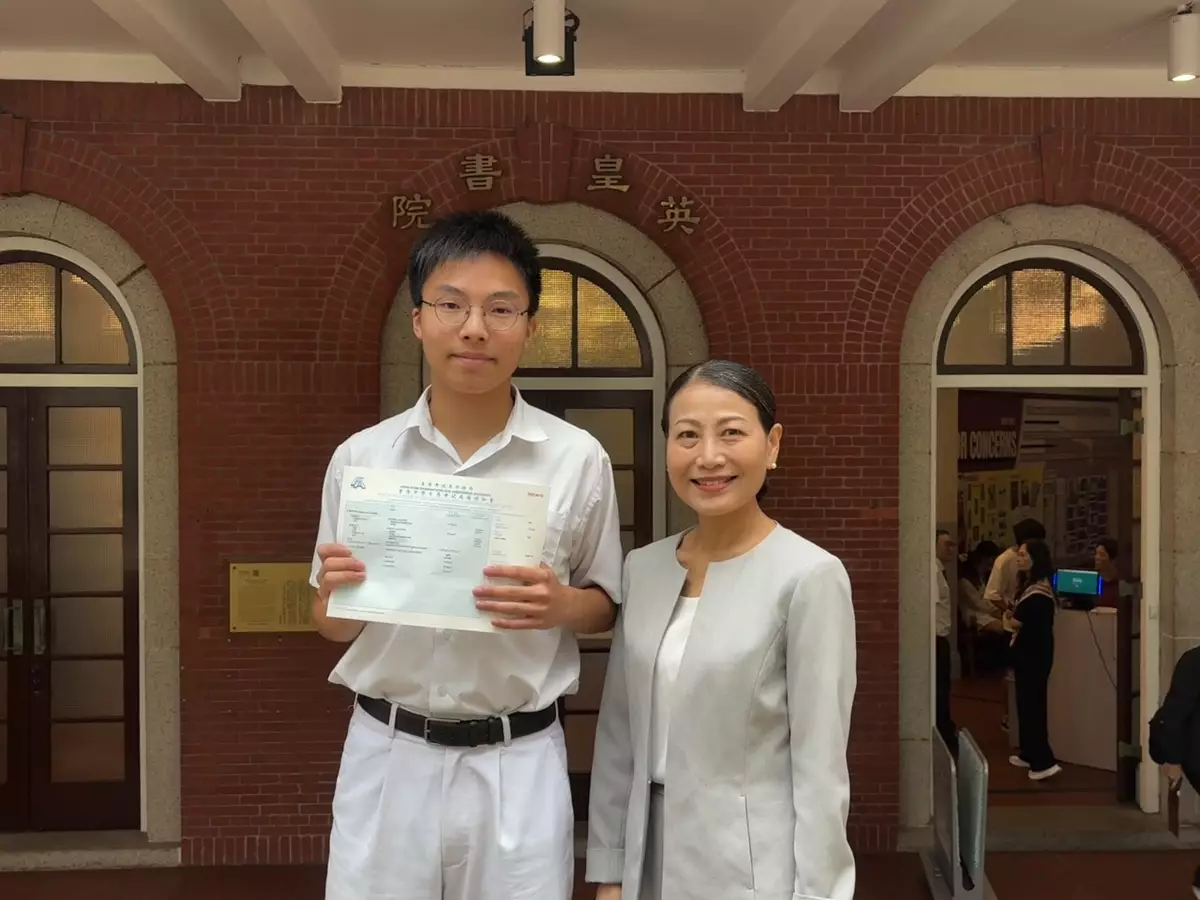
The super top scorer of King’s College, Ryan, Photo by Bastille Post
Ryan said he took tutoring in three core subjects and Geography. He believes a well‑planned schedule is essential, knowing clearly what to do at each time of day. He typically reads extensively, asks questions whenever he encounters unclear points, and described Geography as “really interesting,” adding that he enjoys hiking in Sai Kung. To relieve stress, he plays football, spends time with friends, listens to music, and goes hiking.
Ryan admitted he was more relaxed in junior secondary school, but started exploring different career paths in senior forms, gradually setting his sights on medicine. From Form 6 onward, he studied at least six hours a day, though he eased off slightly as the DSE approached. He also uses AI to help analyse key study areas, mainly for English and project ideas, but stressed that “tools should serve people” — ultimately, knowledge must be absorbed by oneself.
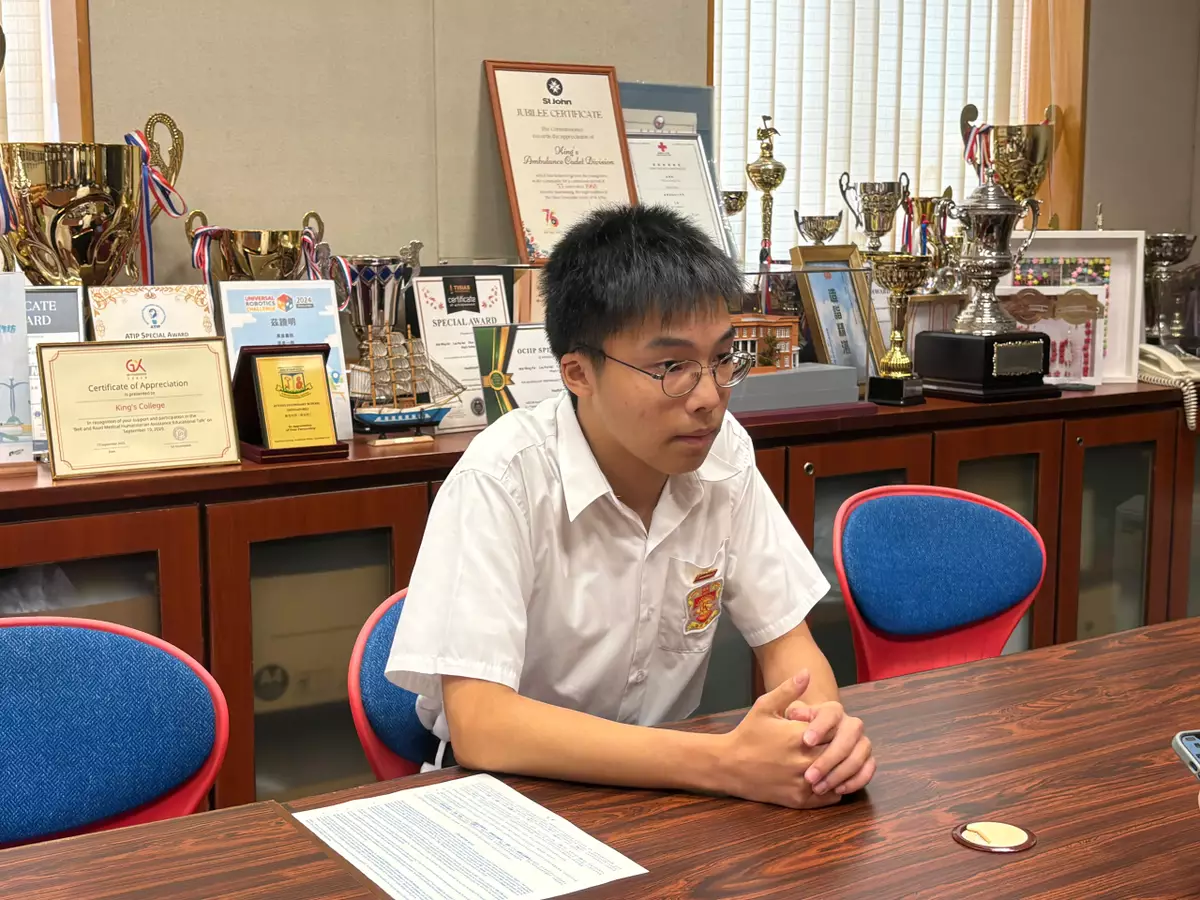
The super top scorer of King’s College, Ryan, Photo by Bastille Post
Ryan’s parents work in finance and accounting respectively. He said they were “very happy, surprised and excited” upon hearing his results, and have always been caring and supportive. He expressed particular gratitude to his parents for backing his different decisions over the years, allowing him to explore his interests freely. He also thanked the school for providing numerous opportunities and his teachers for their guidance and encouragement. He also thanked his friends for playing football together, and some friends came to congratulate him.
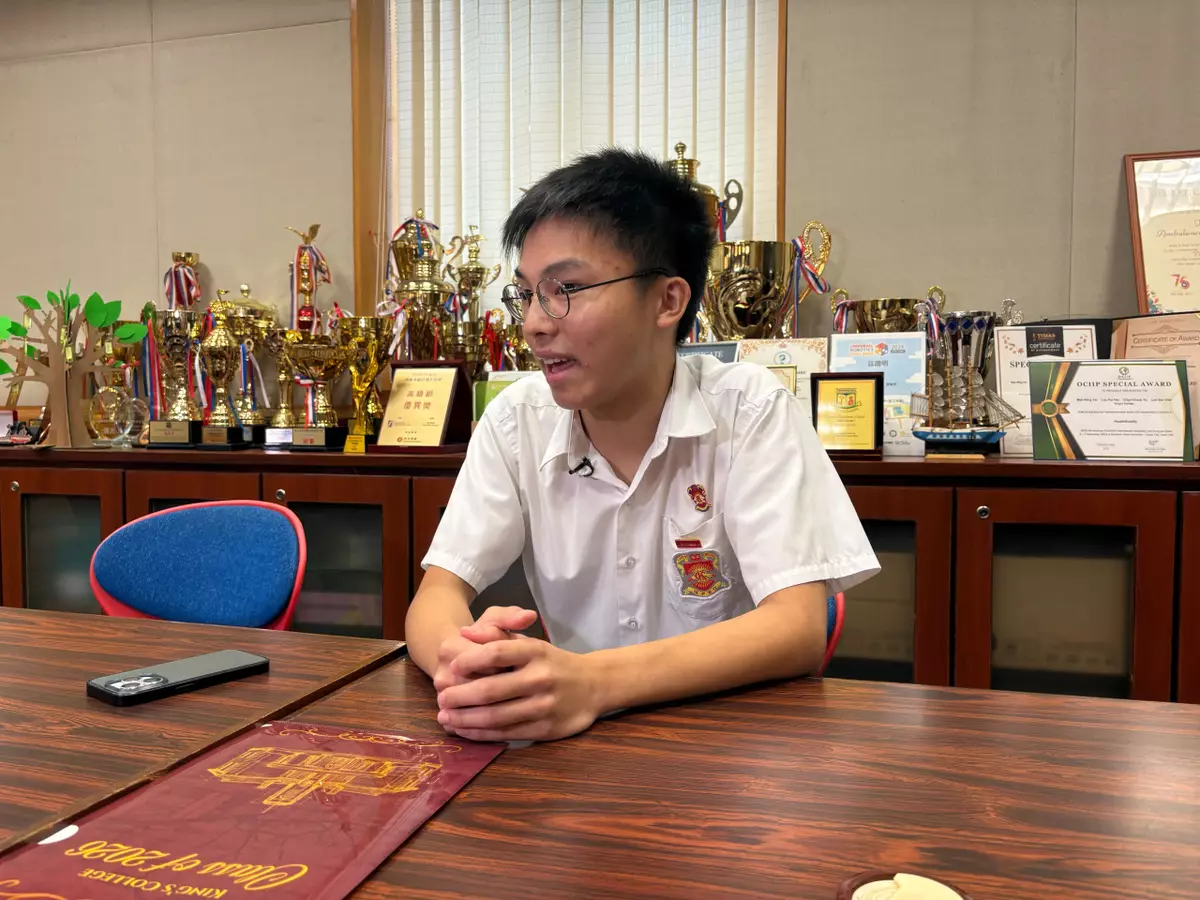
The super top scorer of King’s College, Ryan, Photo by Bastille Post
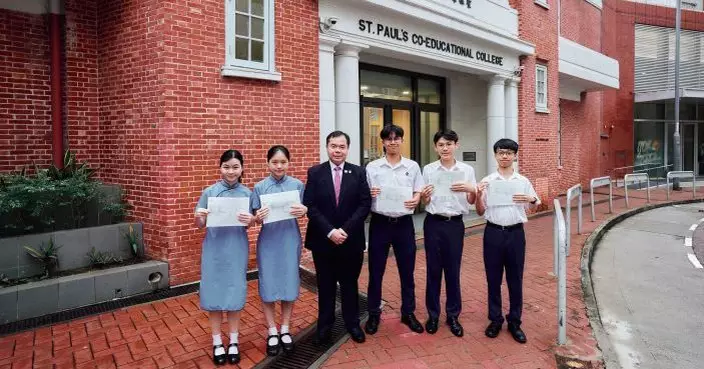
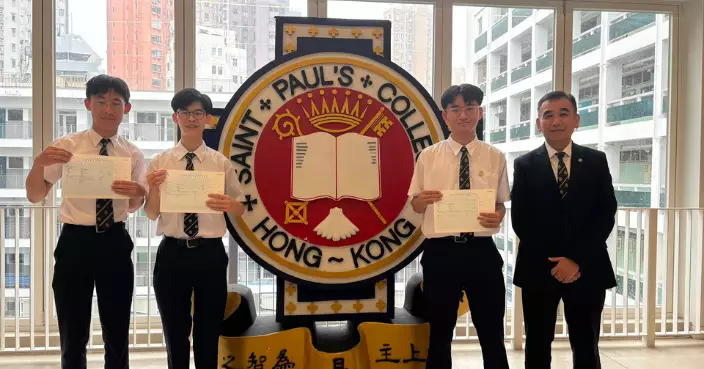
The 2026 HKDSE results were released today (July 15). St. Paul's College celebrated one top scorer and two runners-up, alongside another remarkable success: a visually impaired student who overcame significant challenges to achieve outstanding results.
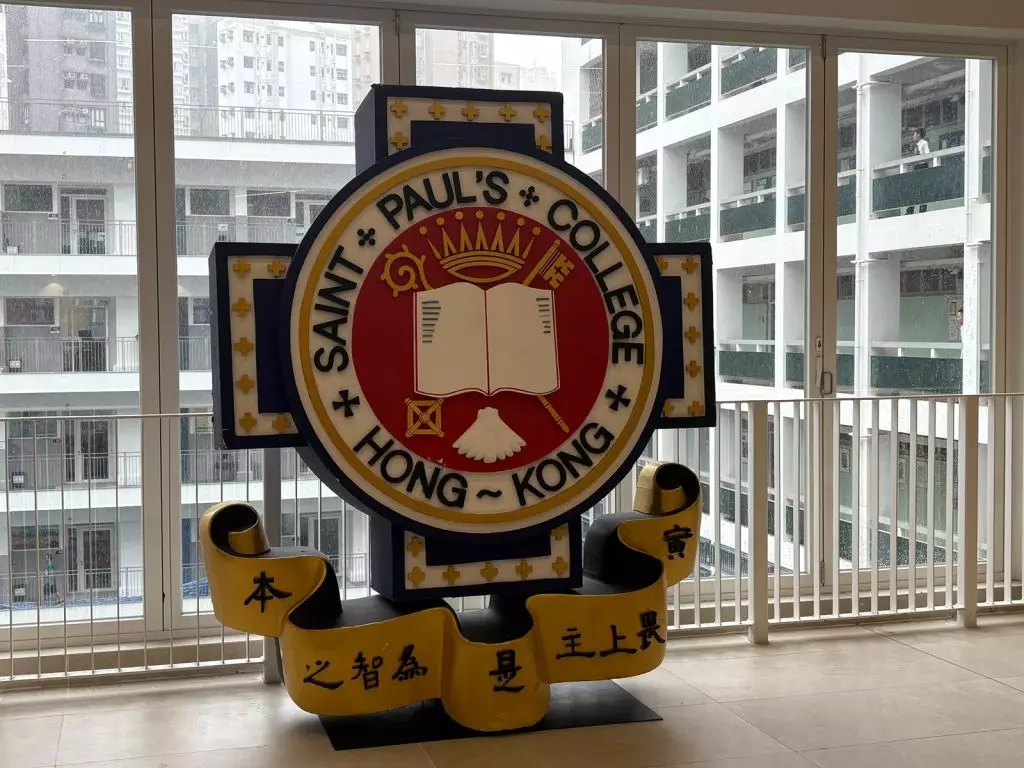
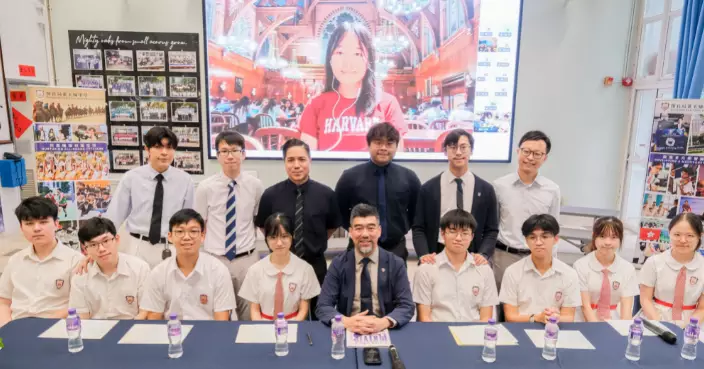
St. Paul's College, Photo by Bastille Post
James Zheng studied Mathematics Extended Module 2 (M2), Business, Accounting and Financial Studies (BAFS), and Economics, and achieved 5** in both English and Information and Communication Technology (ICT). He has been admitted to the Bachelor of Arts and Sciences in Financial Technology programme at the University of Hong Kong through the School Nominations Direct Admission Scheme (SNDAS).
James's visual impairment is caused by a congenital developmental condition. He has also participated in support programmes at the Ebenezer School and Home for the Visually Impaired. He requires specialised computer equipment for learning and is granted extended time during examinations.
He admitted that some people questioned his ability to use a computer when he chose his subjects, but he persevered. "I feel that studying is my only way out," he said, expressing hope that entering a good university would open up more choices for him. He believes Hong Kong is generally tolerant towards visually impaired individuals, but acknowledges that prejudice still exists. He hopes that securing a place at a good university and finding a stable job will give him a "safety net."
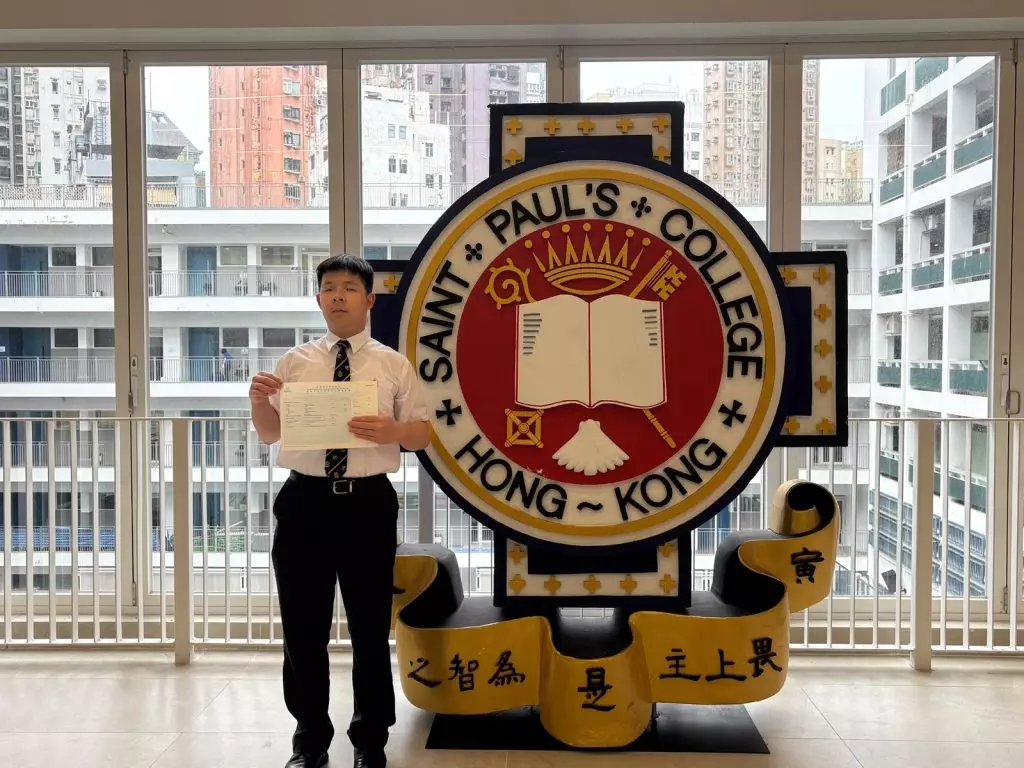
James Zheng, Photo by Bastille Post
James attended Toi Shan Association Primary School in Tuen Mun before studying at St. Paul's College, which has a long-standing partnership with the school and consistently provides strong support for visually impaired students. Initially, his grades were average. He ranked around 80th, and he struggled with English, though he could still see partially. He worked hard and gradually caught up.
However, in Form 4, he became almost completely blind. The transition required extensive rehabilitation and learning to live independently, making it difficult to focus on his studies. His grades plummeted. He decided to repeat a year, and after adapting to his new circumstances, he slowly regained his academic footing.
To improve communication efficiency with teachers, James wrote a programme that converts Braille mathematics directly into printed mathematical symbols, significantly reducing what had been a lengthy conversion process.
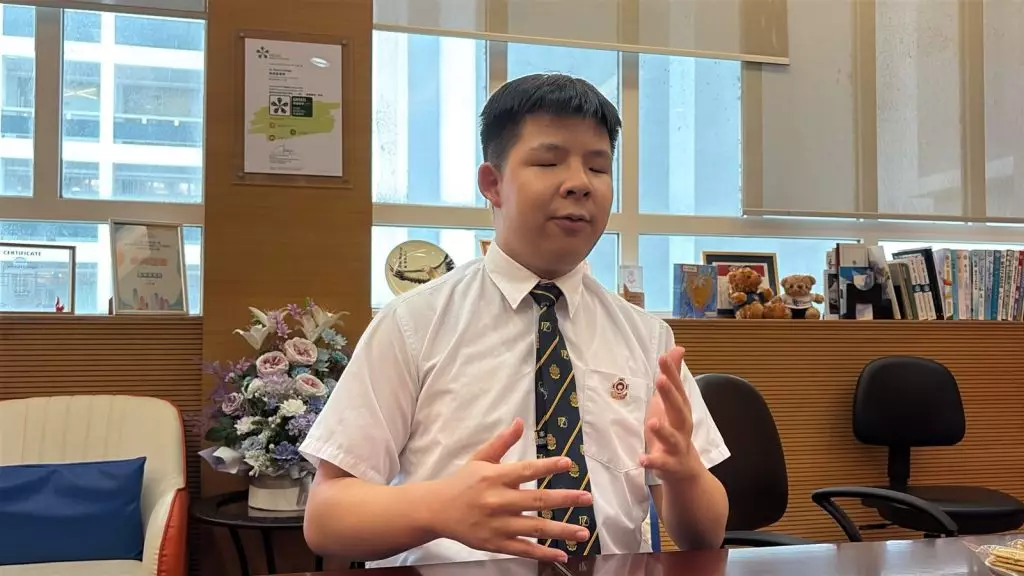
In Form 4, James became almost completely blind. Photo by Bastille Post
James is deeply grateful for the school's support, particularly his mathematics teacher, who dedicated time each week to help him study and later recommended him for HKU's admission programme. The school has also provided him with various opportunities, including camping trips and overseas competitions, ensuring his visual impairment does not limit his experiences. Last year, he even represented the school at a competition in Europe.
James was satisfied and happy with his DSE results, though he felt his Chinese exam performance was not ideal, and found the M2 paper particularly challenging due to the need for electronic devices. Although he was a little nervous the night before results day, he was not overly anxious, having already secured his offer from HKU.
He is deeply interested in AI applications, believing they can assist visually impaired individuals in daily life and studies - for example, by describing images or helping with study summaries. However, he has not yet tried technologies like OpenClaw, citing potential security risks. He hopes to use his programming skills in the future to help visually impaired people and others in need.
Immediately after completing the DSE, James immersed himself in tech and AI-related activities in Hong Kong, including presenting an open-source project at the Hong Kong Open Source Conference. He also interned at City University of Hong Kong, working on AI-related projects. He intends to pursue undergraduate research in AI and hopes to broaden his horizons through the university's exchange programmes.
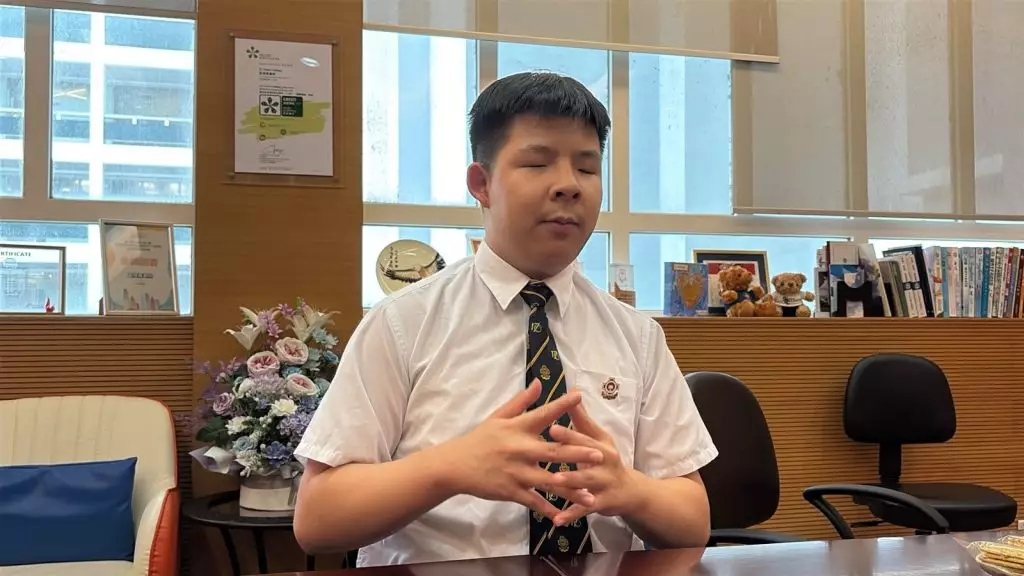
James Zheng, Photo by Bastille Post
He previously visited HKU and found the campus welcoming, and also has a strong interest in finance. He acknowledges that the job market changes rapidly and cannot predict his future career path with certainty.
James shared his learning philosophy: the earlier you prepare, the better. He read extensively in English during junior secondary school, building a strong language foundation. He rarely attended tutoring classes, only taking a few months of maths tuition between Form 5 and Form 6, and economics tuition a few months before the DSE. Instead, he prefers to study independently. He likes to take notes after reading, believing it enhances memory retention.
James hoped other visually impaired students would not care too much about others' opinions, even if some people hold stereotypes or try to discourage them. In his eyes, the most important thing is to pursue dreams. "As long as you are interested and feel capable, you should try — even if you fail, you won't regret it," he said.
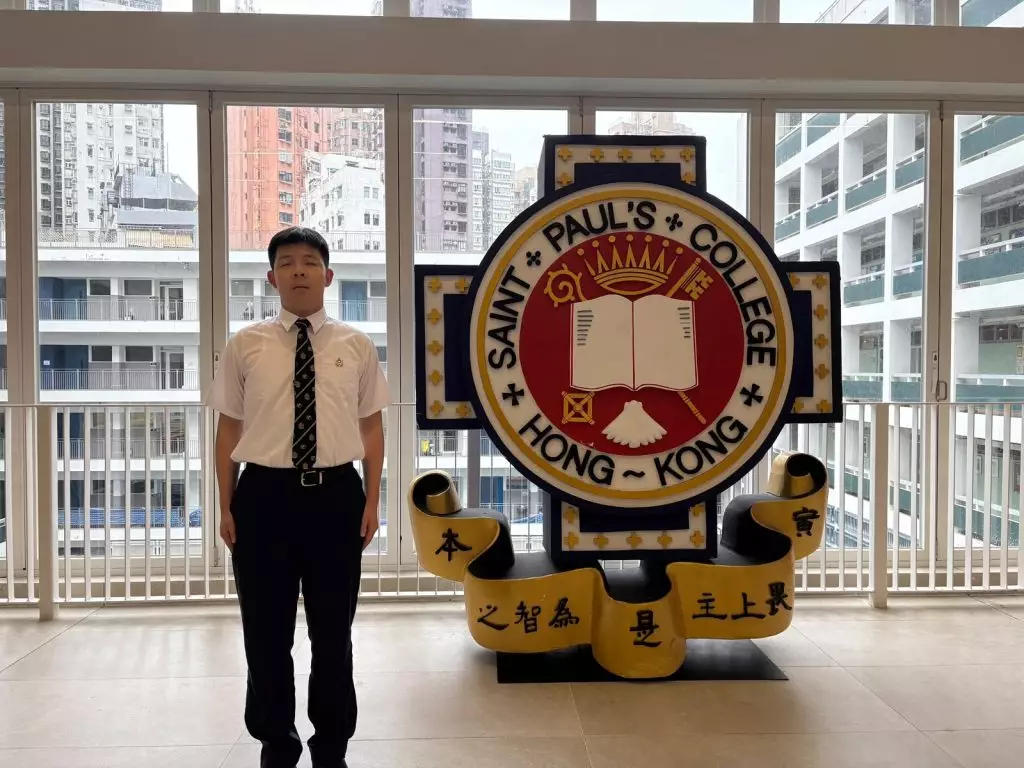
James hoped other visually impaired students would not care too much about others' opinions, even if some people hold stereotypes or try to discourage them. Photo by Bastille Post