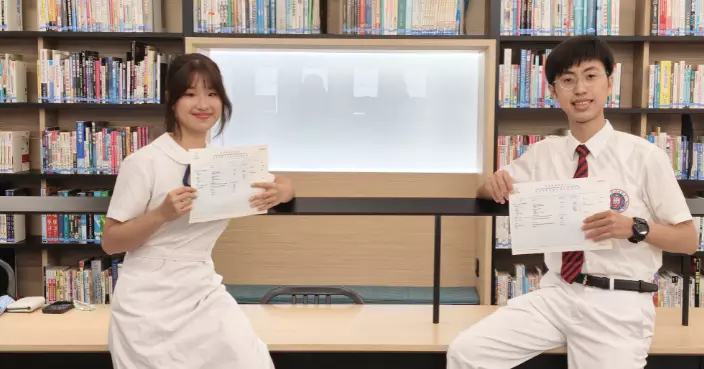
The 2026 HKDSE results were released today (July 15), with St. Mary's Canossian College (SMCC) celebrating a top scorer, Audrey. She has expressed her aspiration to pursue medicine and dedicate herself to clinical practice in Hong Kong.
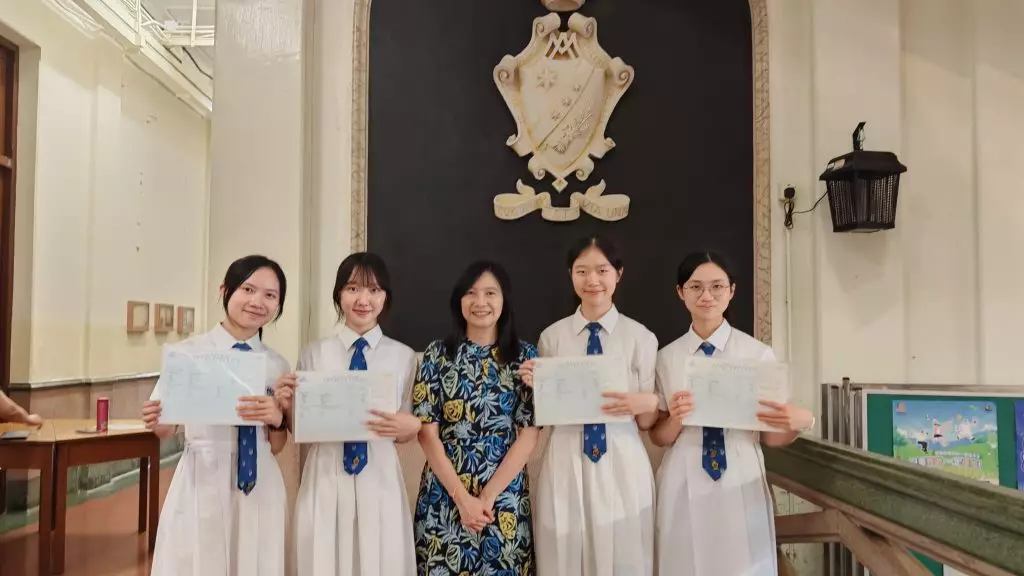
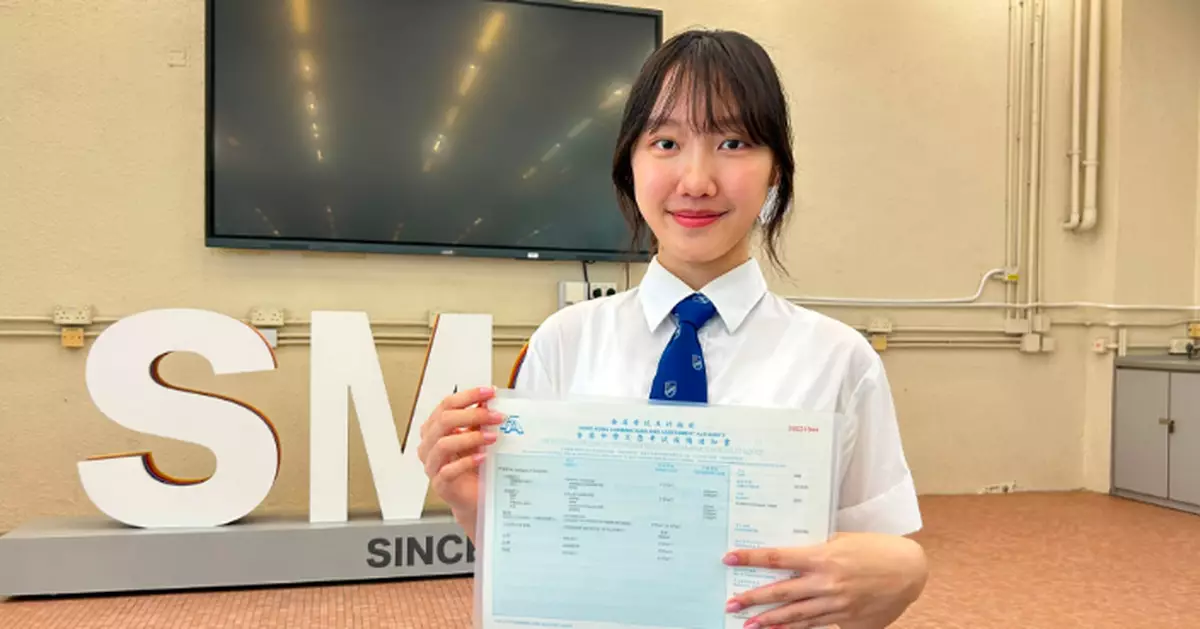
St. Mary's Canossian College (SMCC) celebrated a top scorer, Audrey (second from the left), Photo by Bastille Post
Having achieved 5** in six of her DSE subjects, Audrey is leaning towards the medical programme at the Chinese University of Hong Kong (CUHK), though she has not yet made a final decision.
Click to Gallery
St. Mary's Canossian College (SMCC) celebrated a top scorer, Audrey (second from the left), Photo by Bastille Post
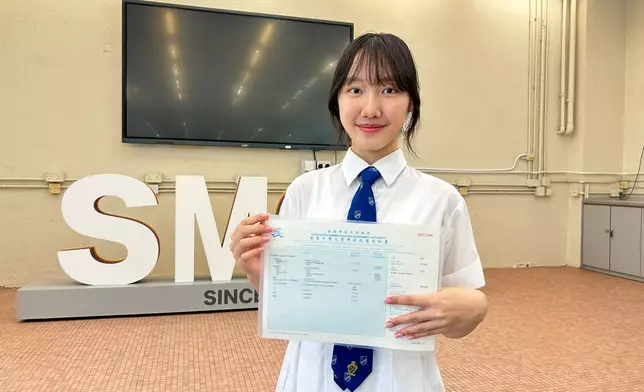
The top scorer, Audrey, Photo by Bastille Post
St. Mary's Canossian College (SMCC) celebrated a top scorer, Audrey (second from the left), Photo by Bastille Post
St. Mary's Canossian College (SMCC) celebrated a top scorer, Audrey (second from the left), Photo by Bastille Post
Audrey said she decided to pursue medicine during her junior secondary years. She has loved science since childhood and has participated in summer exchange programmes organised by the medical schools of both HKU and CUHK each year, visiting hospitals and campuses. After comparing the two traditional medical schools, she currently favours CUHK, but remains open to both options.
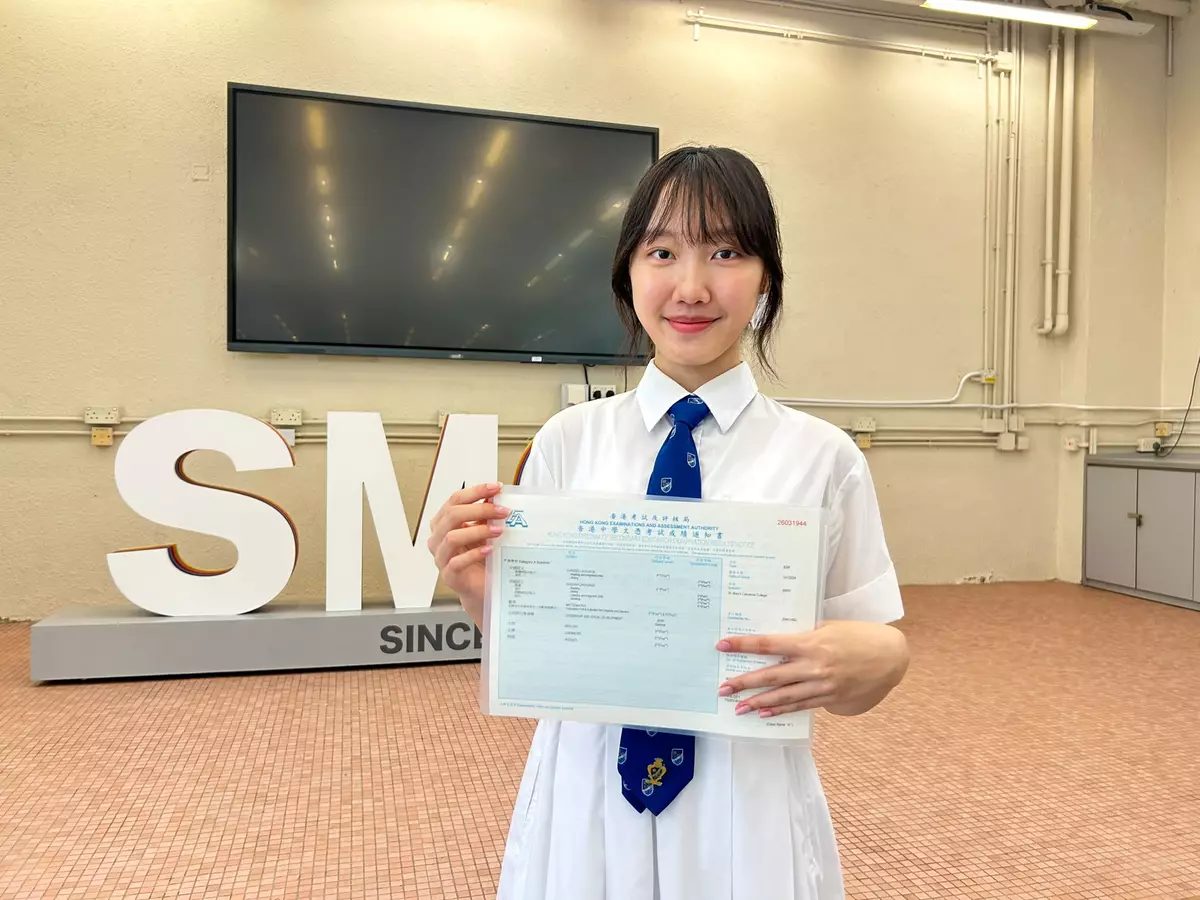
The top scorer, Audrey, Photo by Bastille Post
She noted that HKU’s medical school offers overseas exchange opportunities and the option to pursue a master’s degree concurrently, providing ample room for students to explore personal interests. CUHK, on the other hand, attracts her with its strong alumni network, where graduates frequently share their study and internship experiences. As no one in her family works in the medical field, her passion for medicine stems purely from personal interest.
Commenting on the newly established HKUST Medical School, which offers a postgraduate programme, Audrey believes it will help increase the local healthcare workforce and alleviate manpower shortages. However, she noted that the programme is designed for those who already hold a bachelor’s degree, and she is not familiar with its specifics.
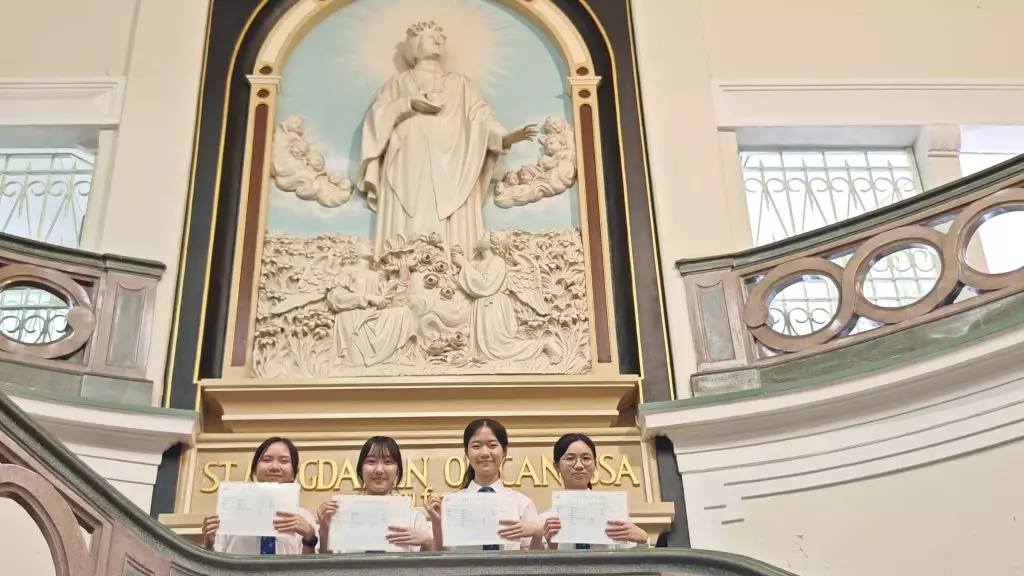
St. Mary's Canossian College (SMCC) celebrated a top scorer, Audrey (second from the left), Photo by Bastille Post
Audrey also said she hopes to work in clinical practice after graduation, as she enjoys face‑to‑face interaction with patients. During her six‑year medical training, she also plans to proactively study medical technology to keep pace with digital developments in the healthcare industry.
On the role of AI in healthcare, she emphasised that AI can never replace doctors, since final diagnostic and treatment decisions must remain in the hands of physicians. However, she acknowledged that AI can effectively support the local healthcare system. During a visit to CUHK, she witnessed a demonstration of cross‑border tele‑surgery, in which patients in Hong Kong received surgery assisted by doctors from multiple countries via technology. AI can also rapidly interpret X‑rays, shortening consultation times and improving overall treatment efficiency.
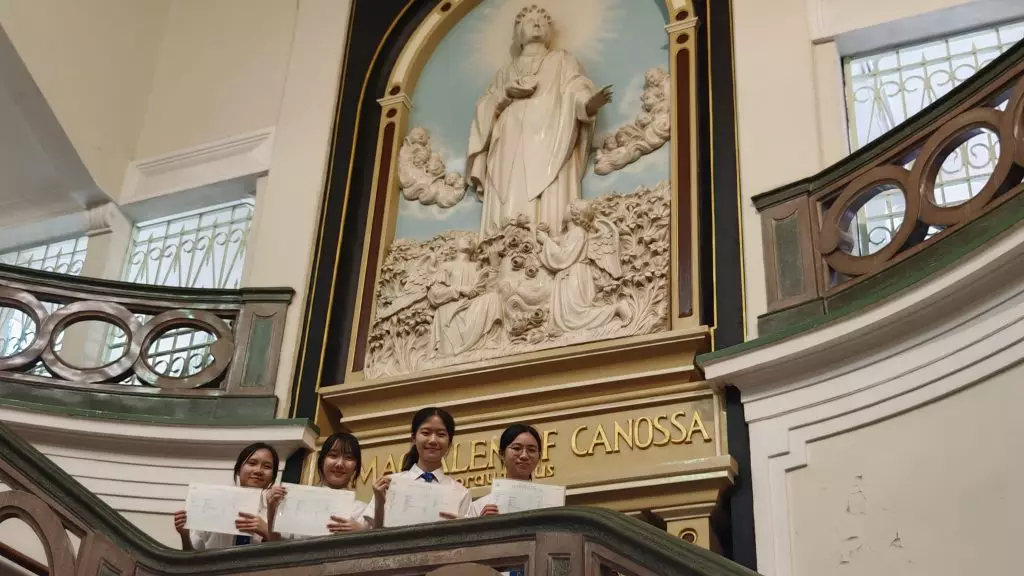
St. Mary's Canossian College (SMCC) celebrated a top scorer, Audrey (second from the left), Photo by Bastille Post
She also raised concerns about privacy and ethical issues arising from medical AI, and said she would proactively study AI ethics and patient privacy to harness the positive potential of technology while safeguarding patients’ rights.
The 2026 HKDSE results were released today (July 15). St. Paul's College celebrated one top scorer and two runners-up, alongside another remarkable success: a visually impaired student who overcame significant challenges to achieve outstanding results.
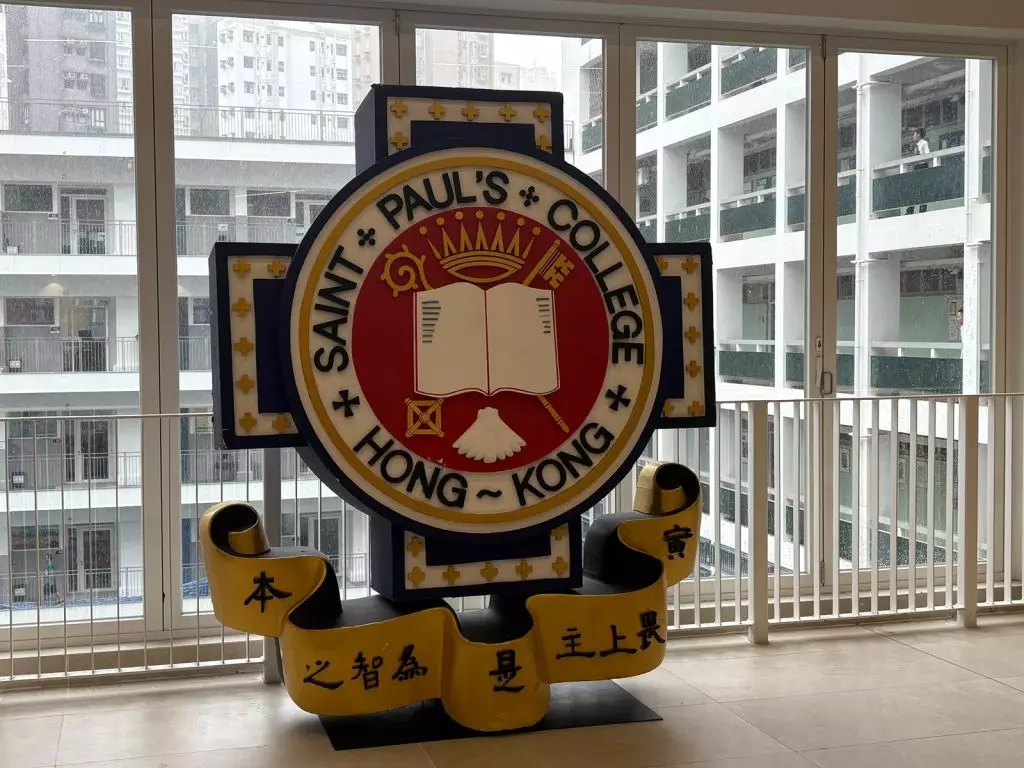
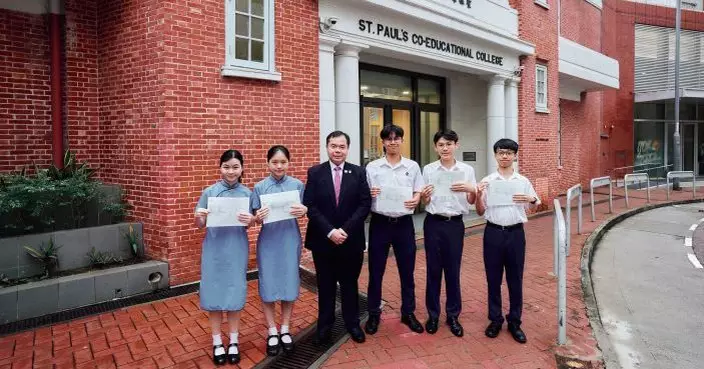
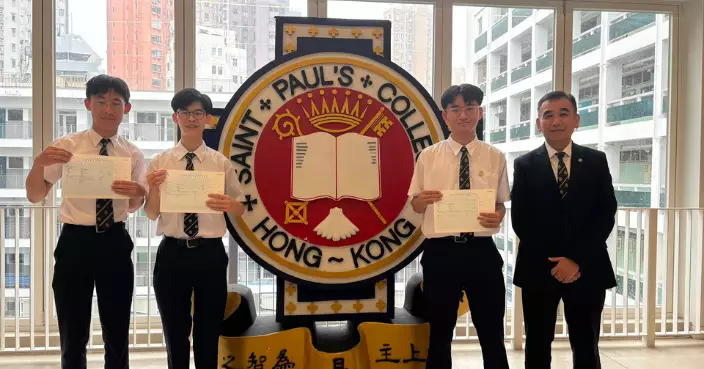
St. Paul's College, Photo by Bastille Post
James Zheng studied Mathematics Extended Module 2 (M2), Business, Accounting and Financial Studies (BAFS), and Economics, and achieved 5** in both English and Information and Communication Technology (ICT). He has been admitted to the Bachelor of Arts and Sciences in Financial Technology programme at the University of Hong Kong through the School Nominations Direct Admission Scheme (SNDAS).
James's visual impairment is caused by a congenital developmental condition. He has also participated in support programmes at the Ebenezer School and Home for the Visually Impaired. He requires specialised computer equipment for learning and is granted extended time during examinations.
He admitted that some people questioned his ability to use a computer when he chose his subjects, but he persevered. "I feel that studying is my only way out," he said, expressing hope that entering a good university would open up more choices for him. He believes Hong Kong is generally tolerant towards visually impaired individuals, but acknowledges that prejudice still exists. He hopes that securing a place at a good university and finding a stable job will give him a "safety net."
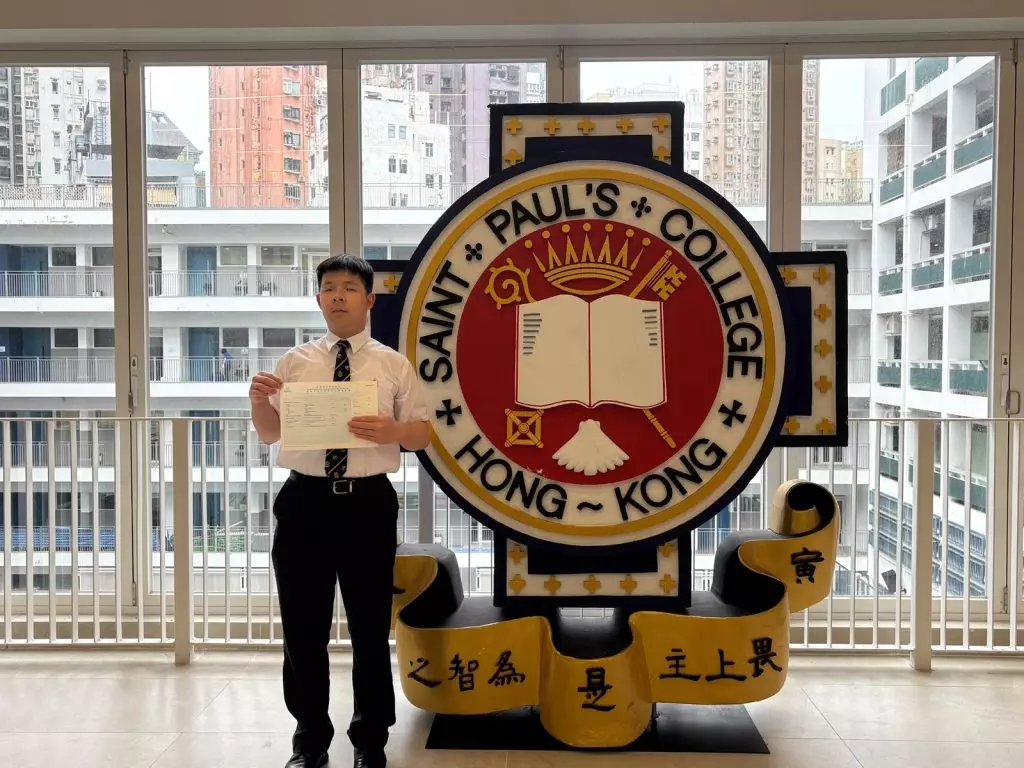
James Zheng, Photo by Bastille Post
James attended Toi Shan Association Primary School in Tuen Mun before studying at St. Paul's College. As for the college, it has a long-standing partnership with the Ebenezer School and Home for the Visually Impaired, which consistently provides strong support for visually impaired students. Initially, his grades were average. He ranked around 80th, and he struggled with English, though he could still see partially. He worked hard and gradually caught up.
However, in Form 4, he became almost completely blind. The transition required extensive rehabilitation and learning to live independently, making it difficult to focus on his studies. His grades plummeted. He decided to repeat a year, and after adapting to his new circumstances, he slowly regained his academic footing.
To improve communication efficiency with teachers, James wrote a programme that converts Braille mathematics directly into printed mathematical symbols, significantly reducing what had been a lengthy conversion process.
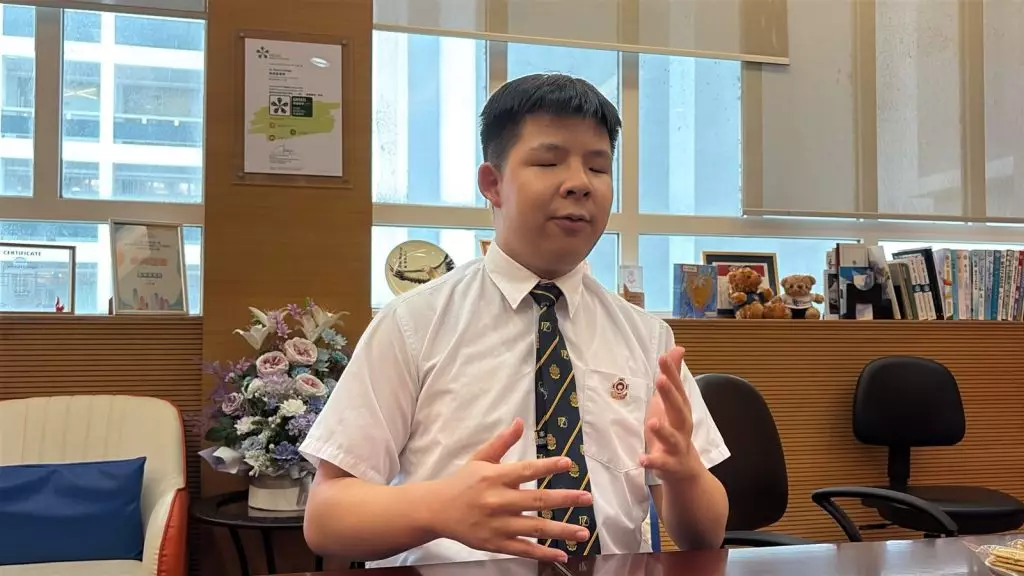
In Form 4, James became almost completely blind. Photo by Bastille Post
James is deeply grateful for the school's support, particularly his mathematics teacher, who dedicated time each week to help him study and later recommended him for HKU's admission programme. The school has also provided him with various opportunities, including camping trips and overseas competitions, ensuring his visual impairment does not limit his experiences. Last year, he even represented the school at a competition in Europe.
James was satisfied and happy with his DSE results, though he felt his Chinese exam performance was not ideal, and found the M2 paper particularly challenging due to the need for electronic devices. Although he was a little nervous the night before results day, he was not overly anxious, having already secured his offer from HKU.
He is deeply interested in AI applications, believing they can assist visually impaired individuals in daily life and studies - for example, by describing images or helping with study summaries. However, he has not yet tried technologies like OpenClaw, citing potential security risks. He hopes to use his programming skills in the future to help visually impaired people and others in need.
Immediately after completing the DSE, James immersed himself in tech and AI-related activities in Hong Kong, including presenting an open-source project at the Hong Kong Open Source Conference. He also interned at City University of Hong Kong, working on AI-related projects. He intends to pursue undergraduate research in AI and hopes to broaden his horizons through the university's exchange programmes.
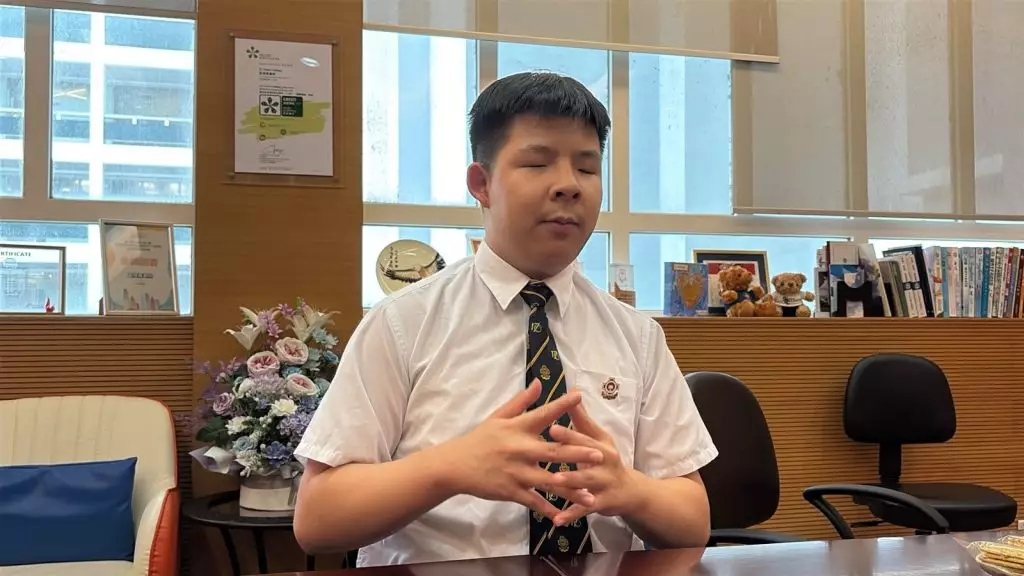
James Zheng, Photo by Bastille Post
He previously visited HKU and found the campus welcoming, and also has a strong interest in finance. He acknowledges that the job market changes rapidly and cannot predict his future career path with certainty.
James shared his learning philosophy: the earlier you prepare, the better. He read extensively in English during junior secondary school, building a strong language foundation. He rarely attended tutoring classes, only taking a few months of maths tuition between Form 5 and Form 6, and economics tuition a few months before the DSE. Instead, he prefers to study independently. He likes to take notes after reading, believing it enhances memory retention.
James hoped other visually impaired students would not care too much about others' opinions, even if some people hold stereotypes or try to discourage them. In his eyes, the most important thing is to pursue dreams. "As long as you are interested and feel capable, you should try — even if you fail, you won't regret it," he said.
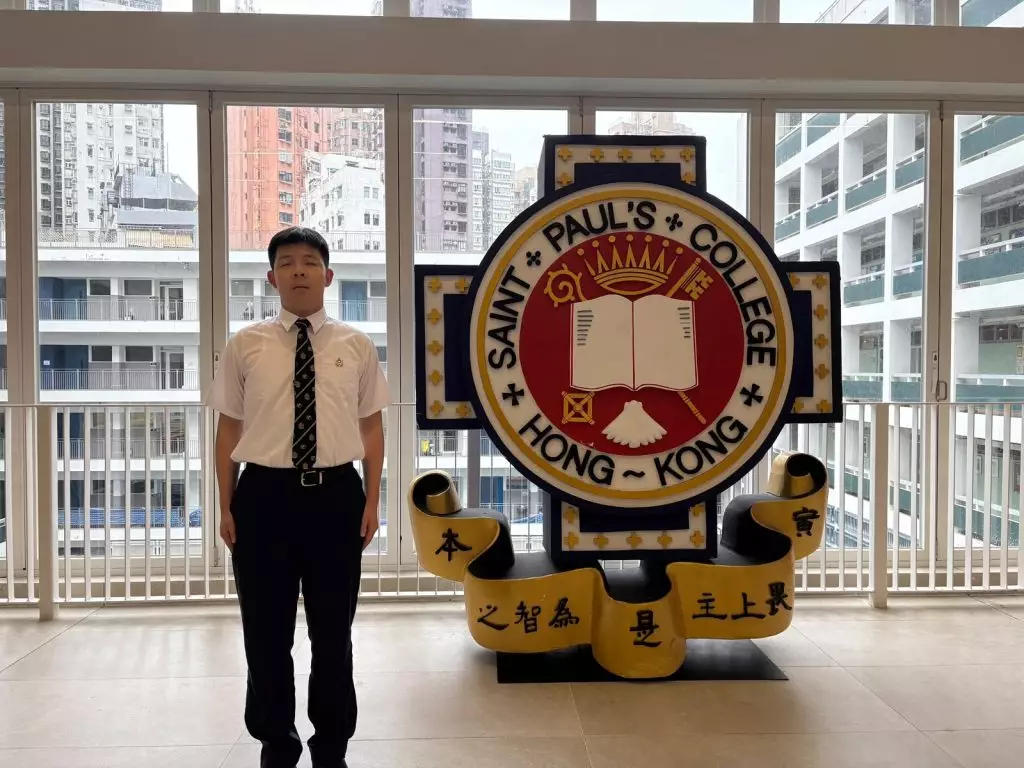
James hoped other visually impaired students would not care too much about others' opinions, even if some people hold stereotypes or try to discourage them. Photo by Bastille Post