Skip to Content Facebook Feature Image

United by grief, mothers in Brazil demand reparations after police killed their sons

News

United by grief, mothers in Brazil demand reparations after police killed their sons
News

News

United by grief, mothers in Brazil demand reparations after police killed their sons

2026-07-15 18:25 Last Updated At:18:40

RIO DE JANEIRO (AP) — When a Brazilian police officer killed Ana Paula Oliveira’s 19-year-old son in a Rio de Janeiro favela in 2014, the mother of two didn’t think she would survive the grief.

Founding a group with other grieving mothers — attending judicial hearings, protests and commemorative events together and providing essential psychological support to one another — saved her life, Oliveira says.

More Images
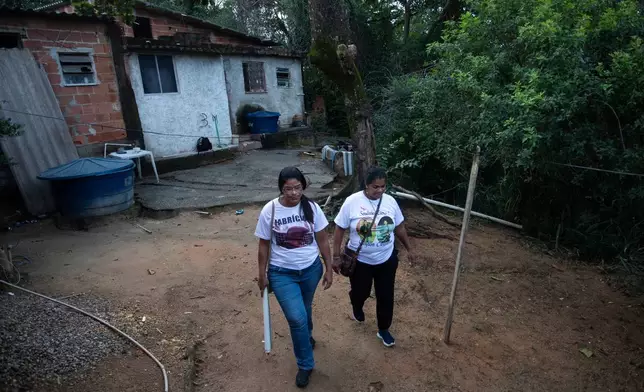
Nadia dos Santos, right, and her sister Glaucia dos Santos, who have sons who were killed by police, walk outside the home where Nadia lived with one of her sons in the Morro da Criança favela in Rio de Janeiro, Thursday, June 4, 2026. Nadia's two sons Cleyton dos Santos Bravo and Cleyverson dos Santos Bravo, and her sister's son Fabricio dos Santos, were killed by police. (AP Photo/Bruna Prado)
Nadia dos Santos, right, and her sister Glaucia dos Santos, who have sons who were killed by police, walk outside the home where Nadia lived with one of her sons in the Morro da Criança favela in Rio de Janeiro, Thursday, June 4, 2026. Nadia's two sons Cleyton dos Santos Bravo and Cleyverson dos Santos Bravo, and her sister's son Fabricio dos Santos, were killed by police. (AP Photo/Bruna Prado)

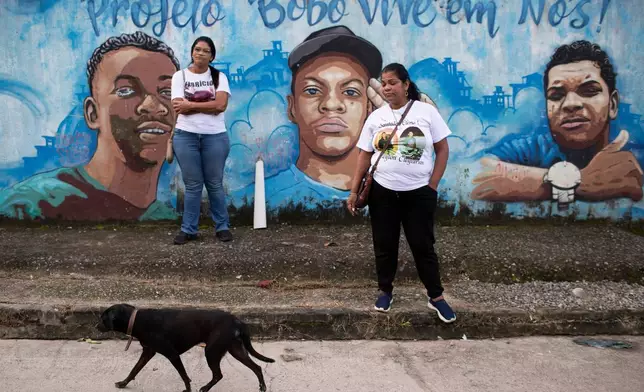
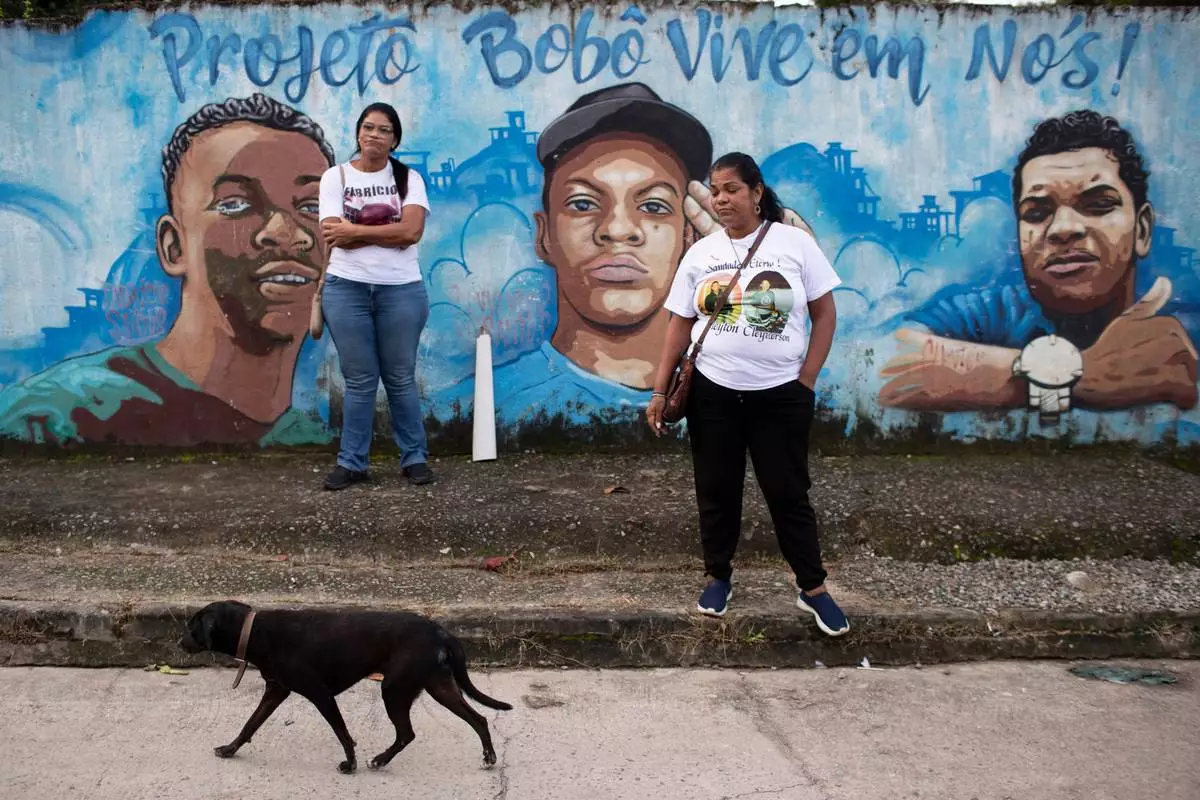
Glaucia dos Santos, left, and her sister Nadia dos Santos stand by a mural honoring their late sons who were killed by police, in the Morro da Criança favela in Rio de Janeiro, Thursday, June 4, 2026. Nadia's two sons are Cleyton dos Santos Bravo, right, and Cleyverson dos Santos Bravo, center. Glaucia's son is Fabricio dos Santos, left. (AP Photo/Bruna Prado)
Glaucia dos Santos, left, and her sister Nadia dos Santos stand by a mural honoring their late sons who were killed by police, in the Morro da Criança favela in Rio de Janeiro, Thursday, June 4, 2026. Nadia's two sons are Cleyton dos Santos Bravo, right, and Cleyverson dos Santos Bravo, center. Glaucia's son is Fabricio dos Santos, left. (AP Photo/Bruna Prado)

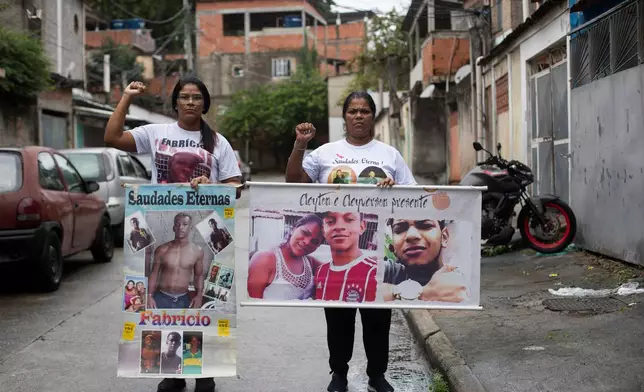
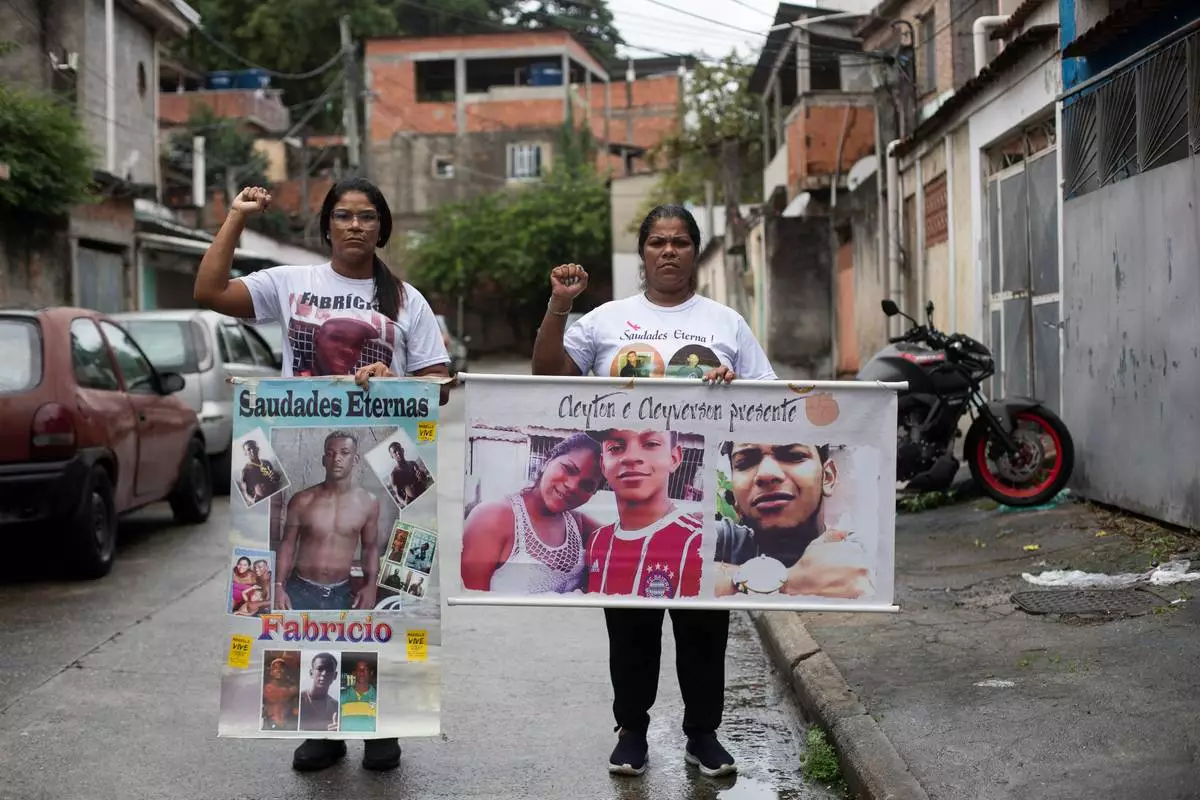
Glaucia dos Santos, left, and her sister Nadia dos Santos raise their fists and hold photos of their late sons outside Glaucia's home in the Morro do Final Feliz favela in Rio de Janeiro, Thursday, June 4, 2026. Nadia's two sons Cleyton dos Santos Bravo and Cleyverson dos Santos Bravo, and her sister's son Fabricio dos Santos, were killed by police. (AP Photo/Bruna Prado)
Glaucia dos Santos, left, and her sister Nadia dos Santos raise their fists and hold photos of their late sons outside Glaucia's home in the Morro do Final Feliz favela in Rio de Janeiro, Thursday, June 4, 2026. Nadia's two sons Cleyton dos Santos Bravo and Cleyverson dos Santos Bravo, and her sister's son Fabricio dos Santos, were killed by police. (AP Photo/Bruna Prado)

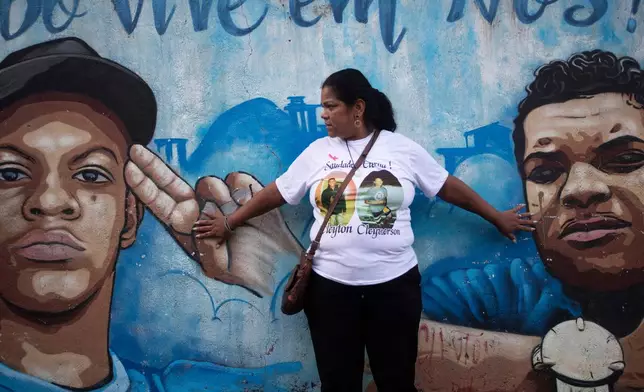
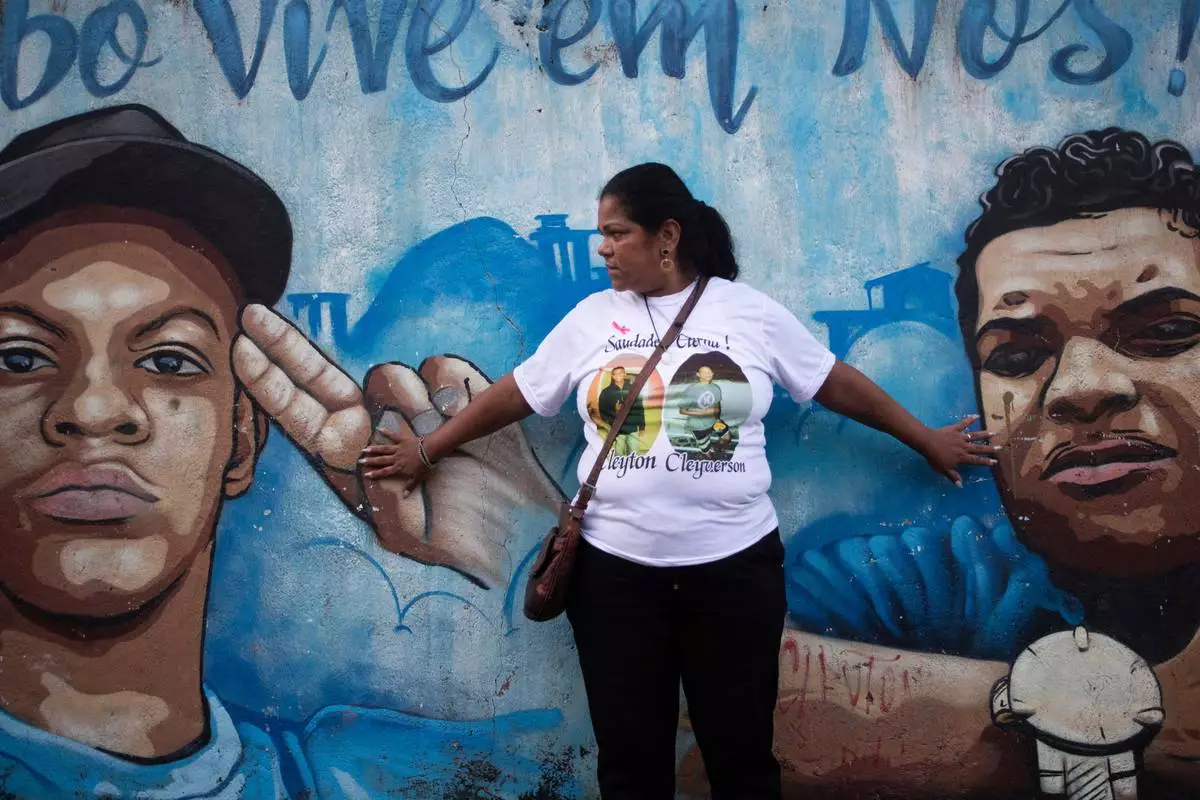
Nadia dos Santos touches a mural honoring her sons, Cleyverson dos Santos Bravo, left, and Cleyton dos Santos Bravo, right, who were killed by police, outside the home where she lived with one of her sons in the Morro da Criança favela in Rio de Janeiro, Thursday, June 4, 2026. (AP Photo/Bruna Prado)
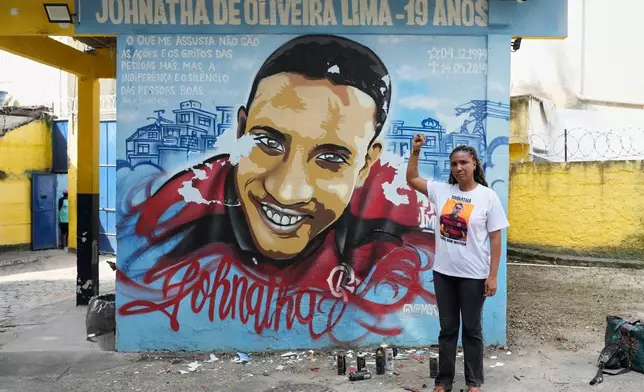
Nadia dos Santos touches a mural honoring her sons, Cleyverson dos Santos Bravo, left, and Cleyton dos Santos Bravo, right, who were killed by police, outside the home where she lived with one of her sons in the Morro da Criança favela in Rio de Janeiro, Thursday, June 4, 2026. (AP Photo/Bruna Prado)

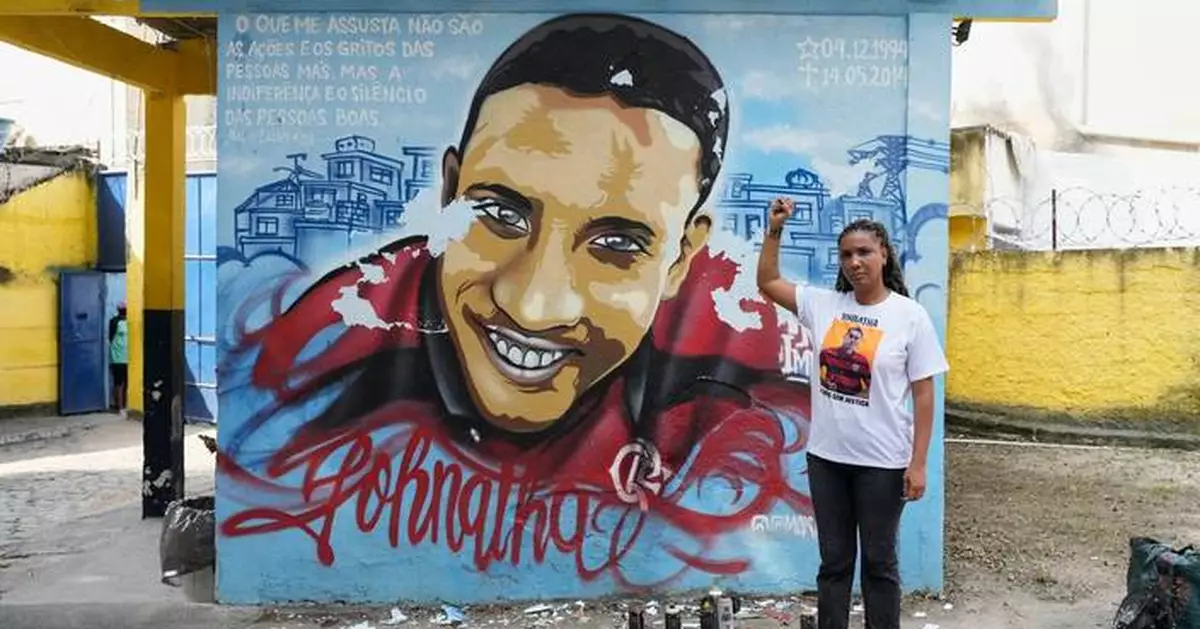
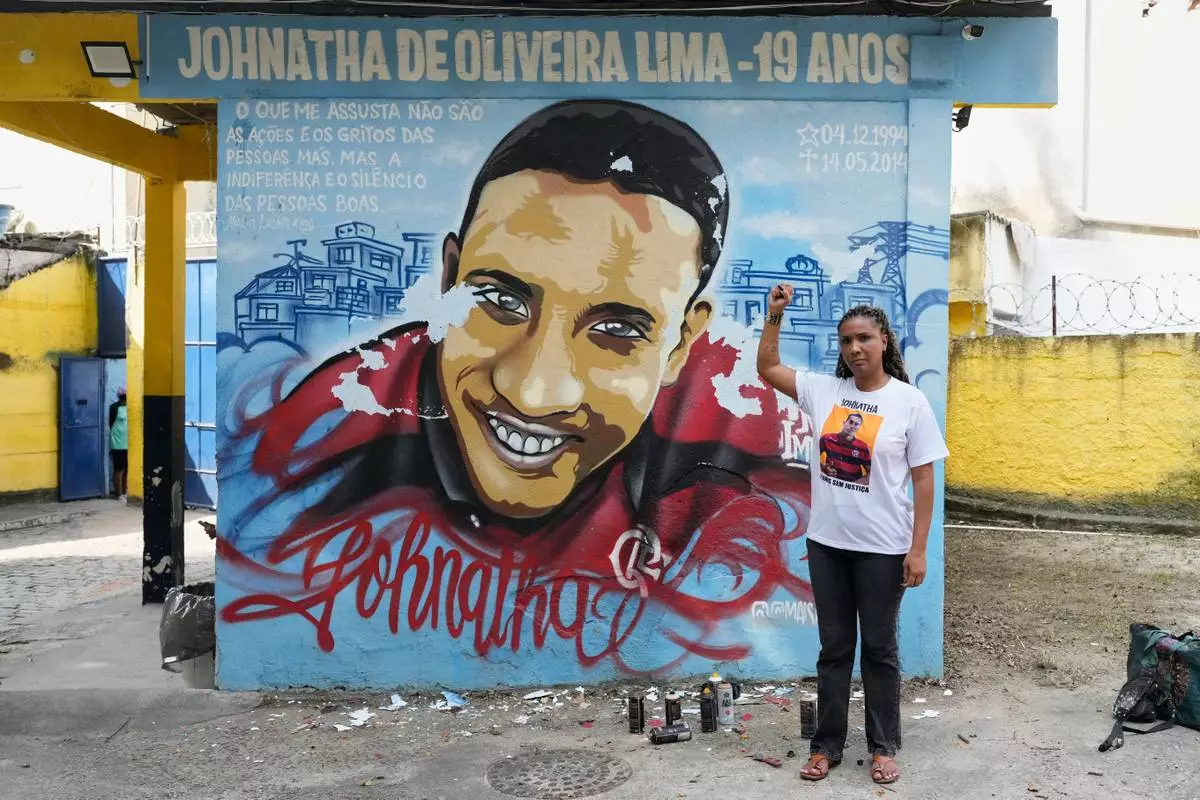
Ana Paula Oliveira poses for a photo by a mural honoring her late son Johnatha, who was killed by police when he was 19, in Rio de Janeiro, Thursday, May 14, 2026. (AP Photo/Silvia Izquierdo)

Ana Paula Oliveira poses for a photo by a mural honoring her late son Johnatha, who was killed by police when he was 19, in Rio de Janeiro, Thursday, May 14, 2026. (AP Photo/Silvia Izquierdo)

“Without any doubt, if I had been alone I wouldn’t have made it here, 12 years later,” she said, at a recent event at her son's old school marking the anniversary of his death. “We need one another to cry together, to smile together and to fight together.”

Oliveira and other Brazilian mothers turn to activism to ensure that their sons are remembered as more than a statistic. Now, they are demanding a nationwide policy to support relatives of victims of state violence and are seeking public funding to finance their activities.

The nonprofit Crossfire Institute said 460 people died during police operations in Rio last year, the highest number since 2016 and a 52% increase from the previous year.

Much like the Mothers of Plaza de Mayo, a human rights organization created by women whose children were kidnapped by the military dictatorship that ruled Argentina from 1976 to 1983, Oliveira and her group draw attention to the pain generated by police killings and seek judicial accountability — sometimes successfully.

Last year, they traveled to the capital Brasilia and met with the judiciary, legislative and executive branches to present their project, developed with the support of Raave, a network of organizations supporting people affected by police killings in Rio.

“Raave is negotiating with the federal government to implement a pilot project … developed by the mothers, so that we can provide care and guarantee the rights of this population,” said Guilherme Pimental, a coordinator for Raave.

As in other Latin American countries, including Peru and Colombia, crime is a key issue for voters in Brazil's elections in October.

Supporters and allies of presidential hopeful Sen. Flávio Bolsonaro, son of former President Jair Bolsonaro, argue that police must be given full support in their fight against heavily armed gangs in favelas, or impoverished sprawling urban communities.

But grieving mothers and nonprofits contend that Brazil’s police too often use excessive force, sometimes ending in death.

Oliveira’s son Johnatha was shot in the back as he passed through a street in Manguinhos favela in Rio after visiting his grandmother, his mother said. He later died of his injuries.

“Police officers allege that they shot him to disperse a crowd” that was protesting, said Oliveira, who wants the law enforcement official who fired the shot convicted of intentional homicide. In 2024, a jury convicted the official of manslaughter without intent to kill. Prosecutors successfully appealed, but a new court date for a second trial hasn't been set.

Like Oliveira, Monica Cunha also transformed her pain into activism. After her 20-year-old son was killed by police in 2006, she became a councilwoman and this month will launch her precandidacy to run for state lawmaker in the upcoming October elections.

“I fight for memory, truth, justice, reparations and guarantees of nonrepetition — not only for myself, but so that no other family has to endure this pain,” Cunha said in an Instagram post on the 18th anniversary of her son's death. “The racism that kills our children and loved ones is not an isolated problem, and it must be confronted through state policies. I will keep going, turning grief into struggle.”

Brazilian police have killed more than 6,000 people every year since 2018, according to the Brazilian Forum on Public Safety, a prominent nonprofit. The largest number of victims are age 18 to 24, while 82% of victims of lethal police violence are Black, the nonprofit said in its 2025 annual publication on violence in Brazil.

Anti-gang tactics in Rio’s favelas came under scrutiny once again last year, when police killed 117 suspected gang members in the state’s most lethal raid ever, targeting members of the criminal group Red Command in two favelas. Five police officers also died. Officers arrested 113 people, seized 118 weapons and confiscated more than a ton of drugs in that operation, police said.

Then-Rio Gov. Cláudio Castro, a Bolsonaro ally, defended the operation, which he said targeted “ narco-terrorists ” — a term echoing U.S. President Donald Trump. Last month, the Trump administration classified the Red Command as well as its rival First Command Capital as foreign terrorist organizations.

Nadia dos Santos’ sons Cleyton and Cleyverson were both killed by police: the former in 2015 when he was 18 and the latter when he was 17 in 2022. Police also killed the son of her sister, Glaucia dos Santos, Fabricio, in 2014 when he was 17. A memorial honoring and depicting the three boys covers the front wall of the family’s home in Rio's Chapadao complex of favelas.

The sisters founded support groups and began the long work of investigating the circumstances of each boy’s death, seeking accountability through the courts.

In 2023, the police officers involved in the death of Fabricio were sentenced to nine years in prison, a decision that was celebrated by other mothers and gave them hope, Glaucia dos Santos said.

“We want others to stay alive, so we have to stay upright” despite the immense toll of the grief, said Glaucia dos Santos.

Her sister Nadia said the mothers need a nationwide public policy on restitution that she went to Brasilia to demand.

“The state should have the obligation to give us mothers who lose our sons because of the state's violence reparations. … We fight, we work, but we become ill. We need solutions,” she said.

Oliveira suggested restitution could take the form of placing victims’ names in public places and naming facilities after them, such as schools, hospitals and daycare centers.

“There are other forms of reparation as well, such as building other public policies of nonrepetition that would help prevent new cases. … Many things need to be done, repaired, so that this barbarity does not continue,” she said.

Associated Press journalist Diarlei Rodrigues contributed to this report.

Follow AP’s coverage of Latin America and the Caribbean at https://apnews.com/hub/latin-america
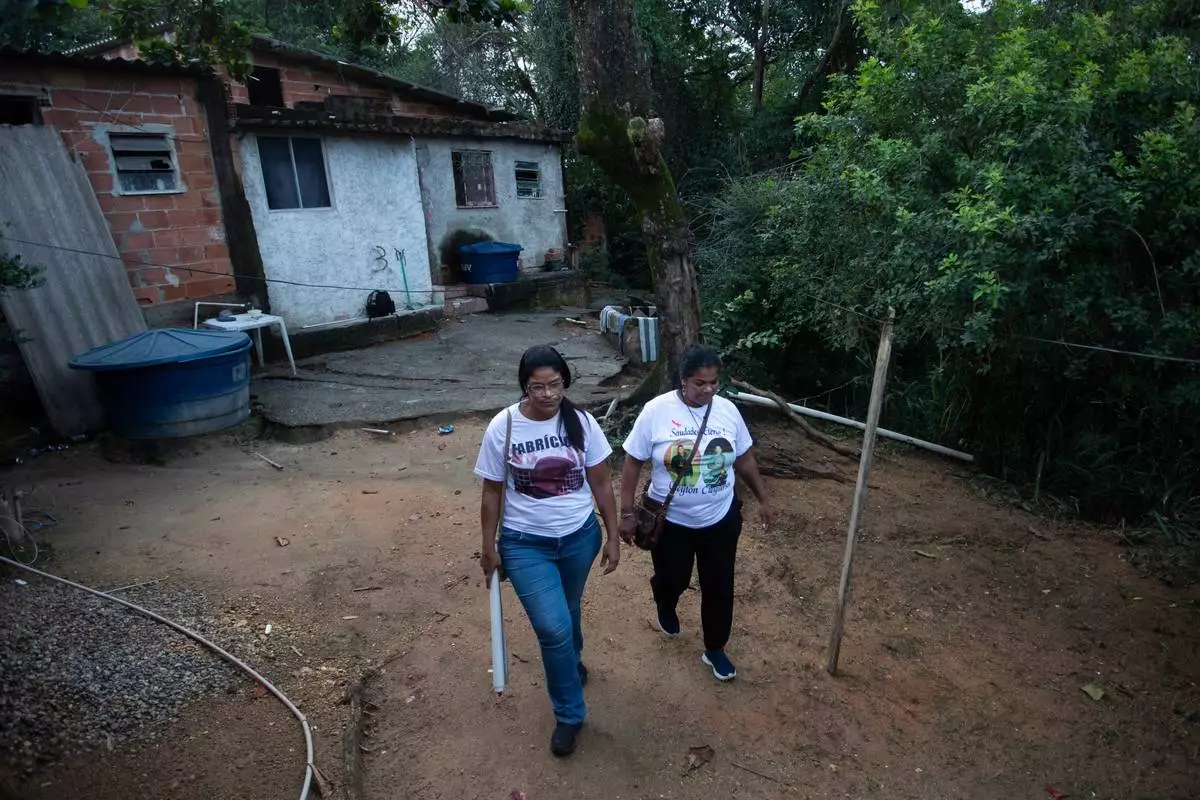
Nadia dos Santos, right, and her sister Glaucia dos Santos, who have sons who were killed by police, walk outside the home where Nadia lived with one of her sons in the Morro da Criança favela in Rio de Janeiro, Thursday, June 4, 2026. Nadia's two sons Cleyton dos Santos Bravo and Cleyverson dos Santos Bravo, and her sister's son Fabricio dos Santos, were killed by police. (AP Photo/Bruna Prado)
Nadia dos Santos, right, and her sister Glaucia dos Santos, who have sons who were killed by police, walk outside the home where Nadia lived with one of her sons in the Morro da Criança favela in Rio de Janeiro, Thursday, June 4, 2026. Nadia's two sons Cleyton dos Santos Bravo and Cleyverson dos Santos Bravo, and her sister's son Fabricio dos Santos, were killed by police. (AP Photo/Bruna Prado)

Glaucia dos Santos, left, and her sister Nadia dos Santos stand by a mural honoring their late sons who were killed by police, in the Morro da Criança favela in Rio de Janeiro, Thursday, June 4, 2026. Nadia's two sons are Cleyton dos Santos Bravo, right, and Cleyverson dos Santos Bravo, center. Glaucia's son is Fabricio dos Santos, left. (AP Photo/Bruna Prado)
Glaucia dos Santos, left, and her sister Nadia dos Santos stand by a mural honoring their late sons who were killed by police, in the Morro da Criança favela in Rio de Janeiro, Thursday, June 4, 2026. Nadia's two sons are Cleyton dos Santos Bravo, right, and Cleyverson dos Santos Bravo, center. Glaucia's son is Fabricio dos Santos, left. (AP Photo/Bruna Prado)

Glaucia dos Santos, left, and her sister Nadia dos Santos raise their fists and hold photos of their late sons outside Glaucia's home in the Morro do Final Feliz favela in Rio de Janeiro, Thursday, June 4, 2026. Nadia's two sons Cleyton dos Santos Bravo and Cleyverson dos Santos Bravo, and her sister's son Fabricio dos Santos, were killed by police. (AP Photo/Bruna Prado)
Glaucia dos Santos, left, and her sister Nadia dos Santos raise their fists and hold photos of their late sons outside Glaucia's home in the Morro do Final Feliz favela in Rio de Janeiro, Thursday, June 4, 2026. Nadia's two sons Cleyton dos Santos Bravo and Cleyverson dos Santos Bravo, and her sister's son Fabricio dos Santos, were killed by police. (AP Photo/Bruna Prado)

Nadia dos Santos touches a mural honoring her sons, Cleyverson dos Santos Bravo, left, and Cleyton dos Santos Bravo, right, who were killed by police, outside the home where she lived with one of her sons in the Morro da Criança favela in Rio de Janeiro, Thursday, June 4, 2026. (AP Photo/Bruna Prado)
Nadia dos Santos touches a mural honoring her sons, Cleyverson dos Santos Bravo, left, and Cleyton dos Santos Bravo, right, who were killed by police, outside the home where she lived with one of her sons in the Morro da Criança favela in Rio de Janeiro, Thursday, June 4, 2026. (AP Photo/Bruna Prado)

Ana Paula Oliveira poses for a photo by a mural honoring her late son Johnatha, who was killed by police when he was 19, in Rio de Janeiro, Thursday, May 14, 2026. (AP Photo/Silvia Izquierdo)

Ana Paula Oliveira poses for a photo by a mural honoring her late son Johnatha, who was killed by police when he was 19, in Rio de Janeiro, Thursday, May 14, 2026. (AP Photo/Silvia Izquierdo)
LONDON (AP) — Prime Minister Keir Starmer said that he was leaving the United Kingdom in "better shape than I found it” as he fielded questions, criticism and even a bit of praise from lawmakers in the House of Commons for the last time on Wednesday.

Starmer, who leaves office next week, bid farewell to the boisterous weekly Prime Minister’s Questions sessions where he has traded barbs with opposition politicians and defended his government’s record. On Monday, he will step down as prime minister after losing the support of his Labour Party, handing over power to a new Labour leader, Andy Burnham.

“Every prime minister knows when they take up the torch that the day will come when they have to pass it on,” said Starmer, who has spent six years as leader of the Labour Party and two as prime minister.

“This is the end of my political journey,” he said, though he plans to remain a backbench lawmaker for now.

Britain’s parliamentary democracy allows governing parties to change leaders, and thus prime ministers, without the need for a general election. The next national election doesn't have to be held until 2029.

PMQs is a weekly ritual in British politics, where the prime minister answers questions, from opposition party leaders and others, on topics they don’t know in advance. A test of leaders’ ability to think on their feet, it is derided by some as political pantomime that generates more noise than insight.

Starmer's valedictory session was a gentler affair, mixing seriousness and political criticism with personal tributes and jokes about an upcoming special election pitting Reform UK leader Nigel Farage against the comedy candidate Count Binface.

Starmer opened by saying he was “horrified” at the killing last week of the former lawmaker Ann Widdecombe. Counterterrorism police are investigating it as murder.

Starmer called it “ chilling” that three serving or former members have been killed during his 11 years in Parliament, and urged politicians to “do more to defend our democracy.”

Instead of mentioning upcoming meetings with ministers, as he has every other week, Starmer said that he had “an important appointment with the television” later when England faces Argentina in a World Cup semifinal.

Kemi Badenoch — the fourth leader of the opposition Conservative Party since 2022 — cautioned Labour that changing leaders is no “silver bullet,” and recalled how Starmer had predicted she wouldn't last a year in charge.

“Life comes at you fast,” Badenoch said.

Starmer was elected in a landslide in July 2024, but is quitting after two years in office marred by missteps and judgment errors that eroded his standing with his party and the public.

He struggled to deliver promised economic growth, repair tattered public services and ease the cost of living. And he was hamstrung by repeated missteps, including his decision to appoint Peter Mandelson, a scandal-tarnished friend of Jeffrey Epstein, as U.K. ambassador to the United States.

After Labour was hammered in May’s local elections, Starmer gave in to mounting pressure from the party and announced that he would step down. Burnham, the former mayor of Greater Manchester, is the only candidate in the contest to replace him and will be announced as the new Labour leader on Friday.

On Monday, Starmer will go to Buckingham Palace and announce his resignation as prime minister to King Charles III, who will then ask Burnham to take over.

At Prime Minister’s Questions, Starmer said that he was proud of his government’s domestic policy achievements, including stronger protections for working people, a reduction in child poverty, a law designed to stop official cover-ups after tragedies, and higher defense spending.

“I am proud to leave this country in better shape than I found it,” he said.

Starmer has been lauded for his role on the world stage, especially in repairing relations with Britain's European Union neighbors after Brexit and galvanizing international support for Ukraine's fight against Russia's full-scale invasion.

On Tuesday, Starmer attended Bastille Day celebrations in Paris with French President Emmanuel Macron, who awarded him the Legion of Honor in recognition of his work with France on European security. The two countries have led efforts to assemble an international coalition to underpin peace in Ukraine if there is a ceasefire.

Ukraine's cause has wide political support in Britain, and Badenoch praised Starmer for inviting President Volodymyr Zelenskyy to London immediately after the Ukrainian leader was berated by U.S. President Donald Trump and other administration officials in the White House last year.

Starmer recalled how people had gathered at the gates of Downing Street to see Zelenskyy, and “the moment he got out the car and hugged me, they cheered from the top of their voices, the British people, to tell President Zelenskyy exactly what they thought of him and the way he had been treated” in the Oval Office.

The rambunctious House fell silent as Starmer ended by thanking colleagues, staff, civil servants and all those “who struggle to be seen or heard — you’re the reason I came into politics.”

He said “I love you” to wife Victoria and two teenage children, who were watching from a viewing gallery, before a final: “Goodbye.”

Lawmakers from all sides of the chamber applauded, with many rising for a standing ovation. That drew a reprimand from Speaker Lindsay Hoyle, who reminded them that cheering is allowed in the House of Commons, but clapping is against the rules.

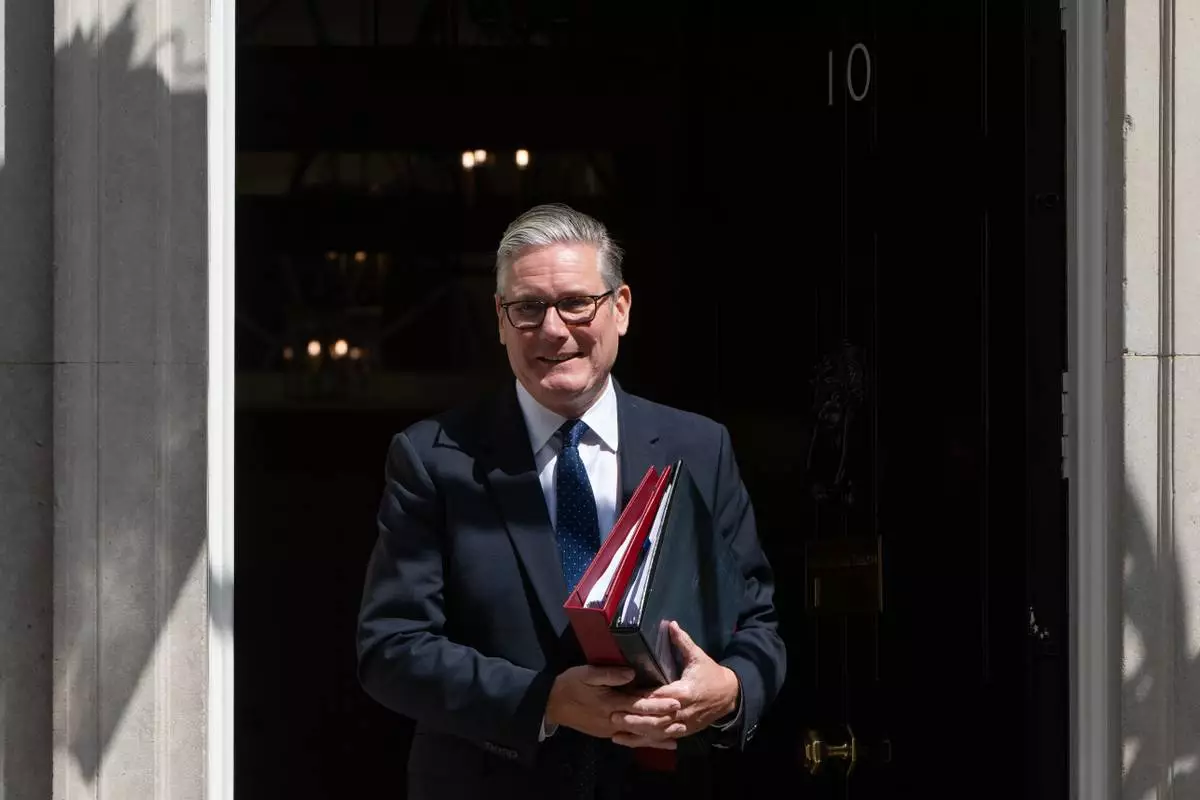
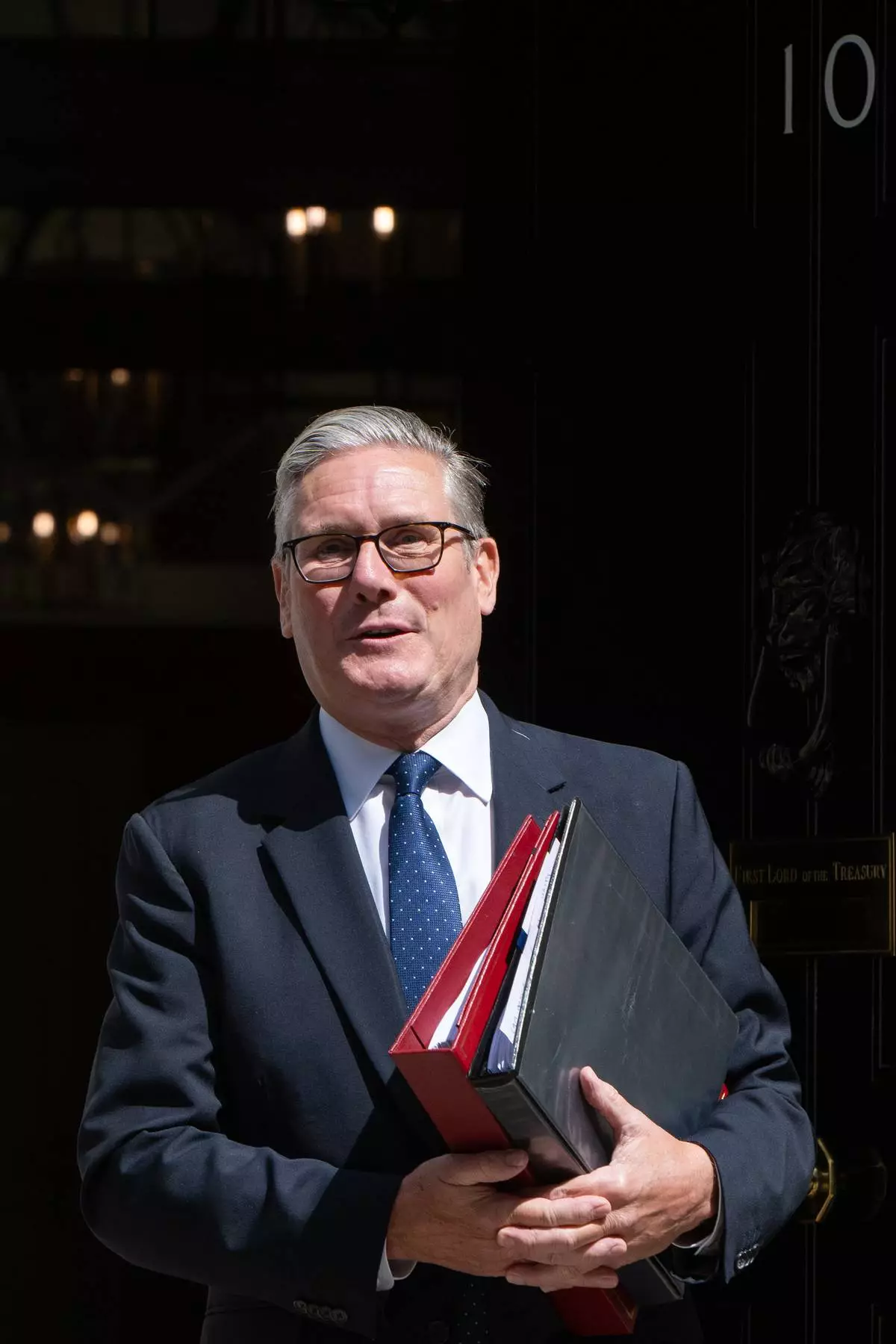
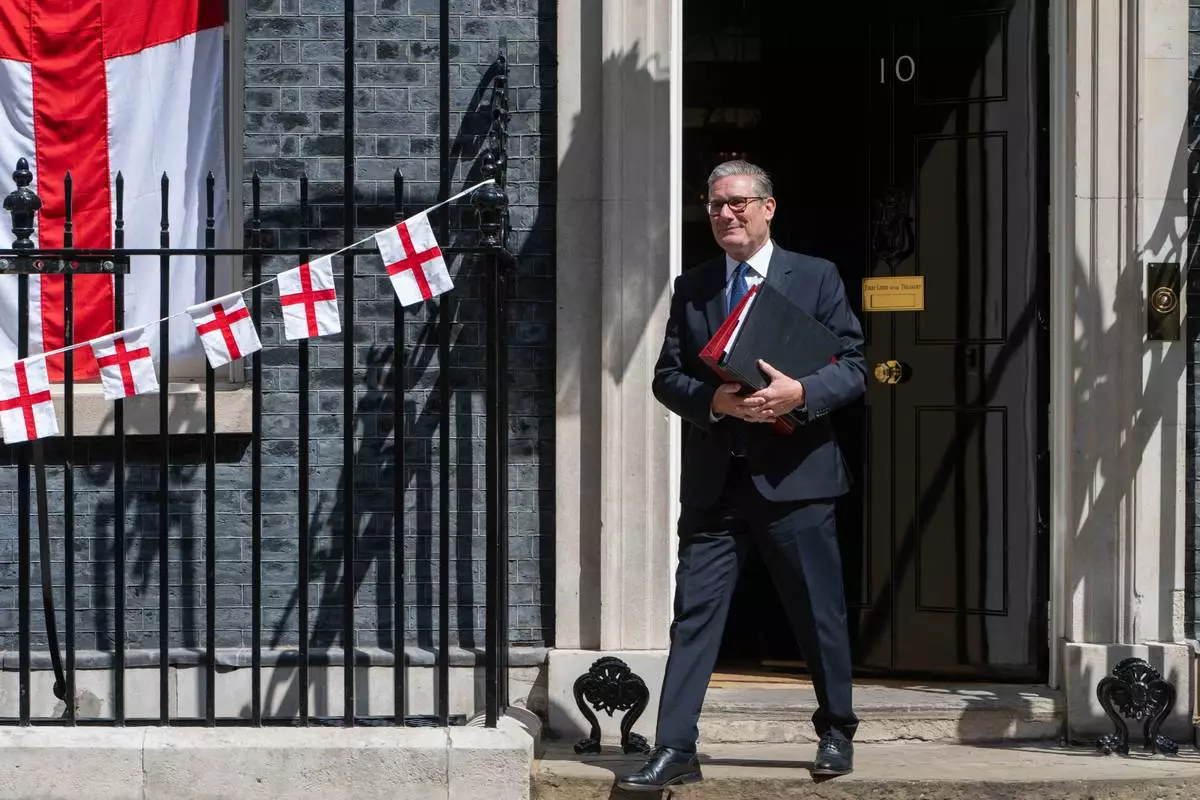
Britain's Prime Minister Keir Starmer leaves 10 Downing Street to attend Prime Minister's Questions at the House of Commons in London, Wednesday, July 15, 2026. (AP Photo/Thomas Krych)

Britain's Prime Minister Keir Starmer leaves 10 Downing Street to attend Prime Minister's Questions at the House of Commons in London, Wednesday, July 15, 2026. (AP Photo/Thomas Krych)

Britain's Prime Minister Keir Starmer leaves 10 Downing Street to attend Prime Minister's Questions at the House of Commons in London, Wednesday, July 15, 2026. (AP Photo/Thomas Krych)

Britain's Prime Minister Keir Starmer leaves 10 Downing Street to attend Prime Minister's Questions at the House of Commons in London, Wednesday, July 15, 2026. (AP Photo/Thomas Krych)

Britain's Prime Minister Keir Starmer leaves 10 Downing Street to attend Prime Minister's Questions at the House of Commons in London, Wednesday, July 15, 2026. (AP Photo/Thomas Krych)

Britain's Prime Minister Keir Starmer leaves 10 Downing Street to attend Prime Minister's Questions at the House of Commons in London, Wednesday, July 15, 2026. (AP Photo/Thomas Krych)

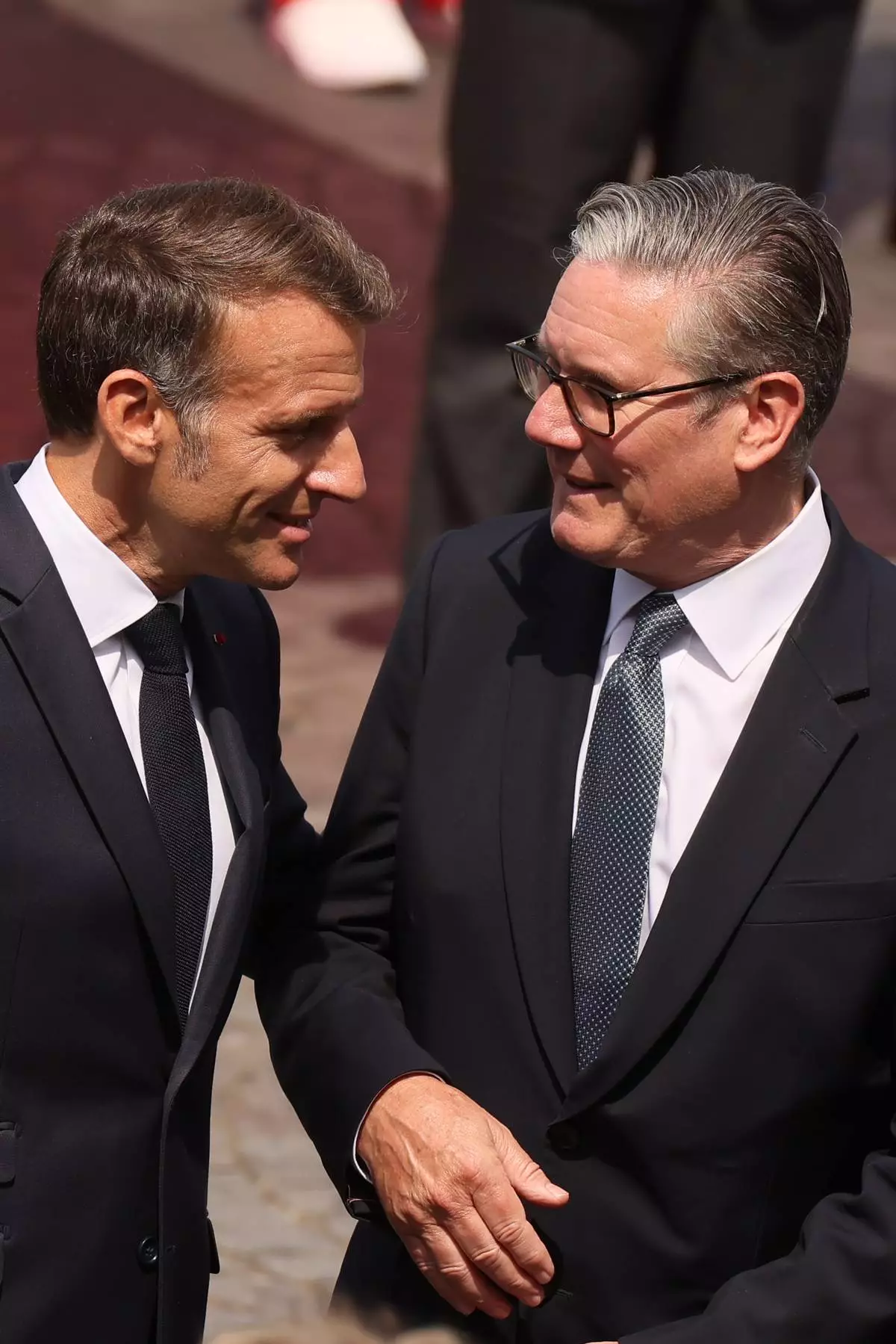
French President Emmanuel Macron speaks with British Prime Minister Keir Starmer after the Bastille Day military parade on the Champs-Elysees avenue, in Paris, Tuesday, July 14, 2026. (AP Photo/Thomas Padilla)

French President Emmanuel Macron speaks with British Prime Minister Keir Starmer after the Bastille Day military parade on the Champs-Elysees avenue, in Paris, Tuesday, July 14, 2026. (AP Photo/Thomas Padilla)

British Prime Minister Keir Starmer arrives for the Bastille Day military parade on the Champs-Elysees avenue in Paris, Tuesday, July 14, 2026. (AP Photo/Thomas Padilla)

British Prime Minister Keir Starmer arrives for the Bastille Day military parade on the Champs-Elysees avenue in Paris, Tuesday, July 14, 2026. (AP Photo/Thomas Padilla)

Recommended Articles