BANDA, India (AP) — Heat at all hours, even in the middle of the night. Long stretches without electricity, meaning some homes can't even use basic fans. And a constant search for relief, like being hosed down with water or sleeping outside.
For many residents of Banda, a town in northern India that has recorded some of the country's highest temperatures, just getting through each day is a challenge.
Click to Gallery
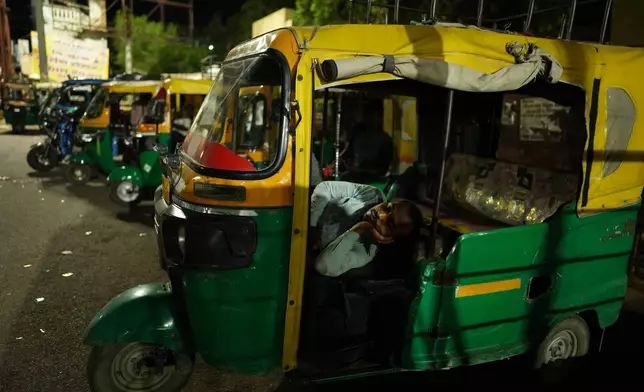
An auto-rickshaw driver rests inside his vehicle during a heat wave in Banda, northern Indian state of Utter Pradesh, Saturday, June 20 , 2026. (AP Photo/Rajesh Kumar Singh)
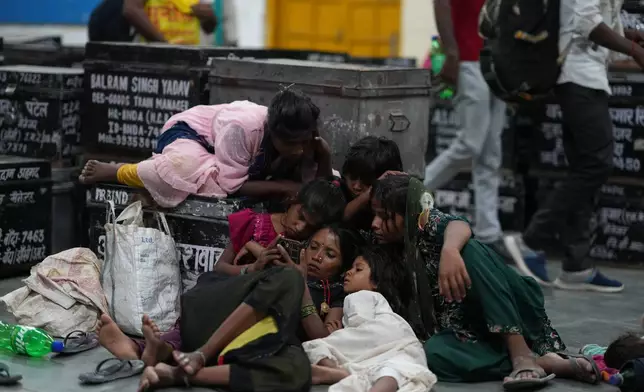
Children gather around a mobile phone as local residents rest at a railway station to escape the heat in Banda, northern Indian state of Utter Pradesh, Saturday, June 20, 2026 (AP Photo/Rajesh Kumar Singh)
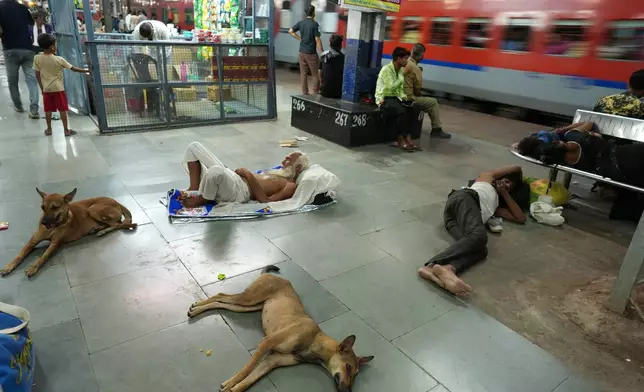
Residents and stray dogs rest on the platform of a railway station to escape the heat in Banda, northern Indian state of Utter Pradesh, Saturday, June 20 , 2026. (AP Photo/Rajesh Kumar Singh)
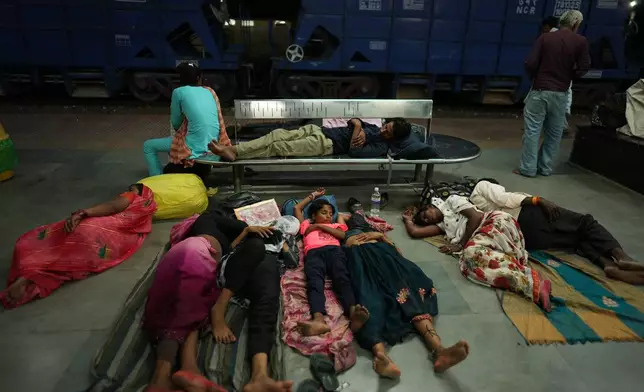
Residents sleep on the platform of a railway station to escape the heat in Banda, northern Indian state of Utter Pradesh, Saturday, June 20 , 2026. (AP Photo/Rajesh Kumar Singh)
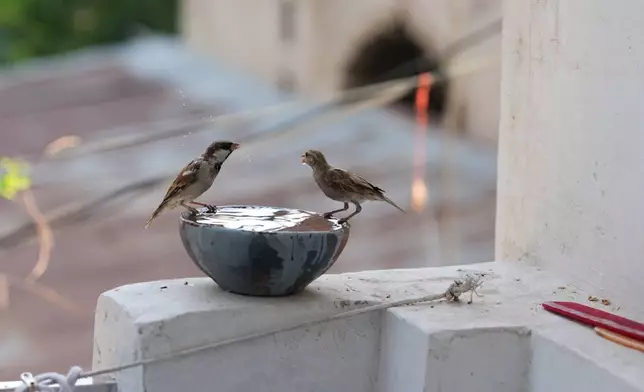
Birds cool off during a heat wave in Banda, northern Indian state of Utter Pradesh, Saturday, June 20 , 2026. (AP Photo/Rajesh Kumar Singh)
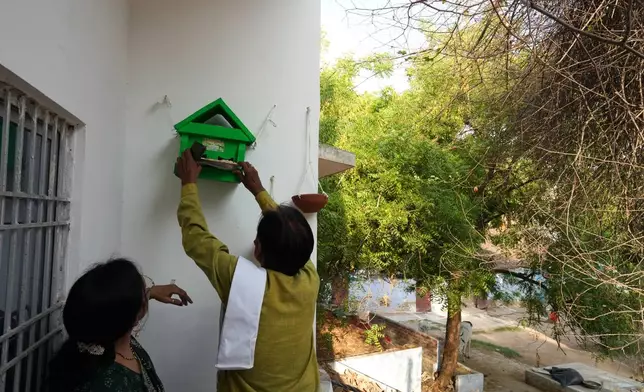
Bird conservationist Shobharam Kashyap installs a wooden birdhouse for sparrows during a heat wave in Banda, northern Indian state of Utter Pradesh, Saturday, June 20, 2026. (AP Photo/Rajesh Kumar Singh)
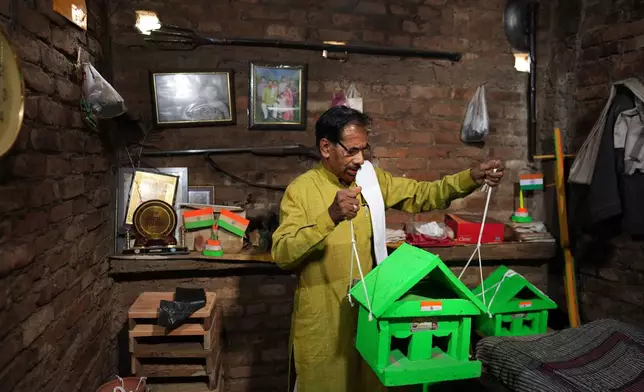
Bird conservationist Shobharam Kashyap holds wooden birdhouses he makes for sparrows during a heat wave in Banda, northern Indian state of Utter Pradesh, Saturday, June 20, 2026. (AP Photo/Rajesh Kumar Singh)
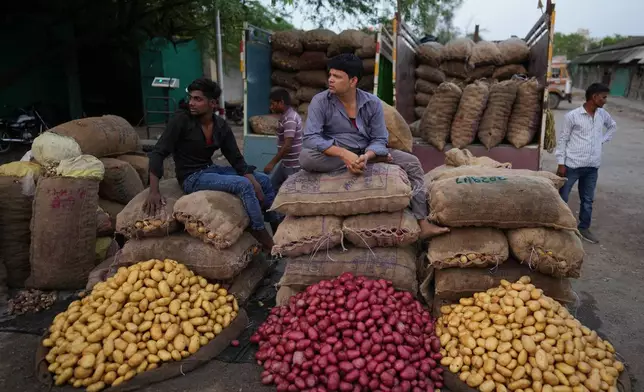
Laborers sit beside sacks of potatoes at a vegetable market in the early morning during a heat wave in Banda, northern Indian state of Utter Pradesh, Saturday, June 20, 2026. (AP Photo/Rajesh Kumar Singh)
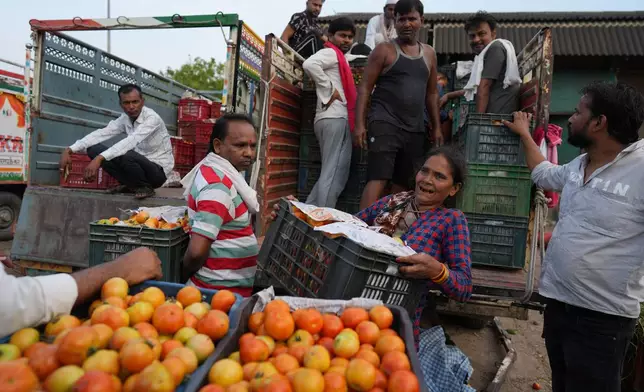
Munni Devi unloads tomatoes from a truck at a vegetable market in the early morning during a heat wave in Banda, northern Indian state of Utter Pradesh, Saturday, June 20 , 2026. (AP Photo/Rajesh Kumar Singh)
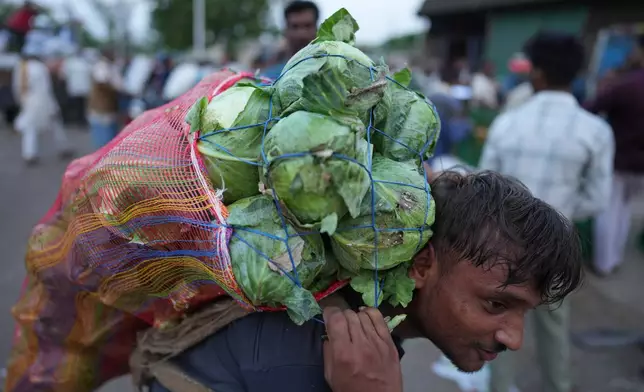
A laborer carries vegetables at a market in the early morning during a heat wave in Banda, northern Indian state of Utter Pradesh, Saturday, June 20 , 2026. (AP Photo/Rajesh Kumar Singh)
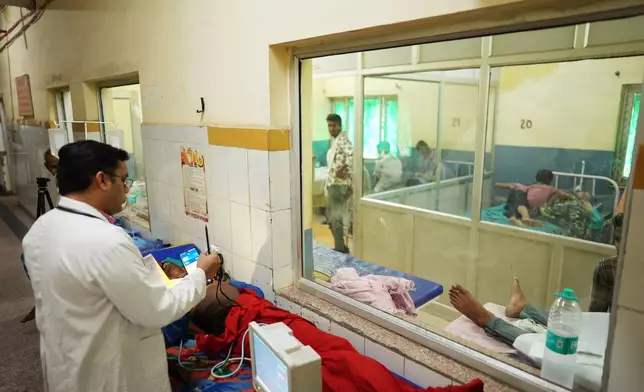
Dr. Abhishek Pranayami examines a patient suffering from a heat-related illness amid high temperatures at a district government hospital in Banda, northern Indian state of Uttar Pradesh, Friday, June 19, 2026 (AP Photo/Rajesh Kumar Singh)
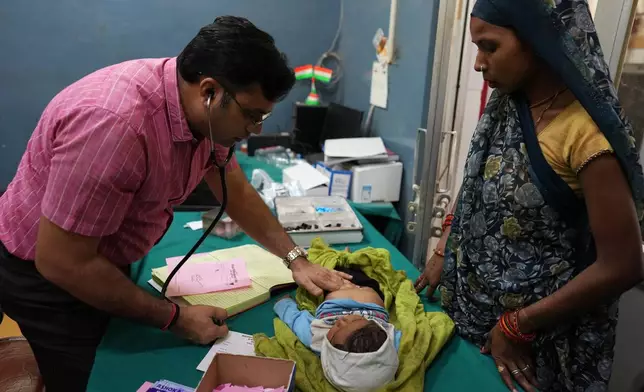
Dr. Abhishek Pranayami examines a child suffering from a heat-related illness amid high temperatures as the child's mother looks on at a government hospital during a heat wave Banda, northern Indian state of Utter Pradesh, Friday, June 19 , 2026. (AP Photo/Rajesh Kumar Singh)
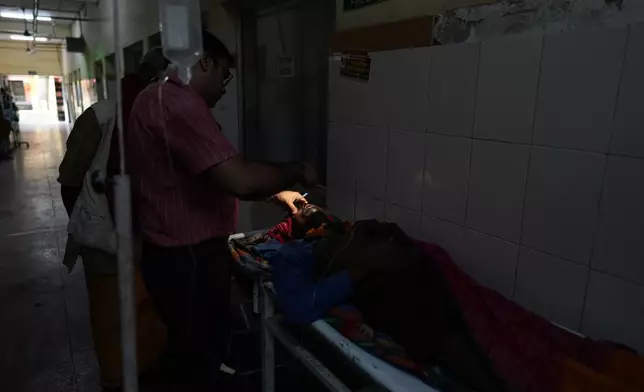
Dr. Abhishek Pranayami examines a patient suffering from a heat-related illness amid high temperatures at a district government hospital in Banda, northern Indian state of Uttar Pradesh, Friday, June 19, 2026 (AP Photo/Rajesh Kumar Singh)
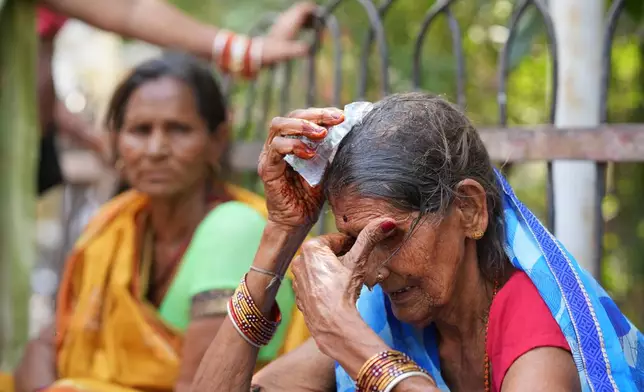
A woman cools herself off with an ice pack during a heat wave in Banda, northern Indian state of Utter Pradesh, Sunday, June 21, 2026. (AP Photo/Rajesh Kumar Singh)
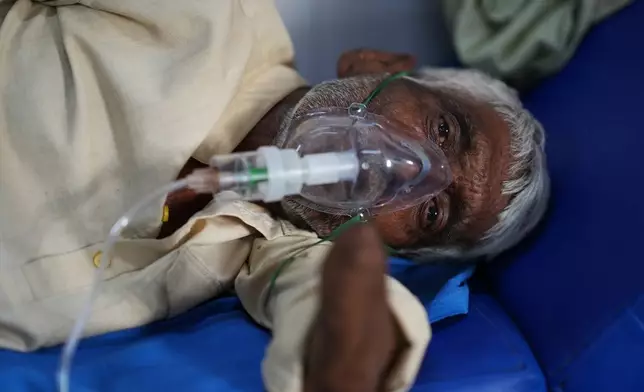
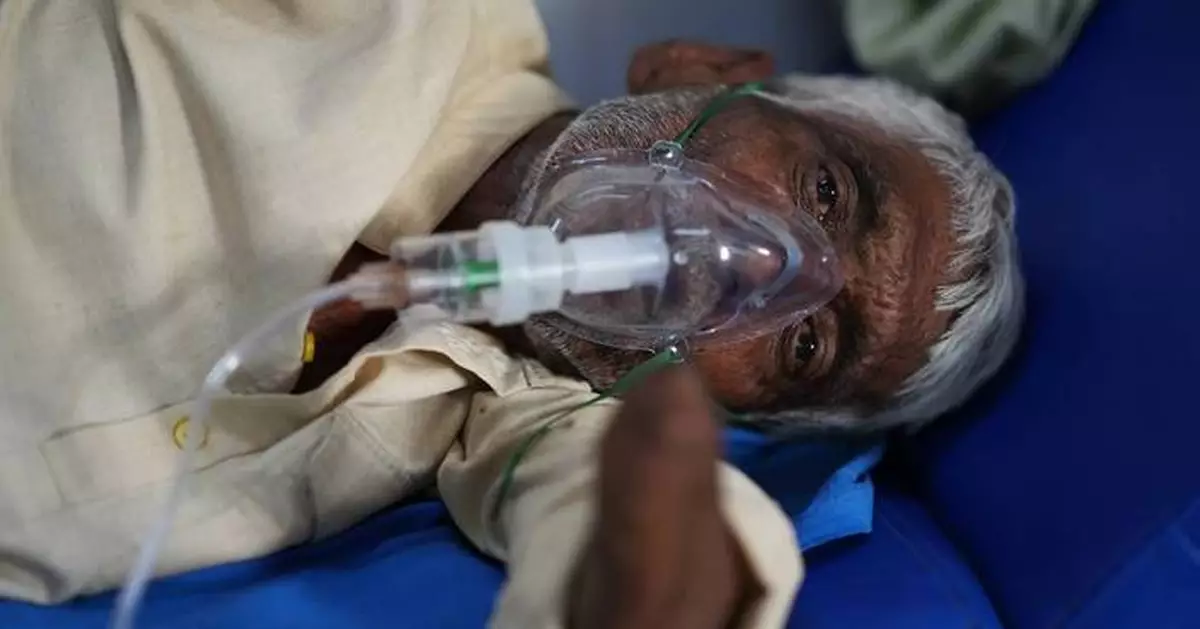
A patient receiving oxygen lies on a hospital bed while suffering from a heat-related illness amid high temperatures during a heat wave in Banda, northern Indian state of Utter Pradesh, Friday, June 19 , 2026. (AP Photo/Rajesh Kumar Singh)
Global warming, caused mostly by the burning of fuels like gas, oil and coal, is making heat waves across India more frequent and intense. Uttar Pradesh, the state Banda is in, is among those most vulnerable to extreme heat. In 2023, at least 119 people died over several days during a severe heat wave in parts of the state.
In May, temperatures reached 48.2 Celsius (118.8 Fahrenheit), one of multiple times this year that the town recorded the country’s highest temperature for the day. Banda was also the hottest spot on Earth seven times this year, most of them in April, according to climatologist and weather historian Maximiliano Herrera, who tracks global weather extremes. Since then, temperatures have dropped some but are still stifling, particularly as seasonal rains increase humidity.
In June, an Associated Press team went to Banda to report on how people try to cope with the heat throughout the day.
Munni Devi and her four sons begin work loading and unloading vegetables when most of the town is asleep.
It’s only 4 a.m., but the temperature is already 30 C (86 F). Workers at Banda's vegetable market are busy unloading tomatoes, jackfruits and other vegetables and transferring them to smaller vehicles for delivery to neighborhood shops.
Devi, 70, says the heat is becoming more intense every year, and this year has been especially bad. The work is physically demanding in any weather. During a heat wave, it can be brutal. But Devi says she and her sons can’t afford to miss a day.
“Everyone feels the heat, but because of our circumstances, we have to bear it,” she says.
At the market, young men wheel carts through narrow lanes. Women sort vegetables on the streets. Devi says many buyers arrive early, hoping to finish shopping before temperatures soar.
Devi and her sons work from early morning until lunch, then return home to recuperate.
She says unreliable power to her home means there is little respite even there. Devi’s grandchildren get sprayed down every day with a water hose to get some relief.
“If there is no power, even the ceiling fans don’t work. Sometimes there is no power for hours,” she says.
As the afternoon sun bakes Banda’s streets, residents who can afford to stay inside do so. But some vegetable sellers and auto rickshaw drivers stay outdoors in hopes of attracting a little more business.
Meanwhile, 70-year-old animal lover Shobharam Kashyap is busy making wooden birdhouses at a workshop in his home.
Kashyap says he and other volunteers have installed over 15,000 birdhouses across the town to give birds respite from an increasingly harsh environment.
Kashyap’s brightly painted birdhouses — many of which are painted green as he says birds seem to prefer that color — have been mounted on trees and walls across Banda.
He has also placed clay water bowls in and near his home to give birds a place for a dip or drink.
Kashyap says he is continuing traditional practices of caring for other animals.
“Our culture has long encouraged feeding birds. Women visiting temples traditionally offer rice. Neither the priest nor the deity consumes it — the birds do,” he says.
Hotter days have brought more patients to the hospital in Banda, one of the bigger medical centers in this region. Those with heat maladies, ranging from fainting to heatstroke, tend to come in the afternoon and evening, filling the corridors and wards.
Patients sit shoulder-to-shoulder on benches. Relatives fan family members with sheets of paper. Hospital staff move between beds carrying intravenous fluids.
Dr. Abhishek Pranayami, the hospital's head doctor, says the hospital sees a surge of patients every summer, "and the number of patients is increasing every year.”
He says they are treating large numbers of people suffering from dehydration, diarrhea, vomiting and abdominal pain — illnesses that become more common as temperatures rise. Some patients recover within days. Others take longer.
“Pressure is quite high on us and the staff,” he says.
Even after sunset, Banda remains hot.
When young boys play a game of cricket, they keep their water bottles cool by wrapping them in torn clothes.
At the town’s railway station, families sometimes gather late into the night, hoping the open platforms and occasional breeze will be more comfortable than cramped homes that have absorbed heat all day.
On one such night, dozens are sleeping in the station to avoid the heat. In one spot, several children and adults sleep on blankets spread out on the stone platform with parked train cars a few feet away. Some use bags as pillows. A pile of flip-flops sits inches from their bare feet. Another man stretches out on a bench, with his head on a backpack.
Nearby, several men and women are trying to sleep on blankets near the ticket kiosks, despite the bright lights. Dogs lie between some of the people on the ground, also trying to get relief.
Laborers whose homes are too small and hot to sleep in are sleeping on blankets outside the railway station's entrance, trying their best to get some rest in the hot night. Regardless of the noise of vehicles and passengers entering and leaving the station, laborers and residents are lying on towels and sometimes right on the gravel as the relatively open, breezy roads and pavements near the railway station give them the best chance for some shut-eye.
For parents with little children, the hot night is too uncomfortable for sleep, so they wait in the station, huddled around a smartphone.
The struggle for relief and rest has become a defining feature of summer in cities like Banda.
“Climate change is shifting the average,” says Abhiyant Tiwari, climate and health expert at New Delhi-based NRDC India. “While Banda has always been known for hot summers, what is changing right now is the intensity, the duration and the number of people exposed to dangerous heat conditions.”
High nighttime temperatures are especially worrying because they prevent people from recovering physically from the day’s heat, he says.
The top government official in Banda says authorities have responded by opening cooling centers, distributing hundreds of thousands of oral rehydration kits and monitoring hospitals during heat warnings.
Amit Aasery, the district magistrate of Banda, says officials are studying groundwater levels, soil moisture and vegetation loss while working to improve water supplies and public awareness.
But he says there is only so much they can do.
“What is happening here is a global phenomenon,” he says. “It is because of climate change. We are the recipient of this.”
Arasu reported from Bengaluru, India, and can be followed on X at @sibi123. Associated Press writer Seth Borenstein contributed to this report from Washington.
The Associated Press’ climate and environmental coverage receives financial support from multiple private foundations. AP is solely responsible for all content. Find AP’s standards for working with philanthropies, a list of supporters and funded coverage areas at AP.org.
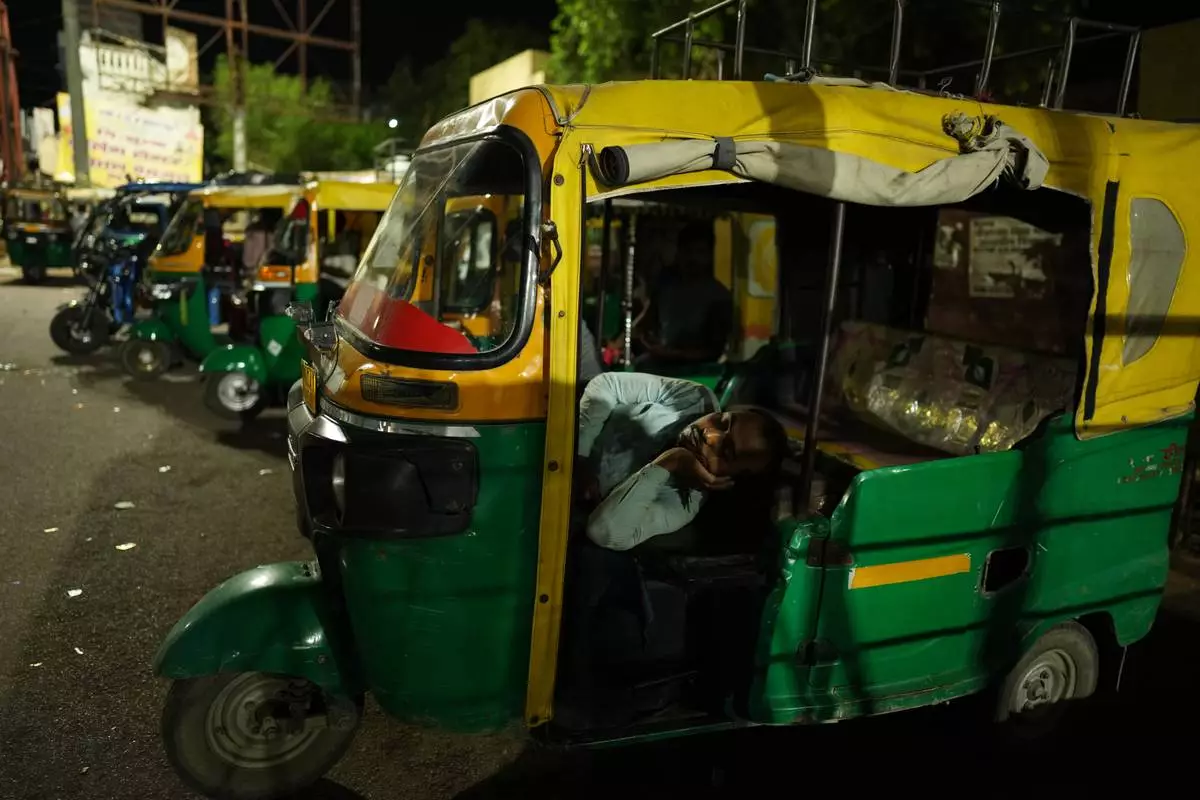
An auto-rickshaw driver rests inside his vehicle during a heat wave in Banda, northern Indian state of Utter Pradesh, Saturday, June 20 , 2026. (AP Photo/Rajesh Kumar Singh)
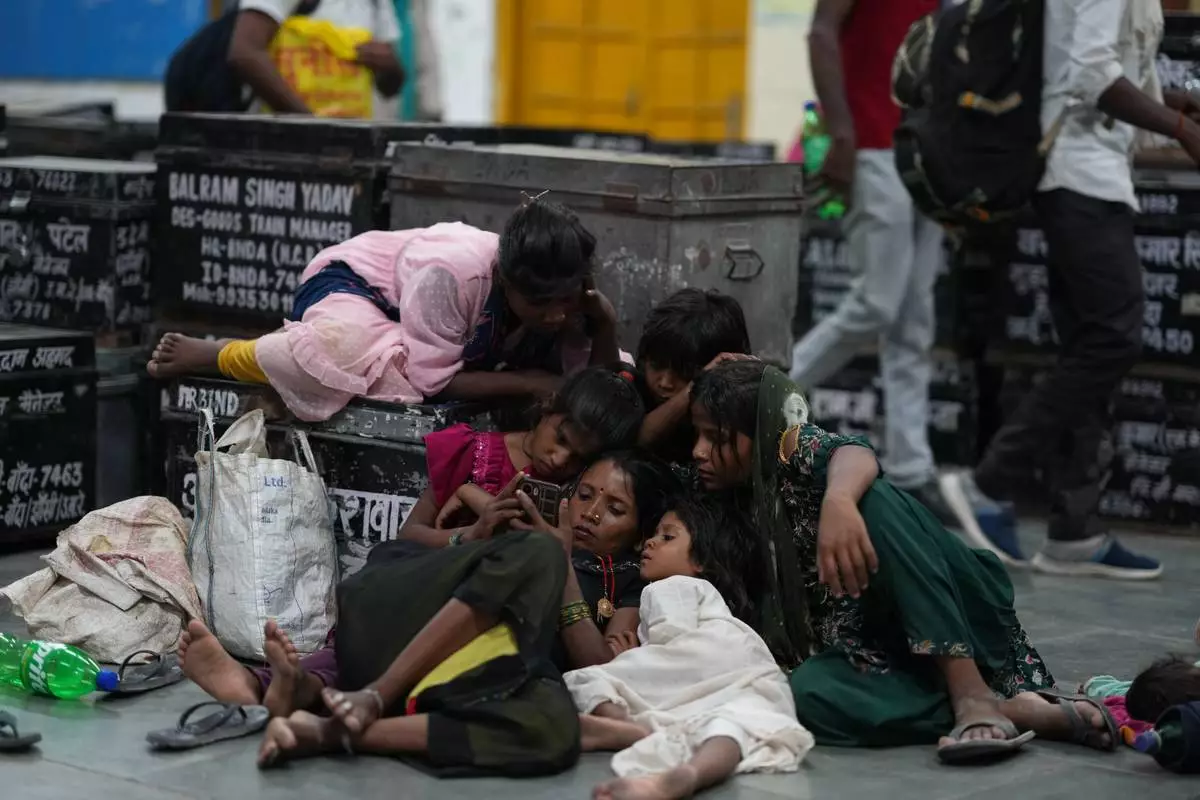
Children gather around a mobile phone as local residents rest at a railway station to escape the heat in Banda, northern Indian state of Utter Pradesh, Saturday, June 20, 2026 (AP Photo/Rajesh Kumar Singh)
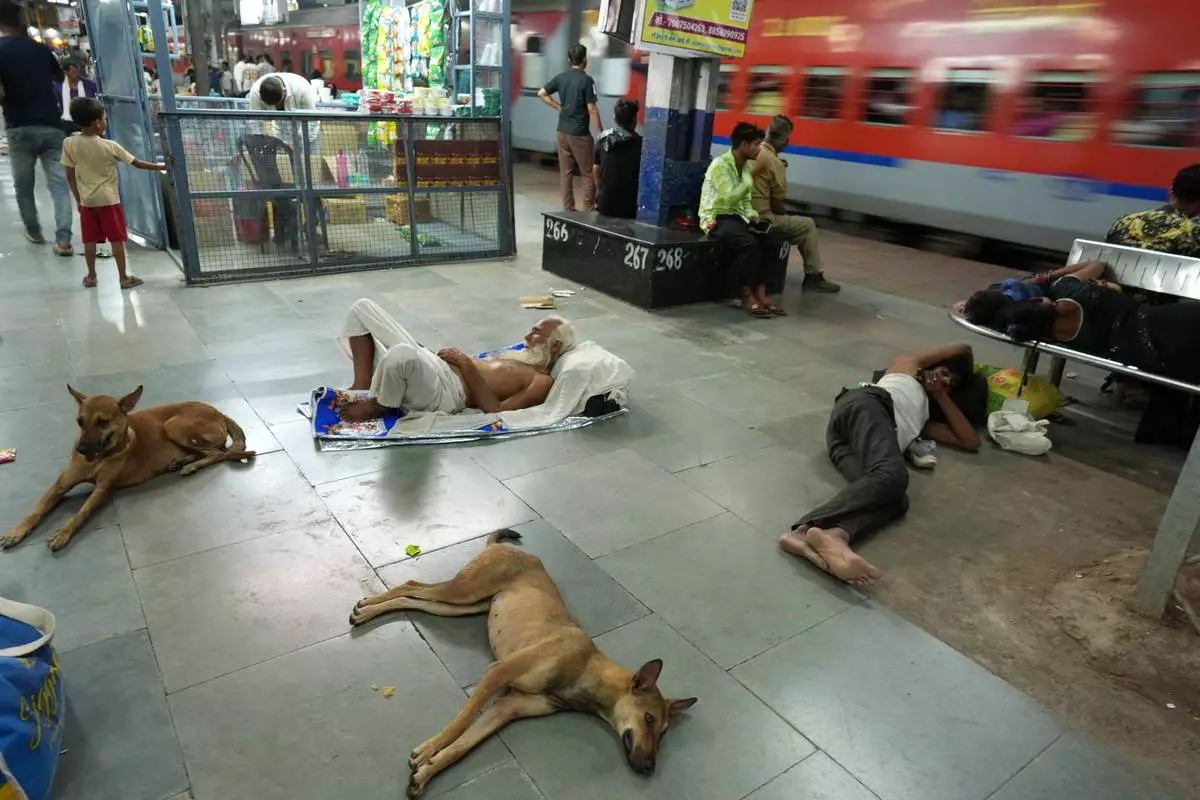
Residents and stray dogs rest on the platform of a railway station to escape the heat in Banda, northern Indian state of Utter Pradesh, Saturday, June 20 , 2026. (AP Photo/Rajesh Kumar Singh)
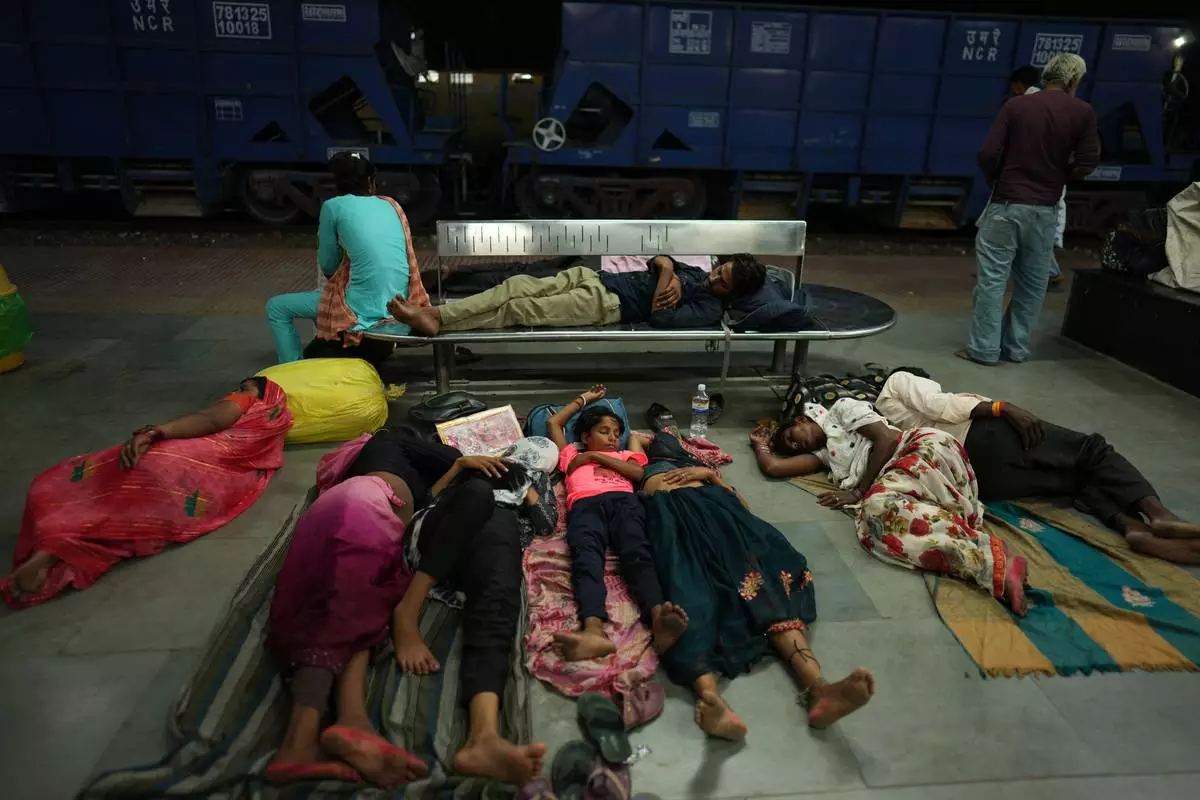
Residents sleep on the platform of a railway station to escape the heat in Banda, northern Indian state of Utter Pradesh, Saturday, June 20 , 2026. (AP Photo/Rajesh Kumar Singh)
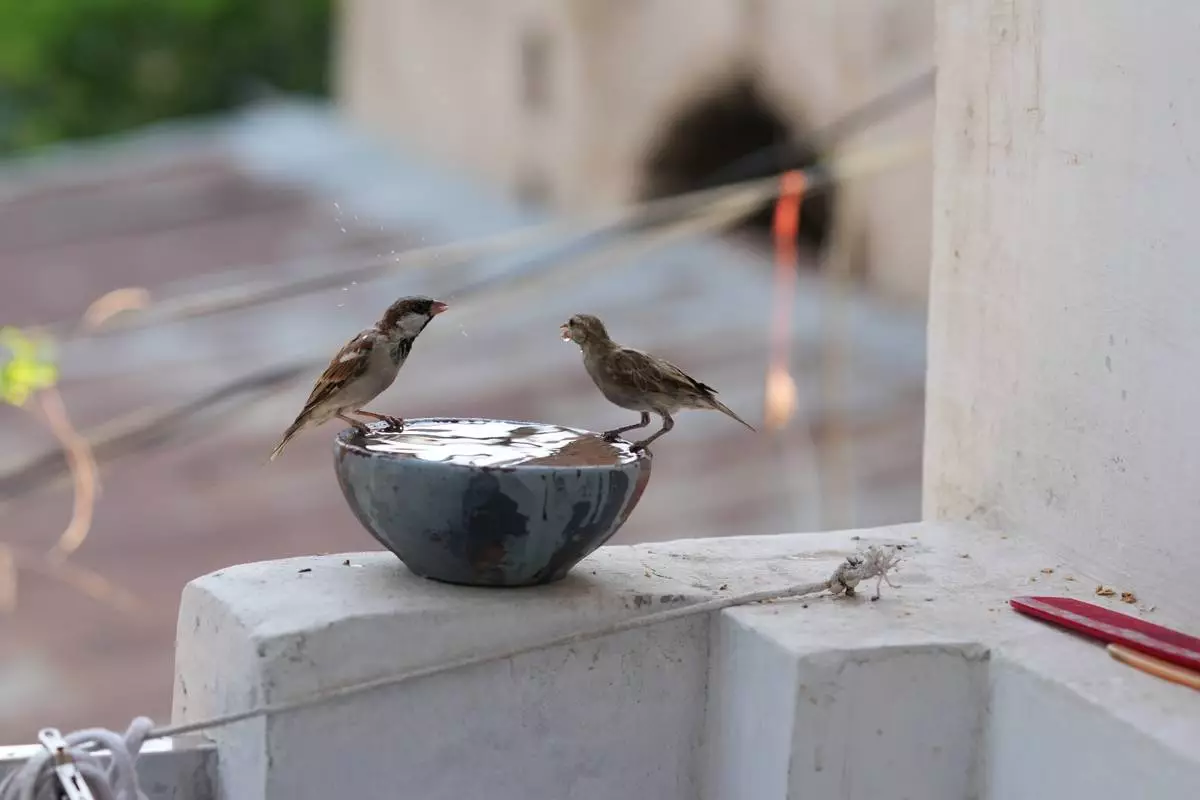
Birds cool off during a heat wave in Banda, northern Indian state of Utter Pradesh, Saturday, June 20 , 2026. (AP Photo/Rajesh Kumar Singh)
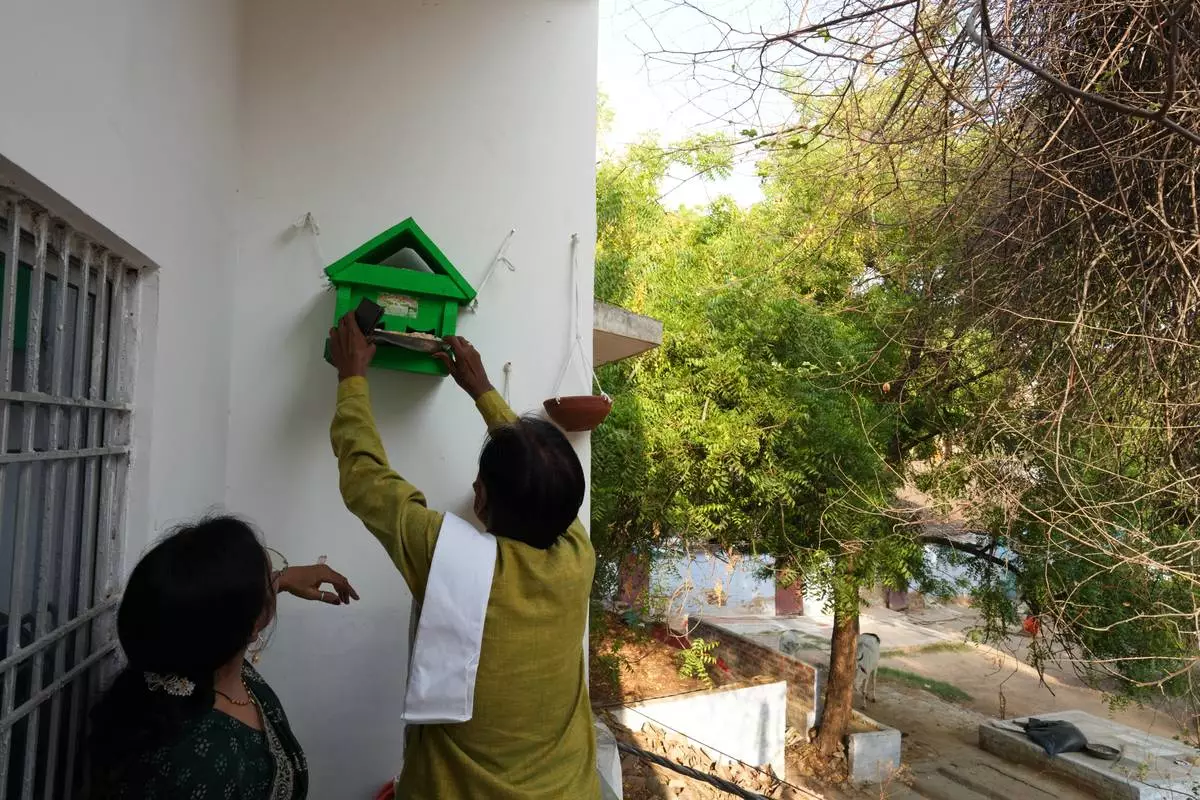
Bird conservationist Shobharam Kashyap installs a wooden birdhouse for sparrows during a heat wave in Banda, northern Indian state of Utter Pradesh, Saturday, June 20, 2026. (AP Photo/Rajesh Kumar Singh)
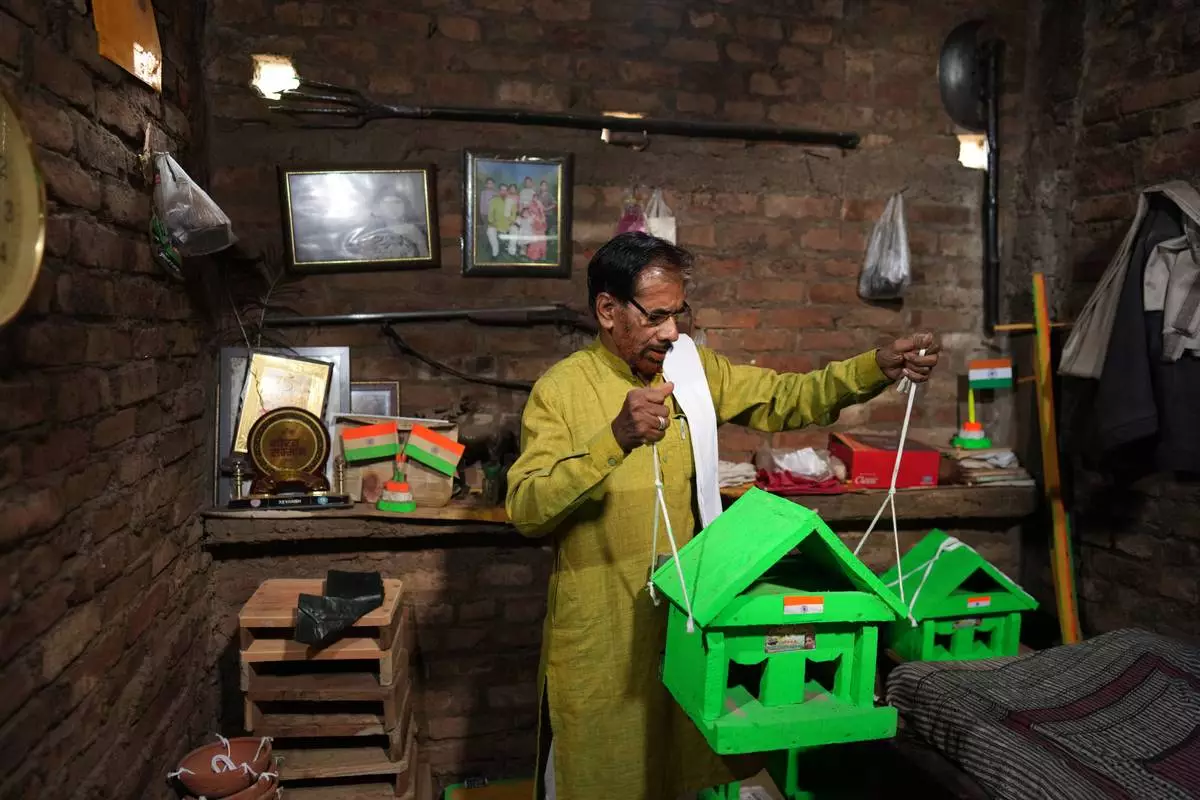
Bird conservationist Shobharam Kashyap holds wooden birdhouses he makes for sparrows during a heat wave in Banda, northern Indian state of Utter Pradesh, Saturday, June 20, 2026. (AP Photo/Rajesh Kumar Singh)
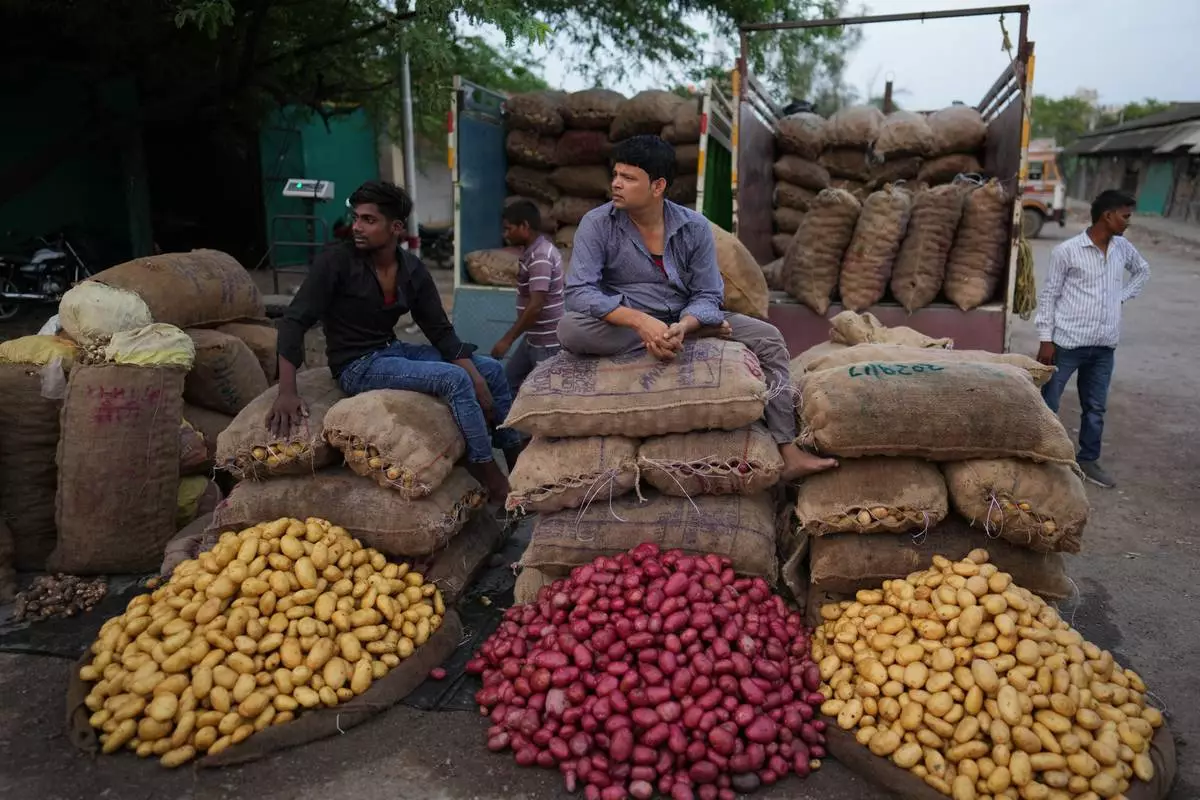
Laborers sit beside sacks of potatoes at a vegetable market in the early morning during a heat wave in Banda, northern Indian state of Utter Pradesh, Saturday, June 20, 2026. (AP Photo/Rajesh Kumar Singh)
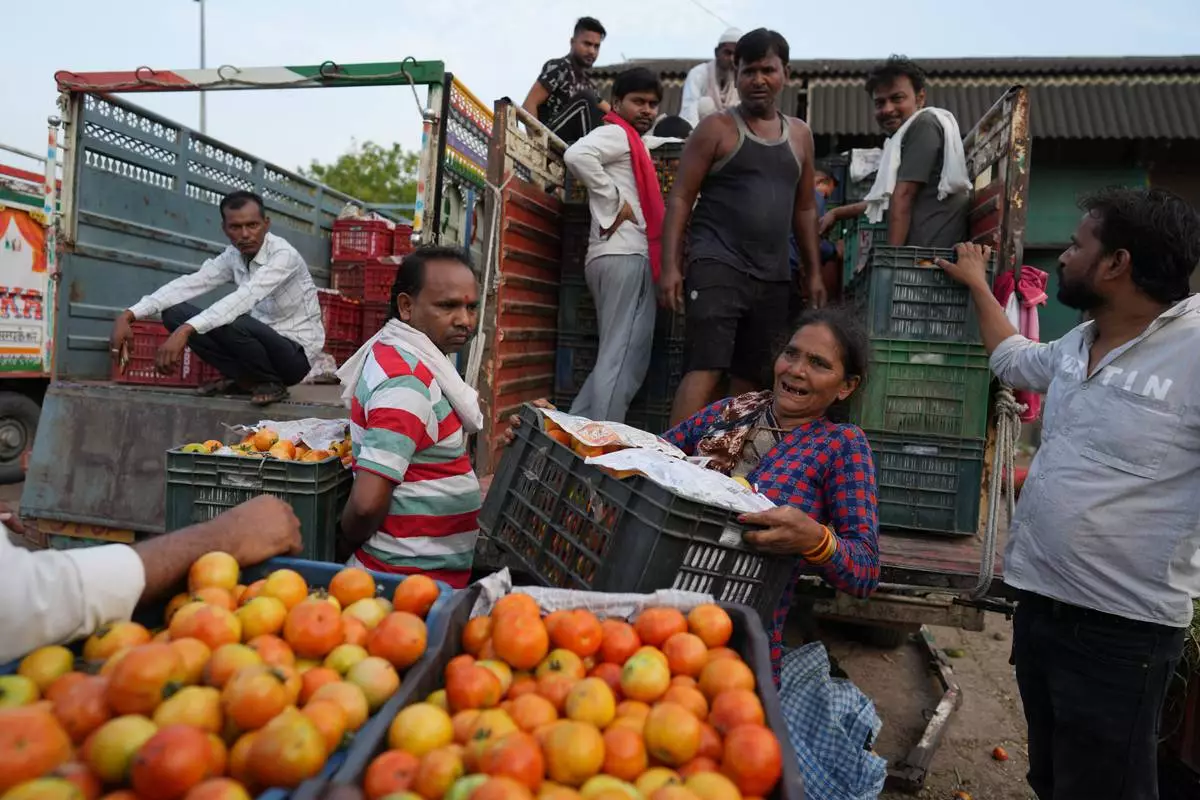
Munni Devi unloads tomatoes from a truck at a vegetable market in the early morning during a heat wave in Banda, northern Indian state of Utter Pradesh, Saturday, June 20 , 2026. (AP Photo/Rajesh Kumar Singh)
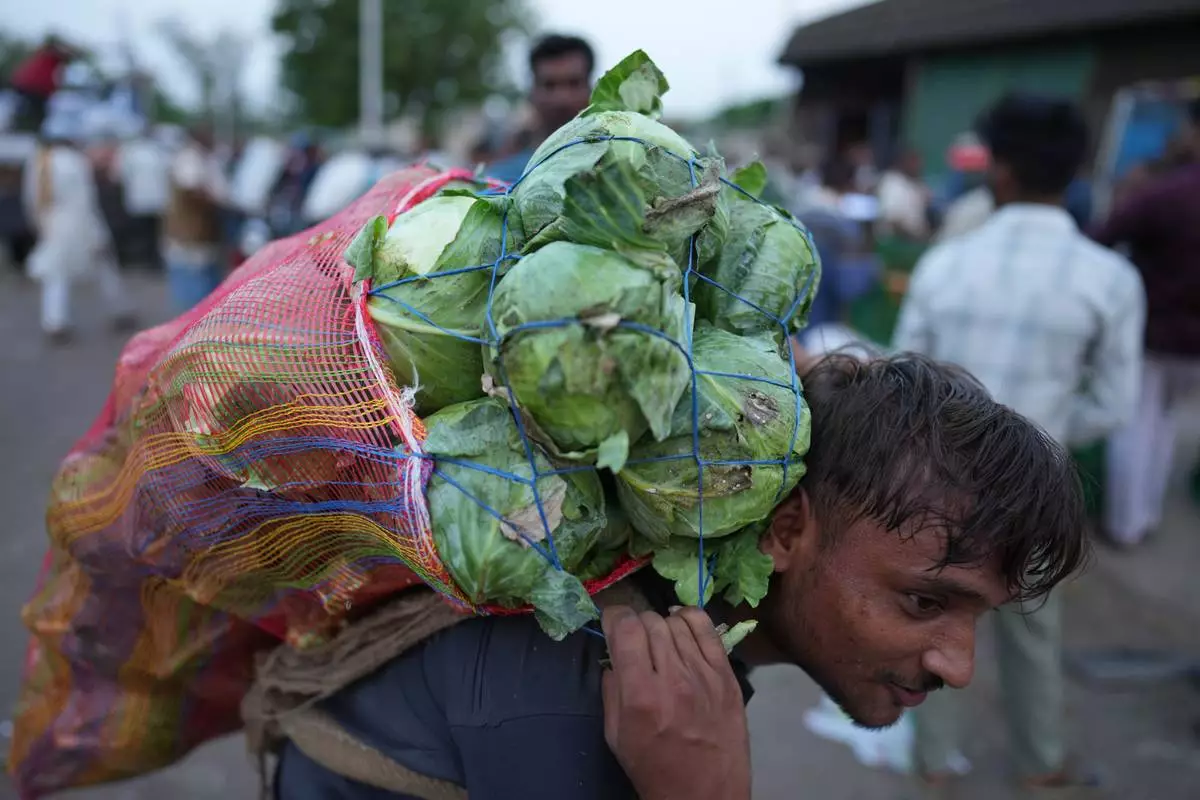
A laborer carries vegetables at a market in the early morning during a heat wave in Banda, northern Indian state of Utter Pradesh, Saturday, June 20 , 2026. (AP Photo/Rajesh Kumar Singh)
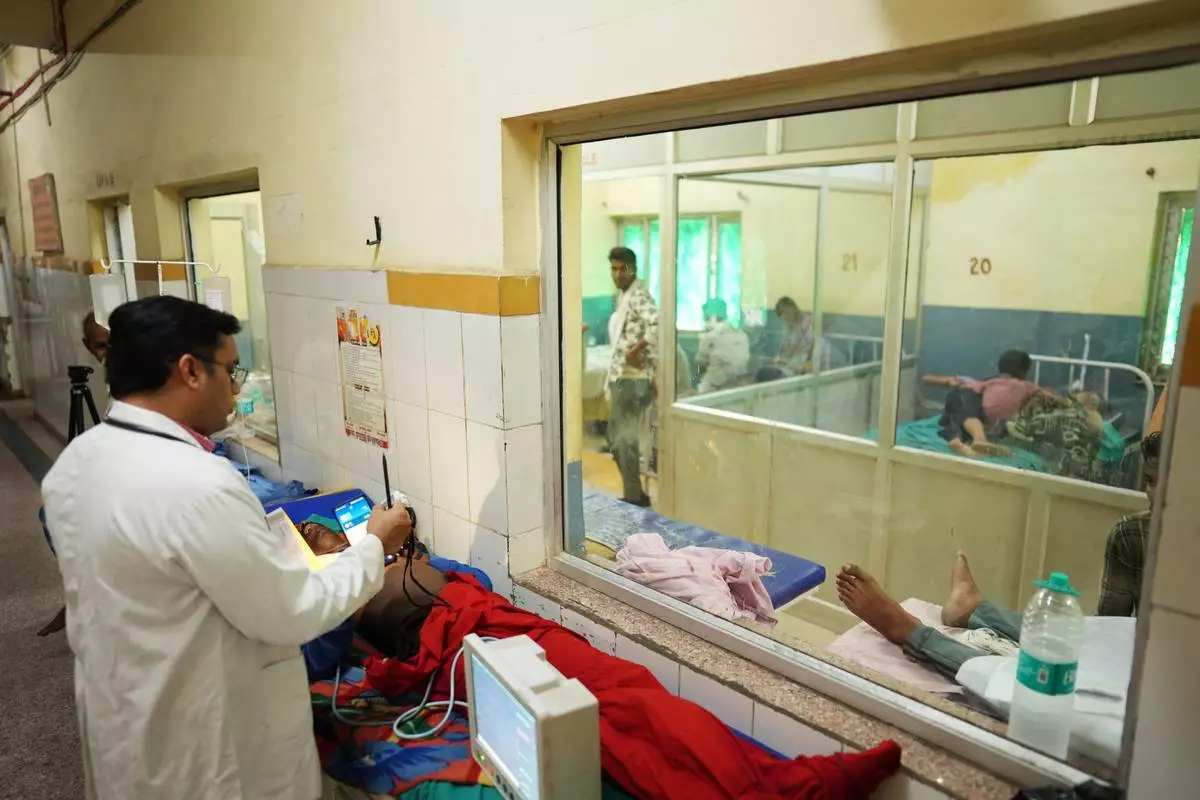
Dr. Abhishek Pranayami examines a patient suffering from a heat-related illness amid high temperatures at a district government hospital in Banda, northern Indian state of Uttar Pradesh, Friday, June 19, 2026 (AP Photo/Rajesh Kumar Singh)
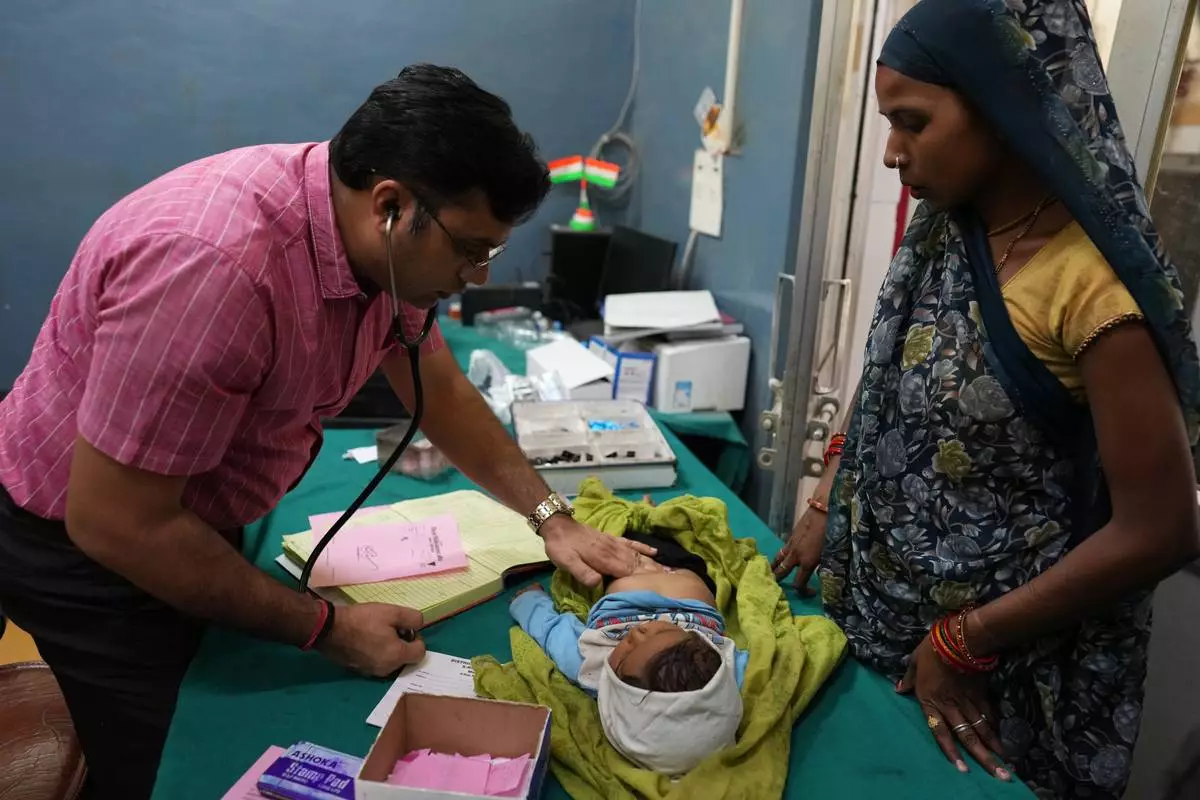
Dr. Abhishek Pranayami examines a child suffering from a heat-related illness amid high temperatures as the child's mother looks on at a government hospital during a heat wave Banda, northern Indian state of Utter Pradesh, Friday, June 19 , 2026. (AP Photo/Rajesh Kumar Singh)
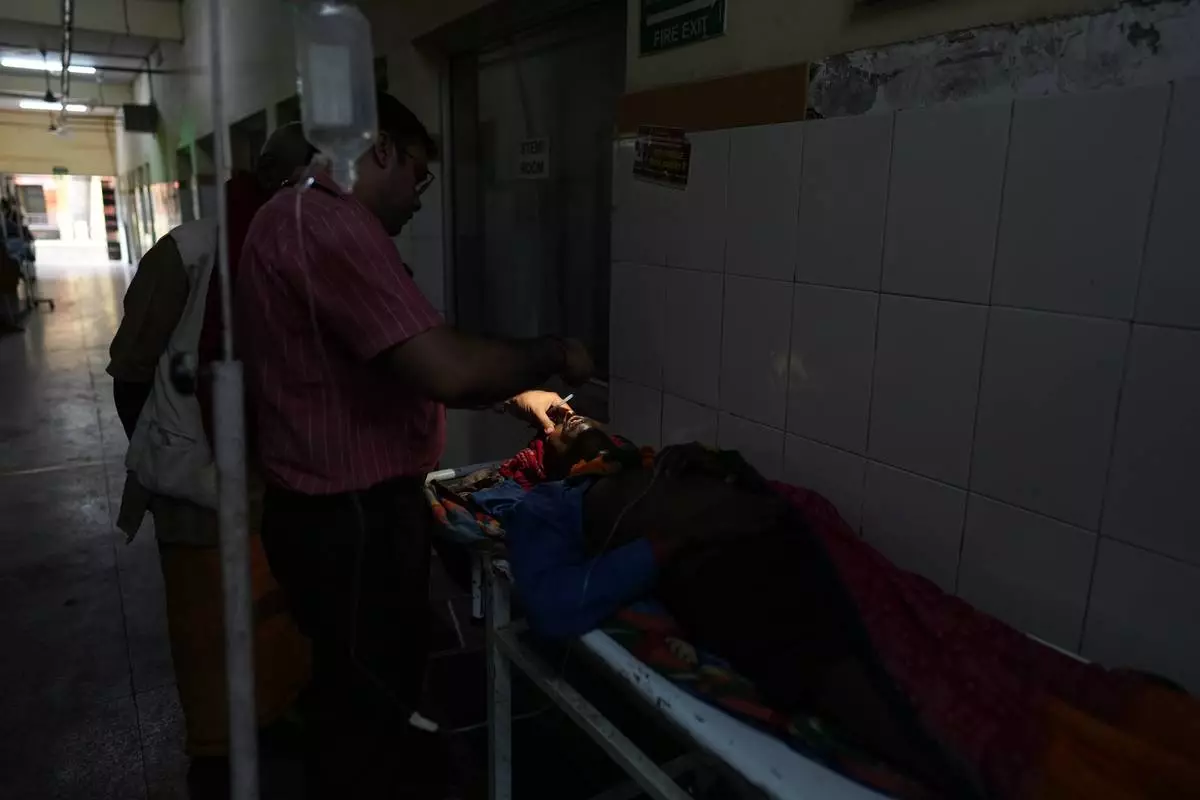
Dr. Abhishek Pranayami examines a patient suffering from a heat-related illness amid high temperatures at a district government hospital in Banda, northern Indian state of Uttar Pradesh, Friday, June 19, 2026 (AP Photo/Rajesh Kumar Singh)
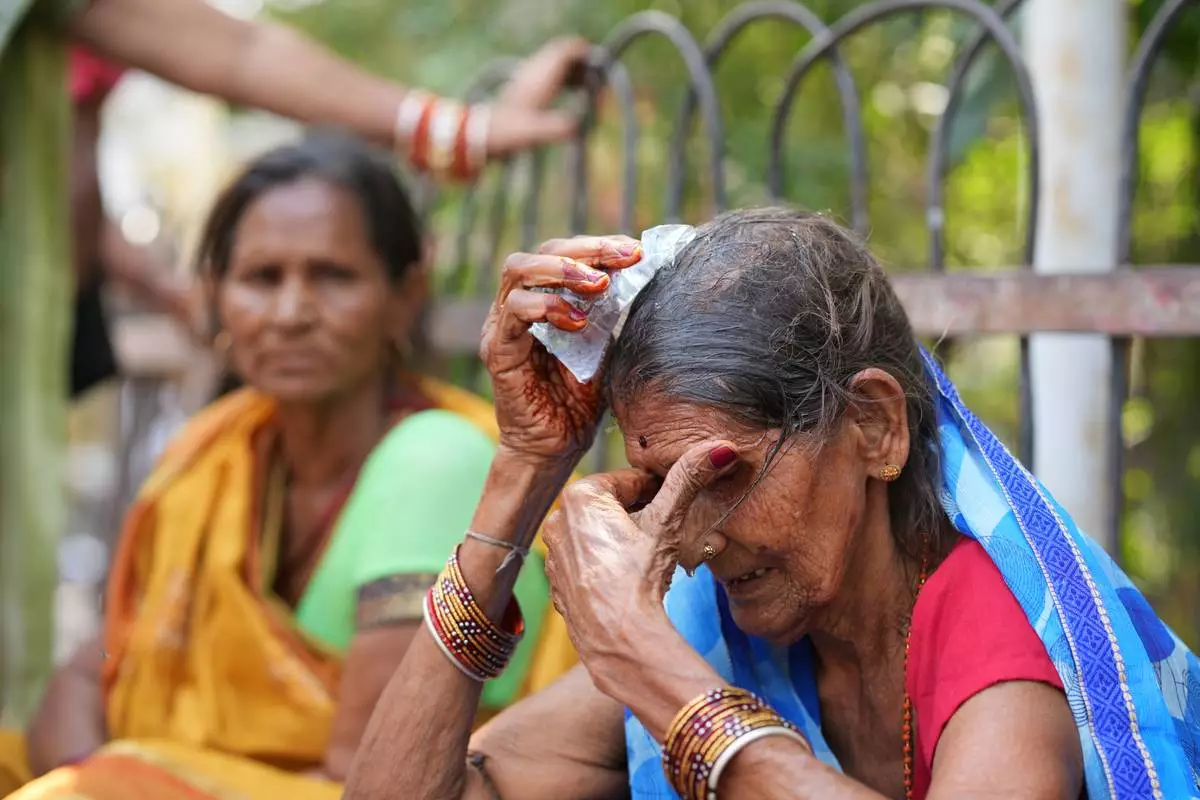
A woman cools herself off with an ice pack during a heat wave in Banda, northern Indian state of Utter Pradesh, Sunday, June 21, 2026. (AP Photo/Rajesh Kumar Singh)
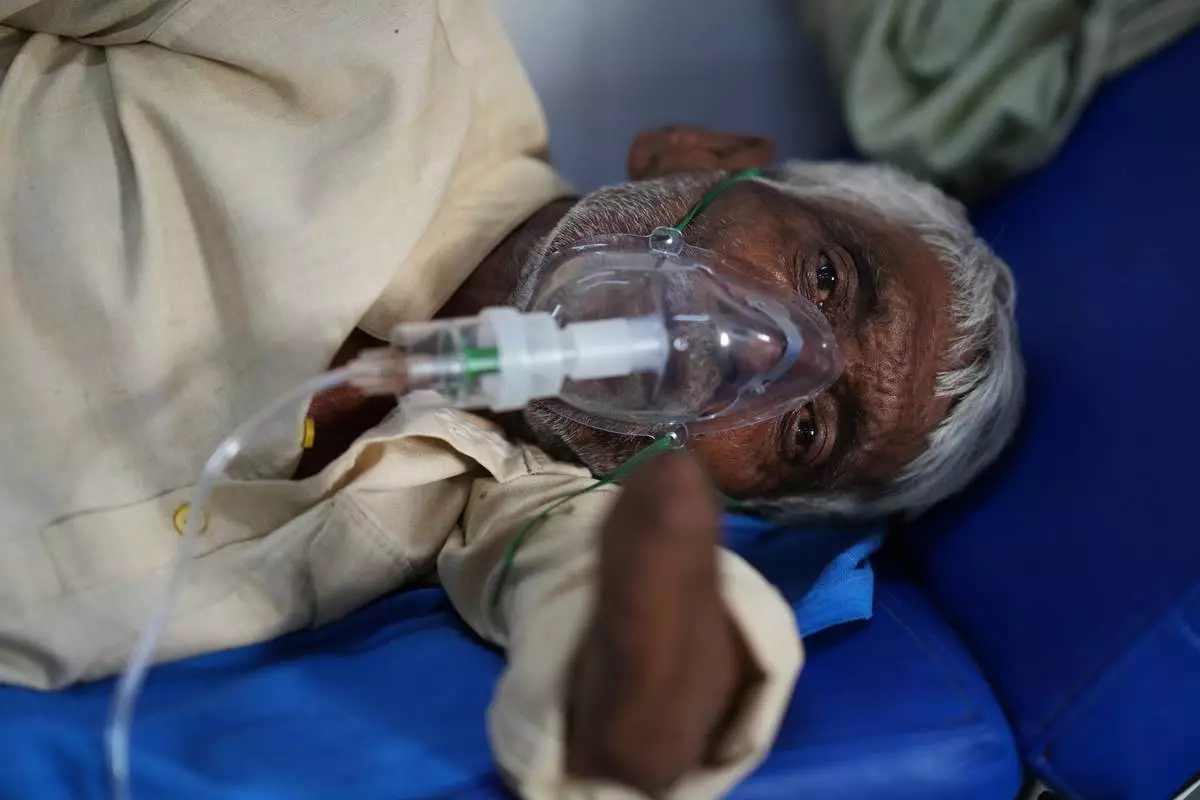
A patient receiving oxygen lies on a hospital bed while suffering from a heat-related illness amid high temperatures during a heat wave in Banda, northern Indian state of Utter Pradesh, Friday, June 19 , 2026. (AP Photo/Rajesh Kumar Singh)