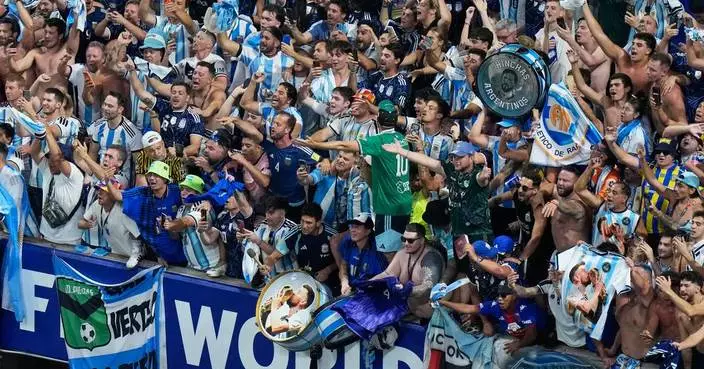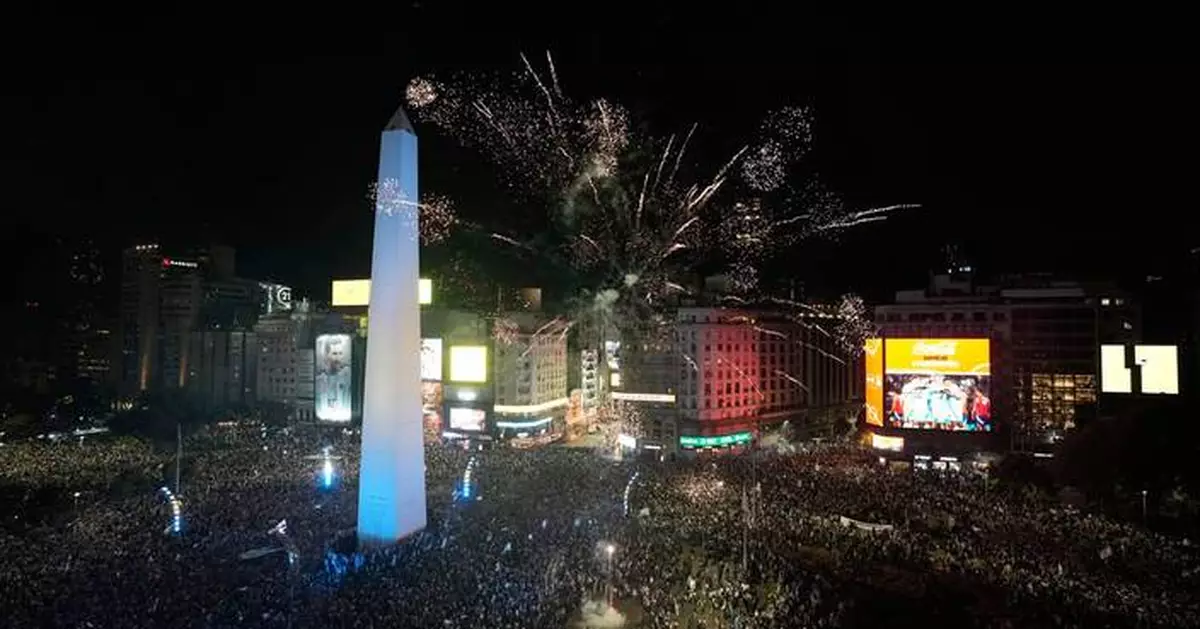
BUENOS AIRES, Argentina (AP) — Tens of thousands of soccer fans flooded the streets of Argentina's capital on Wednesday evening in a collective eruption of ecstasy over their national team’s 2-1 victory over England to reach the World Cup final.
Some screamed, others cried — and the most frenzied sprinted shirtless in pouring winter rain through the streets of Buenos Aires, their bodies painted in blue and white national colors. Young men and women scaled lamp posts and traffic lights, waving Argentine flags. Many sobbed, completely overwhelmed by the moment.
Click to Gallery
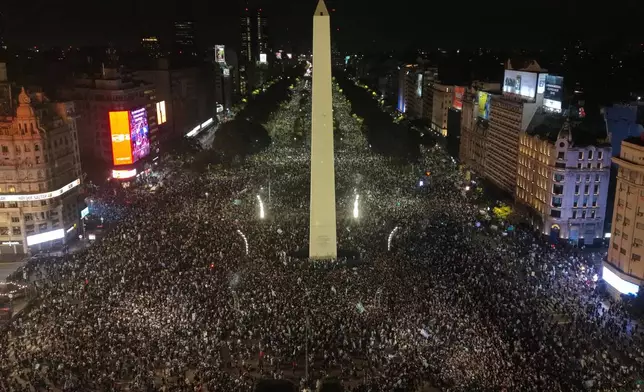
Fans celebrate Argentina's victory over England in a World Cup semifinal soccer match around the Obelisk in downtown Buenos Aires, Argentina, Wednesday, July 15, 2026. (AP Photo/Rodrigo Abd)

A fan perches atop a traffic signal during celebrations of Argentina's victory over England in a World Cup semifinal soccer match in downtown Buenos Aires, Argentina, Wednesday, July 15, 2026. (AP Photo/Natacha Pisarenko)
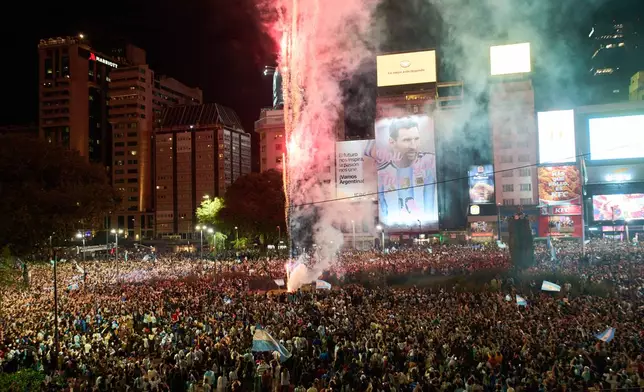
Fans celebrate Argentina's victory over England in a World Cup semifinal soccer match in downtown Buenos Aires, Argentina, Wednesday, July 15, 2026. (AP Photo/Rodrigo Abd)

A family celebrates Argentina's victory over England in a World Cup semifinal soccer match while driving through Buenos Aires, Argentina, Wednesday, July 15, 2026. (AP Photo/Gustavo Garello)
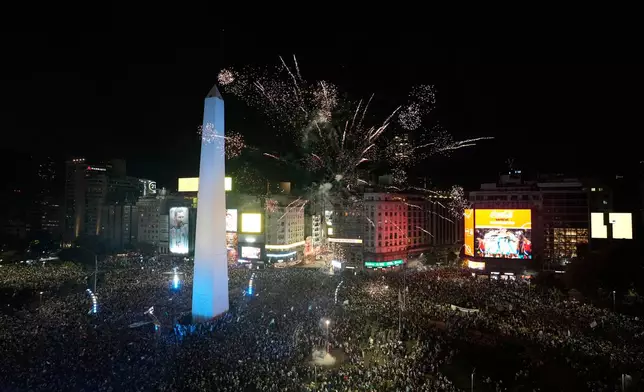
Fans celebrate Argentina's victory over England in a World Cup semifinal soccer match around the Obelisk in downtown Buenos Aires, Argentina, Wednesday, July 15, 2026. (AP Photo/Natacha Pisarenko)
The celebrations — likely to last long into the night — followed Lautaro Martinez's winning goal two minutes into injury time in the game in Atlanta. Defending champions Argentina will now play Spain in the World Cup final on Sunday.
“Look around at all these strangers, jumping and dancing together,” said Rosana Beto Cruz, a 48-year-old Catholic nun celebrating among the sea of Argentines thronging the Obelisk, the city's soaring downtown monument, hours after the game.
“The World Cup, our national team, it makes this happen,” she added.
The public joy, many fans said, wasn’t so much about advancing to the finals or defending the title they won four years ago in Qatar as it was about crushing their nation’s historical adversary.
Wednesday's semifinal was the latest chapter in a long-running feud that has transcended far beyond the pitch to encompass British control over the disputed Falkland Islands, which Argentina calls the Malvinas and claims as its sovereign territory.
“This is not just about football, it's about beating the country that broke our hearts,” Maria Bertero, 40, said, referring to the 10-week war in 1982 when the Argentine military dictatorship had unsuccessfully attempted to reclaim the remote South Atlantic territory. “My heart still aches for all the young boys who were sent to their deaths."
But joy soon replaced sadness as Bertero spoke of Wednesday's game. “It's tremendous. It's magic. It makes me proud to be Argentine,” she added, whistling and cheering.
The Buenos Aires celebrations were a sharp contrast to recent sentiment toward Argentina expressed on social media, where accusations that FIFA and the referees have conspired to get superstar Lionel Messi and Argentina through to the final have stirred resentment toward the reigning champions.
There is no evidence for such claims, but there have been several contentious calls.
That has done nothing to dim Argentines’ euphoria.
“All this talk about it being fixed, about FIFA being involved, have they even looked at what's happening on the field? How much we've suffered?” asked Jorge Luis Lema, who watched the game at a downtown bar, where the mood among patrons was somber until the 85th minute, when Enzo Fernandez's unstoppable goal unleashed pure exhilaration.
“It's a lie. Football is football,” Lema said of the online hate. “Whoever wins, wins. And Argentina won once again.”
The war over the Falkland Islands, which killed 649 Argentines — many of them young conscripts underresourced and outgunned by the British army — remains one of the South American nation's darkest chapters.
It also has loomed large in Argentine soccer culture since one of history’s greatest players, Diego Maradona, led Argentina to victory over England in a monumental 1986 World Cup quarterfinal with his notorious “Hand of God” goal and epic 58-meter solo sprint known as the “Goal of the Century.”
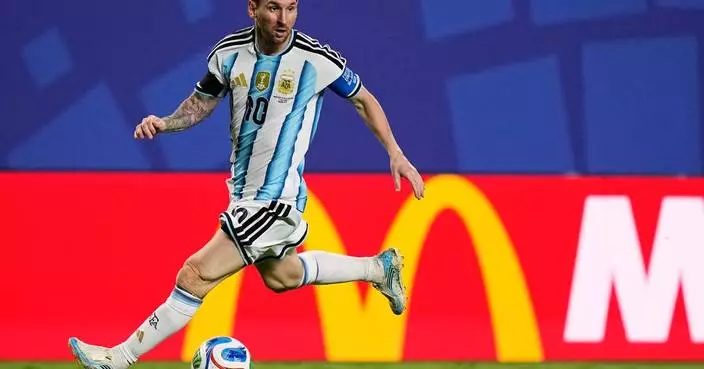
Messi, 39, who played for years under the weight of Maradona’s legacy until becoming a world champion in 2022, has once again lived up to — and perhaps exceeded — his country’s oppressive expectations, fans said.
“Seeing Messi playing football like this, at his age, it just leaves me speechless,” said Matías Adorno, 28, one of the countless revelers wearing Messi jerseys in central Buenos Aires — the same place where fans have gathered after every World Cup victory so far.
“As Argentines, we've always put so much pressure on him. But he's given us absolutely everything,” Adorno said, beaming.
Cries of “For the Malvinas, for Diego (Maradona), for Leo’s last one (tournament)” pierced the air.
Crowds bounced up and down to another classic chant dating back to the war — “El que no salta es un ingles,” or, “Whoever doesn't jump is an Englishman.”
The celebrations provided a rare catharsis that many Argentines, polarized under their radical libertarian President Javier Milei and accustomed to cycles of economic crisis, said was desperately needed.
“It is just pure joy, especially given the really bad movement we're going through now, with life being so expensive, with this president who's dividing us,” said Yanina Quinteros, 40, celebrating with her 6-year-old daughter perched on her shoulders.
“Tonight, we're together,” she added. “All of us, grandparents, children, mothers, fathers, we're all just here to celebrate tonight.”
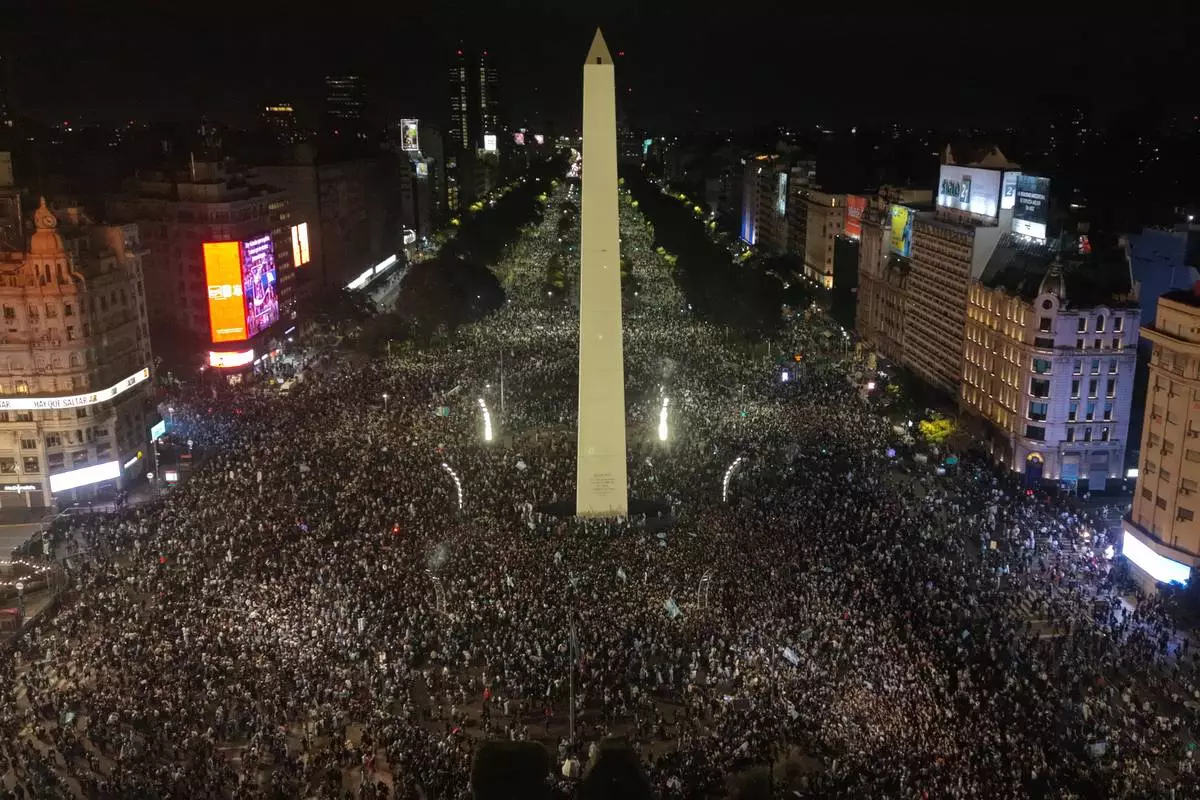
Fans celebrate Argentina's victory over England in a World Cup semifinal soccer match around the Obelisk in downtown Buenos Aires, Argentina, Wednesday, July 15, 2026. (AP Photo/Rodrigo Abd)
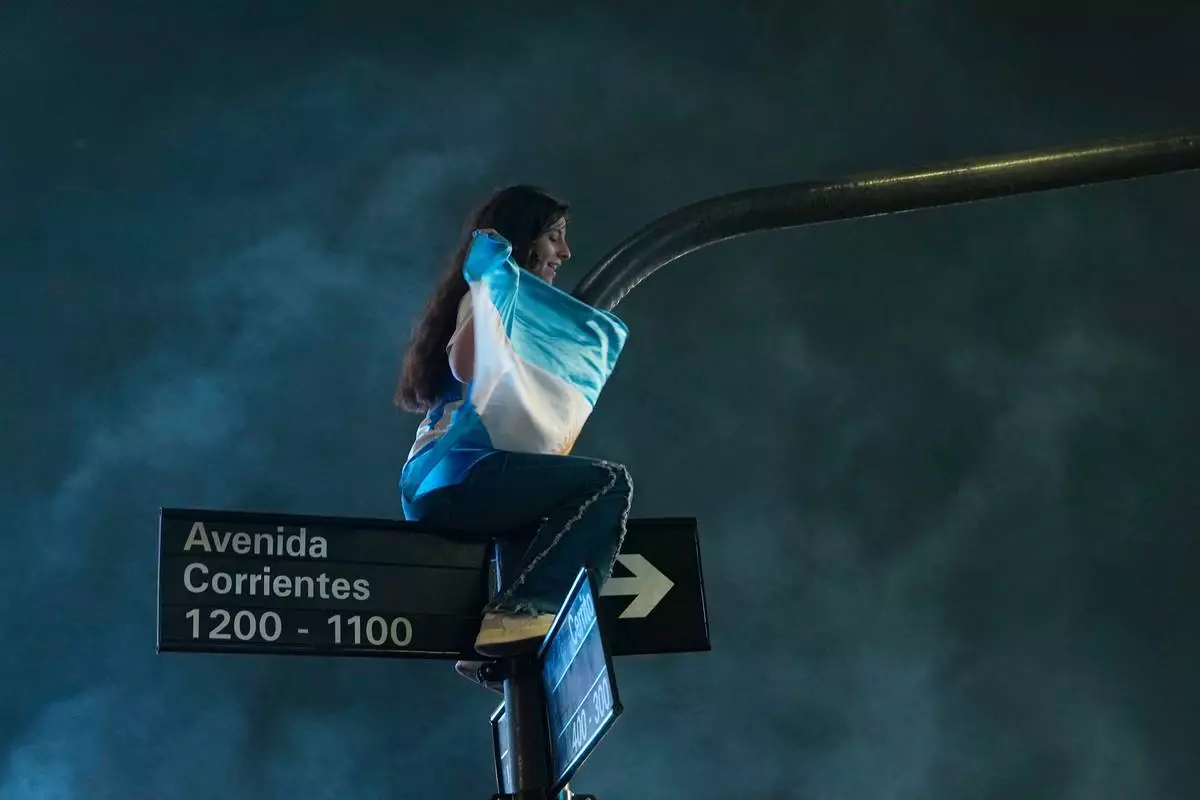
A fan perches atop a traffic signal during celebrations of Argentina's victory over England in a World Cup semifinal soccer match in downtown Buenos Aires, Argentina, Wednesday, July 15, 2026. (AP Photo/Natacha Pisarenko)
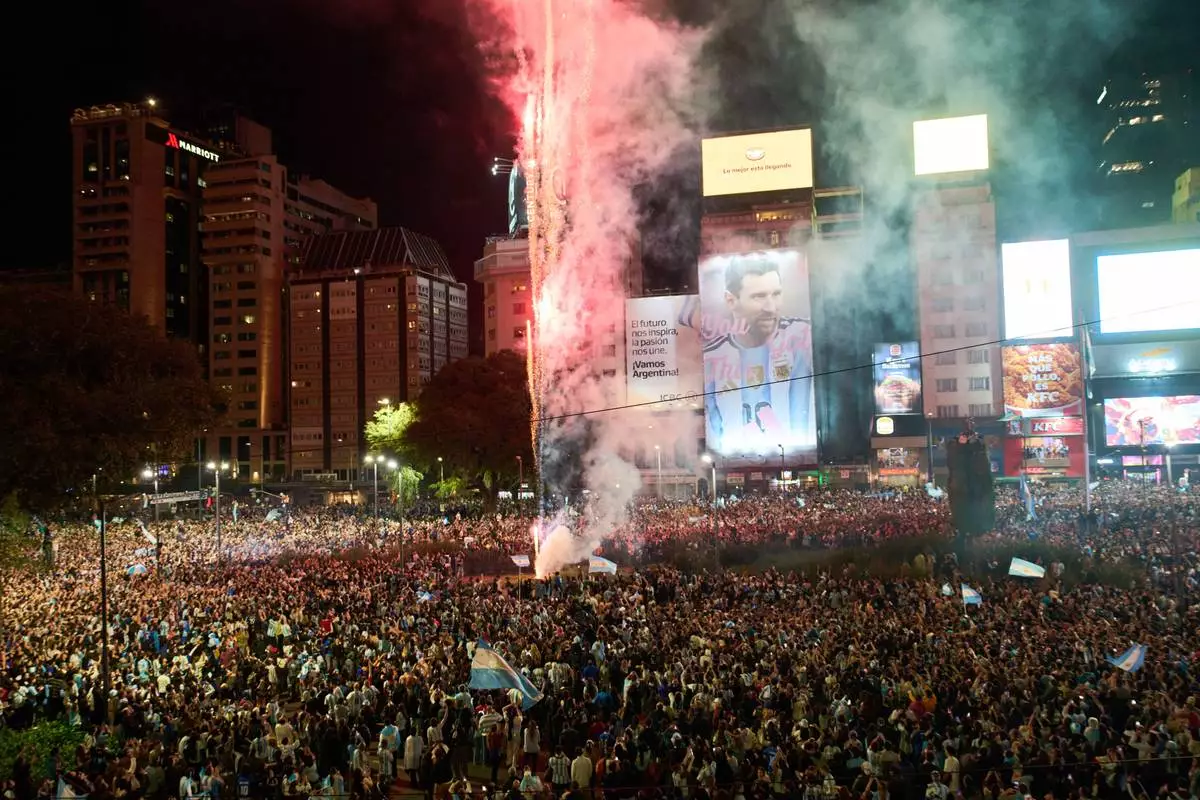
Fans celebrate Argentina's victory over England in a World Cup semifinal soccer match in downtown Buenos Aires, Argentina, Wednesday, July 15, 2026. (AP Photo/Rodrigo Abd)

A family celebrates Argentina's victory over England in a World Cup semifinal soccer match while driving through Buenos Aires, Argentina, Wednesday, July 15, 2026. (AP Photo/Gustavo Garello)
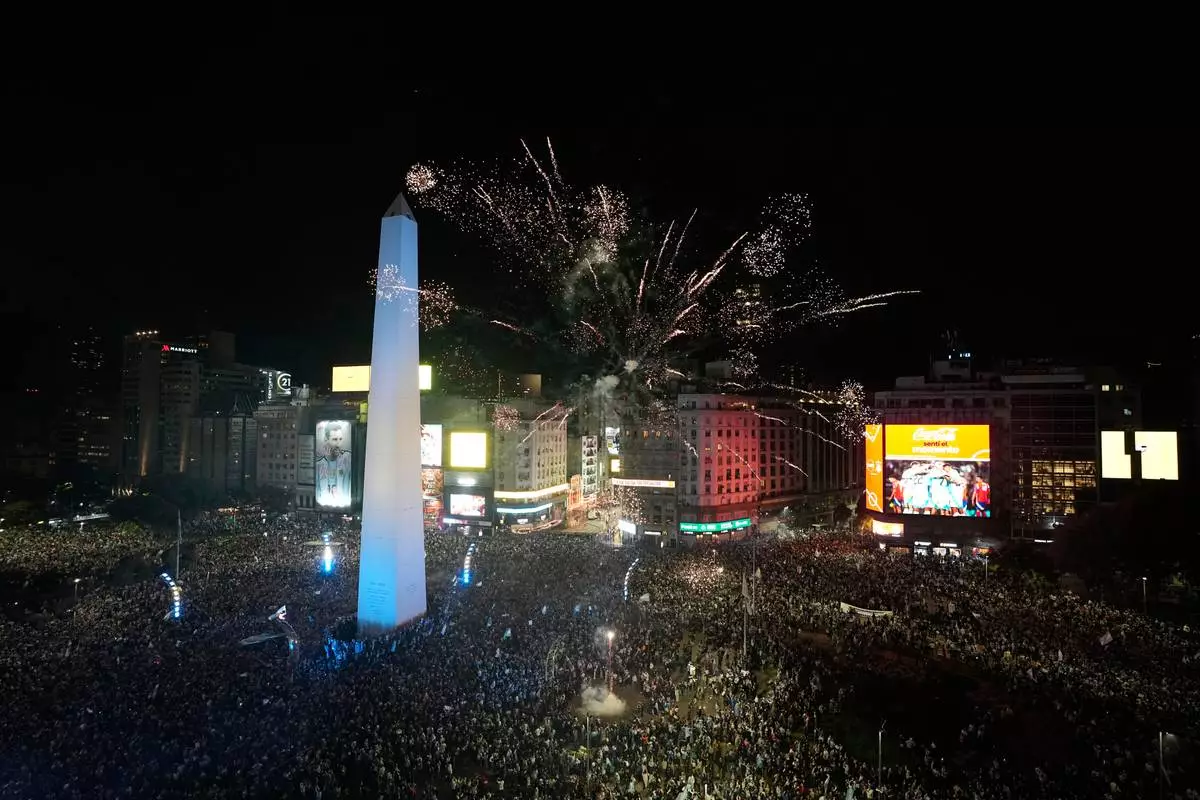
Fans celebrate Argentina's victory over England in a World Cup semifinal soccer match around the Obelisk in downtown Buenos Aires, Argentina, Wednesday, July 15, 2026. (AP Photo/Natacha Pisarenko)