NEW YORK (AP) — A former cargo ship captain pleaded guilty on Wednesday to drugging and raping a 21-year-old U.S. Merchant Marine Academy cadet who was working on the vessel as part of the academy’s Sea Year training program.
John Merrone, 53, pleaded guilty just as his trial was about to start in Brooklyn federal court. He admitted that he had sexual intercourse with the cadet without her consent “on the ship, in the middle of the ocean” after knocking her out with an intoxicant in 2019.
A jury had been picked and the woman, identified only as Jane Doe, was in the courthouse waiting to testify. Prosecutors were also planning to call as witnesses several other women who have accused Merrone of sexual assaults over the last three decades.
The Associated Press generally does not name people who say they have been sexually assaulted, unless they agree to be identified.
Merrone was previously convicted of false imprisonment and battery after a Florida Keys waitress accused him of having sex with her against her will, but an appeals court overturned the verdict and prosecutors didn't retry the case.
The former cadet, who still works in the maritime industry, watched through tears from the courtroom gallery as Merrone impassively said “guilty” to each of five charges, including aggravated sexual abuse and abusive sexual contact.
Her lawyer, Ryan Melogy, said she turned to him afterward and said, “It's over.”
“Sex crimes are notoriously difficult to prosecute in general,” Melogy said. “When they occur in the middle of the ocean aboard a ship, the level of difficulty involved in prosecuting them probably increases exponentially.”
Merrone faces up to life in prison, but Assistant U.S. Attorney Kayla Bensing said federal sentencing guidelines call for about 15 to 19 years behind bars. Merrone's lawyers said they think that estimate is too high. The guidelines are advisory, and the judge, Ramon E. Reyes Jr., could sentence him to more or less time.
Merrone will remain free on bail until sentencing, which is scheduled for Dec. 22. He and his lawyers, Bruce Barket and Nicole Aloise, declined to comment as they left court.
“It is my hope that today’s guilty plea will give the survivor of this attack some measure of closure knowing that the defendant has been held accountable for his despicable conduct,” U.S. Attorney Joseph Nocella Jr. said.
In a statement, the U.S. Merchant Marine Academy said it “remains committed to providing a safe, professional, and respectful learning environment for all midshipmen, both on campus and at sea.”
According to prosecutors, Merrone began sending the cadet and another student Facebook messages a few weeks before they boarded his ship, the 623-foot-long (190-meter-long) Liberty Glory, for a voyage from Bahrain to Corpus Christi, Texas.
On Sept. 9, 2019, after more than a month onboard and with a little more than a week left in the journey, prosecutors said Merrone messaged the cadet and her friend asking that they come to his room for a “soda.”
“Captain you know I stay away from soda !” the cadet wrote.
“U may like my soda!?!?” Merrone replied.
The women acquiesced, prosecutors said, and the captain poured them each a drink from an already open bottle of alcohol, then opened a new bottle and poured a drink for himself.
Soon after having some of the drinks, the women “lost recollection of the remainder of the evening,” prosecutors said.
The cadet awoke the next morning in her bed wearing only a shirt and bra but not pants or underwear, feeling nauseous; she had a headache and felt vaginal discomfort, prosecutors said. Her friend awoke with stomach cramping and a debilitating headache, prosecutors said. She did not accuse Merrone of sexual assault.
Merrone called the cadet to his room and told her he had “fun last night,” that “one thing led to another” and asked her to do it again, prosecutors said. After the cadet told him she didn't remember what happened and that the encounter was not consensual, Merrone offered her money, which she declined, prosecutors said.
Merrone later sent the cadet a photograph of herself holding money on what she believed to be from the night of the assault, along with a message: “lol. That how u make a woman happy!!!!” She didn't recall the photo being taken, prosecutors said.
After that, prosecutors said, the captain went to the cadet's room and pulled from his pocket the underwear she had been wearing the night of the assault.
The U.S. Merchant Marine Academy, in Kings Point, New York, trains students to work in the commercial shipping industry. It has an enrollment of about 1,000 students. It is one of five military service academies, and the only one under the U.S. Department of Transportation.
In 2016, the academy temporarily shut down the Sea Year program, which sends cadets to work on container ships, oil tankers, passenger liners and other vessels, amid sexual abuse and bullying concerns. The program resumed in 2017 on vessels operated by three companies that the academy said had implemented new preventive policies.
The Sea Year program was suspended again in 2021 after another cadet said a cargo ship supervisor got her drunk and raped her. It resumed after more safety protocols were put in place.
Congress passed the Safer Seas Act, which strengthened reporting requirements for sexual offenses aboard U.S.-flag commercial vessels. The academy updated its amnesty policy to encourage reporting by sexual assault and harassment victims and witnesses.
It has expanded prevention education and support resources, provides all cadets with satellite phones during Sea Year and conducts confidential interviews with cadets returning from the program.
The academy, in its statement, said it “will continue working with Congress, industry partners, and its federal partners to further strengthen the safety and well-being of every midshipman.”
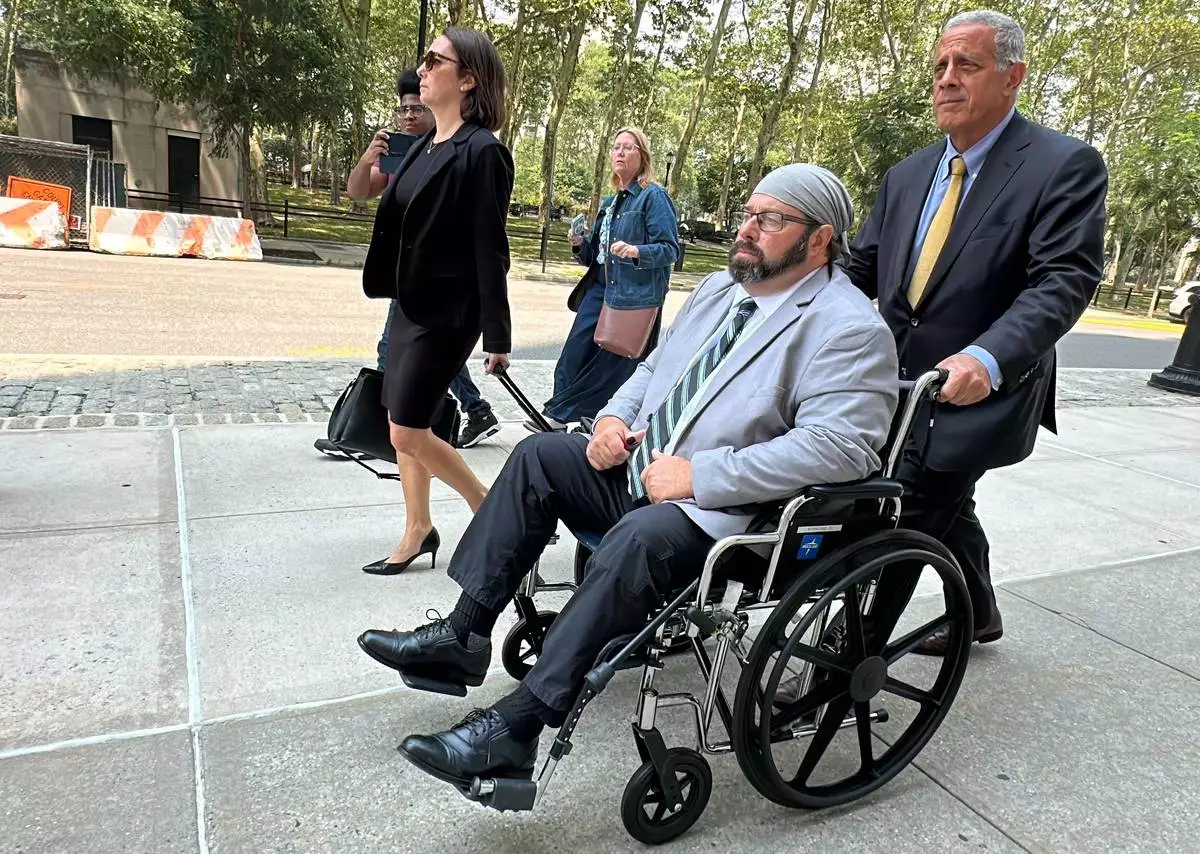
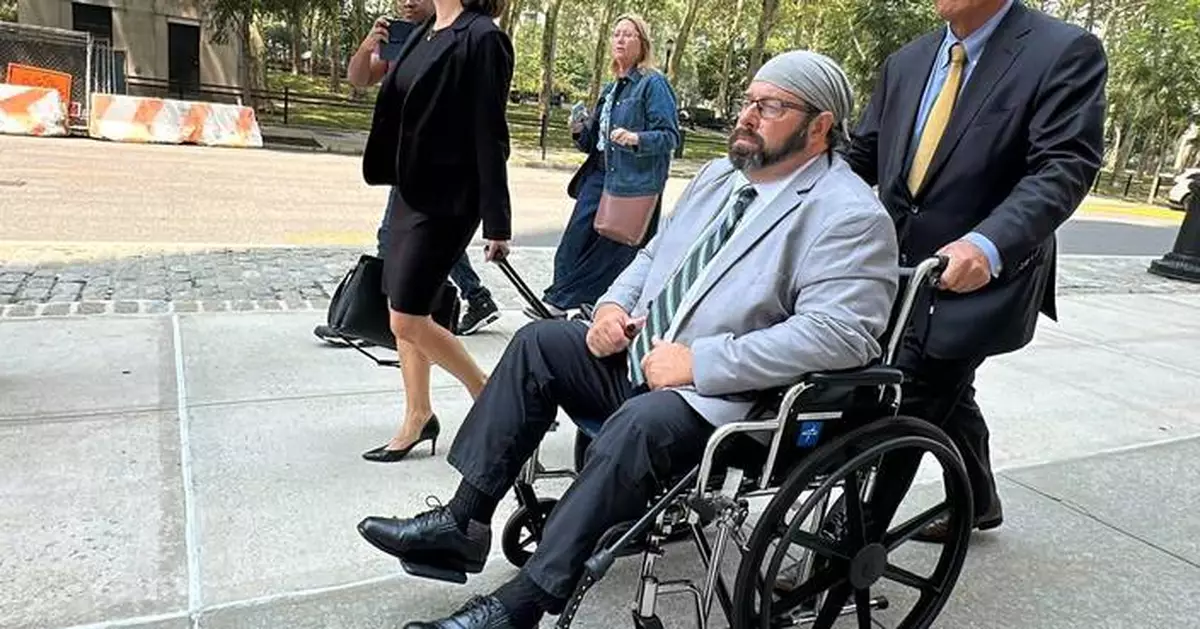
Former cargo ship captain John Merrone is wheeled out of federal court in the Brooklyn borough of New York by his lawyer, Bruce Barket, Wednesday, July 15, 2026, after pleading guilty to charges he drugged and sexually assaulted a U.S. Merchant Marine Academy cadet in 2019 while she was working on the vessel. (AP Photo/Michael R. Sisak)
WASHINGTON (AP) — President Donald Trump wants Immigration and Customs Enforcement officers to keep pulling over vehicles, signaling his opposition Wednesday to plans announced just a day earlier to suspend most traffic stops following another string of fatal shootings.
It's not clear whether ICE will quickly reverse course and resume most stops, which have been a key tool in Trump's immigration crackdown.
Ending those stops, Trump wrote, would be “playing right into the criminal’s hands.”
“We CANNOT give up one of ICE’s most important and effective Crime Fighting tools, THE TRAFFIC STOP!” Trump wrote Wednesday on his social media site.
Hours after Trump made his views known, Homeland Security Secretary Markwayne Mullin issued his own statement saying people illegally in the country would be “arrested and deported wherever they are.” While Mullin didn't directly say whether ICE officers will be allowed to carry out traffic stops, he later said in a statement that he and Trump “are on the same page," and that they want ICE officers “to have all options available to keep them safe while executing our mission.”
ICE's enforcement tactics are coming under renewed criticism after three people died during encounters with federal officers within a week. In Florida, a 28-year-old man was killed Tuesday after he was hit by a tractor trailer while running from immigration and other federal officers, authorities said.
Before that, two motorists were shot and killed by ICE officers — one in Texas last week and another in Maine on Monday.
After the Maine killing, Trump administration officials told ICE officers to suspend most vehicle stops, people familiar with the decision said Tuesday.
Since the immigration crackdown began, federal officers confronting drivers have opened fire several times, saying the drivers’ vehicles had posed a danger. Policing experts have long said that shooting into moving cars presents a danger of its own and should almost always be avoided.
There have been at least 10 deaths involving encounters with immigration agents since Trump launched his deportation campaign. At least four of them involved people in vehicles, a trend so troubling that Republican U.S. Sen. Susan Collins of Maine urged Department of Homeland Security leaders “to cease all non-urgent vehicle stops.”
Two shootings in a week, she said Wednesday, “raise very serious questions” and warrant a halt in that approach for the time being.
ICE has been under pressure to beef up arrest and deportation numbers. It says people being sought are increasingly staying in their homes, and it often blames immigration advocates who advise immigrants to stay in homes unless ICE produces a warrant signed by an independent judge.
ICE officers say that means they’re forced to find other ways to make arrests.
More protests are planned after hundreds gathered Tuesday to remember Johan Sebastián Durán Guerrero, the 25-year-old Colombian national who was shot in his car Monday.
Karolina Rojas, his partner and the mother of their young daughter, shared a photo on Instagram of the three hugging and smiling.
“I love you, my darling, my life. I love you. I have no words for this pain. You were my everything. Please watch over me. Help me find the strength to carry on. Stay with me always. Don’t leave me alone. I’m begging you, my love," she wrote.
Durán Guerrero illegally entered the U.S. on Sept. 1, 2023, through the southern border, DHS said Wednesday. Advocacy groups said that when he was killed, he was authorized to work in the U.S.
Sen. Angus King, I-Maine, said the Homeland Security secretary told him on Monday that ICE officers were in Biddeford to serve an arrest warrant but that it wasn't for the person who was shot.
When ICE tried to stop a vehicle driven by someone who came from a home under surveillance, the “vehicle attempted to flee the scene and, fearing for public safety, an officer discharged his weapon,” the department said.
In its statement Wednesday, DHS said Guerrero was released into the U.S. after crossing the border.
The department didn't answer questions about the agent who shot him.
Photos showed bullet holes in Durán Guerrero’s car windshield, but the officers involved didn’t have body cameras, leaving many questions.
Republican Texas Gov. Greg Abbott, a staunch supporter of Trump's immigration crackdown, said Wednesday that the state's top law enforcement unit would investigate the fatal shooting of Lorenzo Salgado Araujo in Houston.
DHS' account of the July 7 shooting is disputed by three other men who were riding in a van with Salgado Araujo at the time. A public viewing for Salgado Araujo, a homebuilder from Mexico, was set for Thursday in Houston.
More than a week after the shooting, new court records show the FBI is investigating if drugs were found in the van, according to a search warrant application signed by a federal judge Tuesday.
FBI special agent David McNeilly stated in an affidavit that he observed four plastic bags of a white substance appearing to be meth inside the van. DHS has not stated that suspected drugs were the reason why ICE officers engaged in the traffic stop. The FBI referred questions about the search warrant to the U.S. Attorney’s Office for the Southern District of Texas, which did not immediately respond to a request for comment.
The ACLU of Texas, which is providing legal representation for Salgado Araujo’s family, said the Trump administration “lacks credibility” to investigate itself.
Outgoing Colombian President Gustavo Petro called the shooting of Durán Guerrero in Maine a targeted killing “at the hands of the U.S. government.”
In Wednesday’s social media post, Trump told ICE to be “judicious, fair and smart, and go back and do your very important job.”
Border czar Tom Homan told reporters that the investigation needs to play out and that officers will be held accountable if they are found to have acted inappropriately or illegally.
Maine’s Democratic governor, Janet Mills, said ICE should be scrapped as a federal agency if it can’t be fixed.
Mills, who has criticized ICE before, said Wednesday that the agency needs changes “before more families are robbed of a loved one.”
Whittle reported from Biddeford, Maine. Associated Press reporters Jack Brook in New Orleans, Michael R. Sisak in New York, John Seewer in Toledo, Ohio, Isabel DeBre in Buenos Aires, Argentina, Elliot Spagat in Park City, Utah, Anna Wilder in Austin, Texas, and Darlene Superville in Washington contributed to this report.
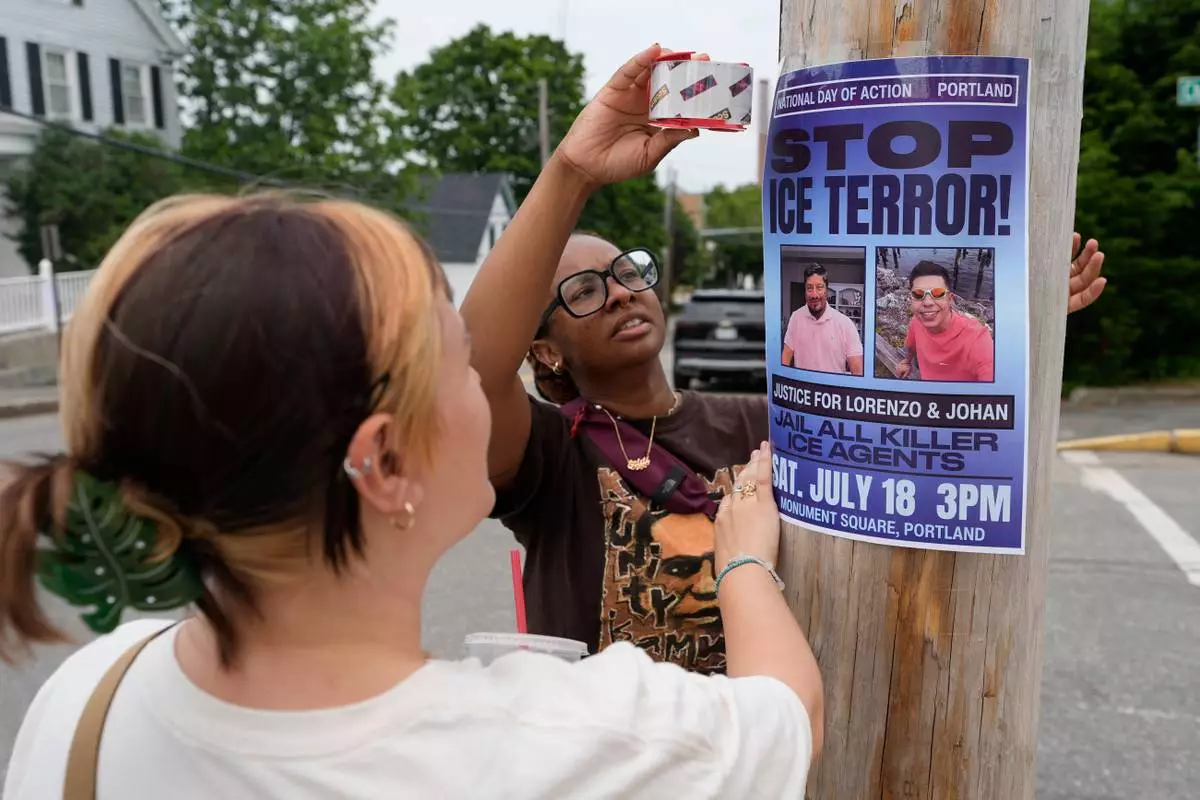
Angeliki Cintron, left, and Saidi Moseley post a notice of an upcoming gathering in response to the recent killings by U.S. Immigration and Customs Enforcement agents, in Biddeford, Maine, Wednesday, July 15 2026. (AP Photo/Robert F. Bukaty)
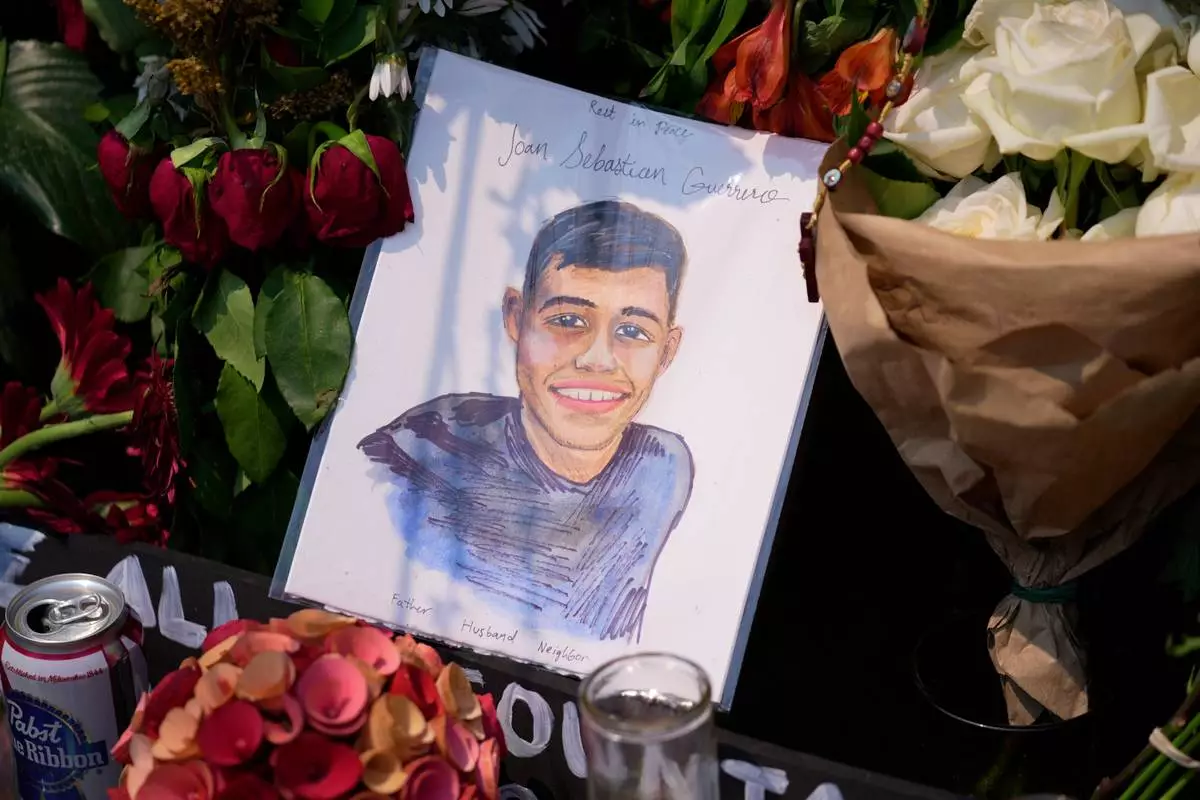
A portrait of Johan Sebastián Durán Guerrero, the man killed by U.S. Immigration and Customs Enforcement, is displayed among flowers and tributes at a makeshift memorial in Biddeford, Maine, Wednesday, July 15 2026. (AP Photo/Robert F. Bukaty)
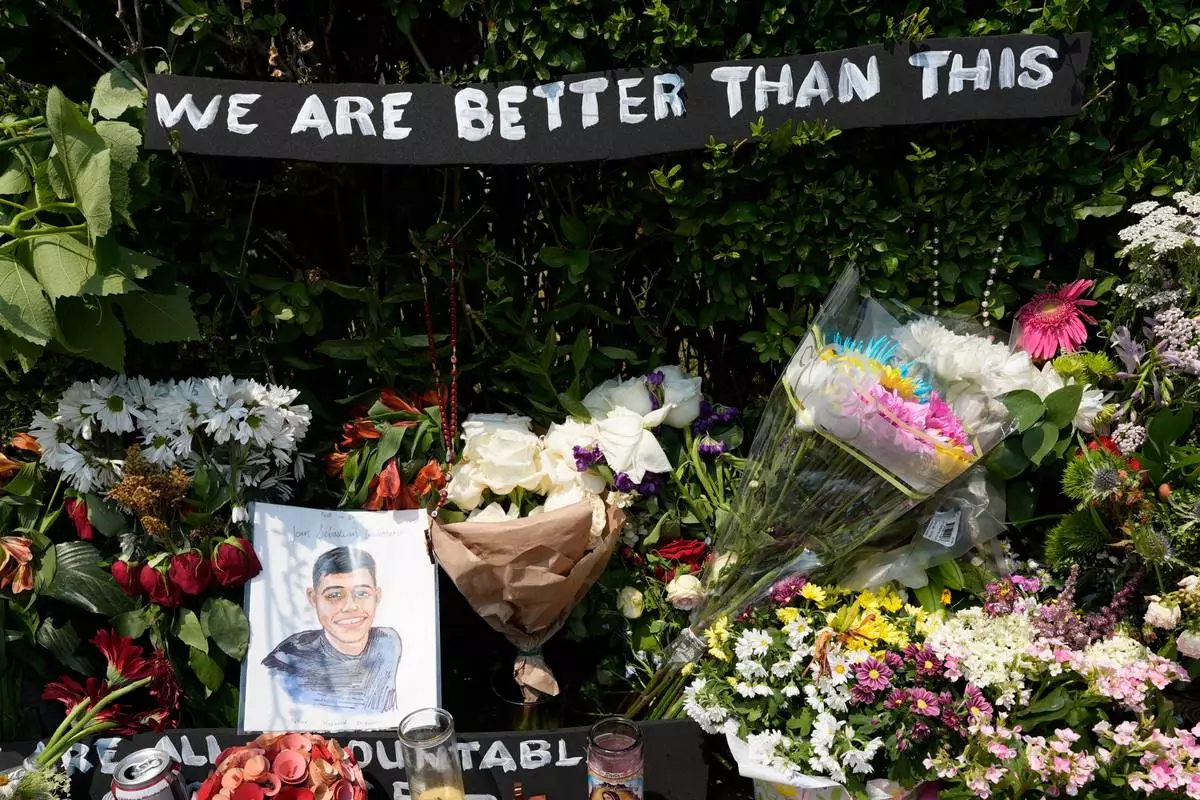
A portrait of Johan Sebastián Durán Guerrero, the man killed by U.S. Immigration and Customs Enforcement, is displayed among flowers and tributes at a makeshift memorial in Biddeford, Maine, Wednesday, July 15 2026. (AP Photo/Robert F. Bukaty)
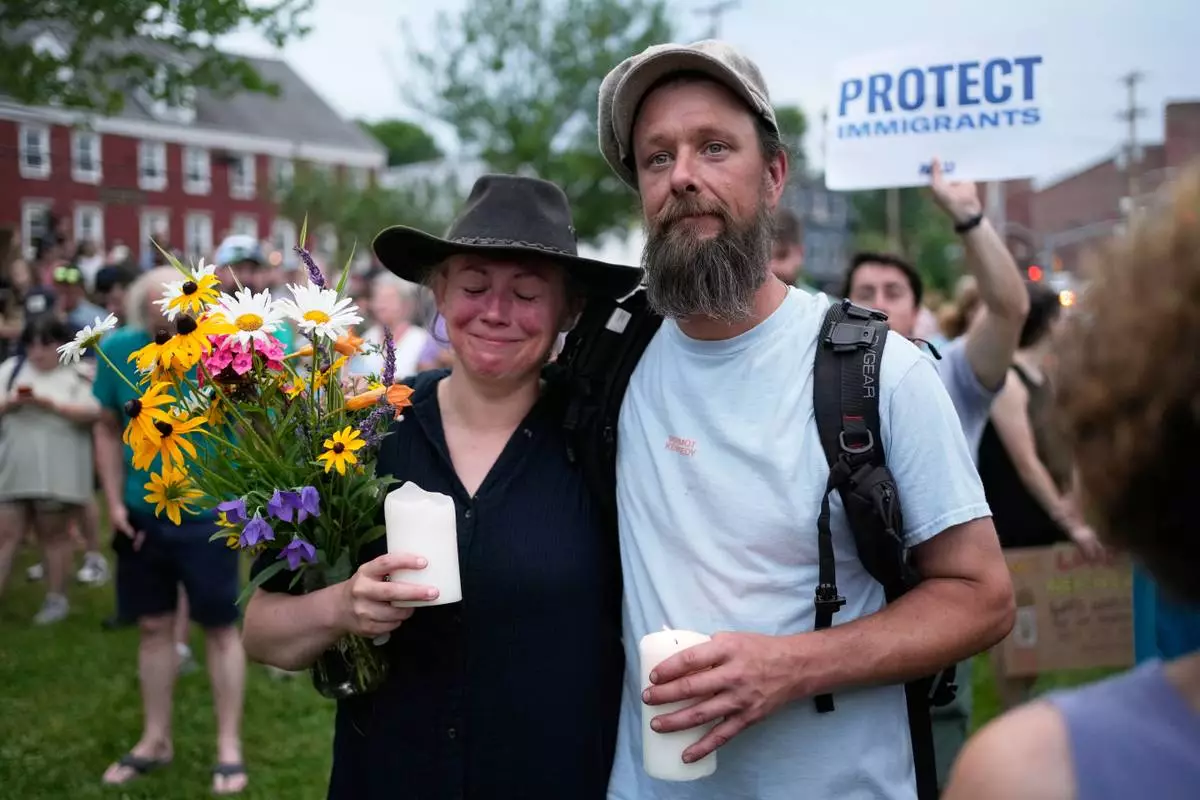
Attendees stand during a vigil after a man was shot and killed by U.S. Immigration and Customs Enforcement on Monday, July 13, 2026, in Biddeford, Maine. (AP Photo/Robert F. Bukaty)
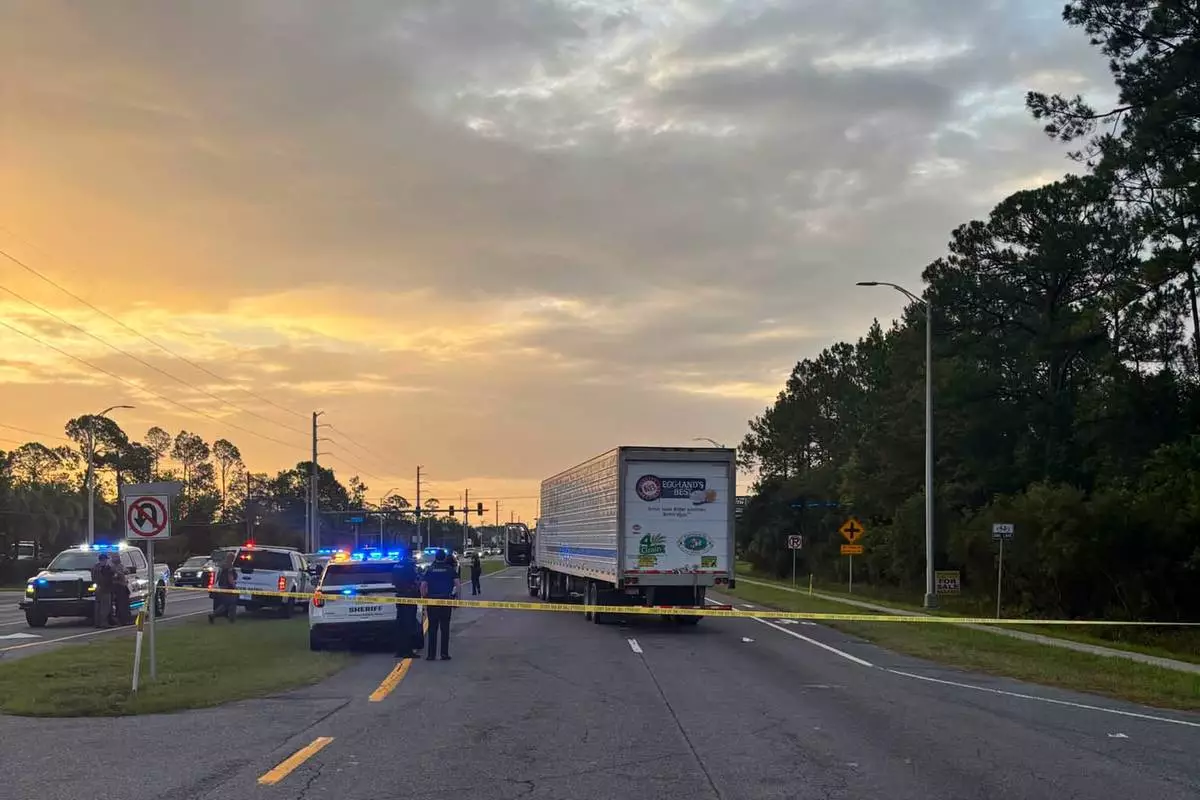
In this photo provided by the St. Johns County Sheriff's Office, the eastbound lanes of SR 16 between Outlet Mall Boulevard and Inman Road in St. Augustine, Fla., are shutdown after a fatal collision. (St. Johns County Sheriff's Office via AP)
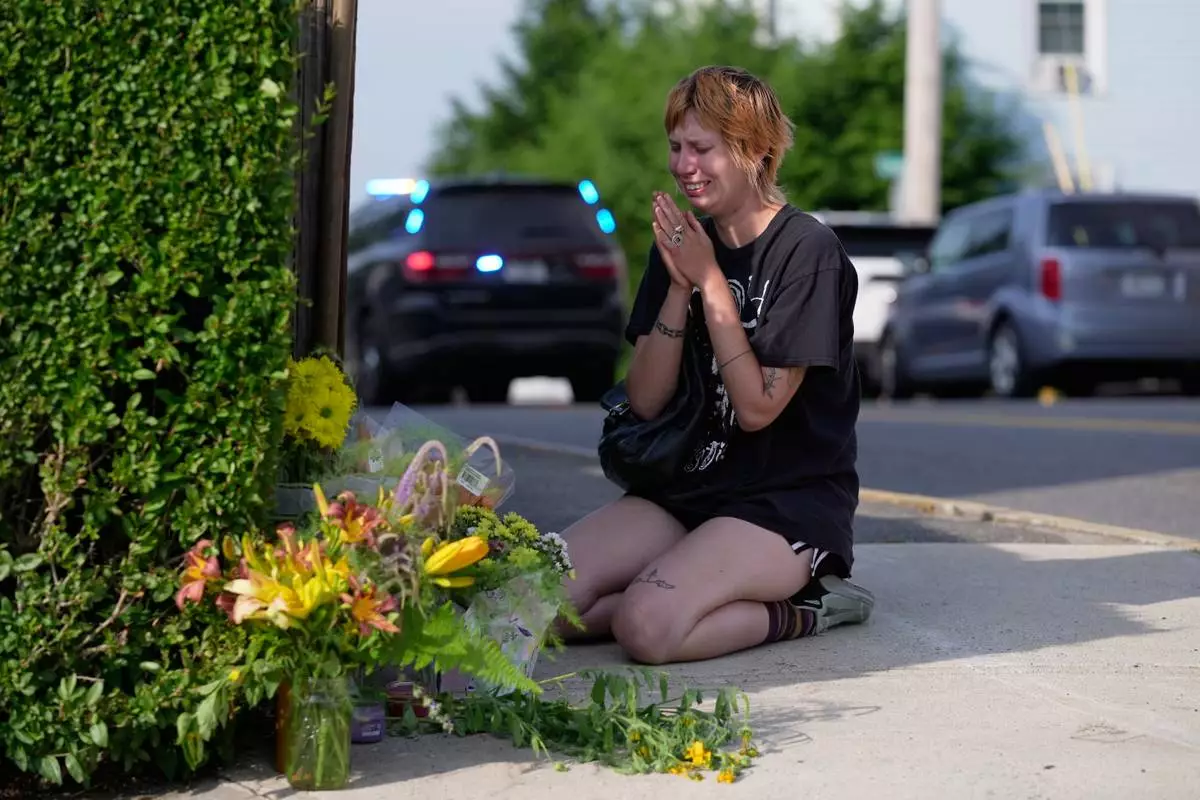
A woman prays after leaving flowers near the scene where a man was shot and killed by U.S. Immigration and Customs Enforcement on Monday, July 13, 2026, in Biddeford, Maine. (AP Photo/Robert F. Bukaty)

Friends and relatives hold a vigil for Johan Sebastián Durán Guerrero, a Colombian national who was fatally shot by an Immigration and Customs Enforcement officer in Maine, at his family home in Bucaramanga, Colombia, Tuesday, July 14, 2026. (AP Photo/Jaime Moreno)

President Donald Trump speaks as he meets with Iraq's Prime Minister Ali al-Zaidi in the Oval Office of the White House, Tuesday, July 14, 2026, in Washington. (AP Photo/Julia Demaree Nikhinson)