PHOENIX (AP) — Election officials in Arizona's most populous county reached an agreement this week on how to jointly oversee the vote, ending a prolonged legal battle.
Maricopa County Recorder Justin Heap sued the predominantly GOP board of supervisors in June 2025, alleging it illegally took control of certain aspects of election administration. The board called the lawsuit frivolous and said Heap was wasting taxpayer money.
They reached a settlement this week to resolve the lawsuit after mediated negotiations, and the board approved it.
“This deal gets us out of the courtroom,” board Chairwoman Kate Brophy McGee, said after Tuesday's vote. “I’m sick of drama. We are done with being on the front page going forward.”
Heap said his office's objective is simple: to ensure its statutory responsibilities are carried out lawfully.
“I am pleased we have reached an agreement that, when implemented, will restore those responsibilities and establish a clear framework for administering elections moving forward,” Heap said in a statement jointly released with the board.
Under the agreement, an interim plan proposed by Heap's attorney and approved by the Arizona Supreme Court will govern the July 21 primary. Early voting began in late June.
Heap largely will oversee early voting, selection of ballot drop box locations and other duties. The board will handle other areas, including Election Day voting, ballot tabulation and voting location equipment maintenance. The board also will fund a $15 million information technology system and related positions.
Heap was backed in the lawsuit by America First Legal, a conservative public interest group founded by Stephen Miller, a deputy chief of staff in the White House. Heap had claimed the board transferred funding, IT staff and some key functions — including management of drop boxes and establishment of early voting sites — away from his office through an agreement negotiated with his predecessor.
Heap defeated incumbent recorder Stephen Richer, in a GOP primary, and won the 2024 general election.
The two were at odds over election administration in Maricopa County. In the past, Heap has stopped short of repeating false claims that the 2020 and 2022 elections were stolen. But he has said voters don’t trust the state’s voting system and that it is poorly run. Richer, also a Republican, relentlessly defended the legitimacy of the vote.
Supervisor Steve Gallardo, a Democrat, did not vote to approve the settlement and criticized Heap during Tuesday's board meeting.
“Honestly, I don’t think he wants to have an election that is conducted transparent or even an election that’s not compromised,” Gallardo said. “Now, with this, he owns it."
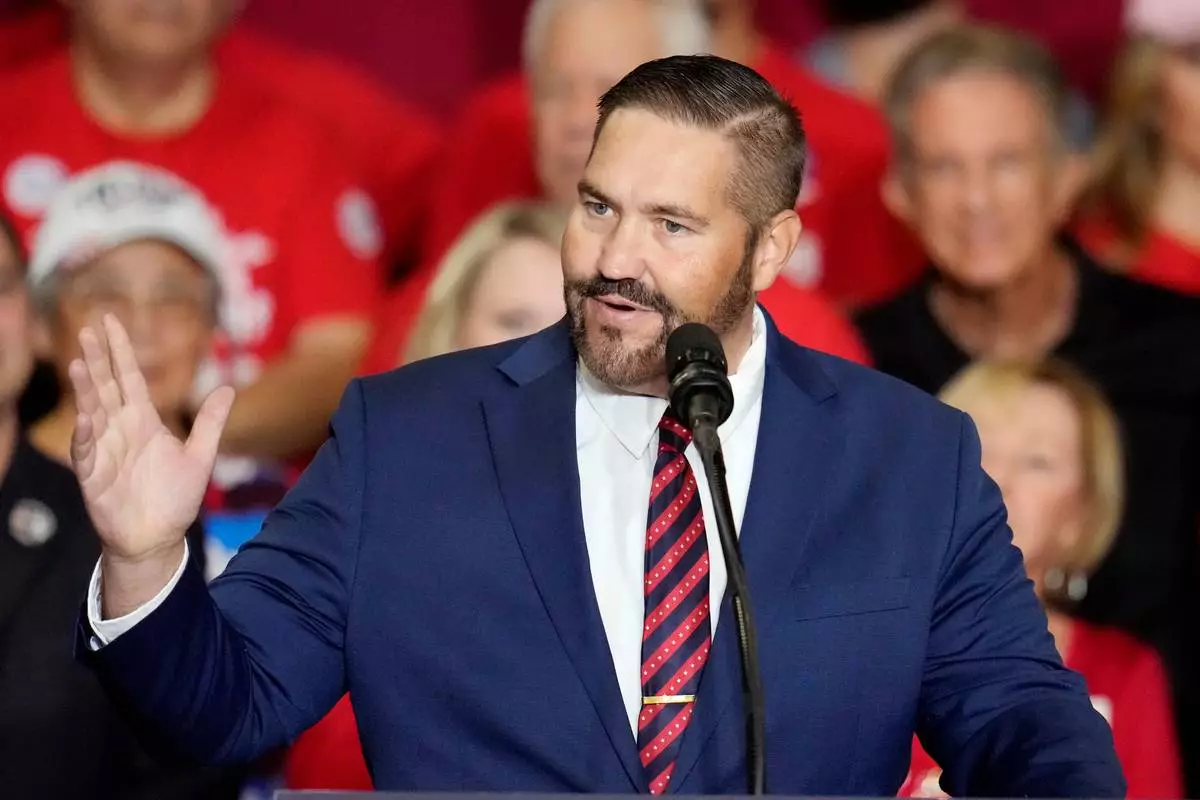
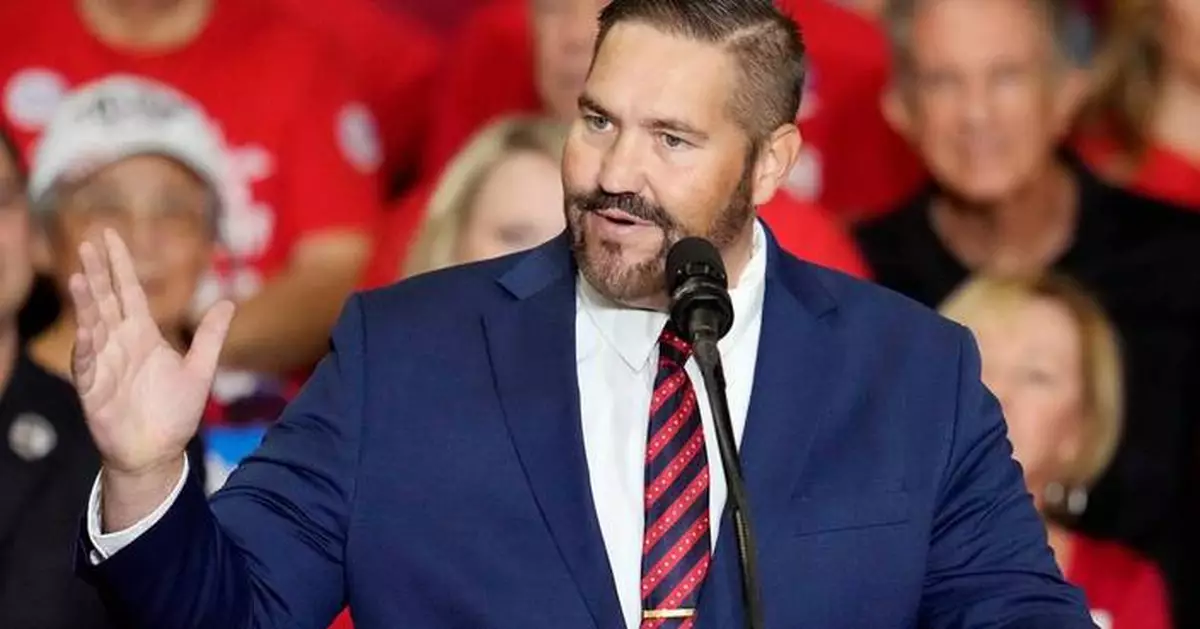
FILE - Maricopa County Recorder candidate Arizona state Rep. Justin Heap, R-Phoenix, speaks during a campaign event Oct. 22, 2024, in Peoria, Ariz. (AP Photo/Ross D. Franklin, File)
DUBAI, United Arab Emirates (AP) — The U.S. military said early Thursday it ended its latest wave of airstrikes targeting Iran, with attacks rattling parts of northern Iran for the first time in recent days.
Iranian state media reported explosions around Iran’s capital, Tehran, for the first time in the latest attacks over control of the Strait of Hormuz, the narrow mouth of the Persian Gulf through which a fifth of all oil and natural gas once passed in peacetime.
It also reported American attacks targeted Iran’s Semnan province, home to ballistic missile production and its space program.
There was no immediate word on casualties or damage from the attacks.
THIS IS A BREAKING NEWS UPDATE. AP’s earlier story follows below.
DUBAI, United Arab Emirates (AP) — Iranian attacks targeted Bahrain and Kuwait early Thursday after the U.S. reimposed a naval blockade on Iran and intensified its airstrike campaign in retaliation for Tehran’s attacks on ships trying to pass through the Strait of Hormuz.
The American strikes hit an Iranian army barracks, killed at least seven troops and wounded hundreds of people across the country, Iranian officials said.
There was no immediate word on damage or casualties from the Iranian strikes.
Days of back-and-forth strikes by the U.S. and Iran across the Middle East — and renewed threats to the waterway crucial to global energy supplies — have shredded the interim deal to end the conflict and the region could tip back into all-out war.
The U.S. first imposed a blockade in April and lifted it last month after signing the interim deal that paused the fighting and set a 60-day period for negotiations over issues such as Iran’s nuclear program. Those talks have stalled as fighting over the Strait of Hormuz has intensified.
When the U.S. and Israel launched the war on Iran on Feb. 28, Tehran effectively closed the waterway to shipping traffic — a move that sent the price of oil, fertilizer and many other goods soaring far beyond the region and gave Iran major leverage in negotiations. Those rising prices pose a particular challenge to U.S. President Donald Trump and his Republican Party, which hopes to retain control of Congress in elections in November. But Washington has struggled to successfully reopen the waterway.
About 24 hours after the blockade went into effect, the U.S. military opened fire and disabled a merchant vessel.
Iran’s parliament speaker and lead negotiator, Mohammad Bagher Qalibaf, said Iran was prepared for a fuller military confrontation if the U.S. does not live up to the terms of the interim deal, and Iran’s paramilitary Revolutionary Guard threatened to halt all energy exports from the Middle East over the blockade.
“The export of oil and gas from the region will be either for everyone or for no one,” the Guard said.
Soon after the U.S. launched its third wave of strikes in 24 hours, Trump said Iran was ready to strike a peace deal, but he did not elaborate.
“They don’t like what we’re doing, and they do want to settle. We’ll find out whether or not we settle with them, or we just finish it off,” he said Wednesday at a defense summit at the U.S. Army War College in Pennsylvania.
Later Wednesday, Trump said on social media that Tehran made a “gesture of Goodwill” by releasing an American citizen wrongly detained in Iran since 2024. He didn't release further details. Human rights lawyer Jared Genser released a statement identifying the detainee as his client Dena Karari, a U.S.-Iranian citizen who runs a nonprofit and was charged with espionage.
The U.S. carried out a wave of strikes, hitting dozens of targets overnight, the military’s Central Command said Wednesday, and then resumed striking Iran during daylight — an unusual move that further signaled the increasing tempo of the attacks. Another wave of strikes began late Wednesday.
U.S. Central Command said it spotted Curacao-flagged oil tanker Belma sailing toward Kharg Island and, after the ship “ignored multiple warnings,” a U.S. aircraft disabled the merchant vessel by firing hellfire missiles into the ship’s smokestack.
In addition to the now-disabled Belma, the U.S. military said it had to speak with two other commercial vessels, but they complied with their instructions to turn away.
Among the U.S. military's targets was Greater Tunb Island, which is viewed as a strategic point in the Strait of Hormuz. Central Command said the attack targeted Iranian defense and missile sites.
Another strike targeted a barracks for Iran’s 388th Mechanized Infantry Brigade, which operates tanks and armored vehicles, in Sistan and Baluchestan province, Iranian state television reported. The report said Americans fired at least 13 missiles in the attack and the seven dead included conscripts and career soldiers. A number of troops were wounded.
More than 35 people have been killed and more than 300 wounded by U.S. airstrikes in recent days, said Hossein Kermanpour, a spokesperson for the Iranian Health Ministry. Kermanpour did not break down the figures between civilians and combatants.
The announcement marked the first overall toll given by Iranian authorities for this round of fighting. The number of wounded was far larger than for any other recent violence between Iran and the U.S. The army said it would make “a decisive response,” according to state TV.
U.S. Navy Adm. Brad Cooper, who leads Central Command, said in a statement that Iran had launched dozens of missiles and drones at neighboring Gulf Arab countries.
Missile-alert warnings sounded Wednesday in Bahrain and Kuwait as they faced incoming Iranian fire — a daily occurrence recently. In a post on X, Bahrain’s Interior Ministry urged people to “head to the nearest safe place.”
Jordan said it shot down three incoming Iranian missiles. Iran claimed attacks on the three nations, all of which host U.S. forces.
In a statement published online, Qalibaf said the United States had not lived up to the terms of the interim peace deal, which he said included “Iranian arrangements” over the Strait of Hormuz.
“Now that we have entered the implementation phase, the United States, having exhausted its legal and diplomatic options, is trying to undermine those Iranian arrangements through force,” he wrote.
Qalibaf's comments appeared aimed at critics within Iran who oppose negotiations with the U.S. He argued that negotiations should not be equated with compromise or surrender, but as part of a broader strategy of resistance.
The latest round of fighting is focused on the Strait of Hormuz, through which a fifth of the world’s oil and natural gas trade passes during peacetime. How to reopen the strait has bedeviled the U.S. since Iran choked it off in the early days of the war.
During the interim deal, some ships began moving through the passage using a route near Oman overseen by the U.S. military that is outside Tehran’s control.
In recent days, Iran attacked ships using that route — and back-and-forth attacks ensued. The U.S. has threatened to reopen the strait by force — but experts say that would require a much bigger armada if not tens of thousands of ground troops. Imposing the blockade is another way to put pressure on Iran.
But in the meantime, oil prices are rising. The price for Brent crude oil, the international standard, traded above $85 a barrel on Wednesday — more than 15% higher than the price before the war, but still well below the nearly $120 reached at the height of the conflict.
Analysts with the International Monetary Fund warned Wednesday that while a surplus of oil had kept prices low, “much of that room has now been used up.”
“Unless inventories are replenished, the world will start from a weaker position when the next shock comes,” Azim Sadikov and Jean-Marc Natal wrote in a blog post.
Associated Press writers Michelle Price, Konstantin Toropin, Will Weissert, Collin Binkley and Fatima Hussein in Washington, Christopher Weber in Los Angeles, and Nasser Karimi in Tehran, Iran, contributed to this report.
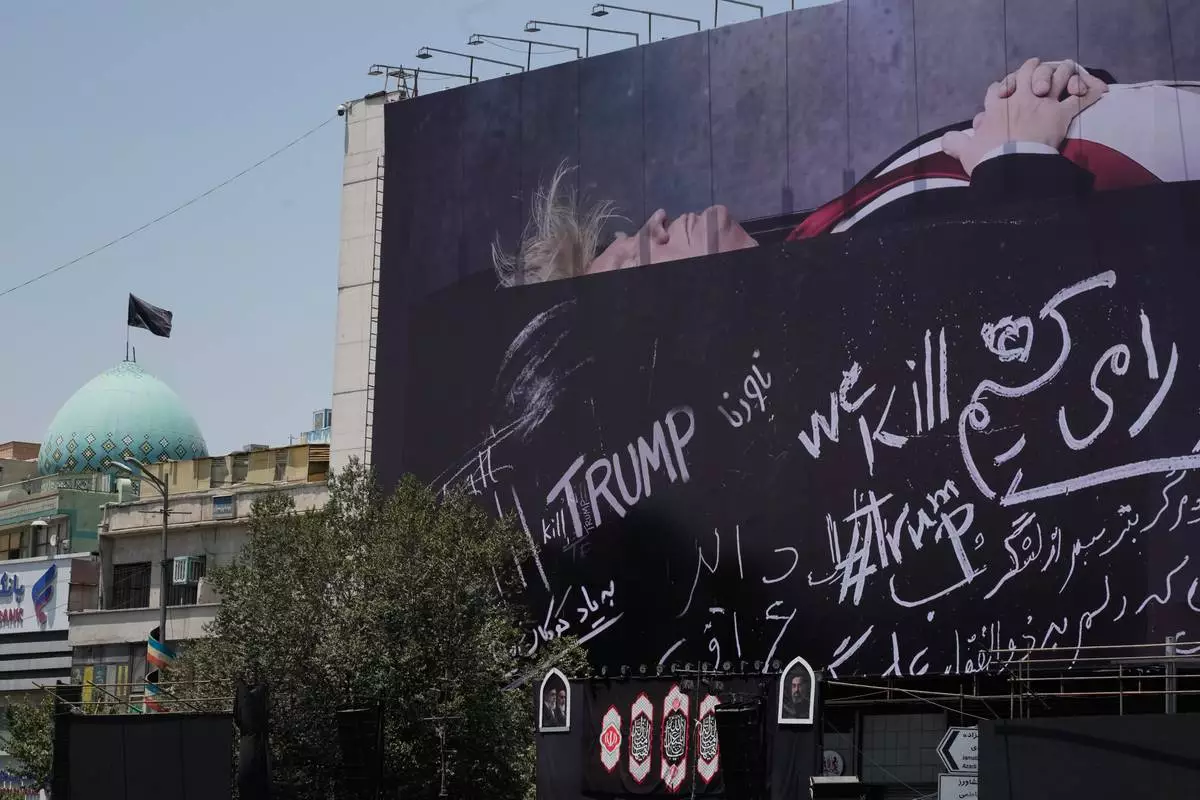
A billboard depicting U.S. President Donald Trump lying on what appears to be a coffin and bearing anti-Trump messages, including the phrase "We Kill Trump," is seen at Islamic Revolution Square in downtown Tehran, Iran, Wednesday, July 15, 2026. (AP Photo/Vahid Salemi)
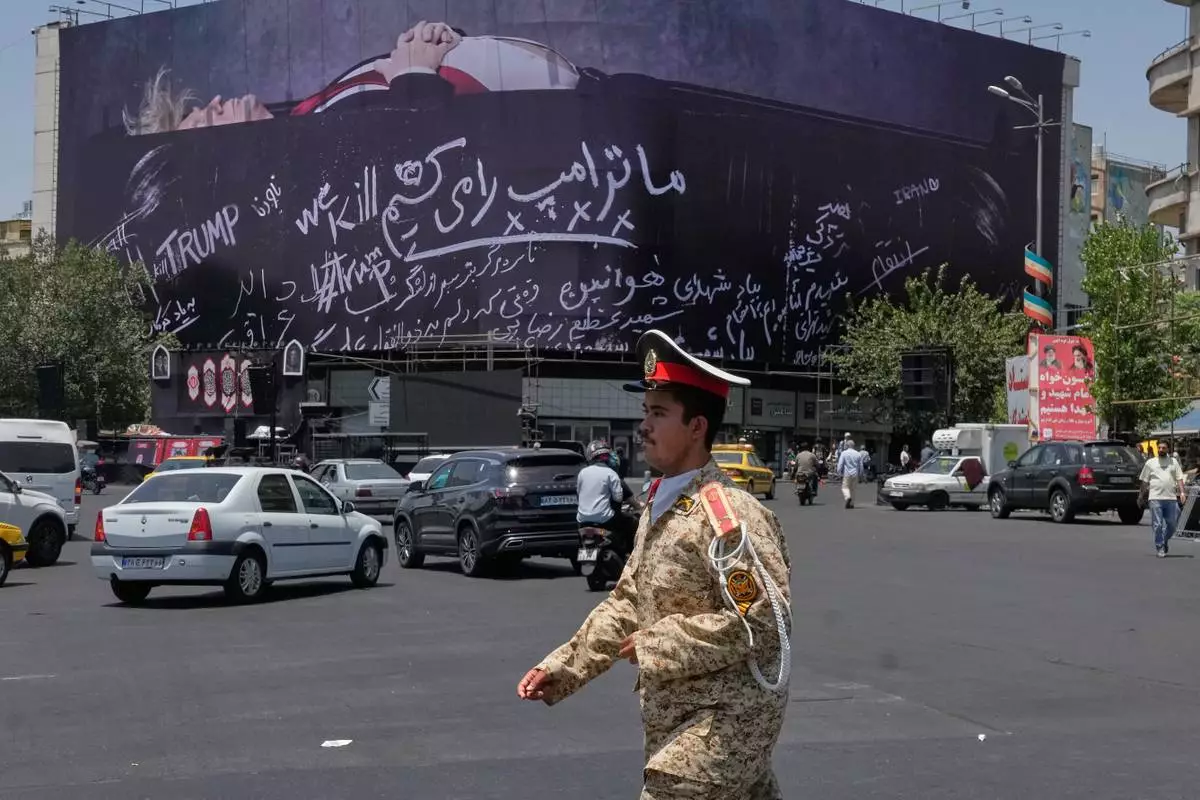
An army cadet walks past a billboard bearing anti-Trump messages, including the phrase "We Kill Trump," at Islamic Revolution Square in downtown Tehran, Iran, Wednesday, July 15, 2026. (AP Photo/Vahid Salemi)
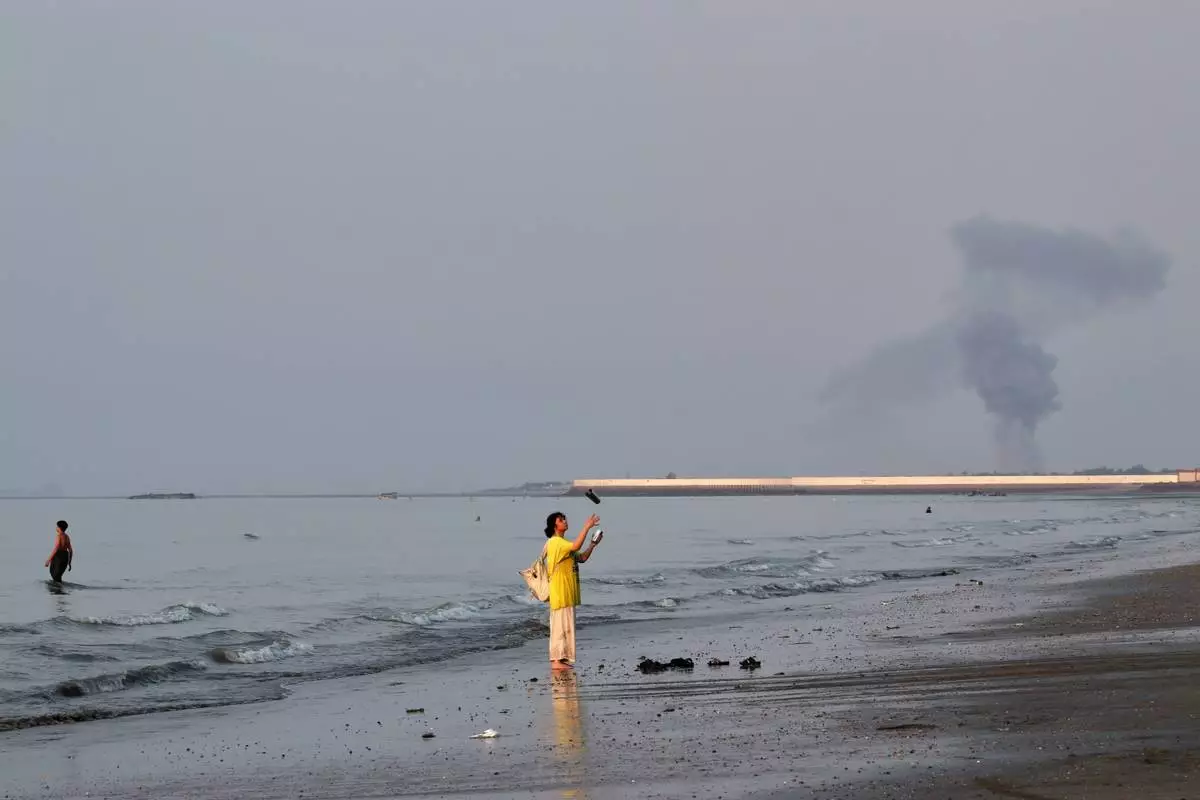
A woman stands at the water's edge along the Strait of Hormuz as a plume of smoke rises in the background following an explosion, off Bandar Abbas, Iran, Monday, July 13, 2026. (Razieh Poudat/ISNA via AP)
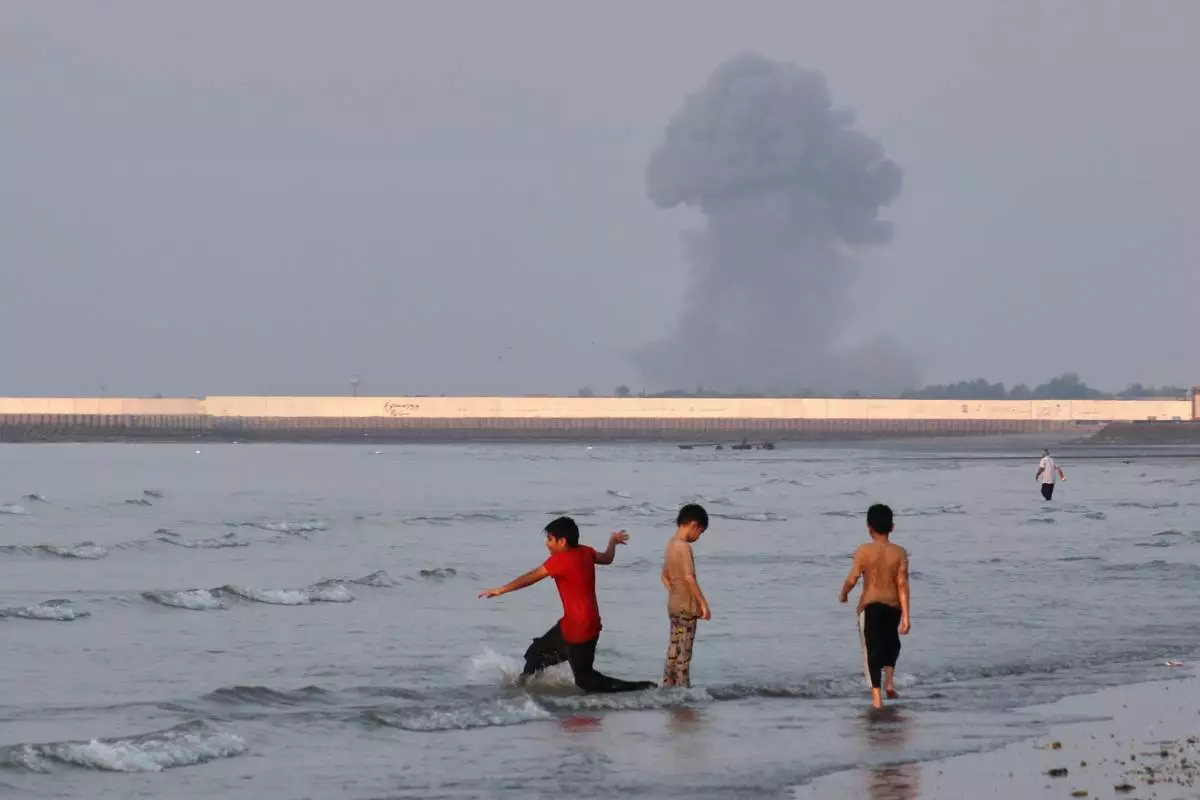
Three boys play in the shallow waters of the Strait of Hormuz, as a plume of smoke rises from an explosion in the background, off Bandar Abbas, Iran, Monday, July 13, 2026. (Razieh Poudat/ISNA via AP)
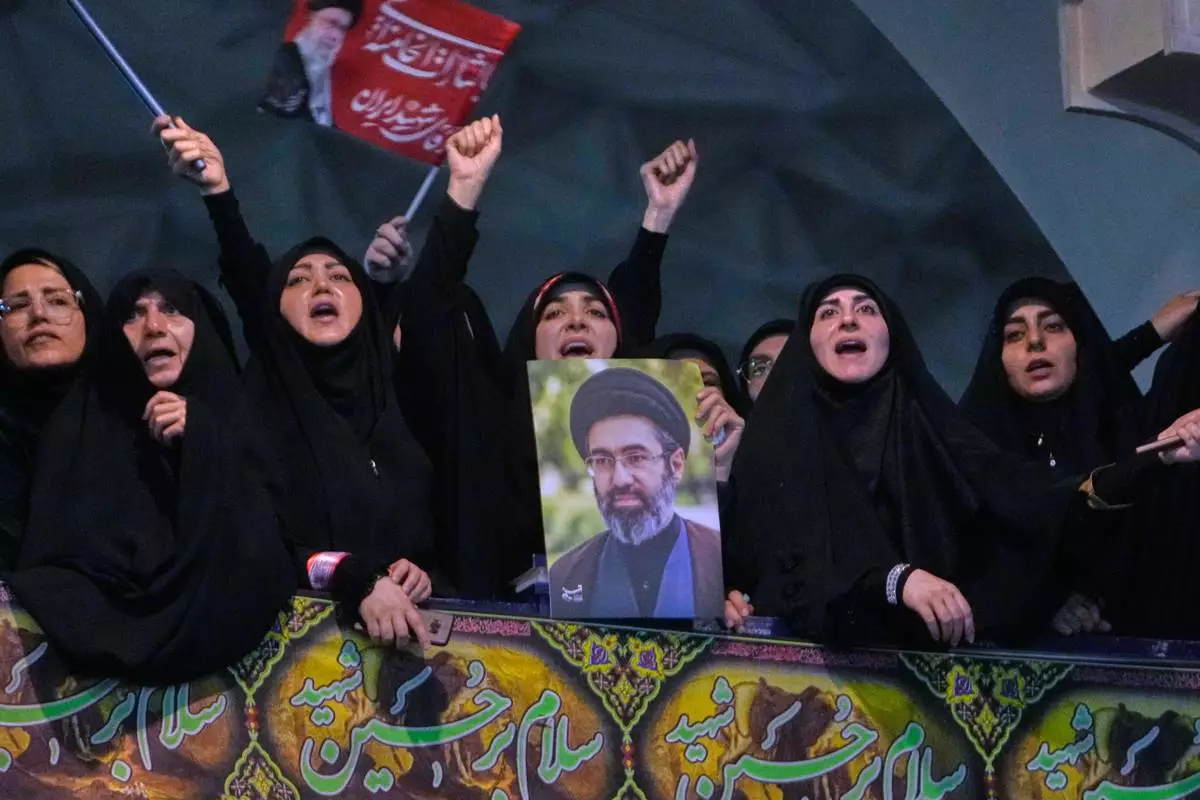
Mourners chant slogan as one of them holds a poster of the Supreme Leader Ayatollah Mojtaba Khamenei in a ceremony commemorating the late Supreme Leader Ayatollah Ali Khamenei at the Imam Khomeini Mosalla Grand Mosque in Tehran, Tuesday, July 14, 2026. (AP Photo/Vahid Salemi)