China's carbon emissions trading market has played a significant role in reducing carbon emissions and promoting green development over the past five years, said an official from the Ministry of Ecology and Environment, as the market marks its fifth anniversary on Thursday.
Since its launch, the national carbon market has undergone rapid development and grown into the world's largest of its kind.
As of June this year, cumulative trading volume of carbon emission quotas had exceeded 917 million tons, with the total turnover surpassing 61.7 billion yuan (about 9.12 billion U.S. dollars).
In the first half of 2026, the trading volume reached 52.96 million tons, up about 37 percent year on year.
"During the 14th Five-Year Plan period (2021–2025), the thermal power sector alone achieved 530 million tons of carbon emission reductions, with around 80 percent of enterprises lowering their carbon emission intensity. Over the past three years, more than 200 small and outdated power units were shut down. Meanwhile, new emission-reduction projects including concentrated solar power and green hydrogen production have been promoted. In addition to cutting carbon emissions, the market has also reduced sulfur dioxide by 27,000 tons, nitrogen oxides by 94,000 tons, and smoke and dust by 135,000 tons. The guiding role of carbon price is gradually taking effect," said Lu Shize, deputy director general of the Department of Climate Change at the ministry.
Over the past five years, the number of key emission entities covered by the market has expanded from 2,162 thermal power companies to 3,378 high-energy-consuming enterprises in sectors including steel, cement and aluminum smelting.
By leveraging the market mechanism to drive low-carbon transition, China's national carbon market has forged a path toward a win-win outcome for economic development, industrial upgrading and ecological improvement.
"By 2027, we aim to achieve full coverage of key industrial emission sectors, so that the carbon price truly reflects abatement costs and sends clear market signals to all industries - higher emissions mean higher costs, while low-carbon transitions will yield returns. We must harness the market mechanism to inject strong momentum into achieving the target of reducing carbon emissions per unit of product by 3 percent across covered industries during the 15th Five-Year Plan period (2026–2030)," said Lu.
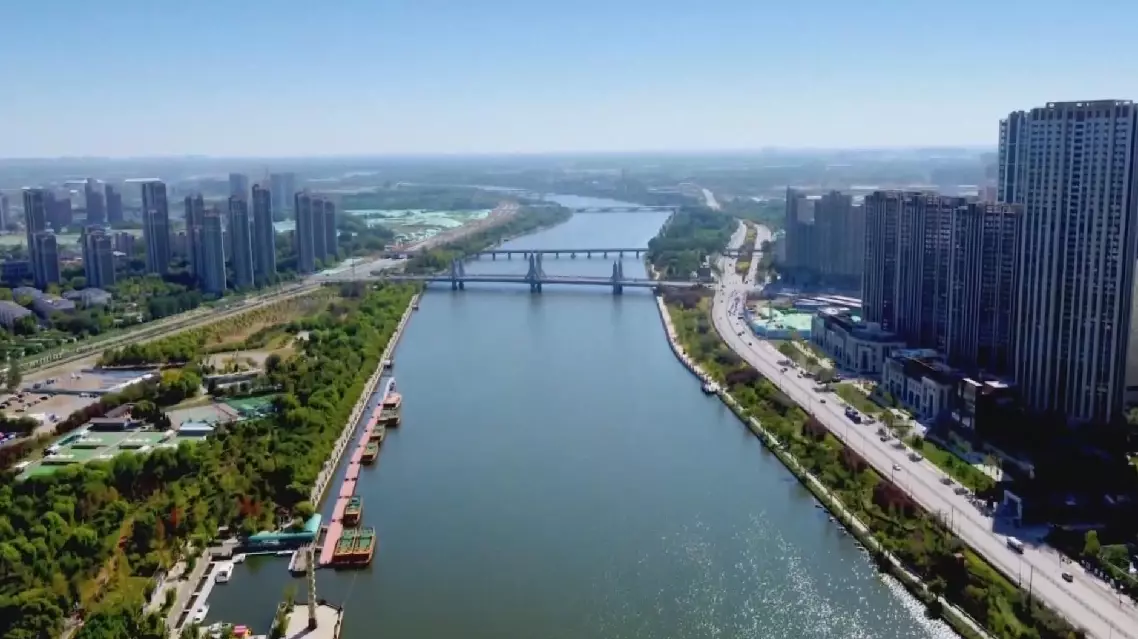
China's carbon market plays significant role in promoting green development: official
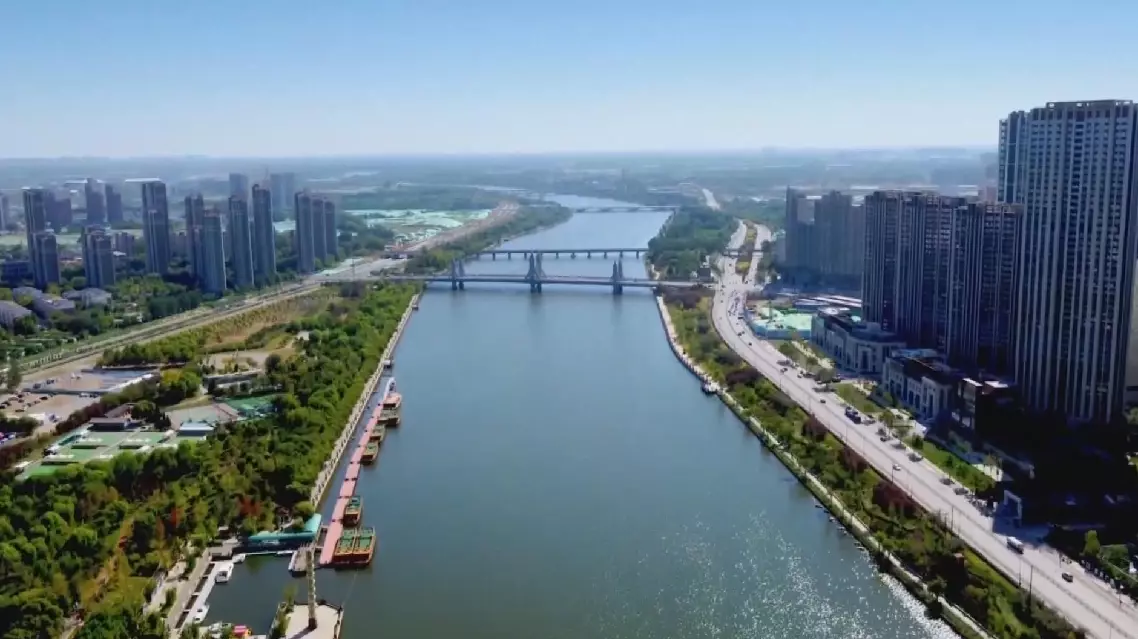
Prices for existing homes in China's four first-tier cities, namely Beijing, Shanghai, Guangzhou and Shenzhen, continued their upward momentum for a fourth consecutive month in June, according data from the National Bureau of Statistics on Wednesday.
In June, existing home prices in first-tier cities rose by 0.3 percent from May. Beijing saw a 0.1 percent increase, while Shanghai and Guangzhou each recorded a 0.4 percent rise, and Shenzhen posted a 0.3 percent gain.
The existing home transactions in Beijing reached 16,618 units in June, up about 10 percent from 15,139 units in the same month last year, according to online contract signing data from the Beijing Municipal Commission of Housing and Urban-Rural Development.
For the first half of this year as a whole, total transaction for existing homes in the capital hit 93,583 units, a 5.7 percent increase year on year, marking the highest first-half figure in five years.
Similarly, according to data from the Shanghai Real Estate Trading Center, the city's existing home transactions, including commercial properties, totaled 25,158 units in June, marking the fourth consecutive month that volumes have exceeded the 25,000-unit threshold. Over the first six months of the year, cumulative transactions in Shanghai surpassed 147,000 units, also hitting a five-year high for the same period.
In Guangzhou, the market remained active in June after the city issued a package of eight measures, including raising housing provident fund loan limits and launching a temporary subsidy program for home upgrades.
The transaction area of pre-owned residential property in the city reached 918,200 square meters in June, up 3.7 percent year-on-year.
"This year's transaction volume for existing homes has been more active than in the first half of last year, especially from March to May, when it continued to climb higher. The implementation of the eight measures for Guangzhou, along with the increase in the housing provident fund loan limit and the subsidy program for home upgrades, just happened to attract a large number of buyers with rigid housing demand," said Huang Liping, sales manager at a real estate agency in Guangzhou.
"In the first half of the year, there was also a very obvious phenomenon that residents' expectations have become more stable. This is prominently reflected in the fact that the phenomenon of existing home owners lowering prices significantly when listing their properties for sale has improved notably in the first half of this year," said Li Yujia, chief researcher at the Guangdong Provincial Housing Policy Research Center.
Data from the Shenzhen Real Estate Intermediary Association showed that Shenzhen recorded 6,168 resale home transactions in June, up 11.2 percent from a year earlier.
For the first half of 2026, cumulative resale residential transactions in the city reached 33,892 units, a 5 percent increase compared with the same period in 2025.
Existing home prices in first-tier cities up for 4th consecutive month in June