Skip to Content Facebook Feature Image

China's top political advisor attends reception commemorating 65th anniversary of China-DPRK treaty

China

China

China

China's top political advisor attends reception commemorating 65th anniversary of China-DPRK treaty

2026-07-16 20:59 Last Updated At:21:07

China's top political advisor Wang Huning and Pak Thae Song, premier of the Cabinet of the Democratic People's Republic of Korea (DPRK), attended and delivered speeches in Pyongyang on Thursday at a reception commemorating the 65th anniversary of the signing of the China-DPRK Treaty of Friendship, Cooperation and Mutual Assistance.

Wang, a member of the Standing Committee of the Political Bureau of the Communist Party of China (CPC) Central Committee and chairman of the National Committee of the Chinese People's Political Consultative Conference (CPPCC), is leading a party and government delegation to the DPRK for an official goodwill visit.

He said that 65 years ago, the older generations of leaders of China and the DPRK signed the China-DPRK Treaty of Friendship, Cooperation and Mutual Assistance, laying an important political and legal foundation for consolidating the friendship forged in blood between the two peoples.

Over the past 65 years, the two sides have upheld the spirit of the treaty, supported each other, stood united, cooperated closely and worked together, with political mutual trust continuously consolidated, exchanges and cooperation keeping pace with the times, and strategic coordination increasingly deepened, vividly demonstrating the defining features of China-DPRK relations -- friendship passed down from generation to generation, a shared future and mutual support, Wang noted.

Wang said that China is willing to work with the DPRK to resolutely implement the important consensus reached by General Secretary Xi Jinping and General Secretary Kim Jong Un, and take the commemoration of the treaty's 65th anniversary as an opportunity to carry forward the fine traditions and firmly steer bilateral ties in the right direction; deepen exchanges and mutual learning to continuously enhance the well-being and friendship of the two peoples; and demonstrate a sense of responsibility for the times and join hands to promote peace and stability in the region and the world at large.

Pak, who is also a member of the Presidium of the Political Bureau of the Central Committee of the Workers' Party of Korea and vice president of the State Affairs Commission of the DPRK, said that since its signing 65 years ago, the treaty has made important contributions to vigorously advancing DPRK-China relations and the development of the socialist cause in both countries, as well as to safeguarding peace, stability and security in Northeast Asia.

Today's solemn commemorative event fully demonstrates the treaty's great strategic importance and the strong vitality of the DPRK-China friendship, he added.

Pak said that the DPRK stands ready to follow the important consensus reached by General Secretary Kim and General Secretary Xi, continue carrying forward the spirit of the treaty, steadily strengthen DPRK-China relations with socialism at the core, and jointly open a new chapter in the friendship between the two countries.
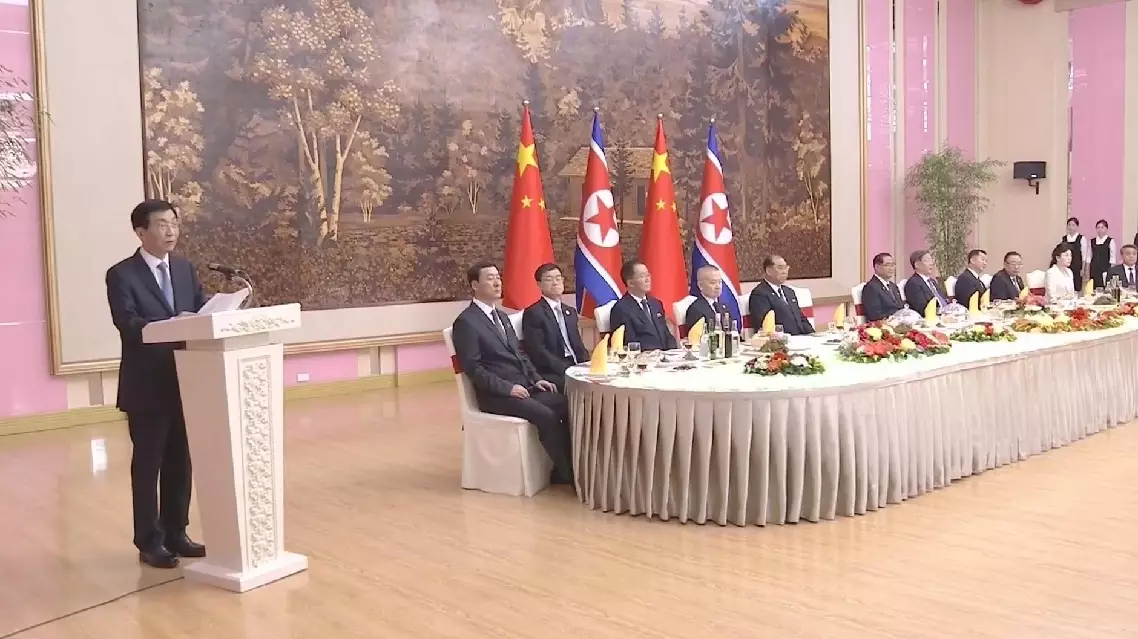
China's top political advisor attends reception commemorating 65th anniversary of China-DPRK treaty

China's top political advisor attends reception commemorating 65th anniversary of China-DPRK treaty
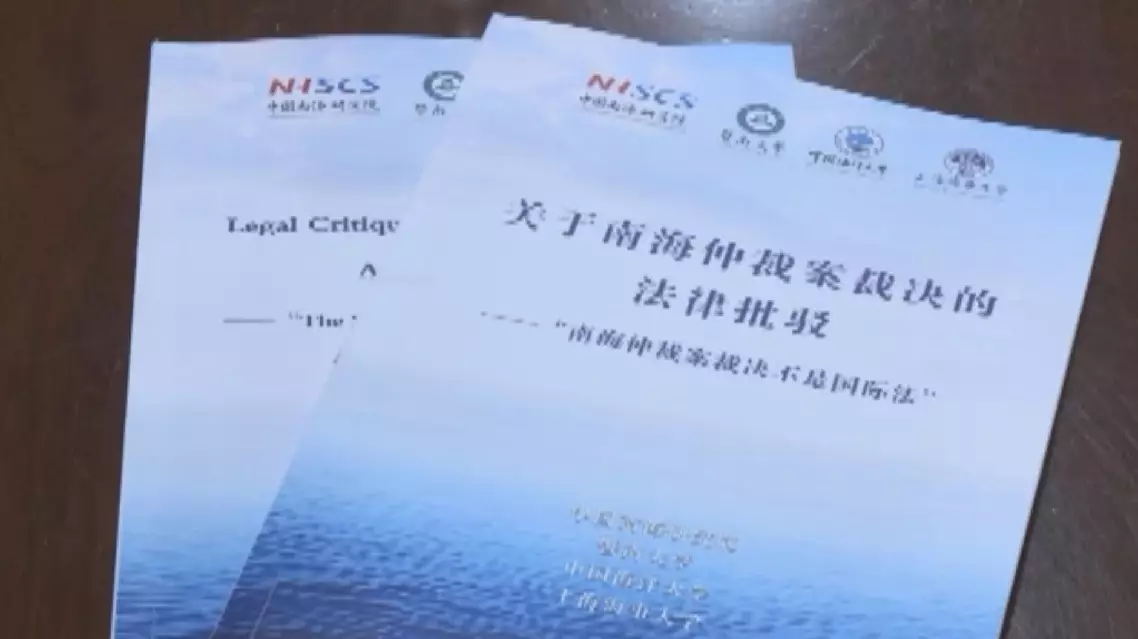
The so-called "South China Sea arbitration awards" run counter to the international judicial practice, according to a report released on Thursday.

The report, titled "Legal Critique of the South China Sea Arbitration Awards -- 'The South China Sea Arbitration Awards Are Not International Law'," was penned by scholars from the National Institute for South China Sea Studies, Jinan University, Ocean University of China, and Shanghai Maritime University.

The report presents its analysis along three main threads -- arbitral jurisdiction, the application of substantive rules, and the validity of the awards.

Many scholars pointed out that jurisdictional issues are the first problem to emerge in this case and also the most decisive legal obstacle.

"In fact, the way the Philippines packaged the dispute was a key prerequisite for the arbitral tribunal to overstep its authority in accepting the case. The report lays bare the entire process by which the Philippine side, through carefully crafted rhetoric, framed territorial issues and maritime delimitation disputes as issues that could be interpreted under the Convention (the United Nations Convention on the Law of the Sea). In essence, this is a sleight of hand that disguises sovereignty and maritime delimitation disputes as legal and technical issues," said Xu Qi, assistant dean in the School of Law of Jinan University.

According to the report, the arbitral tribunal's substantive hearing also exhibited serious systemic errors. Moreover, the "awards" were delivered by a makeshift "arbitral tribunal" without jurisdiction. They contained fundamental flaws in the application of law, and have no validity under international law from the outset.

"These arbitrators were all previously academics. But in this case, they acted more like politicians. In the 'South China Sea arbitration case', they had in fact abandoned their academic independence and respect for the law, and had instead become tools of political maneuvering. This is something we absolutely cannot accept," said Zhou Yong, vice president of the National Institute for South China Sea Studies.

The report wraps up by exploring how to settle the South China Sea issue. Scholars emphasized that consultation and negotiation is the right way forward.

"Through the release of this report, we also hope that more countries, especially the international community, will better understand the illegal nature of the 'South China Sea arbitration awards.' The 'awards' cannot be used to resolve the South China Sea issue, nor are they of any help in doing so. Therefore, we should properly return to the 'dual-track approach' -- that is, on the one hand, we set aside disputes, and on the other hand, we promote the peaceful resolution of the South China Sea issue through consultation and negotiation," Xu said.

South China Sea arbitration awards run counter to international judicial practice: report

South China Sea arbitration awards run counter to international judicial practice: report

Recommended Articles