SAN FRANCISCO--(BUSINESS WIRE)--Jul 16, 2026--
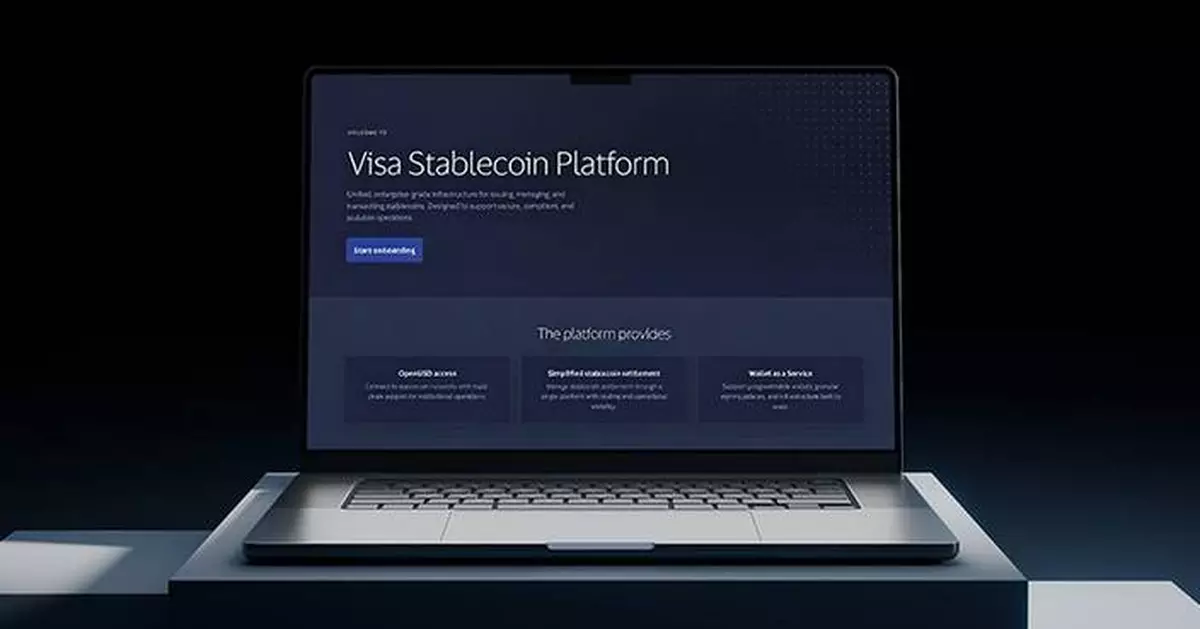
Today, Visa (NYSE: V) announced the Visa Stablecoin Platform (VSP), a new enterprise platform designed to help financial institutions, fintechs, and crypto natives access stablecoin capabilities through a single Visa-managed environment.
This press release features multimedia. View the full release here: https://www.businesswire.com/news/home/20260716292689/en/
Building on Visa’s broader crypto strategy, VSP gives FIs, fintechs and other payment providers a simple way to access, store, and redeem stablecoins, beginning with Open USD (OUSD), a new stablecoin recently introduced by Open Standard. This includes onchain wallet infrastructure through a newly introduced Wallet-as-a-Service offering and connectivity for minting and burning Open USD.
“Stablecoins are opening up a new layer of programmable money, but for most institutions the hard part isn’t the concept, it’s the operational reality,” said Jack Forestell, Chief Product and Strategy Officer, Visa. “With the Visa Stablecoin Platform, we’re giving our clients a single place to mint, move and manage stablecoin operations with the controls, security and network reach they already expect from Visa. It’s how we help them turn interest in stablecoins into real products and real payment flows.”
Visa Stablecoin Platform provides direct access to a range of stablecoin capabilities and flows alongside Visa’s network, risk and fraud capabilities, so institutions can move from exploration to implementation with greater confidence. This includes:
VSP is interoperable with Visa's existing stablecoin offerings, including stablecoin settlement, stablecoin-linked cards, and stablecoin money movement. Together, these capabilities provide a full stack of solutions that help FIs and fintechs come onchain and enable crypto platforms to access Visa's global network.
How to get Started
VSP, including Wallet-as-a-Service, is initially available for beta testing with select clients, providing an early opportunity to explore how stablecoins fit into their strategies. As clients test and refine use cases, Visa will use those learnings to inform how and where the platform scales to broader market availability.
About Visa
Visa (NYSE: V) is a world leader in digital payments, facilitating transactions between consumers, merchants, financial institutions and government entities across more than 200 countries and territories. Our mission is to connect the world through the most innovative, convenient, reliable and secure payments network, enabling individuals, businesses and economies to thrive. We believe that economies that include everyone everywhere, uplift everyone everywhere and see access as foundational to the future of money movement. Learn more at Visa.com.
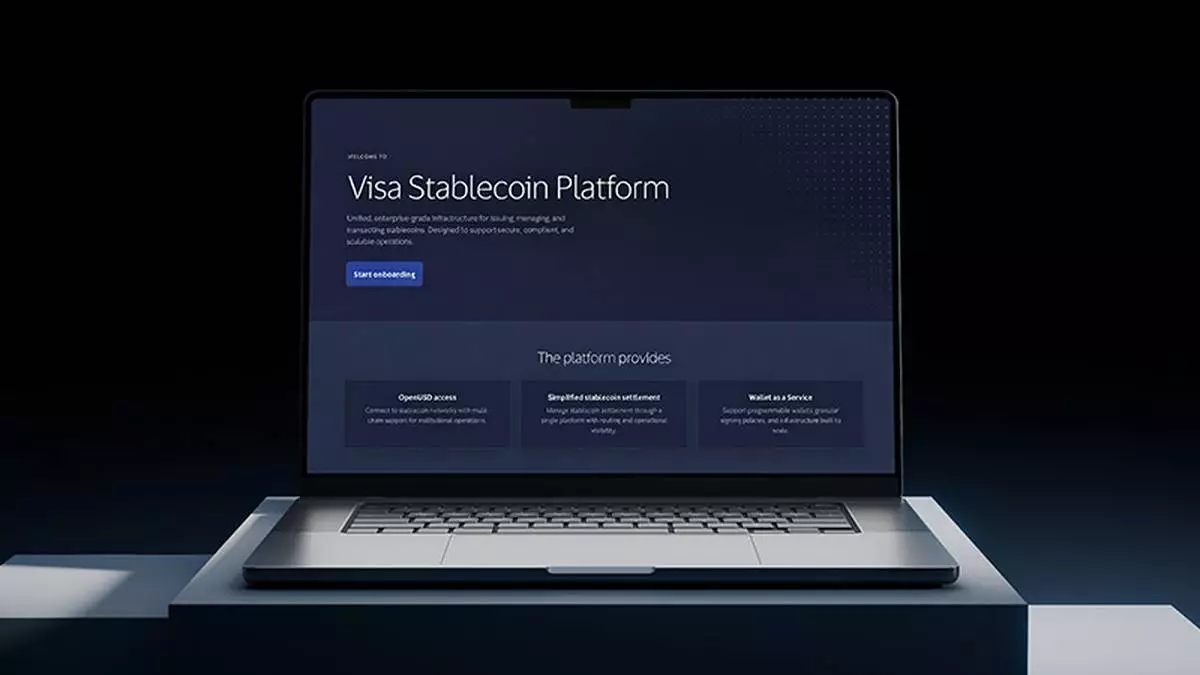
Visa Introduces Platform for Stablecoin Minting, Movement and Management
NEW YORK--(BUSINESS WIRE)--Jul 16, 2026--
Finout, a FinOps platform that gives engineering and finance teams a single, dollar-based view of cloud and AI spend, announced the world-first native FinOps integration with OpenAI Codex. The integration converts Codex Enterprise's credit-based billing into per-team, per-model dollar costs across every other AI provider Finout tracks, and is available now to Finout customers running Codex on ChatGPT Enterprise- timing that lines up with external Codex adoption climbing from near zero to roughly 17% of active enterprise users in under a year.
This press release features multimedia. View the full release here: https://www.businesswire.com/news/home/20260716517429/en/
At a glance:
Coding agents are moving from experiment to default workflow. As that shift accelerates, Codex's credit-based billing, split across models and reasoning-effort tiers, becomes harder to attribute to teams or reconcile against a budget. Finout closes that gap by converting Codex credits into dollars using each customer's contract rate, then allocating that spend the same way it allocates cloud and other AI costs.
Once connected, Codex credits are converted to dollars and sliced by user, model, and reasoning effort. A new OpenAI Origin dimension separates Codex spend from OpenAI Platform spend inside the same account. Finout's Virtual Tags, its rules engine for mapping raw spend to business context, map Codex spend to teams, products, and cost centers alongside OpenAI Platform, Anthropic, Cursor, and cloud costs inside MegaBill, Finout's unified billing layer. The result: finance and engineering get one bill and one anomaly feed, instead of a separate Codex report to reconcile by hand.
Head FinOps, Large B2B SaaS company: “Connecting OpenAI Codex inside Finout finally let us allocate AI spend by team and improve our ROI projections instead of guessing at them"
The integration also extends Finout's Anomaly Detection to Codex usage. A common cost spike is a team shifting from medium to high reasoning effort, which can multiply per-task cost overnight; Finout flags the shift as it happens rather than after it compounds across a billing cycle. Codex spend also flows into Billy, Finout's AI FinOps assistant, so teams can ask plain-English questions like which team drove this week's AI spend spike, and get a live, chart-backed answer with no dashboards or queries.
The integration is read-only and built to the same security standard as the rest of Finout's platform: SOC 2 Type II audited, ISO 27001 certified, and GDPR compliant.
FAQ
What does the Finout Codex integration actually do?
It converts OpenAI Codex Enterprise credit usage into dollar costs at the customer's contract rate, then attributes that spend to teams, products, and cost centers.
Does Finout read prompt or code content from Codex?
No. The integration is read-only and accesses only usage and credit metadata.
How is this different from OpenAI's own Codex reporting?
Codex reporting shows credits and usage; Finout converts that into dollars and merges it with cloud, OpenAI Platform, Anthropic, and Cursor spend in one unified view, MegaBill.
Who is this for?
FinOps, engineering, and finance leaders at companies running Codex on ChatGPT Enterprise who need to attribute AI spend to teams and reconcile it against budget.
Documentation: docs.finout.io/billing-integrations/ai-providers/connect-to-openai
Book a demo: finout.io/book-a-demo-page
About Finout
Finout is the enterprise-grade FinOps platform built for the agentic era, where AI workloads shift weekly and automation accelerates cost decisions across cloud, Kubernetes, LLMs, and shared resources. Finout delivers accurate, automated cost allocation, unified visibility through MegaBill, precise unit economics, and reliable planning at scale, turning cloud and AI complexity into clarity so every team owns its number. Finout is trusted by companies including Wiz, The New York Times, Lyft, and SiriusXM. Learn more at www.finout.io.
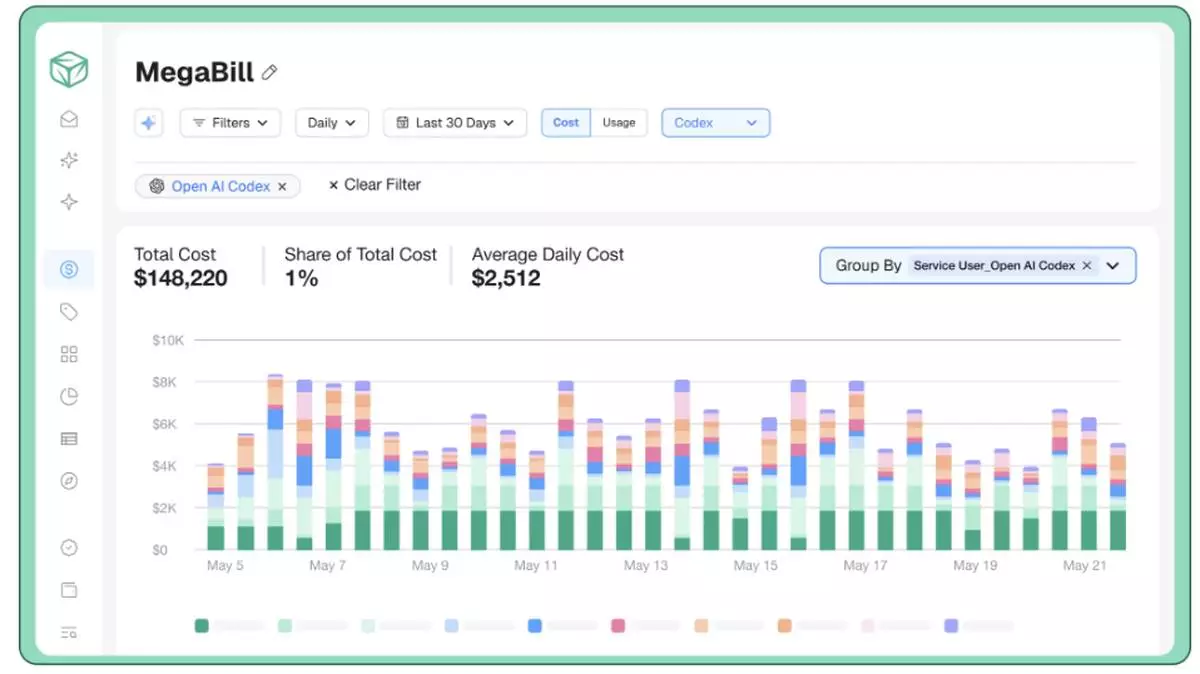
Finout's OpenAI Codex dashboard