NEW YORK (AP) — Cheryl Reeve has seen a lot of improvements in officiating this season and it's helped the WNBA have record offensive numbers so far through the first half of the season.
There's still areas that need to be worked on, but it will take more than 20 games for everything to be cleaned up.
“We’ve seen great improvements on the very things that were broken,” the Minnesota Lynx coach said. “There was a level of impeding players and trying to cut off a screen. We don’t want the unnecessary physicality.”
The league put together a task force, which Reeve is on, in the offseason to help clean up some of the physicality in the game. The main point of emphasis was to help players' freedom of movement. Despite some hiccups early on, it has led to more offense as teams are averaging around 86 points a game — the highest ever. They are shooting nearly 45% from the field — also the best in league history.
So far this season there have been roughly 4 1/2 more fouls called per game with 75% of them being non-shooting fouls.
“I think it’s fair for our coaches and players to be able to say we’re happy and we think positive things are taking place, but still I disagree with the calls that are affecting our team tonight,” Monty McCutchen, who is the head of WNBA officials, told The Associated Press.
“I want coaches to remain advocates for their teams," McCutchen added. "We have gotten positive feedback that we’re on the right track. we’ll continue to work through specifics when we fail that task and we’ll continue to check in with the officiating task force to make sure that we’re aligned with the expectations.”
By no means are things perfect. Coaches and players have complained of inconsistencies between officiating crews. What might be called a foul in one half might not be deemed a foul at another point in the game. Obvious fouls are getting missed too.
“It’s never going to be perfect, but we’re trending in the right direction,” Reeve said. “We’ve put resources into this.”
Reeve recalled a play that she asked to be reviewed during her team's game against Dallas. The officials looked at the play and upgraded it to a flagrant.
The league is constantly reviewing plays. Alyssa Thomas’ punch to the throat of Caitlin Clark that was upgraded to a Flagrant-2 was one of four that the league reviewed that night and was the only one upgraded.
Common fouls aren’t the only thing on the rise. Both technical fouls and flagrant fouls are up too. There have been 124 technicals assessed this season (four more were rescinded). Last year there were 171 total. There have been 44 flagrants called this season as compared to 51 all of last year.
“I think they are doing a better job at reviewing hostile acts,” Reeve said. “We didn't ask for that, but if that's what it takes to clean it up (it's worth it).”
Not everyone is a fan of all the reviews. Las Vegas coach Becky Hammon said after a loss to Indiana last week that there were too many of them.
“It’s exhausting when they go to the review every time. I mean, these games are getting longer and longer. It’s encouraging more drama,” she said. “So, it’s like somebody gets hit, and it’s like take them to the hospital. And they jump up, and they’re fine. So I actually think it’s not just today. It’s across the league. There’s so many reviews.”
AP WNBA: https://apnews.com/hub/wnba-basketball
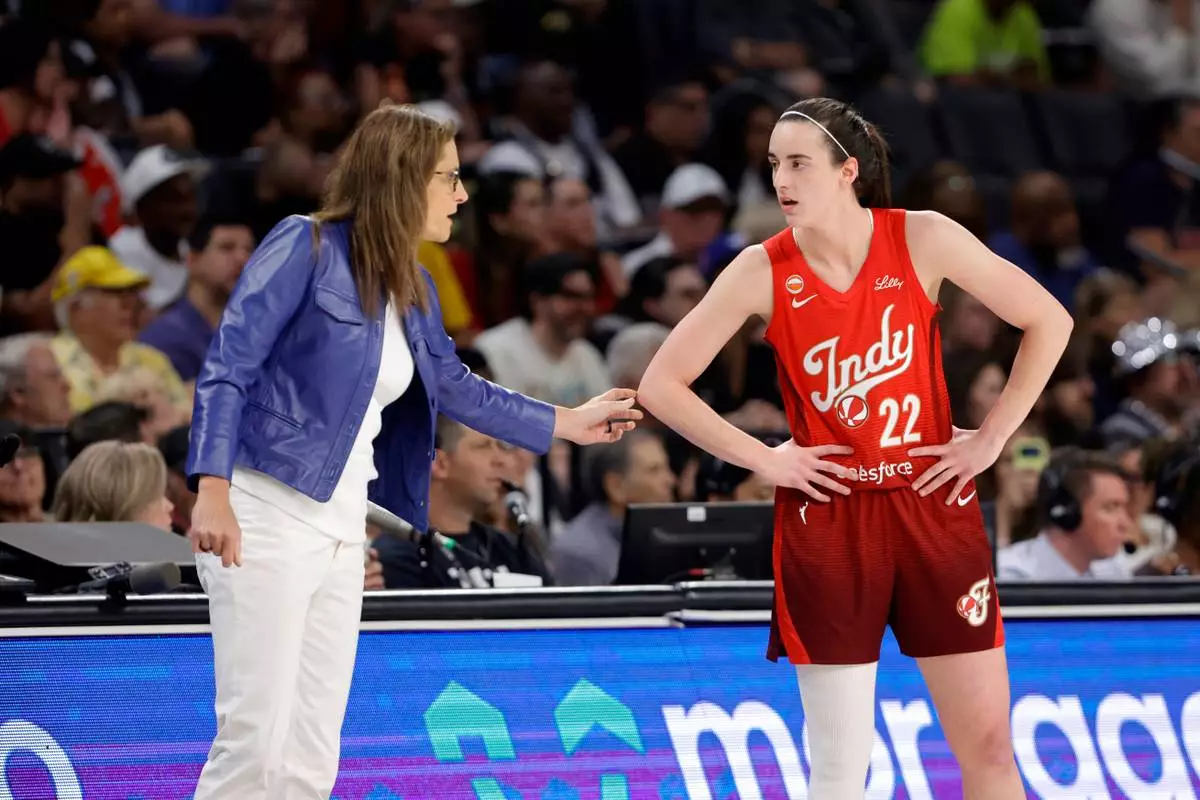
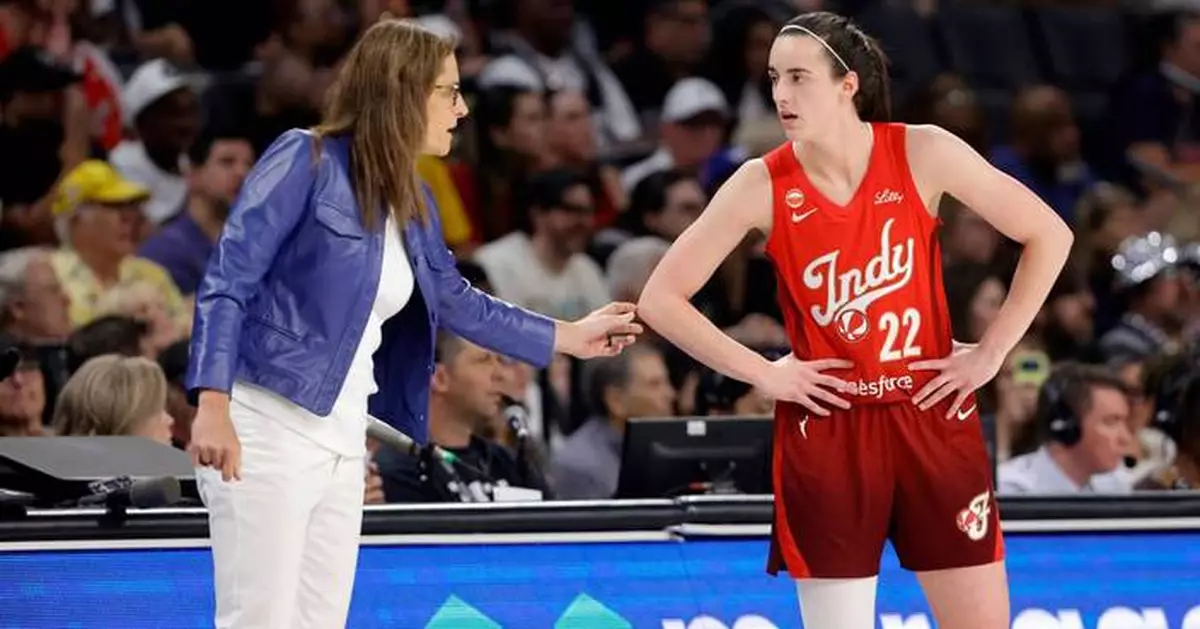
Indiana Fever head coach Stephanie White talks with Indiana Fever guard Caitlin Clark (22) during the first half of an WNBA basketball game against the Las Vegas Aces Sunday, July 12, 2026, in Las Vegas. (Steve Marcus/Las Vegas Sun via AP)
GENOA, Italy (AP) — An Italian court on Thursday convicted the former CEO of Italy's main highway operator and 31 others in the 2018 Genoa highway bridge collapse that sent vehicles plunging and killed 43 people, a disaster that exposed serious lapses in the maintenance of Italian infrastructure.
Dozens of family members of the victims packed the courtroom as Chief Judge Paolo Lepri read the verdicts against 57 defendants, including former executives and officials. Many relatives broke down in tears as the sentences were read.
A representative for the families of the victims, Egle Possetti, expressed satisfaction with the verdicts, saying they showed “there were serious failures in management, and 43 people paid with their lives.”
The former chief executive of highway operator Autostrade per l'Italia, Giovanni Castellucci, was sentenced to 12 years in prison, the longest sentence handed down after four hours of deliberation in the trial that spanned four years.
Castellucci’s lawyers said they would appeal, noting in a statement that as CEO, their client had relied on Italy’s leading engineers and suggesting that he had been scapegoated.
“The suffering caused by the Genoa tragedy is immense and deserves respect. But the gravity of the event requires justice to remain based on individual responsibility, not the search for a scapegoat,” they said in a statement.
Also convicted were Autostrade’s former head of maintenance, Michele Donferri Mitelli, who was sentenced to 11 years in prison. The former CEO of the SPEA engineering company, Antonino Galatà, received five years and six months.
The most serious charges included negligence resulting in the collapse, aggravated manslaughter and vehicular homicide stemming from failures to properly monitor and maintain the bridge, which was part of a main route linking northern Italy with the French Riviera.
The court will issue its full reasoning within six months. But in a summary accompanying the verdict, it said the convictions were based on findings that identified a system of defects affecting one of the bridge’s stay cables and concluded that the collapse was “foreseeable and preventable.”
The court said that some defendants from the highway concession and its engineering subsidiary failed to carry out the requiring monitoring of the bridge, relying in part on a 1967 Ministry of Public Works circular, while some transport ministry had officials had failed to exercise proper oversight of Autostrade's safety monitoring.
In all, 32 people were convicted and handed sentences ranging from 1 year and 11 months to 12 years. The rest were either found not guilty, or lesser charges had expired under the statute of limitations.
Lawyer Raffaele Caruso expressed satisfaction that court had held people resonsible at the three main players: the highway concession, its engineering subsidiary and the transport ministry.
“What emerges is that this bridge did not collapse by chance — this bridge collapsed due to specific, precise, individualized, personalized, and specifically identified responsibilities," Caruso told a press conference. “There has been much talk about the construction defect ... But this does not rule out the existence of liability.”
Shortly before noon on Aug. 14, 2018, a 200-meter (650-foot) section of Genoa’s Morandi highway bridge gave way during a rainstorm, sending dozens of vehicles plunging to the ground.
Images of the collapsed bridge were seen around the world and shocked Italians on one of Italy’s busiest travel days, as millions headed out for the traditional Aug. 15 Ferragosto holiday that marks the peak summer vacation season.
Prosecutors argued that years of maintenance neglect led to the collapse, and demanded combined sentences totaling nearly 400 years for all of the defendants. The defendants denied wrongdoing and say the fault was caused by a construction defect.
Considered an engineering marvel when it opened in 1967, the Morandi featured three A-shaped concrete pylons and concrete-encased stay cables.
Caruso said that the trial showed that warning signs about defects in the pylon that collapsed had existed for decades. He cited maintenance on the other two starting in 1993 that was never extended to the third.
“From 1993 onward, the problem was known. We had three identical pylons. Two had already shown the same defect, and no one seriously asked whether the third one had it as well,” Caruso said.
The current Autostrade chief executive, Arrigo Giana, issued a public apology Thursday in an open letter published in major Italian dailies.
“The actions and decisions of some people left indelible scars,’’ said Giana, who joined Autostrade as CEO last year. “Offering today the apology that was not made then is, for us, a moral imperative that goes beyond establishing legal responsibility and the course of justice toward the truth.”
Autostrade and its subsidiary reached a deal on corporate liability earlier in the proceedings, paying roughly 30 million euros ($34 million) in financial penalties. The agreement spared the companies from a trial as corporate defendants and potentially much harsher sanctions, including exclusion from public contracts.
The settlements were reached after the companies adopted new compliance procedures aimed at preventing similar accidents, and after victims were compensated.
A new bridge designed by Genoa-born Italian architect Renzo Piano opened in 2020, spanning a memorial to the victims of the Morandi Bridge collapse.
Barry reported from Milan.
This story corrects the number of convictions to 32.
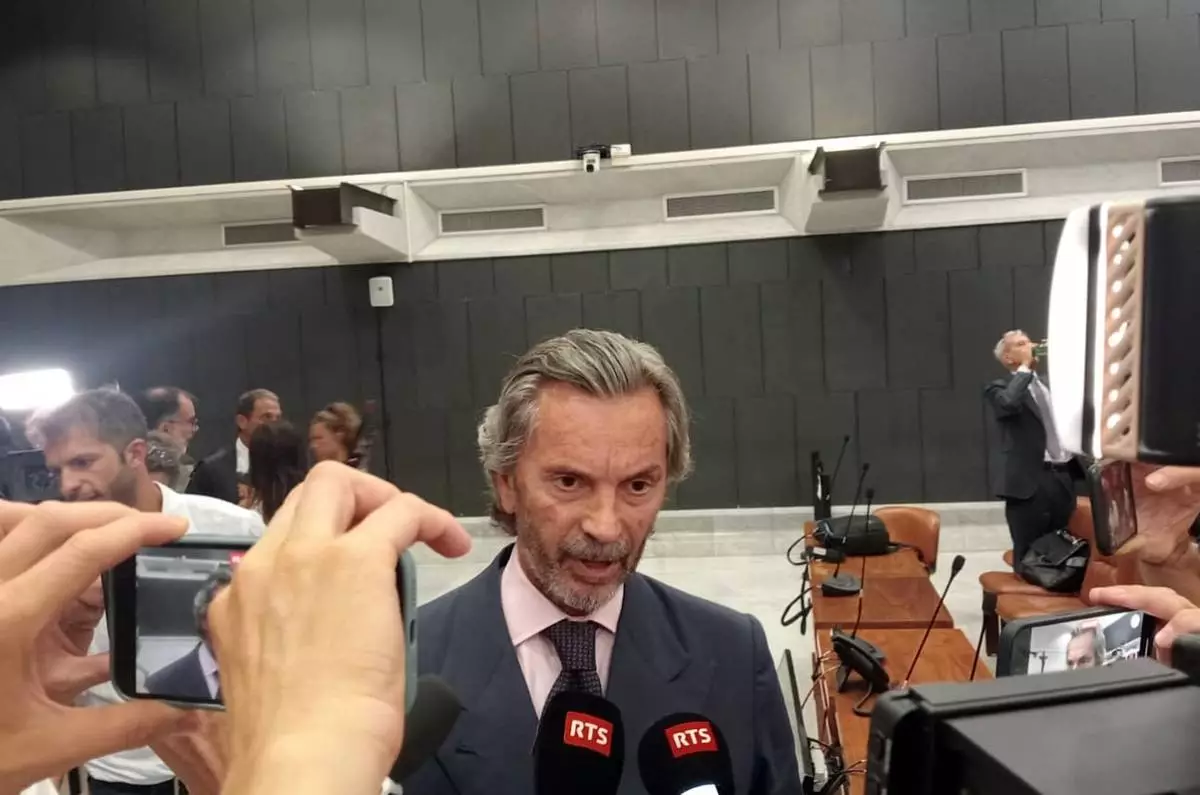
Giovanni Paolo Accinni, lawyer of Giovanni Castellucci, former CEO of Italian highway operator Autostrade per l’Italia, is interviewed after an Italian court convicts the former CEO of Italy’s main highway operator in a deadly bridge collapse in Genoa and hands down 12-year sentence, in Genoa, Italy, Thursday, July 16, 2026. (Valentina Carosini/LaPresse via AP)
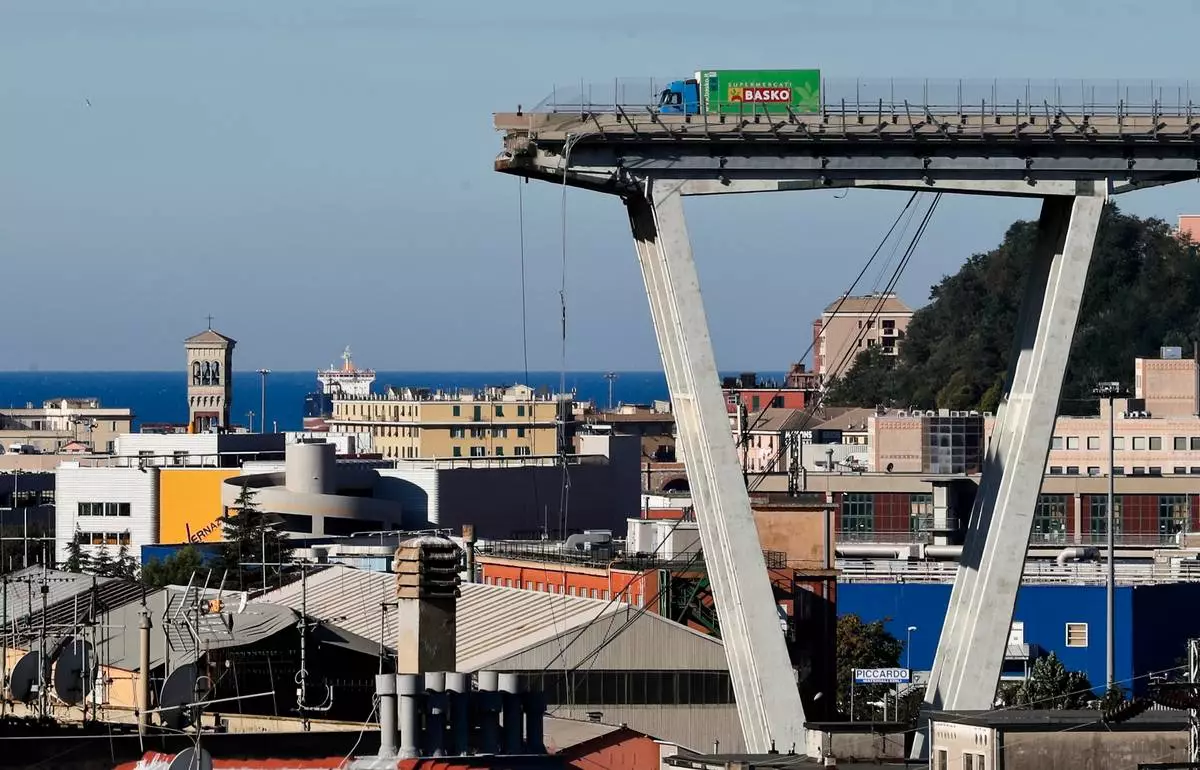
FILE - A vehicle sits short of a section of the Morandi highway bridge that collapsed on Aug. 15, 2018, in Genoa, northern Italy. (AP Photo/Antonio Calanni, File)
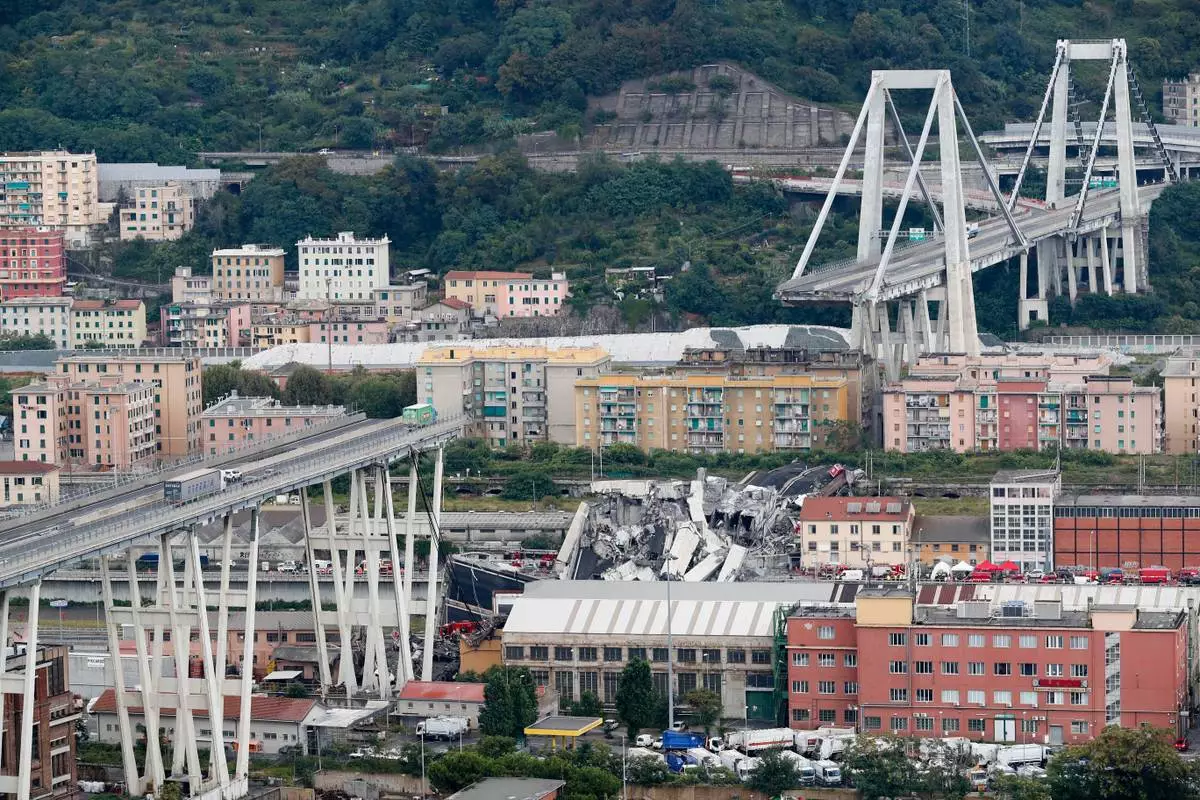
FILE - Cars are blocked on the Morandi highway bridge after a section of it collapsed, Aug. 14, 2018, in Genoa, northern Italy. (AP Photo/Antonio Calanni, File)