WASHINGTON (AP) — The U.S. Treasury last year swelled with revenue from President Donald Trump’s double-digit taxes on imports from almost every country on earth.
But the money dried up after the Supreme Court struck down the biggest and boldest of Trump’s tariffs in February.
The question now is: Can the president’s trade team make good on its promise to replace the lost revenue?
A deadline is approaching rapidly.
After the Supreme Court setback, the president turned first to Section 122 of the Trade Act of 1974 to impose 10% tariffs globally. But Section 122 only authorizes tariffs for 150 days. Trump’s expire on July 24. Congress would have to extend those tariffs — something lawmakers are unlikely to do as the Nov. 3 midterm elections approach amid voter discontent over the high cost of living.
But the administration has more durable options: Section 301 of the same 1974 trade law permits the president to impose tariffs and other sanctions against countries found to engage in “unjustifiable,” “unreasonable” or “discriminatory” trade practices. Trump used Section 301 to impose big tariffs on China in his first term and is rolling them out again — as recently as late Wednesday when he announced 25% tariffs on some Brazilian imports, charging the world’s 11th-biggest economy with a host of unfair trade practices.
Trade attorneys and analysts are confident the tariff-happy Trump administration will manage to beat the clock and swap out Section 122 tariffs with bigger Section 301 tariffs by the July 24 deadline. “They’re going to raise the tariff wall again,’’ said trade lawyer Ryan Majerus, a partner at King & Spalding and a trade official in Trump's first administration and in President Joe Biden's.
Trump last year tested – and exceeded – the limits of his authority to impose import taxes, a power the U.S. Constitution gives Congress. He invoked the 1977 International Emergency Economic Powers Act (IEEPA) to slap big tariffs on most of the world’s countries.
He justified the levies, which marked a stunning reversal of decades of U.S. policy in favor of lower tariffs and freer trade, by labeling America’s longstanding trade deficits a national emergency.
The Supreme Court didn’t buy it, ruling in February that the president couldn’t use the emergency powers law to impose tariffs at all. The legal defeat meant the administration had to send refunds to importers that had paid the levies.
As a result, tariffs have at least temporarily gone from a windfall to a drain on the Treasury.
Revenue from import taxes peaked at more than $31.4 billion last October. Then, after the Supreme Court ruling, it started dwindling – to $22 billion in both March and April. As refund checks went out faster than revenue from the Section 122 and other tariffs came in, the number turned negative: A small ($42 million) shortfall in May was followed by a whopping $25.6 billion loss in June.
Trump and Treasury Secretary Scott Bessent have vowed to use other legal authorities to recoup the lost income.
Enter Section 301, which gives the president power to impose – and adjust – tariffs in response to other countries’ trade practices. But the administration must first check procedural boxes – collecting comments and holding hearings. There are no limits on Section 301 tariffs. They expire after four years but can be renewed.
So the president has flexibility in how he uses the Section 301 tariffs. Trump can still change them — after clearing procedural hurdles — but he can’t impose or move them up or down on a whim as he often did with the IEEPA tariffs. Uncertainty over Trump's tariff policy has vexed businesses, leaving them hesitant to make investments and decisions because they don't know what the trade rules are going to be.
A switch to rule-bound 301 tariffs would mean "there’s less uncertainty but not no uncertainty,’’ said Sarah Bianchi, a former U.S. trade official who is now chief strategist of international political affairs at the investment research firm Evercore ISI.
The Trump administration has turned to two big Section 301 investigations in its campaign to replace lost tariff revenue. One accuses 60 countries, accounting for 99% of U.S. imports, of failing to do enough to crack down on imports created by forced labor. The other is investigating whether 16 U.S. trading partners — including China, the European Union and Japan — are overproducing goods, driving down worldwide prices and putting American manufacturers at a disadvantage.
The administration has already decided what it wants to do about the forced labor issue. Invoking Section 301 last month, U.S. Trade Representative Jamieson Greer proposed tariffs — 10% on 16 countries and 12.5% on 44 — that are the same or slightly higher than the 10% Section 122 levies they would replace. But Greer's office is still receiving public comments on the proposed tariffs and has not imposed them yet.
Nathaniel Halvorson, a partner at the Baker McKenzie law firm and a former U.S. trade official, expects Greer’s office will manage to get the forced-labor levies in place in time so that there won’t be much, if any, “daylight’’ between them and the expiring Section 122 tariffs. “Really, they’re operating about as fast as legally possible,’’ he said.
The administration has not yet completed the other Section 301 investigation into alleged overproduction by 16 countries. Trade attorney Majerus expects the administration to propose more big tariffs in that case, likely in a month or two. He suspects they will be timed to take effect only after the midterm elections “for obvious reasons.’’
Trump, who has proudly called himself “Tariff Man,’’ has made it clear that he is seeking to bring back the big, worldwide import taxes he’d imposed in 2025. So the new 301 investigations look like a pretext to do that and might be vulnerable in court, Bianchi said.
“Section 301s have been pretty legally durable,” she said. “But no one has tried to use it to basically put in place universal tariffs. I think there will be legal challenges.’’
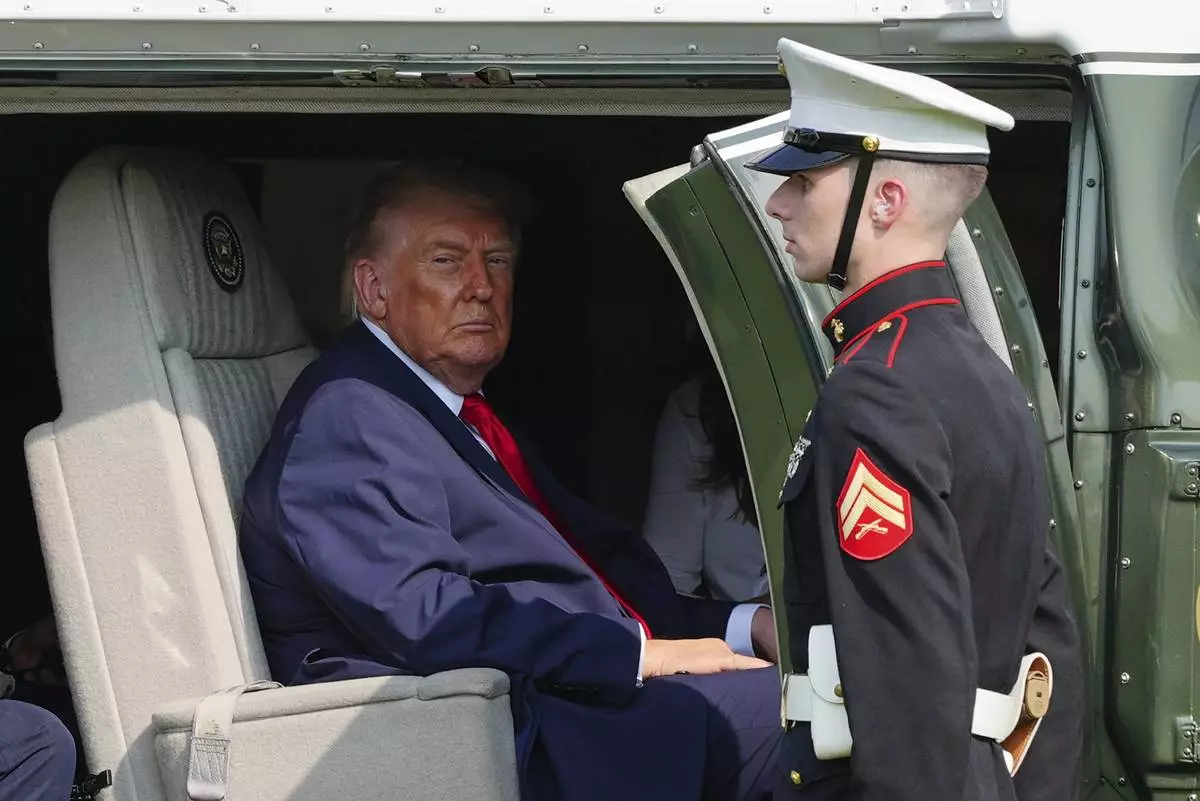
President Donald Trump departs on Marine One after speaking at the United States Army War College in Carlisle, Pa., at the Pennsylvania Defense and Innovation Summit, Wednesday, July 15, 2026. (AP Photo/Julia Demaree Nikhinson)
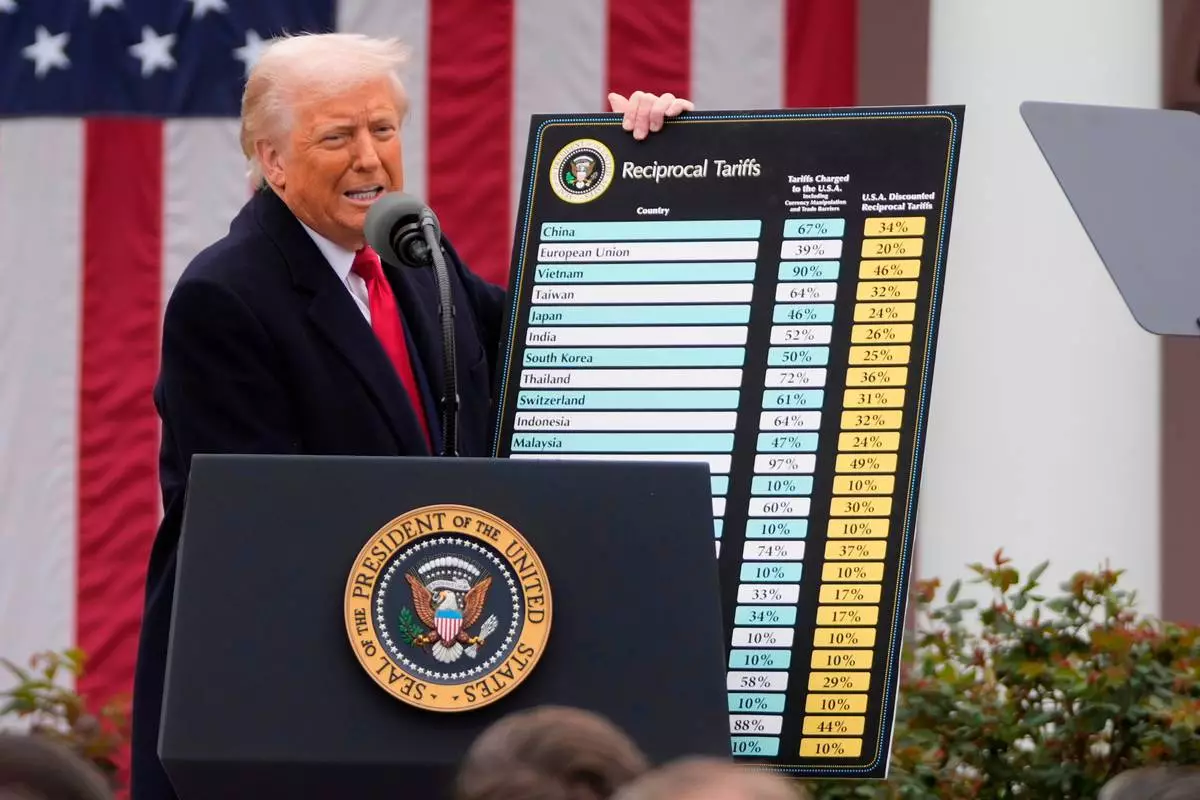
FILE - President Donald Trump speaks during an event to announce new tariffs in the Rose Garden at the White House on April 2, 2025, in Washington. (AP Photo/Mark Schiefelbein, File)
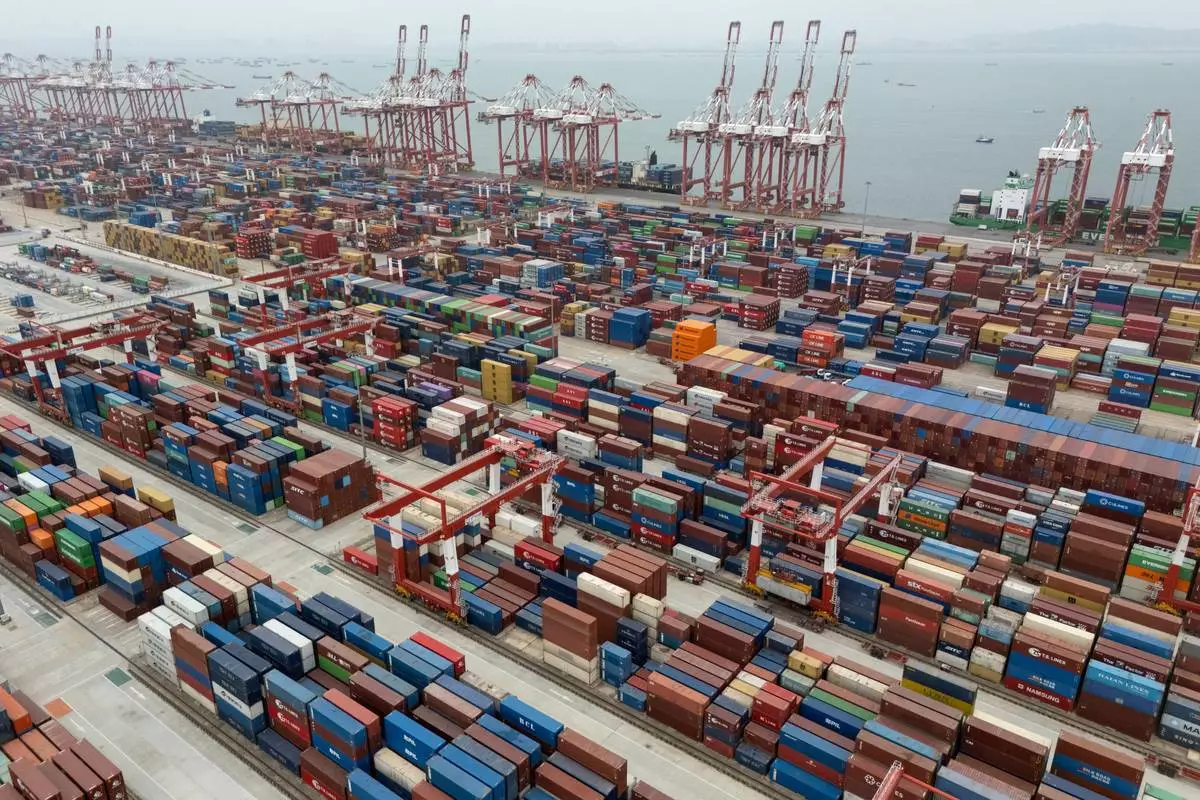
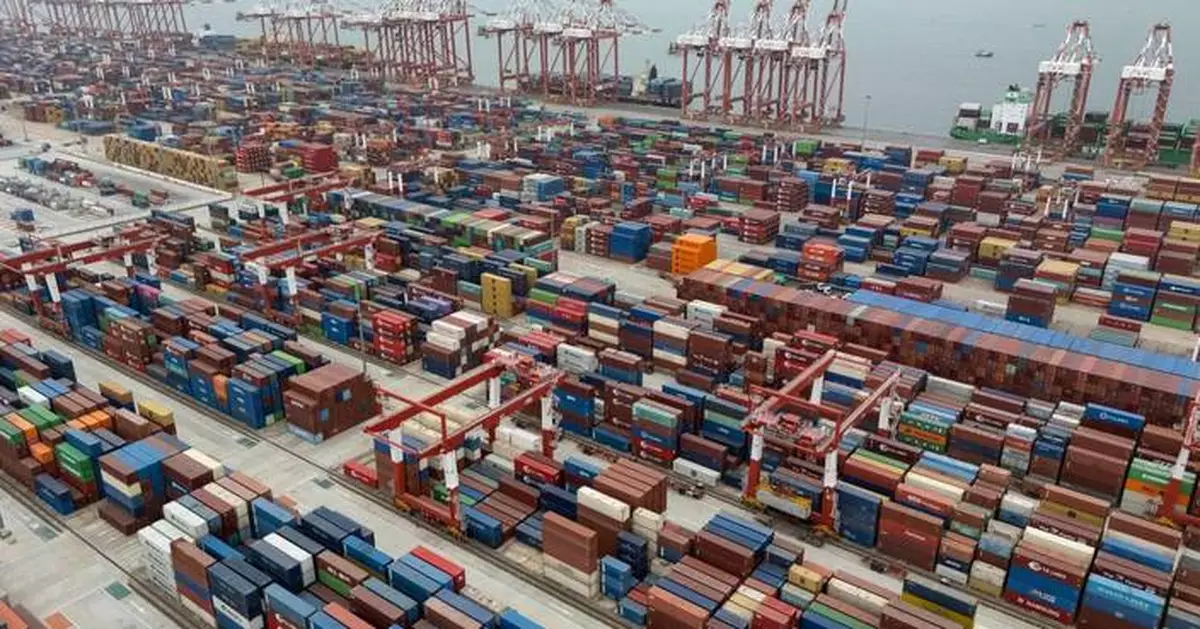
FILE - Shipping containers are seen ready for transport at the Guangzhou Port in the Nansha district in southern China's Guangdong province, April 17, 2025. (AP Photo/Ng Han Guan, File)
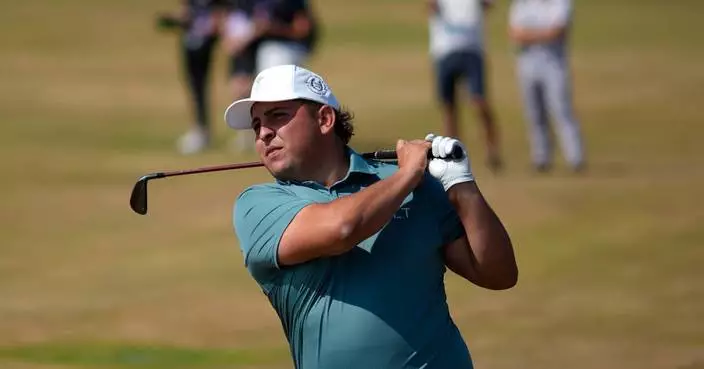
SOUTHPORT, England (AP) — Turns out Bryson DeChambeau had enough strategy to get in the mix Thursday at Royal Birkdale, often ripping driver to take the fearsome bunkers out of play and doing enough right for a 3-under 67 that left him one shot out of the early lead in the British Open.
Sungjae Im and Dan Brown led the way at 4-under 66, the lowest score Royal Birkdale offered even in a mild wind, which strengthened and switched late in the afternoon as Rory McIlroy and others were just getting started.
Defending champion Scottie Scheffler had few complaints after a 68, even after four birdies in his opening six holes and no birdies the rest of the way. He had a pair of soft bogeys and played the two par 5s on the back nine in 1 over.
“If I continue to strike the ball the way I did today and just keep giving myself looks, that’s part of it,” Scheffler said. “Golf is played over 72 holes, and I definitely liked what I saw today.”
As for DeChambeau's strategy? Part of it might have been declining to speak to the media, which he did again Thursday and has at the majors this year during competition rounds. The two-time U.S. Open champion has missed the cut in all three majors.
Strategy became a talking point when three-time British Open champion Nick Faldo told the Sky Sports Golf Podcast this week, “DeChambeau has zero clue of strategy. He said last year, ‘I’m going to go out and attack the links’. Well, I’ve never attacked a links. You thread it, don’t you? You feed it down the fairway. ... You don't think, ‘Oh, I’ll just blast it down there.'"
DeChambeau twice blasted it over the trouble and close to the green at the par-4 second and the par-4 10th, the latter a blind shot. He made birdie on both. And while Jon Rahm was among those who said going long can lead to trouble at some point, the only two shots DeChambeau dropped came from his putting (the par-5 14th) and chipping (the par-4 18th).
He was tied for the lead until going from wispy, yellow rough over the back of the 18th, chipped weakly to 8 feet and missed the putt. He missed three birdie chances from around 10 feet or under, one of them on redesigned, 321-yard fifth hole, when his drive settled on a hump behind the green.
DeChambeau agreed to take a few questions from the R&A and said, “I feel like I did a really good job today of being incredibly strategic and focused super hard on placing it in the right places. Besides 18, I placed the ball in some good areas. I just need to hit more fairways. Other than that, I feel like my strategy was nice today.”
Brown ran off three straight birdies around the turn and found himself atop the leaderboard, just as he did at Royal Troon two years ago after the first round. That year, he was in the penultimate group with hardly anyone watching. This time he was out early with Im, who had four birdies on the back nine as they matched 66s.
Robert MacIntyre and Francesco Molinari, the Open champion from Carnoustie in 2018, were part of the large group of players at 67. That included Ryan Gerard in his Open debut, M.J. Daffue of South Africa and Alex Smalley, the only player to reach 5 under at any point.
Smalley, who took a two-shot lead into the final round at the PGA Championship, was leading until his drive on the 18th was fading with the wind and then the luck of links golf took over. One wild bounce sent it further right and out-of-bounds. He finished with a double bogey for a 67.
“Got up to where the ball was supposed to be and was told it hit a spectator fence and kicked another 15 yards right out-of-bounds. All three of us in our group actually hit it over there, and mine just got an unlucky break,” Smalley said. "Poor tee shot, poor break. Sometimes that's how it goes."
Scheffler played in the group with DeChambeau and they traded birdies early. For six holes, the world's No. 1 player had total control of his shots and looked as though he couldn't miss. He got to 4 under when he gave a leg kick as his 40-foot birdie putt dropped on No. 6.
But then he missed the seventh green — 139 yards, downhill — to the left between a pair of bunkers, and his pitch was so strong it flirted with going in a bunker on the other side. He missed a 5-foot birdie chance on the 11th, and then made a mess of the par-5 17th.
Scheffler missed his approach well to the right and was so surprised to see it buried in deep grass he felt it might have been embedded from someone stepping on it. But no one stepped forward, and he was denied a free drop. He yanked that across the fairway to more deep grass, then hit a splendid chip to 4 feet, only to miss the par putt.
“It was underneath the wire and it was just ... I’m hoping somebody stepped on it, but nobody would fess up. Apparently nobody did,” Scheffler said. "I was just shocked at how deep the ball was in that grass. I considered actually taking an unplayable.
“Sometime you hit it over there and you get a clean lie and you’re able to give yourself a look, and then other times like today, you pay a pretty severe price,” he said. “But I guess don’t hit it offline.”
AP golf: https://apnews.com/hub/golf
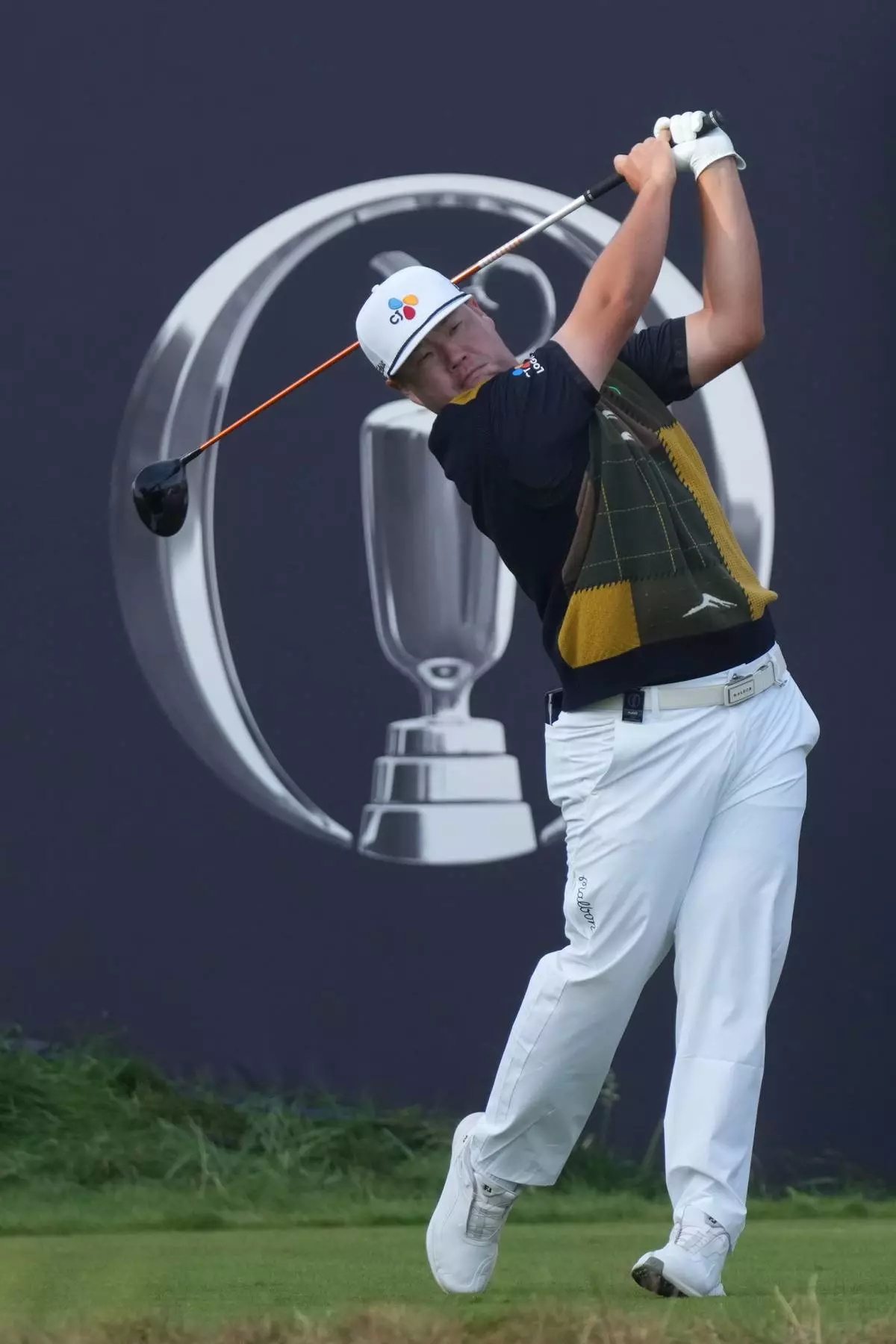
Sungjae Im of South Korea plays his shot from the 1st tee during the first day of the British Open Golf championships at Royal Birkdale golf club, in Southport, England, Thursday, July 16, 2026. (AP Photo/Jon Super)
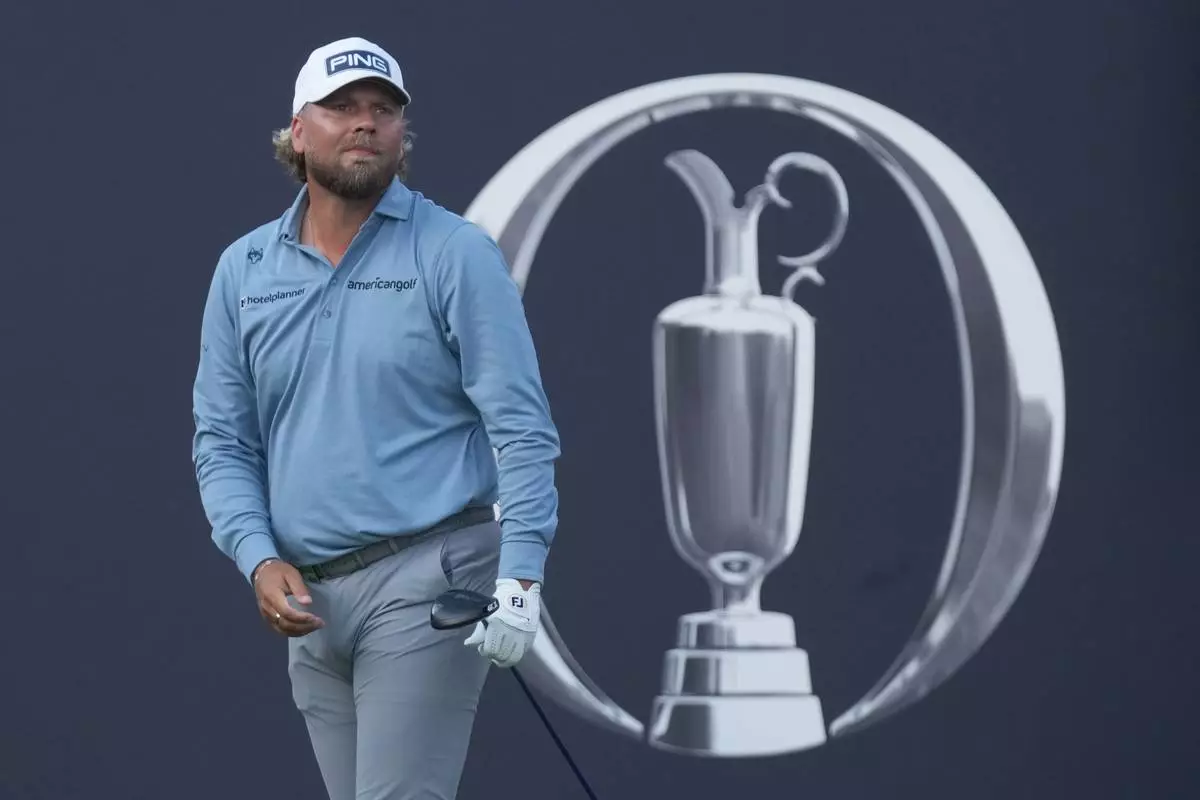
Daniel Brown of England watches where his shot has landed after playing off the 1st tee during the first day of the British Open Golf championships at Royal Birkdale golf club, in Southport, England, Thursday, July 16, 2026. (AP Photo/Jon Super)
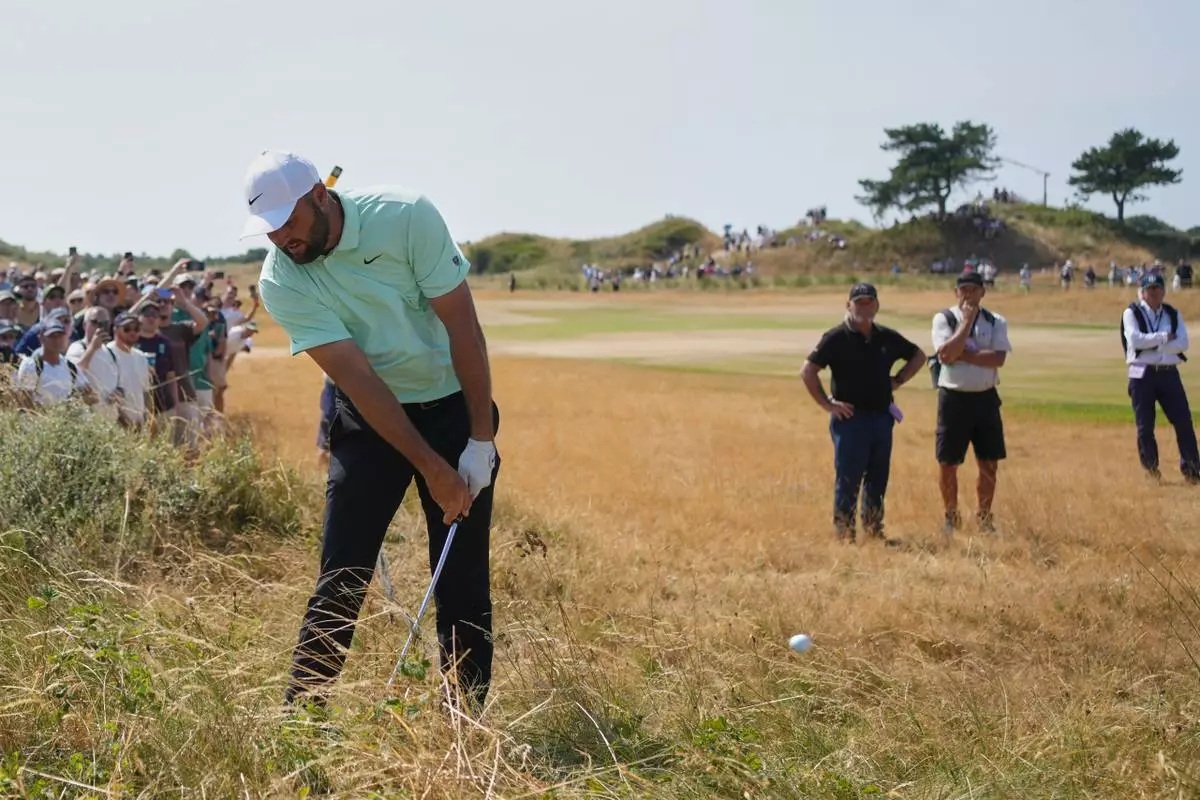
Scottie Scheffler of the United States plays out of the thick rough on the 17th hole during the first day of the British Open Golf championships at Royal Birkdale golf club, in Southport, England, Thursday, July 16, 2026. (AP Photo/Jon Super)
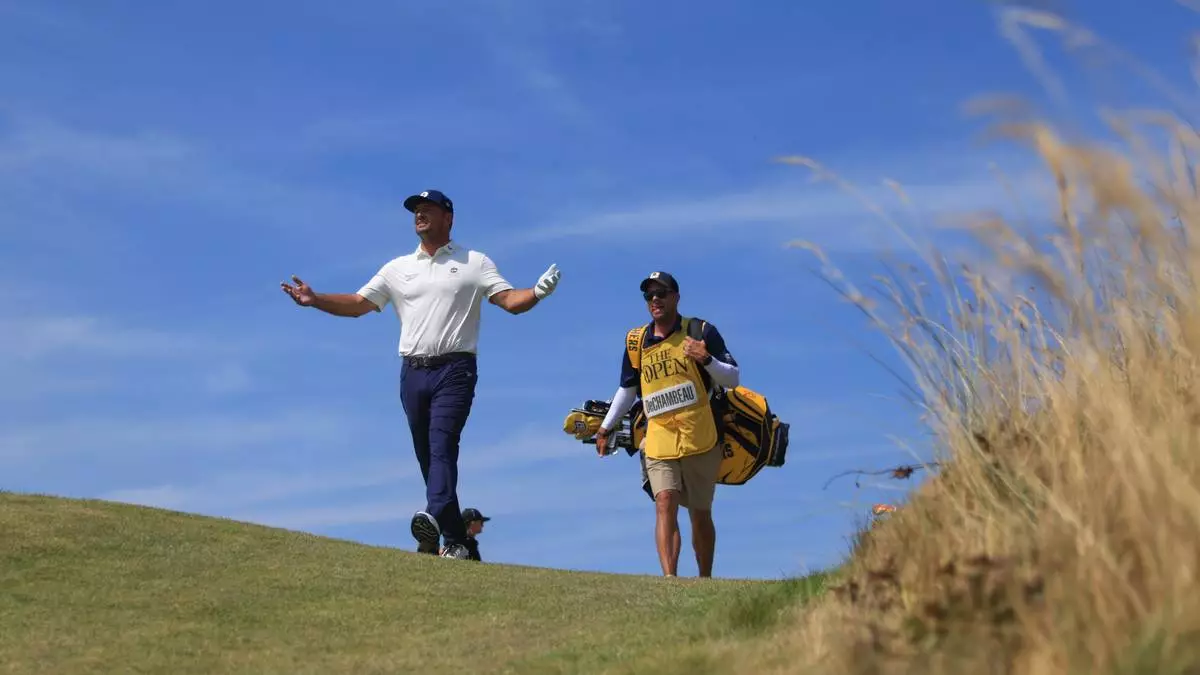
Bryson DeChambeau of the United States gestures as he walks the 7th hole during the first day of the British Open Golf championships at Royal Birkdale golf club, in Southport, England, Thursday, July 16, 2026. (AP Photo/Peter Morrison)
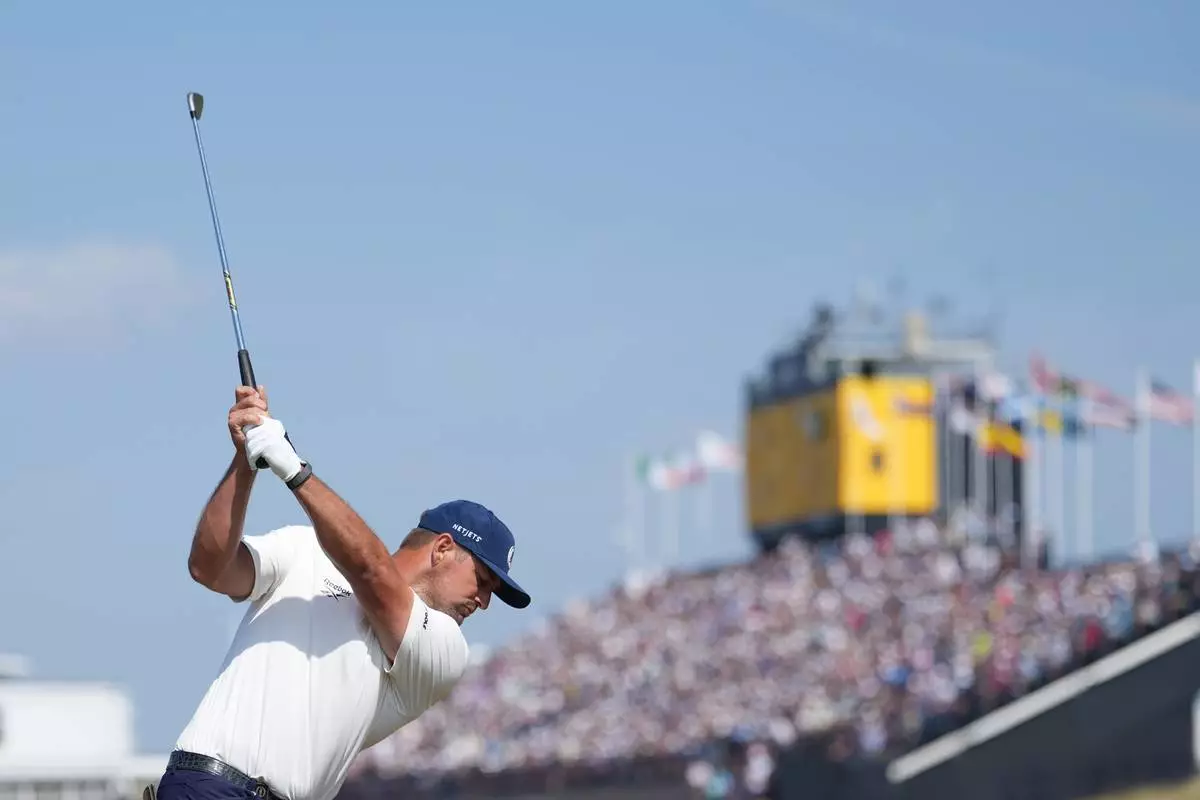
Bryson DeChambeau of the United States plays tom the 18th green from the rough during the first day of the British Open Golf championships at Royal Birkdale golf club, in Southport, England, Thursday, July 16, 2026. (AP Photo/Jon Super)
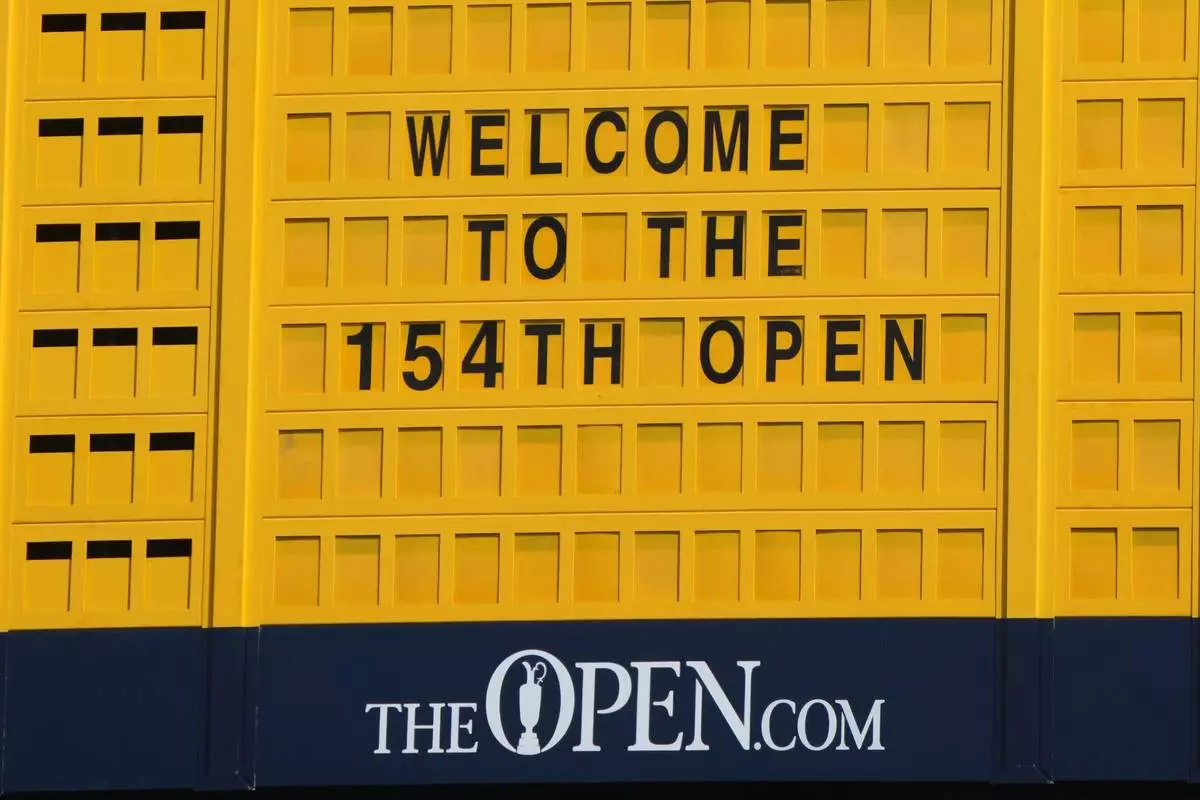
The welcome to the Open sign on the large scoreboard overlooking the 18th green ahead of the British Open Golf championships at Royal Birkdale golf club, in Southport, England, Wednesday, July 15, 2026. (AP Photo/Jon Super)
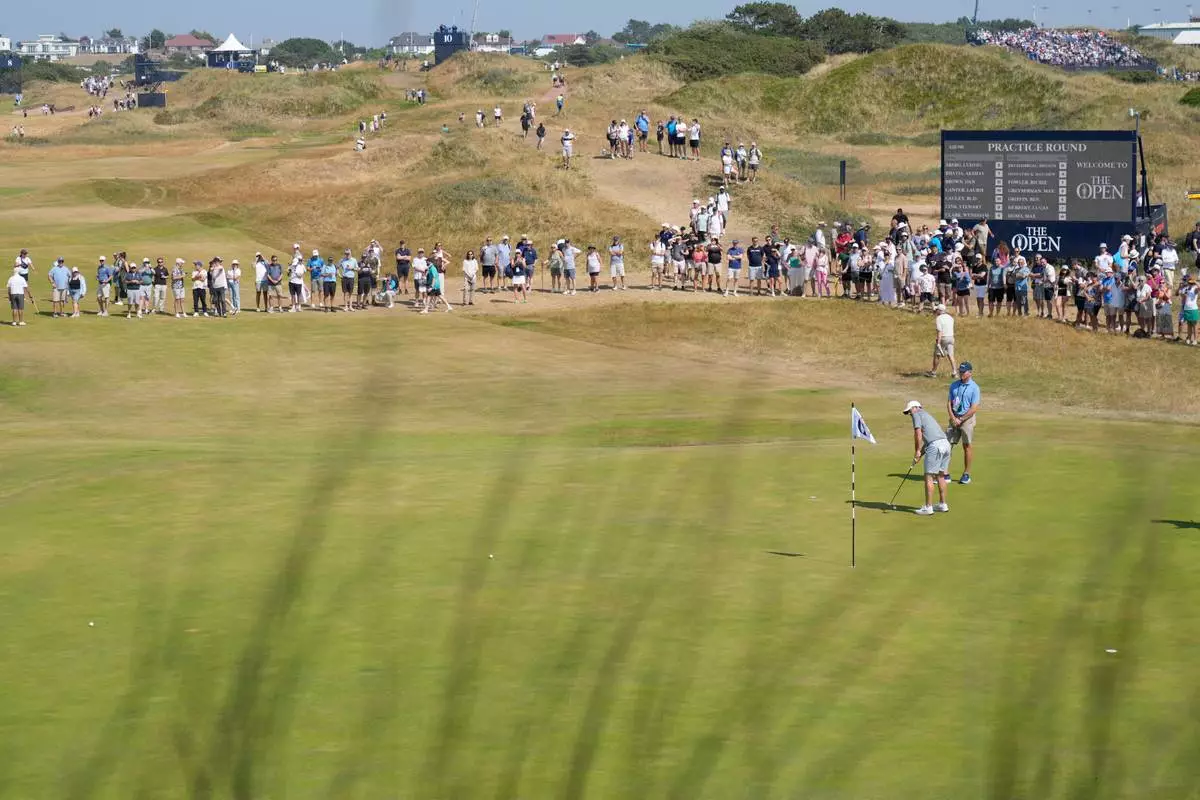
Rory McIlroy of Northern Ireland putts on the 10th green during a practice round for the British Open Golf championships at Royal Birkdale golf club, in Southport, England, Wednesday, July 15, 2026. (AP Photo/David Goldman)
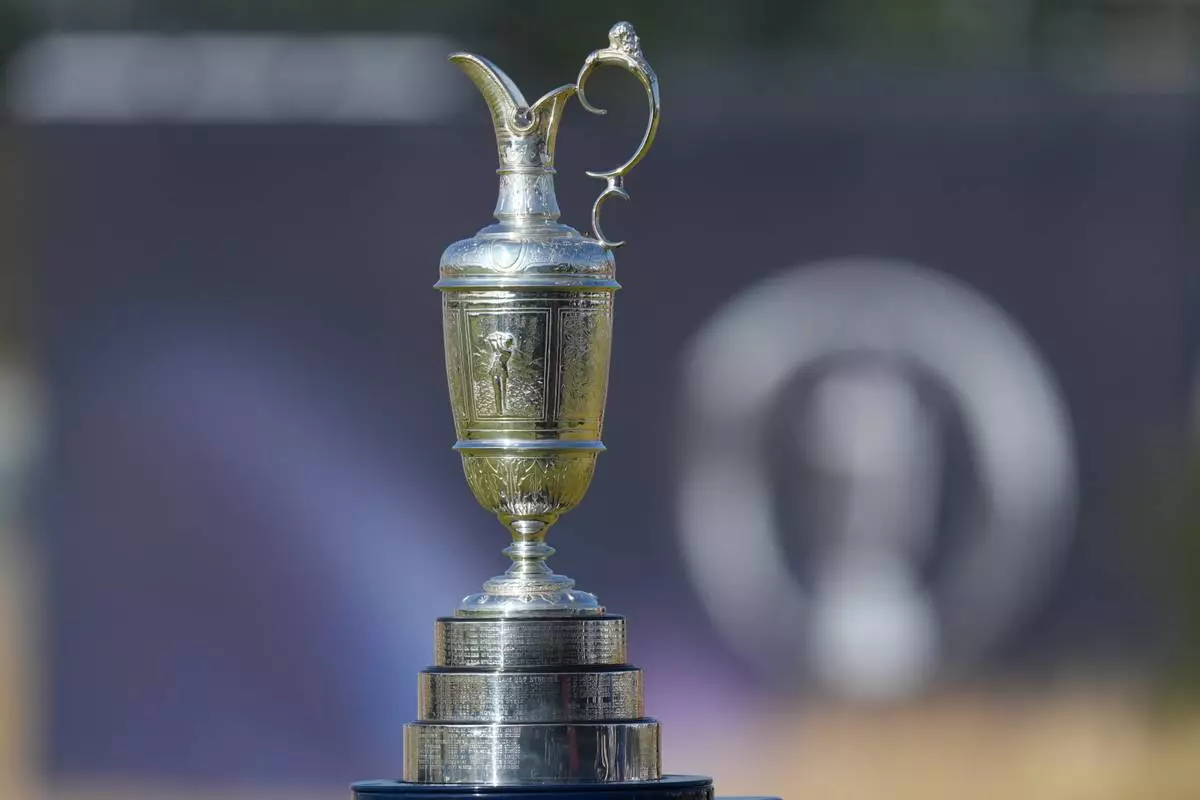
The Claret Jug trophy which will be presented to the winning golfer on display at the driving range ahead of the British Open Golf championships at Royal Birkdale golf club, in Southport, England, Wednesday, July 15, 2026. (AP Photo/Jon Super)