KYIV, Ukraine (AP) — In a military cemetery in Kyiv, a brother and sister walk between the crosses, carrying a bunch of carnations. Each cross in that section bears the same words: “unknown defender of Ukraine,” with an ID number below and a note that identification is ongoing.
One grave stands out: beneath the inscription, a photo was later attached, showing Ihor Yalynych, a soldier last seen alive in Kharkiv region in 2022. After four years of searching, Stanislav and Oleksandra Yalynych found their father.
Click to Gallery
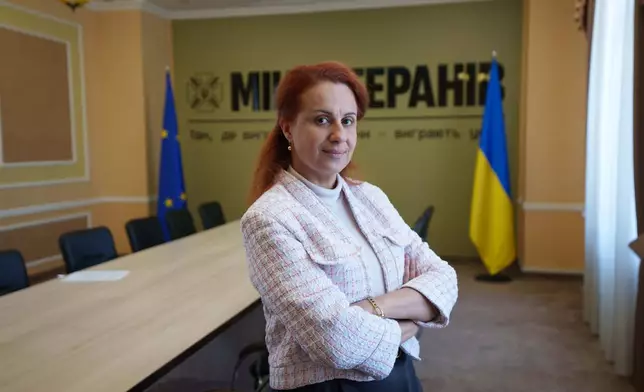
Natalia Kalmykova, Ukraine's Veterans Affairs Minister poses for a photo at her office in Kyiv, Ukraine, Wednesday, June 17, 2026. (AP Photo/Evgeniy Maloletka)
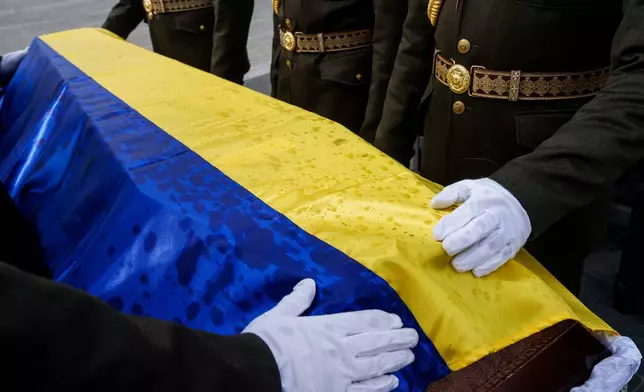
An honor guard straightens out the flag draped over the coffin of a unidentified Ukrainian soldier killed in battle during the Russian-Ukrainian war, during a funeral ceremony at a military cemetery near Kyiv, Ukraine, Thursday, April 30, 2026. (AP Photo/Evgeniy Maloletka)
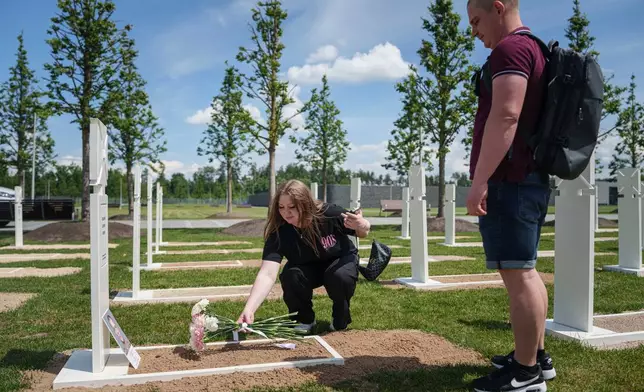
Stanislav and Oleksandra Yalynych lay flowers on the grave of their father Ihor Yalynych, a Ukrainian soldier who has been missed since 2022, at the military cemetery near Kyiv, Ukraine, Wednesday, June 17, 2026. (AP Photo/Evgeniy Maloletka)
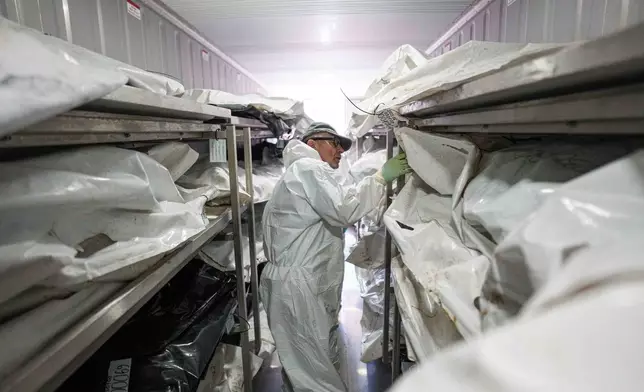
A morgue worker searches for a body of Ukrainian soldier before examination at the forensic bureau in Kyiv region, Ukraine, on Monday, June 1, 2026. (AP Photo/Evgeniy Maloletka)
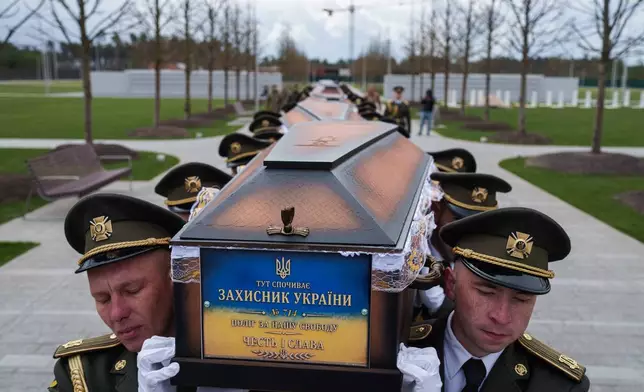
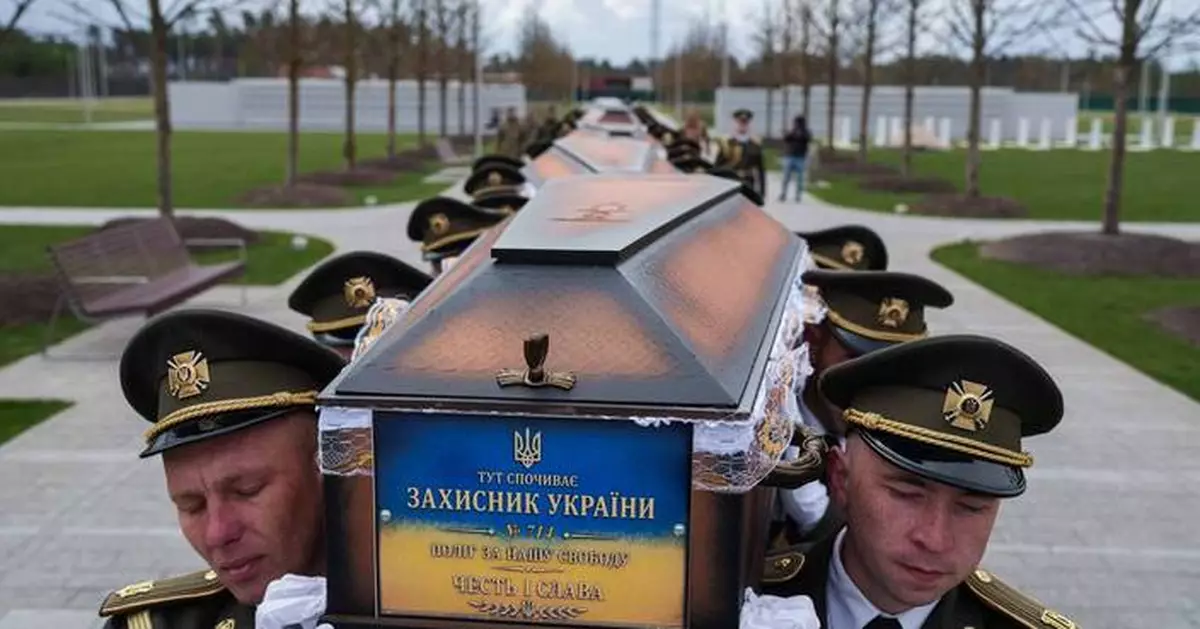
FILE - An honor guard carries the coffins of unidentified Ukrainian soldiers killed in battle during the Russian-Ukrainian war at a funeral ceremony at a military cemetery near Kyiv, Ukraine, April 30, 2026. (AP Photo/Evgeniy Maloletka, File)
Identification of the dead is a reckoning that will stretch on for years, among the longest-lasting wounds of Russia’s war in Ukraine. Some graves may remain nameless forever, with the families left to wait.
For most of the war, there was nowhere to bury the unidentified dead. The bodies lay in refrigerated storage while the national military cemetery was still being built. Even before the cemetery was completed in January, the first group of the unknown soldiers were laid to rest in August. More than 300 now lie beneath numbered crosses, with more graves being dug.
“I was a daddy’s girl, and I took the loss very hard,” said Oleksandra Yalynych, 21. “All these four years, all I wanted was to come and sit with him, to talk. ... Now I’m glad we found him. Now I have somewhere to go.”
Ihor Yalynych was killed in April 2022 in eastern Ukraine. He had served in the military since 2015, the year after armed conflict began in eastern Ukraine and Russia illegally annexed Crimea.
When Russia launched its full-scale invasion in 2022, he was in a brigade stationed in eastern Ukraine. He returned safely from his first mission and sent photos to his son, but he never returned from the second.
After weeks of silence, Stanislav posted on social media that his father was missing. An acquaintance had seen a photo on a Russian Telegram channel — nine soldiers in Ukrainian uniform, shot and lying in a row — and recognized Ihor Yalynych among them. When Stanislav saw it, he knew that his father was among them.
Ukraine’s National Police in the Kharkiv region confirmed to AP that an investigation is underway into the deaths of a group of Ukrainian servicemen whose bodies were found in the region in April 2022, and into their identification.
Ihor’s body lay in the occupied part of the region but was only recovered after the area was liberated in September 2022. The family had to navigate layers of bureaucracy, including DNA testing, before they could reclaim his remains, a process that took four years.
“It could have been faster if the police hadn’t lost the case,” Stanislav said. According to him, the file was sent to the police of Mykolaiv region, where his father was from, and sat unprocessed for more than two years.
In response to a written request from AP, Mykolaiv police did not address the family’s account of a lost file or a delay, but said only that no one had lodged criminal proceedings over Ihor’s identification.
Because the file was missing, Stanislav was only permitted to give a DNA sample for comparison about six months ago. The match followed two months later.
At a Ukrainian military funeral, the flag that covers the coffin is folded and handed to the family. With no one to receive the flag of an unknown soldier, the state stands in, accepting each flag and holding it until the soldier can be identified, Veterans Affairs Minister Natalia Kalmykova said.
“Honoring a person who gives their life for their country is, first of all, truly needed by those who remain,” she said. “So we understand the price being paid for independence — in our case, our country’s — for our right to choose our own path and democracy in this country.”
Three of those first buried as unknown have since been identified, she said.
Part of the reason so many remain nameless dates to the start of the invasion, Kalmykova said. Soldiers who joined in the first years were not required to give DNA samples, so no database existed. Only later was one built. About half of Ukraine’s troops have now given samples, according to a senior military official who was not authorized to speak publicly.
In cases where there's no sample on the database, identification requires a close relative to come forward, and many cannot as they are in occupied territory, abroad, estranged, unaware, or simply gone.
Since the full-scale invasion, more than 40,000 samples from unidentified bodies have been registered, said Ruslan Abbasov, deputy director of the State Scientific Research Forensic Center of the Ministry of Internal Affairs. Most of them have now been matched with some of the 170,000 samples taken from relatives.
Often, Abbasov said, identification moves beyond the lab, with investigators seeking other ways to obtain a person’s DNA like searching an apartment or belongings they left behind.
When an unidentified body is buried, a number is placed inside the coffin, written on the outside and inscribed on the cross that marks the grave. A registry records which number belongs to which body, so that when a number and its DNA produce a match, the grave can be located.
Bodies come directly from the battlefield and through repatriation from the Russians. Since the start of the invasion, Ukraine has repatriated 24,805 bodies, according to the Coordination Headquarters for the Treatment of Prisoners of War.
Pockets sometimes hold passports, military IDs or driver’s licenses. But DNA testing is still required, because there is no certainty the documents belong to the body they are found with.
Maksym Paziura, a forensic medical examiner, said in some cases the remains of several people are mixed into a single bag, complicating the process of even taking a DNA sample. Most of the bodies are in the late stages of decomposition.
His branch in the Kyiv region processes 15 to 20 bodies a day, holding them in refrigeration until they are identified or can be buried. The workload has grown roughly fivefold compared with peacetime, he said.
“Even if the war ends, we’ll still have a great deal of work,” Paziura said. “Identification is a hard, long process, and it won’t stop when the fighting does.”
For families, identification is not only about closure. Until a death is confirmed, relatives cannot settle an inheritance, remarry, or claim the compensation owed to families of the fallen.
Abbasov pointed to the Western Balkans, where bodies are still being identified, long after the wars there ended. Ukraine, he said, will be no exception.
When Stanislav Yalynych saw his father’s photo on the grave, something eased.
“Now it won’t only be us who know our father lies there,” he said. Since the photo went up, strangers have stopped to ask about him. To Stanislav, it means his father's sacrifice was not for nothing, and his memory will live on.
Evgeniy Maloletka and Vasilisa Stepanenko in Kyiv, Ukraine contributed to this report.
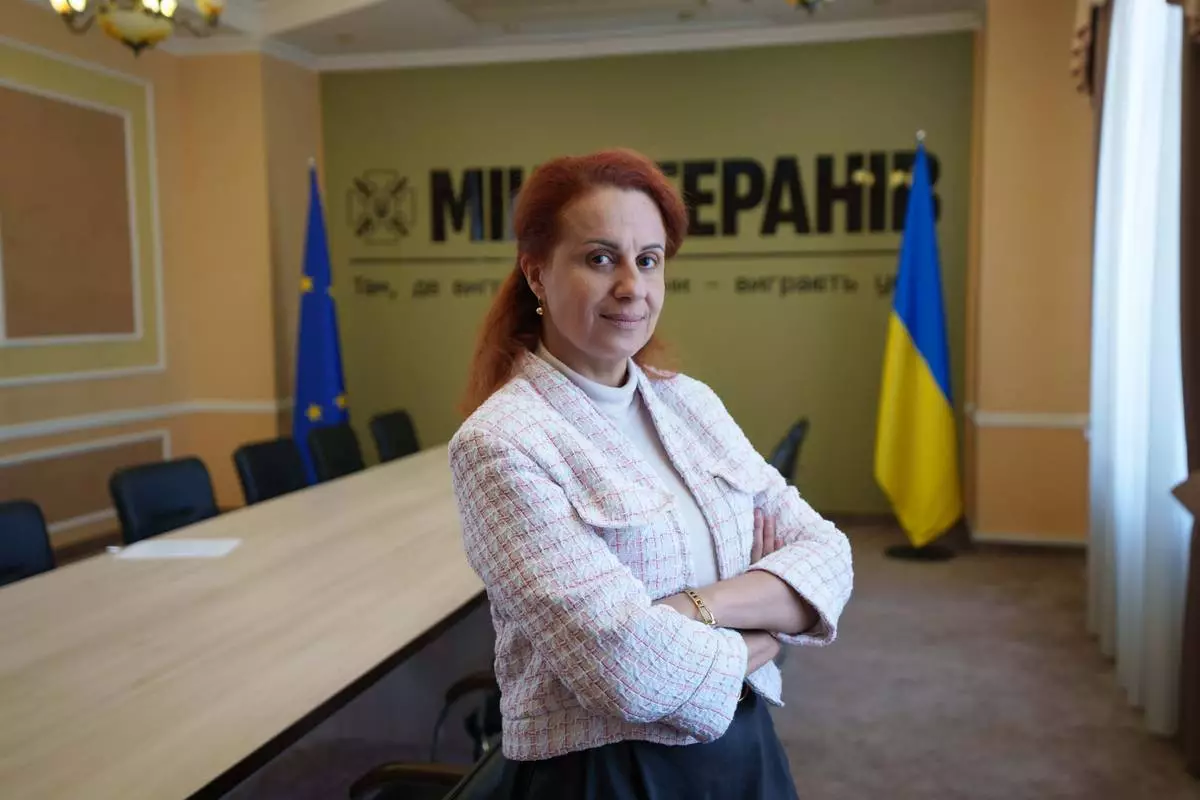
Natalia Kalmykova, Ukraine's Veterans Affairs Minister poses for a photo at her office in Kyiv, Ukraine, Wednesday, June 17, 2026. (AP Photo/Evgeniy Maloletka)
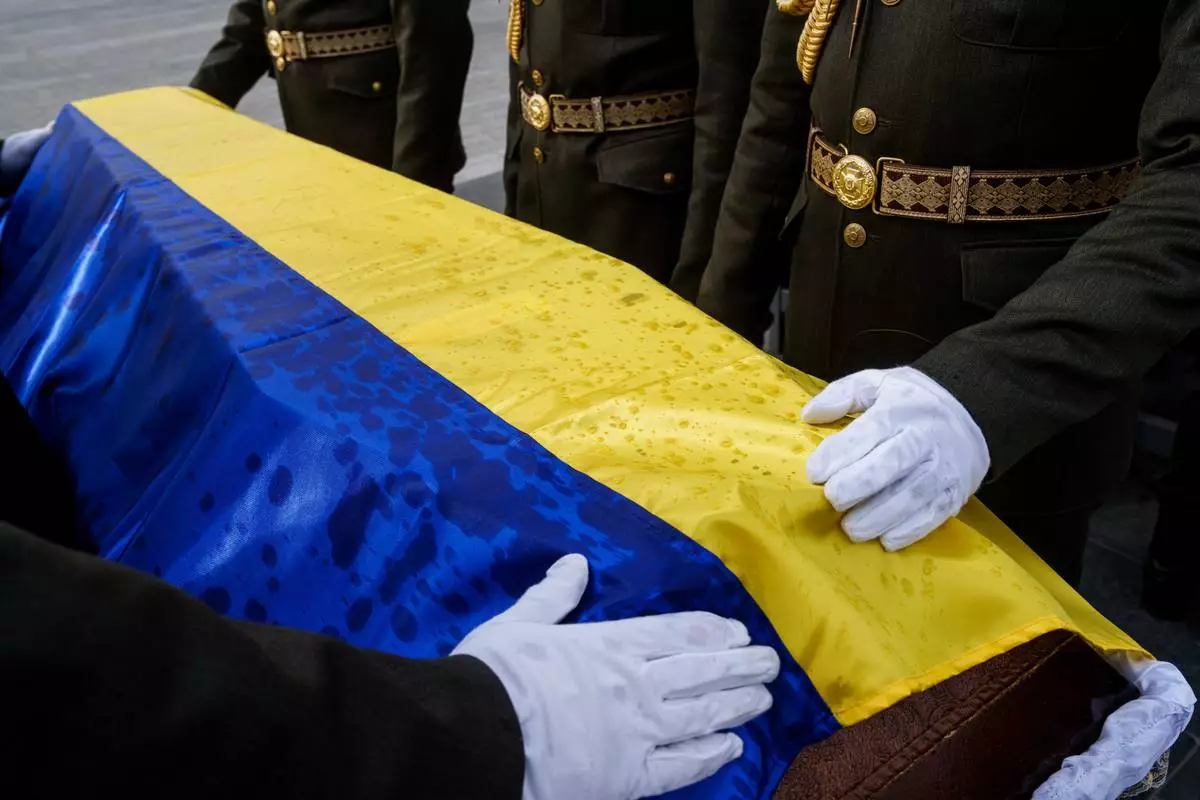
An honor guard straightens out the flag draped over the coffin of a unidentified Ukrainian soldier killed in battle during the Russian-Ukrainian war, during a funeral ceremony at a military cemetery near Kyiv, Ukraine, Thursday, April 30, 2026. (AP Photo/Evgeniy Maloletka)
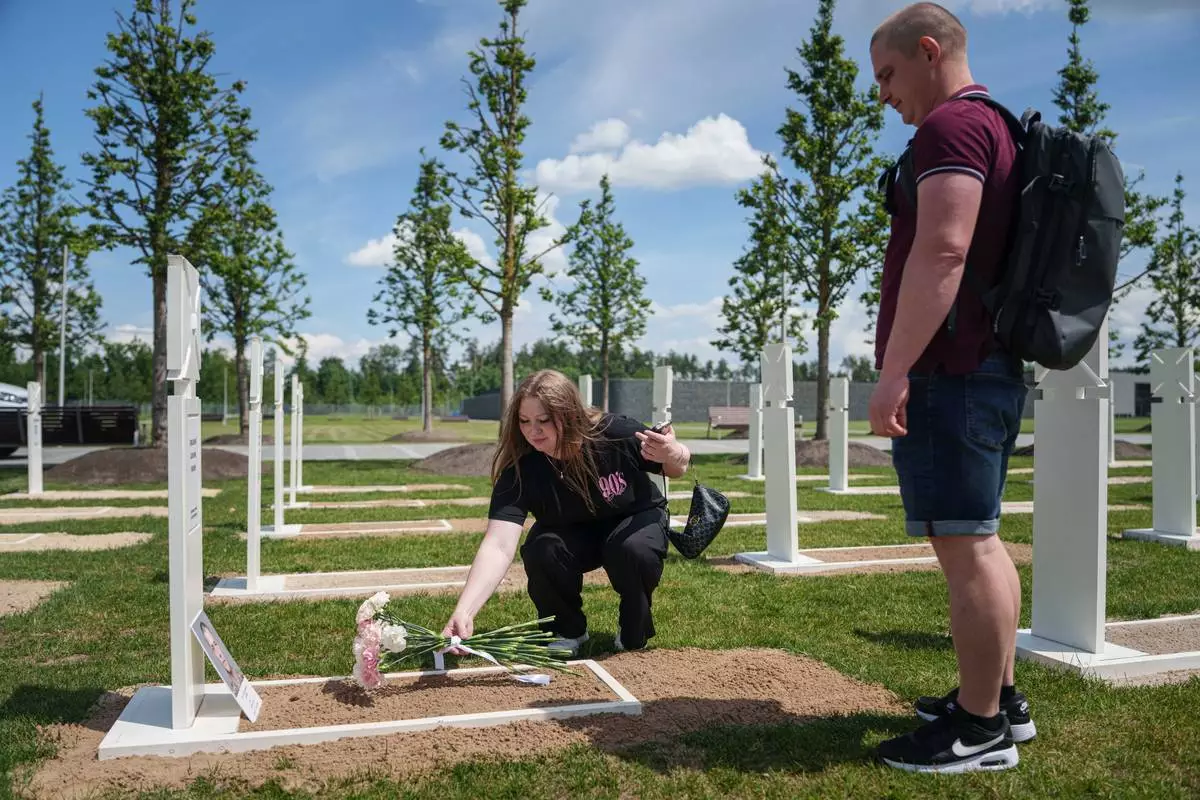
Stanislav and Oleksandra Yalynych lay flowers on the grave of their father Ihor Yalynych, a Ukrainian soldier who has been missed since 2022, at the military cemetery near Kyiv, Ukraine, Wednesday, June 17, 2026. (AP Photo/Evgeniy Maloletka)
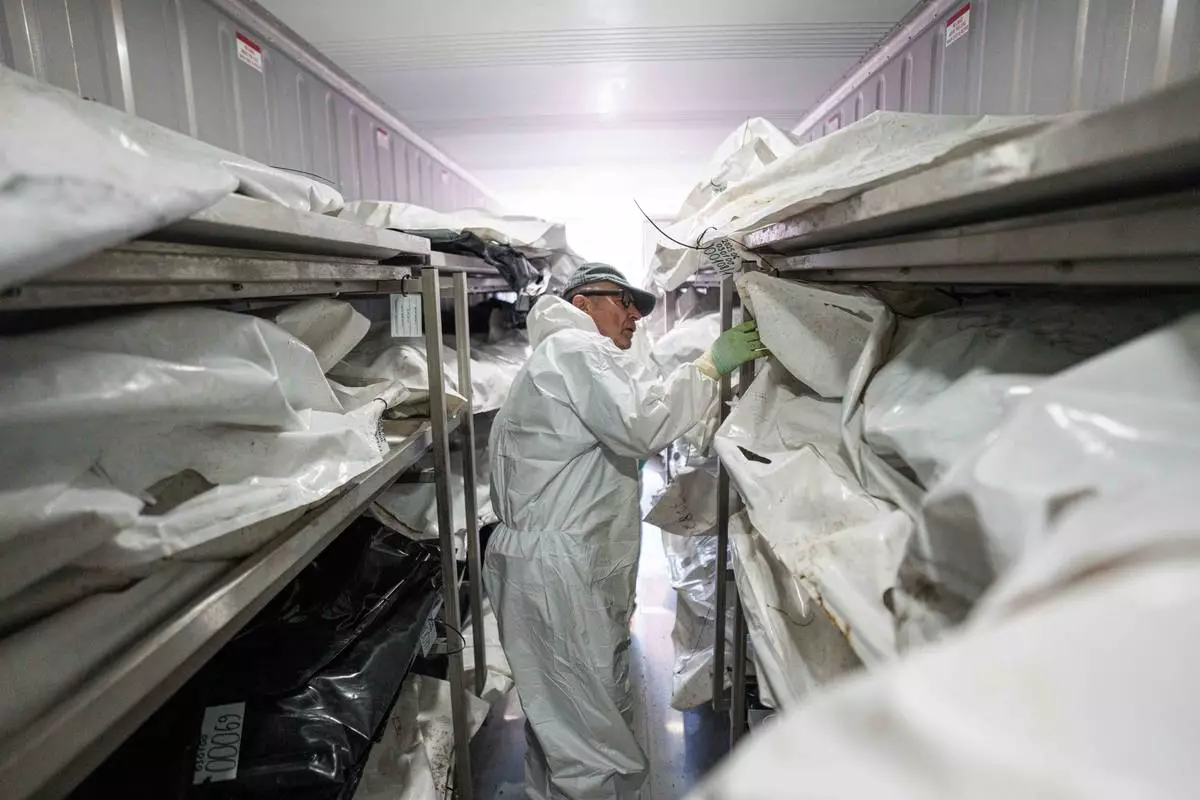
A morgue worker searches for a body of Ukrainian soldier before examination at the forensic bureau in Kyiv region, Ukraine, on Monday, June 1, 2026. (AP Photo/Evgeniy Maloletka)
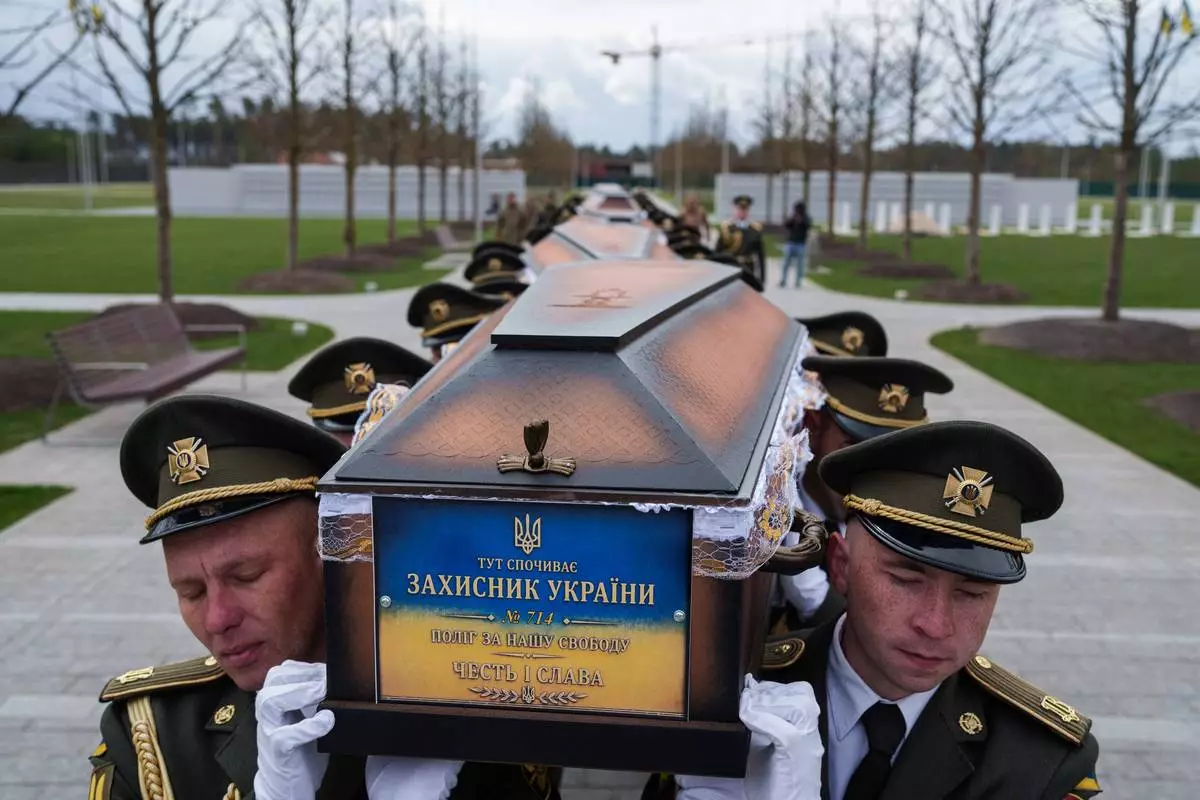
FILE - An honor guard carries the coffins of unidentified Ukrainian soldiers killed in battle during the Russian-Ukrainian war at a funeral ceremony at a military cemetery near Kyiv, Ukraine, April 30, 2026. (AP Photo/Evgeniy Maloletka, File)