WELLINGTON, New Zealand (AP) — Actor Sam Neill died from pneumonia and will be honored at a private family memorial at his New Zealand farm later, his agent told The Associated Press on Thursday.
Neill's family had earlier announced the actor known for “Jurassic Park,” “The Piano” and other films died Monday in Sydney.
His agent Philip Grenz said he was providing more information after speaking with Neill's family and following news reports “which contain inaccuracies and outright falsehoods,” he said.
"Sam passed away from pneumonia," Grenz said. “Prior to becoming sick, Sam had valiantly fought and beaten lymphoma through a new treatment called CAR-T therapy.”
He added that Neill had filmed four projects “back-to-back” during the past year that are due to be released in the coming months.
“As Sam was an intensely private man who loathed a fuss, his family will honor him with a private family memorial at his farm in New Zealand at a still-undetermined later date,” Grenz said.
The New Zealand actor disclosed in 2023 that he had been diagnosed with angioimmunoblastic T-cell lymphoma, a rare type of non-Hodgkin lymphoma, and said in April this year that he was cancer-free. CAR-T therapy is a form of immunotherapy based on an individual's T cells and is used for several types of blood cancer.
His agent's statement followed days of tributes to Neill from film industry colleagues who remembered him as a kind, witty and curious man.
“You are so loved and will be sorely missed by us all,” director Taika Waititi, who directed Neill in 2016's “Hunt for the Wilderpeople” — one of Neill's best-loved films in New Zealand — wrote on Instagram on Wednesday.
“Love you and see you soon, sweet Nigel," Waititi wrote, referring to Neill's birth name, which he told interviewers he had changed to Sam at school because there were too many Nigels in his class.
“Sam was exceptionally collaborative," said Steven Spielberg, who helmed the first “Jurassic Park” movie, in which Neill played paleontologist Alan Grant.
“I adored making all the Jurassic movies with him,” Spielberg said in a statement. "Along with Laura Dern and Jeff Goldblum, we will always have our Jurassic family and Sam will never be forgotten by us or his many millions of fans around the world.”
Neill was one of a host of actors and directors who achieved international fame after an explosion of Australian films that began in the late 1970s. In New Zealand, he has been mourned as a friendly, unassuming person who shunned celebrity and contributed to causes and community projects near his home, according to local news outlets.
Neill was also a vintner and under his Two Paddocks brand, he produced pinot noir and riesling wines from his winery in the Central Otago region of New Zealand’s South Island.
He is survived by his four children and eight grandchildren.

FILE - Actor Sam Neill poses at the premiere of "Hunt for the Wilderpeople" during the 2016 Sundance Film Festival on Jan. 22, 2016, in Park City, Utah. (Photo by Danny Moloshok/Invision/AP, File)

FILE - Sam Neill arrives at the premiere of "Apples Never Fall" on March 12, 2024, in Los Angeles. (Photo by Richard Shotwell/Invision/AP, File)
MASAFER YATTA, West Bank (AP) — The blue-and-white Israeli flags flutter from hilltops and line the roads of the occupied West Bank, signaling the growing presence of Israeli settlements and the outposts they’re building on Palestinian land.
For shepherds in the Jordan Valley, as well as in Masafer Yatta, a cluster of villages in the southern West Bank, the flags and expanding settlements have become inescapable features of the landscape, reminders of how daily life has narrowed.
Thiab Draghme and his brother, Ayman, led their flock across the dry hills of the Jordan Valley, returning to their community after searching for grazing land. Their route is carefully chosen. Some pastures are no longer considered safe because of increasing attacks by settlers. Others can be reached only with Israeli activists walking alongside them, documenting their encounters with settlers and Israeli troops and providing what they call a protective presence.
Shepherding has changed little over generations. The risks surrounding it have.
“We are people of generosity and hospitality,” said Thiab, a father of eight. “We want to live in peace.”
He said his children have grown up surrounded by Israeli demolitions, displacement and uncertainty. “What kind of future is that for a child?”
Not far away, Youssef Moussa Shinaran, 52, says he has not been able to harvest olives from his land since the war between Israel and Hamas in Gaza began in October 2023. “You’re not allowed to move around. The house has become a prison,” said Shinaran, who lives near Susya in the southern West Bank.
According to the U.N. humanitarian agency, settler attacks have increased sharply in 2026. Between January and April, the agency recorded 761 attacks linked to Israeli settlers and nearly 2,000 people displaced by violence and access restrictions. Entire communities have found themselves increasingly isolated as new outposts expand across the surrounding hills.
The pressure extends well beyond confrontations between settlers and Palestinians.
One morning, a dispute over a brush fire brought settlers, Palestinians, soldiers and police to a hillside. After settlers accused Palestinians of starting the blaze, one Palestinian and one Israeli activist were detained before being released later that day.
The expansion of the settlements and accompanying violence has forced many Palestinian families to alter their routines. Like the Draghme brothers, some shepherds no longer graze where they once did. Others have sold their flocks after deciding the risk had become too great.
Near the village of Taybeh, northeast of Ramallah, Shoma Kaabneh’s family sold all their sheep after an Israeli outpost was built close to their home. Her husband now works in construction, earning far less than they once made selling dairy products.
In another community in the northern Jordan Valley, a Palestinian family leaves an Israeli flag that settlers planted near their sheep pen. They say removing it could provoke retaliation from settlers or soldiers.
As evening fell over the Masafer Yatta region, men gathered to pray outside homes. Nearby, settlers rode quad bikes before returning to an outpost a few hundred meters away.
Residents organize night watches, taking turns staying awake to warn neighbors if Israeli settlers approach.
Each day begins much like the last: Sheep are led into the hills. Children play between tents and homes. Families tend to their animals, repair fences and prepare meals under a horizon increasingly dominated by Israeli construction that seeks to push them away.
This is a documentary photo story curated by AP photo editors.
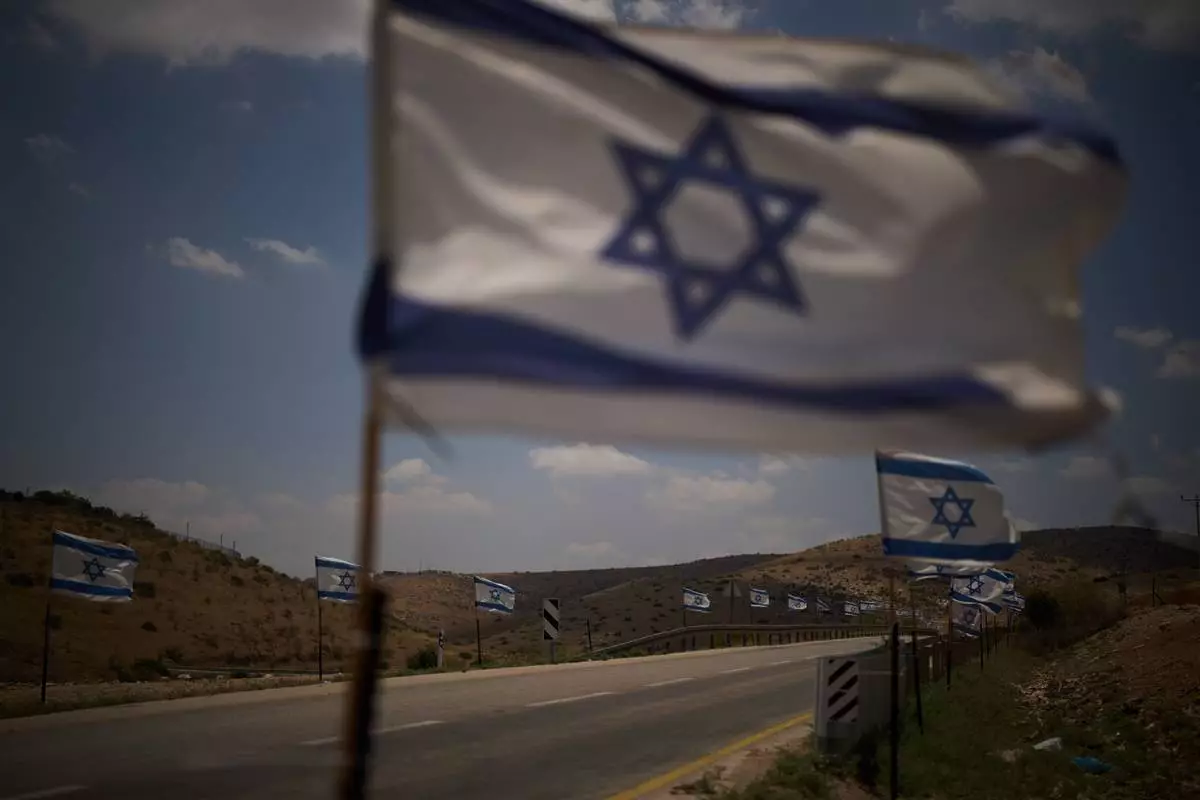
Israeli flags are seen lining a road in the northern Jordan Valley in the occupied West Bank, Wednesday, June 24, 2026. (AP Photo/Leo Correa)
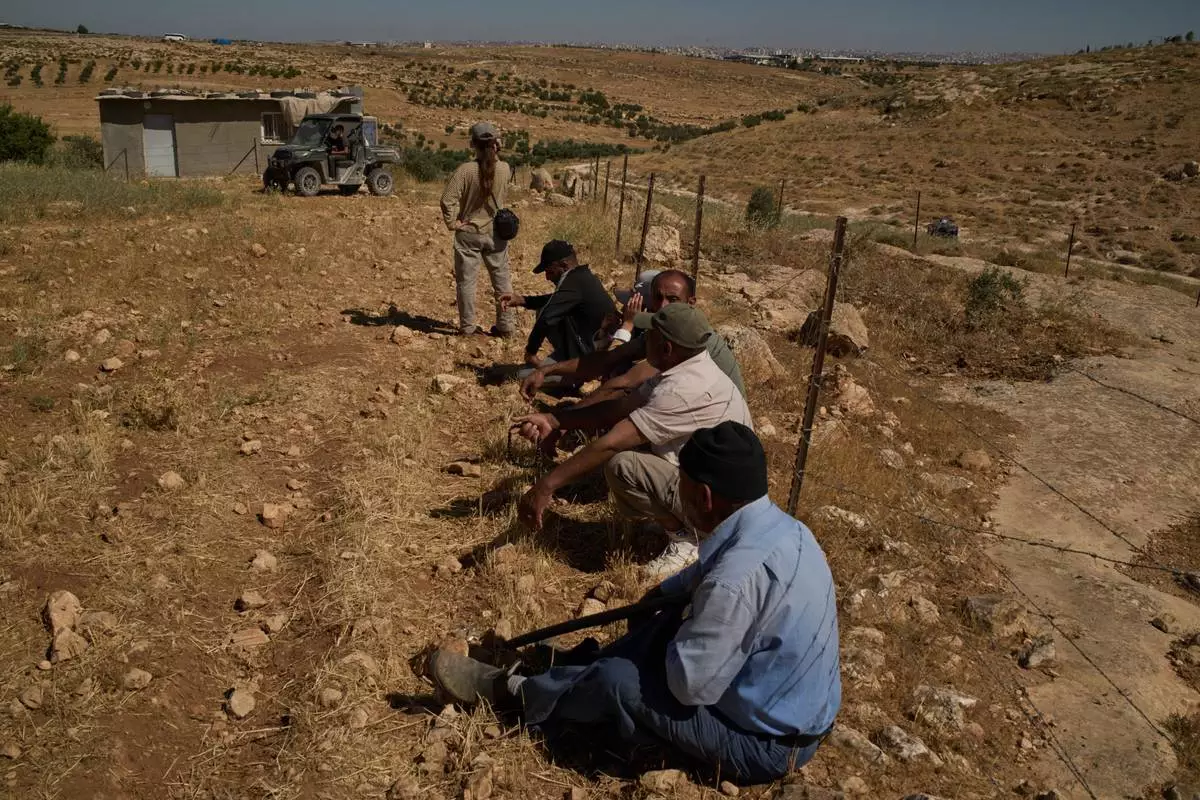
After Israeli soldiers told them to remain by the fence, Palestinians and an Israeli activist sit watching as settlers arrive in a vehicle after the settlers accused a local Palestinian resident of setting fire to a field, near the West Bank village of Susya in the Masafer Yatta region, Thursday, June 18, 2026. (AP Photo/Leo Correa)
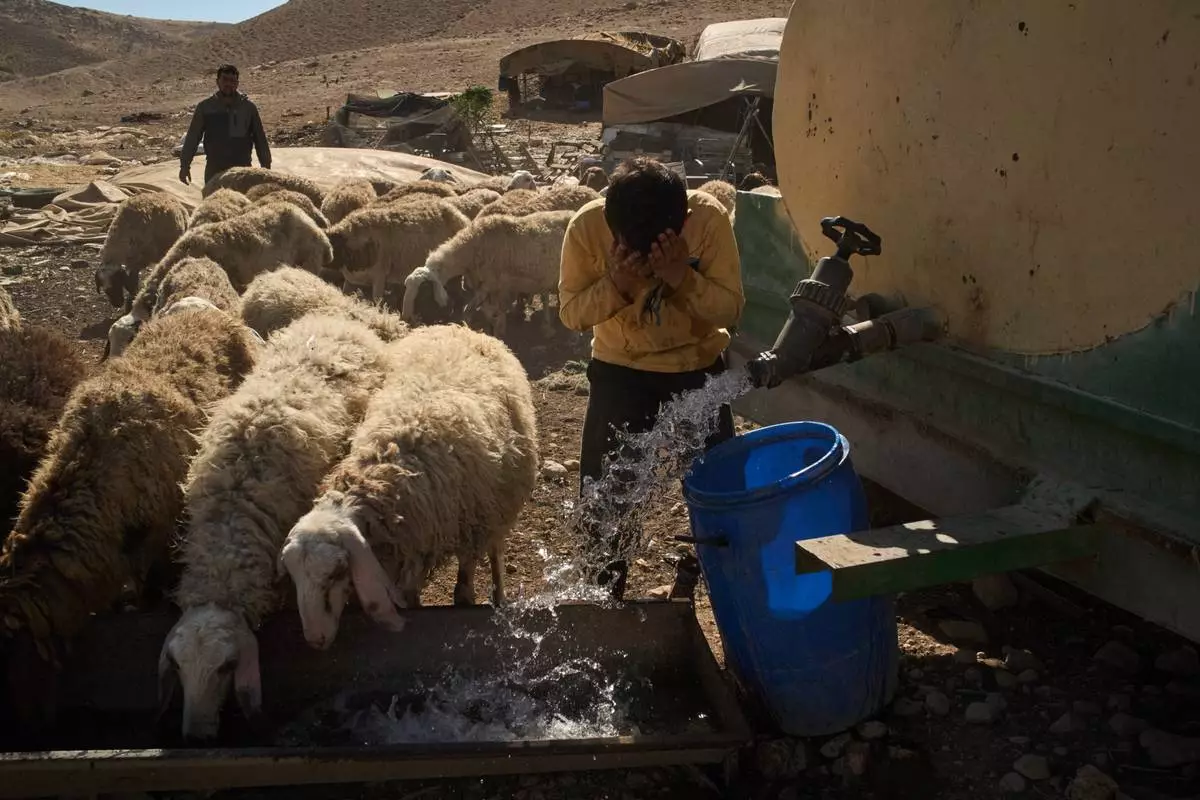
Hamoudi, 10, washes his face as he gives water to his family's sheep at a Palestinian community in the northern Jordan Valley in the occupied West Bank, Tuesday, June 23, 2026. (AP Photo/Leo Correa)
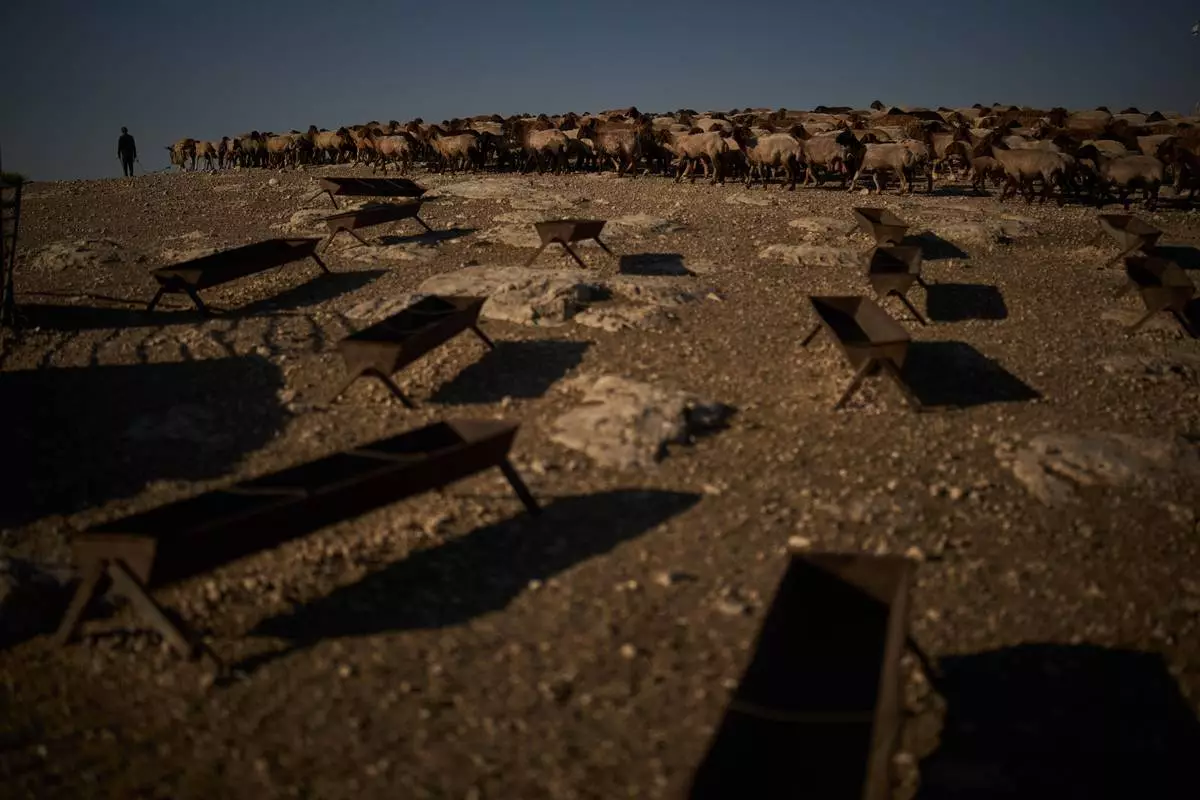
A Palestinian shepherd leads his flock of sheep as they move away from his family compound in the northern Jordan Valley in the occupied West Bank, Wednesday, June 24, 2026. (AP Photo/Leo Correa)
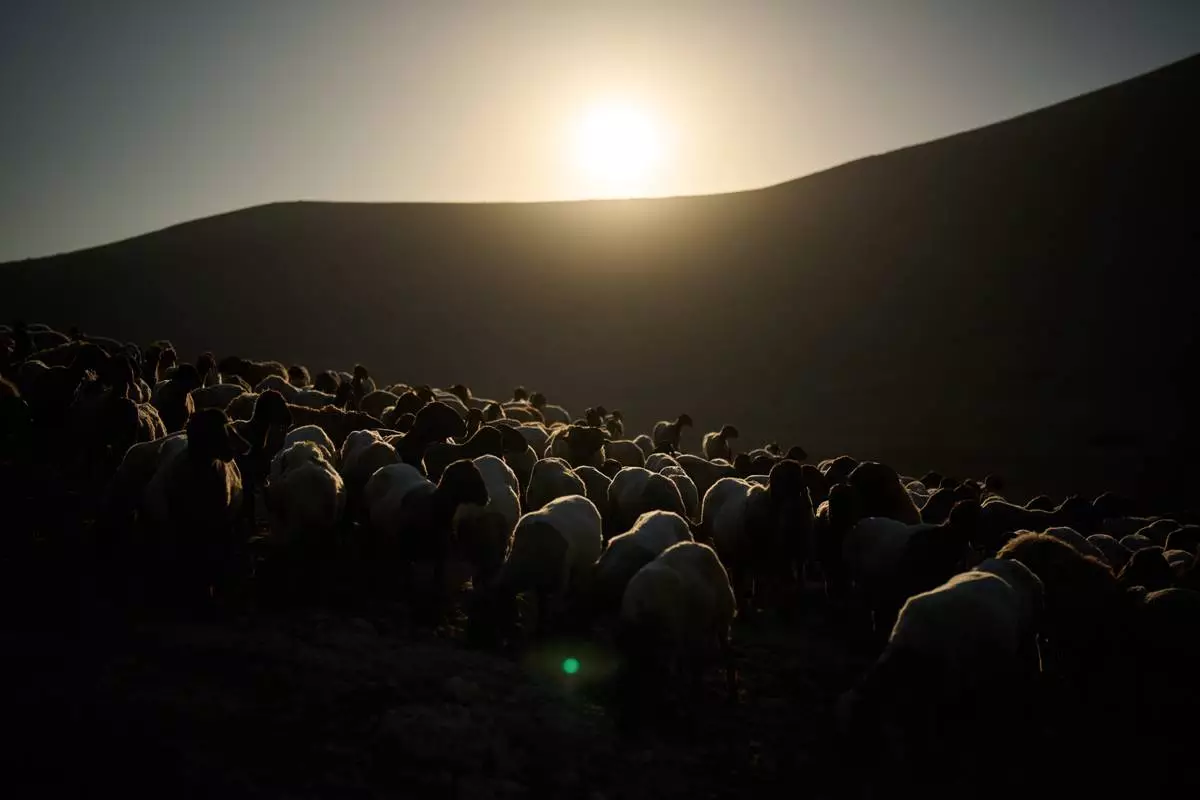
A herd of sheep graze on a hill as the sun rises over a Palestinian community in the northern Jordan Valley, in the occupied West Bank, Wednesday, June 24, 2026. (AP Photo/Leo Correa)
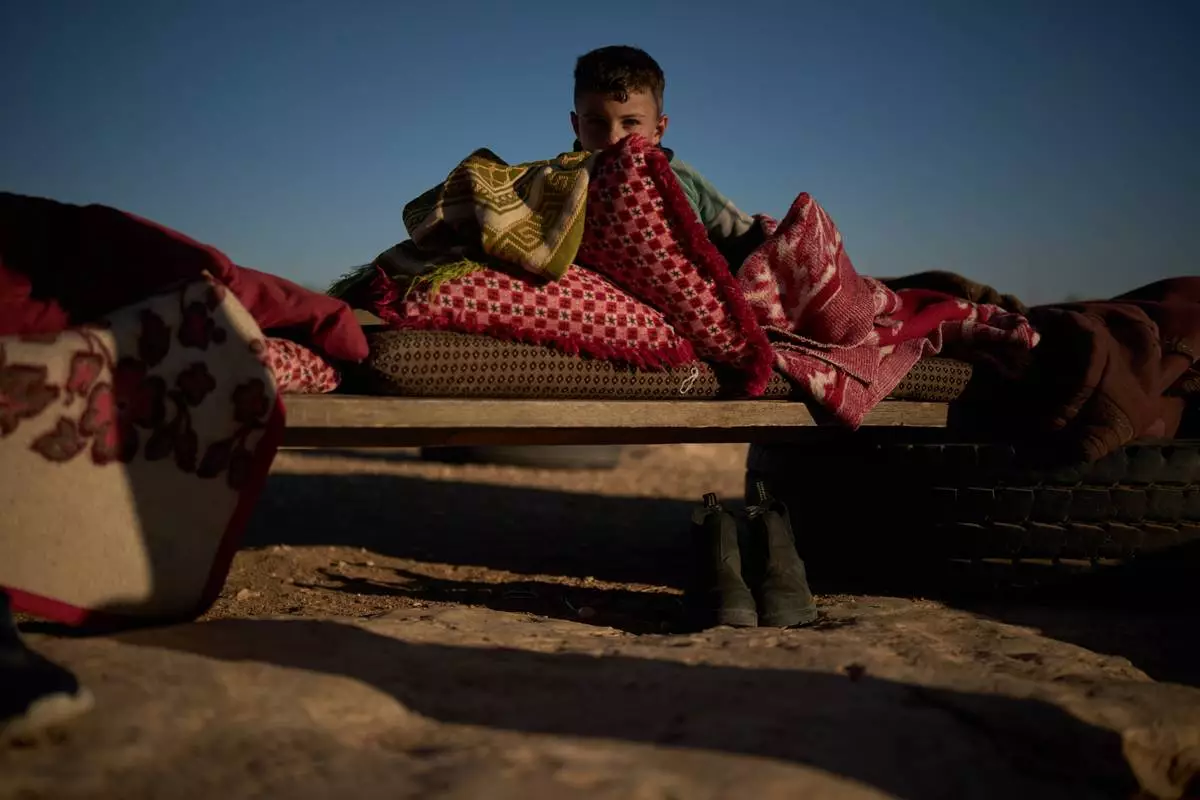
Yasser, 8, looks at the camera after taking a nap in the morning outside his house in a Palestinian community near the West Bank village of Susya, in the Masafer Yatta region, Thursday, June 18, 2026. (AP Photo/Leo Correa)
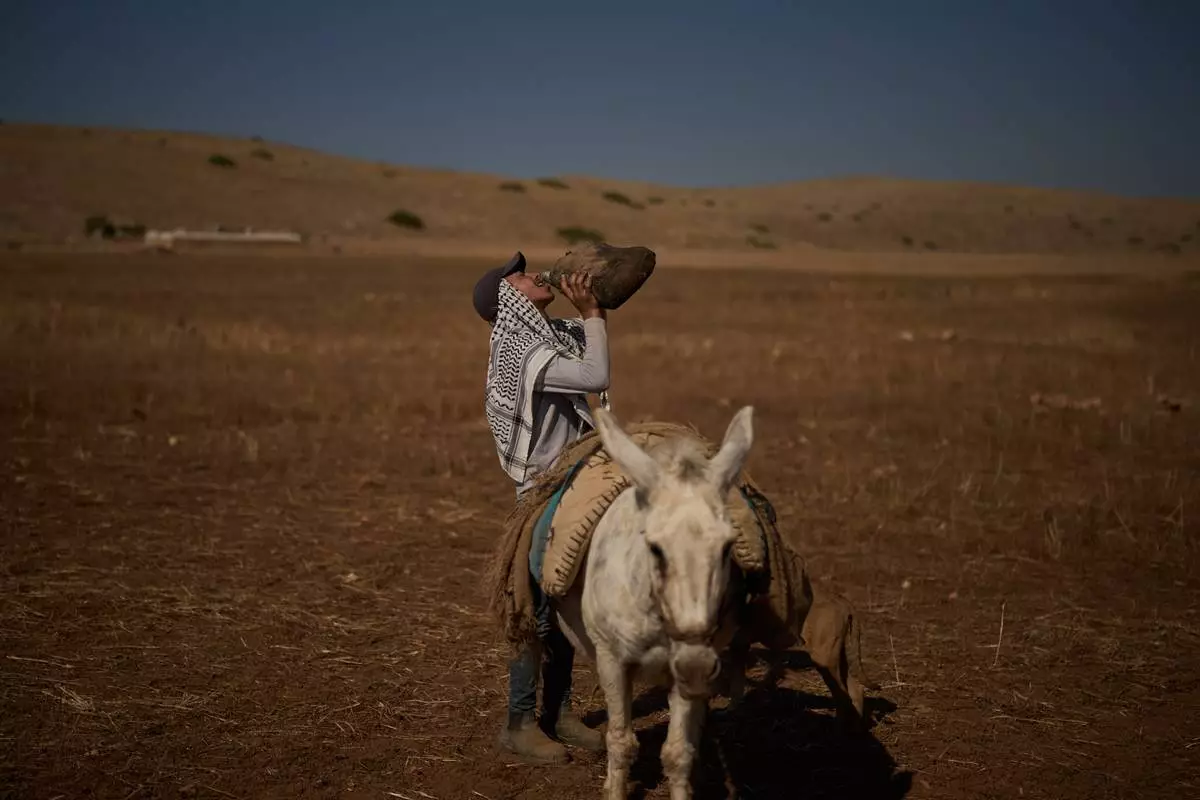
Ahmad, 15, drinks water after being stopped by Israeli soldiers while grazing his flock near his community in the northern Jordan Valley in the occupied West Bank, Wednesday, June 24, 2026. (AP Photo/Leo Correa)
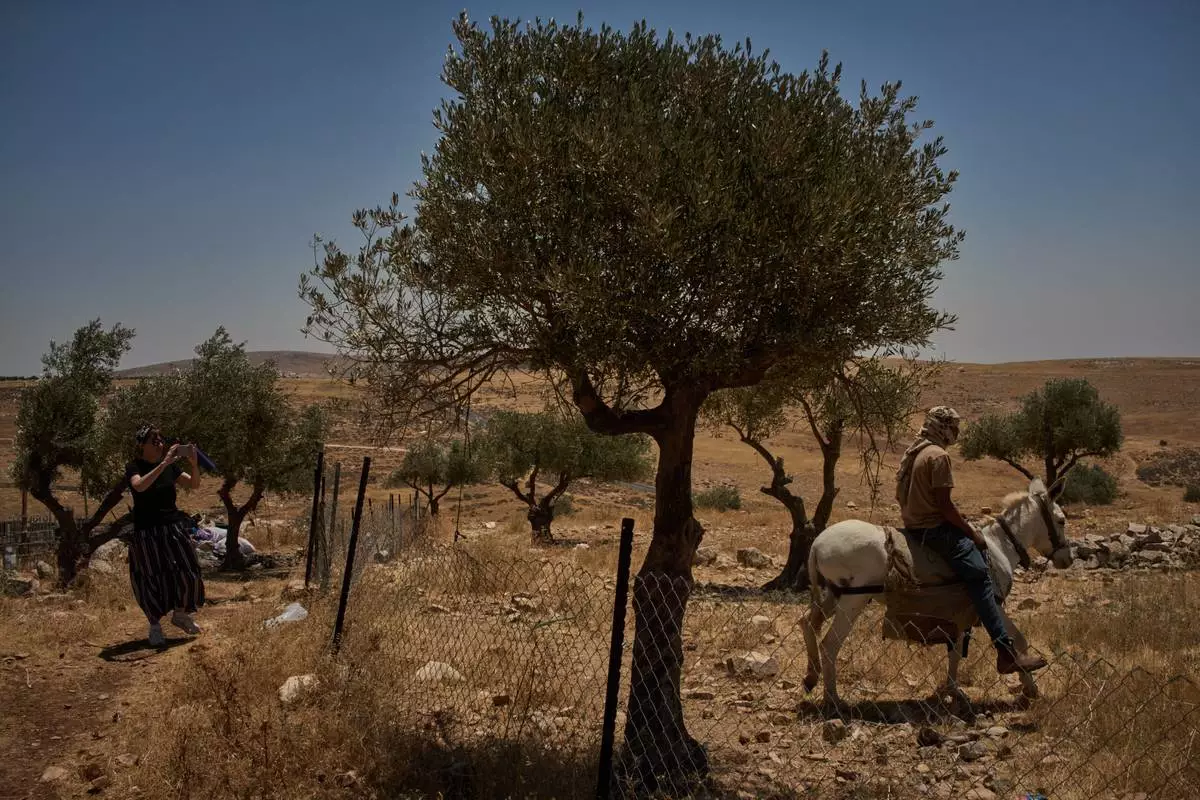
An Israeli activist records the presence of a settler as he moves with his donkey in front of a Palestinian house on the outskirts of the West Bank town of Taybeh, Thursday, June 25, 2026. (AP Photo/Leo Correa)
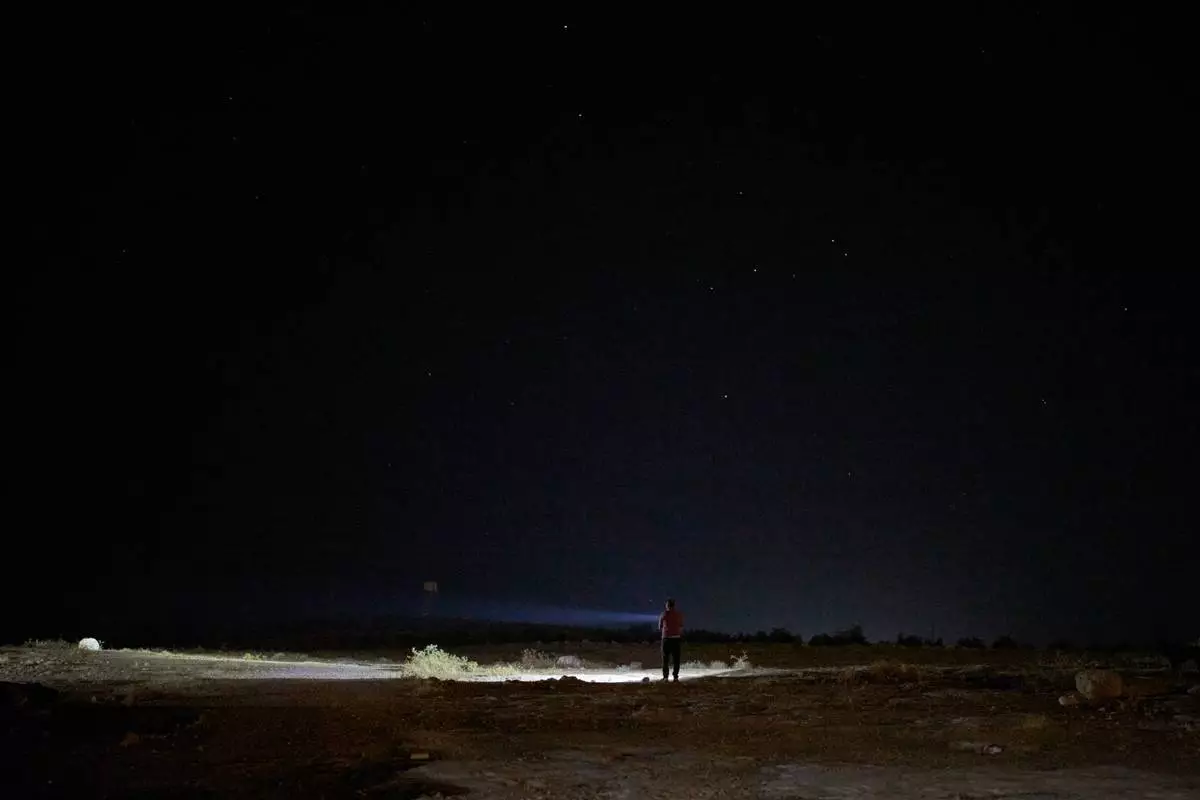
A Palestinian uses a flashlight as he takes part in a night watch to warn neighbors if Israeli settlers approach his community near the West Bank village of Susya, in the Masafer Yatta region, Thursday, June 18, 2026.. (AP Photo/Leo Correa)
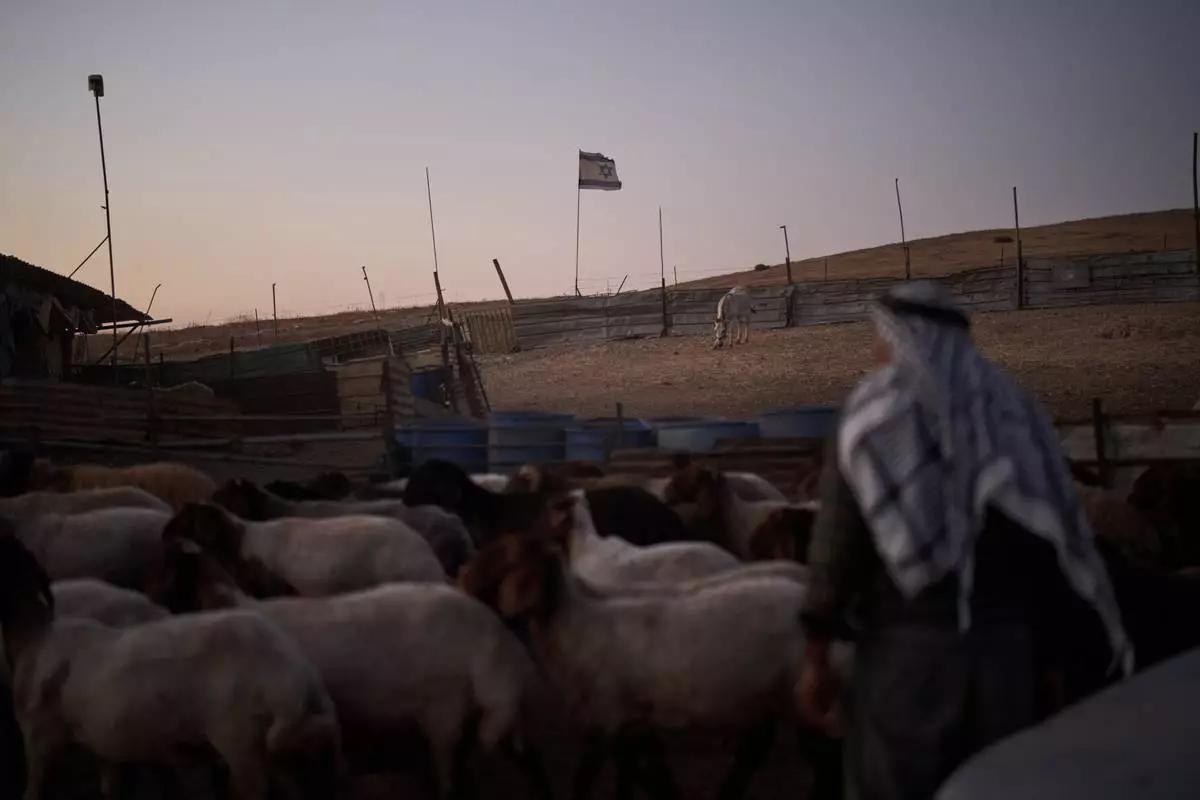
An Israeli flag, set up by settlers, waves beside a fence around a Palestinian compound's sheep pen at dusk in the northern Jordan Valley in the occupied West Bank, Tuesday, June 23, 2026.(AP Photo/Leo Correa)
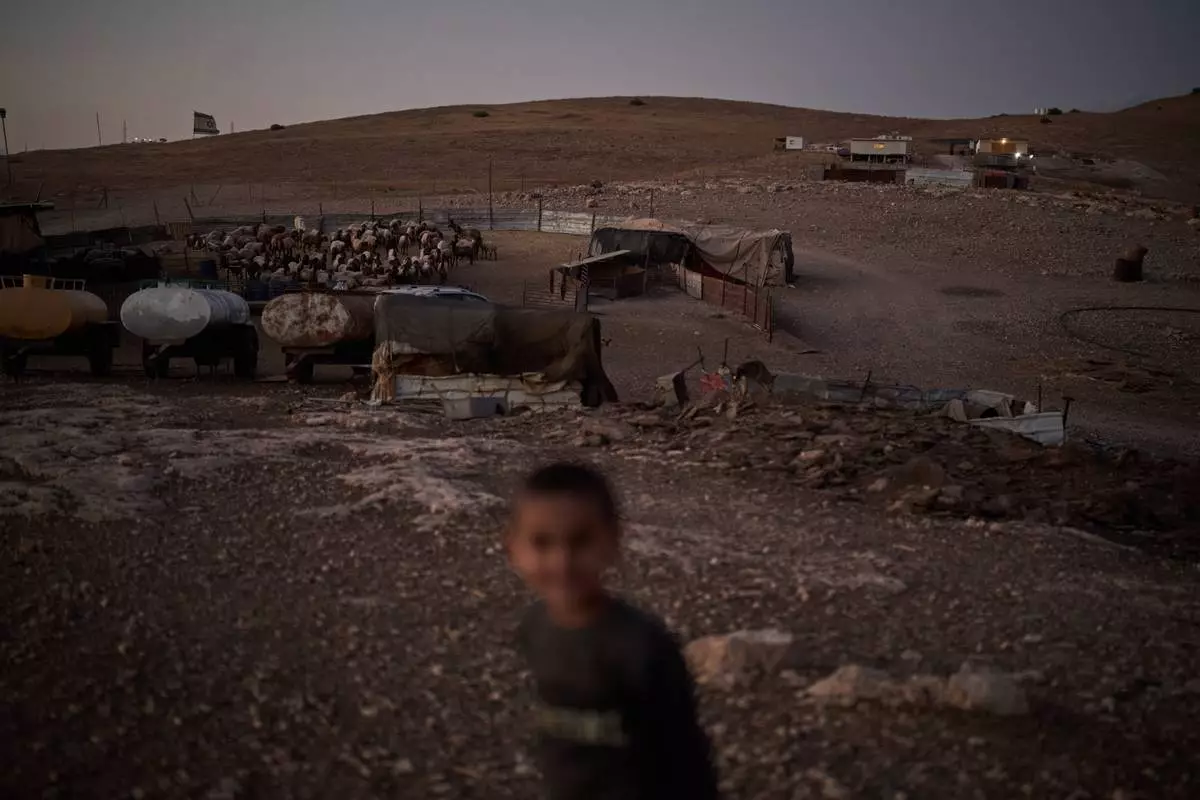
An Israeli settler outpost, top right, overlooks a Palestinian compound at dusk in the northern Jordan Valley in the occupied West Bank, Tuesday, June 23, 2026. (AP Photo/Leo Correa)
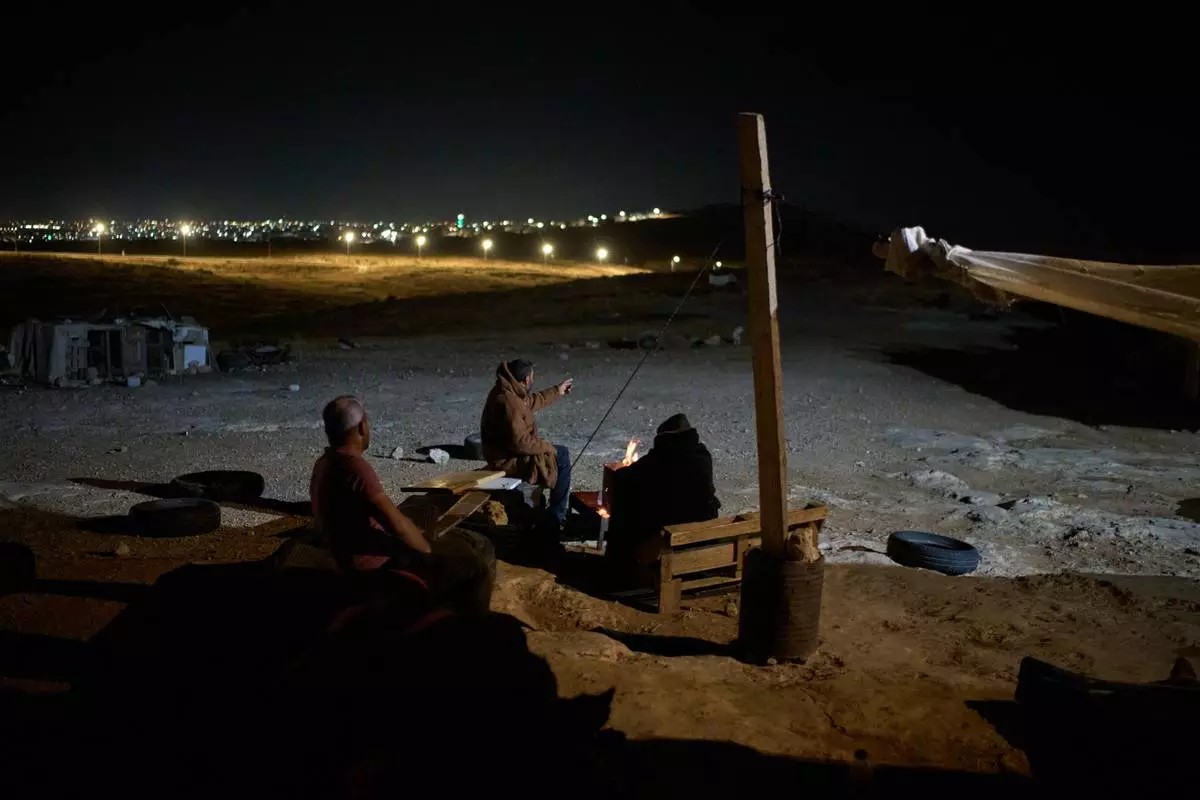
Palestinians sit next to a fire as they take part in a night watch to warn neighbors if Israeli settlers approach their community near the West Bank village of Susya, in the Masafer Yatta region, Thursday, June 18, 2026.. (AP Photo/Leo Correa)
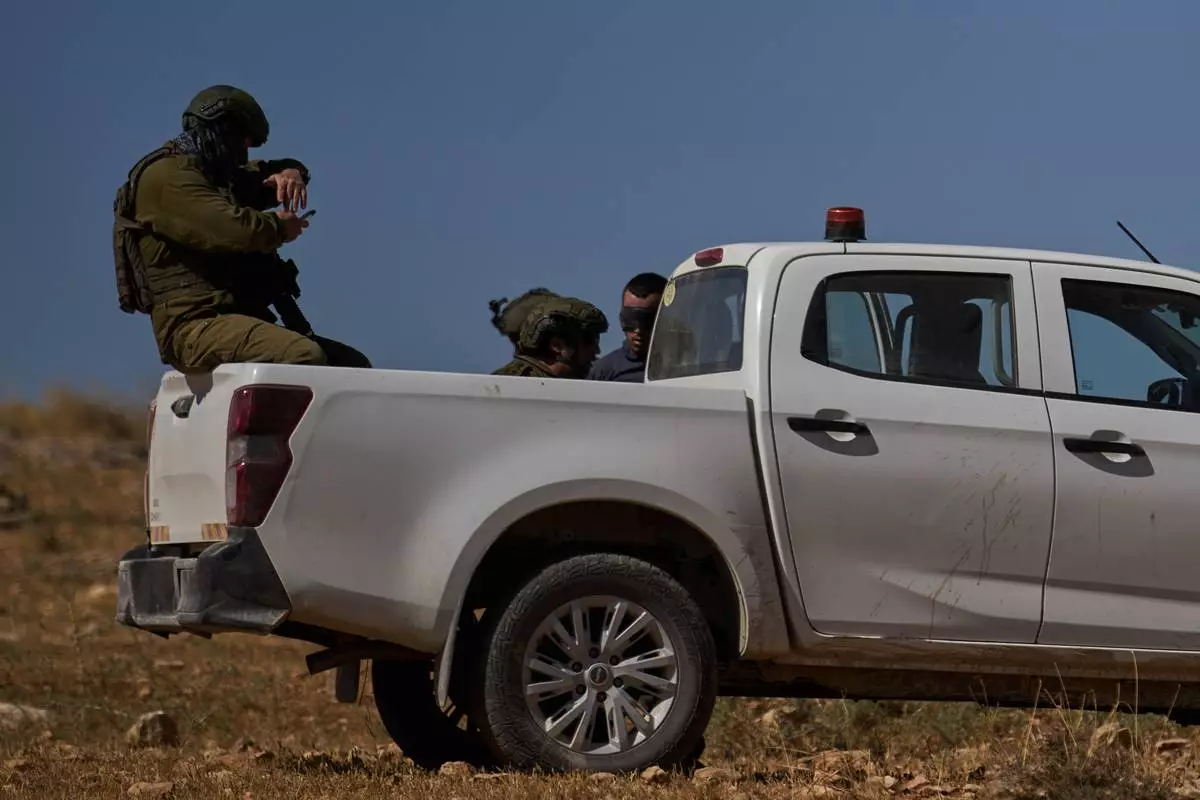
A blindfolded Palestinian is detained by Israeli soldiers after being accused by Israeli settlers of setting a field on fire near the West Bank village of Susya, in the Masafer Yatta region, Thursday, June 18, 2026.(AP Photo/Leo Correa)
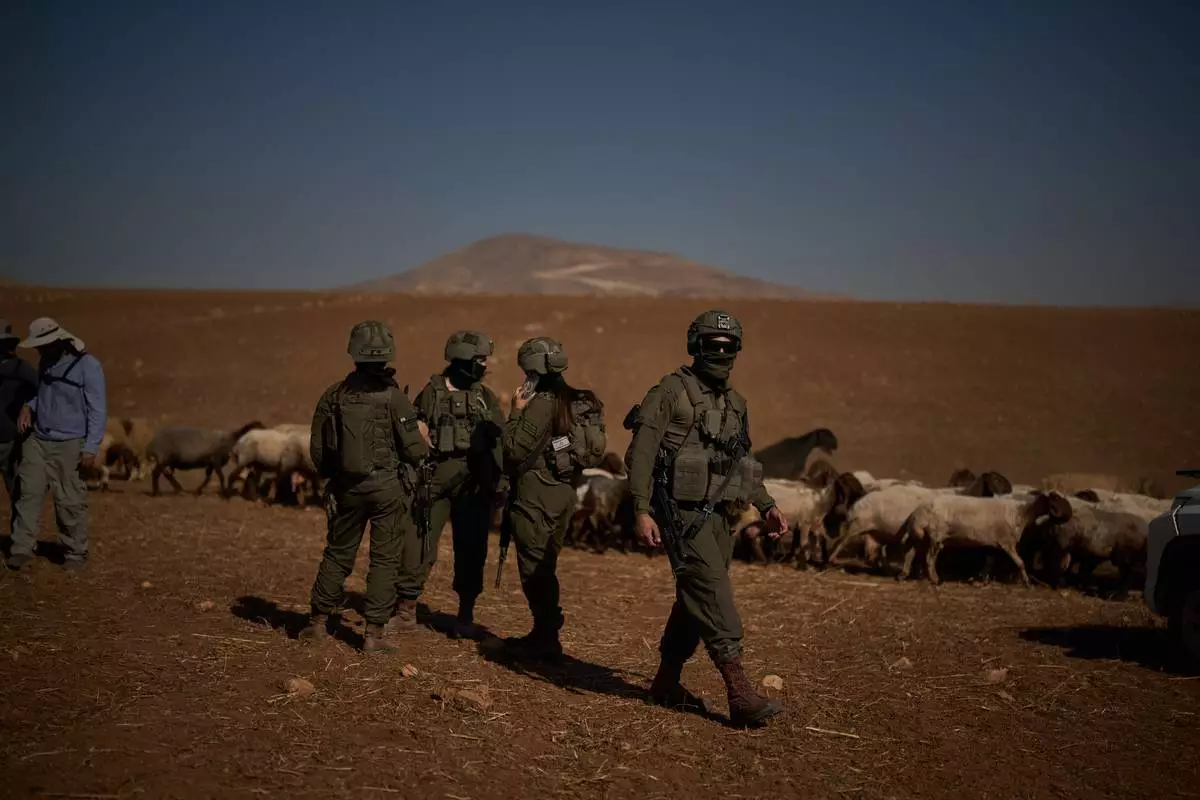
Israeli soldiers stand next to an activist and sheep after stopping a young Palestinian man who was grazing his flock near his community in the northern Jordan Valley in the occupied West Bank, Wednesday, June 24, 2026. (AP Photo/Leo Correa)
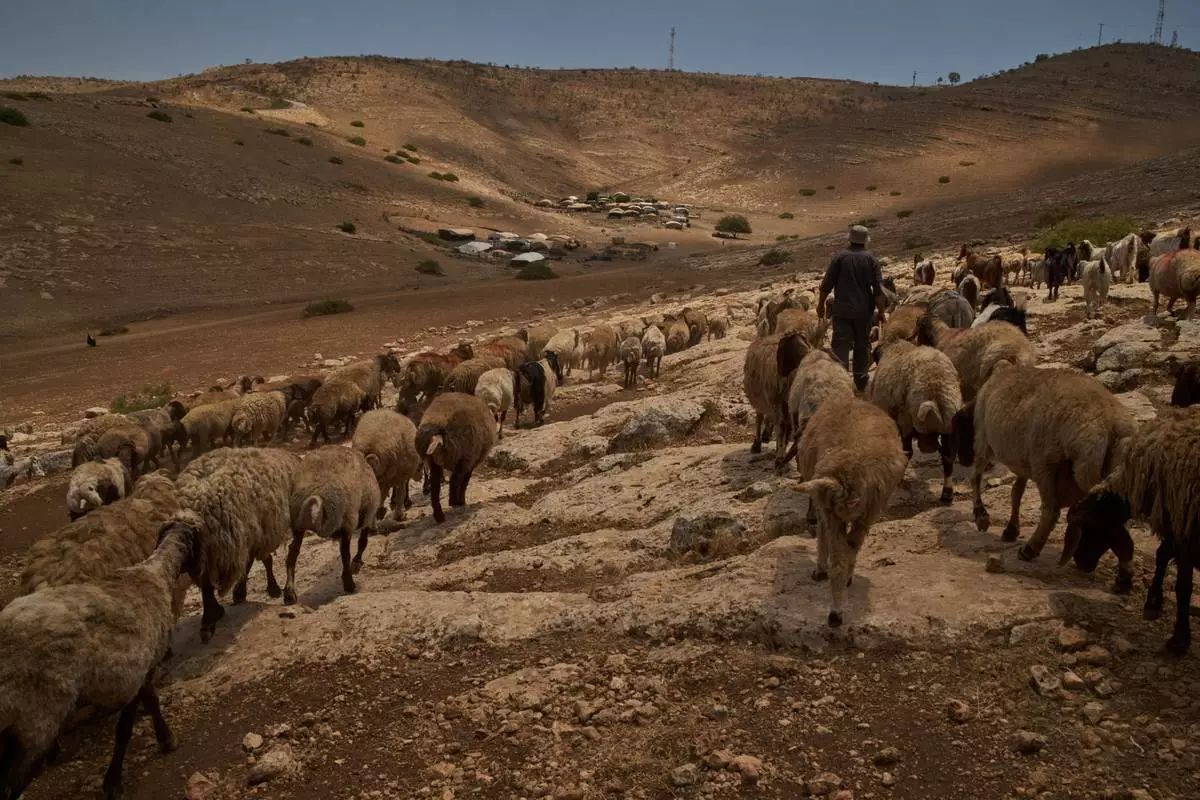
Palestinian shepherd Ayman Draghme leads his flock back to his family's community in the northern Jordan Valley in the occupied West Bank, Tuesday, June 23, 2026. (AP Photo/Leo Correa)
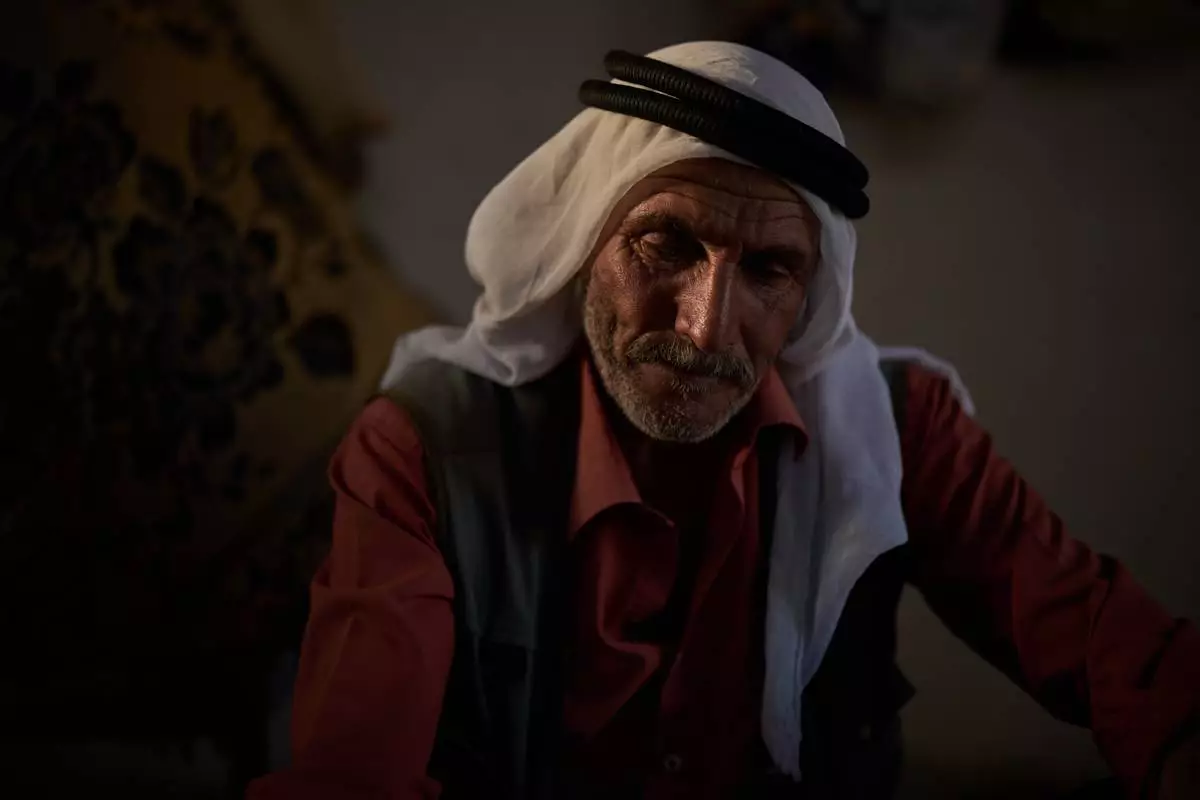
Youssef Moussa Shinaran, looks down as he talks about settlers attacks in his community near the West Bank village of Susya, in the Masafer Yatta region, Wednesday, June 17, 2026. "You're not allowed to move around. The house has become a prison," says the 52-year-old Palestinian. (AP Photo/Leo Correa)
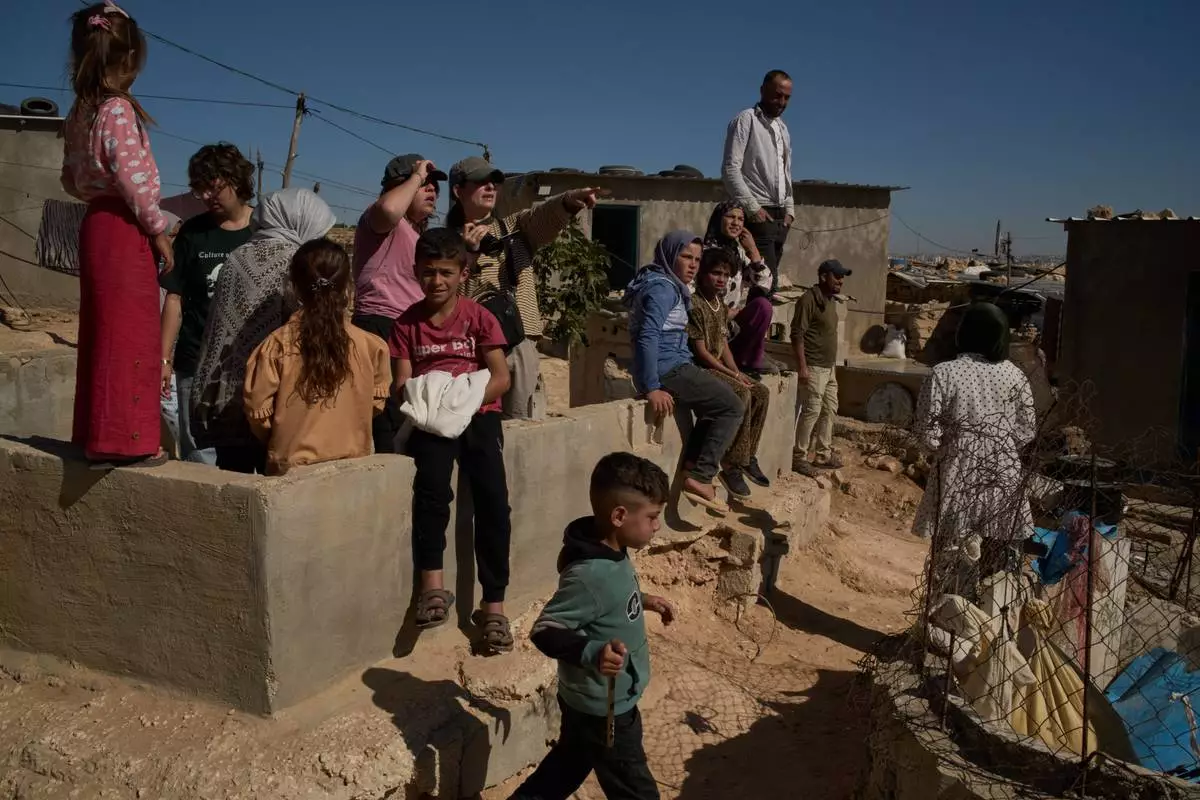
Israeli activists along with Palestinians from a local community observe the movement of settlers near the West Bank village of Susya, in the Masafer Yatta region, Thursday, June 18, 2026. (AP Photo/Leo Correa)
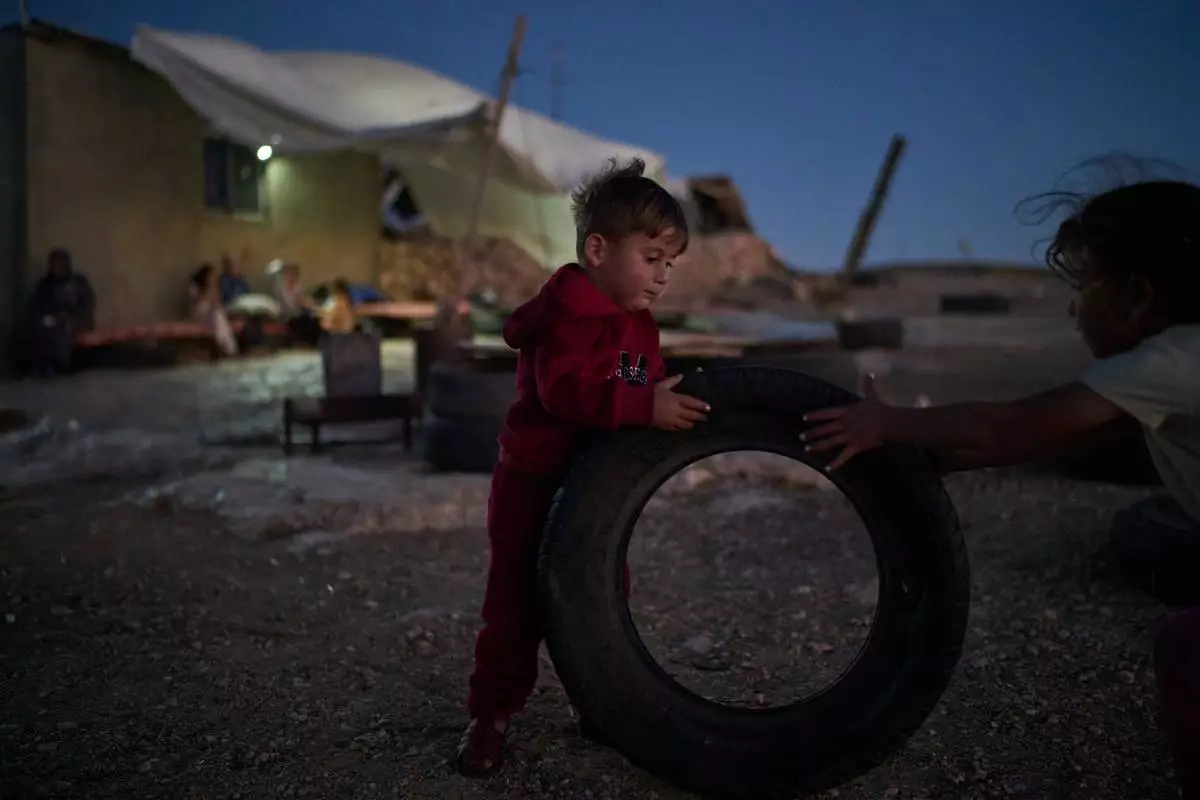
Palestinian children play outside their houses in a community near the West Bank village of Susya, in the Masafer Yatta region, Wednesday, June 17, 2026.(AP Photo/Leo Correa)
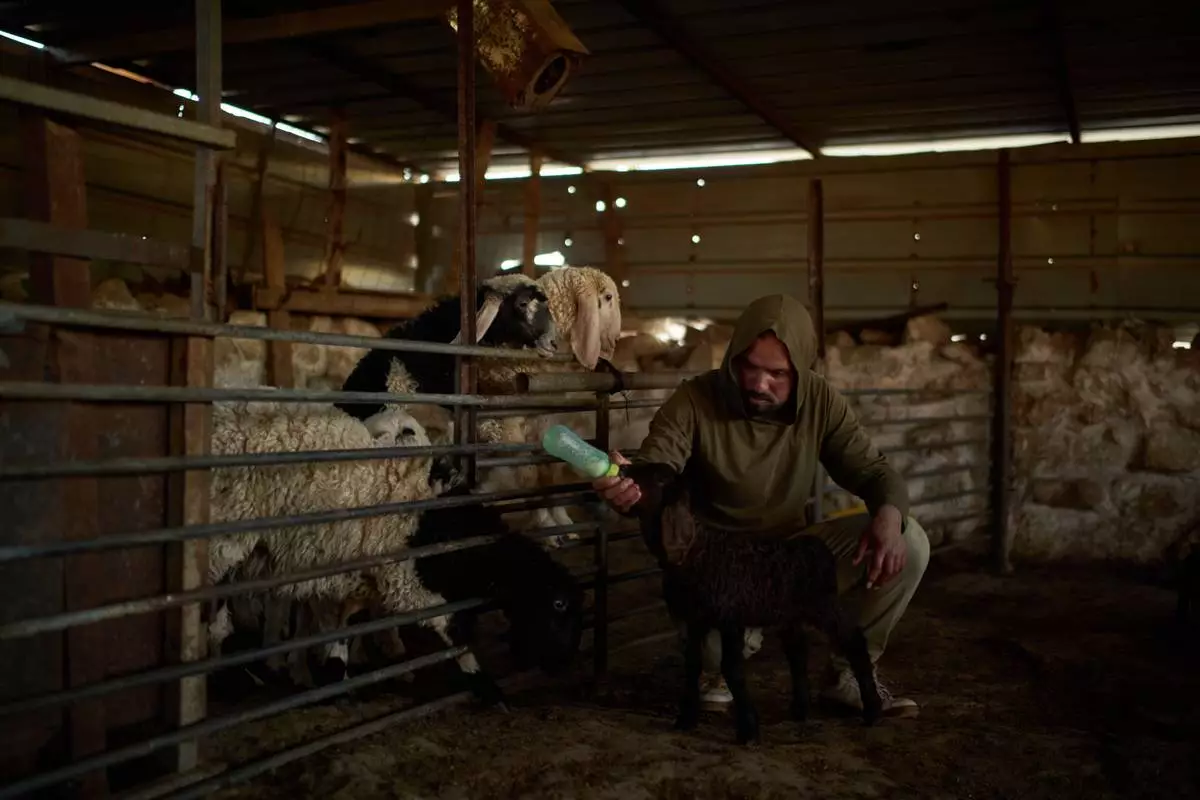
Saber, 32, bottle feeds a lamb in his community near the West Bank village of Susya, in the Masafer Yatta region, Thursday, June 18, 2026.(AP Photo/Leo Correa)
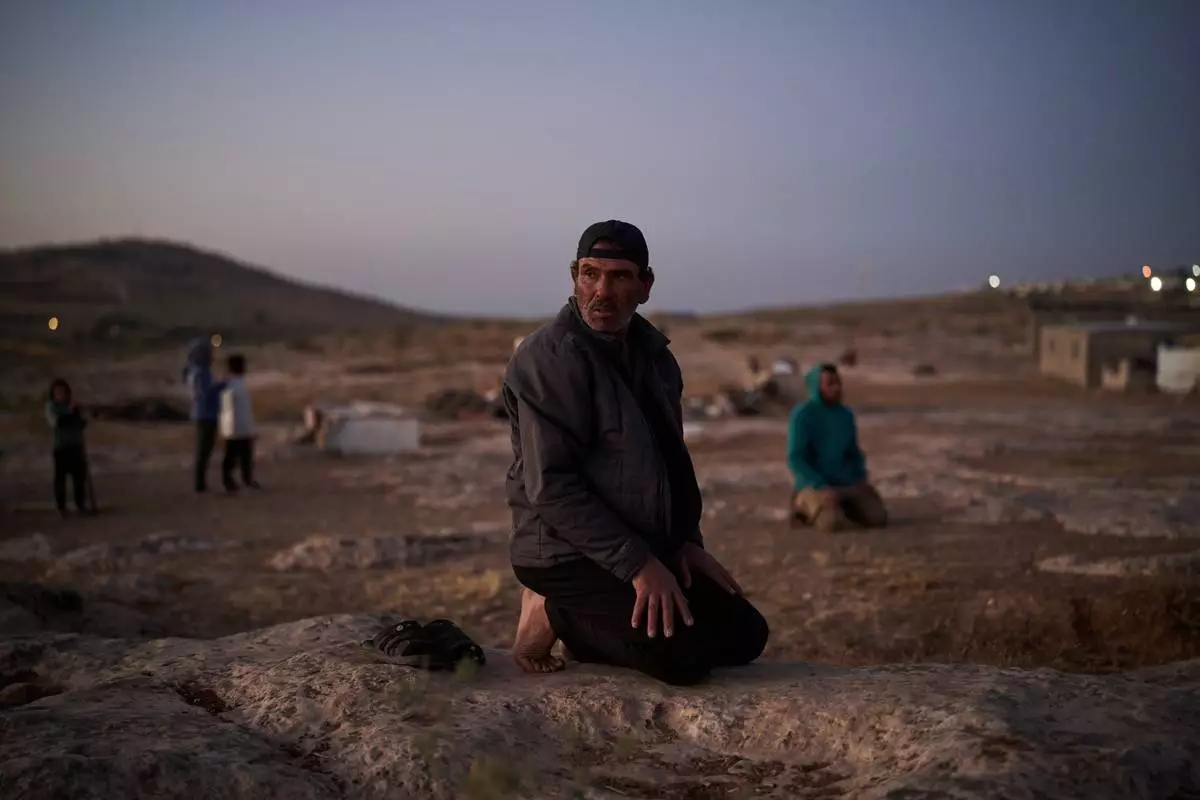
Thalib prays along with other Palestinian men at dusk in their community near the West Bank village of Susya, in the Masafer Yatta region, Wednesday, June 17, 2026.(AP Photo/Leo Correa)
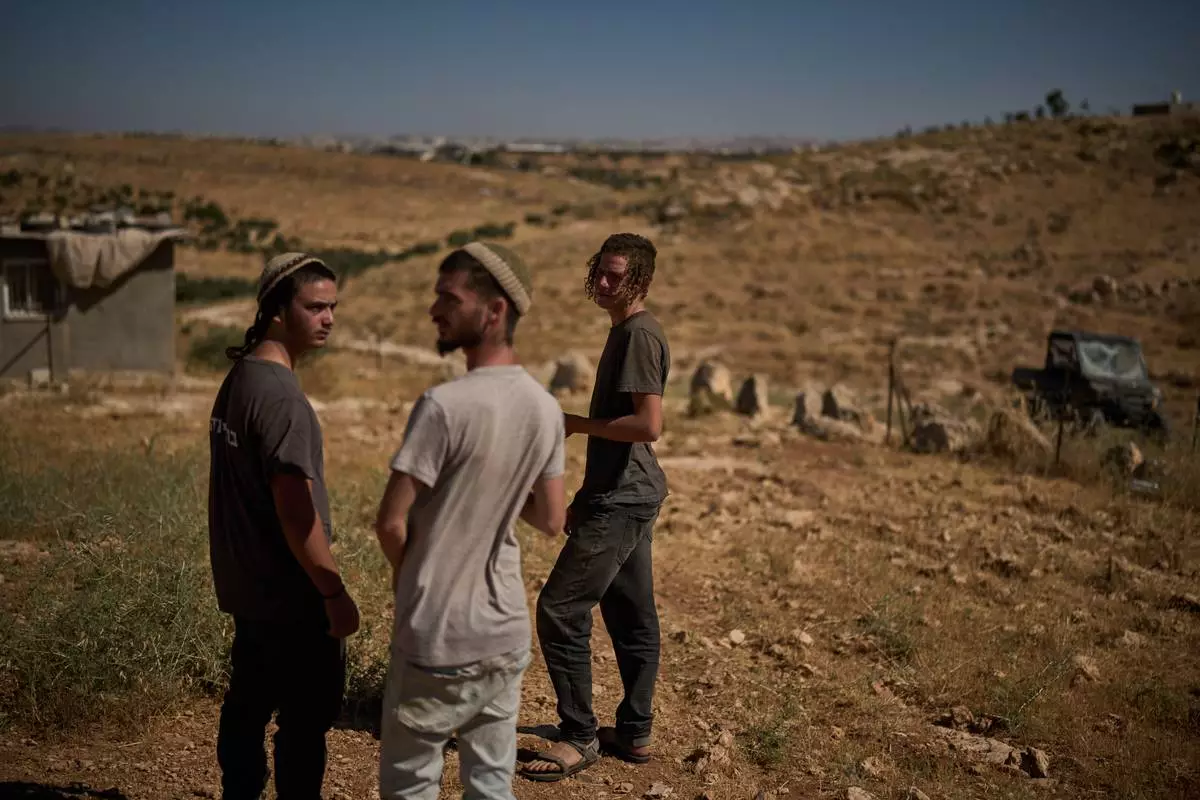
Israeli settlers stand together as they wait for the arrival of police after accusing Palestinians of setting a field on fire near the West Bank village of Susya, in the Masafer Yatta region, Thursday, June 18, 2026.(AP Photo/Leo Correa)
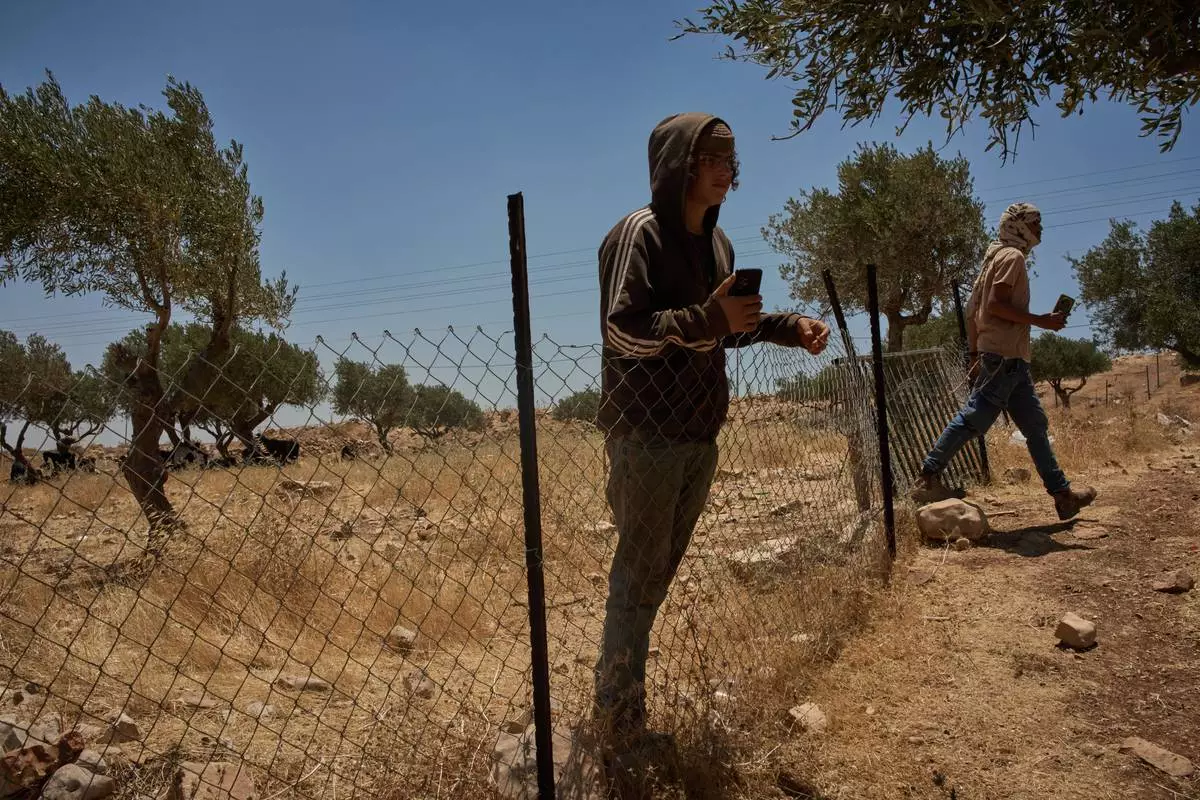
An Israeli settler steps into the courtyard of a home as another stands next to the fence, trespassing on Palestinian property on the outskirts of the West Bank town of Taybeh, Thursday, June 25, 2026. (AP Photo/Leo Correa)
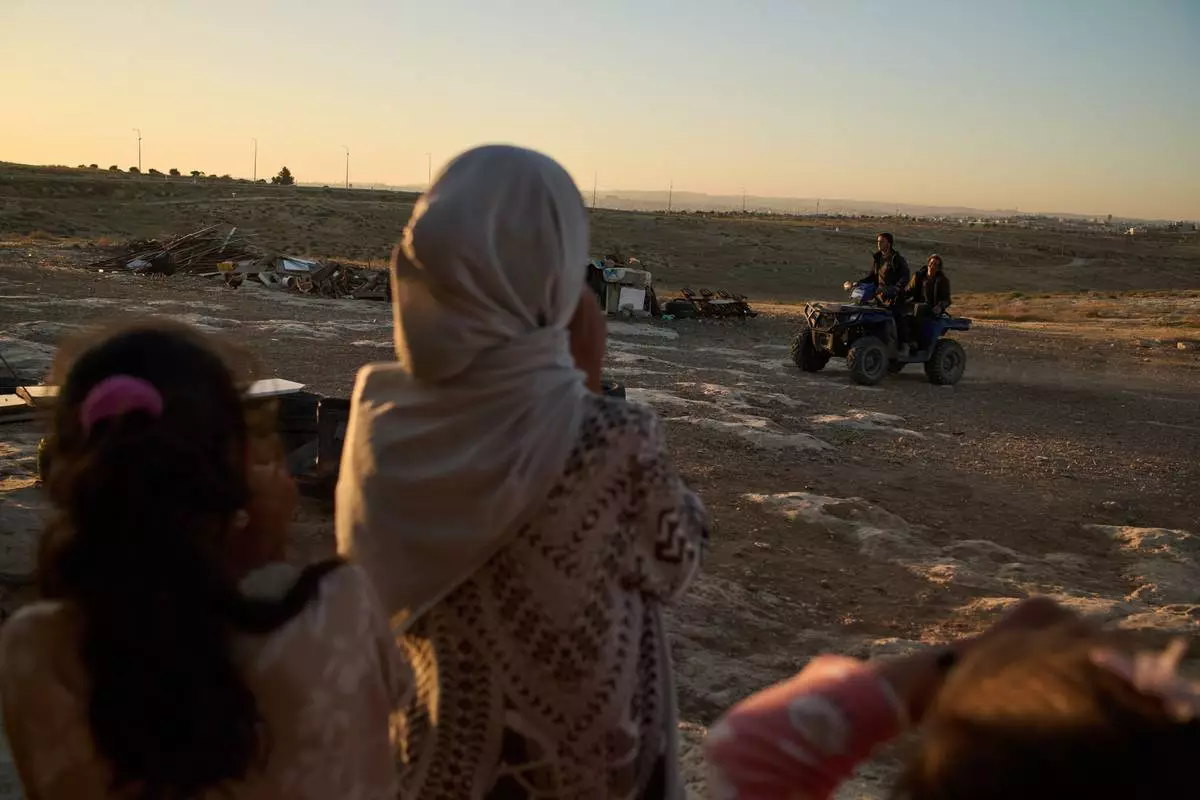
Palestinian girls watch Israeli settlers riding a quad bike past their community near the West Bank village of Susya, in the Masafer Yatta region, Wednesday, June 17, 2026.(AP Photo/Leo Correa)
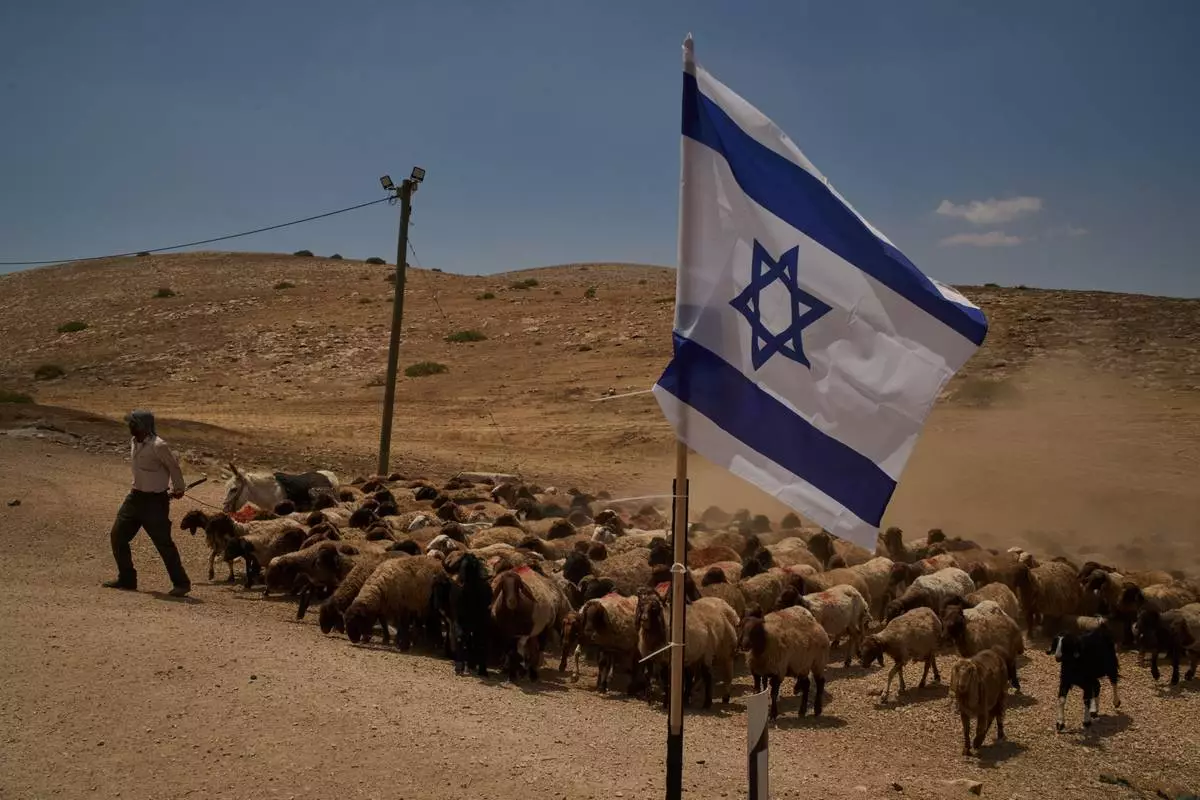
Palestinian shepherd Thiab Draghme leads his flock of sheep and goats past an Israeli flag placed on a road in the northern Jordan Valley of the occupied West Bank, Tuesday, June 23, 2026. (AP Photo/Leo Correa)