WASHINGTON (AP) — President Donald Trump is set to address the nation on Thursday night on topics he said will include elections and voting machines, suggesting he is likely to revisit some of the unproven claims he has previously made about Republican losses, particularly his own in 2020.
Trump’s fixation on his loss to Democrat Joe Biden six years ago and the long-debunked theories he’s circulated about it are something he still brings up regularly when discussing other subjects. But elevating the deeply political and conspiratorial topics to a presidential primetime address underscores the lengths to which Trump has used his second term to both blow past norms and fixate on old grievances.
Trump has offered only vague details about the address, scheduled for 9 p.m. When asked by a reporter on Tuesday if it would concern “election machines and integrity,” Trump said it would “concern that subject” and “we’ll have a couple of other things to say also.”
He went on to say that he has “really, really big news and our country has to shape up. But that’s what we’re going to be talking about Thursday.” He added that “it doesn’t get bigger because without free and fair elections, you don’t have a country.”
Despite Trump’s comments, the White House on Wednesday suggested that the content of the speech could change.
“As usual, anonymous sources are speculating about what President Trump will say during his speech on Thursday evening. The truth is, nobody knows yet what President Trump will ultimately say, which is why everyone should tune in,” White House press secretary Karoline Leavitt said in a statement.
Primetime presidential addresses are typically reserved for major milestones or nationally significant events.
Trump last did it in April to speak on the Iran war, a month after it started. He said then that the U.S. would accomplish its objectives “very shortly” and that “the hard part is done, so it should be easy.” The war, however, has dragged on and strikes between the U.S. and Iran have intensified this week.
Trump also delivered a politically charged primetime speech in December in which he sought to blame the challenging economic climate on Democrats.
It was not clear if TV networks were planning to air the speech, or to what extent. Messages to ABC, CBS, NBC, CNN, Fox News and MS NOW asking about coverage plans were not immediately returned.
Democrats warned that Trump was trying to revive false claims of past stolen elections in order to delegitimize the upcoming 2026 midterm elections, in which Trump’s Republican Party is facing headwinds.
“Tomorrow night, Trump is going to use a primetime address to stoke misleading claims about our elections in order to justify interfering in our midterms. It’s on all of us to follow the facts and not accept his constant stream of misdirections and lies,” Virginia Democratic Sen. Mark Warner said in a statement on X.
“Trump is again trying to drum up baseless election conspiracies ahead of the November elections,” New Jersey Democratic Sen. Andy Kim said in a post on X. “Americans are tired of endless war, skyrocketing gas prices, and a president that isn’t looking out for them. Voters will make their voices heard, whether Trump wants them to or not.”
On Capitol Hill on Wednesday, Vice President JD Vance bristled when asked if he’d encourage Trump in his Thursday remarks to stay focused on November’s midterm elections rather than relitigate past elections. “'The unfounded claims,'” Vance said, repeating the reporter's language. "You’re basically assuming an answer in the very question that you ask.”
“The president is going to talk about a number of things tomorrow night. I’m obviously not going to get ahead of his remarks,” Vance said. “But we can talk about a number of the American people’s problems. We can solve a number of the American people’s problems.”
Senate Majority Leader John Thune, R-S.D., told reporters that he doesn’t know what Trump is going to say. “But," he said, "the only thing I can tell you is that we are focused on the 2026 election, at least I am, and I think most of my colleagues are.”
Associated Press writers Mary Clare Jalonick and Will Weissert in Washington and Jocelyn Noveck in New York contributed to this report.

President Donald Trump departs on Marine One after speaking at the United States Army War College in Carlisle, Pa., at the Pennsylvania Defense and Innovation Summit, Wednesday, July 15, 2026. (AP Photo/Julia Demaree Nikhinson)
MASAFER YATTA, West Bank (AP) — The blue-and-white Israeli flags flutter from hilltops and line the roads of the occupied West Bank, signaling the growing presence of Israeli settlements and the outposts they’re building on Palestinian land.
For shepherds in the Jordan Valley, as well as in Masafer Yatta, a cluster of villages in the southern West Bank, the flags and expanding settlements have become inescapable features of the landscape, reminders of how daily life has narrowed.
Thiab Draghme and his brother, Ayman, led their flock across the dry hills of the Jordan Valley, returning to their community after searching for grazing land. Their route is carefully chosen. Some pastures are no longer considered safe because of increasing attacks by settlers. Others can be reached only with Israeli activists walking alongside them, documenting their encounters with settlers and Israeli troops and providing what they call a protective presence.
Shepherding has changed little over generations. The risks surrounding it have.
“We are people of generosity and hospitality,” said Thiab, a father of eight. “We want to live in peace.”
He said his children have grown up surrounded by Israeli demolitions, displacement and uncertainty. “What kind of future is that for a child?”
Not far away, Youssef Moussa Shinaran, 52, says he has not been able to harvest olives from his land since the war between Israel and Hamas in Gaza began in October 2023. “You’re not allowed to move around. The house has become a prison,” said Shinaran, who lives near Susya in the southern West Bank.
According to the U.N. humanitarian agency, settler attacks have increased sharply in 2026. Between January and April, the agency recorded 761 attacks linked to Israeli settlers and nearly 2,000 people displaced by violence and access restrictions. Entire communities have found themselves increasingly isolated as new outposts expand across the surrounding hills.
The pressure extends well beyond confrontations between settlers and Palestinians.
One morning, a dispute over a brush fire brought settlers, Palestinians, soldiers and police to a hillside. After settlers accused Palestinians of starting the blaze, one Palestinian and one Israeli activist were detained before being released later that day.
The expansion of the settlements and accompanying violence has forced many Palestinian families to alter their routines. Like the Draghme brothers, some shepherds no longer graze where they once did. Others have sold their flocks after deciding the risk had become too great.
Near the village of Taybeh, northeast of Ramallah, Shoma Kaabneh’s family sold all their sheep after an Israeli outpost was built close to their home. Her husband now works in construction, earning far less than they once made selling dairy products.
In another community in the northern Jordan Valley, a Palestinian family leaves an Israeli flag that settlers planted near their sheep pen. They say removing it could provoke retaliation from settlers or soldiers.
As evening fell over the Masafer Yatta region, men gathered to pray outside homes. Nearby, settlers rode quad bikes before returning to an outpost a few hundred meters away.
Residents organize night watches, taking turns staying awake to warn neighbors if Israeli settlers approach.
Each day begins much like the last: Sheep are led into the hills. Children play between tents and homes. Families tend to their animals, repair fences and prepare meals under a horizon increasingly dominated by Israeli construction that seeks to push them away.
This is a documentary photo story curated by AP photo editors.
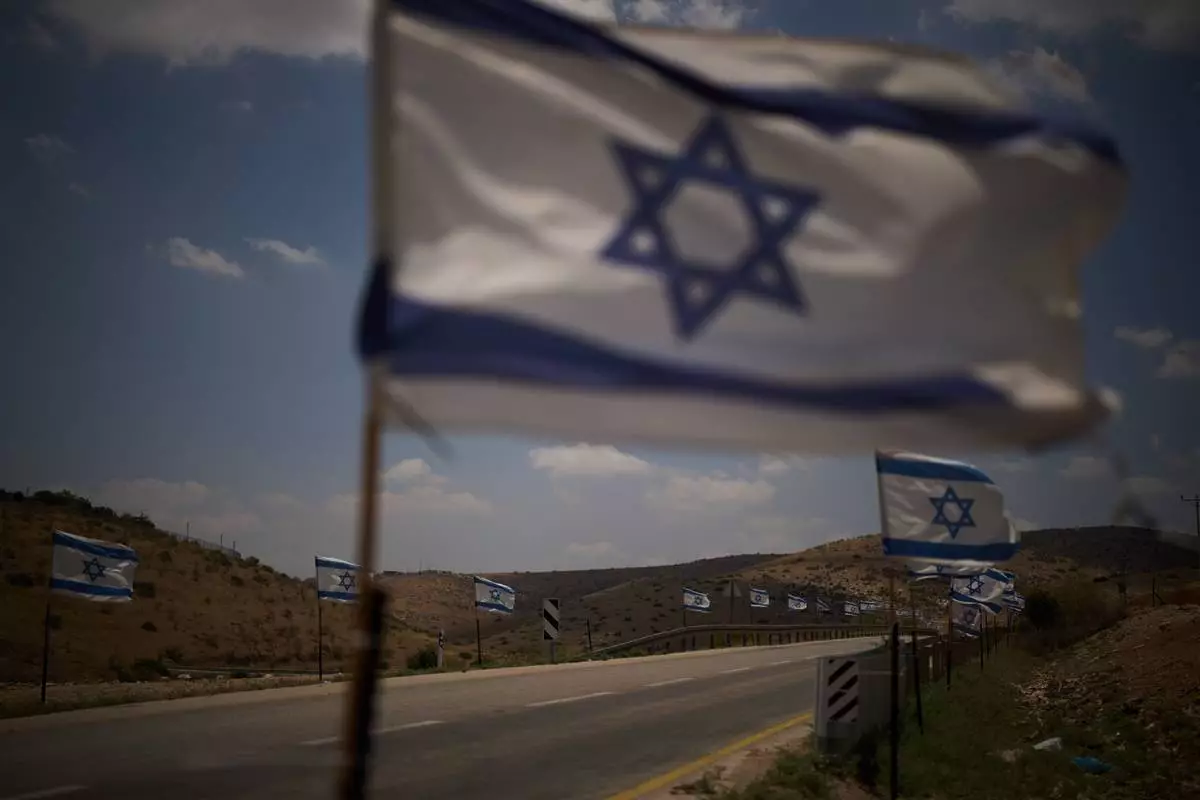
Israeli flags are seen lining a road in the northern Jordan Valley in the occupied West Bank, Wednesday, June 24, 2026. (AP Photo/Leo Correa)
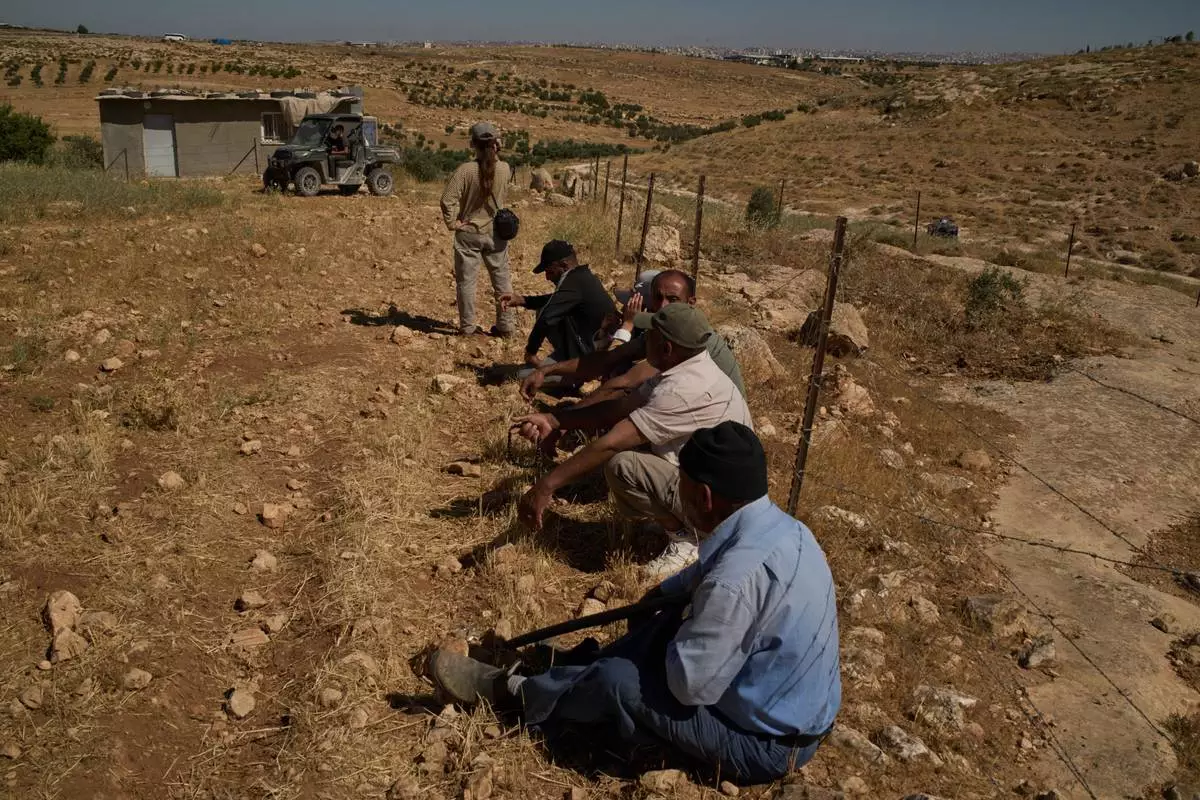
After Israeli soldiers told them to remain by the fence, Palestinians and an Israeli activist sit watching as settlers arrive in a vehicle after the settlers accused a local Palestinian resident of setting fire to a field, near the West Bank village of Susya in the Masafer Yatta region, Thursday, June 18, 2026. (AP Photo/Leo Correa)
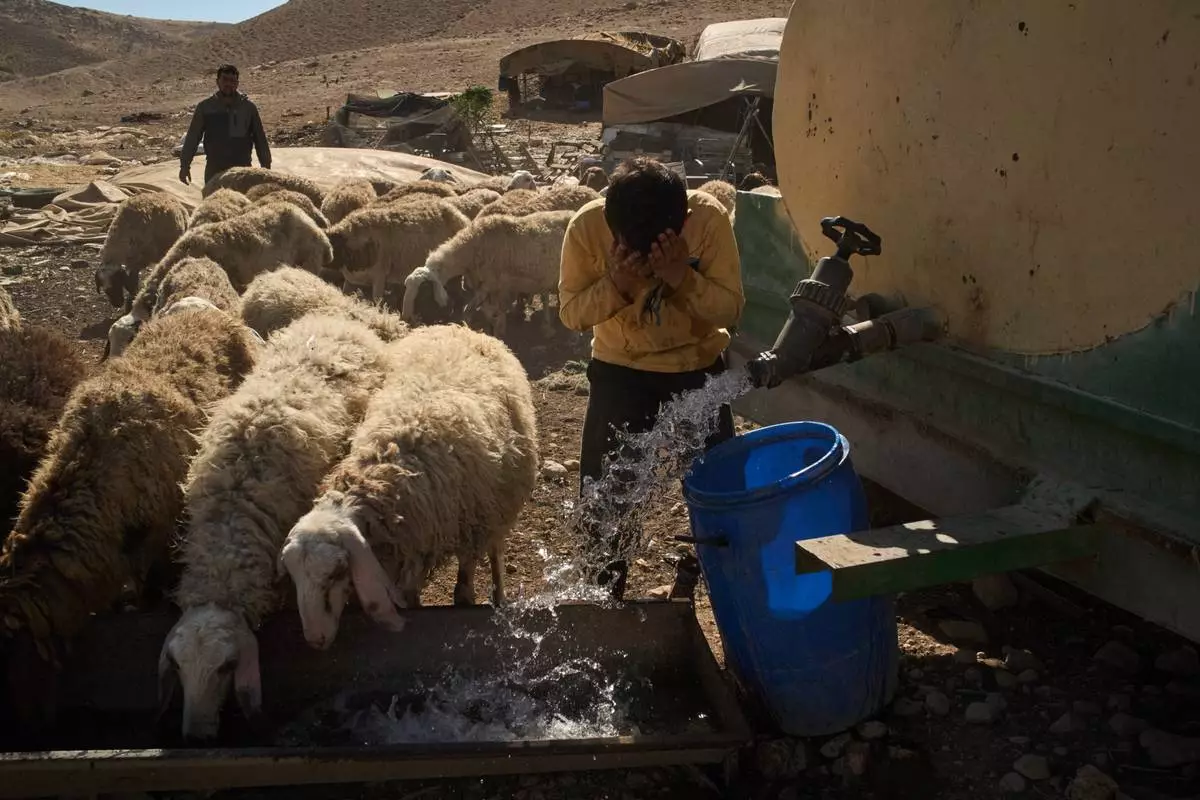
Hamoudi, 10, washes his face as he gives water to his family's sheep at a Palestinian community in the northern Jordan Valley in the occupied West Bank, Tuesday, June 23, 2026. (AP Photo/Leo Correa)
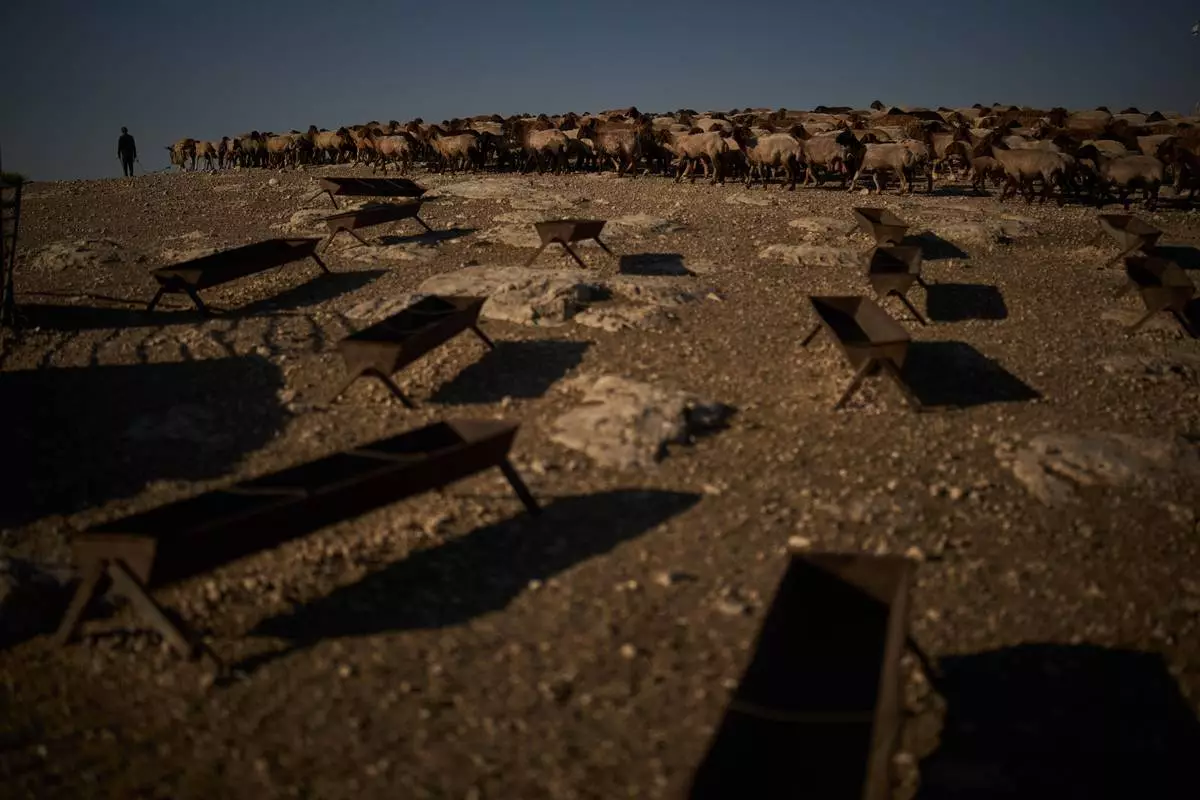
A Palestinian shepherd leads his flock of sheep as they move away from his family compound in the northern Jordan Valley in the occupied West Bank, Wednesday, June 24, 2026. (AP Photo/Leo Correa)
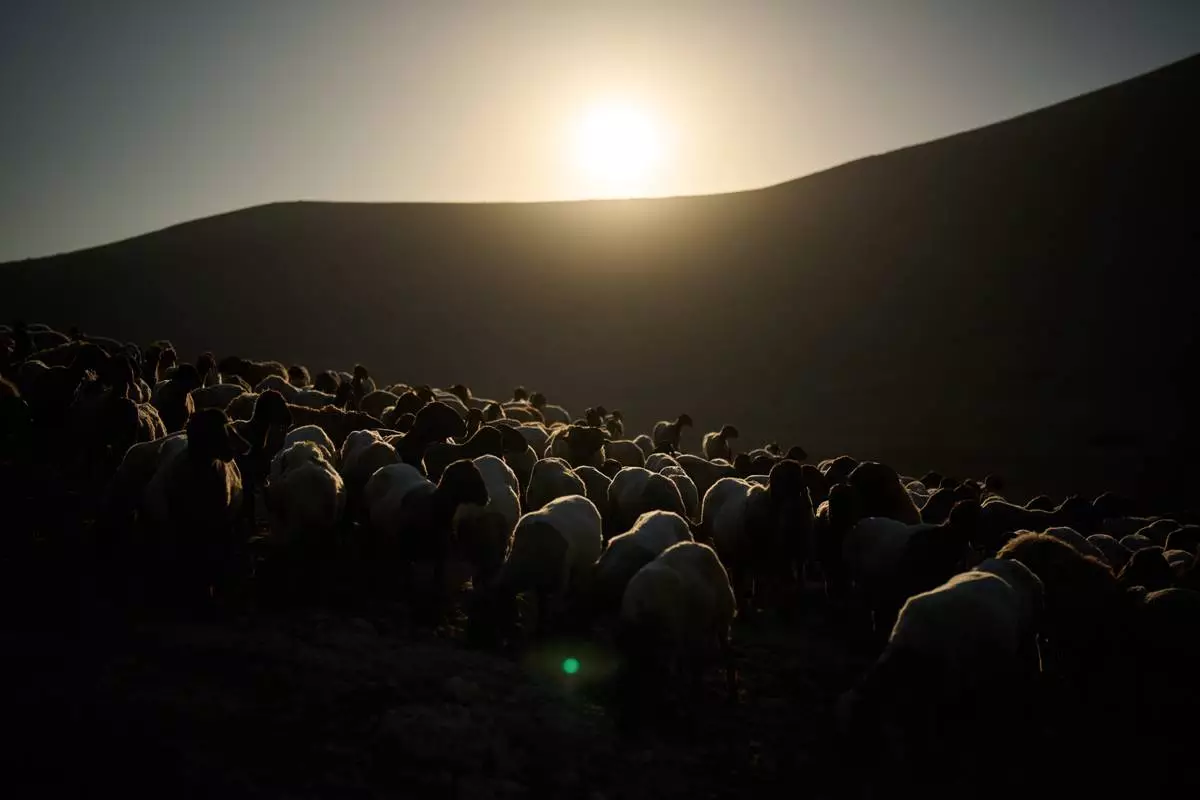
A herd of sheep graze on a hill as the sun rises over a Palestinian community in the northern Jordan Valley, in the occupied West Bank, Wednesday, June 24, 2026. (AP Photo/Leo Correa)
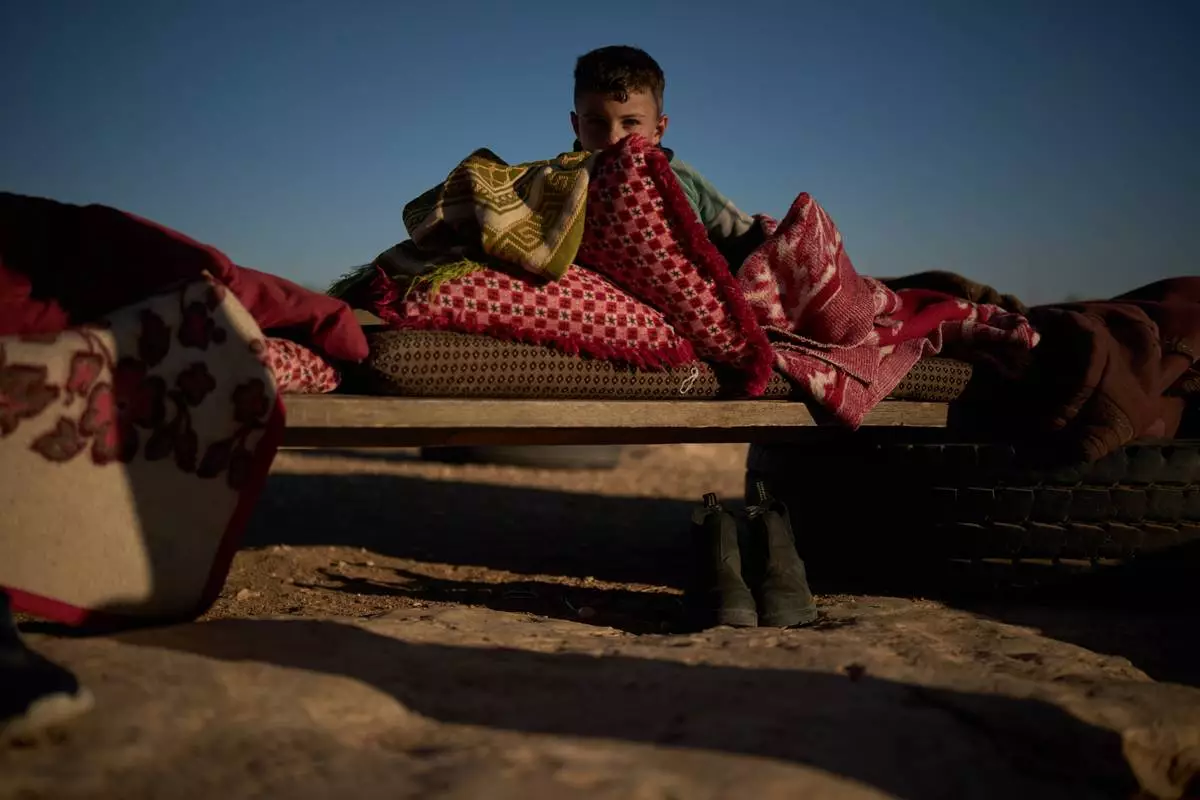
Yasser, 8, looks at the camera after taking a nap in the morning outside his house in a Palestinian community near the West Bank village of Susya, in the Masafer Yatta region, Thursday, June 18, 2026. (AP Photo/Leo Correa)
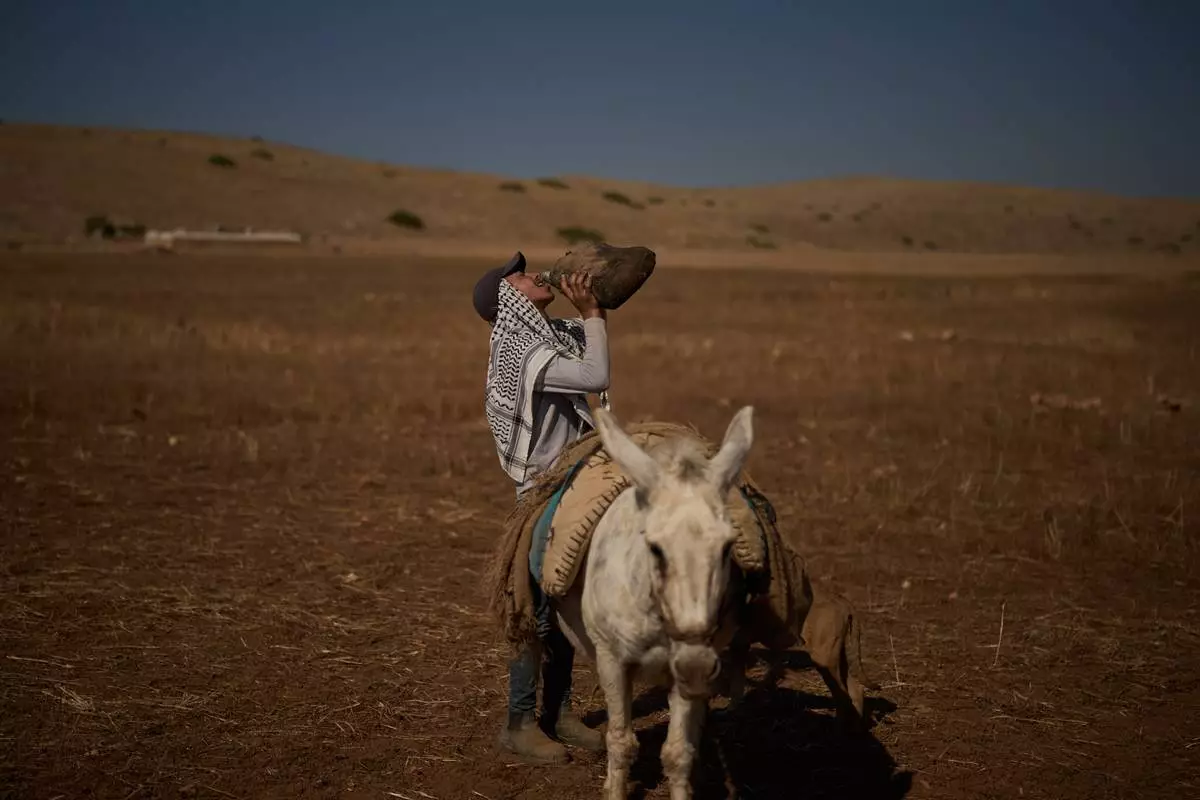
Ahmad, 15, drinks water after being stopped by Israeli soldiers while grazing his flock near his community in the northern Jordan Valley in the occupied West Bank, Wednesday, June 24, 2026. (AP Photo/Leo Correa)
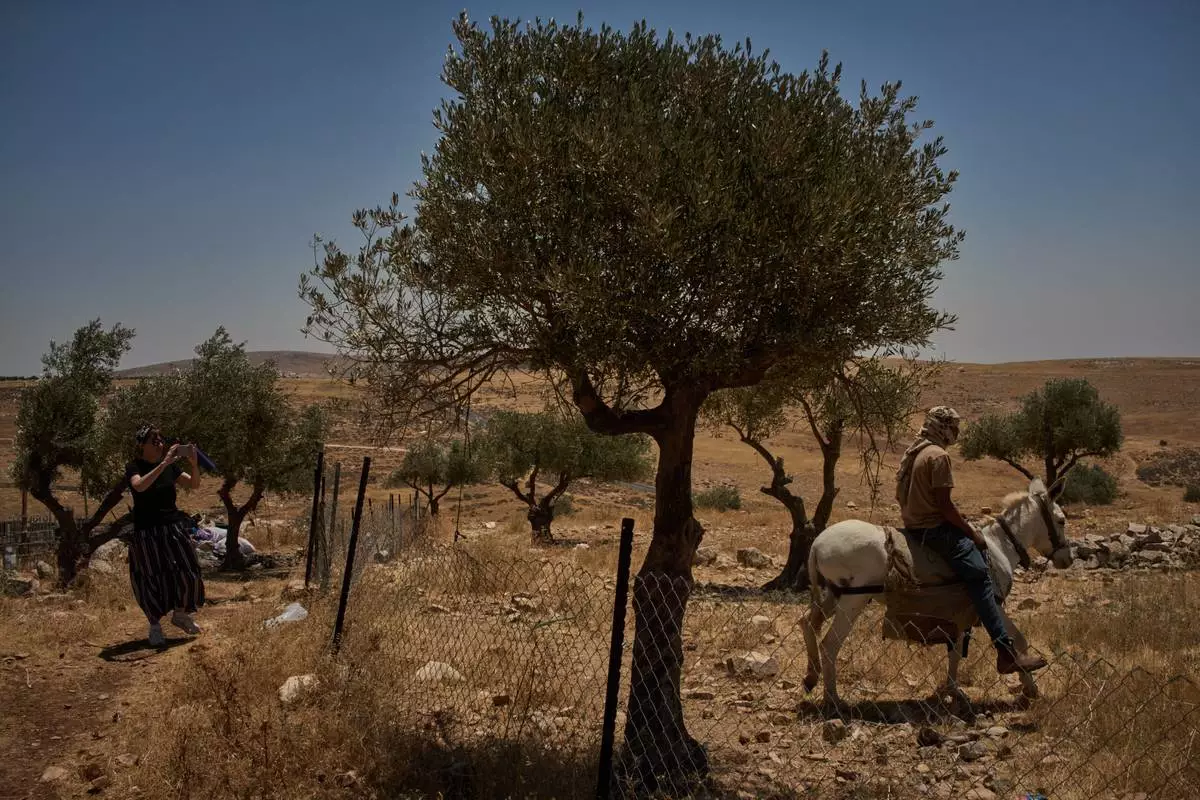
An Israeli activist records the presence of a settler as he moves with his donkey in front of a Palestinian house on the outskirts of the West Bank town of Taybeh, Thursday, June 25, 2026. (AP Photo/Leo Correa)
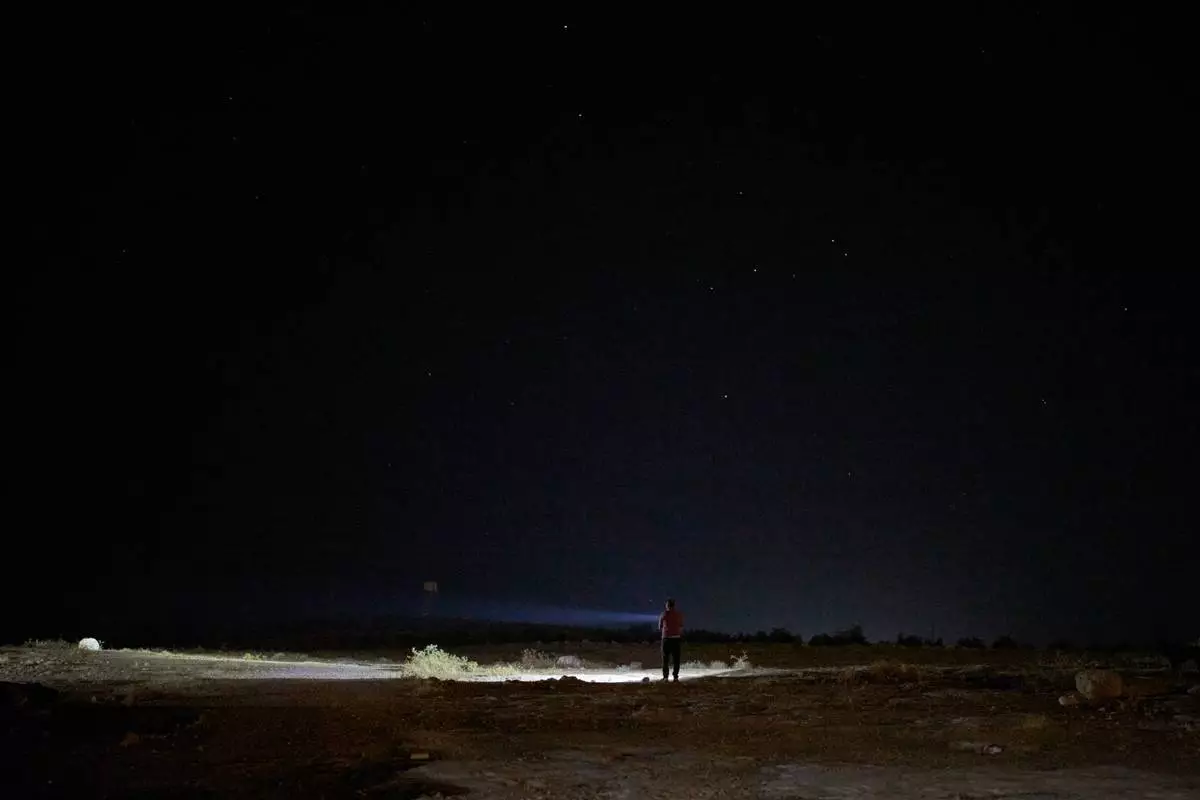
A Palestinian uses a flashlight as he takes part in a night watch to warn neighbors if Israeli settlers approach his community near the West Bank village of Susya, in the Masafer Yatta region, Thursday, June 18, 2026.. (AP Photo/Leo Correa)
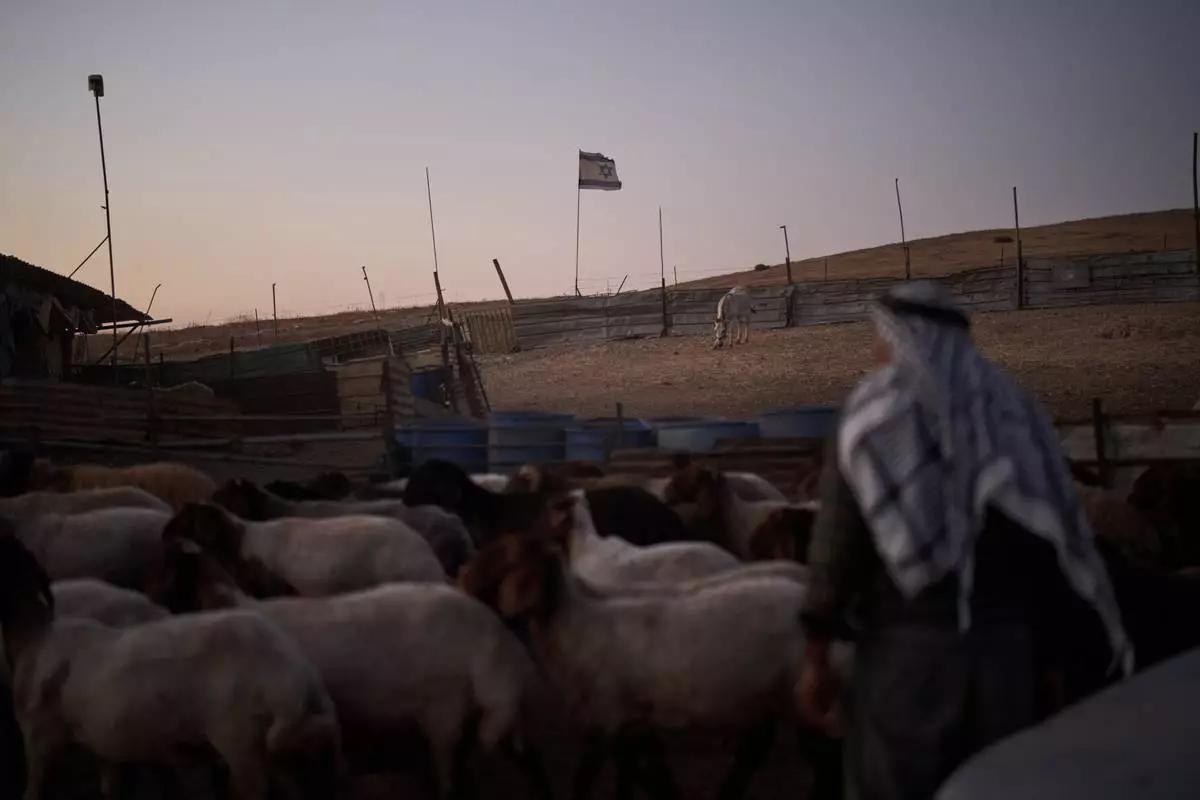
An Israeli flag, set up by settlers, waves beside a fence around a Palestinian compound's sheep pen at dusk in the northern Jordan Valley in the occupied West Bank, Tuesday, June 23, 2026.(AP Photo/Leo Correa)
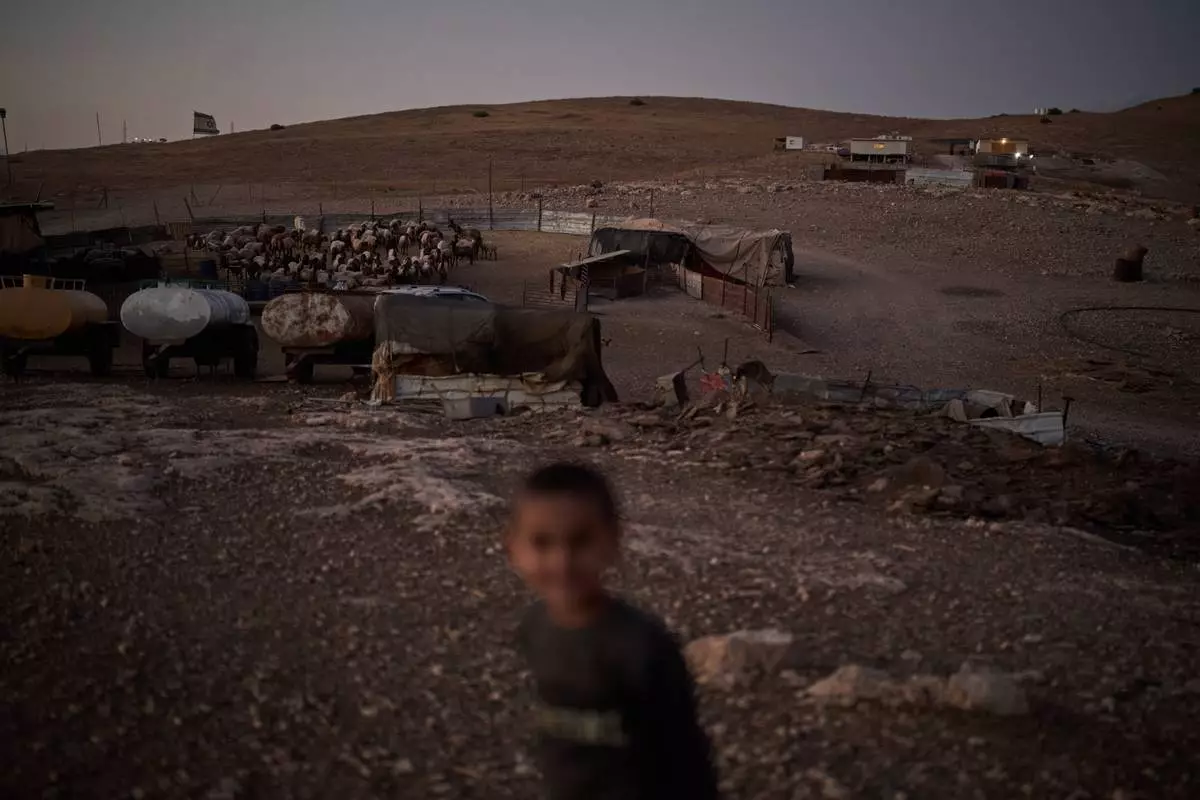
An Israeli settler outpost, top right, overlooks a Palestinian compound at dusk in the northern Jordan Valley in the occupied West Bank, Tuesday, June 23, 2026. (AP Photo/Leo Correa)
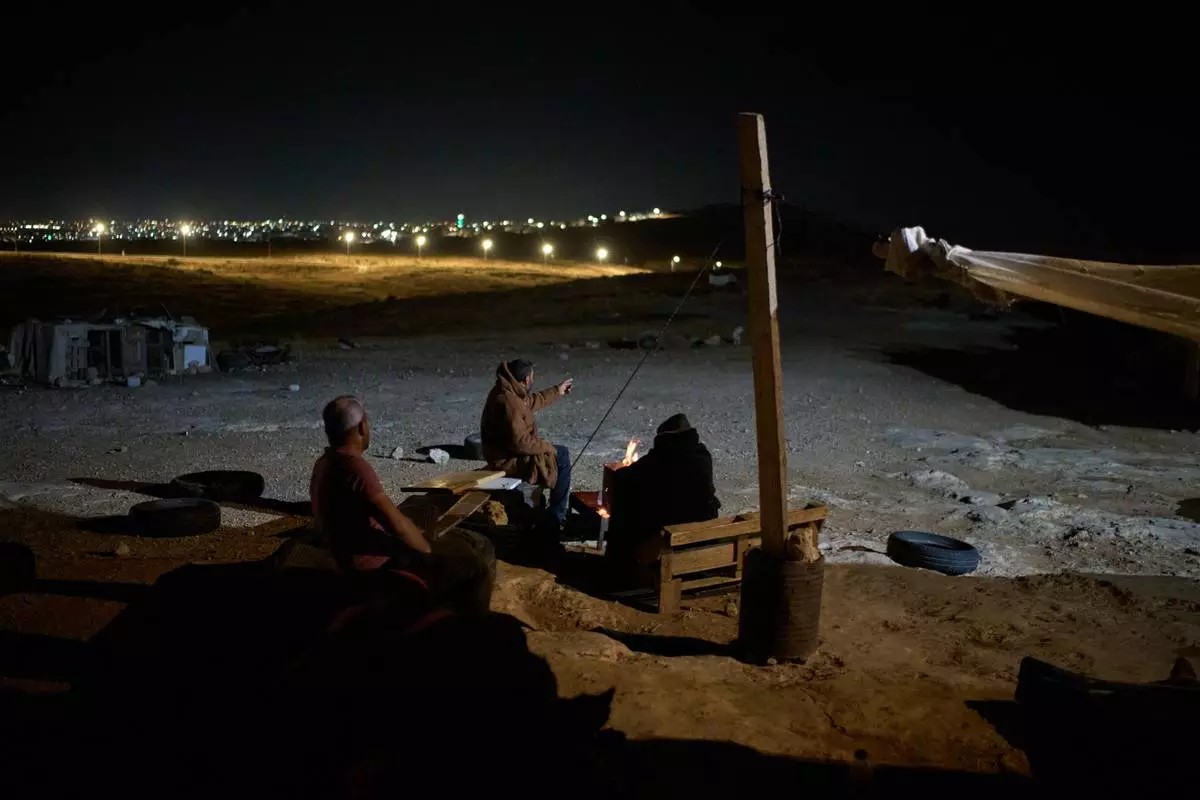
Palestinians sit next to a fire as they take part in a night watch to warn neighbors if Israeli settlers approach their community near the West Bank village of Susya, in the Masafer Yatta region, Thursday, June 18, 2026.. (AP Photo/Leo Correa)
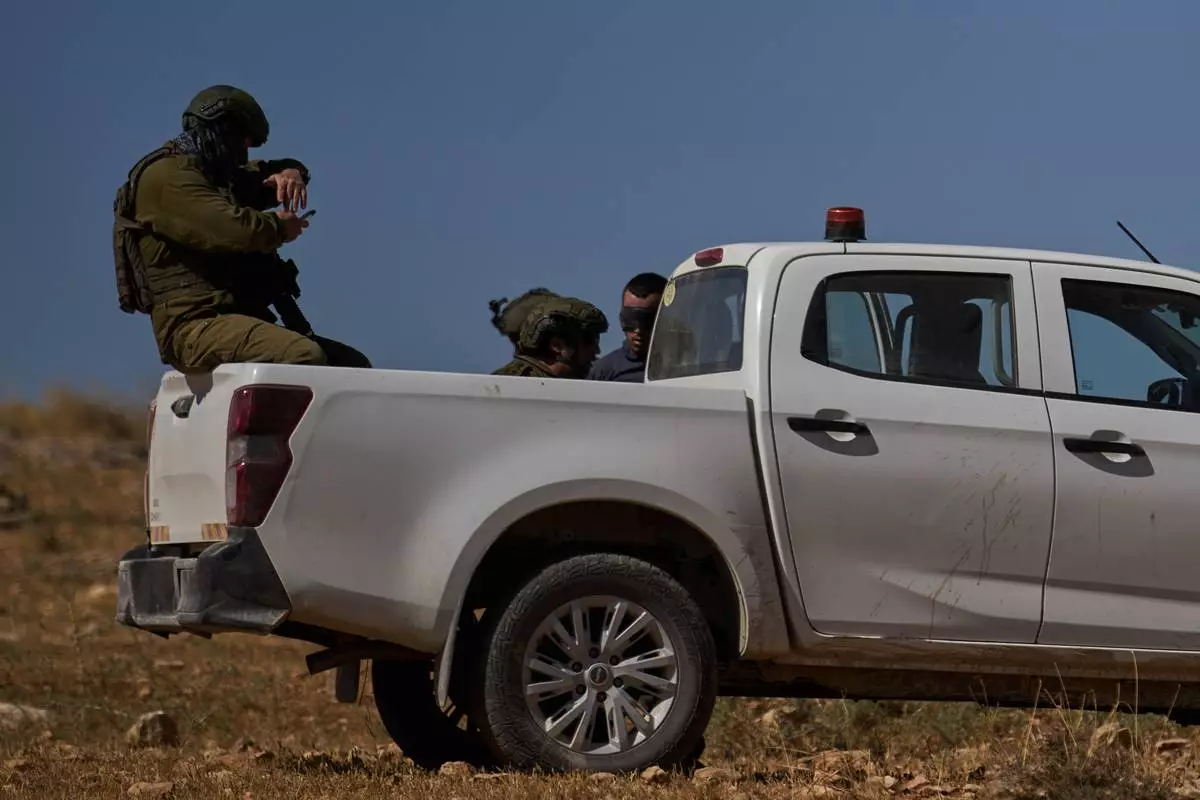
A blindfolded Palestinian is detained by Israeli soldiers after being accused by Israeli settlers of setting a field on fire near the West Bank village of Susya, in the Masafer Yatta region, Thursday, June 18, 2026.(AP Photo/Leo Correa)
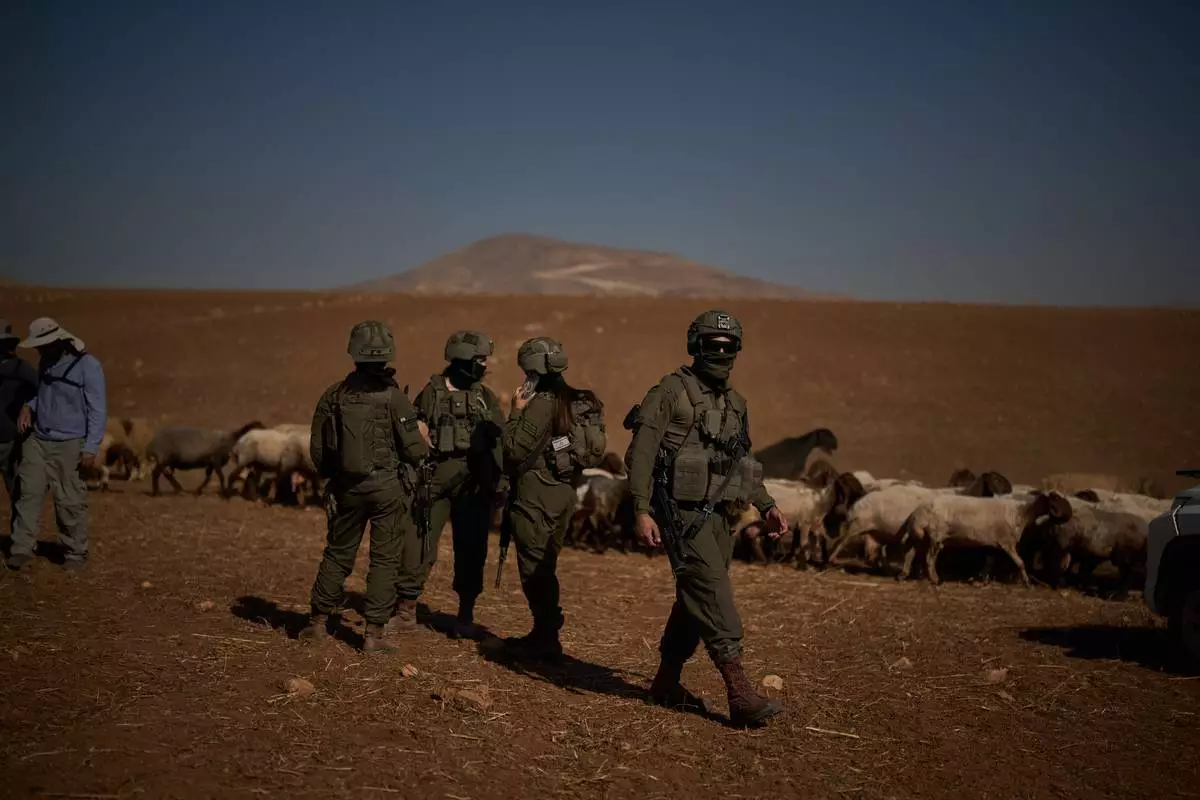
Israeli soldiers stand next to an activist and sheep after stopping a young Palestinian man who was grazing his flock near his community in the northern Jordan Valley in the occupied West Bank, Wednesday, June 24, 2026. (AP Photo/Leo Correa)
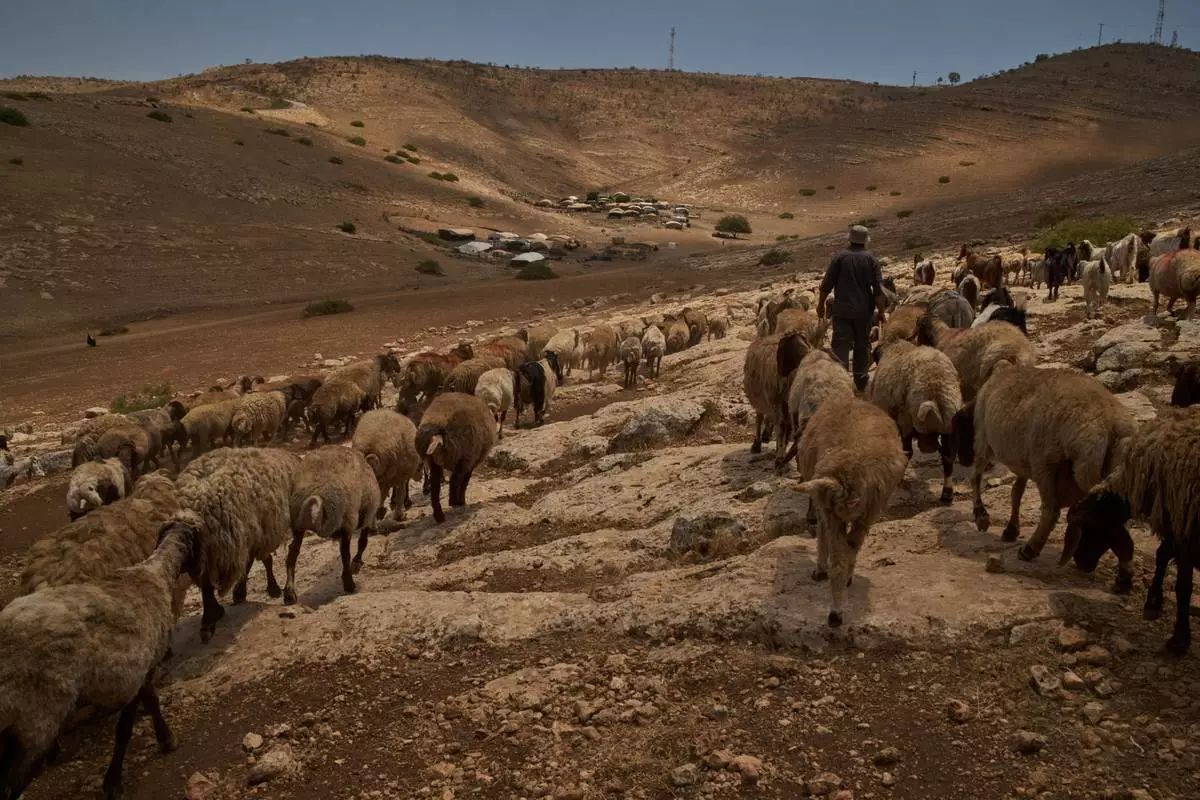
Palestinian shepherd Ayman Draghme leads his flock back to his family's community in the northern Jordan Valley in the occupied West Bank, Tuesday, June 23, 2026. (AP Photo/Leo Correa)
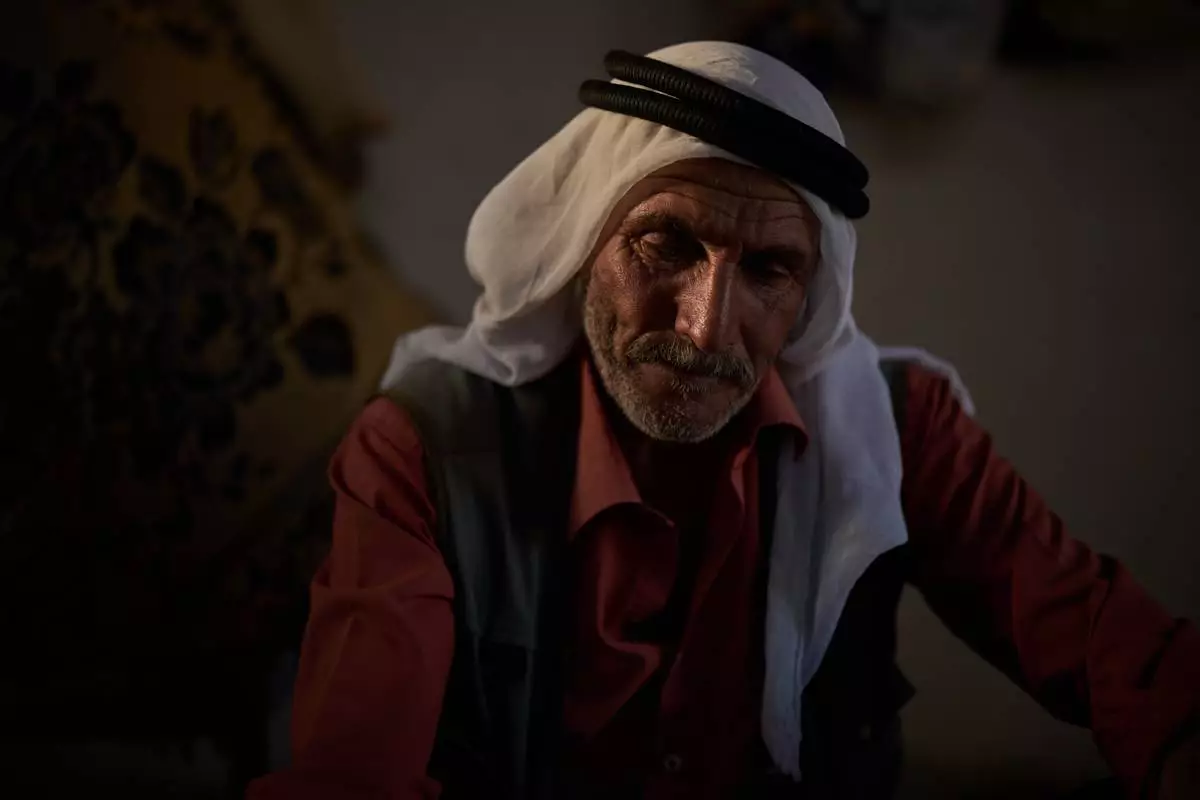
Youssef Moussa Shinaran, looks down as he talks about settlers attacks in his community near the West Bank village of Susya, in the Masafer Yatta region, Wednesday, June 17, 2026. "You're not allowed to move around. The house has become a prison," says the 52-year-old Palestinian. (AP Photo/Leo Correa)
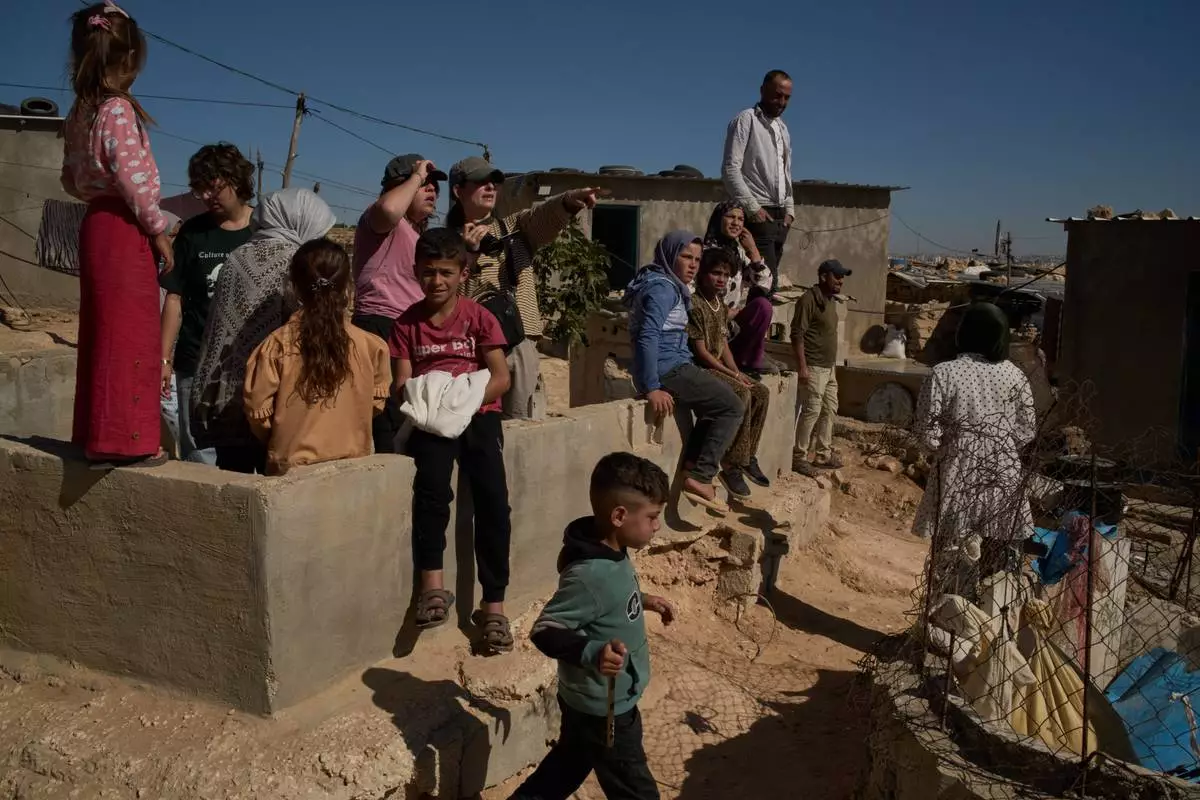
Israeli activists along with Palestinians from a local community observe the movement of settlers near the West Bank village of Susya, in the Masafer Yatta region, Thursday, June 18, 2026. (AP Photo/Leo Correa)
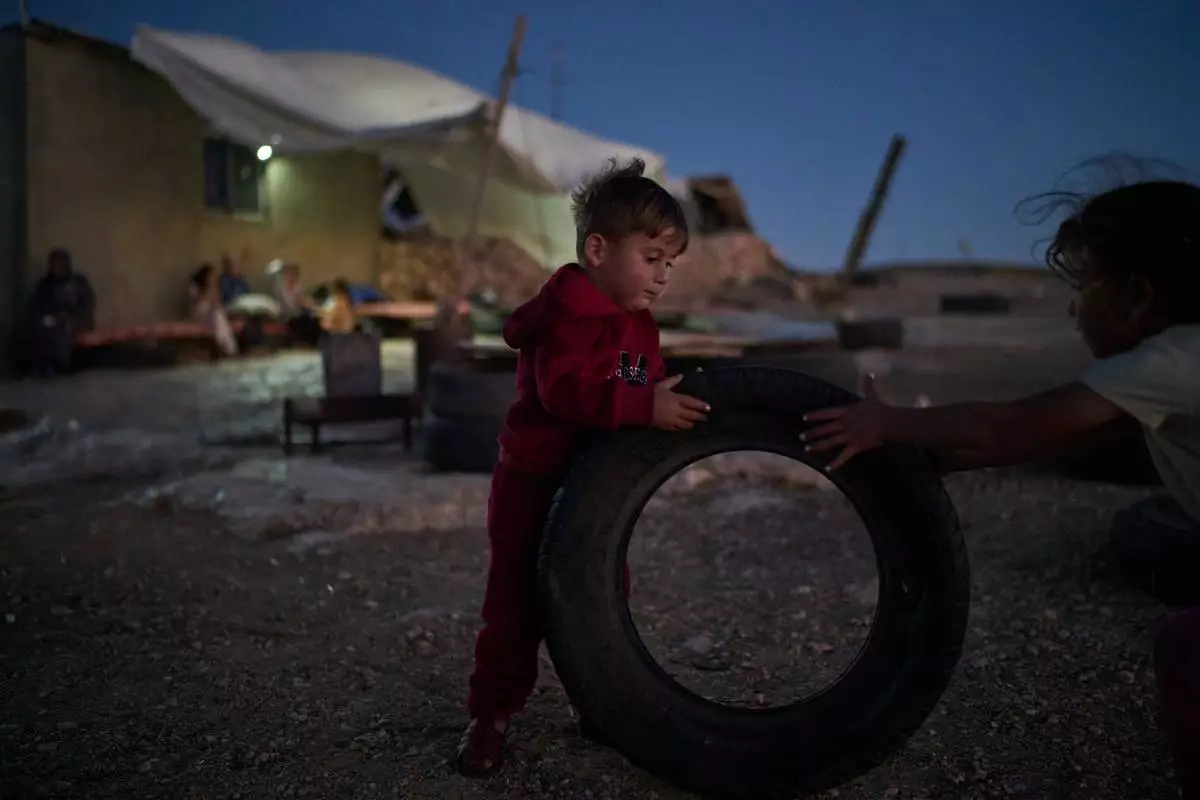
Palestinian children play outside their houses in a community near the West Bank village of Susya, in the Masafer Yatta region, Wednesday, June 17, 2026.(AP Photo/Leo Correa)
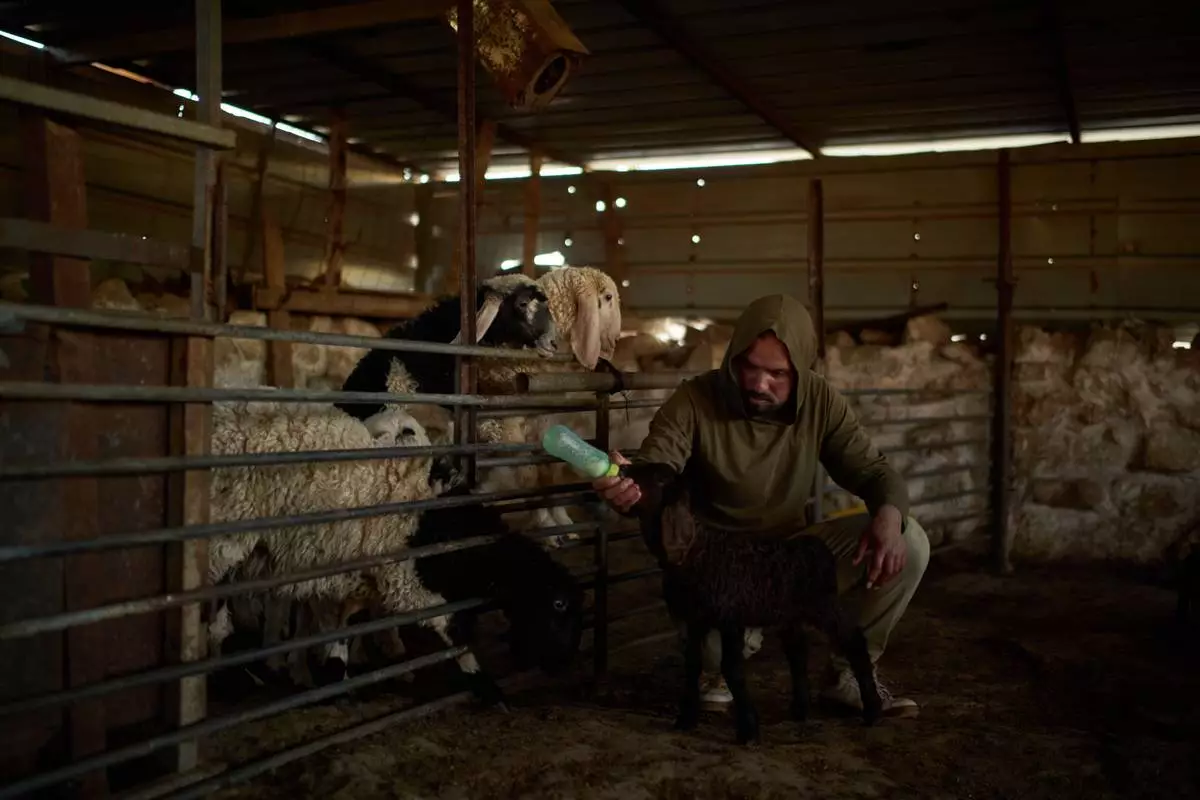
Saber, 32, bottle feeds a lamb in his community near the West Bank village of Susya, in the Masafer Yatta region, Thursday, June 18, 2026.(AP Photo/Leo Correa)
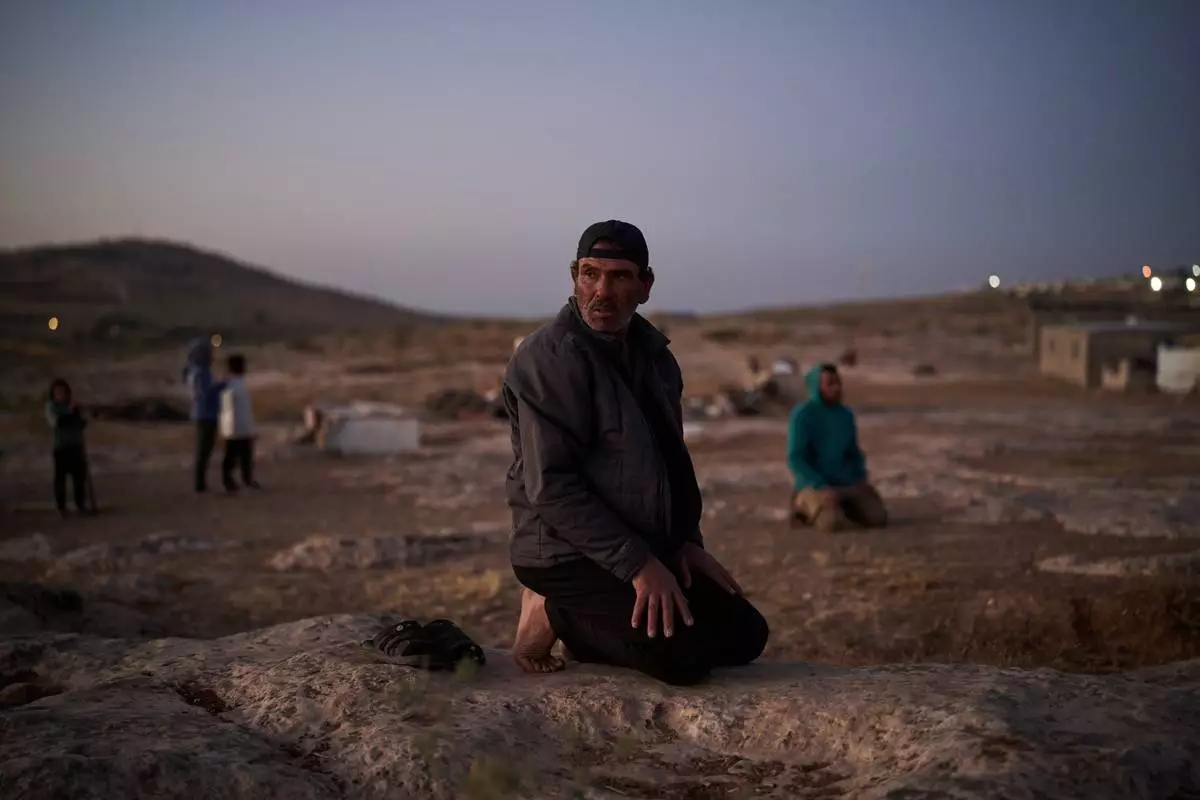
Thalib prays along with other Palestinian men at dusk in their community near the West Bank village of Susya, in the Masafer Yatta region, Wednesday, June 17, 2026.(AP Photo/Leo Correa)
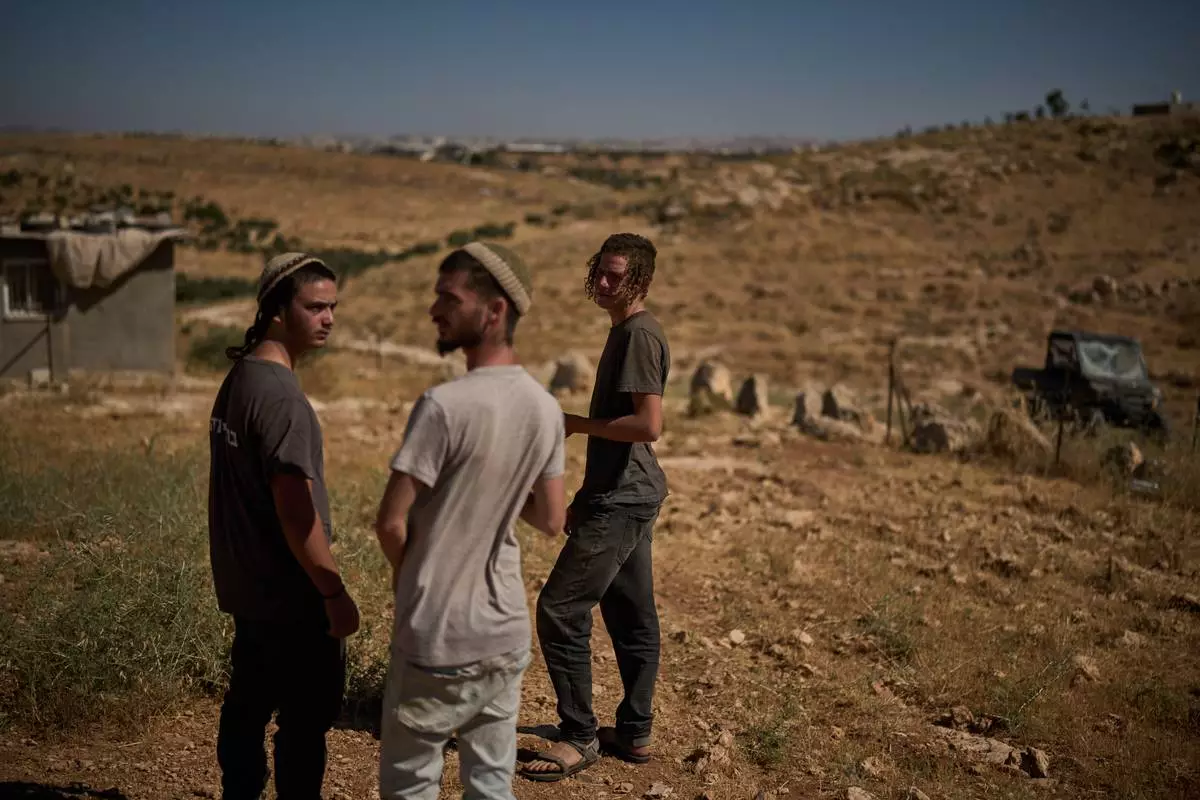
Israeli settlers stand together as they wait for the arrival of police after accusing Palestinians of setting a field on fire near the West Bank village of Susya, in the Masafer Yatta region, Thursday, June 18, 2026.(AP Photo/Leo Correa)
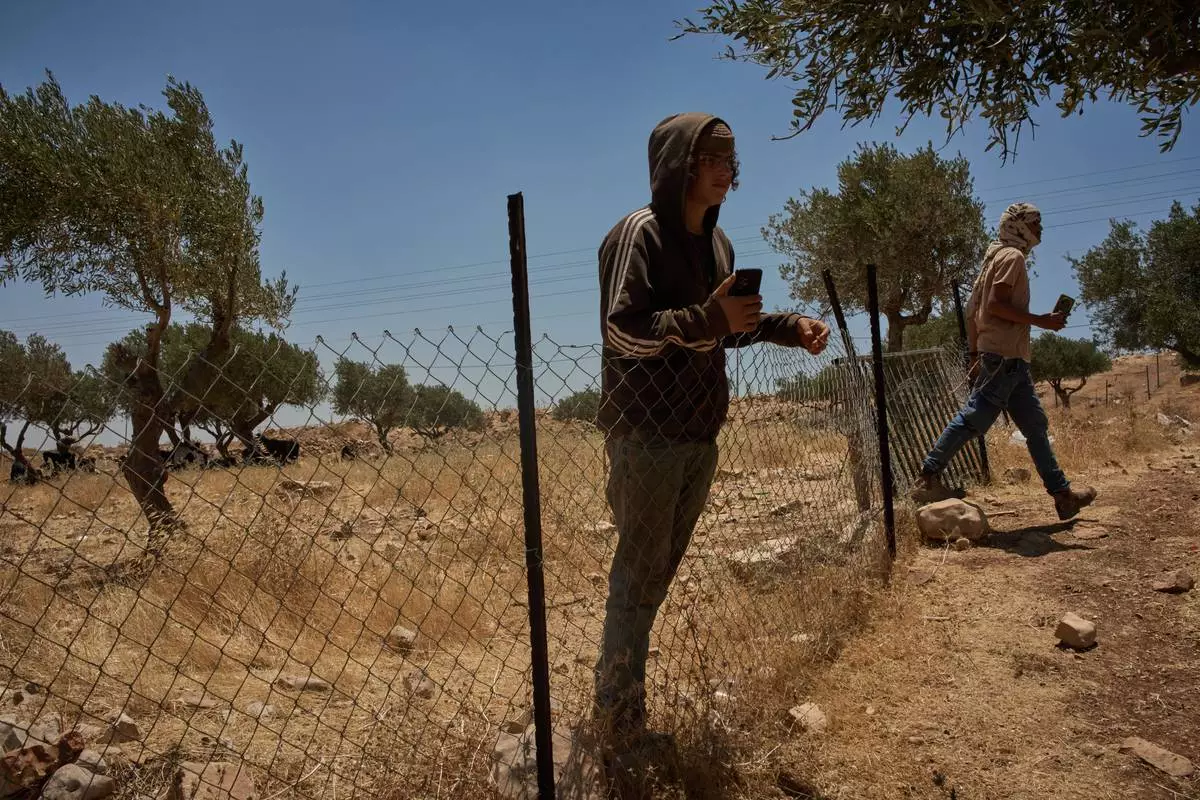
An Israeli settler steps into the courtyard of a home as another stands next to the fence, trespassing on Palestinian property on the outskirts of the West Bank town of Taybeh, Thursday, June 25, 2026. (AP Photo/Leo Correa)
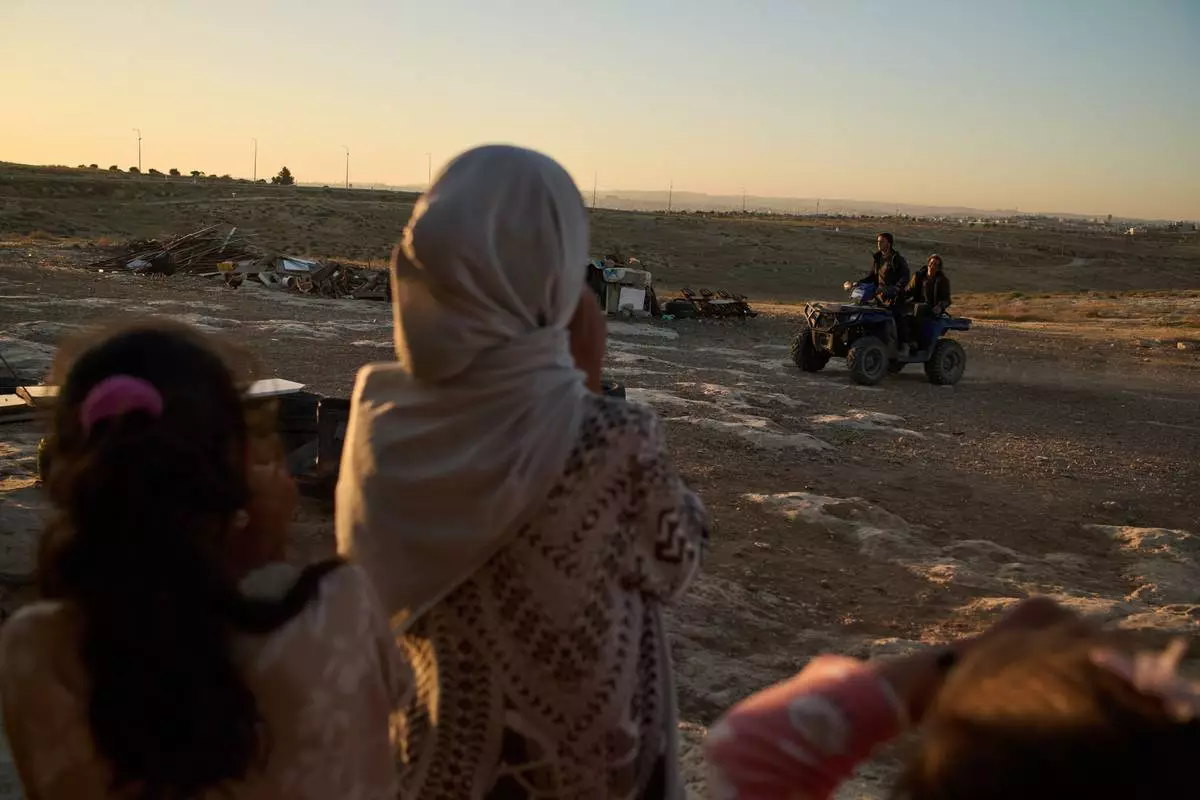
Palestinian girls watch Israeli settlers riding a quad bike past their community near the West Bank village of Susya, in the Masafer Yatta region, Wednesday, June 17, 2026.(AP Photo/Leo Correa)
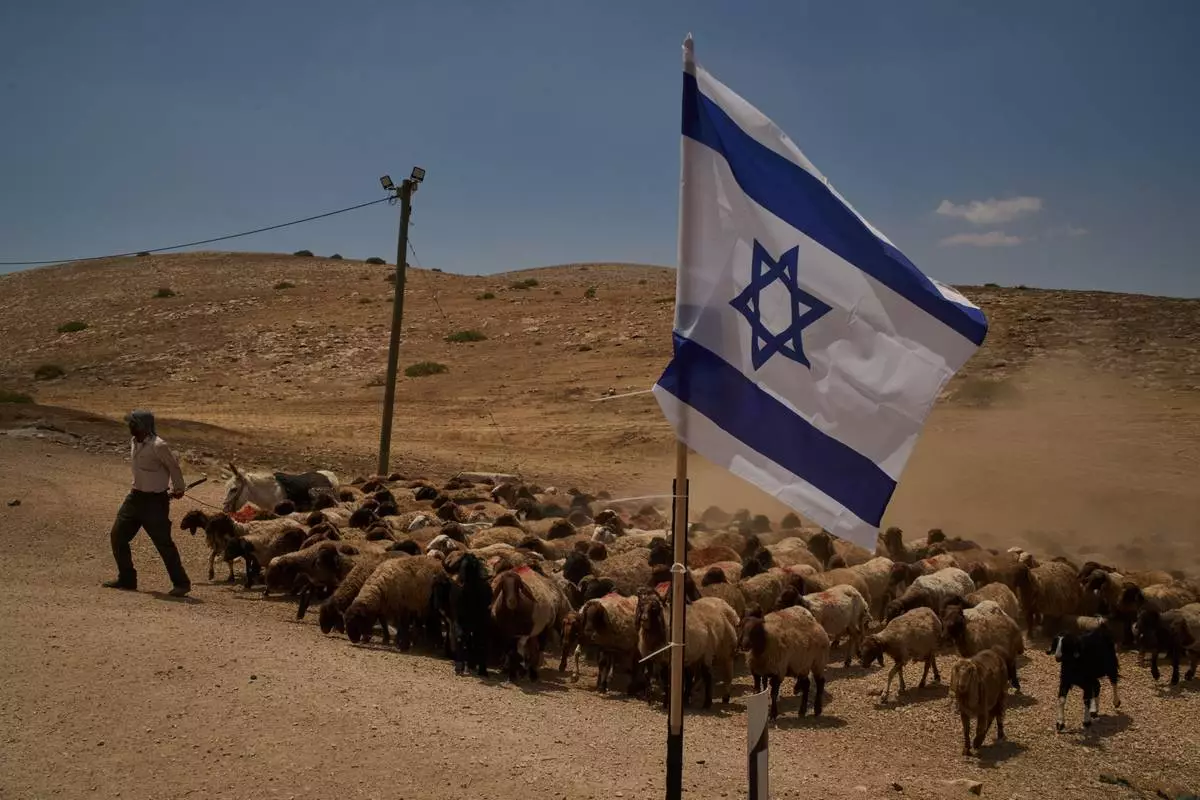
Palestinian shepherd Thiab Draghme leads his flock of sheep and goats past an Israeli flag placed on a road in the northern Jordan Valley of the occupied West Bank, Tuesday, June 23, 2026. (AP Photo/Leo Correa)