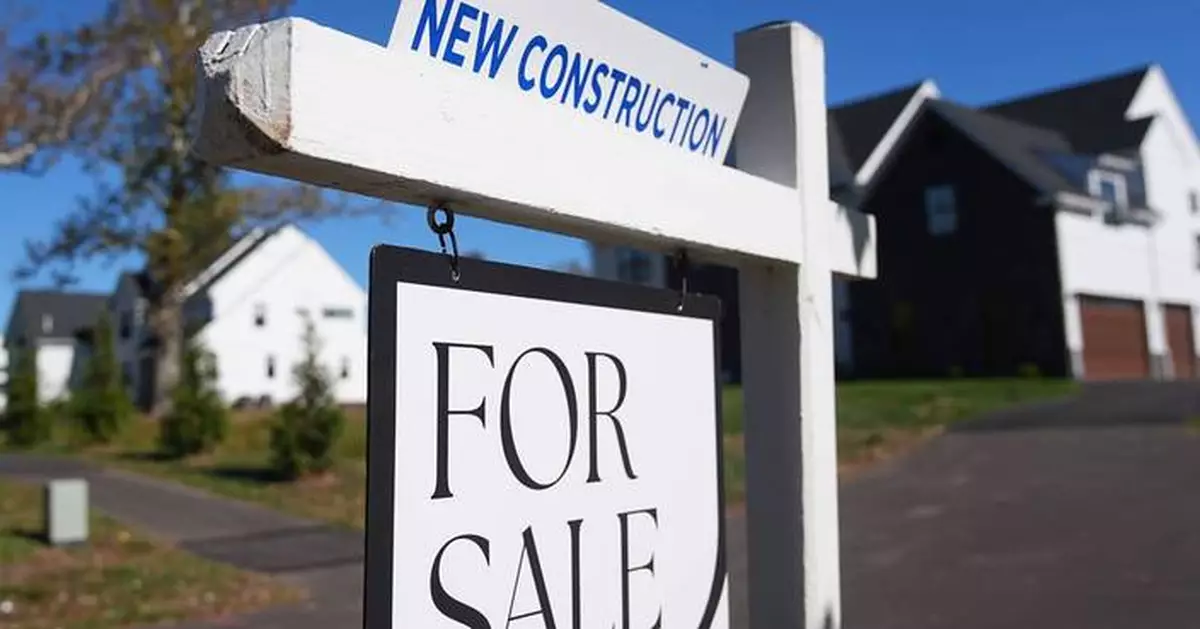
The average long-term U.S. mortgage rate climbed this week to its highest level in nearly a year, driving up borrowing costs for prospective homebuyers.
The benchmark 30-year fixed rate mortgage rate rose to 6.55% from 6.49% last week, mortgage buyer Freddie Mac said Thursday. One year ago, the average rate was 6.75%.
Higher mortgage rates can add hundreds of dollars a month in costs for borrowers, limiting homebuyers’ purchasing power at a time when affordability challenges continue to sideline many aspiring homeowners.
Mortgage rates are influenced by several factors, from the Federal Reserve’s interest rate policy decisions to bond market investors’ expectations for the economy and inflation. They generally follow the trajectory of the 10-year Treasury yield, which lenders use as a guide to pricing home loans.
Rates have been mostly rising this year as the war with Iran has driven crude oil prices sharply higher, stoking expectations of hotter inflation. That's pushed up long-term bond yields relative to where they were before the conflict began in late February, causing mortgage rates to trend higher.
The 10-year Treasury yield was 4.57% at midday Thursday on the bond market, up from 4.54% a week ago. It was just 3.97% in late February, before the war broke out.
The average rate on a 30-year mortgage is now the highest it's been since Aug. 28, when it was at 6.56%. As recently as late February, the average rate dropped slightly below 6% for the first time since late 2022.
Borrowing costs on 15-year fixed-rate mortgages, often sought by borrowers refinancing a home loan, also rose this week. That average rate increased to 5.93% from 5.82% last week. A year ago, it was at 5.92%, Freddie Mac said.
A report this week showing prices paid by consumers for gas, clothes and other goods cooled last month could help take pressure off the Federal Reserve, which is considering raising interest rates.
The central bank doesn’t set mortgage rates, but its decisions to raise or lower its short-term rate are watched closely by bond investors and can ultimately affect the yield on 10-year Treasurys.
That cooler inflation reading “is a step in the right direction, but until mortgage rates actually follow suit, buyers will keep feeling the pinch of stubbornly high borrowing costs even as other conditions improve,” said Hannah Jones, senior economist at Realtor.com.
While average long-term mortgage rates remain lower than they were at this time last year, their upward trajectory has weighed on home sales this year.
And the latest monthly tally of home purchase transactions that have yet to be finalized points to potentially more sluggish home sales this summer.
Pending U.S. home sales fell 5.4% in June from the previous months and were down 0.3% from June last year, the National Association of Realtors said Thursday. There’s usually a month or two lag between a contract signing and when the sale is finalized, which makes pending home sales a near-term bellwether for the housing market.
Data on mortgage applications also signal that the upward trend in mortgage rates has given some would-be homebuyers reason to pause.
Mortgage applications, which include loans to buy a home or refinance an existing mortgage, fell 2.7% last week from the previous week, according to the Mortgage Bankers Association. The pullback was driven mainly by a 7% drop in applications to buy a home.
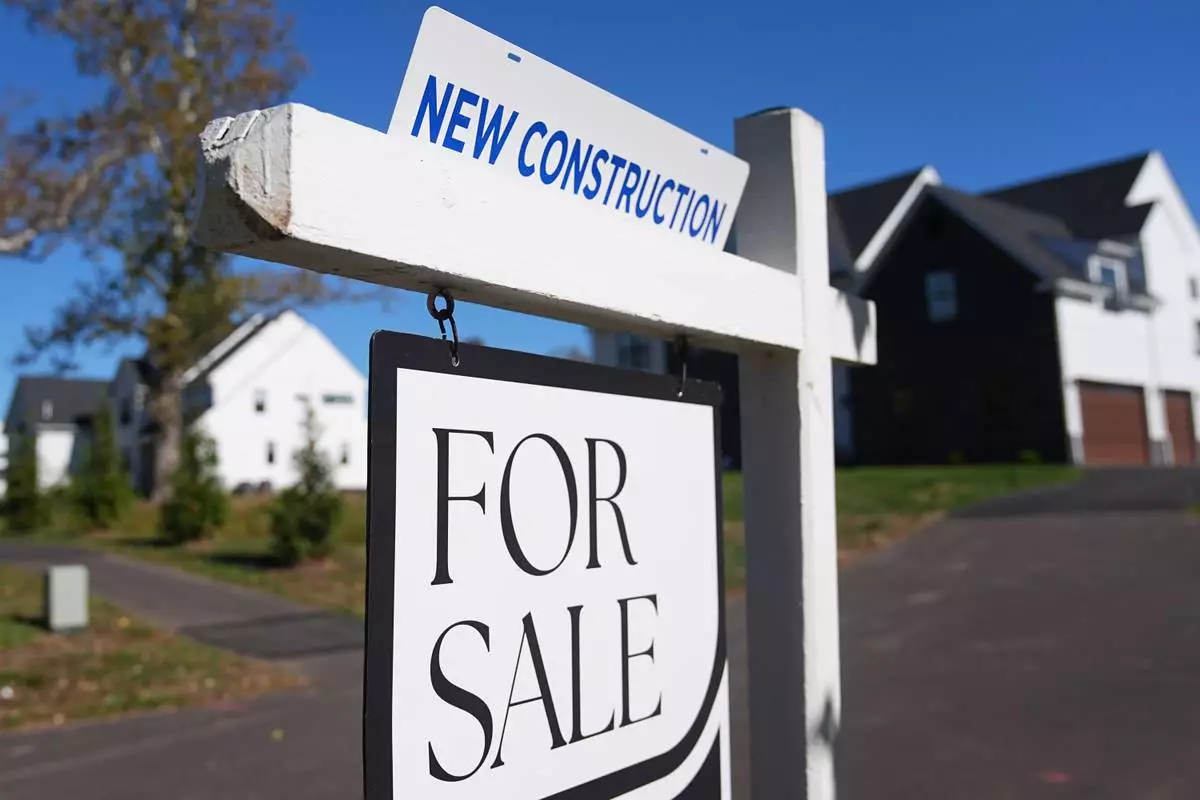
FILE - A sign is posted for a new home for sale in Ambler, Pa., Oct. 16, 2025. (AP Photo/Matt Rourke, File)
President Donald Trump is set to address the nation Thursday at 9 p.m. ET on topics he said will include elections and voting machines, suggesting he could revisit long-debunked conspiracy theories about his 2020 defeat to Democrat Joe Biden. The speech comes as he’s escalated his calls for Republicans to pass tighter federal voting rules ahead of November’s midterm elections.
At Trump’s last primetime presidential address in April, he said the U.S. would accomplish its Iran war objectives “very shortly.” But days of back-and-forth attacks by the U.S. and Iran across the Middle East and in the Strait of Hormuz have shredded the interim deal to pause the fighting. U.S. strikes intensified early Thursday against a widening set of targets, including a ship it accused of breaking its blockade on Iranian ports. Iran retaliated by firing on U.S. allies in the region.
Here's the latest:
She kicked off the briefing with a scheduling update, highlighting Trump’s national address planned for Thursday evening.
“President Trump will deliver a major address to the nation on protecting the integrity of our elections. And we encourage every American to tune in,” Leavitt said.
She added that Trump will head to New York City on Friday for a FIFA reception at Trump Tower ahead of his appearance at the World Cup final between Spain and Argentina on Sunday.
The White House planned to use TV screens ahead of the daily briefing, but technical issues got in the way, and the screens were removed before White House press secretary Karoline Leavitt came to the lectern.
An aide was working on a laptop to get the screens going before the briefing began and looked relatively stressed as the start of the briefing was delayed. Eventually, four aides — two of them on cellphones — tried to resolve the situation without success.
Eventually, the screens were removed from behind the lectern, and Leavitt appeared for her first briefing since giving birth and going on parental leave.
White House press secretary Karoline Leavitt is back at the briefing room podium on Thursday, the first time since she went on maternity leave earlier this year.
Leavitt last held a briefing on April 24 before taking leave and giving birth to a daughter on May 1. She returned to work at the White House in late June.
While she was away, the White House leaned on a rotating cast of cabinet members to fill in, including Vice President JD Vance, Secretary of State Marco Rubio and Treasury Secretary Scott Bessent.
Leavitt’s return comes ahead of a national address Trump is scheduled to deliver Thursday evening. The president has said he will discuss topics including elections and voting machines.
Rep. Hakeem Jeffries said, “None of the things that Trump has said — or may say later on today — with respect to election interference have any merit.”
Ahead of Thursday’s speech, Jeffries was asked whether China may have interfered in U.S. elections. The Democratic leader said he drew from the work of the House Intelligence Committee’s top Democrat, Rep. Jim Himes of Connecticut, whose op-ed published Thursday in The New York Times restated the findings of U.S. intelligence after recent elections.
Himes wrote that U.S. intelligence said that there are “no indications that any foreign actor attempted to interfere in the 2020 U.S. elections by altering any technical aspect of the voting process.” Himes warned that Trump may try to cherry-pick unverified information and present it as explosive new theories of election wrongdoing.
Jeffries said Trump is “the one fanning the flames of conspiracy theories.”
President Donald Trump’s administration is reviving a rule that could deny green cards to immigrants who use public benefits, including food stamps, Medicaid, housing vouchers and others.
The policy, known as “public charge,” appeared in the Federal Register on Thursday and will be formally published on July 20.
The policy was first implemented in February 2020 as one of Trump’s moves to limit legal immigration during his first administration. But it was reversed after Democratic President Joe Biden took office.
Its return comes when the Republican administration is implementing a hardline policy to curb both illegal and legal immigration, and when the cost of healthcare and food is rising.
▶ Read more
Messages to ABC, CBS, NBC, CNN, Fox News Channel and MS NOW asking about coverage plans weren’t returned.
Democrats warned that Trump was trying to revive false claims of past stolen elections in order to delegitimize the upcoming 2026 midterm elections, in which Trump’s Republican Party is facing headwinds.
They are the Juárez Cartel, on the border with Texas, and Los Viagras, a criminal group from the western state of Michoacán. The Federal Register, the U.S. government’s gazette, published the designation Thursday.
They joined six other Mexican criminal organizations the U.S. considers terrorist groups, including the Sinaloa Cartel and the Jalisco New Generation Cartel. Gangs in other Latin American countries, including Venezuela, Brazil, Ecuador and El Salvador, also have been designated as foreign terrorist organizations by the Trump administration.
President Trump began to extend the terrorist label to Latin American cartels in February 2025 to allow U.S. authorities to take more aggressive action against them or against anyone the U.S. sees as aiding the groups.
▶ Read more
U.S. Secretary of State Marco Rubio convened more than 60 governments to address what he described a growing increase of left wing violence around the globe. Rubio opened the conference by making sweeping statements about the issue and noting that the U.S. and most of the world has spent the last few decades focusing on Islamic terrorism.
“For far too long, however, our counterterrorism doctrine has had a blind spot, a blind spot when it comes to extremist violence from the political left,” he said.
Rubio added that the U.S. plans to make more terrorist designations against groups like antifa.
Two of the eight men indicted on murder and terrorism conspiracy charges for their alleged roles in a thwarted drone and sniper attack on the UFC cage-fighting show at the White House last month pleaded not guilty Thursday.
Tycen Proper, 19, of Danville, Ohio, and Chandler Scaggs, 21, of Chapmanville, West Virginia, entered the pleas before U.S. District Court Judge Edmund Sargus Jr. in Columbus, Ohio. Each is charged, as are the six others, with conspiracy to provide material support to terrorists and conspiracy to commit murder on federal government territory and to murder a federal government official.
Sargus set their trial date for Sept. 14.
A message seeking comment was left with Proper’s attorney. Scaggs’ lawyer declined to comment.
▶ Read more
When Markwayne Mullin took over as Homeland Security secretary from fired Kristi Noem, he pledged to get the department responsible for carrying out the Trump administration’s mass deportations policy out of the headlines.
But just months into Mullin’s time in office, the department is squarely in the center of controversy again after three people were killed in encounters with Immigration and Customs Enforcement officers in the span of less than a week.
The events are the first major test for Mullin, who promised a steady hand for a department roiled by his predecessor’s conduct and the Trump administration’s immigration crackdown.
As he navigates the uptick in violence, he’s being forced into a balancing act that has him juggling pressures from a White House eager to carry out mass deportations and his former colleagues in Congress seeking answers — all while attempting to ease tensions in American cities over the deaths.
▶ Read more
In the weeks after Trump lost to Joe Biden in 2020, the people Trump appointed to run the Department of Justice, cybersecurity agencies and intelligence departments all said the same thing — the election was fair, legitimate and free of major fraud or foreign interference.
In his second term, Trump has tried to use the levers of power to rewrite that well-settled history, something he’s expected to try again Thursday night with an address to the nation.
He’s already appointed loyalists who’ve echoed his false claims that the 2020 election was stolen and made clear he expects everyone to follow his lead.
In an indication of how fealty to Trump’s lies has become a litmus test for his administration, many of his nominees have steadfastly refused to directly answer the question of who won in 2020, preferring to tersely note that Biden became president.
▶ Read more
When major disasters strike, Americans are routinely waiting weeks — or even months — to receive presidential approval for aid. And if they live in a state that didn’t support President Trump, chances are greater that aid will be denied.
Since taking office last year, Trump has approved about 65 requests for major disaster declarations and denied more than two dozen others from states, tribes or territories seeking federal financial assistance following hurricanes, tornadoes, storms, floods and fires.
Trump has taken longer on average to approve disaster requests than any other president, according to an Associated Press analysis of data dating back to 1989, when a federal law setting new parameters for disaster determinations was implemented. And no other president has such a disparity in denials between states that supported him politically and those that did not.
▶ Read more
President Donald Trump is set to address the nation Thursday night on topics he said will include elections and voting machines, suggesting he’s likely to revisit some of the unproven claims he’s previously made about Republican losses, particularly his own in 2020.
Trump’s fixation on his loss to Democrat Joe Biden six years ago and the long-debunked theories he’s circulated about it are something he still brings up regularly when discussing other subjects. But elevating the deeply political and conspiratorial topics to a presidential primetime address underscores the lengths to which Trump has used his second term to both blow past norms and fixate on old grievances.
Trump has offered only vague details about the address, scheduled for 9 p.m. When asked by a reporter Tuesday if it would concern “election machines and integrity,” Trump said it would “concern that subject” and “we’ll have a couple of other things to say also.”
▶ Read more
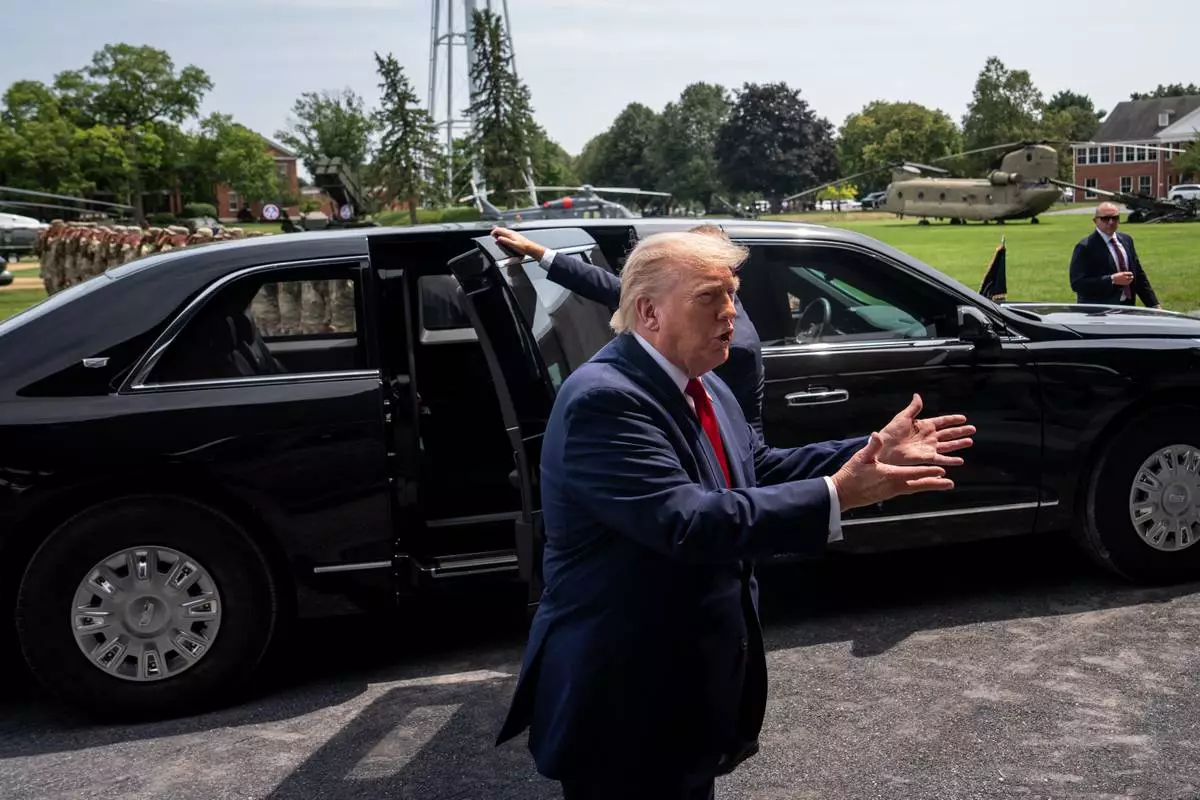
President Donald Trump arrives at the United States Army War College for the Pennsylvania Defense and Innovation Summit, Wednesday, July 15, 2026, in Carlisle, Pa. (AP Photo/Julia Demaree Nikhinson)
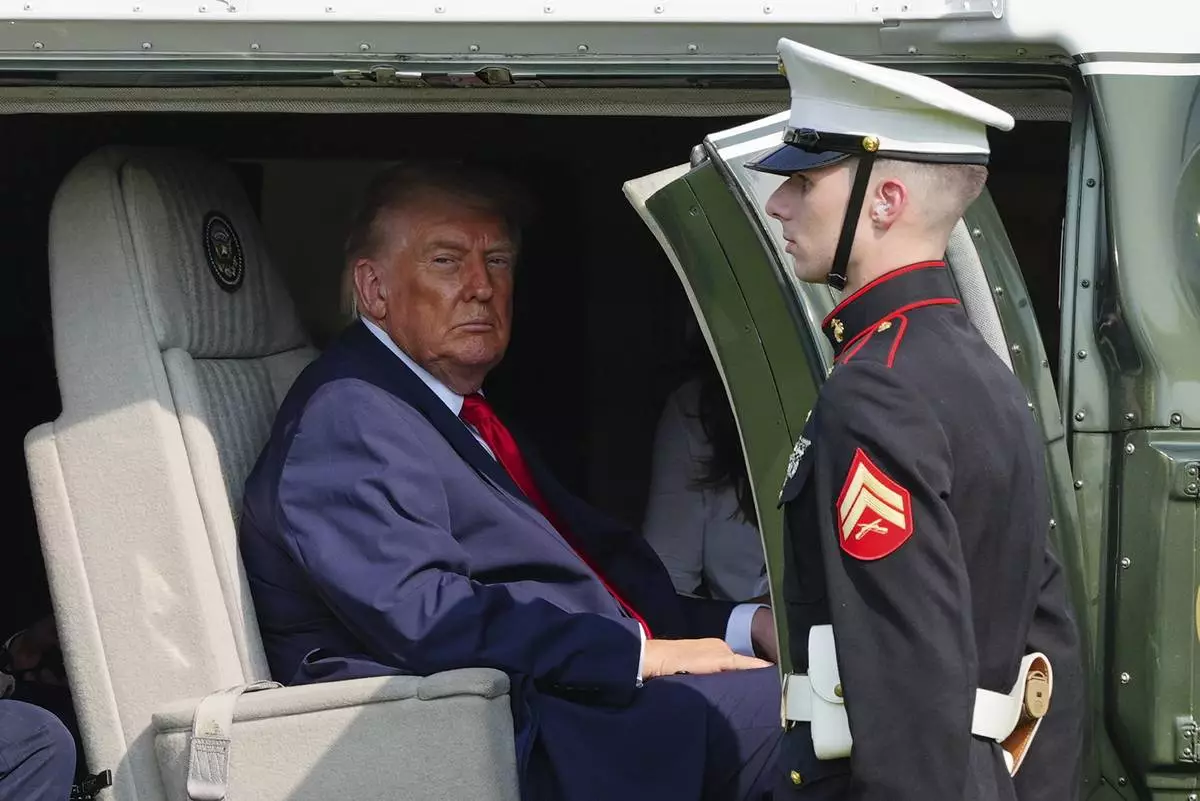
President Donald Trump departs on Marine One after speaking at the United States Army War College in Carlisle, Pa., at the Pennsylvania Defense and Innovation Summit, Wednesday, July 15, 2026. (AP Photo/Julia Demaree Nikhinson)