Cambodian Prime Minister Hun Manet commended China's constructive contributions to promoting international dialogue and cooperation on artificial intelligence (AI) governance at the opening ceremony of the 2026 World Artificial Intelligence Conference in Shanghai on Friday.
"[I highly commend] the government of the People's Republic of China for convening this important gathering under the timely and relevant theme -- 'AI Partnership for a Brighter Future'. AI is reshaping economies, public services, security, and competitiveness at an unprecedented speed. China's constructive contributions to advancing international dialogue and cooperation on AI governance through initiatives such as the Global AI Governance Initiative and the Global AI Governance Action Plans," Hun Manet said when addressing the opening ceremony of the grand gathering.
"The World Artificial Intelligence Conference has become a crucial platform for broadening participation in global AI governance and translating our shared commitment to international cooperation and to practical dialogue and partnership," he said.
Chinese President Xi Jinping delivered a keynote speech at the event. Kazakh President Kassym-Jomart Tokayev, Thai Prime Minister Anutin Charnvirakul and United Nations Secretary-General Antonio Guterres also addressed the ceremony, respectively.
The 2026 World AI Conference and High-Level Meeting on Global AI Governance runs from Friday to next Monday, bringing together officials, representatives, business leaders, scholars and researchers from more than 100 countries and international organizations.
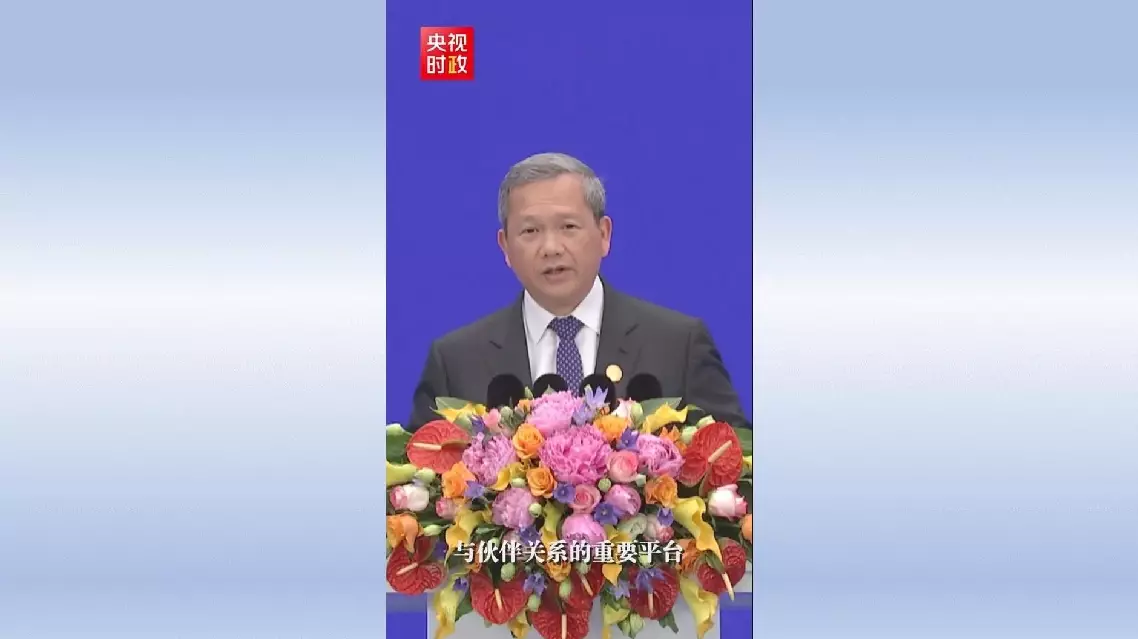
Cambodian prime minister commends China's contributions to promote dialogues, cooperation on AI governance
Chinese traditions such as mooncakes, lanterns and lion dances are bringing people together across several countries as celebrations for the upcoming Mid-Autumn Festival open a window on Chinese culture for overseas communities and local residents alike.
The Mid-Autumn Festival, one of the most important traditional Chinese holidays, falls on Sept 25 this year. Celebrated on the night of a full moon, it is a time when families gather to share mooncakes, light lanterns and admire the moon, a symbol of reunion.
From lantern-making in Hamburg to lion dances at a Canadian night market, vibrant Mid-Autumn Festival celebrations have been held around the world, bringing together overseas Chinese and local communities to share in the traditions and cultural charm of the festival.
In Hamburg, a garden party transformed the city center into a public festival ground over the weekend, with the mooncakes to taste, children's laughter around the pastry tables and local residents trying their hands at lantern-making.
For many residents, it was a first encounter with the festival.
"I learned about the Mid-Autumn Festival through a friend. Being able to get closer to China here in Hamburg is very special for me," said Arantxa Arana, a Hamburg resident.
The outdoor gathering was only part of the city's celebrations. This year marks the 40th anniversary of the sister-city relationship between Shanghai and Hamburg, and to mark the occasion, a Mid-Autumn gala was held at the Hamburg Yuyuan Garden. Modeled on its Shanghai namesake, the garden was built to honor that very partnership.
Against that backdrop, a folk music quintet, dances and dramas took the stage, drawing warm applause as Chinese and German residents gathered to celebrate the festival.
The stage also belonged to some of the city's youngest talents.
"I'm very happy to perform here today. I wish all of you a happy Mid-Autumn Festival," said Anna Klatt, a German high school student.
In Canada, the festival is reaching beyond the biggest cities. Alongside celebrations in Toronto and Vancouver, the small city of Burlington in southern Ontario held its first-ever Mid-Autumn event as an Asian night market opened at the city's largest shopping mall on Friday, complete with Chinese cultural performances, lion dances and Kung Fu.
For one local performer, the appeal goes well beyond the food.
"I love mooncakes. I understand the mythology and legends behind the Moon Festival. I really admire the culture. It's very nice," said Amit, a member of a lion dance team in Ontario.
Half a world away in the Saudi capital Riyadh, the celebration moved from the marketplace to the classroom. The Confucius Institute at the Prince Sultan University gathered students from several universities to taste mooncakes, try on traditional Chinese clothing and learn about Chinese tea culture.
"I like learning Chinese because I like Chinese culture. I hope that I can have an opportunity to study and work in China in the future," said Mohammed, one of the participating students.
Zhang Xinying, the Chinese director of the Confucius Institute at Prince Sultan University, hopes the festive event will spark a deeper curiosity about China.
"More and more students are keen to learn Chinese. They are not just learning the language, but many want to study in China, have closer exchanges with Chinese people, and even use Chinese as a working language in Chinese companies," she said.
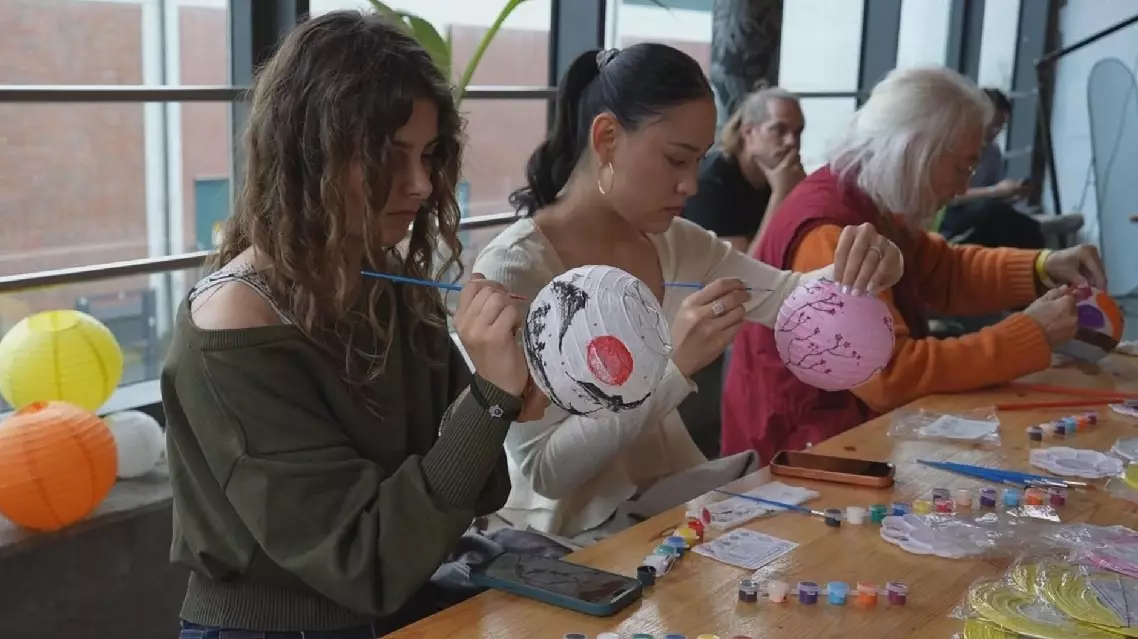
Mid-Autumn Festival celebrations worldwide show charms of Chinese culture