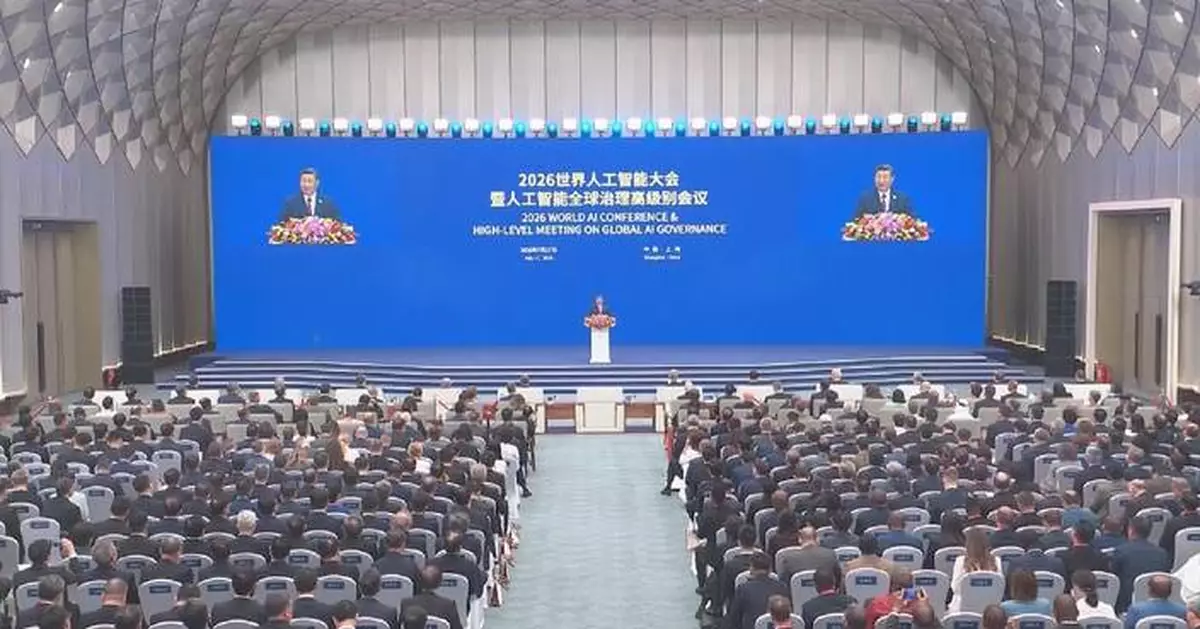
Chinese President Xi Jinping, in addressing the opening ceremony of the 2026 World AI Conference (WAIC) and High-Level Meeting on Global AI Governance in Shanghai on Friday, underlined the great significance of developing a just and equitable global AI governance system, emphasizing China's commitment in this endeavor.
Before the opening ceremony officially began, Xi had group photos taken with other heads of state and government, heads of international organizations and heads of delegations from participating countries.
Following warm applause, Xi delivered a keynote address titled "Joining Hands to Build a Just and Equitable System for Global AI Governance".
In his address, Xi pointed out that the world has entered an unprecedentedly vigorous period of innovation in AI technologies, bringing great opportunities and governance challenges.
He said humanity must answer the questions of the times -- how humans can get along with thinking machines, how security can be ensured when algorithms are involved in decision-making, how ethical challenges posed by technologies can be tackled through adaptive governance, and how AI for all can be realized when the divide keeps widening.
Xi said these questions require serious consideration and answers from the entire international community.
To this end, Xi presented four observations on AI development and governance.
First, adhering to the principle of openness and all-win cooperation while boosting innovation-driven development: Xi highlighted the importance of encouraging open-source, openness, collaboration and sharing to facilitate technological innovation, industrial development and scenario-based application of AI.
Second, strengthening risk awareness and ensuring security and controllability of AI: Stressing the need to ensure that AI is always under human control, Xi urged all sides to jointly oppose overstretching the national security concept in the field of AI or placing one country's security over that of others.
Third, encouraging inclusiveness and promoting mutual learning among civilizations: AI development and its application should not erode or undermine the diversity of world civilizations or the uniqueness of cultures of different countries, according to Xi.
And fourth, advocating solidarity and improving global governance: The important role of the United Nations should be recognized, Xi said, calling for further alignment and coordination on AI development strategies, governance rules and technical standards.
Extensive international cooperation must be carried out to help Global South countries with capacity building to bridge the AI and digital divides, promote sustainable development and prevent creating new historical injustice in AI, he said.
Xi highlighted that 2026 marks the beginning of China's 15th Five-Year Plan, which outlines a blueprint for China's economic and social development over the next five years and presents a list of opportunities for the rest of the international community.
In recent years, China has strengthened AI scientific and technological innovation and actively promoting the "AI+" initiative, fostering a healthy ecosystem where various entities coexist and thrive. The scale of the country's core intelligent economy has exceeded one trillion yuan, with intelligent manufacturing emerging as another shining hallmark of Chinese modernization.
Meanwhile, China has prioritized both development and security, continuously improving the relevant laws, regulations, policy systems, application standards, and ethical guidelines to ensure AI is safe, reliable, and controllable. As a responsible major country, China is always dedicated to being a provider of international public goods in the field of artificial intelligence, continuously contributing Chinese solutions, Xi noted.
The Chinese president said the World Artificial Intelligence Cooperation Organization (WAICO), established Thursday, is a major initiative by China to respond to the calls of the Global South and unite the international community in actively promoting the development and governance of AI, and it will serve as an important milestone in the history of AI development.
China will provide developing countries with 5,000 opportunities for artificial intelligence (AI) training and seminars over the next five years, Xi announced.
He said China will develop international AI application cooperation centers with ASEAN, the League of Arab States, the African Union, the Community of Latin American and Caribbean States, the Shanghai Cooperation Organization and BRICS.
China will help 30 countries utilize the AI-powered MAZU meteorological early warning system to protect people's lives and property around the world, Xi added.
"China is willing to adopt a more open attitude, take more practical actions, and assume a more visionary perspective to work with all parties to seize the opportunities of AI development and meet the challenges, and join hands to create a brighter future for humanity," Xi said as he concluded the speech.
Kazakh President Kassym-Jomart Tokayev, Cambodian Prime Minister Hun Manet, Thai Prime Minister Anutin Charnvirakul, and UN Secretary-General Antonio Guterres also delivered speeches at the opening ceremony.
They warmly congratulated the signing of the WAICO agreement in Shanghai, and highly commented on China's contributions to promoting global AI governance.
AI holds the promise of becoming humanity's greatest development opportunity, yet it also harbors potential risks, they said. China's advocacy for AI for good, inclusive and equitable development, and safe and controllable technology, along with its active assistance to developing countries in strengthening relevant capacity building and promoting international AI cooperation, demonstrates its role as a responsible major power.
They stressed that AI technology should be shared and governed by all countries, ensuring its fair benefit to all nations, serving sustainable development of all humanity, and bridging the global digital divide and the North-South development gap.
The opportunities and challenges brought by AI transcend national borders, requiring concerted efforts from all parties to grasp and address them, the speakers noted. Hopes were expressed that the WAICO would play a crucial role in achieving a secure, prosperous future where no country is left behind through open, inclusive, and mutually beneficial cooperation.
Friday's meeting also saw the issuance of the Chair's Statement of the 2026 World Artificial Intelligence Conference and High-Level Meeting on Global AI Governance.
Prior to the meeting, Xi and his wife, Peng Liyuan, held a banquet Thursday evening to welcome international dignitaries attending the conference.
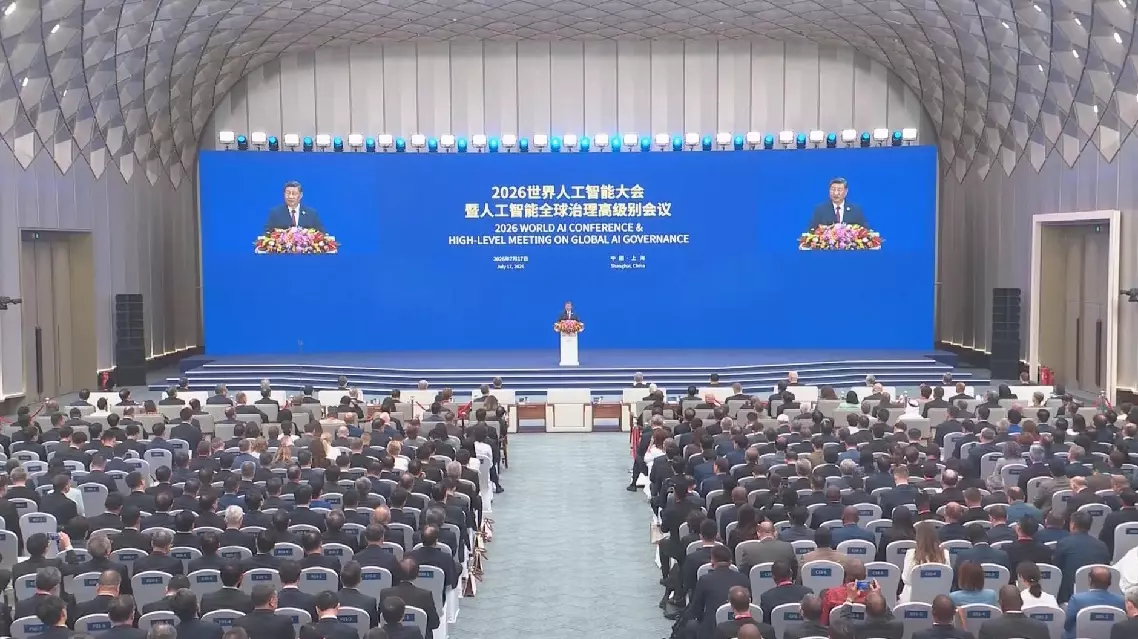
Xi underlines just, equitable global AI governance system at 2026 World AI Conference
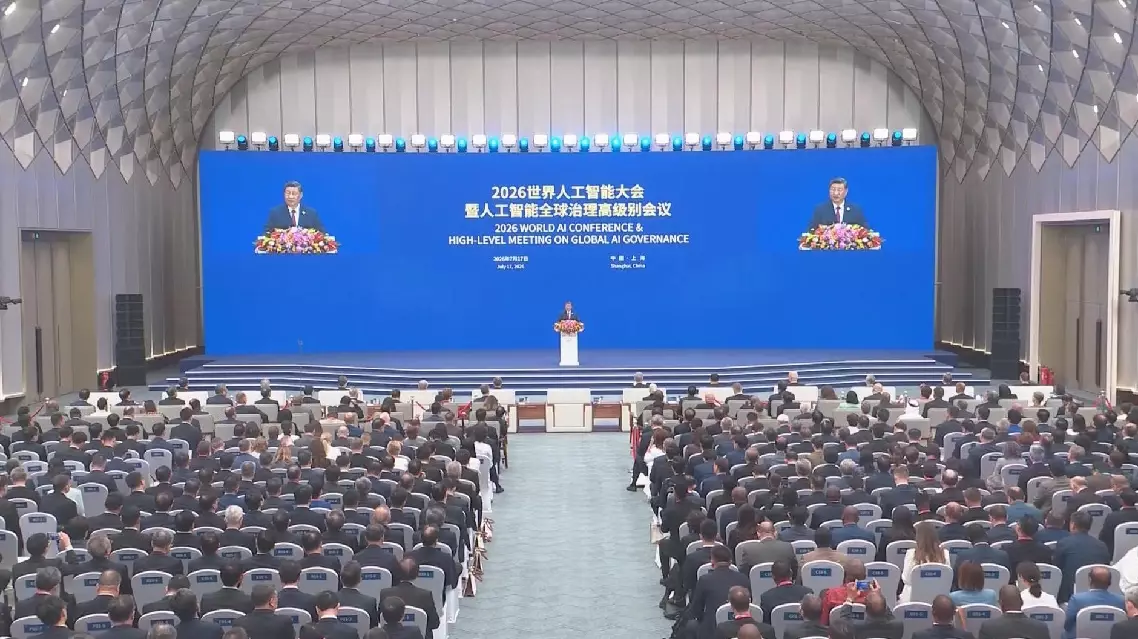
Xi underlines just, equitable global AI governance system at 2026 World AI Conference
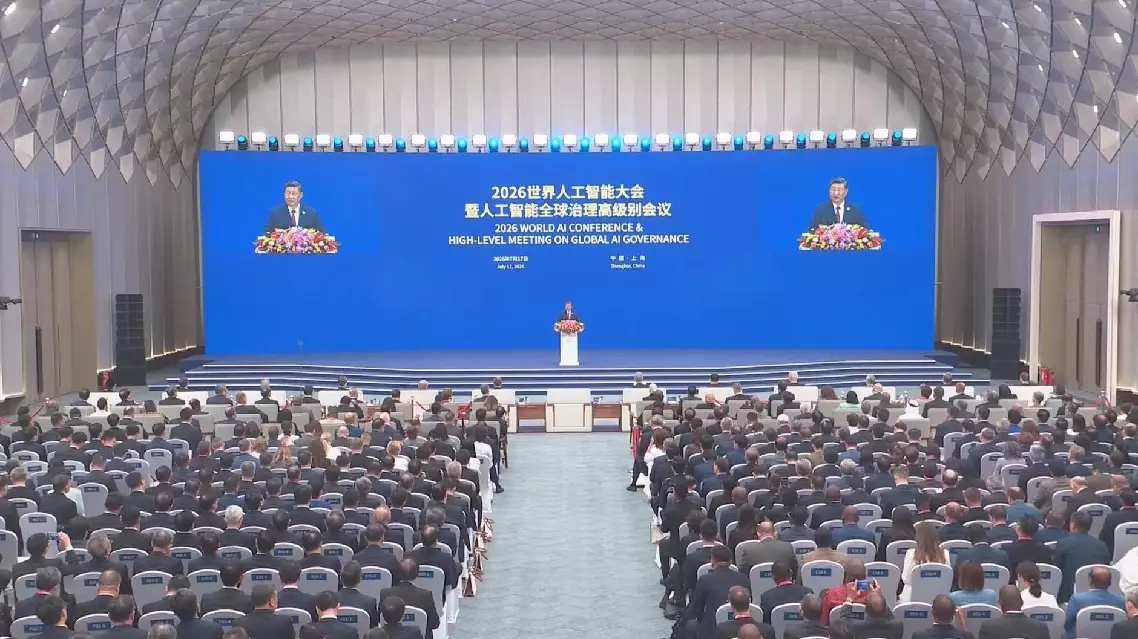
Xi underlines just, equitable global AI governance system at 2026 World AI Conference