SAN JUAN, Puerto Rico (AP) — The U.S. government plans to auction off massive sections of water surrounding American Samoa for potential deep-sea mining in an unprecedented move that is expected to draw criticism from many countries.
The area of the water surface planned to be auctioned off covers a total of 33 million acres (about 51,560 square miles).
The proposed leasing notice was published on Friday as U.S. President Donald Trump's administration seeks to expedite mining permits despite growing environmental concerns.
The unilateral U.S. move is also a departure from previous administrations that have respected the rules of the Jamaica-based U.N. International Seabed Authority, which oversees deep international waters and has been debating mining rules for years.
More than 43 countries have called for a moratorium or ban on deep sea mining, which scientists have warned could unleash noise, light and suffocating dust storms and affect fragile marine life.
But the U.S. and others are eager to mine the seafloor for copper, iron, zinc and other minerals that are in demand for technology, military use and electric vehicles.
“Critical minerals have become a strategic asset in global competition, and China’s dominance in the supply of many of these materials creates unacceptable risks for America’s energy, defense and manufacturing sectors,” Matt Giacona, acting director of the U.S. Marine Minerals Administration, said in a statement Thursday.
A spokesperson for the secretary general of the International Seabed Authority did not immediately respond to a message seeking comment.
Seumalu Elora Raymond, a spokesperson for Fa’asao Amerika Samoa, a community group, said in a statement that the U.S. government’s fast-tracking of the lease sale is “ignoring the voices of the very people whose waters, traditions, and livelihoods are on the line.”
“We will not stand by while an untested industry threatens to destroy American Samoa’s environment and cultural heritage for corporate profit,” she said.
The government of American Samoa, which has banned deep-sea mining in local waters, did not immediately return a message seeking comment.
Earthjustice, a nonprofit legal organization, accused the U.S. of bulldozing American Samoan outcry against deep-sea mining.
“The Trump administration continues to bow to this untested, extractive industry and seeks to make American Samoa one of the first test sites,” said Earthjustice attorney J.V. Langkilde.
The U.S. Bureau of Ocean Energy Management said in a July environmental assessment report that the area proposed for lease sales has water depths ranging from 4,600 to 20,000 feet (1,400 to 6,000 meters). The area is located 57 miles (92 kilometers) from the Rose Atoll National Wildlife Refuge.
The bureau envisions issuing up to two commercial leases of nearly 17 million acres (67, 000 square kilometers) each, solely for preliminary activities. These would include geophysical surveys, biological sampling and oceanographic measurements.
“Offering large lease areas provides flexibility for environmental and technical exclusions,” the bureau said in its report.
It alternatively proposed issuing five leases covering nearly 7 million acres (26,800 square kilometers) each. The bureau noted that any future mining would require a submission and its approval of a plan subject to an environmental review.
The report of the U.S. Bureau of Ocean Energy Management stated that “some uncertainty remains regarding the potential for indirect or accidental impacts, particularly in deepwater and pelagic zones” near Rose Atoll and several national marine sanctuaries.
It asserted that there are no expected impacts to nearshore environments and no substantial adverse impacts to offshore habitats. The bureau, however, acknowledged data gaps, especially in the area’s deeper waters, “where biodiversity, ecological function, and baseline conditions remain poorly characterized.”
The bureau stated in its report that because the U.S. has not ratified the U.N. Convention on the Law of the Sea, the National Ocean and Atmospheric Administration regulates U.S. exploration and commercial recovery of minerals.
NOAA announced in January that companies could apply for an exploration license and commercial operations at the same time, scrapping what used to be a two-step process. In April, Trump signed an executive order directing NOAA to expedite the permitting process for seafloor mining.
Meanwhile, the International Seabed Authority has authorized exploration licenses for 22 contractors, but it has not allowed any commercial mining.
Much of the ongoing exploration is centered in the Clarion-Clipperton Fracture Zone, which covers 1.7 million square miles (4.5 million square kilometers) between Hawaii and Mexico. It is occurring at depths ranging from 13,000 to 19,000 feet (4,000 to 6,000 meters).
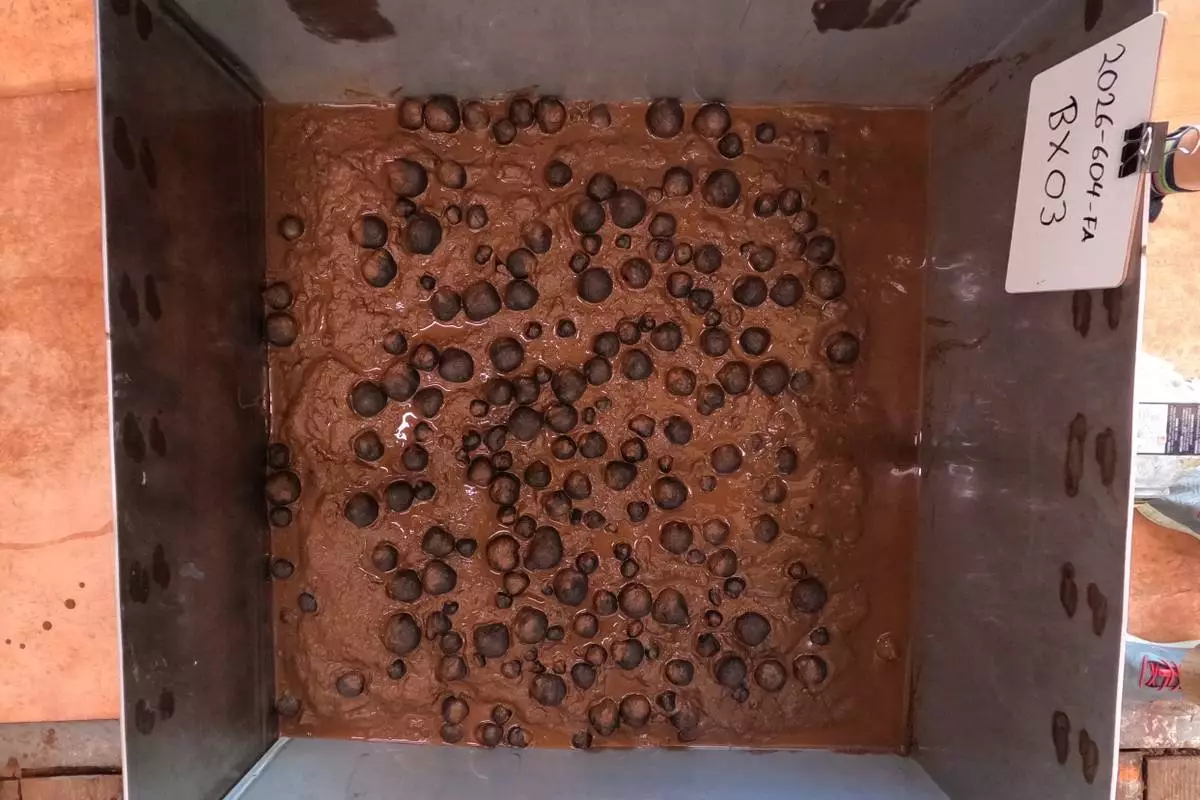
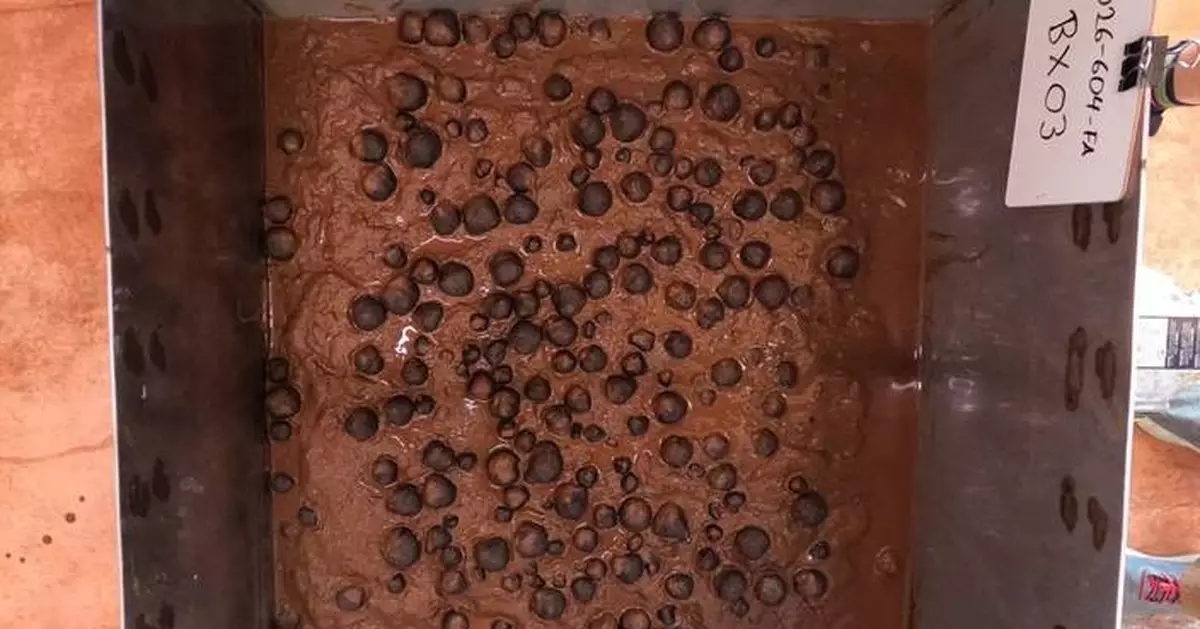
FILE - This photo provided by the U.S. Geological Survey shows polymetallic nodules in a sample from the seafloor that was collected on April 14, 2026, in U.S. waters off American Samoa. (USGS via AP, File)
During his senior year of high school on the Puyallup Reservation, Gerald Dillon traded much of his academic coursework for career training. When he walked into the second grade classroom where he worked as a teaching assistant, students would rush from their seats for a fist bump or a hug.
The 18-year-old, who once found classes boring and put in only enough effort to pass, found renewed purpose to come to school everyday.
“It motivates me. I like making connections with the kids, I like helping them,” Dillon said.
It began in his junior year when he enrolled in career training courses. Soon, Dillon said, his grades improved. He graduated in June from Chief Leschi Schools in Washington and is now considering going to college for a teaching degree.
Administrators at the school say a shift in focus to technical training and career readiness is paying off, with more students not only staying in school but graduating on time.
Those gains are emblematic of progress across the U.S. Bureau of Indian Education, which oversees 183 primary and secondary schools serving over 40,000 students. In 2015, just over half of high schoolers at BIE schools graduated within four years. That number soared to a record high of 79% by 2025.
Some BIE educators attribute that surge to local innovations. Assistant Secretary of Indian Affairs Billy Kirkland says they reflect the Trump administration’s commitment to Native American students, including efforts to strengthen teacher training. In addition, the way graduation rates are reported across BIE schools was changed to address flawed data collection that previously depressed the numbers.
But concerns loom that changes reshaping the BIE under the Trump administration — including the planned dismantling of the U.S. Department of Education and continued fallout from cuts instituted by DOGE — could undermine progress and prevent struggling schools from improving.
The surge in graduation rates reflects, in part, more accurate reporting rather than a sudden leap in student academic improvement, according to agency officials.
For years, school administrators across the system used flawed methods to track graduation rates, often counting students who had transferred to other schools as dropouts.
“We had to come to a consensus and set an accountability framework for our schools,” said Carmelia Becenti, the agency’s chief academic officer.
Beginning in 2018, BIE began standardizing data collection methods. In the years since, Becenti said, the data has painted a more accurate and encouraging picture.
An AP analysis of BIE data found that graduation rates across the system are up 55% since new reporting standards began rolling out, with 11 of its secondary schools reporting 100% growth or higher.
Less than one-third of BIE schools are operated by the agency itself. The rest are run by tribes and receive federal funding. At some of those, educators say data collection is only part of the story.
Don Brummett, superintendent of Chief Leschi Schools, said his staff has been working to correct a “disconnect” between the high school's previous laser focus on getting students ready for college and many students’ goals of finding a job upon graduation.
“We devalued the trades. That was a mistake,” Brummett said.
The school launched its career and technical curriculum in 2020 with funding from the Puyallup Tribal Council. Since then, Brummett has seen students who might otherwise have dropped out instead enter health sciences, education and fisheries management and find new motivation to stay in school.
Dillon, the recent graduate, said hands-on job training was a better match for his learning style.
“It was kind of the first time I felt excited to go to school,” said Dillon, reflecting on his time helping second graders practice reading skills and learn the life cycle of a frog.
Between 2019 and 2025, Chief Leschi Schools reported four-year graduation rates rose from 53% to 87%.
A focus on trades is just one of the ways tribal-controlled BIE schools have innovated to keep students on track. At Choctaw Central High School, a BIE school operated by the Mississippi Band of Choctaw, administrators said a COVID-era experiment in virtual learning contributed to a surge in graduation rates from roughly 70% to 93%.
“For certain kids that have more responsibilities at home, kids that need to work, we saw that (virtual learning) gave them a flexible schedule and an opportunity to earn their diploma,” said principal Alaric Keams.
When pandemic lockdowns lifted, the district maintained a virtual learning option for all high schoolers.
But not all tribal governments have the resources to pay for these kinds of programs or take over management of BIE schools.
Peter Lengkeek, chairman of the Crow Creek Sioux Tribe in South Dakota, says the BIE-operated high school serving his community is chronically understaffed and crumbling under a backlog of deferred maintenance, including a gymnasium with sinking walls and a rodent infestation. It has reported graduating fewer than 60% of students on time in recent years.
“If we were able to, we would step in and try to remedy a lot of these things,” said Lengkeek. “We have to rely on the government to fulfill its treaty promise.”
From the dismantling of the federal Department of Education to DOGE reductions that swept out longtime staffers, as well as repeated threats of deep funding cuts, tribal leaders fear the progress that has been made could be undermined.
In November 2025, the Department of Education began handing off oversight of dozens of programs that serve Native students to BIE.
At a tribal consultation session in February in Washington, D.C., dozens of tribal leaders spoke in opposition, saying the transition could overwhelm the already understaffed and stretched BIE with additional responsibilities. Several accused the department of ignoring its legal responsibility to seek their input before moving forward.
“We are here too late,” said Herschel Gorham, lieutenant governor of the Cheyenne and Arapaho Tribes. “The ink was dry on the agreements before the tribes were ever notified. That should never, ever happen.”
Jason Dropik, executive director of the National Indian Education Association, said turmoil at the agency's Washington office trickles down to schools, pointing to a Trump administration executive order that aimed to turn the BIE into a school choice system but was scaled back after an outcry from tribes.
“That caused some delays and disruptions to services,” Dropik said. “When drastic changes go into motion without tribal consultation, there can be unintended consequences for our students.”
Lengkeek worries the BIE could be consumed by political upheaval while schools like the one serving his community continue to underperform.
“This system holds the future of our nations in its hands,” Lengkeek said. “We need stability. We need increased funding. We need infrastructure.”
——
This story is published through the Global Indigenous Reporting Network at The Associated Press.
This story has been updated to correct that 11 BIE secondary schools, not nine, reported 100% growth or higher.
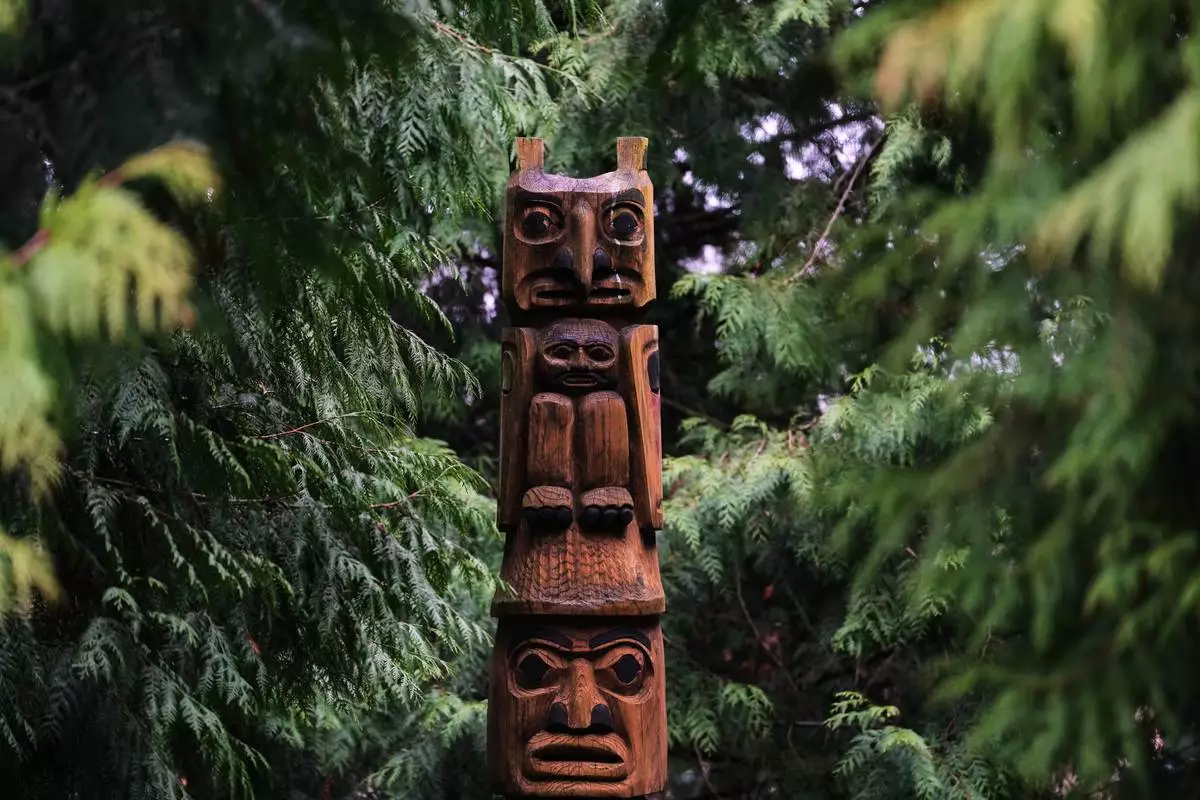
A story pole is seen in the middle of a sacred circle at the center of campus at Chief Leschi Schools, which has improved its graduation rates with a career and technical education program, Wednesday, March 18, 2026, in Puyallup, Wash. (AP Photo/Lindsey Wasson)
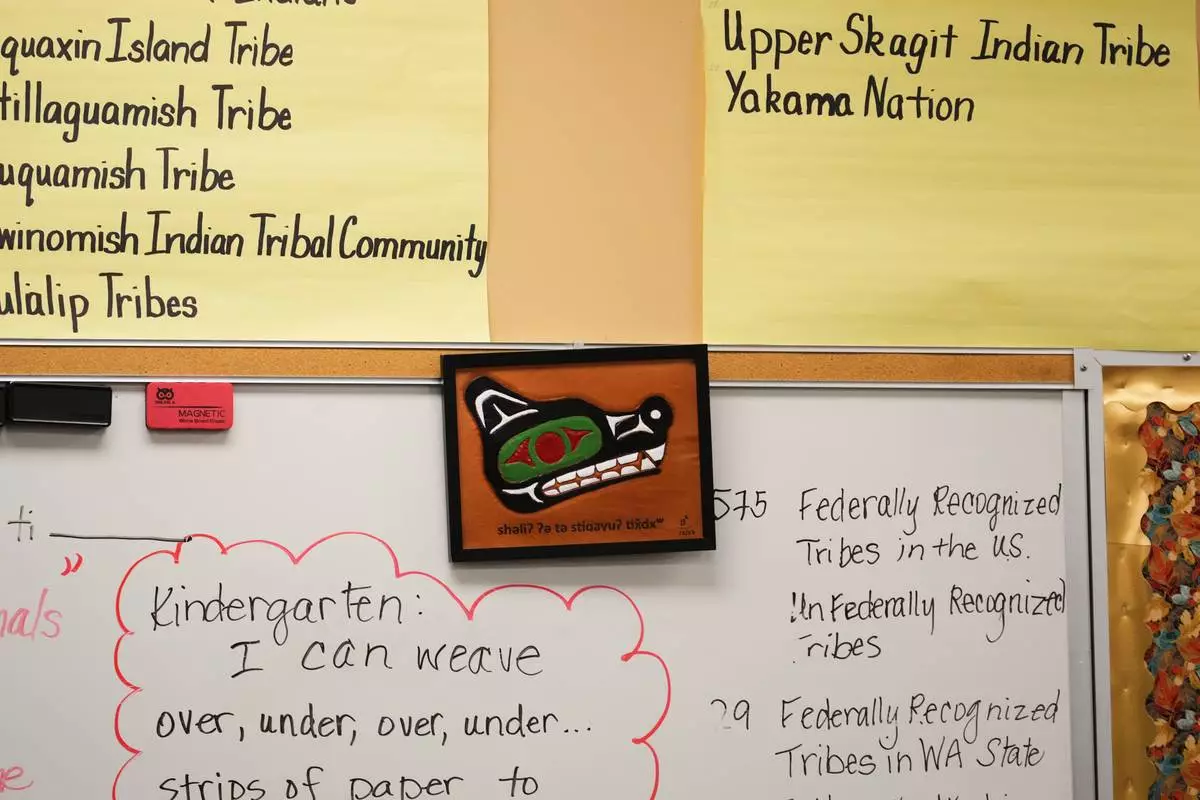
Names of tribes are seen on the walls of a culture classroom at Chief Leschi Schools, which has improved its graduation rates with a career and technical education program, Wednesday, March 18, 2026, in Puyallup, Wash. (AP Photo/Lindsey Wasson)
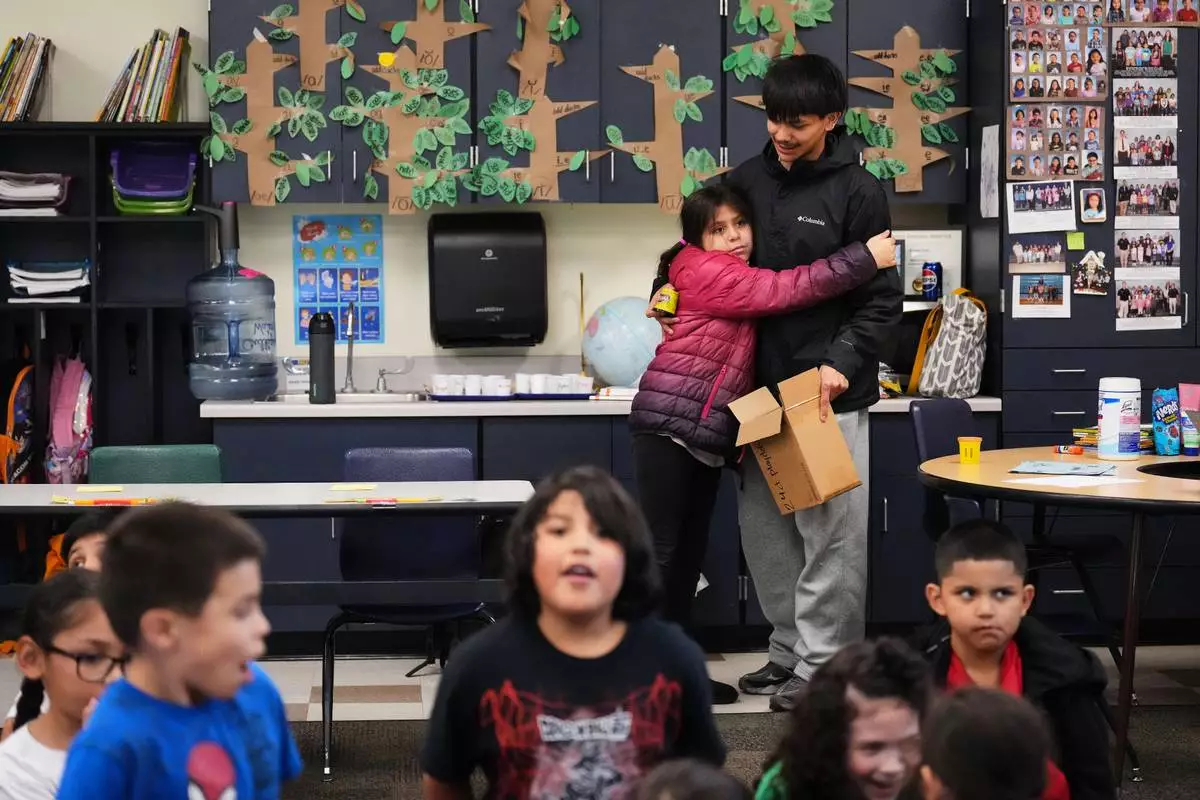
Chief Leschi Schools senior Gerald Dillon, 18, gets a hug from a second grade student as he serves as a teaching assistant through the school's career and technical education program, Wednesday, March 18, 2026, at Chief Leschi Schools in Puyallup, Wash. (AP Photo/Lindsey Wasson)
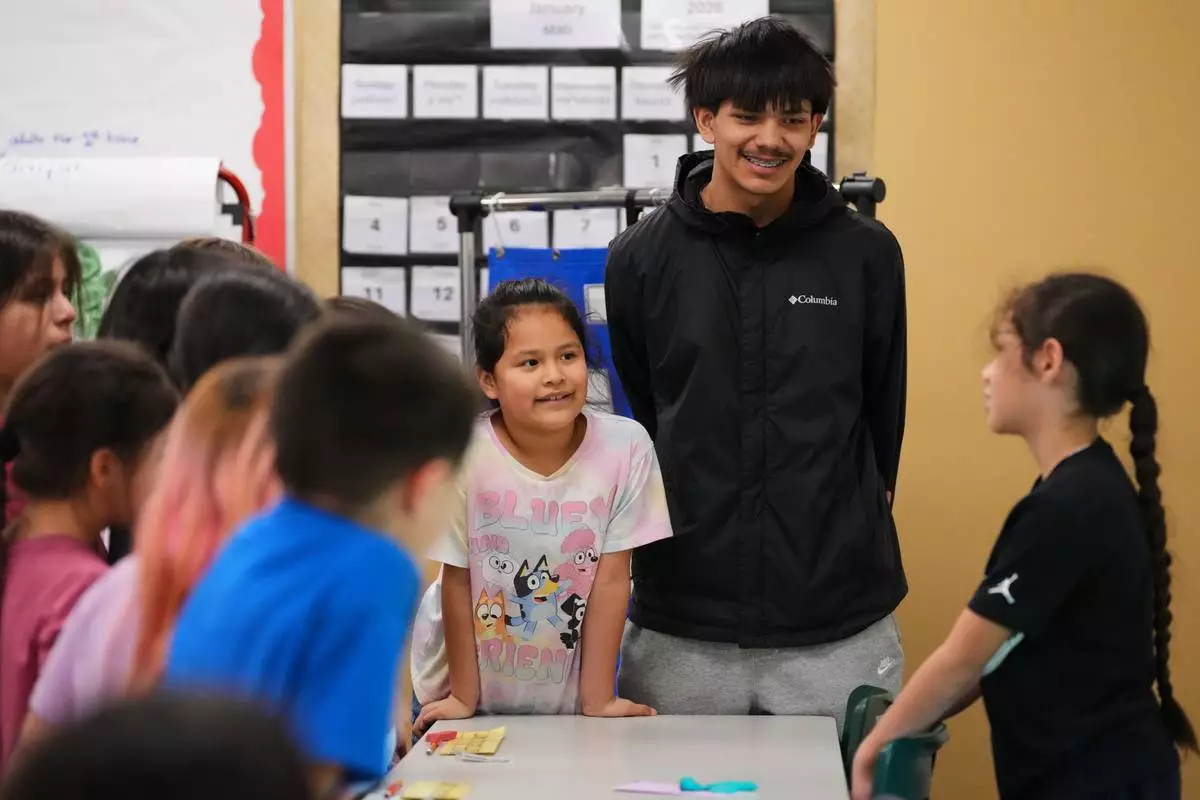
Chief Leschi Schools senior Gerald Dillon, 18, who serves as a teaching assistant through the school's career and technical education program, listens to a second grade student describe the parts of their Play-Doh insect in class Wednesday, March 18, 2026, at Chief Leschi Schools in Puyallup, Wash. (AP Photo/Lindsey Wasson)
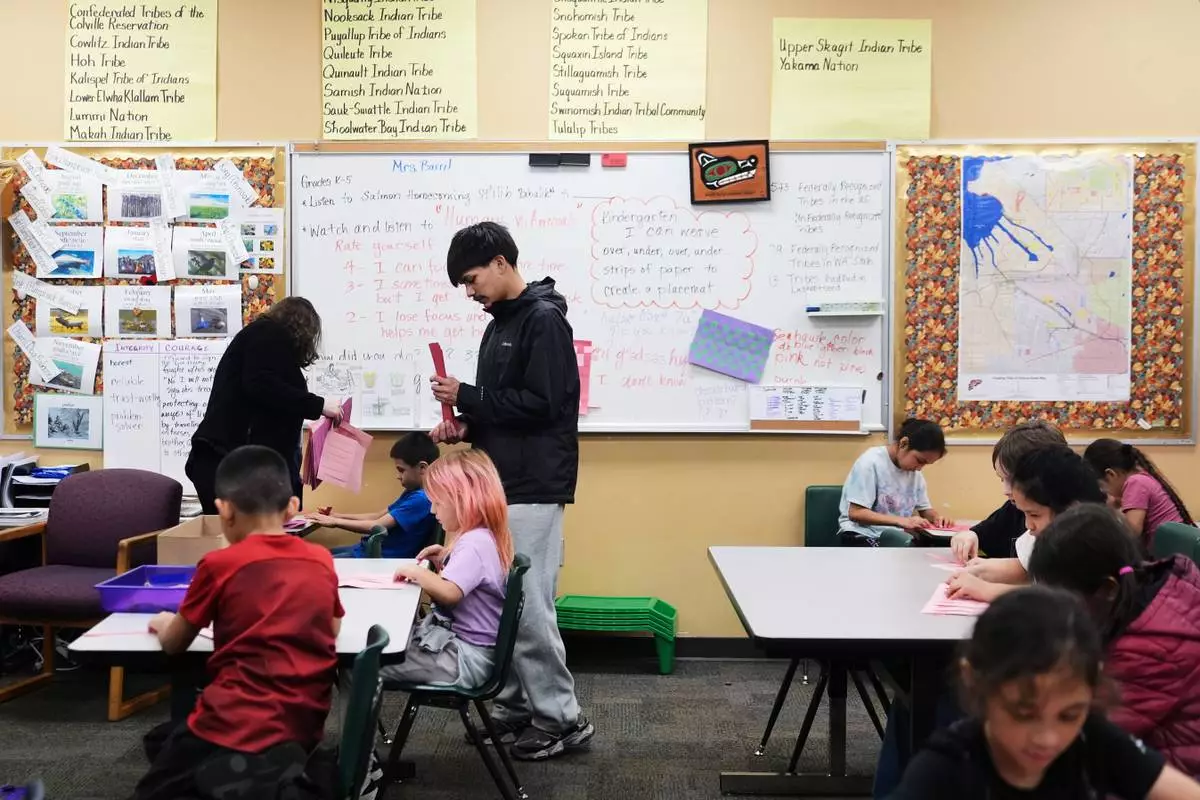
Chief Leschi Schools senior Gerald Dillon, 18, helps during a weaving exercise in a culture class for second graders as he serves as a teaching assistant through the school's career and technical education program, Wednesday, March 18, 2026, at Chief Leschi Schools in Puyallup, Wash. (AP Photo/Lindsey Wasson)