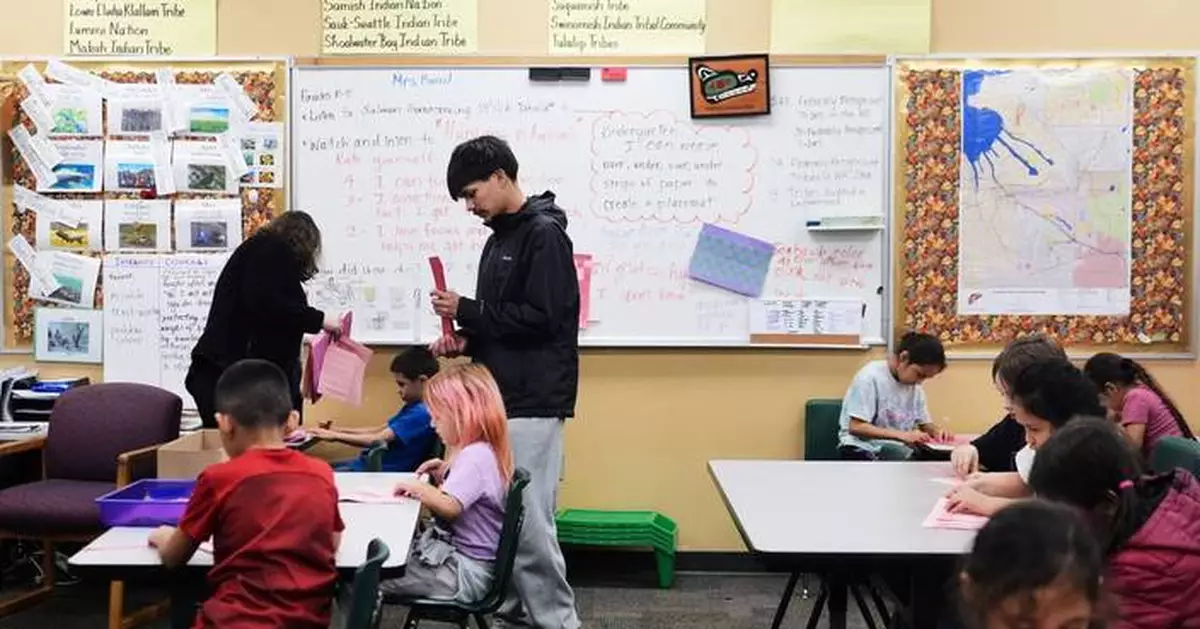
During his senior year of high school on the Puyallup Reservation, Gerald Dillon traded much of his academic coursework for career training. When he walked into the second grade classroom where he worked as a teaching assistant, students would rush from their seats for a fist bump or a hug.
The 18-year-old, who once found classes boring and put in only enough effort to pass, found renewed purpose to come to school everyday.
Click to Gallery

A story pole is seen in the middle of a sacred circle at the center of campus at Chief Leschi Schools, which has improved its graduation rates with a career and technical education program, Wednesday, March 18, 2026, in Puyallup, Wash. (AP Photo/Lindsey Wasson)
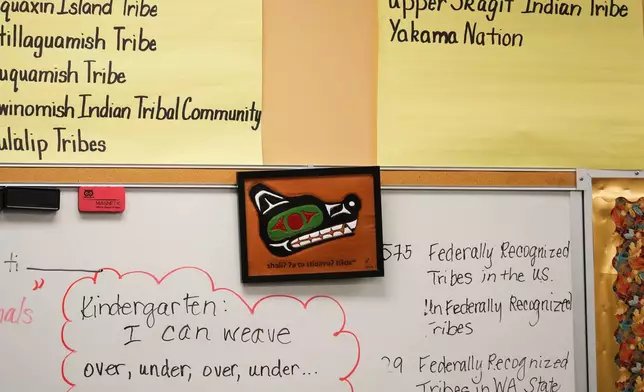
Names of tribes are seen on the walls of a culture classroom at Chief Leschi Schools, which has improved its graduation rates with a career and technical education program, Wednesday, March 18, 2026, in Puyallup, Wash. (AP Photo/Lindsey Wasson)
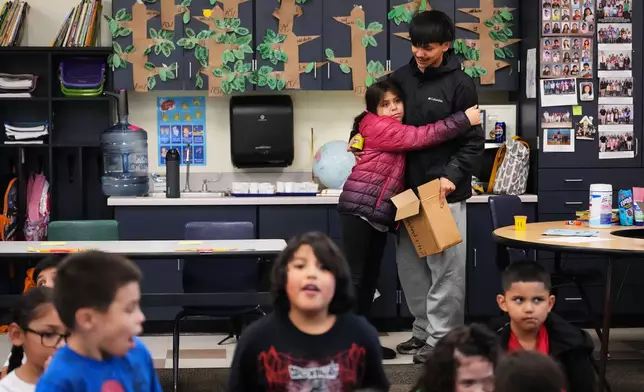
Chief Leschi Schools senior Gerald Dillon, 18, gets a hug from a second grade student as he serves as a teaching assistant through the school's career and technical education program, Wednesday, March 18, 2026, at Chief Leschi Schools in Puyallup, Wash. (AP Photo/Lindsey Wasson)
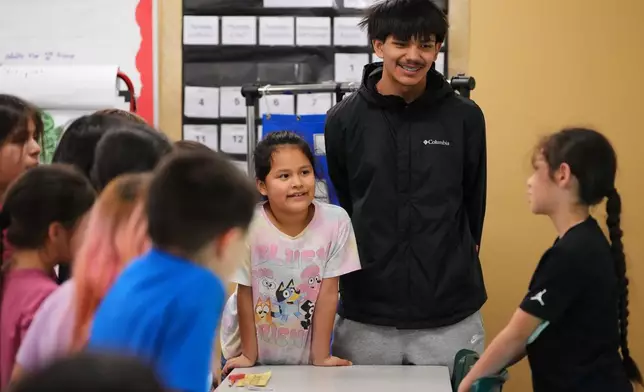
Chief Leschi Schools senior Gerald Dillon, 18, who serves as a teaching assistant through the school's career and technical education program, listens to a second grade student describe the parts of their Play-Doh insect in class Wednesday, March 18, 2026, at Chief Leschi Schools in Puyallup, Wash. (AP Photo/Lindsey Wasson)
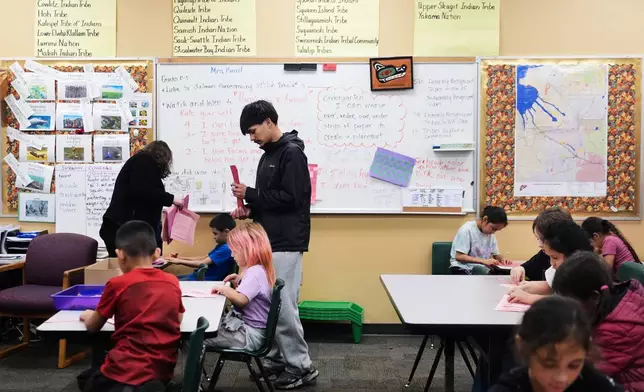
Chief Leschi Schools senior Gerald Dillon, 18, helps during a weaving exercise in a culture class for second graders as he serves as a teaching assistant through the school's career and technical education program, Wednesday, March 18, 2026, at Chief Leschi Schools in Puyallup, Wash. (AP Photo/Lindsey Wasson)
“It motivates me. I like making connections with the kids, I like helping them,” Dillon said.
It began in his junior year when he enrolled in career training courses. Soon, Dillon said, his grades improved. He graduated in June from Chief Leschi Schools in Washington and is now considering going to college for a teaching degree.
Administrators at the school say a shift in focus to technical training and career readiness is paying off, with more students not only staying in school but graduating on time.
Those gains are emblematic of progress across the U.S. Bureau of Indian Education, which oversees 183 primary and secondary schools serving over 40,000 students. In 2015, just over half of high schoolers at BIE schools graduated within four years. That number soared to a record high of 79% by 2025.
Some BIE educators attribute that surge to local innovations. Assistant Secretary of Indian Affairs Billy Kirkland says they reflect the Trump administration’s commitment to Native American students, including efforts to strengthen teacher training. In addition, the way graduation rates are reported across BIE schools was changed to address flawed data collection that previously depressed the numbers.
But concerns loom that changes reshaping the BIE under the Trump administration — including the planned dismantling of the U.S. Department of Education and continued fallout from cuts instituted by DOGE — could undermine progress and prevent struggling schools from improving.
The surge in graduation rates reflects, in part, more accurate reporting rather than a sudden leap in student academic improvement, according to agency officials.
For years, school administrators across the system used flawed methods to track graduation rates, often counting students who had transferred to other schools as dropouts.
“We had to come to a consensus and set an accountability framework for our schools,” said Carmelia Becenti, the agency’s chief academic officer.
Beginning in 2018, BIE began standardizing data collection methods. In the years since, Becenti said, the data has painted a more accurate and encouraging picture.
An AP analysis of BIE data found that graduation rates across the system are up 55% since new reporting standards began rolling out, with nine of its secondary schools reporting 100% growth or higher.
Less than one-third of BIE schools are operated by the agency itself. The rest are run by tribes and receive federal funding. At some of those, educators say data collection is only part of the story.
Don Brummett, superintendent of Chief Leschi Schools, said his staff has been working to correct a “disconnect” between the high school's previous laser focus on getting students ready for college and many students’ goals of finding a job upon graduation.
“We devalued the trades. That was a mistake,” Brummett said.
The school launched its career and technical curriculum in 2020 with funding from the Puyallup Tribal Council. Since then, Brummett has seen students who might otherwise have dropped out instead enter health sciences, education and fisheries management and find new motivation to stay in school.
Dillon, the recent graduate, said hands-on job training was a better match for his learning style.
“It was kind of the first time I felt excited to go to school,” said Dillon, reflecting on his time helping second graders practice reading skills and learn the life cycle of a frog.
Between 2019 and 2025, Chief Leschi Schools reported four-year graduation rates rose from 53% to 87%.
A focus on trades is just one of the ways tribal-controlled BIE schools have innovated to keep students on track. At Choctaw Central High School, a BIE school operated by the Mississippi Band of Choctaw, administrators said a COVID-era experiment in virtual learning contributed to a surge in graduation rates from roughly 70% to 93%.
“For certain kids that have more responsibilities at home, kids that need to work, we saw that (virtual learning) gave them a flexible schedule and an opportunity to earn their diploma,” said principal Alaric Keams.
When pandemic lockdowns lifted, the district maintained a virtual learning option for all high schoolers.
But not all tribal governments have the resources to pay for these kinds of programs or take over management of BIE schools.
Peter Lengkeek, chairman of the Crow Creek Sioux Tribe in South Dakota, says the BIE-operated high school serving his community is chronically understaffed and crumbling under a backlog of deferred maintenance, including a gymnasium with sinking walls and a rodent infestation. It has reported graduating fewer than 60% of students on time in recent years.
“If we were able to, we would step in and try to remedy a lot of these things,” said Lengkeek. “We have to rely on the government to fulfill its treaty promise.”
From the dismantling of the federal Department of Education to DOGE reductions that swept out longtime staffers, as well as repeated threats of deep funding cuts, tribal leaders fear the progress that has been made could be undermined.
In November 2025, the Department of Education began handing off oversight of dozens of programs that serve Native students to BIE.
At a tribal consultation session in February in Washington, D.C., dozens of tribal leaders spoke in opposition, saying the transition could overwhelm the already understaffed and stretched BIE with additional responsibilities. Several accused the department of ignoring its legal responsibility to seek their input before moving forward.
“We are here too late,” said Herschel Gorham, lieutenant governor of the Cheyenne and Arapaho Tribes. “The ink was dry on the agreements before the tribes were ever notified. That should never, ever happen.”
Jason Dropik, executive director of the National Indian Education Association, said turmoil at the agency's Washington office trickles down to schools, pointing to a Trump administration executive order that aimed to turn the BIE into a school choice system but was scaled back after an outcry from tribes.
“That caused some delays and disruptions to services,” Dropik said. “When drastic changes go into motion without tribal consultation, there can be unintended consequences for our students.”
Lengkeek worries the BIE could be consumed by political upheaval while schools like the one serving his community continue to underperform.
“This system holds the future of our nations in its hands,” Lengkeek said. “We need stability. We need increased funding. We need infrastructure.”
——
This story is published through the Global Indigenous Reporting Network at The Associated Press.

A story pole is seen in the middle of a sacred circle at the center of campus at Chief Leschi Schools, which has improved its graduation rates with a career and technical education program, Wednesday, March 18, 2026, in Puyallup, Wash. (AP Photo/Lindsey Wasson)

Names of tribes are seen on the walls of a culture classroom at Chief Leschi Schools, which has improved its graduation rates with a career and technical education program, Wednesday, March 18, 2026, in Puyallup, Wash. (AP Photo/Lindsey Wasson)
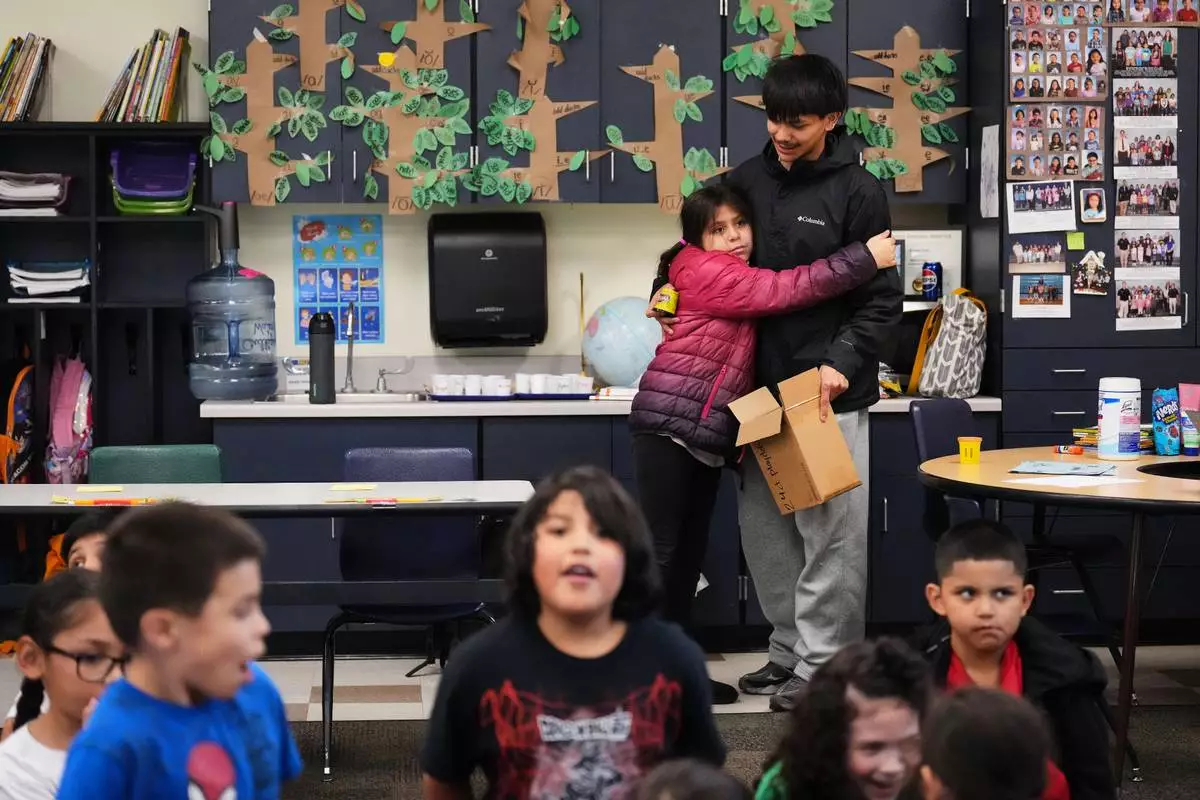
Chief Leschi Schools senior Gerald Dillon, 18, gets a hug from a second grade student as he serves as a teaching assistant through the school's career and technical education program, Wednesday, March 18, 2026, at Chief Leschi Schools in Puyallup, Wash. (AP Photo/Lindsey Wasson)

Chief Leschi Schools senior Gerald Dillon, 18, who serves as a teaching assistant through the school's career and technical education program, listens to a second grade student describe the parts of their Play-Doh insect in class Wednesday, March 18, 2026, at Chief Leschi Schools in Puyallup, Wash. (AP Photo/Lindsey Wasson)
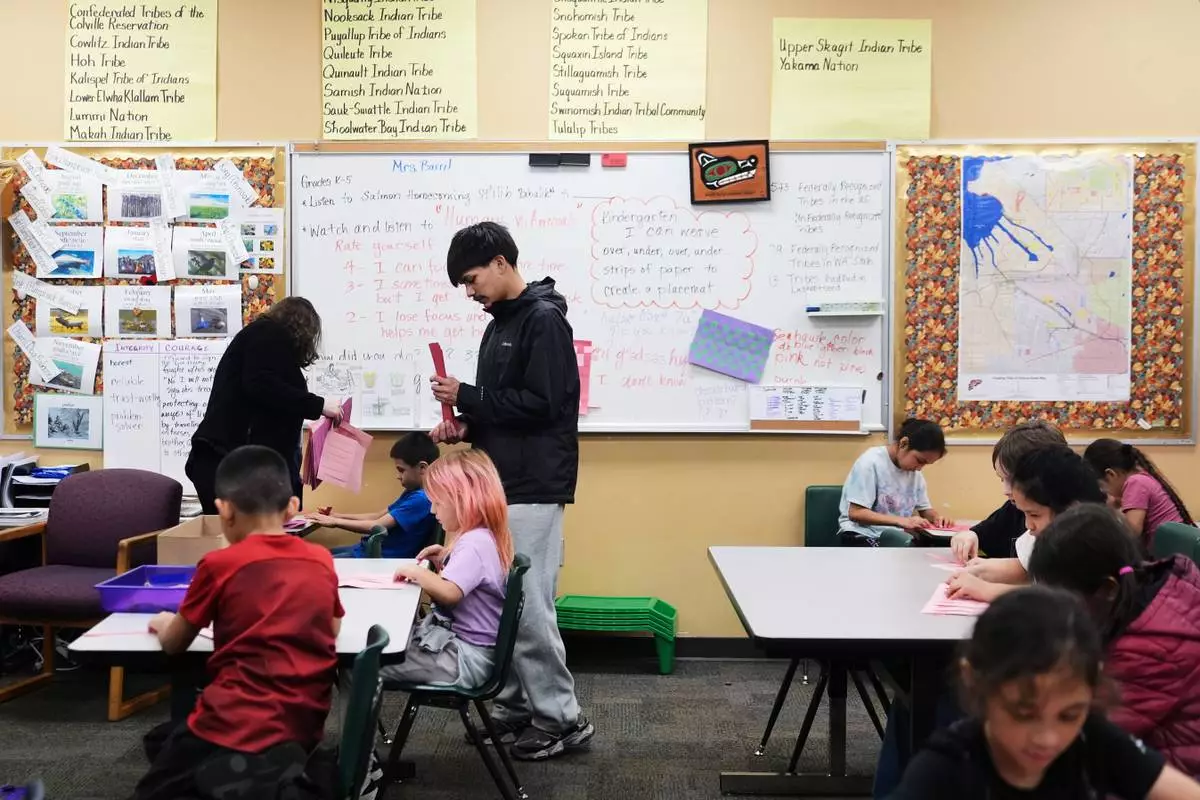
Chief Leschi Schools senior Gerald Dillon, 18, helps during a weaving exercise in a culture class for second graders as he serves as a teaching assistant through the school's career and technical education program, Wednesday, March 18, 2026, at Chief Leschi Schools in Puyallup, Wash. (AP Photo/Lindsey Wasson)

BIDDEFORD, Maine (AP) — A federal immigration officer fatally shot a motorist in Maine on Monday, the second time in a week that U.S. Immigration and Customs Enforcement agents have used deadly force and at least the ninth time since President Donald Trump began his immigration crackdown.
Immigrant rights groups identified the man who was killed as a 26-year-old native of Colombia.
The U.S. Department of Homeland Security said in a post on the social platform X that ICE was surveilling an address for a person with a final order of removal. When ICE tried to stop a vehicle driven by someone coming from that address, “The vehicle attempted to flee the scene and, fearing for public safety, an officer discharged his weapon,” the department said.
U.S. Sen. Angus King previously said Homeland Security Secretary Markwayne Mullin told him the officer opened fire after the man tried to use his vehicle as a weapon against ICE agents in Biddeford, a coastal city roughly 15 miles (24 kilometers) southwest of Portland.
“He was in a vehicle — pulled out in the vehicle, and the term the secretary used was ‘weaponized’ the vehicle and was shot by an ICE agent,” King said.
King, a Maine independent, said Mullin also told him the officers were in Biddeford to serve an arrest warrant but that it was for not for the person who was shot.
King said Mullin told him that earlier information that the man was the target of an enforcement action was incorrect. He said Mullin “got new information, and when he got it he called me to tell me."
Sen. Susan Collins, a Maine Republican, said Mullin told her the Homeland Security Department’s Office of Inspector General is investigating in cooperation with the FBI.
Messages seeking comment were left for the inspector general’s office and the Maine Department of Public Safety.
The Maine attorney general’s office, which is also investigating, said initial statements suggest the motorist was trying to flee in the direction of the agent. The office said the agent who killed him has been placed on leave.
Daniel Boucher said he looked out his third-floor window after hearing a “pop, pop, pop” sound and saw a small car “turned 90 degrees to the curb” with an SUV behind it. The driver was wounded and the car started moving down the street until the SUV hit it again, Boucher said.
“His face was bloody. His head was bloody,” Boucher said, getting choked up. “I clearly heard the victim say, ‘I tried to stop’ — clearly heard him say that.”
Boucher said he saw an ICE officer bring a medical bag to where the man was lying before an ambulance and fire truck arrived. At one point, Boucher said, the agent who shot the man walked close to him.
“I was emotional and I just let him have it, and he looked at me and said, ‘He tried to run me over,’ or something to that effect," Boucher said. "I don’t remember his exact words.”
The agents involved in the shooting didn’t have body-worn cameras, King said.
“The question is: What did he do with his vehicle?” King said. “Were officers threatened? Were the threats rising to the level that justified deadly force?”
Two advocacy groups — the Maine Immigrants’ Rights Coalition and Presente! — said the man who was killed was authorized to work in the U.S.
After the shooting, his family contacted the Immigrants’ Rights Coalition, but they aren't ready to speak publicly about the shooting, said the group's executive director, Mufalo Chitam.
Mary Hayes, who lives close to where the shooting happened, said the man lived nearby with his wife and daughter.
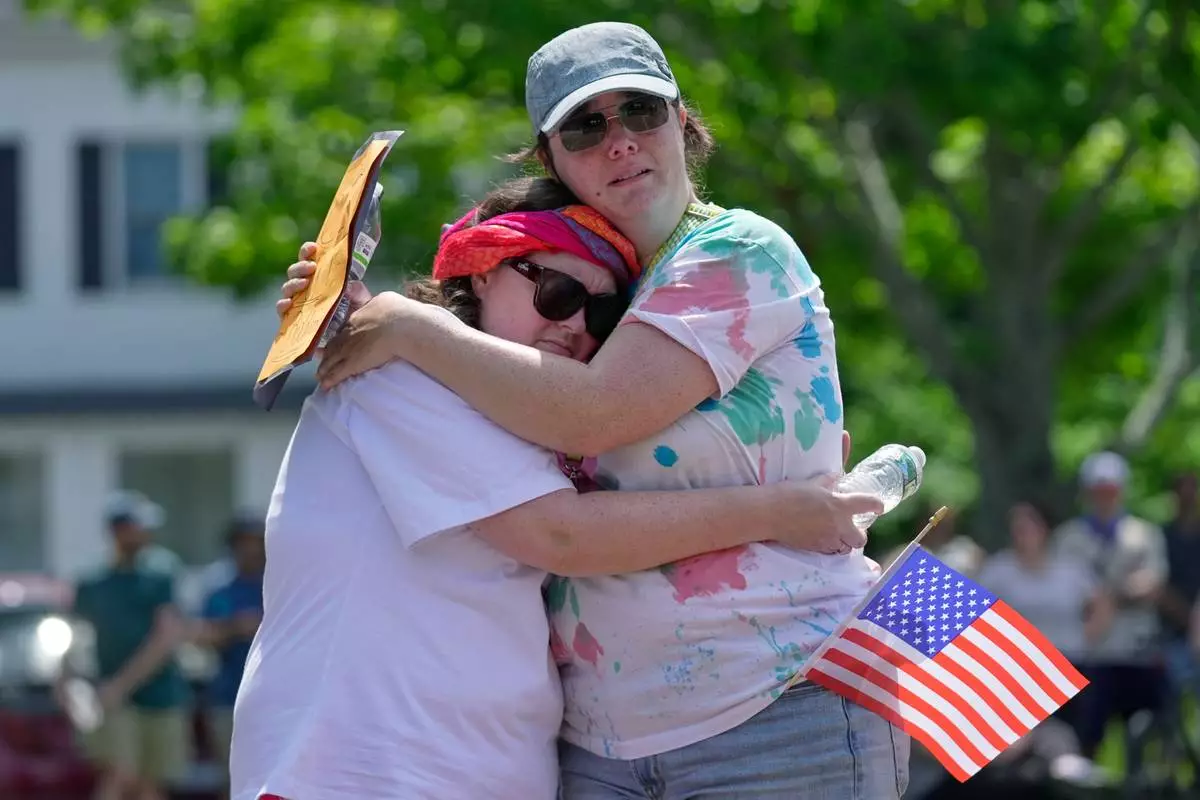
“I watched a wife fall to her knees looking at her husband’s dead body on the ground,” Hayes told the AP as she held a piece of cardboard with “No ICE Stop ICE” written on it. “I watched a little girl crying with a little pink backpack on because she’s never going to see her father again.”
The Colombian Embassy said it is in contact with U.S. authorities and “working to formally confirm the individual’s identity and nationality.”
Sadie Dilboy said the man killed in the shooting regularly came to her laundromat and would bring his daughter, who he'd give quarters to buy candy from the vending machine.
“He was such a good person,” she said. “He was always cleaning up.”
Dozens of demonstrators critical of ICE and Trump’s ongoing immigration crackdown gathered in Biddeford within hours of the shooting.
Amy Goodman, who is from nearby Wells, arrived with a sign that said “Stop Killing Us” and directed it toward police working at the scene.
“Sadly, it’s something we’re seeing a whole lot more often lately, and I’m mad about it,” said Goodman.
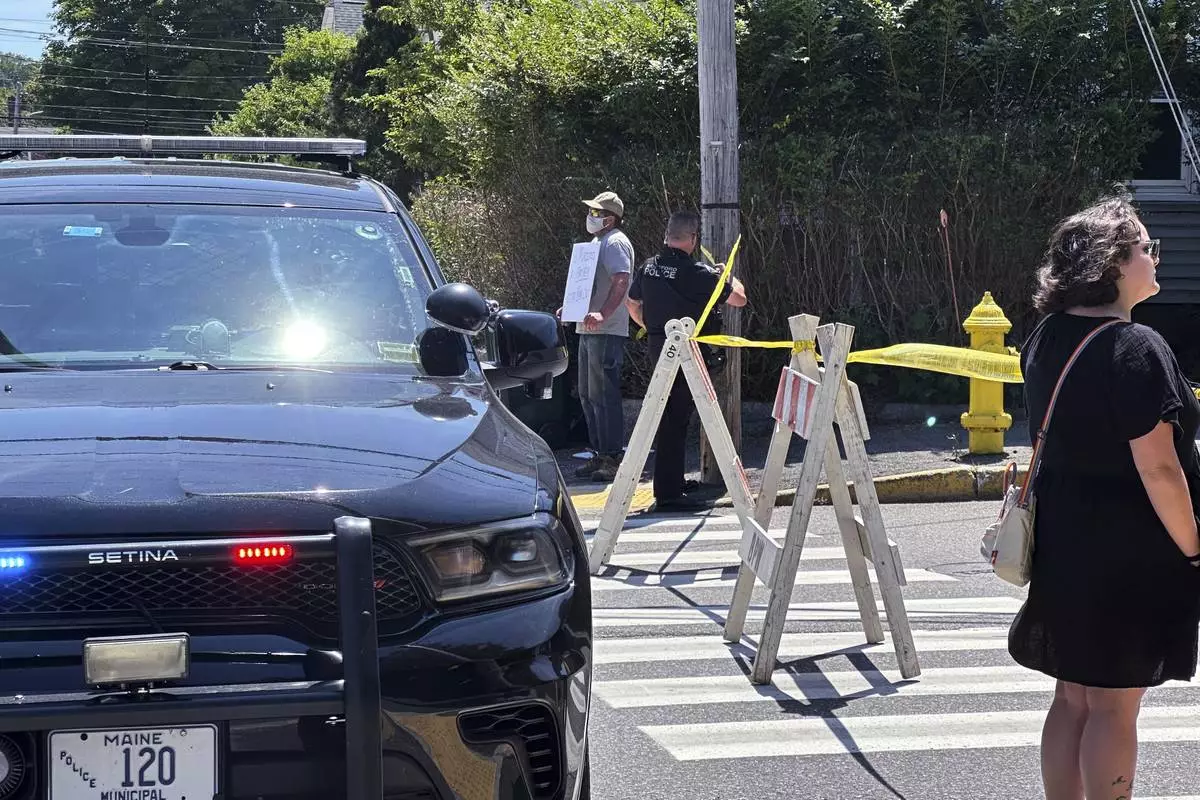
Police blocked access to the shooting scene, which is in a neighborhood of mostly multifamily homes, churches and businesses. Several protesters stood nearby, some holding signs condemning ICE's presence in the community and state.
On July 7, an ICE officer fatally shot 52-year-old Lorenzo Salgado Araujo, of Houston, after federal agents driving unmarked vehicles pursued him while he was taking his construction crew to a job site.
The shootings come amid a Trump administration push to carry out its mass deportations agenda. During the five-day period at the end of June, ICE arrested more than 10,000 people.
The figures indicate that while the administration is no longer cracking down on individual cities, the arrests are surging. The administration’s enforcement efforts were widely condemned last winter after the killings of Alex Pretti and Renee Good in Minnesota.
“More than anything else, I want to know, ‘Why are you in Maine?’" Rep. Chellie Pingree, D-Maine, said in a video on social media.
ICE had a significant presence in Maine earlier this year, which prompted several protests. Immigration officials later said in late January that they had ceased “enhanced operations” in Maine after hundreds of arrests.
A Homeland Security spokesperson said at the time that some Maine arrests were of people “convicted of horrific crimes" including aggravated assault and endangering the welfare of a child.”
Court records show that while some had felony convictions, others had unresolved immigration proceedings or had been arrested but never convicted of a crime.
ICE arrested 546 people in Maine between the start of Trump’s second term and March 11, 2026, the most recent data available, according to ICE arrest data provided to the University of California, Berkeley Deportation Data Project and analyzed by the AP.
About 45% of those arrested had criminal backgrounds. During the equivalent 416-day period before Trump took office, roughly 69% of those arrested had criminal backgrounds, the data show.
This story was updated to correct the spelling of Cory Poulin’s first name.
Willingham reported from Boston and Brook reported from New Orleans. Associated Press reporters Michael R. Sisak in New York, Aaron Kessler in Washington and Kate Brumback in Atlanta contributed to this report.
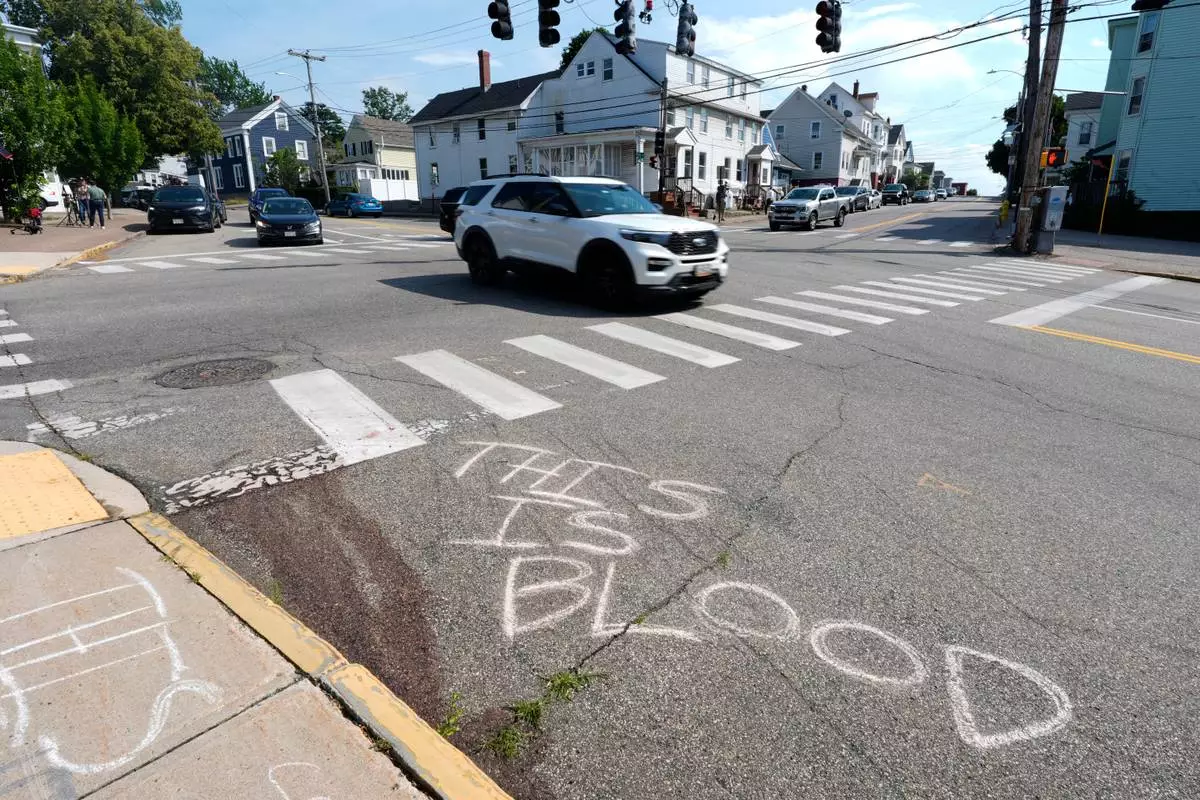
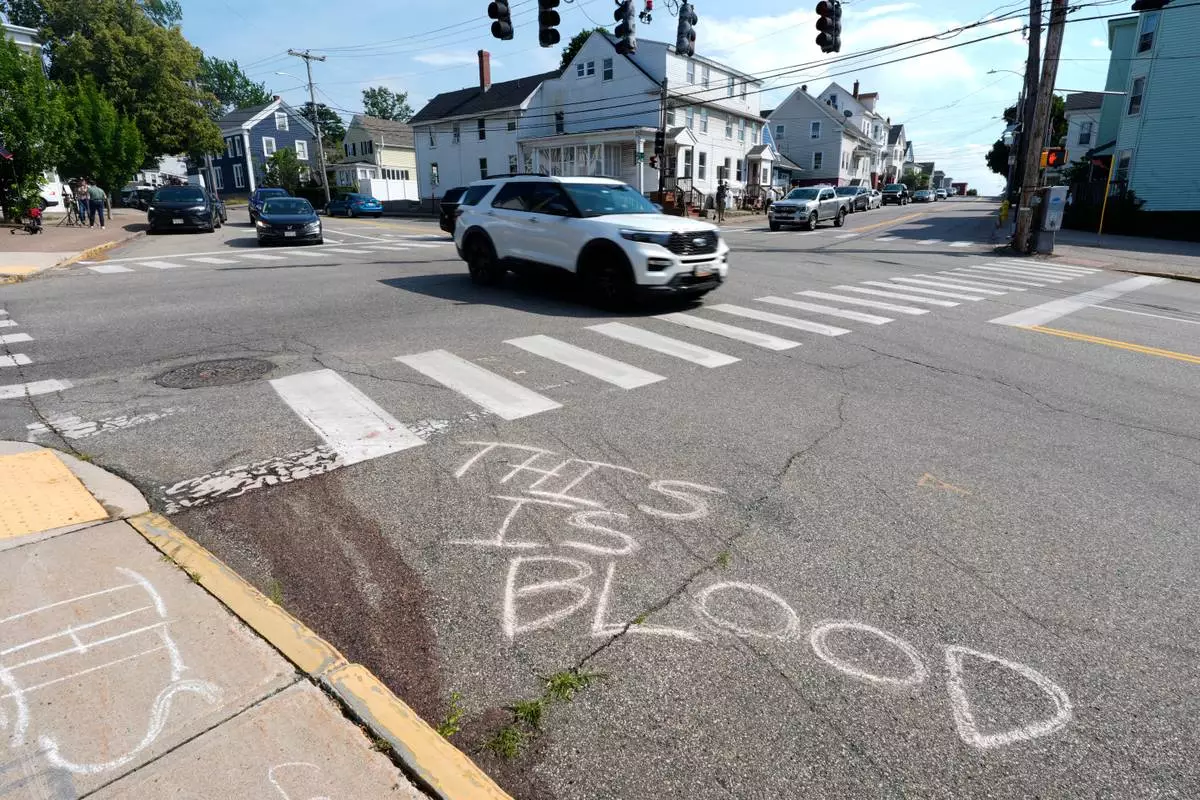
Blood is seen on the pavement near the scene of a shooting involving U.S. Immigration and Customs Enforcement, Monday, July 13, 2026 in Biddeford, Maine. (AP Photo/Robert F. Bukaty)
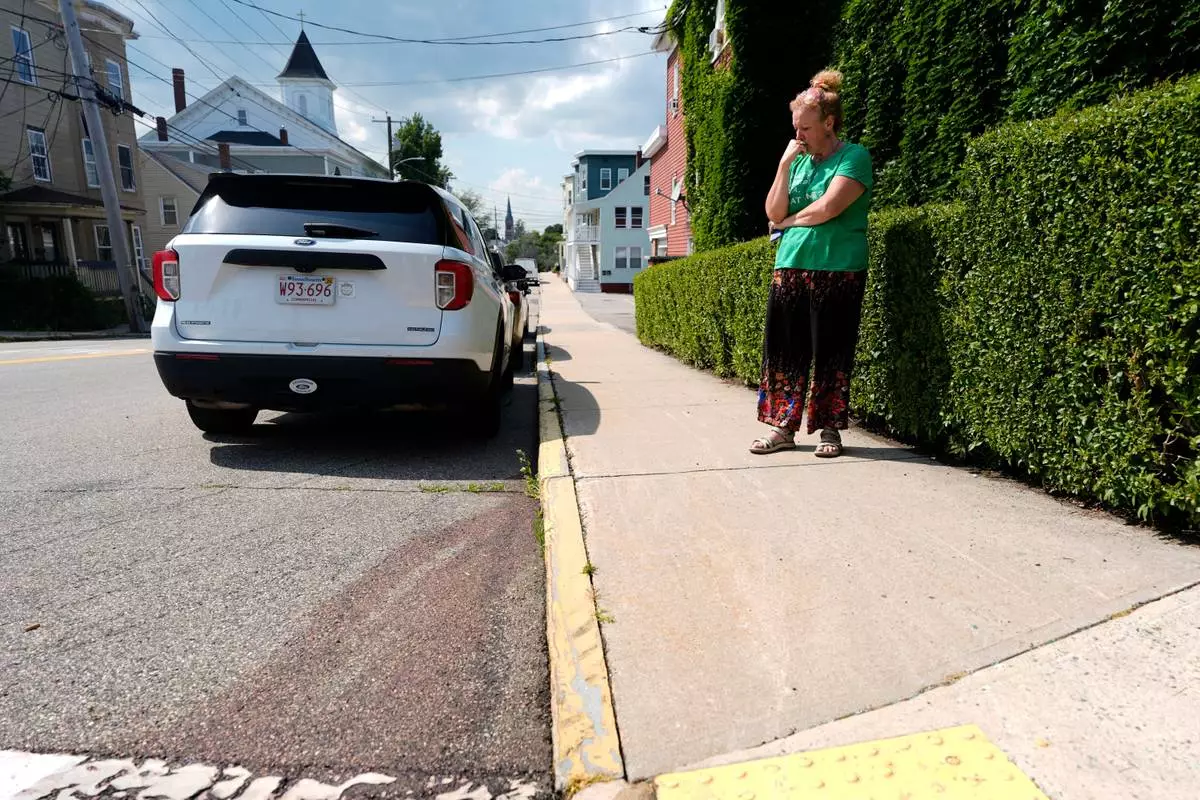
Frances Mercanti-Anthony, from Bristol, Maine, stands near the scene where blood is seen on the pavement after a shooting involving U.S. Immigration and Customs Enforcement, Monday, July 13, 2026 in Biddeford, Maine. (AP Photo/Robert F. Bukaty)
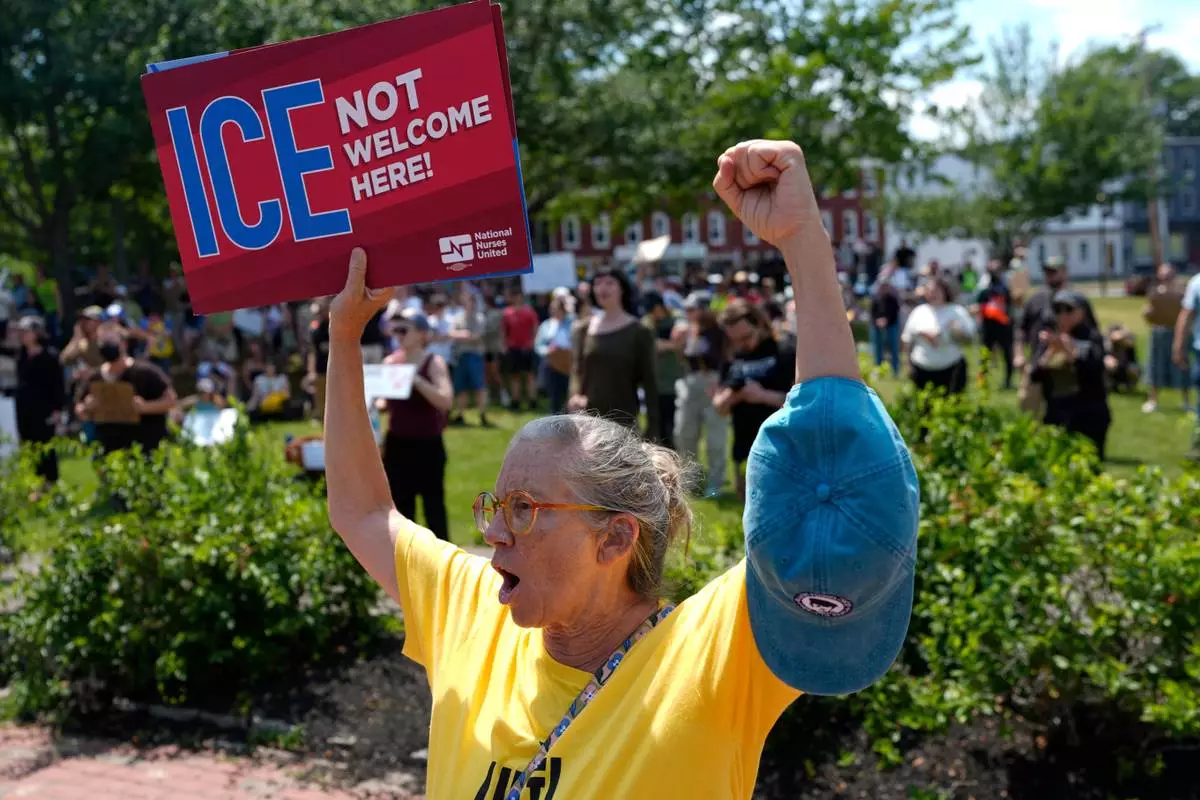
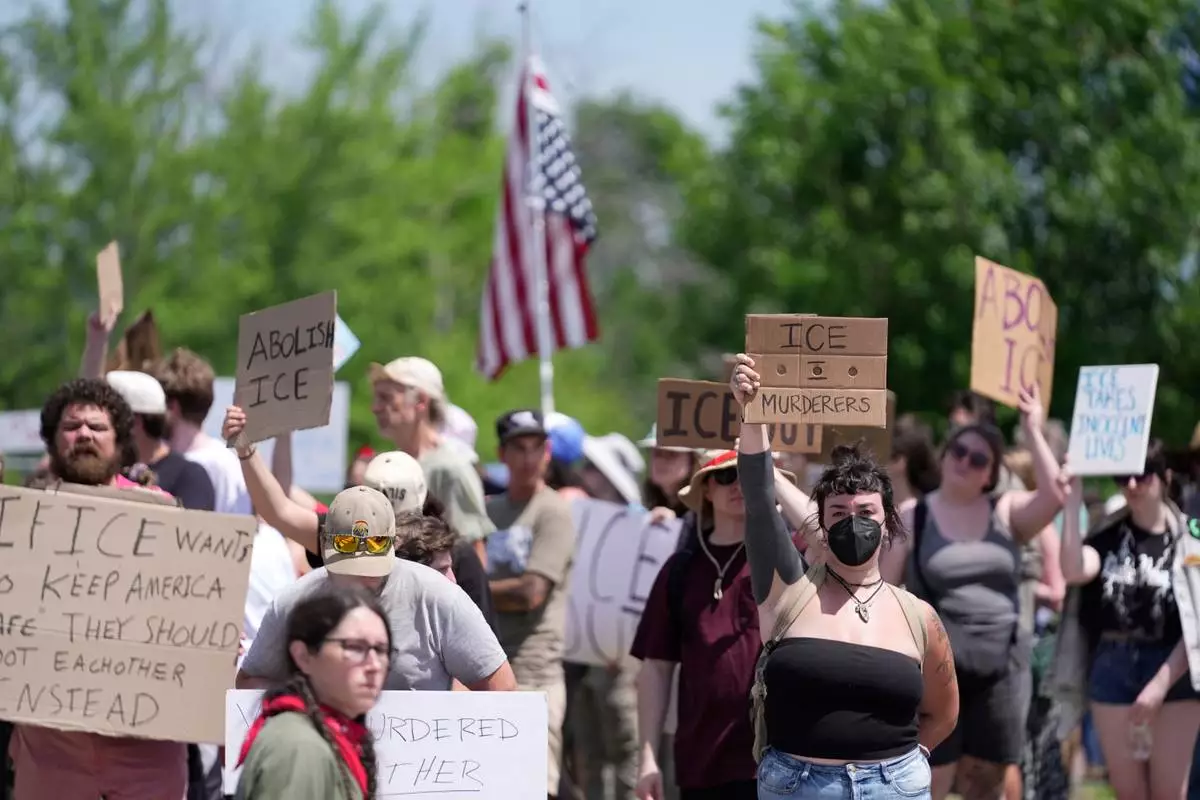
Protesters gather at a park near the scene of a shooting involving U.S. Immigration and Customs Enforcement, Monday, July 13, 2026 in Biddeford, Maine. (AP Photo/Robert F. Bukaty)
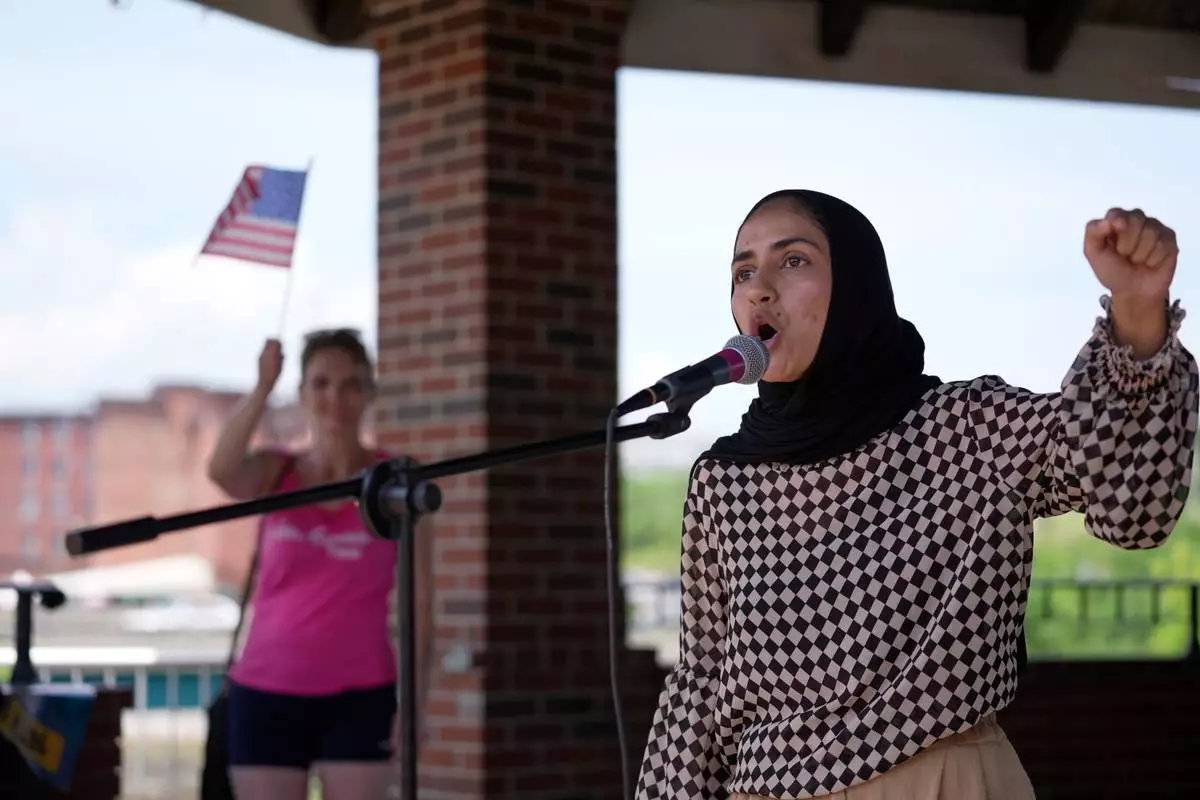
Eisha Khan speaks at a rally of protesters near the scene of a shooting involving U.S. Immigration and Customs Enforcement, Monday, July 13, 2026 in Biddeford, Maine. (AP Photo/Robert F. Bukaty)
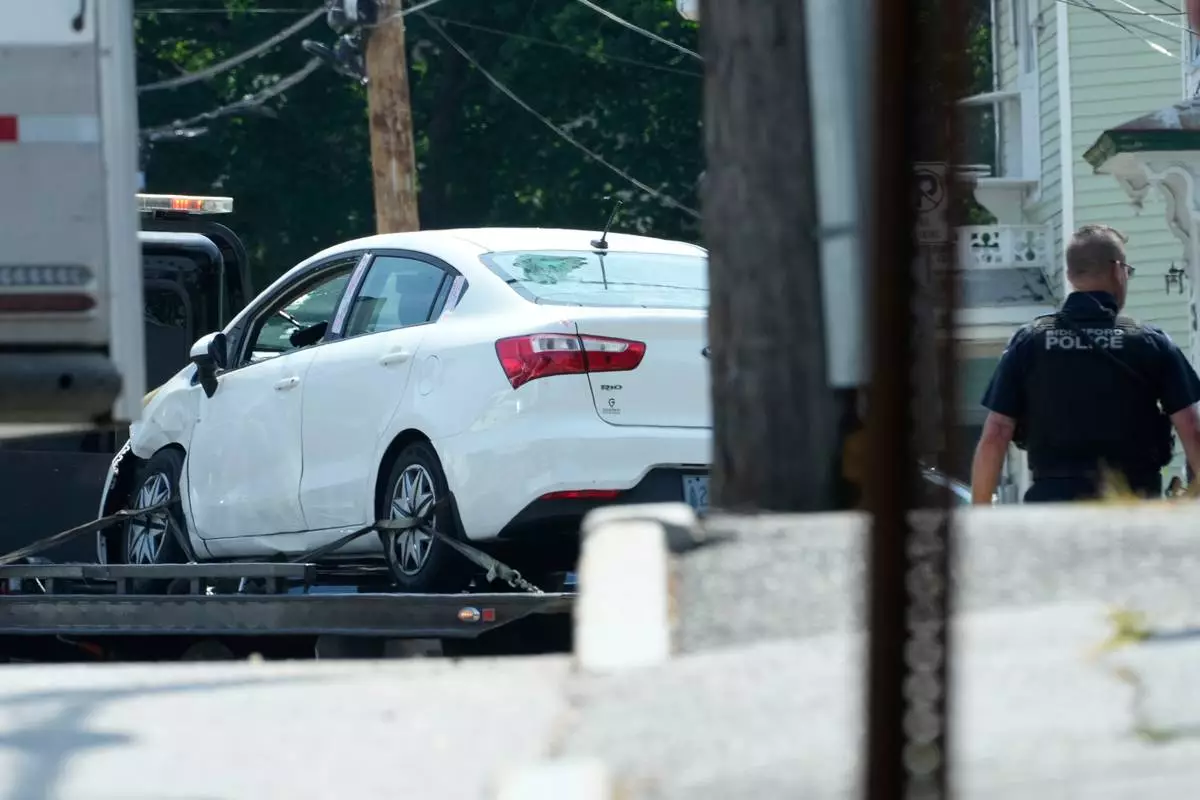
A vehicle with a damaged window is transported away from the scene of a shooting involving U.S. Immigration and Customs Enforcement, Monday, July 13, 2026 in Biddeford, Maine. (AP Photo/Robert F. Bukaty)
Protesters gather near the scene of a shooting involving U.S. Immigration and Customs Enforcement, Monday, July 13, 2026 in Biddeford, Maine. (AP Photo/Robert F. Bukaty)
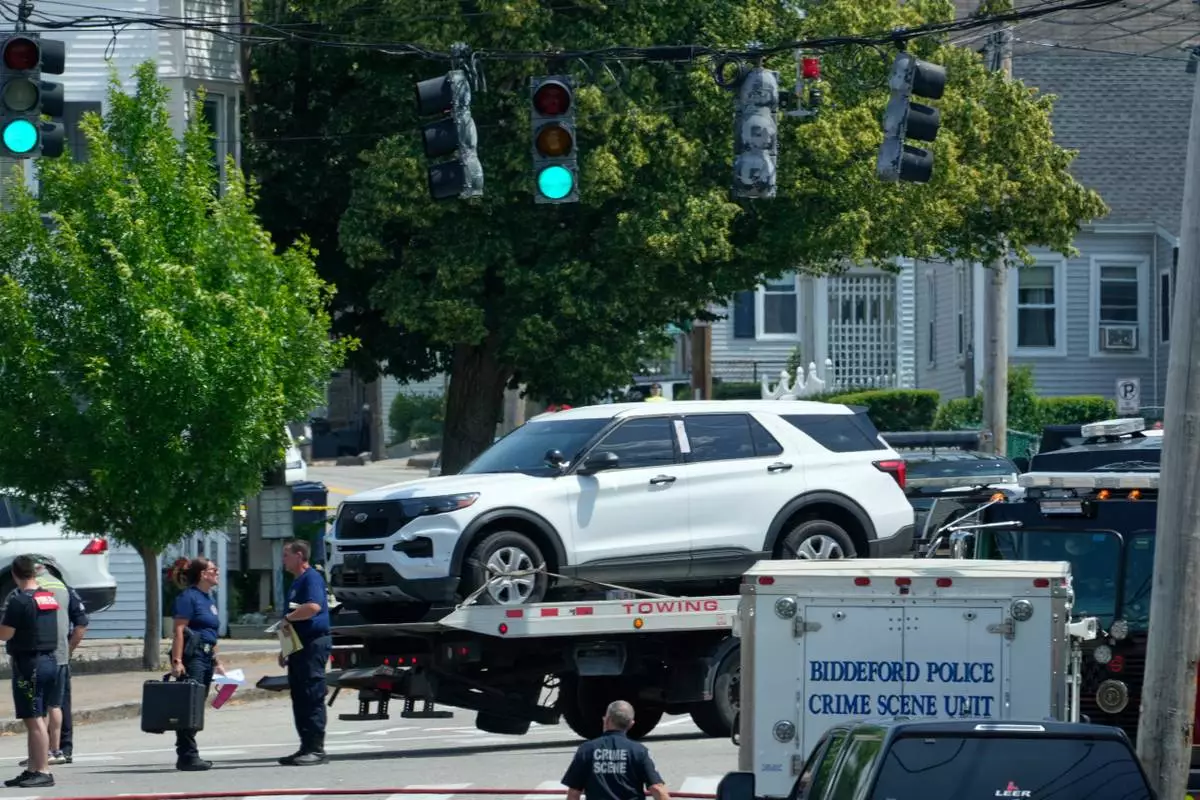
A vehicle is transported on a flatbed near the scene of a shooting involving U.S. Immigration and Customs Enforcement, Monday, July 13, 2026 in Biddeford, Maine. (AP Photo/Robert F. Bukaty)
Biddeford City Councilor Abigail Woods hugs an unidentified constituent during an impromptu protest near the scene of a shooting involving U.S. Immigration and Customs Enforcement, Monday, July 13, 2026 in Biddeford, Maine. (AP Photo/Robert F. Bukaty)
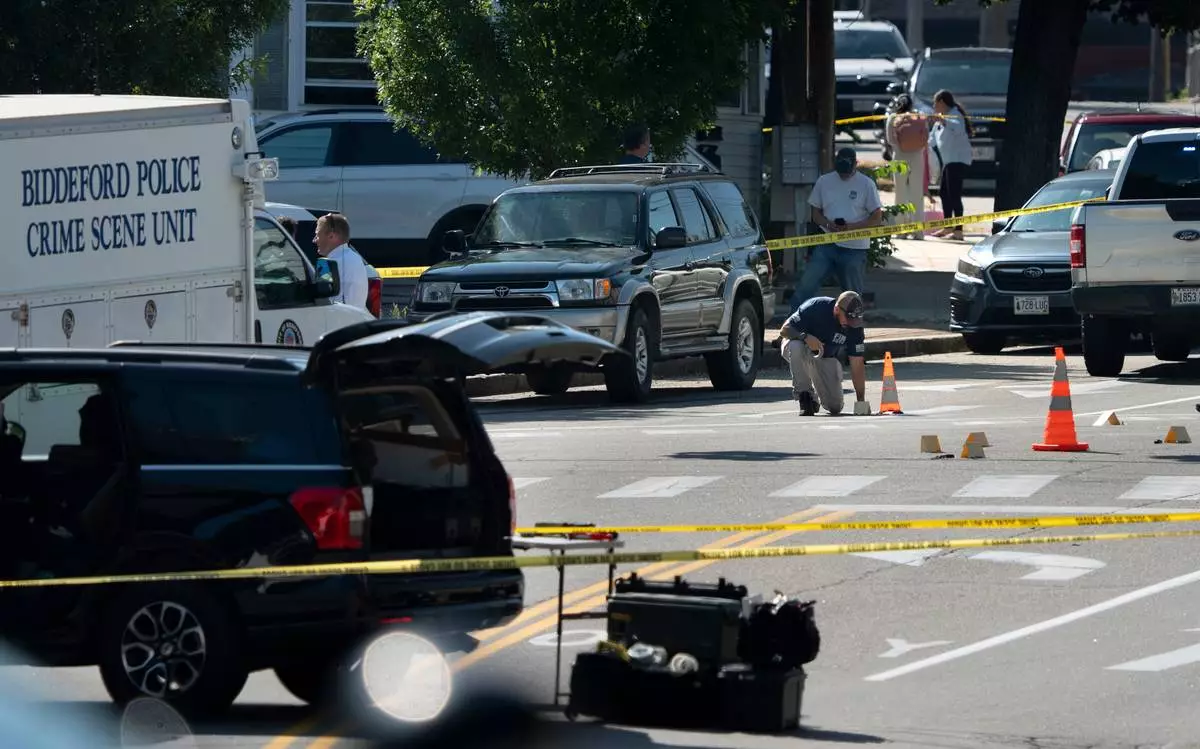
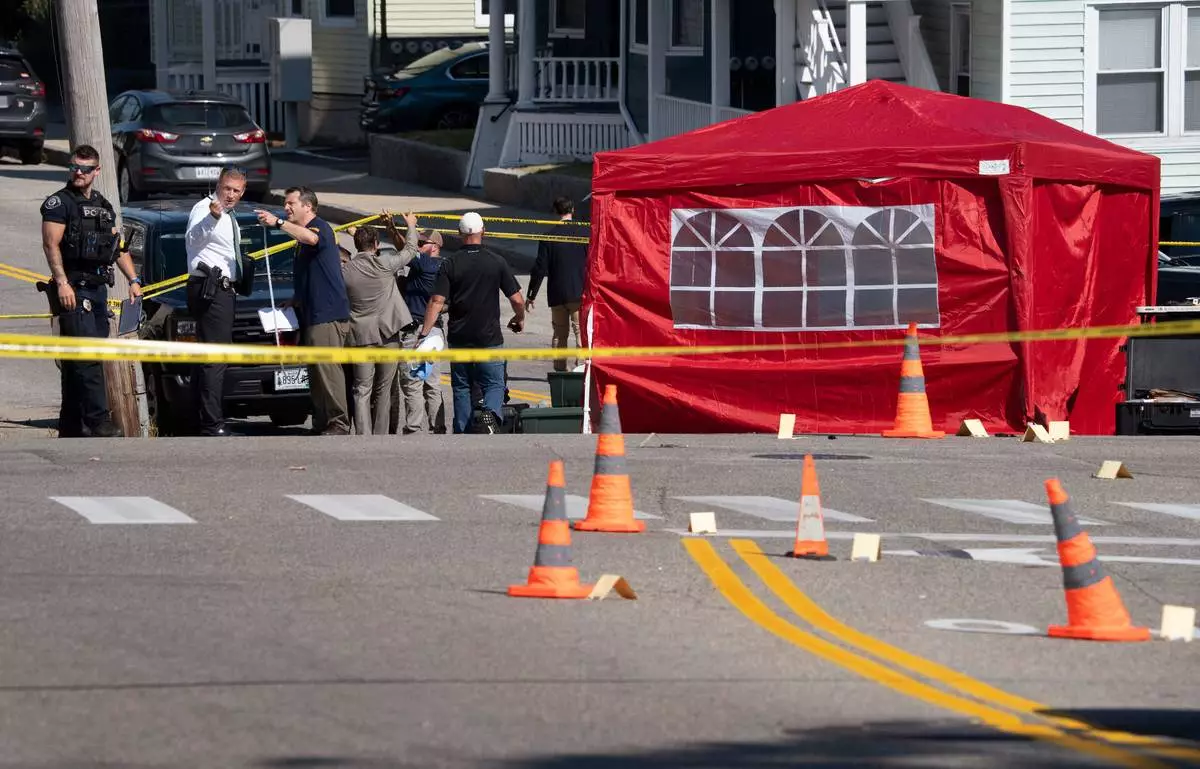
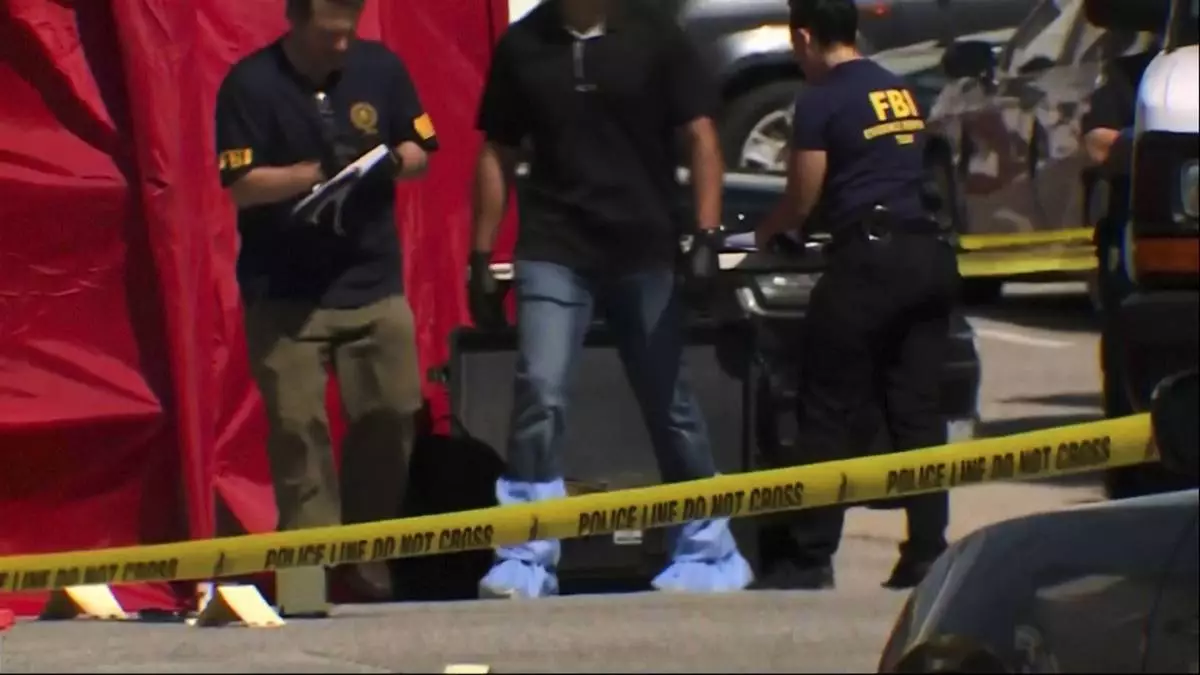
An FBI official places an evidence card where a man was reportedly killed in a shooting involving U.S. Immigration and Customs Enforcement agents, Monday, July 13, 2026 in Biddeford, Maine. (Gregory Rec/Portland Press Herald via AP)
The scene on Pool Street where a man was reportedly killed in a shooting involving U.S. Immigration and Customs Enforcement agents, Monday, July 13, 2026 in Biddeford, Maine. (Gregory Rec/Portland Press Herald via AP)
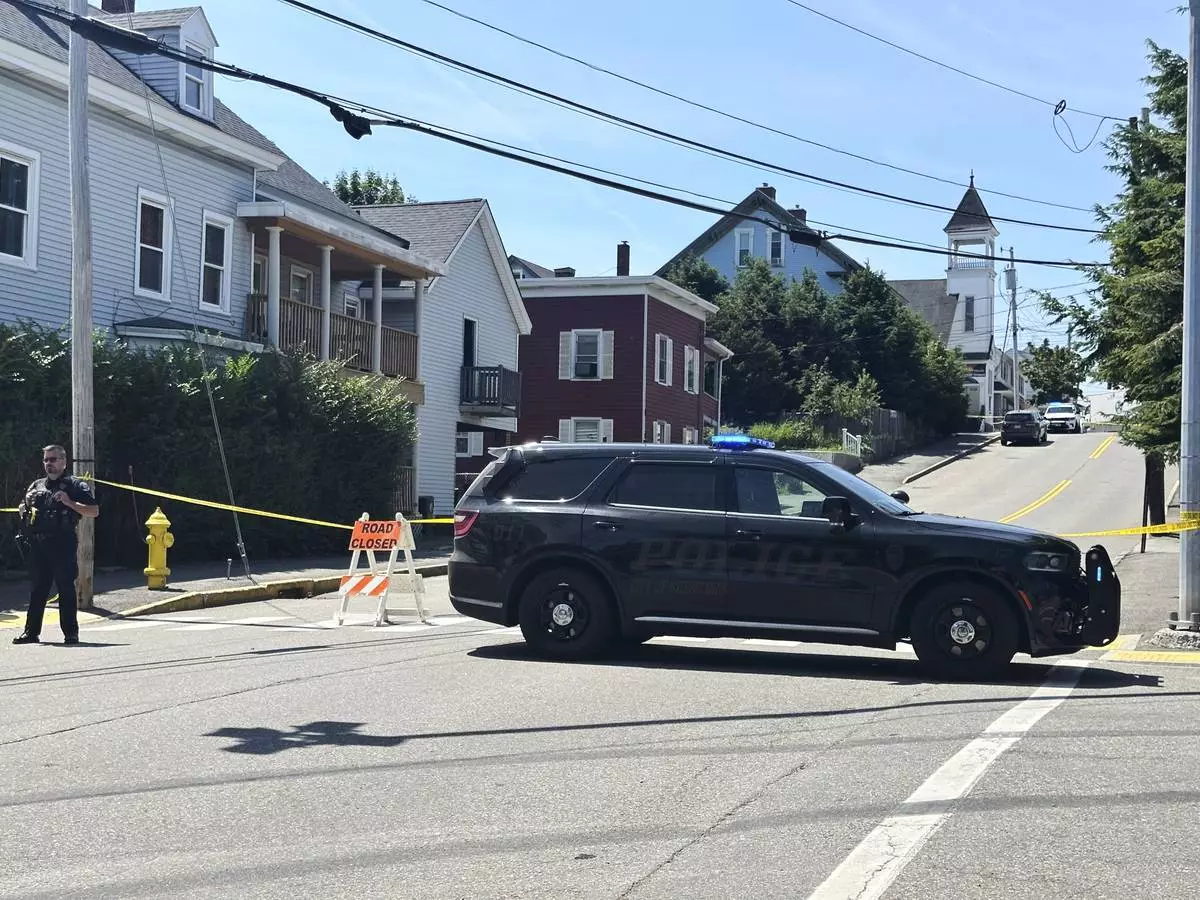
People stand near the scene as police block a road after a shooting involving U.S. Immigration and Customs Enforcement, in Biddeford, Maine, Monday, July 13, 2026. (AP Photo/Patrick Whittle)
Police block a road after a shooting in Biddeford, Maine, Monday, July 13, 2026. (AP Photo/Patrick Whittle)
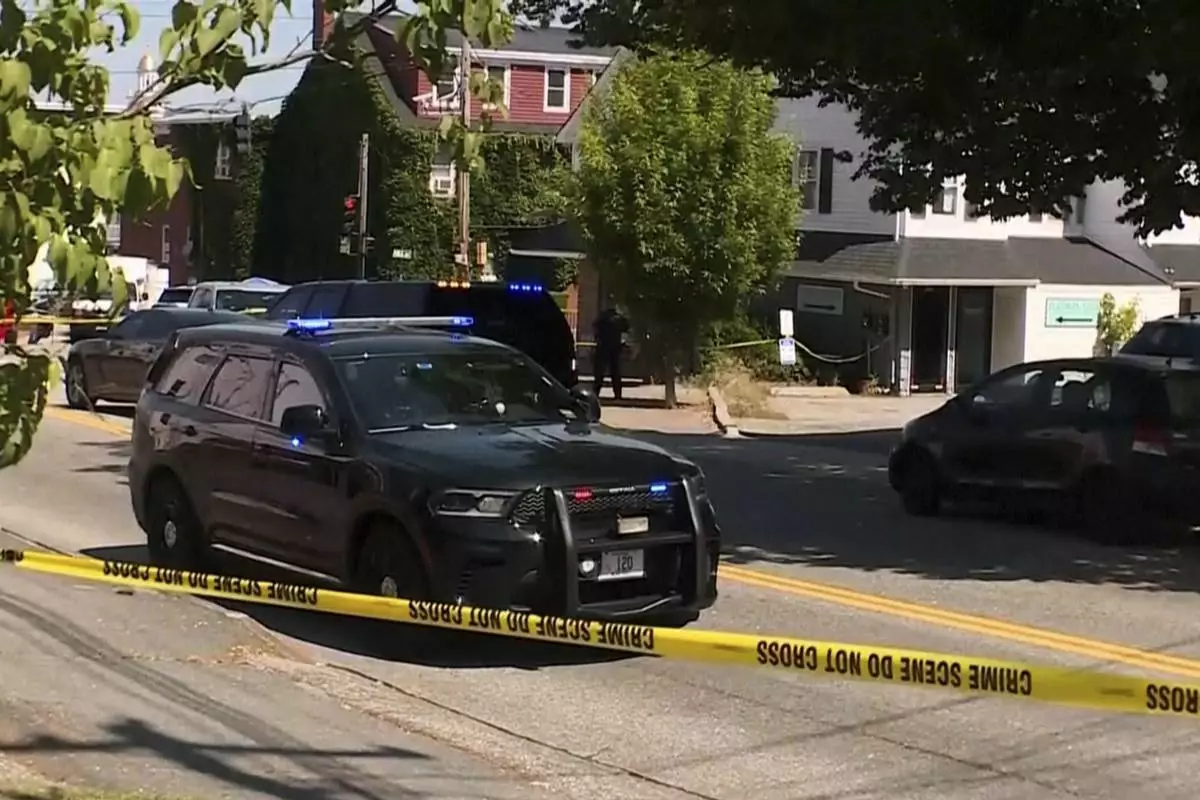
This image taken from video provided by WMTW shows police on the scene after a shooting involving U.S. Immigration and Customs Enforcement, Monday, July 13, 2026 in Biddeford, Maine. (WMTW via AP)
This image taken from video provided by WMTW shows police and FBI agents on the scene after a shooting involving U.S. Immigration and Customs Enforcement, Monday, July 13, 2026 in Biddeford, Maine. (WMTW via AP)
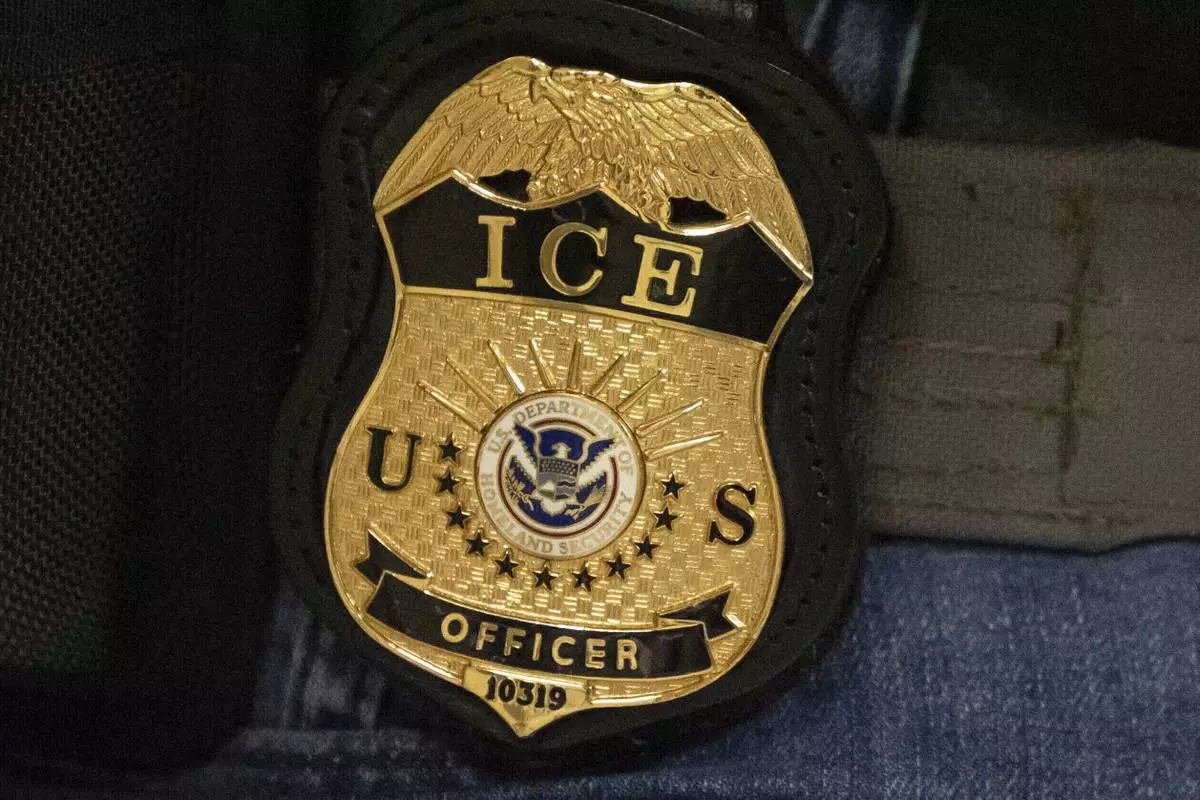
FILE - A federal agent wears an Immigration and Customs Enforcement badge in New York, June 10, 2025. (AP Photo/Yuki Iwamura, File)