A federal prosecutor in Texas shared new details Thursday evening about the moments before an immigration officer shot and killed a Mexican national and longtime U.S. resident in early July. The disclosure complicates the government’s earlier claim that the man struck an ICE vehicle before he was shot.
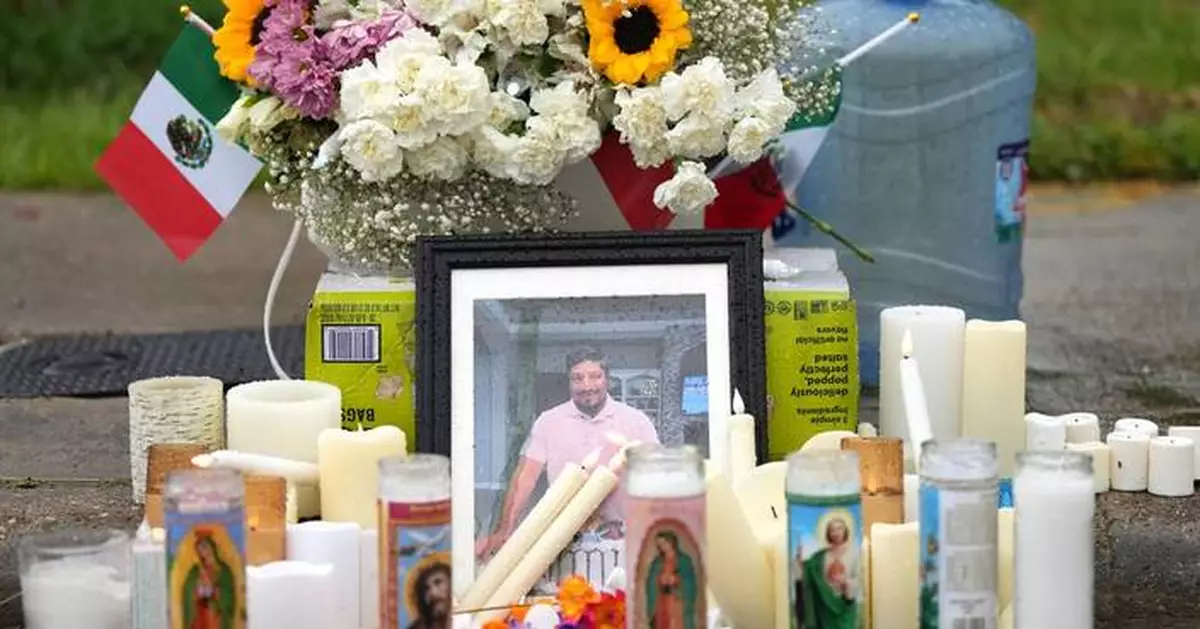
A U.S. Immigration and Customs Enforcement officer killed Lorenzo Salgado Araujo, 52, on July 7 as he was driving to a Houston construction job site with three co-workers, one of whom was his brother. The shooting sparked protests in the sprawling Texas city, echoing Salgado Araujo’s family’s calls for transparency. The family describes him as a hardworking father very close to obtaining legal status in the U.S. after living in the country for 35 years.
The shooting came just days before two other men in Florida and Maine died as part of President Donald Trump's federal immigration crackdown, renewing scrutiny on the Department of Homeland Security's law enforcement tactics.
Aaron Reitz, the U.S. attorney for the Southern District of Texas, said for the first time on Thursday that ICE officers were targeting two Guatemalan men who were potentially subject to deportation. He said they were driving a van similar to the one Salgado Araujo was driving when he was killed. In an earlier statement released the day Salgado Araujo was killed, DHS said he was targeted in an immigration enforcement operation, and he was living in the country without legal permission.
Reitz also said that the officers believed that Salgado Araujo and the passengers in his car fit the description of the Guatemalan men the agents were looking for.
Four officers driving two separate law enforcement vehicles attempted to pull over Salgado Araujo's van using their police lights. Salgado Araujo then made a U-turn and drove over a median to evade getting pulled over, Reitz said.
Later that morning, the officers again encountered Salgado Araujo's van and for the second time tried to pull him over, this time effectively surrounding the vehicle, Reitz said. Two of the four agents got out of their cars and told Salgado Araujo to put the vehicle in park. Just before he was shot, one of the agents was “partially inside the van or immediately next to it” when Salgado Araujo tried to reverse and then drive forward again, Reitz said.
An earlier DHS statement accused Salgado Araujo of weaponizing his vehicle. The agency said he rammed his van into a law enforcement vehicle and said an officer opened fire in self-defense. The most recent statement from the U.S attorney's office, however, didn't mention any collision between Salgado Araujo's van and a law enforcement vehicle. It also didn't explicitly say that the officer feared for his life. There are no reported injuries for the officers involved.
The latest statement didn't name the officer who killed Salgado Araujo, nor did it specify if the officer who fired the shot was the same person who was next to, or partially inside, the van.
Reitz also said in the statement that officers “saw in plain view several small bags of a white, crystal-like substance inside the van” and that the FBI later executed a search warrant to investigate for possible illicit substances. Salgado Araujo’s brother, who was in the van when the shooting happened, has been in ICE detention since the incident. His attorney said the white substance was a salt mixture that the men used as electrolytes to stay hydrated while doing manual labor in the grueling Texas heat.
Few photos or videos surrounding the shooting in Houston have emerged on social media, unlike other deaths involving federal immigration officers.
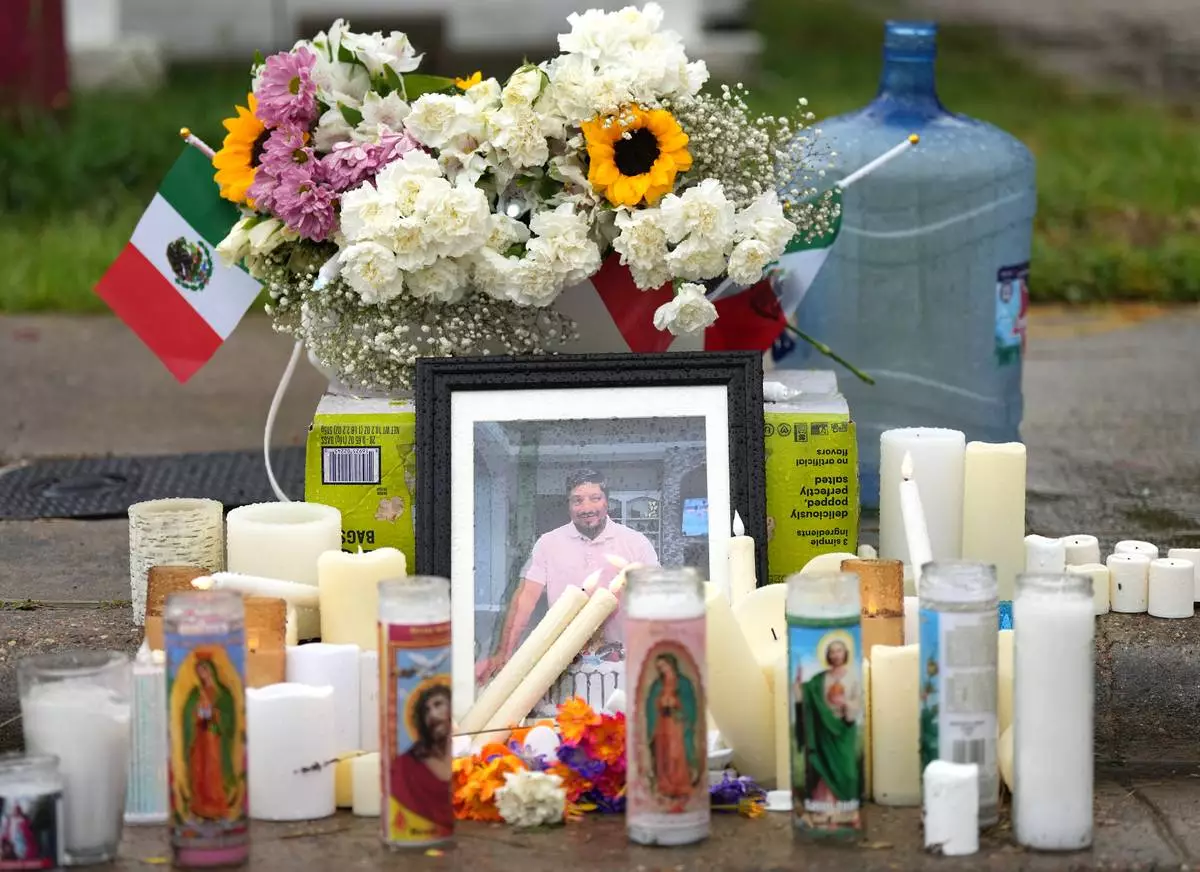
A memorial grows at the site where Lorenzo Salgado Araujo was fatally shot by ICE agents, last week, on Monday, July 13, 2026, in Houston. (AP Photo/Karen Warren)
COLORADO CITY, Colo. (AP) — The families of two men who discovered through DNA tests that they were switched at birth 38 years ago are accusing a North Dakota hospital of robbing them of the lives they were supposed to lead.
Kyle Bylin discovered his birth family after taking an at-home test he chose randomly during a Christmas gift-exchange. That led to his biological aunt on a genealogy platform. Her nephew, Jeremy Morrison, then had his DNA tested. The results were irrefutable.
“That’s when my mind was just completely blown,” Bylin said. “We could have never imagined that it was an actual birth switch that occurred.”
Morrison said he was convinced as soon as he saw a photo of Bylin's brother and realized they looked very much alike.
Bylin and Morrison were the only babies born on Jan. 26, 1988, at Unity Medical Center in Grafton, North Dakota, according to their lawsuit filed in state court last week. Somehow, they went home with the wrong parents.
A hospital statement says there’s no evidence staff was responsible for the switch.
But Bylin, born Jeremy Morrison, says he still has the hospital bracelet that misidentified him as Kyle Bylin.
Two years have passed since the DNA tests shattered what they thought they knew about their families — including disorienting moments, emotional family meetings and thoughts about the what-ifs.
“Kyle is still my son — that is never going to change,” Evelyn Newton, who raised him as her own, told The Associated Press in a phone interview Friday. “But I feel robbed of the life I should have had with my biological son. You can't go back and replace 35 years. First steps, driving a car, getting married — how do you make up for that?”
The hospital doesn't dispute that the babies were switched at some point. It says it's working to better understand what happened, but has uncovered no evidence that its administration or staff were responsible for the lives-altering error.
“We recognize the profound impact this discovery has had on them and their families,” Unity Medical's statement says. “Unfortunately, because of the passage of nearly four decades, the medical and staffing records that might have provided additional clarity no longer exist, and no members of the delivery team from that time are still employed by the hospital.”
The knowledge hasn't changed the way Morrison feels about the family he's always known. He still thinks of the parents he grew up with — Elizabeth O'Toole and Terry Morrison — as his parents. And aside from some challenging times — like wishing he had a sibling to lean on when he was 7 and they divorced — he says his childhood was fine.
“I was loved. I played sports. I did well in school,” Morrison said. “A DNA test is not going to take away 38 years of memories.”
Morrison now lives in Colorado City, Colorado, and works as a welding inspector for a wind energy company. Had he not been switched at birth, he figures he'd still be with his biological brother and father, working on the North Dakota grain farm where Bylin grew up.
Newton said she never had any thought that Kyle might not be their biological son as she and her then-husband, Keith Bylin, were raising him. True, the immediate family had light hair and Kyle’s was dark. But her husband had relatives with dark hair, and Newton herself was adopted, so she didn’t know what her own blood relatives looked like.
For Bylin, questions about nature versus nurture have become more personal. As he pursued an academic career far from North Dakota, he figured the political debates over Thanksgiving dinner were just a staple of American family life.
“You’re just kind of shaking your fist, like, how can this be my family? How am I so different from them?” Bylin said. “It turns out that we’re just totally different people, period.”
Bylin and Morrison have now met their biological parents — the encounters were welcoming but awkward, they said. They have yet to meet each other, but have spoken on the phone.
“We’ve tried to unite as a group and just recognize that no matter what, there’s different ways that this can be socially messy,” Bylin said. “Everyone’s getting to know people that they didn’t know before.”
Such cases are rare, but at-home DNA tests are making them easier to uncover:
Dr. Jonathan Marron, a pediatric oncologist who also teaches at Harvard Medical School’s Center for Bioethics, says such mix-ups should happen “pretty close to never” nowadays.
“As often as all clinicians, doctors, nurses, social workers, everybody else, gripe about the electronic health records,” the digital backstop is a clear benefit, Marron said.
Attorney Tim O’Keefe said he tried for a year to reach a monetary settlement with the hospital before filing a lawsuit claiming emotional distress due to negligence and medical malpractice. The families have spent this time adjusting to new realities.
“I know the truth now, but we’re still working to build relationships,” Morrison said. “I mean, it’s not like I can go back in time and rebuild what’s already lost. It’s a work in progress, just like me.”
Susan Montoya Bryan contributed from Albuquerque, New Mexico. Johnson reported from Seattle, Schuettler from Phoenix. Schuettler is a corps member for The Associated Press/Report for America Statehouse News Initiative. Report for America is a nonprofit national service program that places journalists in local newsrooms to report on undercovered issues.
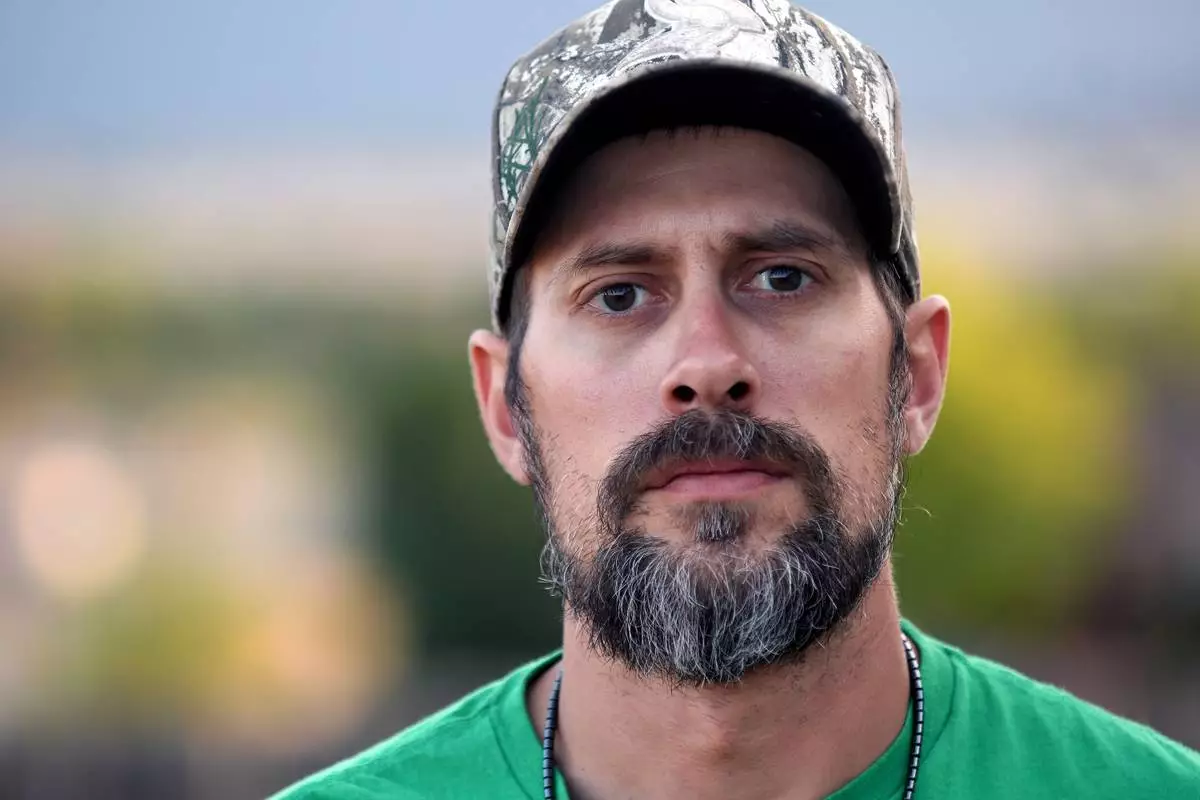
Jeremy Morrison, who says he was sent home with the wrong parents after he was born, poses for a portrait outside his home in Colorado City, Colo., Thursday, July 16, 2026. (AP Photo/Thomas Peipert)
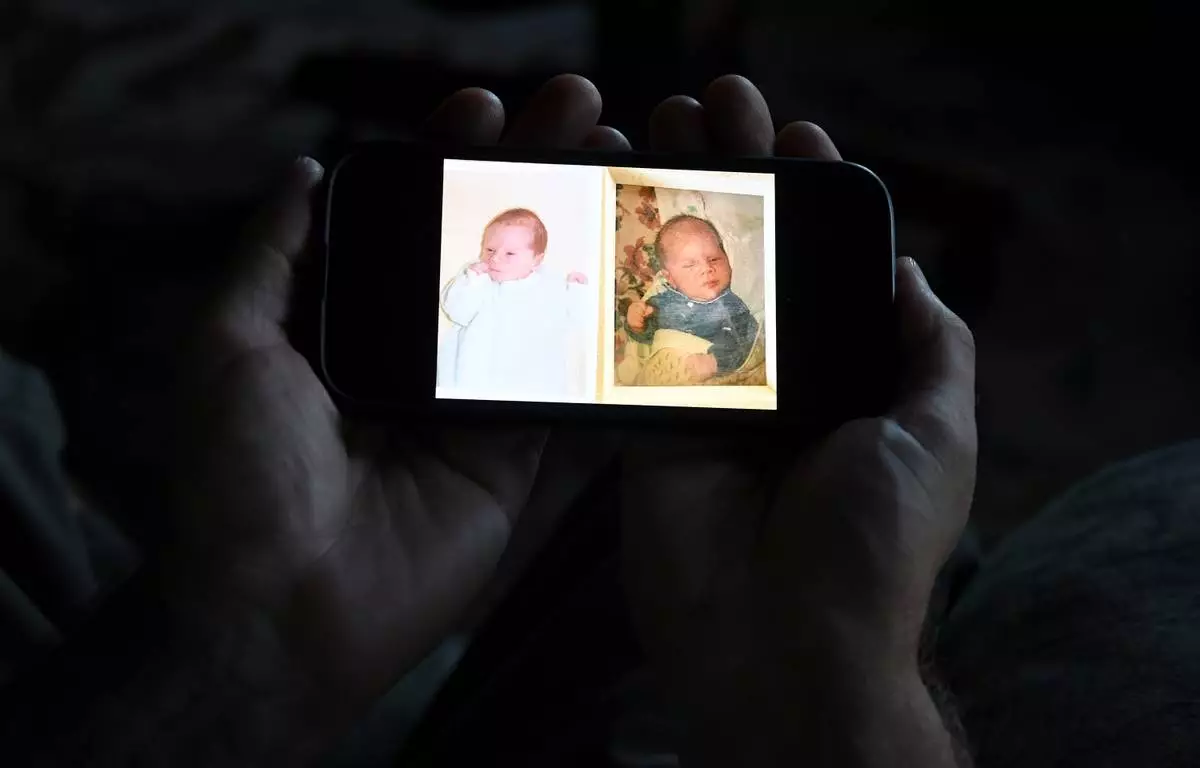
Jeremy Morrison, who says he was sent home with the wrong parents after he was born, shows what he believes is a baby photo of him, left, and of the other baby he says was switched at birth while recounting the story at his home in Colorado City, Colo., on Thursday, July 16, 2026. (AP Photo/Thomas Peipert)