Thailand, one of Southeast Asia's fastest AI adopters, is looking to China for deeper cooperation on developing the technology as a tool to help people, not replace them, said a news editor from the country.
With AI already deeply embedded in everyday life across Thailand, Thai PBS World news editor Stephanie Adair said the country sees China as a natural partner to help shape the future of the technology.
"AI is widely used in Thailand. And with Thailand right now being a developing country, we really want to take advantage of this. So consumer behavior studies show that about 73 to about 91 percent of Thais actually use AI for their daily lives. This is ranking upon like one of the highest in Southeast Asia. So the most popular that's used by Thai people are ChatGPT and Gemini, which these are mostly Western AI platforms. So I was thinking maybe there could be a collaboration between Thailand and China regarding AI platforms," she said.
With Thailand's society aging rapidly, Adair highlighted AI's potential as a powerful tool for improving elderly care, noting that China's advancements in the field are well positioned to help.
While AI is reshaping industries from manufacturing to media and raising concerns about job displacement, Adair said the Thai government could explore ways to manage the transition, with a focus on upskilling citizens to better navigate the rapid changes.
"I think AI can't replace humans. So especially for media, we like to use it as an assistant more than leading the way. You have to lead the way instead of AI leading you, so we could use it to (review) transcripts or anything that could make the workload a lot easier, but we firmly believe that AI can't replace humans, and the responsibility and the context that is needed as a journalist is still very important, because probably AI doesn't understand the context or social norms of each country," she said.
In 2025, China and Thailand signed a memorandum of understanding to deepen cooperation in artificial intelligence, aiming to strengthen collaboration in AI development and governance and promote AI technology to benefit the people of both countries.
AI cooperation with China could support innovation: Thai journalist
China's postal sector handled a total of 108.89 billion parcels in the first half of the year, up 4.2 percent year on year, according to data released by the State Post Bureau on Friday.
Express delivery accounted for the lion's share, with a volume reaching 100.38 billion, up 5 percent year on year.
As demand for their services booms, delivery companies have continued to deepen their collaborative development with advanced manufacturing firms, exploring innovative solutions.
Jiajiang County in Leshan City, southwest China's Sichuan Province, is China's primary production area for calligraphy and painting paper, accounting for more than 60 percent of the nation's output. Distributing these products across the country requires significant logistical resources.
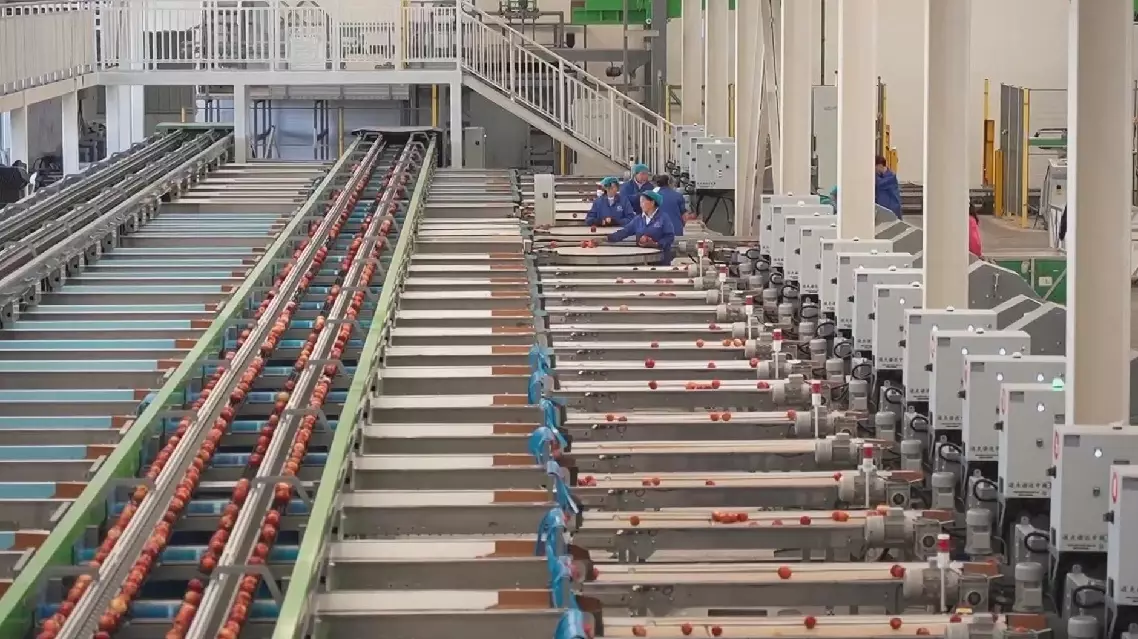
Express delivery providers have integrated warehousing centers into Jiajiang's paper production facilities, equipping them with smart shelving and barcode-scanning outbound systems to achieve an ultra-fast response from order placement to goods dispatch. The collaboration has streamlined the entire supply chain from production, warehousing, e-commerce, and packaging to shipping and after-sales service.
It has also effectively resolved the efficiency and cost bottlenecks previously caused by the fragmented operations of manufacturing enterprises.
"In the past, we had to repeatedly travel back and forth between merchants and clients to pick up and deliver goods, which increased transportation costs and damage rates. Now, we provide one-on-one service directly to the express sorting center, completing the day's workload on the spot," said Huang Chao, general manager of ZTO Express Co., Ltd in Jiajiang County.
Since the express service was integrated into the factories, companies in the sector have seen their average daily shipment volume double from around 4,000 pieces to around 8,000, significantly reducing transportation costs and damage rates.
This year, the county plans to replicate this model in specialty industries such as ceramics, tea, and poultry and eggs, further unleashing the synergistic potential of industrial collaboration.
Wang Yuehan, director of the Industrial Economics Department at the Development Research Center of the State Post Bureau, said industry upgrading has helped bolster the efficiency and development the sector.
"In the first half of the year, industrial integration continued to deepen. The industry optimized and upgraded its delivery service offerings to precisely meet the differentiated needs of various consumer groups, effectively driving steady growth in express delivery volumes and providing a positive boost to the development of the real economy. In the second half of the year, as consumer potential is released and service areas are expanded, the industry's momentum is expected to accelerate, and its overall development will continue to maintain a positive trend of steady progress and improving performance," she said.
China's postal delivery volume up 4.2 pct in H1