Nobel laureate Omar Yaghi on Friday lauded China's clear vision for AI development and stressed the need for countries worldwide to actively embrace the technology to maximize its benefits for humanity.
Yaghi, who won the 2025 Nobel Prize in Chemistry, attended the opening ceremony of the 2026 World AI Conference and High-Level Meeting on Global AI Governance in Shanghai on Friday. He told China Media Group (CMG) that the most impressive part of Chinese President Xi Jinping's speech was the message that AI should benefit the world.
"Well, I think the speech laid out exactly what is the vision for AI in China. China is advancing very rapidly on many fronts and AI is advancing rapidly. And I think it needs us to be conscious of how it's going to evolve and how it's going to impact society, science at large, also globally, both for the good and also to be conscious of the fact that it may be used for negative things as well. So I think the speech laid out very nicely how these two things can be balanced without stifling creativity and science," Yaghi said.
For Yaghi, his key message to share at this forum is that more fields should embrace AI.
"Well, my key message is that AI is developing very quickly. So we need in different disciplines to embrace it, so that the more we embrace it, the more we engage with it, the better the models are going to get, and the more service our discipline and to humanity we will do. So I'm getting a lot of that here in this conference," he said.
In commenting on the signing ceremony for the World AI Cooperation Organization agreement held Thursday, Yaghi said he understands its importance and stressed that scientific knowledge must be shared globally.
"I really love that. I love the fact that 29 countries have similar thinking on bringing together their views on AI and how to deal with AI and how to deal with this rapid evolution of AI. So that instead of few scientists in few countries solving the world's problems, more scientists in more countries would be solving the world problems. That's really what this agreement is about with 29 countries," he said.
The four-day 2026 World AI Conference and High-Level Meeting on Global AI Governance has brought together official representatives, business leaders, scholars and researchers from more than 100 countries and international organizations.
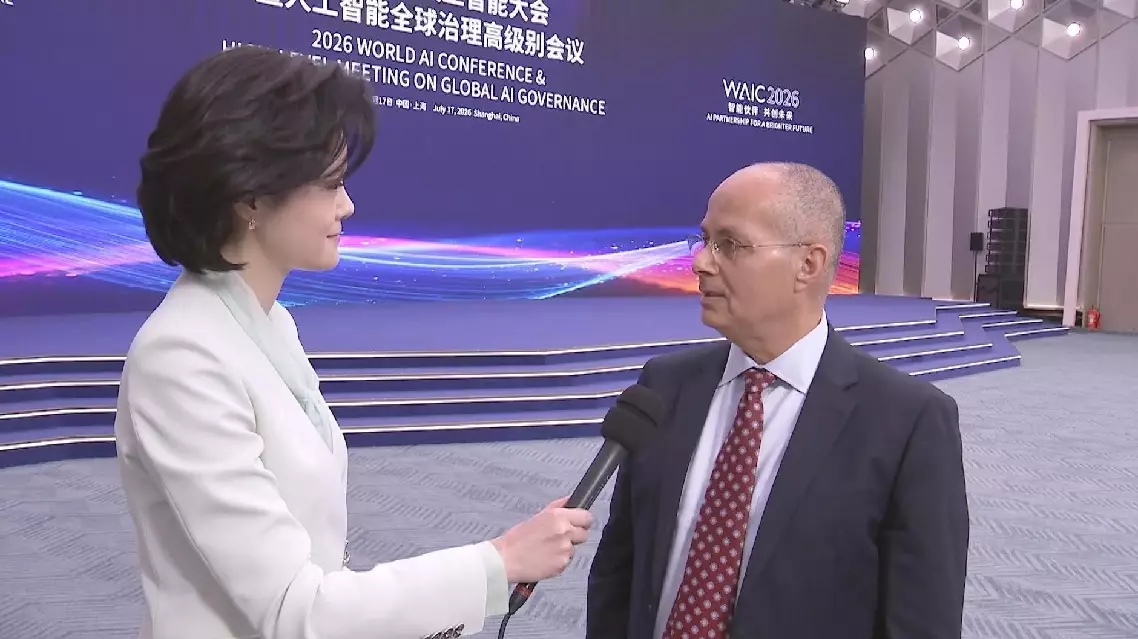
Nobel laureate urges global AI embrace to benefit humanity
Data from five European countries has indicated nearly 10,000 excess deaths due to heat this summer, the World Health Organization's Regional Office for Europe (WHO/Europe) said Thursday, warning that extreme heat poses a growing health challenge and calling for better preparation from individuals and governments.
Describing Europe as the fastest-warming continent in a press release, with temperatures rising at around twice the global average rate, the agency said the deadly higher temperatures had also placed sudden pressure on essential services, including health and social care.
WHO Regional Director for Europe Hans Henri P. Kluge said heat had claimed more than 200,000 lives across the region over the past four years, while heat-related mortality had risen by 30 percent over the past two decades.
"But heat deaths are not inevitable," Kluge said, calling for early warnings, cooler cities, more access to water and shade, support for vulnerable people and better-prepared health systems before temperatures peak.
WHO/Europe said it has developed a range of tools and public health advice to help countries prepare for, respond to and adapt to what it recognizes as a recurring climate crisis across the region.
The measures include technical guidance and a resource package on heatwaves and wildfires, as well as new guidance on Heat-Health Action Plans.
WHO/Europe has also produced five action briefs for different sectors and a public health message bank offering practical advice on how individuals can protect themselves and assist others during hot weather.
The guidance emphasizes the need to reach vulnerable and hard-to-reach communities through digital, traditional and community-based communication channels.
Regarding the extreme heat-related pressure on health facilities that may be ill-designed to cope with higher temperatures, WHO/Europe said its Hospital Safety Initiative is supporting hospitals across the region by using the Hospital Safety Index to assess the likelihood that health facilities will remain operational during emergencies.
Traditionally used to assess preparedness for hazards such as earthquakes and floods, the index is increasingly helping countries identify risks associated with extreme temperatures, including threats to power supplies, cooling systems, water availability and the well-being of patients and staff.

WHO/Europe urges stronger health planning as Europe faces rising heat threat