AI-powered medical solutions unveiled by Chinese exhibitors have captured global attention at the 2026 World AI Conference (WAIC) in Shanghai. Ranging from diagnostic support to early Alzheimer's screening, these innovations underscore how Chinese AI applications are stepping up to help bridge the global medical gap.
China's AI-powered medical solutions are drawing international visitors at the event. Among them is Marcin Sternicki, a radiologist from Poland, who is deeply impressed by an AI agent on display capable of detecting up to 74 diseases from a head Magnetic Resonance Imaging (MRI) scan.
"I'm the first time on WAIC and I am deeply impressed by the technology I see here, but I am not only here as a visitor, but also as an advocate for the future of AI in medical training," said Sternicki, who is also head of the STERMED Medical Center.
The development of AI has significantly aided Sternicki in his daily diagnoses, with his medical center already utilizing equipment and AI software from China.
"China is one of the brilliant examples of this transformation and implementation of AI in everyday clinical practice. I'm very happy to see that," Sternicki said.
The 2026 WAIC is showcasing a wide range of AI-powered healthcare innovations, including a mobile AI tool developed by United Imaging Intelligence to detect early signs of Alzheimer's disease by guiding users through a series of simple cognitive tasks on their smartphones.
What sets this system apart is the use of AI to analyze the assessment process, generating a much more comprehensive report than traditional tests. The company's AI applications are already used in more than 30 countries and regions.
"Let's say Vietnam, our neighbor. We've deployed our AI solutions in some of the top tier hospitals. They initially do 60 cardiac CTA [Computed Tomography Angiography] scans. With the AI solution, that is increased to more than 200 CCTA [Coronary Computed Tomography Angiography] scans," said James J. Xia, chief medical officer of United Imaging Intelligence.
China unveiled an action plan on Friday at the 2026 WAIC to enhance international AI cooperation. The plan states that China will support developing countries in building digital and intelligent capacities and deepen collaboration under the "AI Plus" initiative, including the medical sector.

Chinese AI medical solutions take spotlight at 2026 WAIC
Jordan, Kuwait and Bahrain said on Monday that they have intercepted Iranian aerial attacks.
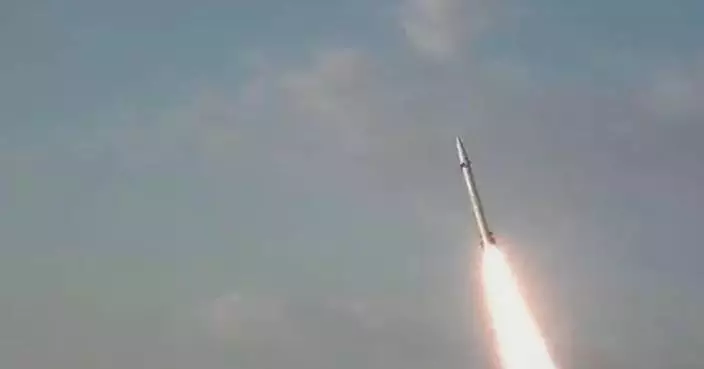
The Jordan Armed Forces-Arab Army said in a statement Monday night that its air defenses intercepted three missiles launched from Iran.
It said the interception caused no casualties or material damage, adding that it remains on high alert and will respond firmly to any threats to national security and sovereignty.
The General Command of the Bahrain Defense Force said that its air defense systems intercepted and destroyed multiple Iranian aerial attacks against the kingdom.
It condemned what it called Iran's "systematic hostile approach," saying the "deliberate use of missiles and drones to target civilians and private property" violates international humanitarian law.
Kuwait's armed forces said on Monday its air defense systems were intercepting "hostile" missile and drone attacks, as explosions were heard in parts of the country.
In a statement on social media platform X, the General Staff of the Kuwaiti Armed Forces confirmed the explosions resulted from air defense systems engaging with "hostile" aerial attacks, urging the public to follow safety instructions issued by authorities.
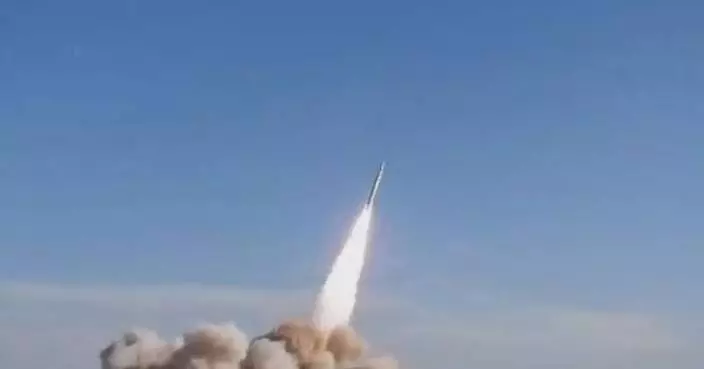
Iran's Islamic Revolution Guard Corps said earlier on Monday that it had launched missile and drone strikes against U.S. assets and facilities in Kuwait and Jordan in response to continued U.S. airstrikes on Iran.
Recent strikes on Kuwait targeted military installations and some of its vital infrastructure, including oil facilities and power and water desalination plants, causing injuries and material damage.
Explosions were heard on Monday evening in Iran's southern provinces of Hormozgan and Fars, the semi-official Mehr news agency reported.
Several explosions were heard in Hormozgan's Sirik County, Mehr cited local citizens as saying, adding the nature of the blast remains unclear.
It also quoted Seyed Ahmad Ahmadizadeh, Fars' deputy governor for political, security and social affairs, as saying that the United States has carried out an airstrike against a region in the provincial capital Shiraz, without causing casualties.
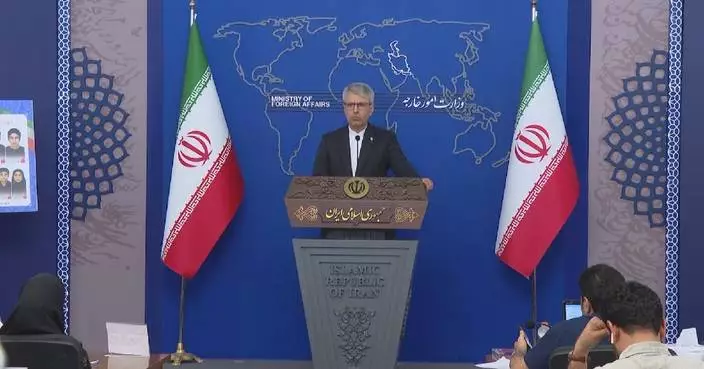
Earlier in the day, Iranian President Masoud Pezeshkian declared a "full-scale war" with the United States. Foreign Ministry spokesperson Esmaeil Baghaei said Iran has received mediation proposals and keeps its diplomatic channels open.
The United States has launched multiple strikes on Iran's southern provinces over the past week, saying they were aimed at "degrading Iran's ability to threaten commercial shipping."
Iran has responded with waves of missile and drone attacks targeting U.S. military bases and facilities in regional countries, including Kuwait, Bahrain and Jordan.
Jordan, Kuwait, Bahrain say intercepted Iranian aerial attacks