Zhao Leji, chairman of the National People's Congress Standing Committee, met with Thai Prime Minister Anutin Charnvirakul in Beijing on Monday.
Zhao said that under the strategic guidance of the leaders of the two countries, China-Thailand relationship is at its best in history.
He noted that President Xi Jinping met with Anutin in Shanghai last week, charting the course for an even brighter future of bilateral ties.
China is ready to work with Thailand to implement the important common understandings between the leaders of the two countries, consolidate political mutual trust, expand practical cooperation, and strengthen exchanges between legislative bodies, and deepen mutual learning in legislation and oversight, so as to advance the building of a China-Thailand community with a shared future and better benefit the two peoples, Zhao said.
Zhao also welcomed the Thai parliament to send representatives to participate in the seminar program for ASEAN parliamentarians that China will host.
Anutin said Thailand and China are good friends that respect and trust each other, with a profound traditional friendship between their peoples.
Noting that Thailand upholds the one-China principle, he said Thailand looks forward to strengthening mutually beneficial cooperation with China, enhancing exchanges between legislative bodies, and advancing bilateral relations to achieve more fruitful results.
Also on Monday, Anutin laid a wreath at the Monument to the People's Heroes in the Tian'anmen Square.
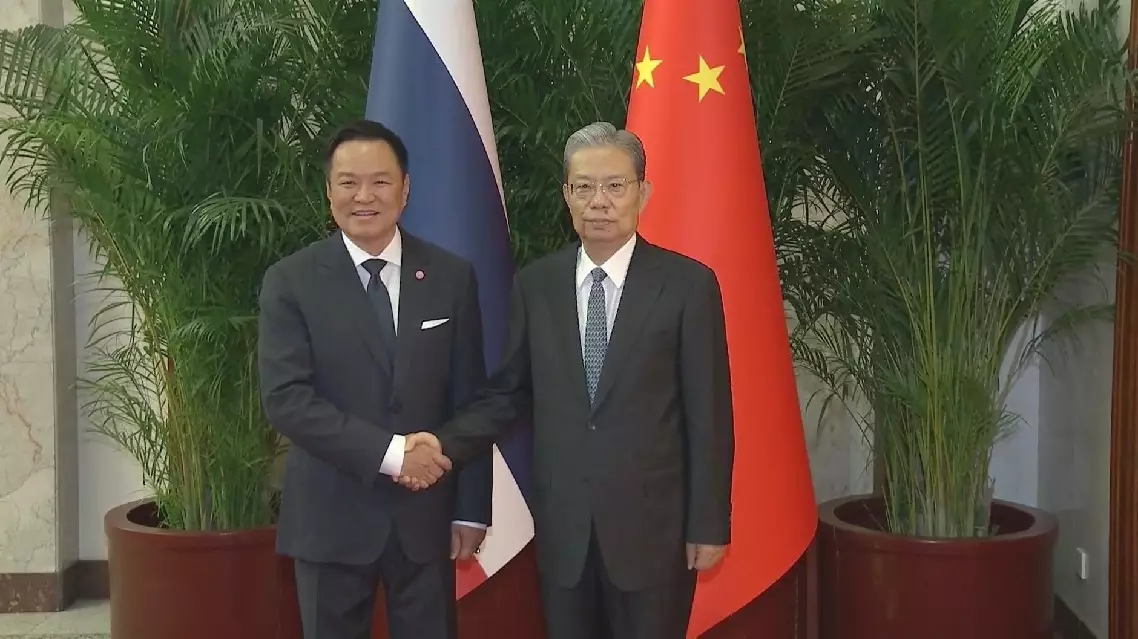
China's top legislator meets Thai PM
Jordan, Kuwait and Bahrain said on Monday that they have intercepted Iranian aerial attacks.
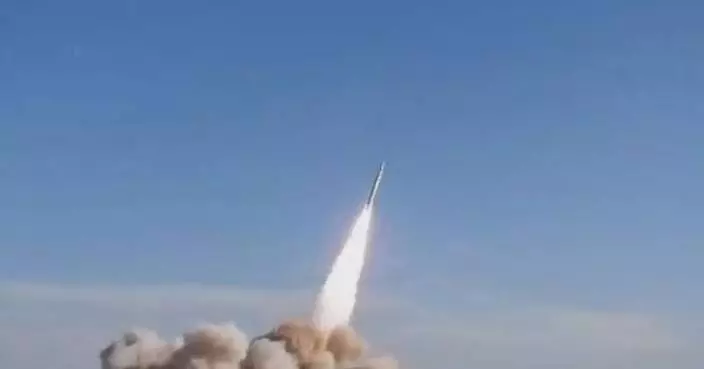
The Jordan Armed Forces-Arab Army said in a statement Monday night that its air defenses intercepted three missiles launched from Iran.
It said the interception caused no casualties or material damage, adding that it remains on high alert and will respond firmly to any threats to national security and sovereignty.
The General Command of the Bahrain Defense Force said that its air defense systems intercepted and destroyed multiple Iranian aerial attacks against the kingdom.
It condemned what it called Iran's "systematic hostile approach," saying the "deliberate use of missiles and drones to target civilians and private property" violates international humanitarian law.
Kuwait's armed forces said on Monday its air defense systems were intercepting "hostile" missile and drone attacks, as explosions were heard in parts of the country.
In a statement on social media platform X, the General Staff of the Kuwaiti Armed Forces confirmed the explosions resulted from air defense systems engaging with "hostile" aerial attacks, urging the public to follow safety instructions issued by authorities.
Iran's Islamic Revolution Guard Corps said earlier on Monday that it had launched missile and drone strikes against U.S. assets and facilities in Kuwait and Jordan in response to continued U.S. airstrikes on Iran.
Recent strikes on Kuwait targeted military installations and some of its vital infrastructure, including oil facilities and power and water desalination plants, causing injuries and material damage.
Explosions were heard on Monday evening in Iran's southern provinces of Hormozgan and Fars, the semi-official Mehr news agency reported.
Several explosions were heard in Hormozgan's Sirik County, Mehr cited local citizens as saying, adding the nature of the blast remains unclear.
It also quoted Seyed Ahmad Ahmadizadeh, Fars' deputy governor for political, security and social affairs, as saying that the United States has carried out an airstrike against a region in the provincial capital Shiraz, without causing casualties.
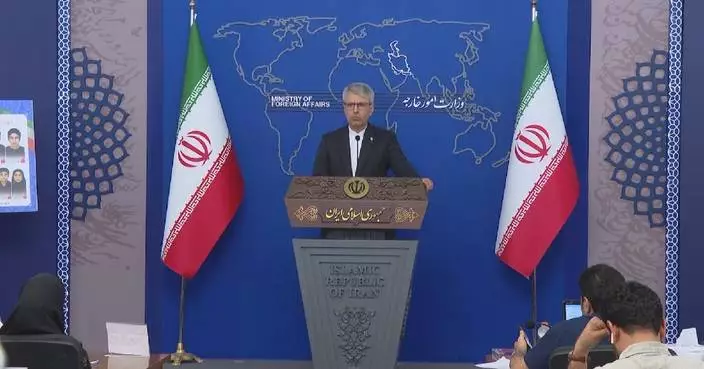
Earlier in the day, Iranian President Masoud Pezeshkian declared a "full-scale war" with the United States. Foreign Ministry spokesperson Esmaeil Baghaei said Iran has received mediation proposals and keeps its diplomatic channels open.
The United States has launched multiple strikes on Iran's southern provinces over the past week, saying they were aimed at "degrading Iran's ability to threaten commercial shipping."
Iran has responded with waves of missile and drone attacks targeting U.S. military bases and facilities in regional countries, including Kuwait, Bahrain and Jordan.

Jordan, Kuwait, Bahrain say intercepted Iranian aerial attacks