Skip to Content Facebook Feature Image

Ebola quarantine center for Americans is up and working in Kenya despite a court ban, activists say

News

Ebola quarantine center for Americans is up and working in Kenya despite a court ban, activists say
News

News

Ebola quarantine center for Americans is up and working in Kenya despite a court ban, activists say

2026-07-21 05:24 Last Updated At:10:07

NAIROBI, Kenya (AP) — Kenyan activists on Monday accused authorities of violating a court order from last month halting the setting up of an American-backed Ebola quarantine center after reports surfaced that Americans were being quarantined in the country.

The center was meant to take in and quarantine Americans evacuated from Congo, where an Ebola outbreak that erupted two months ago has so far killed at least 930 people, out of the 2,344 cases confirmed there.

A U.S. humanitarian organization, the Samaritan’s Purse, said over the weekend that seven of its American staff from Congo were being quarantined in “large military tents” for 21 days in Kenya, adding that none had so far shown symptoms of Ebola.

The organization did not say where in Kenya their workers were quarantined but local media have reported that military tents in Laikipia Air Base would house the U.S.-backed Ebola facility. The air base is about 185 kilometers (115 miles) north from Nairobi, Kenya's capital, near the town of Nanyuki.

Residents of Nanyuki have staged a series of protests against the facility recently, and two people have died when the protests turned violent.

Both Kenya’s Ministry of Health and the U.S. State Department did not respond to requests for comment about whether Americans were being quarantined in Kenya. The Laikipia Air Base could also not be reached for comment.

Kenya — hundreds of miles to the east of Congo and with the country of Uganda between them — has no confirmed Ebola cases but is a key U.S. ally in Africa. The United States has pledged $13.5 million toward Kenya’s Ebola preparedness efforts.

Kenyan President William Ruto has defended the planned U.S.-backed quarantine facility, describing it as part of a partnership with the U.S. He said there were also plans to establish 24 additional Ebola preparedness centers across the country, with U.S. funding.

However, a Kenyan court last month issued an order that barred the operationalization of the facility and Health Minister Aden Duale later ordered suspension of its construction.

The case was based on a petition by the Law Society of Kenya and constitutional lobby group Katiba Institute, which had argued against establishing a quarantine for Americans from Congo, saying that Kenya’s fragile health system could be overwhelmed in the event of an Ebola outbreak.

Katiba Institute’s chief Nora Mbagathi told The Associated Press the activists groups were concerned about the latest reports of Americans already being quarantined in Kenya.

“Should any Kenyan government official be involved ... they have completely betrayed the public trust and must be held personally accountable,” Mbagathi added.

In a statement to the AP, the Law Society of Kenya said on Monday that a “deliberate" violation of a court order would amount to "impunity and lawlessness.”

Samaritan’s Purse said its staff had been working on the front lines of the Ebola response in Congo, where the organization operates two treatment centers in Bunia and Nyankunde.

“They are being housed in large military tents in a fenced gravel compound, sleeping on military cots, and their food is being provided by the U.S. military,” Samaritan’s Purse President and CEO Franklin Graham said in a statement.

Graham did not respond to questions why the quarantine was up and working in Kenya despite the court order.

For more on Africa and development: https://apnews.com/hub/africa-pulse
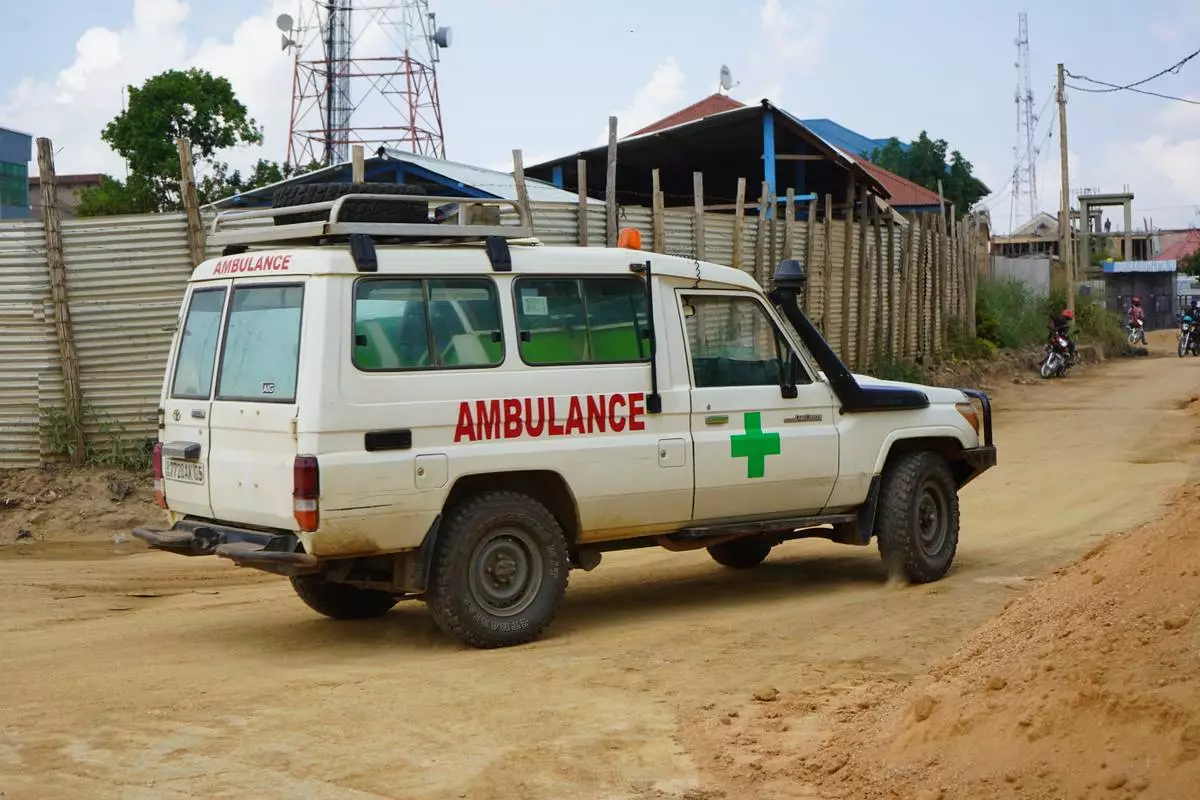
An ambulance drives past an ebola treatment centre in Bunia, Congo, Monday, July 20, 2026. (AP Photo/Prosper Heri Ngorora)
An ambulance drives past an ebola treatment centre in Bunia, Congo, Monday, July 20, 2026. (AP Photo/Prosper Heri Ngorora)

GUWAHATI, India (AP) — A suspected gas explosion on Monday triggered a collapse inside a tunnel that was under construction at a hydropower project in India’s northeastern Himalayan state of Sikkim, leaving at least 11 people dead and 14 missing, officials said on Tuesday.

State Chief Minister Prem Singh Tamang, who visited the disaster site near the Chinese border, said the explosion was triggered by a build-up of methane gas.

At least 27 people were trapped, including some who entered the tunnel to help with rescue efforts after the blast, while two workers escaped, Tamang said.

The blast ripped through the tunnel at Samardung village, about 40 kilometers (25 miles) from the state capital, Gangtok, where multiple workers were carrying out construction work on the 500-megawatt Teesta hydroelectric project, civil official Anupama Tamling said.

Survivors told authorities they heard a loud explosion before debris came crashing through the tunnel, trapping dozens inside, Tamling said.

Officials had recovered 11 bodies on Tuesday while rescue teams including the National Disaster Response Force (NDRF) raced to reach at least 14 people who remained trapped inside the tunnel, where toxic gases and hazardous conditions have hampered operations.

“We found toxic gases such as methane, carbon monoxide and hydrogen sulfide inside the tunnel,” NDRF official Nitin Kumar said at the scene, adding that rescuers were using breathing equipment as they searched in the for survivors in the dangerous air conditions.

As news of the accident spread, six officials from the state-owned National Hydroelectric Power Corporation (NHPC), which is building the project, entered the tunnel to assist in rescue efforts but became trapped themselves, officials said.

Construction accidents are not uncommon in India, where rapid infrastructure growth often collides with fragile geology, construction lapses, extreme weather and safety standards.

In the Himalayan region, fragile mountains, seismic activity and unpredictable underground conditions make tunnel projects especially risky. An explosion inside a coal mine in neighboring Meghalaya state in February killed at least 18 workers. In 2023, a tunnel section in northern Uttarakhand state collapsed, trapping 41 workers for 17 days before they were rescued.

Experts say the Teesta River basin, where the hydropower project is being built, lies in a seismically active region marked by young, fragile rock formations riddled with fractures and underground pockets that can trap ancient gases.

Dr. Devesh Walia, a geology professor at North-Eastern Hill University in Meghalaya, said the area contains relatively young rock formations, some associated with coal-bearing strata.

“It is quite possible that methane along with other gases accumulated underground and may have triggered an explosion,” he said.

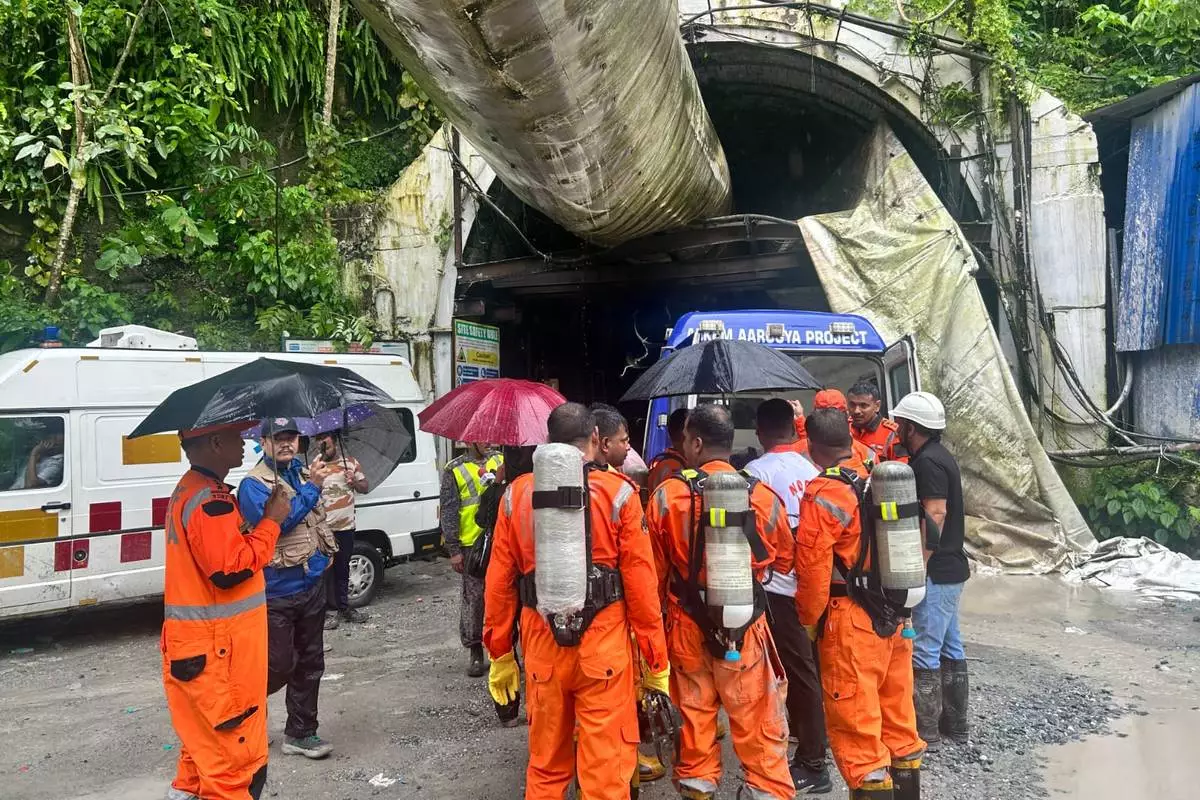
Members of the rescue team carry oxygen cylinders outside the entrance to an under-construction tunnel at a hydropower project in Samardung village, about 40 kilometers (25 miles) from Gangtok, India, Tuesday, July 21, 2026. (AP Photo)

Members of the rescue team carry oxygen cylinders outside the entrance to an under-construction tunnel at a hydropower project in Samardung village, about 40 kilometers (25 miles) from Gangtok, India, Tuesday, July 21, 2026. (AP Photo)

Recommended Articles