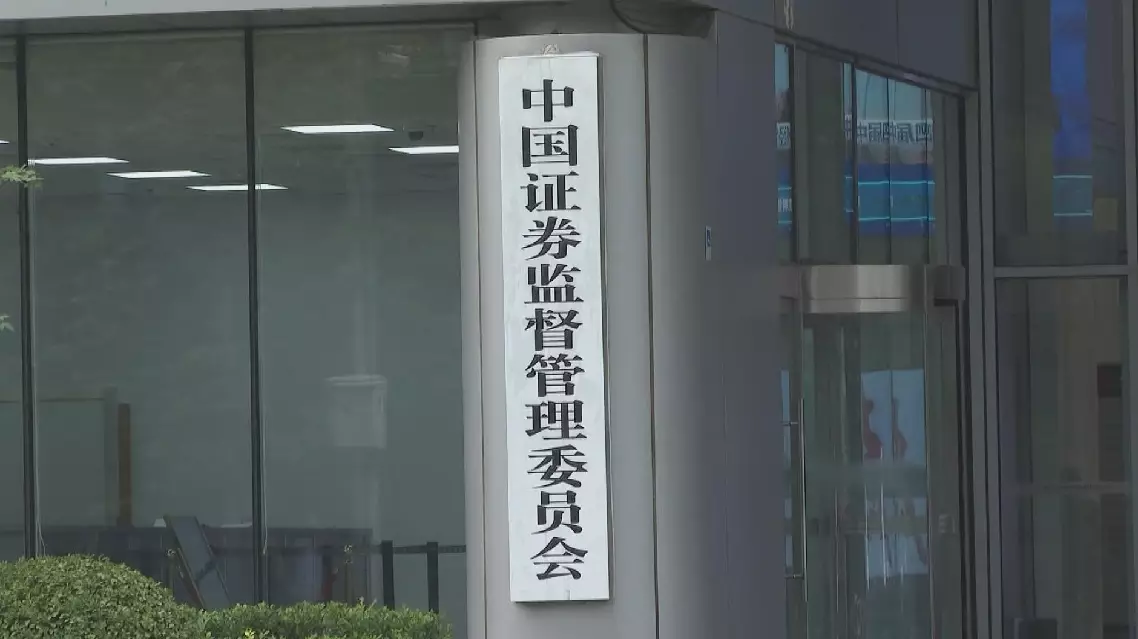
China's securities regulator on Monday pledged to make every effort to maintain the stable operation of domestic capital markets, advancing efforts to prevent risk, strengthen regulation and promote high-quality development.
Wu Qing, chairman of the China Securities Regulatory Commission (CSRC), made the statement during a symposium with investor representatives in Beijing, where Wu was seeking suggestions on the stable and healthy development of China's capital market.
Wu met with representatives from large, medium and small retail investors, and listened to their opinions and suggestions, including discussions on strengthening counter-cyclical adjustments in the primary and secondary markets.
Investors are the foundation of capital markets and their most important participants, Wu said, adding that the CSRC will work to improve the transparency and authenticity of listed companies, strengthen investor protection, and safeguard open, fair and orderly markets, so that investors can share the fruits of high-quality development in the economy and capital markets.
Participants said China's capital markets had maintained generally steady momentum since the implementation of new guidelines on deepening capital market reform. Although the A-share market has recently come under pressure from external risks and other factors, they said the positive, long-term outlook remains unchanged.
They also called for measures to attract more medium- and long-term capital into the markets, improve regulation of quantitative trading and AI applications, encourage higher dividend payouts from listed companies, and impose tougher penalties for securities violations.
Chinese stocks closed mixed on Monday, with the benchmark Shanghai Composite Index up 0.85 percent to 3,796.28 points. The Shenzhen Component Index closed 0.71 percent lower at 13,610.23 points.
Listed subsidiaries of several state-owned enterprises, including China Railway Rolling Stock Corporation Limited (CRRC), Aluminum Corporation of China Limited (Chalco), Nari Technology Co., Ltd., China National Coal Group Corporation, State Power Investment Corporation Limited and China Shenhua Energy Company Limited, also issued a flurry of announcements on Monday, sending positive signals to the market through increased share purchases, buybacks and dividend payouts.
Chalco led the way with its controlling shareholder and related parties announcing plans to increase holdings in A-shares and H-shares by one to two billion yuan (about 147 to 295 million U.S. dollars) over the next 12 months. The controlling shareholder of CRRC plans to increase holdings by 150 million to 300 million yuan (about 22 to 44 million U.S. dollars) within six months, while the controlling shareholder of China National Coal Group Corporation intends to increase holdings by 50 million to 100 million yuan (about 7.3 million to 14.7 million U.S. dollars).
Meanwhile, Nari Technology Co., Ltd. said it plans to repurchase its shares using 500 million to one billion yuan (about 73 million to 147 million U.S. dollars) of its own funds, the largest buyback currently planned by any state-owned enterprise. Several insurance companies also issued statements expressing firm confidence in the prospects of China's capital markets, vowing to seize the dual opportunities of valuation recovery and industrial growth through concrete actions, and voicing optimism about the long-term allocation value of China's equity markets.
China vows to keep capital markets stable: securities regulator
The Northeast China Football League, China's first cross-provincial city-based football tournament, is in full swing across northeast China, transforming a low-cost ticket into a golden key that unlocks regional tourism and fuels a surge in consumer spending this summer.
Fresh off the conclusion of the 2026 FIFA World Cup in North America, football fever is just heating up in China's northeastern region.
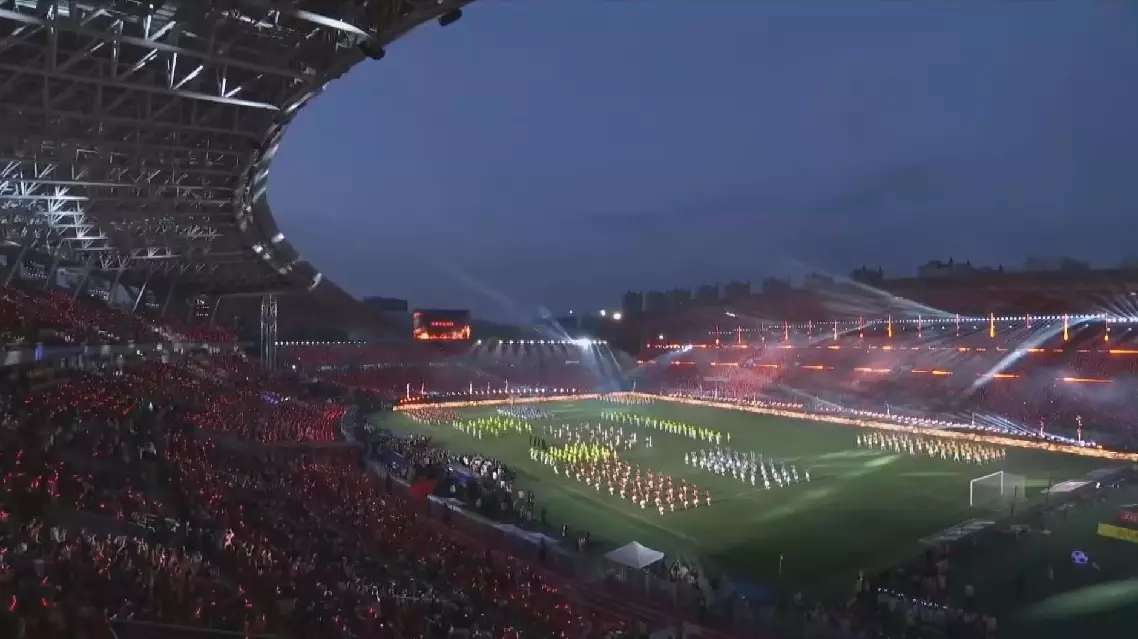
Officially called "The 2026 Northeast China City Football League," an eight-team amateur competition spanning the three northeastern provinces of Liaoning, Jilin and Heilongjiang, plus the Inner Mongolia Autonomous Region, opened simultaneously in Shenyang, Changchun, Harbin and Hohhot, the four capitals of the provinces and the region, on May 23.
While match tickets cost less than three U.S. dollars, their value extends far beyond the pitch. Ticket holders enjoy free entry to landmarks like the Shenyang Imperial Palace, as well as discounts at partner hotels, restaurants and local businesses, with a single match ticket unlocking a host of city-wide benefits.
"The ticket allows us to visit attractions such as the Shenyang Imperial Palace and Marshal Zhang’s Mansion, all of which have discounts. This is something we particularly like. So, taking advantage of the weekend, we should have a good time in the area," said a fan from Heilongjiang.
The bundled benefits have significantly lowered travel costs for fans, turning weekend trips into economical getaways.
"We can enjoy discounts on food, drink and entertainment with our ticket. Roughly calculated, it feels like this trip will save four to five hundred yuan for me," said another fan from Heilongjiang.
This tournament model, which is organized and promoted by local governments, features wide community participation and deep integration with culture, tourism and commercial sectors, and has been widely recognized as a proven success.
Since the launch of the Jiangsu Football City League in 2025, the format has been adopted by regions across China as a way to drive consumption, boost local economies and enrich public life, while also strengthening cultural exchanges between cities.
"We have nearly 20 people here. We hope to use regional football leagues to improve the exchanges between cities and deepen the bond between people. These competitions are just as popular as the World Cup among local fans. We can enjoy intense and exciting matches and their atmosphere right at our doorsteps. This is one of our original goals for football," said Hao Junjie, secretary general of the Jiangsu Zhenjiang Fan Association.
For many visiting supporters, the trip is as much about immersing themselves in local culture as it is about watching football.
"We have experienced Northeast China-style bathhouses and night market barbecue. The football culture and heritage in Shenyang are very good, and this time we are here specifically to watch the Northeast China Football League match. The overall travel cost is approximately 3,500 yuan," said a fan from Jiangsu.
Outside the stadium, thousands of "second viewing venues" have emerged across host cities' core business districts, paired with supporting services including specialty catering, cultural exhibitions and dedicated outdoor match screenings. Every weekend, host cities buzz with vibrant energy, with street stalls bustling with crowds and local businesses thriving.
Local merchants have reported a noticeable surge in activity as the league turns cities into vibrant weekend destinations.
"Business has been very good recently. Since the start of the Northeast China Football League, the customer flow in our entire neighborhood has increased significantly. For our store, the revenue has increased by 10 percent," a local coffee merchant said.
The league's vibrant atmosphere and rich local offerings have even attracted international visitors seeking an authentic cultural experience.
"I'm a Korean who came specifically from Nanjing to watch the match of the Northeast China Football League. I really like it here. It's very lively and fun. I like to eat Northeastern style pork belly and iron pot stew, which are particularly delicious," said a South Korean football fan.
The league is now serving as a powerful catalyst for renewed vitality, proving that the passion for the beautiful game can drive tangible economic and social benefits. The World Cup may be over, but in this corner of China, the season is just beginning.
Grassroots sporting events fuel regional tourism, consumption