TOKYO (AP) — Japan expressed concern after a Chinese navy destroyer conducted live-fire drills off a remote Japanese island in the Pacific Ocean on Sunday during its joint exercise with Russia, officials said Tuesday.
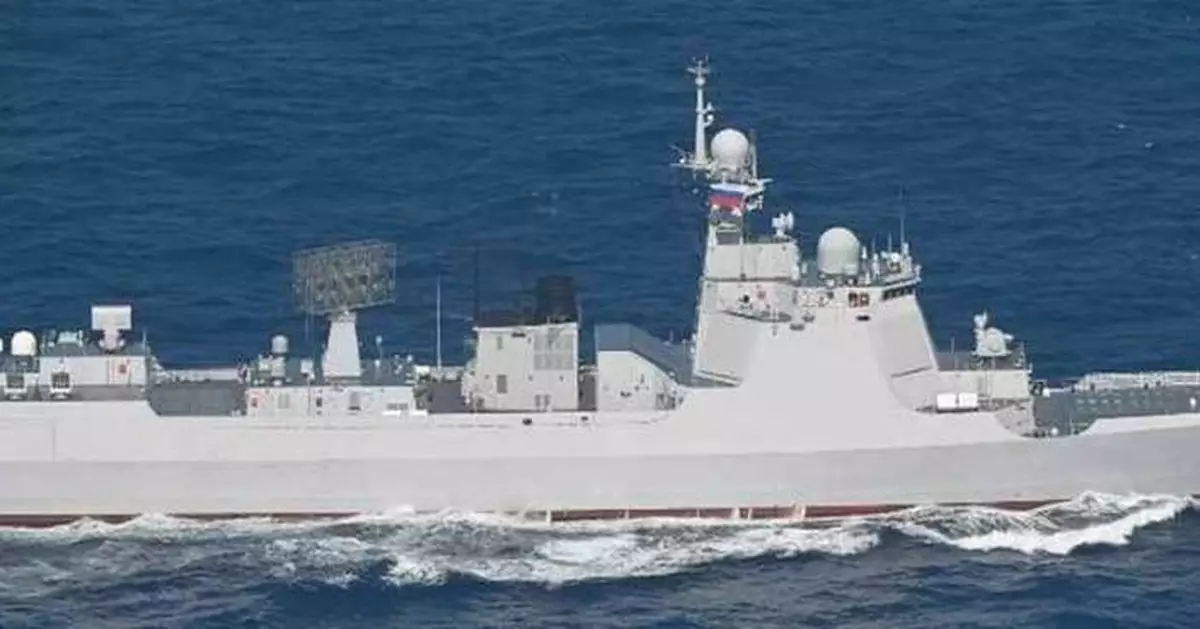
The Chinese Luyang III-class guided-missile destroyer conducted a live-fire exercise off Japan's southernmost island of Okinotori, hours after the Japanese navy spotted it operating alongside two other Chinese warships and a Russian frigate, the Japanese Joint Staff said.
Chief Cabinet Secretary Minoru Kihara told reporters Tuesday that his government conveyed concerns that the live-fire drills posed a potential safety threat to nearby vessels. He noted that ships near the area received a notice from the Chinese warships just before the drills started.
“We will continue to watch China-Russia operations around Japan with concern, while doing utmost for the warning and surveillance of the Japanese airspace and territorial waters,” Kihara said.
Japanese Defense Minister Shinjiro Koizumi, in a speech Monday in Britain, said the action underscored “the deepening military cooperation between China and Russia,” as he also noted China’s ballistic missile launch from a submarine earlier this month, and at least 10 joint flights conducted by Chinese and Russian bombers around Japan.
Chinese Foreign Ministry spokesperson Lin Jian accused Japan of playing up external threats to justify its military buildup. “Japan’s so-called concern is actually groundless, and China has firmly refuted it,” he said at a regular briefing in Beijing.
Japan has been alarmed by China’s rapid expansion of operations in the Pacific, especially since two Chinese aircraft carriers were spotted last year almost simultaneously operating near another southern Japanese island, Iwo Jima, for the first time, fueling Tokyo’s concern about Beijing’s military activity far beyond its borders.
Former Vice-Defense Minister Masahisa Sato said he considers Sunday's live-fire drills as an early stage of China's so-called “salami-slicing strategy” of taking incremental steps to keep expanding its control without triggering border conflicts. China may intensify provocation by aircraft carriers around Okinotori, Sato commented on X, stressing the need to reinforce the Pacific theater defense.
Japan is also deeply concerned about growing joint military operations by China and Russia around Japan in recent years.
Sunday's live-fire drills by the Chinese destroyer were conducted 180 kilometers (110 miles) southwest of the island and within Japan's Exclusive Economic Zone, an area beyond its immediate territorial waters where the country has rights over natural resources.
Lin disputed Japan’s claim to an EEZ around Okinotori, saying it is a rock not an island. “Japan’s claim to an EEZ based on Okinotori-shima violates international law,” he said. The word “shima” means island in Japanese.
China has said previously that it wrapped up joint naval exercises with Russia on July 13 and that some of the participating ships were conducting joint patrols in the Pacific. It wasn’t clear why patrols would include live firing, as claimed by Japan.
The live-fire exercises were held off the port city of Qingdao on China’s east coast, the country's official Xinhua News Agency said. The area is far from the uninhabited Okinotori, which sits in the Philippine Sea.
China-Russia military cooperation plays an important role in safeguarding the two nations’ sovereignty and security and upholding international and regional peace and stability, China's Defense Ministry spokesperson Jiang Bin said in remarks posted online late last week.
“We hope that relevant parties can view China-Russia military cooperation objectively and rationally, and stop making groundless speculation and cease smearing and hyping,” he said.
Japan's Joint Staff said it was the first time it disclosed the detection of Chinese live-fire drills in the Japanese EEZ, though the action did not violate international law.
The Joint Staff said the fleet of the same four Chinese and Russian warships had earlier sailed southward between the main Japanese islands of Okinawa and Miyako.
Associated Press writer Ken Moritsugu in Beijing contributed to this report.
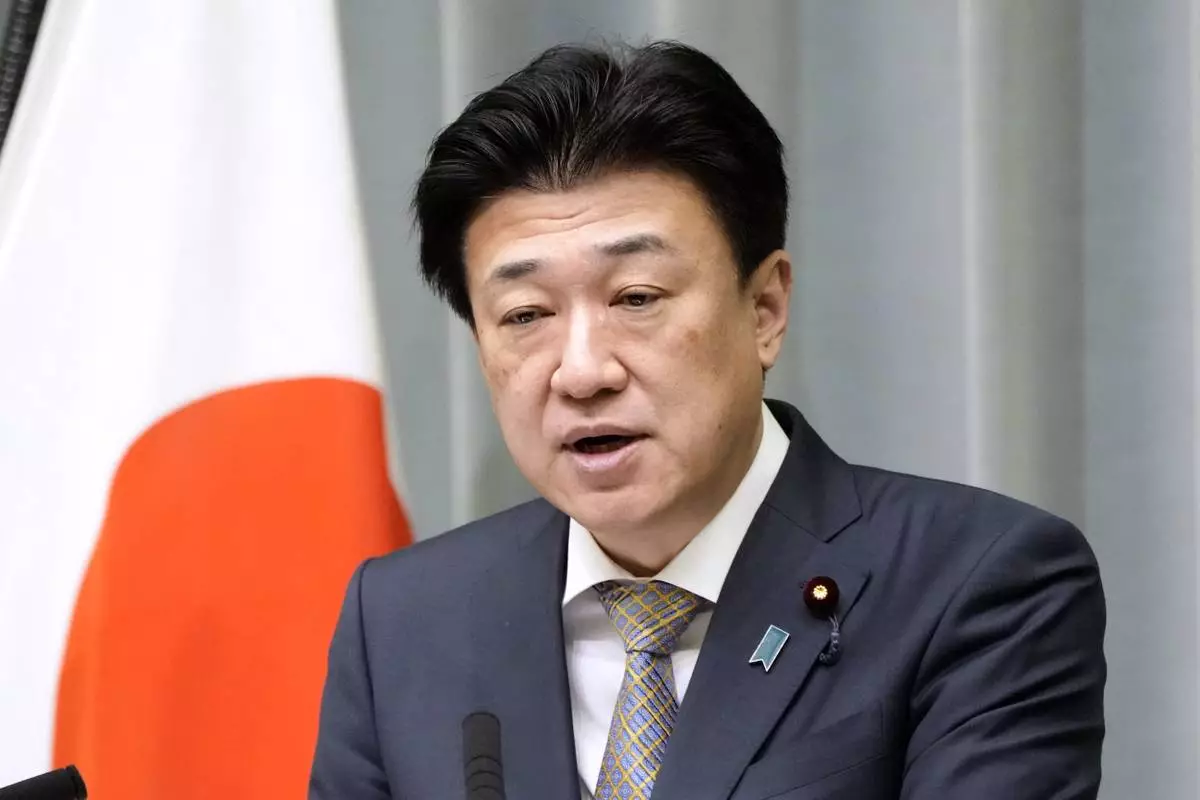
FILE -Japan's Chief Cabinet Secretary Minoru Kihara speaks during a press conference in Tokyo Tuesday, April 7, 2026. (Keisuke Hosojima/Kyodo News via AP, File)
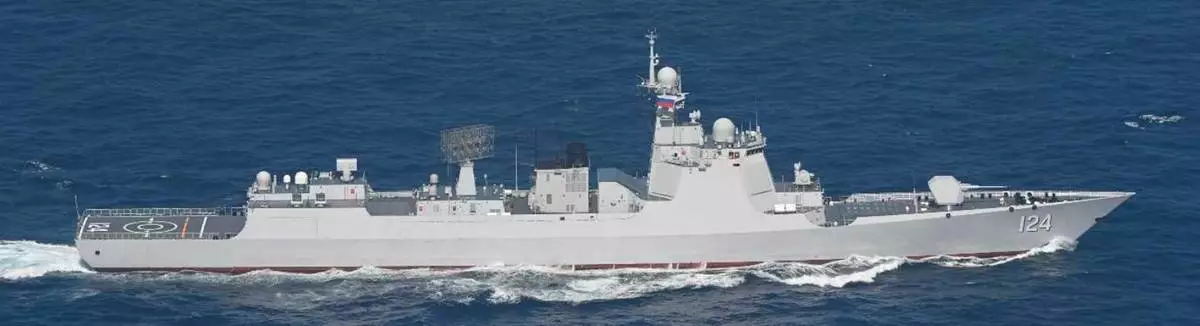
In this photo provided by Japan Joint Staff, a Chinese Luyang III-class guided-missile destroyer sails off Kumejima island, southern Japan, on July 16, 2026. (Japan Joint Staff via AP)