
Skip to Content Facebook Feature Image

Kyckr Reports 46% Revenue Growth as Demand for Live Company Register Data Accelerates

Business

Kyckr Reports 46% Revenue Growth as Demand for Live Company Register Data Accelerates
Business

Business

Kyckr Reports 46% Revenue Growth as Demand for Live Company Register Data Accelerates

2026-07-21 15:02 Last Updated At:15:10

LONDON--(BUSINESS WIRE)--Jul 21, 2026--

Kyckr, the global KYB data provider, today reports annual revenue growth of 46% for the financial year ended June 2026. Growth was driven by intensifying regulatory pressure in regions like Australia and North America, where regulated firms are under mounting pressure to demonstrate that KYB processes are built on verified, current data rather than static third-party sources.

This press release features multimedia. View the full release here: https://www.businesswire.com/news/home/20260721612387/en/

McKinsey estimates the financial industry still detects only around 2% of global financial crime flows. Kyckr's own research points to data infrastructure as a critical challenge, with poor data playing a factor in 68% of UK FCA enforcement actions over the last five years.

Over the past twelve months, Kyckr added 45 new clients, including a Global Systemically Important Bank (G-SIB) - as defined by the Financial Stability Board – adding to the six it already supports. The company also passed a milestone 50 AML orchestration partners, extending its reach across the compliance technology ecosystem. Notable new partners include Athennian in North America and Infotrack in Australia.

Following the appointment of Steve Lamb as CEO in August 2025, who previously served as Head of Product and Chief Operating Officer with the company, Kyckr has recruited a new senior leadership team which includes Ian Jones (formerly Equiniti) as Chief Technology Officer, and Andrew Kellett (formerly Thirdfort) as Head of Customer Delivery. Further commercial appointments have joined from Veriff and Moody's in recent months.

Kyckr enters its 20th year as one of the longest-established KYB data providers in the market. Founded to solve the persistent problem of fragmented, unreliable corporate registry data, the company has built one of the most comprehensive live registry networks in the industry, now connecting regulated firms to over 300 official sources worldwide.

Kyckr has a programme of product launches and international event activity planned to mark the milestone during the second half of 2026. This includes further investment in its core registry network, and preparations for the shift toward reusable business identity under the European Business Wallet framework.

Steve Lamb, CEO, Kyckr, said: "It’s a testament to the work of our incredible team that in its milestone 20th year, Kyckr has just delivered its strongest ever financial performance. The foundational KYB requirements for regulated firms are shifting, and demand for live company register data is only going to increase further. Over the past year we've recruited a new senior team, redrawn the product roadmap and expanded our network of partners to ensure our clients are ahead of changing requirements, not caught out by them. Our strong business performance this year is just the beginning."

About Kyckr

Kyckr is a KYB data provider, connecting regulated firms to live company and beneficial ownership data from more than 300 official corporate registries worldwide. Kyckr's platform helps banks, fintechs, professional services firms and enterprises verify business customers with confidence, meet their AML and regulatory obligations, and fight financial crime. Now in its 20th year, Kyckr serves clients across banking, fintech, payments, professional services and insurance globally.

Learn more at www.kyckr.com

The Kyckr team celebrates a strong start to 2026.

The Kyckr team celebrates a strong start to 2026.
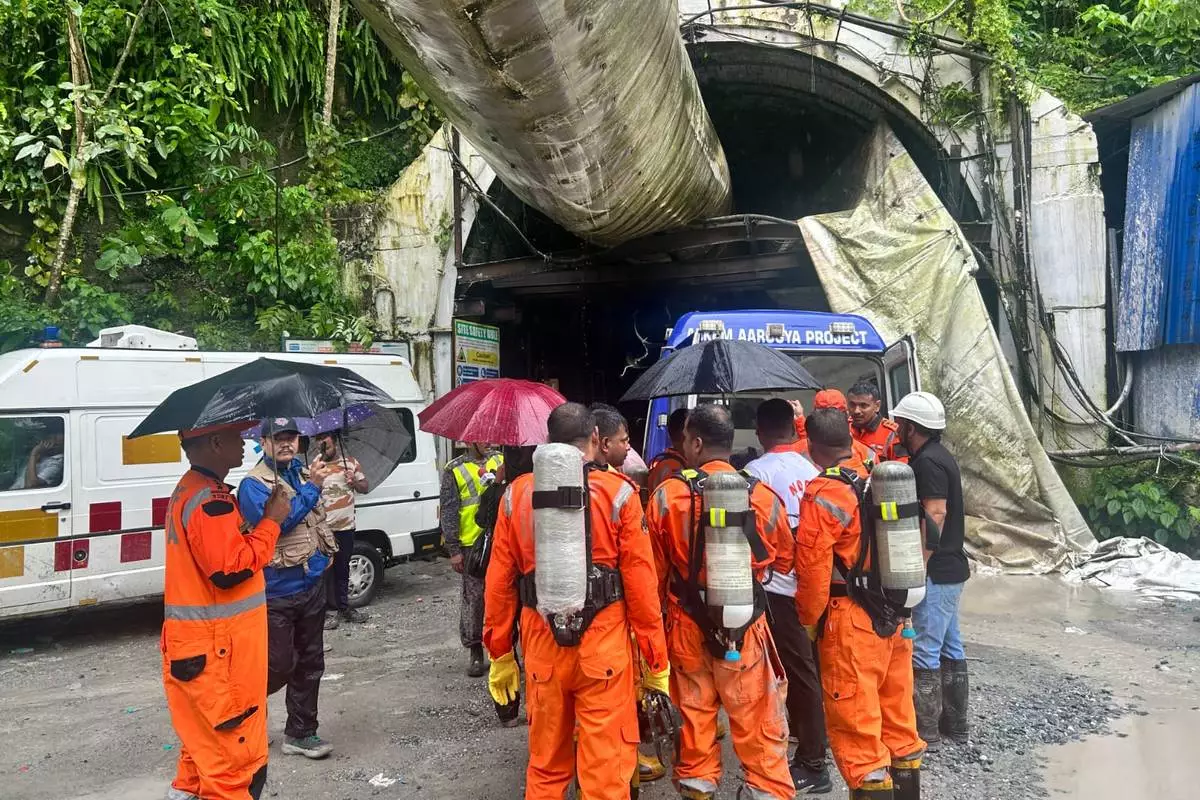
GUWAHATI, India (AP) — A suspected gas explosion on Monday triggered a collapse inside a tunnel that was under construction at a hydropower project in India’s northeastern Himalayan state of Sikkim, leaving at least 11 people dead and 14 missing, officials said on Tuesday.

State Chief Minister Prem Singh Tamang, who visited the disaster site near the Chinese border, said the explosion was triggered by a build-up of methane gas.

At least 27 people were trapped, including some who entered the tunnel to help with rescue efforts after the blast, while two workers escaped, Tamang said.

The blast ripped through the tunnel at Samardung village, about 40 kilometers (25 miles) from the state capital, Gangtok, where multiple workers were carrying out construction work on the 500-megawatt Teesta hydroelectric project, civil official Anupama Tamling said.

Survivors told authorities they heard a loud explosion before debris came crashing through the tunnel, trapping dozens inside, Tamling said.

Officials had recovered 11 bodies on Tuesday while rescue teams including the National Disaster Response Force (NDRF) raced to reach at least 14 people who remained trapped inside the tunnel, where toxic gases and hazardous conditions have hampered operations.

“We found toxic gases such as methane, carbon monoxide and hydrogen sulfide inside the tunnel,” NDRF official Nitin Kumar said at the scene, adding that rescuers were using breathing equipment as they searched in the for survivors in the dangerous air conditions.

As news of the accident spread, six officials from the state-owned National Hydroelectric Power Corporation (NHPC), which is building the project, entered the tunnel to assist in rescue efforts but became trapped themselves, officials said.

Construction accidents are not uncommon in India, where rapid infrastructure growth often collides with fragile geology, construction lapses, extreme weather and safety standards.

In the Himalayan region, fragile mountains, seismic activity and unpredictable underground conditions make tunnel projects especially risky. An explosion inside a coal mine in neighboring Meghalaya state in February killed at least 18 workers. In 2023, a tunnel section in northern Uttarakhand state collapsed, trapping 41 workers for 17 days before they were rescued.

Experts say the Teesta River basin, where the hydropower project is being built, lies in a seismically active region marked by young, fragile rock formations riddled with fractures and underground pockets that can trap ancient gases.

Dr. Devesh Walia, a geology professor at North-Eastern Hill University in Meghalaya, said the area contains relatively young rock formations, some associated with coal-bearing strata.

“It is quite possible that methane along with other gases accumulated underground and may have triggered an explosion,” he said.

Members of the rescue team carry oxygen cylinders outside the entrance to an under-construction tunnel at a hydropower project in Samardung village, about 40 kilometers (25 miles) from Gangtok, India, Tuesday, July 21, 2026. (AP Photo)

Members of the rescue team carry oxygen cylinders outside the entrance to an under-construction tunnel at a hydropower project in Samardung village, about 40 kilometers (25 miles) from Gangtok, India, Tuesday, July 21, 2026. (AP Photo)

Recommended Articles