Skip to Content Facebook Feature Image

AI companions, virtual world tools showcased at WAIC 2026

China

China

China

AI companions, virtual world tools showcased at WAIC 2026

2026-07-21 21:51 Last Updated At:07-22 12:52

Humanoid robots designed to grasp human intentions and artificial intelligence (AI) tools that let users co-create virtual worlds were among the highlights of the 2026 World Artificial Intelligence Conference in Shanghai.

The 2026 World AI Conference and High-Level Meeting on Global AI Governance, which ran from Friday to Monday, brought together official representatives, business leaders, scholars and researchers from more than 100 countries and international organizations. It included 140 forum sessions, with more than 1,100 enterprises presenting over 3,000 products at the event.

Cutting-edge technologies from foundation models and humanoid robots to AI agents demonstrated how artificial intelligence is weaving itself into the fabric of daily life. One phrase kept coming up throughout the conference: AI is no longer just a tool, it is becoming an intelligent companion.

At the Fourier Intelligence booth, a humanoid robot named Xiaoye showcased how machines are moving beyond simple command execution to understanding human intentions.

The robot can interpret natural language requests, such as "I'm thirsty", locate the water in the environment, and deliver it to the user. "All users need to do is say something simple, such as 'I'm hungry' or 'I'm thirsty', in a natural way. It can understand that when you say 'I'm thirsty,' what you need is a drink. Then it can locate the water in the environment and bring it back to you. In other words, the robot is shifting from following commands to understanding intentions. This is truly what we call intelligent companionship," said Serin Chen, senior manager of the Strategic Communication Department of Shanghai Fourier Intelligence Co. Fourier Intelligence has also redesigned the robot's appearance and materials to make it more approachable. The robot is no longer a cold machine of metal and steel, it features an upgraded soft-wrap material with custom inner foam, making it comfortable to touch.

A pat on the head is interpreted as affection, while a touch on the belly becomes a playful interaction.

"If robots are truly going to enter people's daily lives, it needs to feel warm and approachable. At the same time, it shouldn't make people feel uncomfortable or intimidated," said Chen.

The evolving relationship between humans and AI is not limited to the physical world. At the PixVerse booth, a real-time video generation and rendering technology demonstrated how AI is turning users into co-creators of virtual worlds.

Traditional games require lengthy development and rendering processes that can take a year or longer, but the new system allows users to instantly turn their ideas and creativity into playable experiences.

"The major difference is that traditional games require a long process of development and rendering to create all the visual assets. Designing the gameplay and completing the rendering process can take a year or even longer. But our technology is based on real-time video generation and rendering to create games. This allows users to instantly turn their ideas and creativity into playable experiences," said Jaden Xie, co-founder and president of PixVerse.

AI companions, virtual world tools showcased at WAIC 2026
AI companions, virtual world tools showcased at WAIC 2026

The commercialization of the robot industry has given rise to new forms of business in South China's tech hub of Shenzhen, where stores are allowing customers to rent robot models and fully customize the bots they buy.

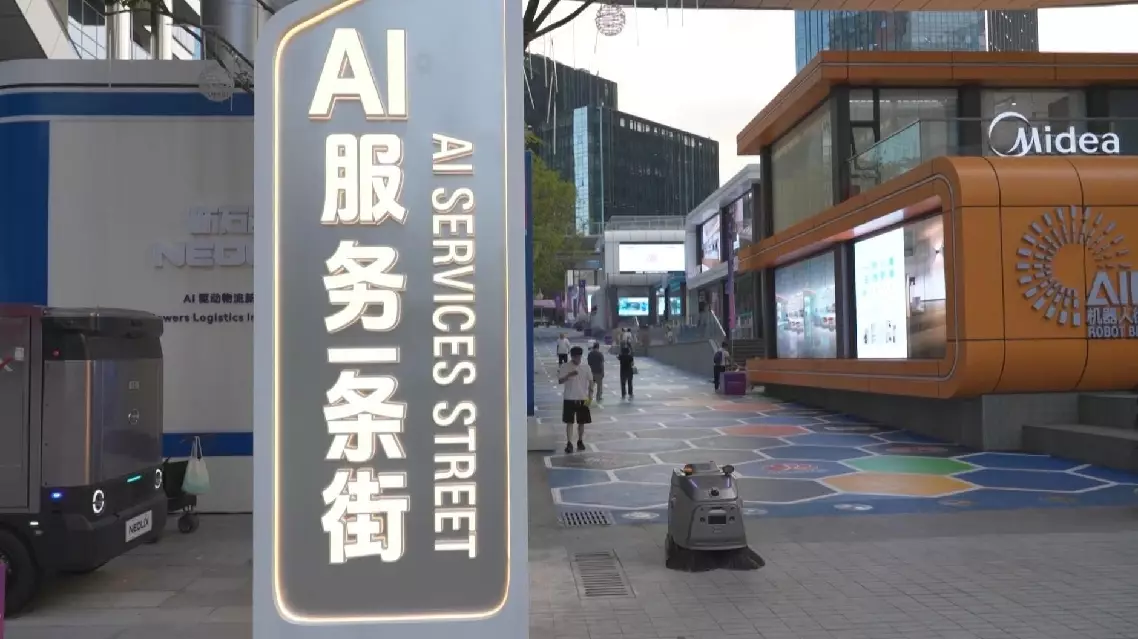
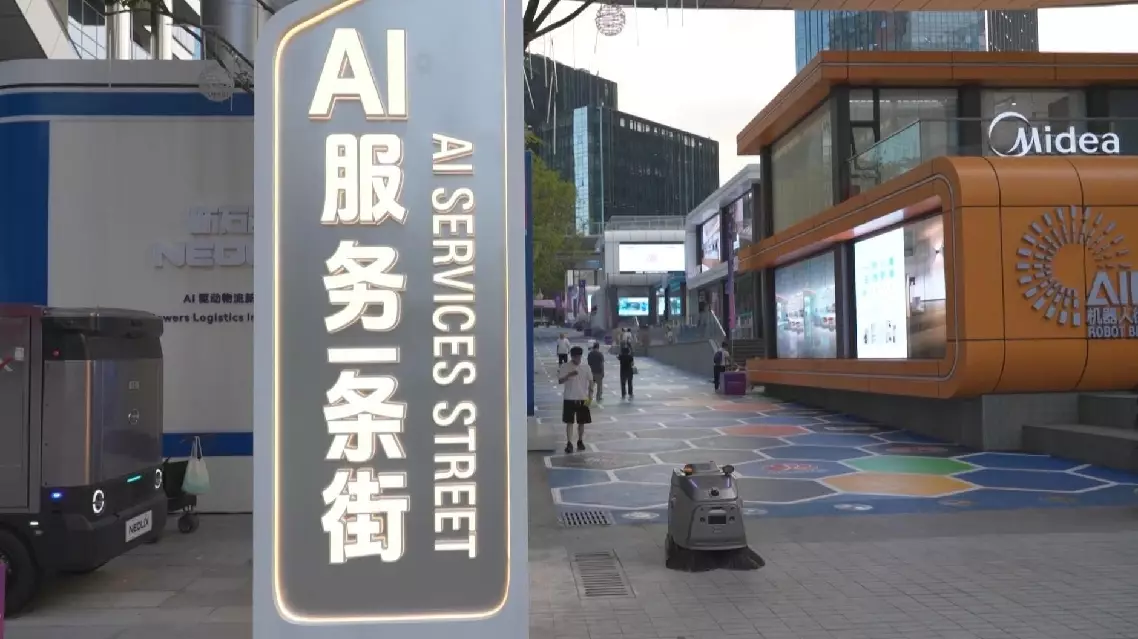
At the AI Services Street in Shenzhen's Longgang District, the first of its kind in China, crowds have been forming daily since the street opened in early September. Visitors come to view exhibitions and try robot services, and many of them leave with orders.

Robot rental is among the hottest businesses. At the Shenzhen Robot 6S Store, dozens of robots are available for rent, from robot dogs and guide bots to humanoid machines that can dance and greet guests.

The cheapest option is a robot dog, which renters can take home for just 1,000 yuan (about 150 U.S. dollars).

"In our rental business, we have more than 100 types of humanoid and special-purpose robots. Special-purpose robots mainly cover cleaning categories such as smart cleaning, as well as smart healthcare and smart elderly care. We offer customized solutions across different categories," said the manager of the Shenzhen Robot 6S Store.

A buyer from the manufacturing sector, surnamed Liu, said many robots in the store match his production line needs. He has identified several promising models and plans to study which could be used at his company.

"Transport robots, cleaning robots -- and since our company uses photovoltaic panels, I also noticed photovoltaic panel cleaning robots here. I think these three types would fit our company well," he said.

At a robot components supermarket along the AI Services Street, core parts including reducers, servo motors, controllers and sensors are displayed on shelves like everyday goods. For companies, components that once took months to source can now all be found on the street.

The supermarket has a dedicated showroom for robot components. Zhou Ying, a staff member at the showroom, said the exhibits are highly diverse, visitor traffic is high, and the showroom receives guests frequently.

"The showroom now houses components from more than 60 suppliers, including chips, sensors, casings and structural parts. Since last year, we have hosted nearly 500 events," she said.

Consumers can also customize robots on the street. Some customers bring a design drawing and receive hardware parts made to order.

"A customer gives us a blueprint of a robot, and we manufacture the hardware components accordingly. This year, our order volume has grown about fivefold compared with 2025. Customizing a robot used to take at least six to eight months from research and development to prototype; now some micro-customized products can be ready in three to four months," said Mao Fangping, senior business development manager at a Guangdong-based smart manufacturing company.

Shenzhen's robot market sees rise of rental, customization services

Shenzhen's robot market sees rise of rental, customization services

Shenzhen's robot market sees rise of rental, customization services

Shenzhen's robot market sees rise of rental, customization services

Recommended Articles