ASEAN Secretary General Kao Kim Hourn has urged deeper rule‑of‑law cooperation with China to safeguard regional trade from transnational crimes and translate their comprehensive strategic partnership into tangible outcomes.
Legal cooperation has often lagged behind economic ties, but Kao said strengthening institutional frameworks is vital as ASEAN and China mark 35 years of dialogue relations. In a recent interview, he shared his vision for advancing cooperation by building legal alliances and enhancing law enforcement capacity.
"This is a very important year for both sides, ASEAN and China. With the establishment of this alliance of various institutions, particularly the education alliance in the field of law, I think it is important, particularly as we work to transform what's in the Plan of Action. To implement the CSP [comprehensive strategic partnership], is to concretize that, to make it tangible," said Kao.
"It's clear that we've been doing a lot of cooperation in areas of trade, investment, tourism, connectivity among others. So, what we need now is to make sure that our trade will not be affected by transnational crimes. And what's important is that we need to enhance our cooperation in the legal sector. This alliance of schools and universities working together side by side, on the one hand, is to increase capacity, training, at the same time to promote better understanding of the legal cooperation. I think that's where our law enforcement sector will have to do a lot more together," said the ASEAN chief.
Established in 1967, ASEAN groups Brunei, Cambodia, Indonesia, Laos, Malaysia, Myanmar, the Philippines, Singapore, Thailand, Vietnam and Timor-Leste.
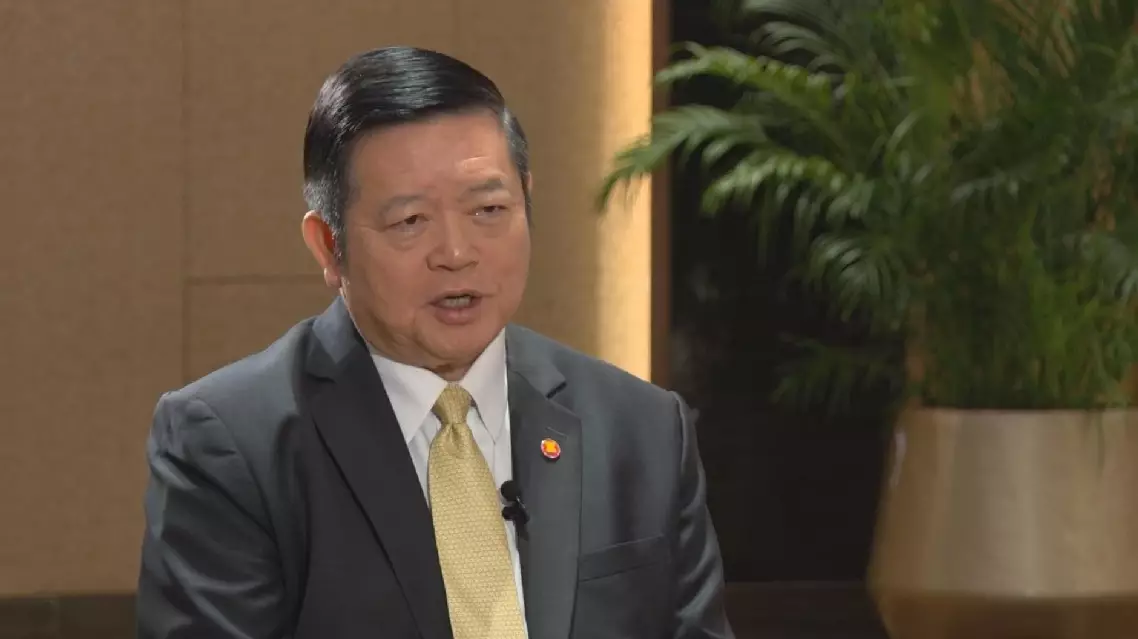
ASEAN chief urges deeper rule‑of‑law cooperation with China to safeguard trade, partnership
Chinese Premier Li Qiang emphasized advancing agricultural modernization and ensuring food security when making investigation in northeast China's Heilongjiang and Jilin provinces from Monday to Wednesday.
In Heilongjiang Province, Li, also a member of the Standing Committee of the Political Bureau of the Communist Party of China Central Committee, visited a state farm and observed the growth of soybean, corn, and rice crops. He stressed that autumn grain accounts for the bulk of annual output, calling for stepped-up farmland management and policy support to ensure grain harvest.
Visiting an agricultural science park and a rice research institute, Li asked about seed breeding innovation and black soil conservation, highlighting the importance of science and technology in pursuing higher yields and calling for further efforts in seed breeding, advanced machinery, and smart farming.
At a major water conservancy project, Li reviewed construction progress, urging faster completion to improve flood control, irrigation, and ecological benefits while supporting stable, high-yield harvests.
In Jilin Province, Li visited an agricultural cooperative and learned about its operations. He called for developing diverse forms of appropriately scaled agricultural operations and improving services for agriculture to help smallholders connect with modern agriculture.
At a grain processing plant, Li inspected a corn oil production line and called for boosting intensive processing of agricultural products to extend industrial chains and raise value.
Li also visited the Chagan Lake and learned about the ecological fisheries. He called for actively developing modern eco-aquaculture, promoting integrated development of the farming, forestry, livestock, and fishing industries as well as the development of eco-tourism.
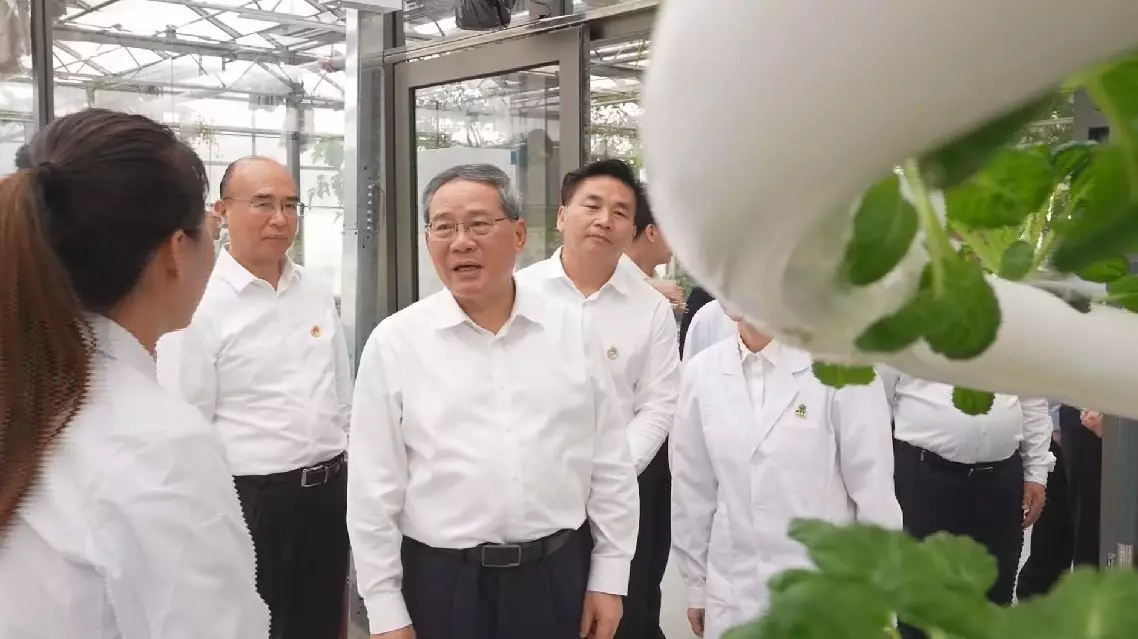
Chinese premier stresses agricultural modernization, food security