The U.S. Center for SafeSport began making public announcements of people placed on its disciplinary database Tuesday, a move designed to increase transparency and bring more attention to what the center believes is one of its top tools in the fight against sex abuse.
The center, in charge of combating abuse in Olympic sports, has long published what it calls its Centralized Disciplinary Database. But without publicizing who lands on the list, people had to access the database and know who they were looking for to learn about banned and restricted people in their orbit.
Now, the center will share weekly updates about people added to the list; the updates will include cases taken to arbitration that have reached a decision.
"Knowledge is power and maintaining safe sport environments improves when information is as accessible as possible,” said the center's CEO, Benita Fitzgerald Mosley. “By sharing weekly news updates of individuals who have been added to the Centralized Disciplinary Database, we hope to improve safeguarding through increased public awareness.”
Among those who receive the center's correspondence are national governing bodies, the U.S. Olympic and Paralympic Committee and media, making the news of someone's listing on the database more likely to be seen.
Publicizing offenders is a core principle in anti-doping. Public announcements of people who get caught doping is considered a deterrent to drug use and the practice is part of the world drug-fighting rulebook.
In the SafeSport Center’s news release announcing the change, it said people listed on the database are currently restricted or banned from participating in Olympic or Paralympic sports — a penalty that encompasses elite level down to the grassroots. The center said the database is a snapshot in time — i.e., someone on the list could come off of it — and that the center's process is neither a criminal nor civil legal proceeding.
AP sports: https://apnews.com/hub/sports
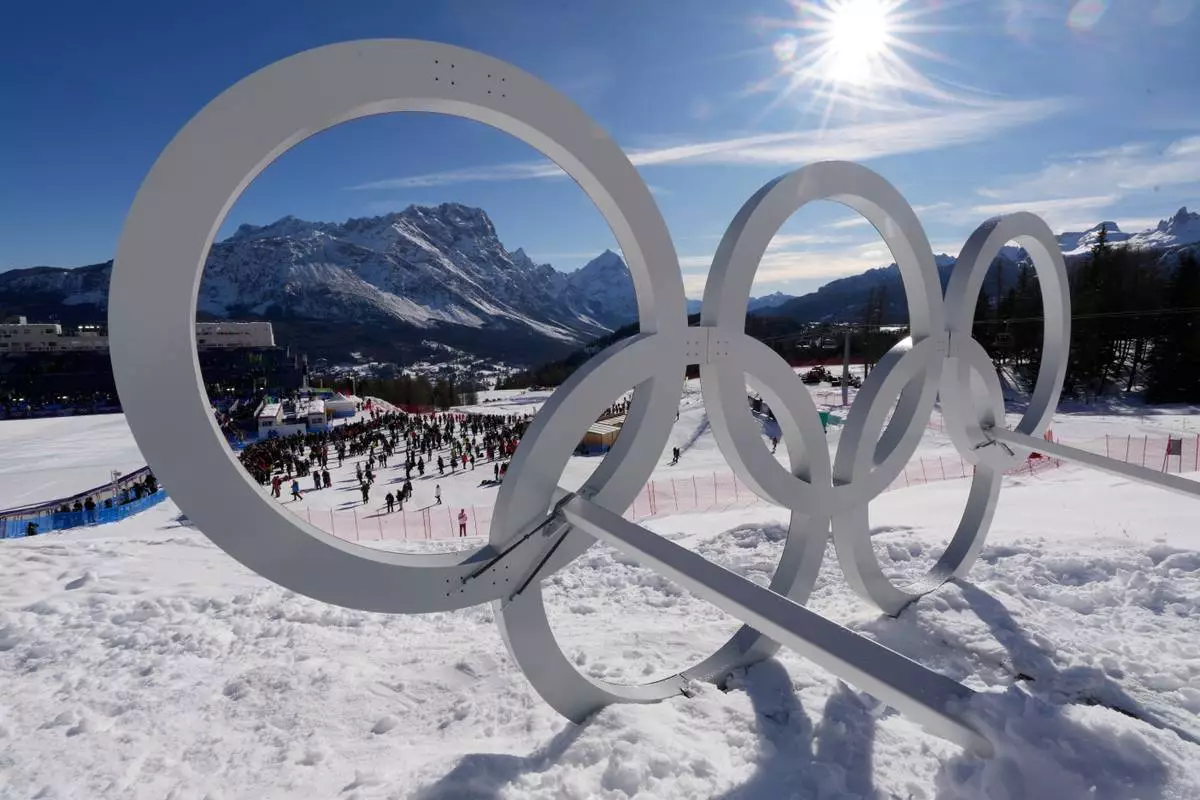
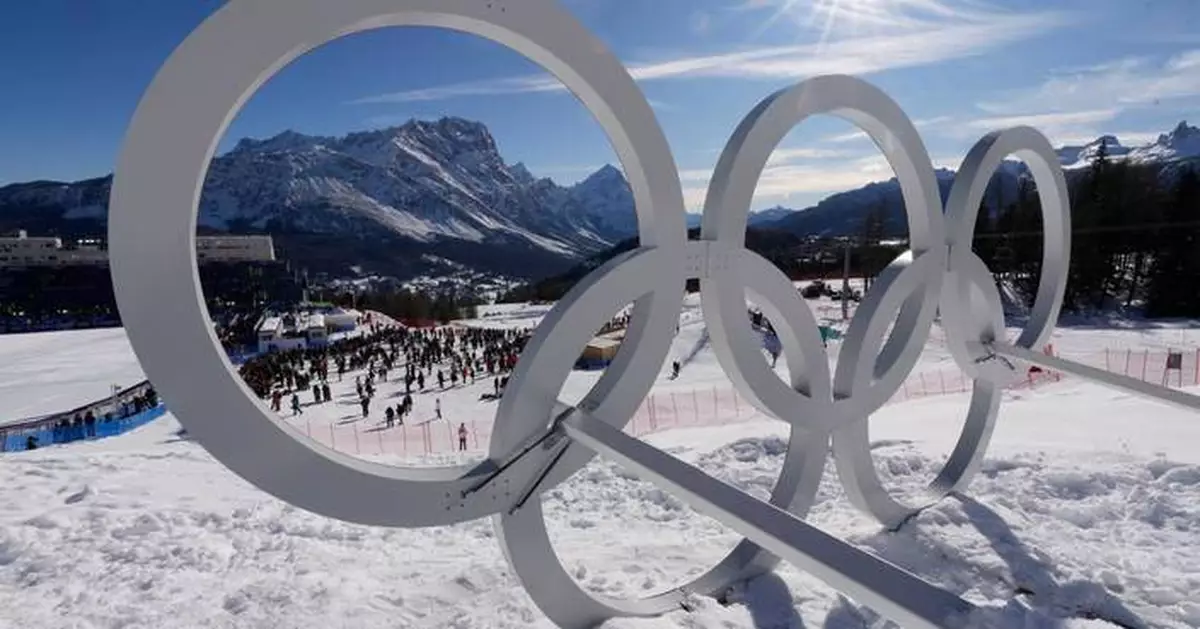
FILE - Olympic rings are seen at the 2026 Winter Olympics in Cortina d'Ampezzo, Italy, Feb. 8, 2026. (AP Photo/Robert F. Bukaty, File)
WASHINGTON (AP) — President Donald Trump has approved an agreement with Saudi Arabia that could potentially provide the kingdom with uranium enrichment capability for its civilian nuclear program, according to two people familiar with the matter.
The people, who were not authorized to comment publicly about the yet to be formally announced decision, said the agreement is expected to be announced publicly as early as Wednesday.
The deal is expected to last 30 years and is also expected to involve U.S. firms in developing the program. The deal could allow for the building of a uranium enrichment facility in Saudi Arabia following a joint U.S.-Saudi study.
But the deal, which is expected to be submitted to Congress for review, could face headwinds among lawmakers who fear that helping the Saudis fulfill their long-standing desire to enrich their own uranium would open new rounds of nuclear proliferation and competition.
Saudi Arabia is a member state of the International Atomic Energy Agency, a Vienna-based agency which promotes peaceful nuclear work but also inspects nations to ensure they don’t have clandestine atomic weapons programs.
But the agreement is not expected to include the IAEA’s Additional Protocol, which would allow for more monitoring, inspections and verification, according to one of the people.
The expected announcement comes in the midst of the war against Iran launched by the U.S. and Israel, in part, to wipe out Tehran’s ability to develop a nuclear weapon. Iran has insisted its nuclear enrichment program is peaceful.
The White House and Saudi officials in Riyadh did not immediately respond to requests for comment on the decision, which was first reported on by The Wall Street Journal.
Both Trump and former President Joe Biden tried to reach a nuclear deal with the kingdom to share American technology.
But nonproliferation experts warn any spinning centrifuges within Saudi Arabia could open the door to a possible weapons program for the kingdom, something its assertive de facto leader, Crown Prince Mohammed bin Salman, has suggested he could pursue if Tehran obtains an atomic bomb.
Energy Secretary Chris Wright traveled to Saudi Arabia last year shortly before Trump visited the kingdom and discussed building out the kingdom’s commercial nuclear power industry with his Saudi counterpart.
Already, Saudi Arabia and nuclear-armed Pakistan signed a mutual defense pact after Israel launched an attack on Qatar targeting Hamas officials. Pakistan’s defense minister then said his nation’s nuclear program “will be made available” to Saudi Arabia if needed, something seen as a warning for Israel, long believed to be the Middle East’s only nuclear-armed state.
Enrichment isn’t an automatic path to a nuclear weapon — a nation also must master other steps, including the use of synchronized high explosives, for instance. But it does open the door to weaponization, which has fueled the concerns of the West over Iran’s program.
The United Arab Emirates, a neighbor to Saudi Arabia, signed what is referred to as a “123 agreement” with the U.S. to build its Barakah nuclear power plant with South Korean assistance. But the UAE did so without seeking enrichment, something nonproliferation experts have held up as the “gold standard” for nations wanting atomic power.
Price reported from Manila, Philippines, and Gambrell from Dubai, United Arab Emirates.
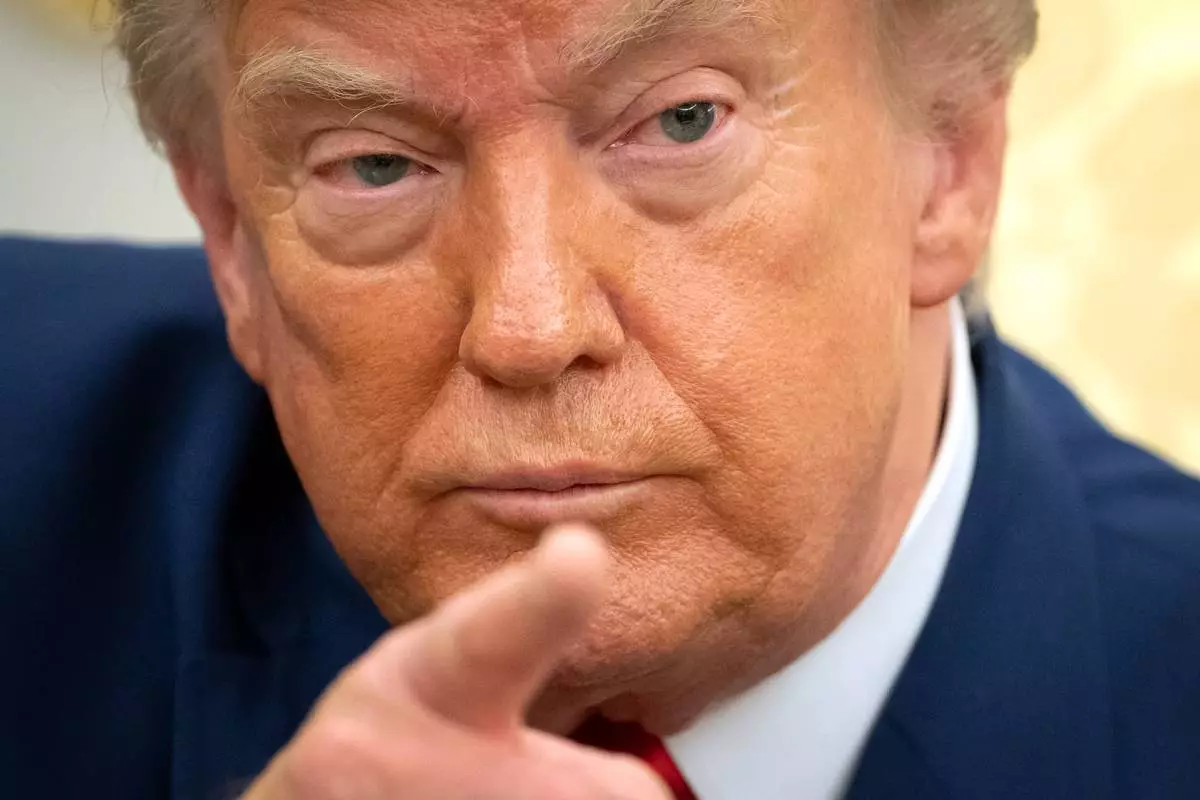
President Donald Trump gestures while meeting with Lebanese President Joseph Aoun in the Oval Office at the White House, Tuesday, July 21, 2026, in Washington. (AP Photo/Mark Schiefelbein)