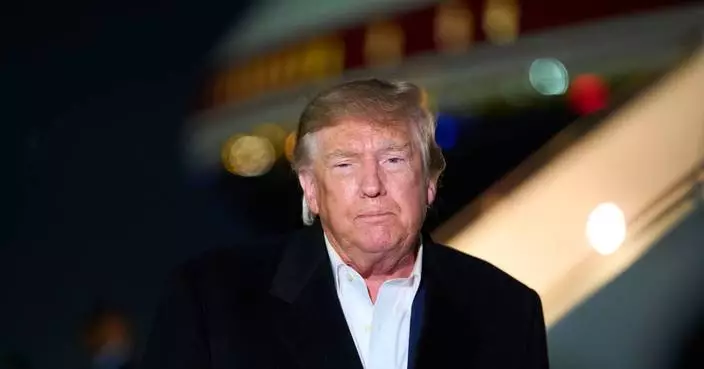
WASHINGTON (AP) — President Donald Trump has approved an agreement with Saudi Arabia that could potentially provide the kingdom with uranium enrichment capability for its civilian nuclear program, according to two people familiar with the matter.
The people, who were not authorized to comment publicly about the yet to be formally announced decision, said the agreement is expected to be announced publicly as early as Wednesday.
The deal is expected to last 30 years and is also expected to involve U.S. firms in developing the program. The deal could allow for the building of a uranium enrichment facility in Saudi Arabia following a joint U.S.-Saudi study.
But the deal, which is expected to be submitted to Congress for review, could face headwinds among lawmakers who fear that helping the Saudis fulfill their long-standing desire to enrich their own uranium would open new rounds of nuclear proliferation and competition.
Saudi Arabia is a member state of the International Atomic Energy Agency, a Vienna-based agency which promotes peaceful nuclear work but also inspects nations to ensure they don’t have clandestine atomic weapons programs.
But the agreement is not expected to include the IAEA’s Additional Protocol, which would allow for more monitoring, inspections and verification, according to one of the people.
The expected announcement comes in the midst of the war against Iran launched by the U.S. and Israel, in part, to wipe out Tehran’s ability to develop a nuclear weapon. Iran has insisted its nuclear enrichment program is peaceful.
The White House and Saudi officials in Riyadh did not immediately respond to requests for comment on the decision, which was first reported by The Wall Street Journal.
Both Trump and former President Joe Biden tried to reach a nuclear deal with the kingdom to share American technology.
But nonproliferation experts warn any spinning centrifuges within Saudi Arabia could open the door to a possible weapons program for the kingdom, something its assertive de facto leader, Crown Prince Mohammed bin Salman, has suggested he could pursue if Tehran obtains an atomic bomb.
Energy Secretary Chris Wright traveled to Saudi Arabia last year shortly before Trump visited the kingdom and discussed building out the kingdom’s commercial nuclear power industry with his Saudi counterpart. The U.S. Department of Energy did not immediately respond to requests for comment late Tuesday.
Already, Saudi Arabia and nuclear-armed Pakistan signed a mutual defense pact after Israel launched an attack on Qatar targeting Hamas officials. Pakistan’s defense minister then said his nation’s nuclear program “will be made available” to Saudi Arabia if needed, something seen as a warning for Israel, long believed to be the Middle East’s only nuclear-armed state.
Enrichment isn’t an automatic path to a nuclear weapon — a nation also must master other steps, including the use of synchronized high explosives, for instance. But it does open the door to weaponization, which has fueled the concerns of the West over Iran’s program.
The United Arab Emirates, a neighbor to Saudi Arabia, signed what is referred to as a “123 agreement” with the U.S. to build its Barakah nuclear power plant with South Korean assistance. But the UAE did so without seeking enrichment, something nonproliferation experts have held up as the “gold standard” for nations wanting atomic power.
Price reported from Manila, Philippines, and Gambrell from Dubai, United Arab Emirates. AP writers Will Weissert and Matthew Daly contributed from Washington.
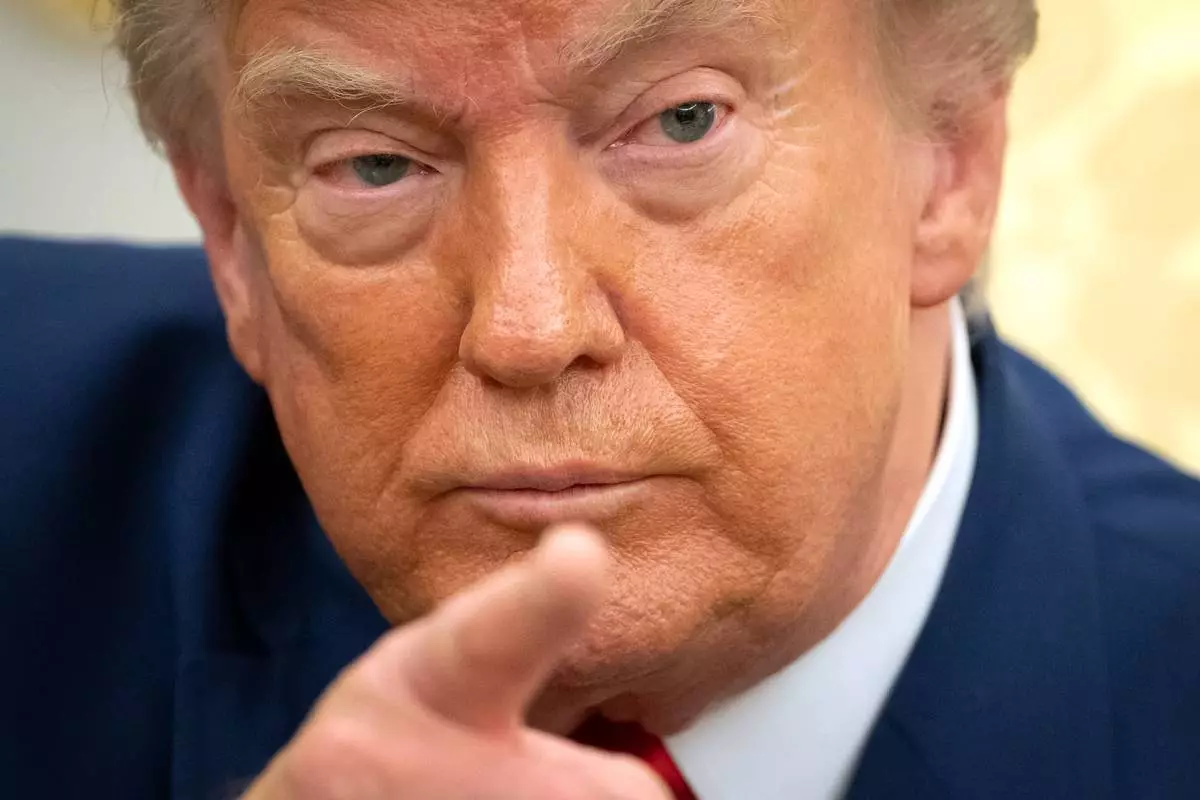
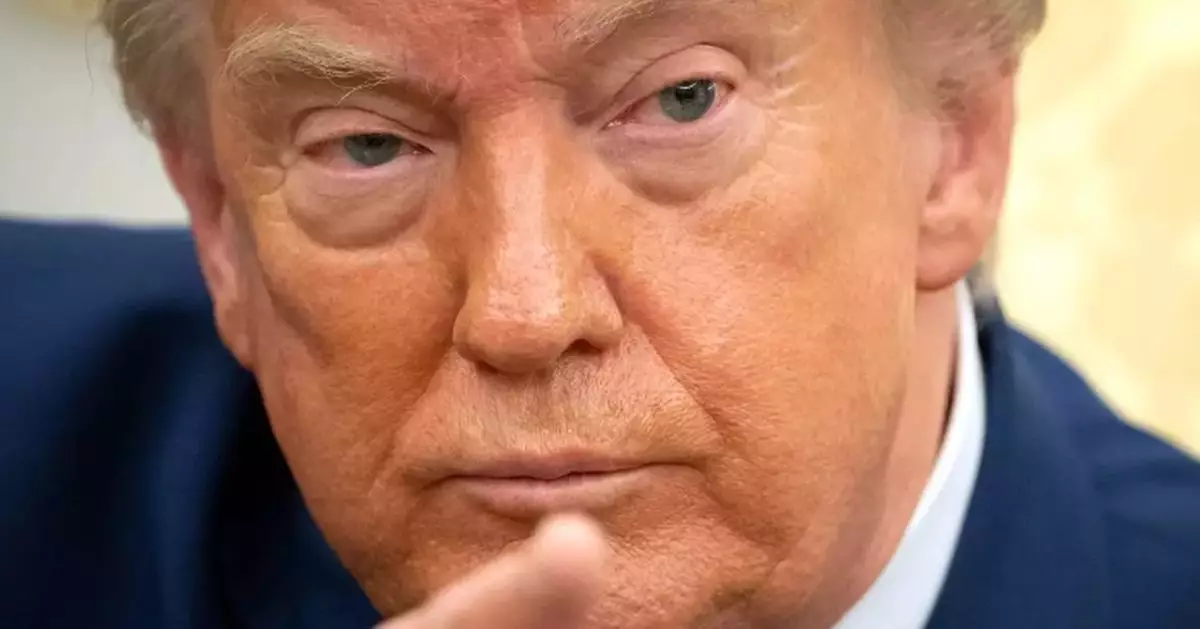
President Donald Trump gestures while meeting with Lebanese President Joseph Aoun in the Oval Office at the White House, Tuesday, July 21, 2026, in Washington. (AP Photo/Mark Schiefelbein)
JERUSALEM (AP) — Hawkish, reserved and unpolished, Israel's former military chief has a viable chance of unseating Prime Minister Benjamin Netanyahu.
His name is Gadi Eisenkot. And while the votes from Tuesday's election are still being counted, his centrist party, Yashar, along with other opposition allies, has the clearest path to power if they can join forces with Arab-led parties, though pulling it off may prove difficult.
It has been a remarkable climb for the 66-year-old, who was raised by Moroccan-Jewish immigrants, and whose son died fighting in the latest war in Gaza. But it's also a major challenge for a man relatively untested in Israel's hardscrabble tradition of coalition building.
The commander of some of Israel's most difficult wartime battles, he is now up against Netanyahu, who has shown, time and time again, an almost uncanny ability to survive the cutthroat world of Israeli politics.
Nevertheless, Eisenkot was ecstatic and determined late Tuesday as initial exit polls suggested a big loss for Netanyahu.
“We have made history!" he bellowed from a podium in Tel Aviv.
“Millions of Israelis have had enough of the culture of lies, of failure, of division and incitement," Eisenkot said. "Tonight marks the beginning of a path that must lead to the formation of a Zionist government.”
Preliminary results from Israel’s elections commission on Wednesday have since shown the prime minister’s party pulling ahead, but without a clear majority. Eisenkot's coalition — a mix of center-right and more liberal figures — is a close second but would need to partner with Arab-led parties for an outright majority.
In Israeli politics, where higher vote counts don’t automatically translate into political victories, the ability to amass a coalition is key.
Emerging results indicated that neither Netanyahu’s nor Eisenkot’s coalition blocs would reach the 61 seats needed for a majority; local media projected 53 seats for Likud and allied parties, 48 for Yashar and allied parties, and 19 for Arab-led parties.
While Netanyahu and many members of his party, Likud, have ruled out working with minority Arab parties, Eisenkot has not.
The parties, composed mainly of Palestinian Muslims and Christians, made a historic showing at the polls in Tuesday's election. If Eisenkot can convince them to join his coalition, he could gain enough seats to form a majority in the Knesset, Israel’s parliament.
Yousef Jabareen, leader of the Joint List of Arab parties, is calling for a “true and equal” Jewish-Arab partnership to help oust Netanyahu’s government after a strong showing by Arab-led parties.
By partnering with Arab parties, Eisenkot could lose the support of more right-wing members of his coalition, endangering his bloc from the opposite flank.
In a bid to prevent such defections, his party has asked Israel’s Arab parties to publicly profess certain principles: that Israel is a Jewish and democratic state, guided by the Israeli declaration of independence; that Hamas is a terrorist organization that should be disarmed and demolished; and that ultra-Orthodox Jews and Palestinian citizens of Israel must no longer be exempt from Israel’s mandatory military draft.
“There is currently no ultra-Orthodox or Arab party that supports these four principles,” Yashar candidate Lian Polak-David said to The Associated Press on Tuesday night.
They must reach an agreement soon or risk going to another round of elections. Thousands of citizens who flew into Israel to vote in the first round might be unable to return for a second, and Arab parties would likely suffer from lower turnout, too.
“We must act swiftly. This is the imperative of the hour, and uniting our people is essential," Eisenkot said Tuesday night in Tel Aviv.
Eisenkot has halting English and comes from a working-class family. He spent four decades in Israel’s military. His 25-year-old son, Gal Meir Eisenkot, was killed in combat in Gaza.
Netanyahu is a U.S.-educated elite, marred by corruption scandals. The International Criminal Court seeks his arrest. Netanyahu’s son, Yair Netanyahu, is a podcaster who lives part time in Florida and has used the legal name “Yonatan Hun,” according to Israel’s Haaretz newspaper.
After the Hamas attacks on Israel on Oct. 7, 2023, Eisenkot took on a role as an observer in Netanyahu’s war Cabinet. That day, the militants killed 1,200 people and took 251 hostage. Israel then launched a war in Gaza that has killed over 74,000 Palestinians, according to the territory’s health ministry, which doesn’t distinguish between civilians and combatants in its count.
In June 2024, Eisenkot followed a colleague out of the Cabinet, writing in his resignation letter that Netanyahu was letting politics influence decision-making, harming Israel’s ability to achieve its war goals.
Eisenkot’s two nephews who were deployed to combat were also killed fighting in Gaza.
The personal losses raised Eisenkot’s profile among Israelis and gave him credibility as someone who, having paid the ultimate price, wouldn’t needlessly sacrifice soldiers.
Eisenkot, like others in the opposition, says Netanyahu should be held accountable for Oct. 7 and the failure to turn battlefield victories into diplomatic achievements. They support launching a state inquiry into the failures that led to the Hamas attacks that day — a probe Netanyahu has long refused.
When it comes to the country’s ultra-Orthodox population, Eisenkot has said he will not compromise on legislation mandating they also serve in the military.
Eisenkot is no dove. Like nearly all the prime minister’s rivals, Eisenkot has supported Israeli military operations in Gaza, Lebanon and Iran.
He says he wants to dial tensions down with the Palestinians in the Israeli-occupied West Bank and follow U.S. President Donald Trump’s plan for Gaza.
He supports settlements but says he would evacuate unauthorized settler outposts, which rights groups say are the primary drivers of violence against Palestinians.
While at times he has emphasized diplomacy to address Israel’s security challenges, he also is credited with formulating Israel’s so‑called Dahiyeh Doctrine, named after the area in Beirut’s southern suburbs where the Hezbollah militant group has a stronghold. It's a military strategy advocating the use of disproportionate power against any entity that fires on Israel, no matter how small or insignificant.
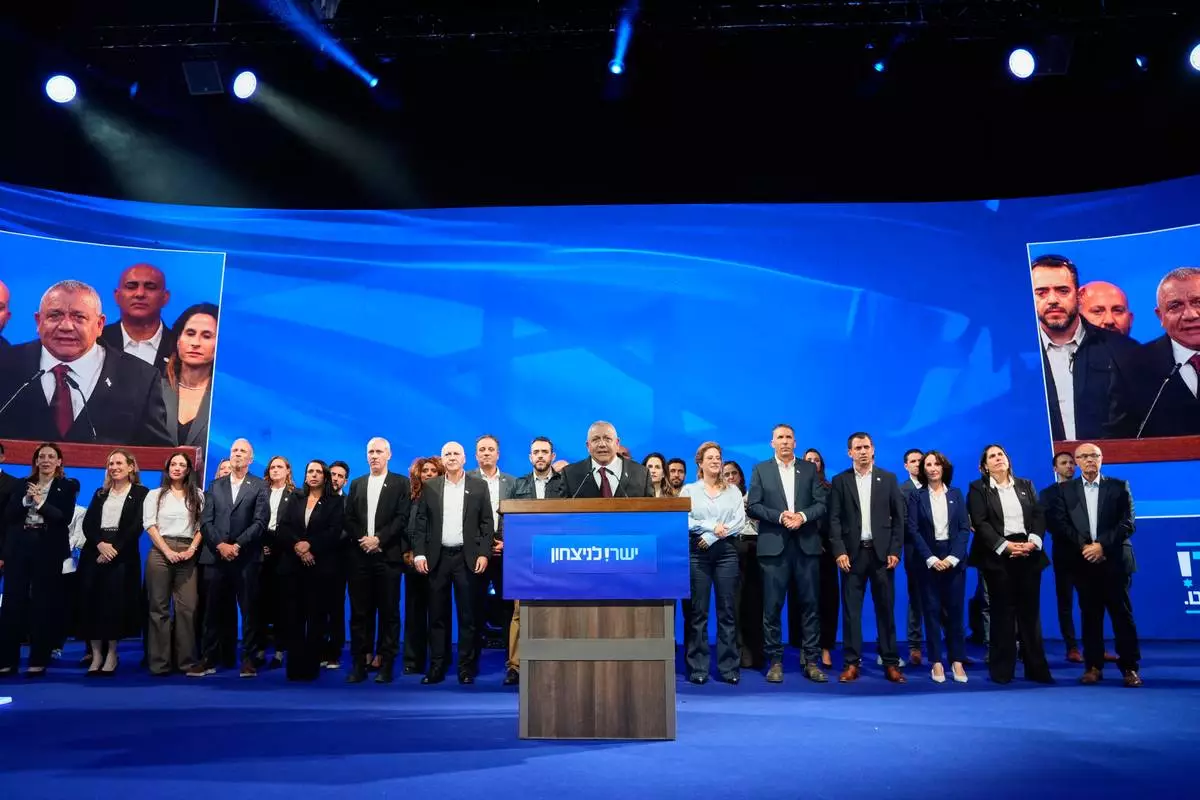
Gadi Eisenkot, leader of the Yashar ("Straight") party, speaks to supporters following the release of the first exit poll results in Israel's general election in Tel Aviv, Israel, Wednesday, Oct. 28, 2026. (AP Photo/Baz Ratner)
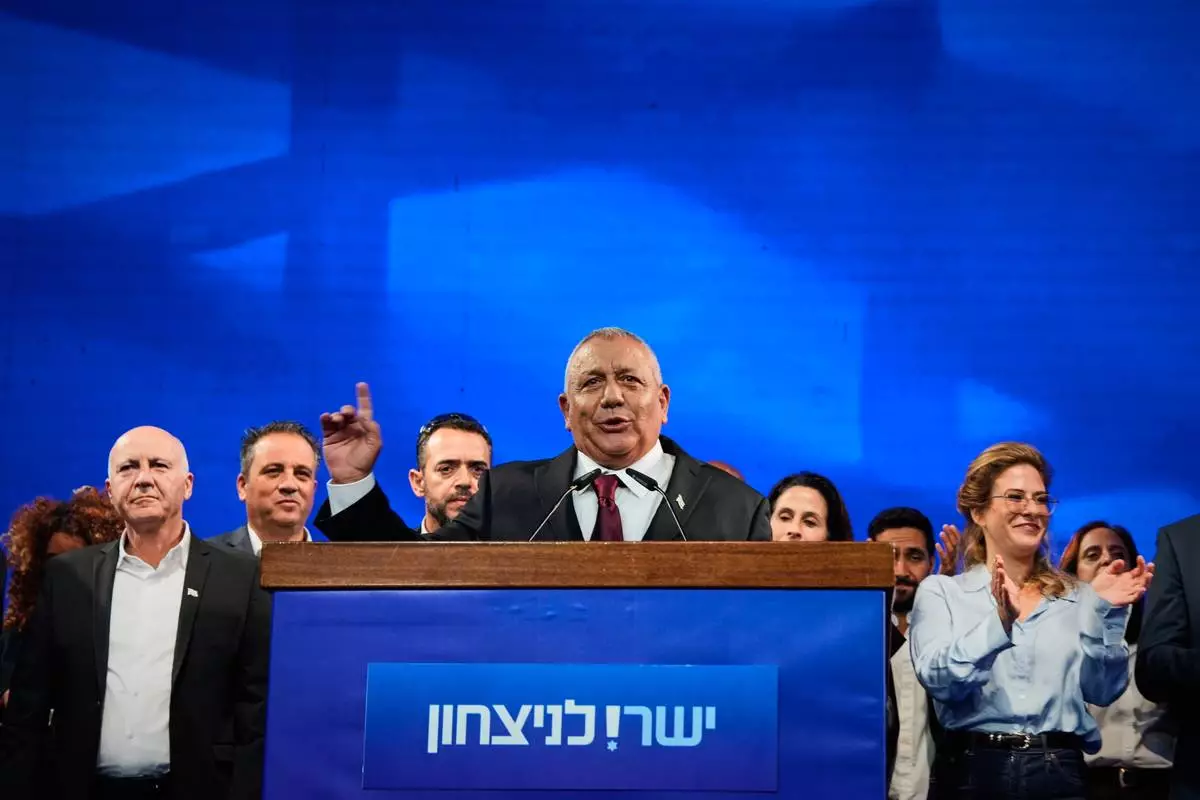
Gadi Eisenkot, leader of the Yashar ("Straight") party, speaks to supporters following the release of the first exit poll results in Israel's general election in Tel Aviv, Israel, Wednesday, Oct. 28, 2026. (AP Photo/Baz Ratner)
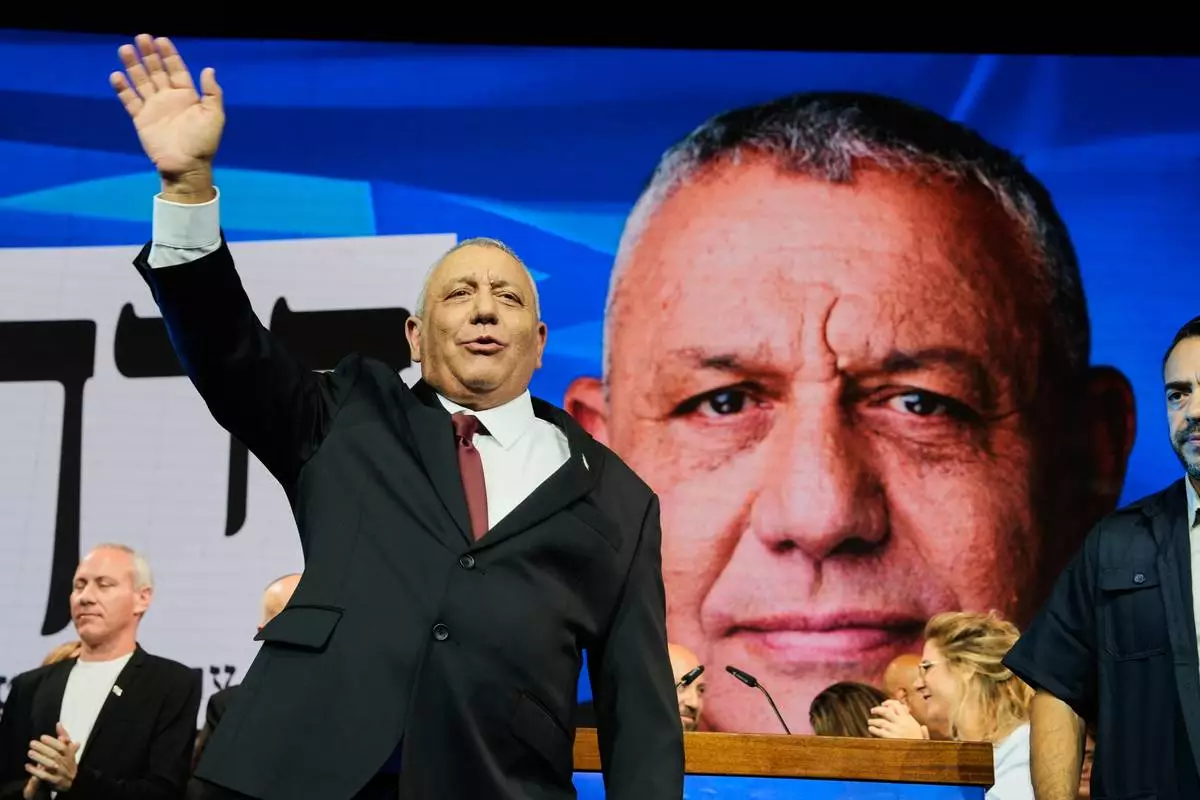
Gadi Eisenkot, leader of the Yashar ("Straight") party, waves to supporters following the release of the first exit poll results in Israel's general election in Tel Aviv, Israel, Wednesday, Oct. 28, 2026. (AP Photo/Baz Ratner)