Skip to Content Facebook Feature Image

Who is Gadi Eisenkot, the man with the best chance to oust Netanyahu?

News

Who is Gadi Eisenkot, the man with the best chance to oust Netanyahu?
News

News

Who is Gadi Eisenkot, the man with the best chance to oust Netanyahu?

2026-10-28 23:43 Last Updated At:23:50

JERUSALEM (AP) — Hawkish, reserved and unpolished, Israel's former military chief has a viable chance of unseating Prime Minister Benjamin Netanyahu.

His name is Gadi Eisenkot. And while the votes from Tuesday's election are still being counted, his centrist party, Yashar, along with other opposition allies, has the clearest path to power if they can join forces with Arab-led parties, though pulling it off may prove difficult.

It has been a remarkable climb for the 66-year-old, who was raised by Moroccan-Jewish immigrants, and whose son died fighting in the latest war in Gaza. But it's also a major challenge for a man relatively untested in Israel's hardscrabble tradition of coalition building.

The commander of some of Israel's most difficult wartime battles, he is now up against Netanyahu, who has shown, time and time again, an almost uncanny ability to survive the cutthroat world of Israeli politics.

Nevertheless, Eisenkot was ecstatic and determined late Tuesday as initial exit polls suggested a big loss for Netanyahu.

“We have made history!" he bellowed from a podium in Tel Aviv.

“Millions of Israelis have had enough of the culture of lies, of failure, of division and incitement," Eisenkot said. "Tonight marks the beginning of a path that must lead to the formation of a Zionist government.”

Preliminary results from Israel’s elections commission on Wednesday have since shown the prime minister’s party pulling ahead, but without a clear majority. Eisenkot's coalition — a mix of center-right and more liberal figures — is a close second but would need to partner with Arab-led parties for an outright majority.

In Israeli politics, where higher vote counts don’t automatically translate into political victories, the ability to amass a coalition is key.

Emerging results indicated that neither Netanyahu’s nor Eisenkot’s coalition blocs would reach the 61 seats needed for a majority; local media projected 53 seats for Likud and allied parties, 48 for Yashar and allied parties, and 19 for Arab-led parties.

While Netanyahu and many members of his party, Likud, have ruled out working with minority Arab parties, Eisenkot has not.

The parties, composed mainly of Palestinian Muslims and Christians, made a historic showing at the polls in Tuesday's election. If Eisenkot can convince them to join his coalition, he could gain enough seats to form a majority in the Knesset, Israel’s parliament.

Yousef Jabareen, leader of the Joint List of Arab parties, is calling for a “true and equal” Jewish-Arab partnership to help oust Netanyahu’s government after a strong showing by Arab-led parties.

By partnering with Arab parties, Eisenkot could lose the support of more right-wing members of his coalition, endangering his bloc from the opposite flank.

In a bid to prevent such defections, his party has asked Israel’s Arab parties to publicly profess certain principles: that Israel is a Jewish and democratic state, guided by the Israeli declaration of independence; that Hamas is a terrorist organization that should be disarmed and demolished; and that ultra-Orthodox Jews and Palestinian citizens of Israel must no longer be exempt from Israel’s mandatory military draft.

“There is currently no ultra-Orthodox or Arab party that supports these four principles,” Yashar candidate Lian Polak-David said to The Associated Press on Tuesday night.

They must reach an agreement soon or risk going to another round of elections. Thousands of citizens who flew into Israel to vote in the first round might be unable to return for a second, and Arab parties would likely suffer from lower turnout, too.

“We must act swiftly. This is the imperative of the hour, and uniting our people is essential," Eisenkot said Tuesday night in Tel Aviv.

Eisenkot has halting English and comes from a working-class family. He spent four decades in Israel’s military. His 25-year-old son, Gal Meir Eisenkot, was killed in combat in Gaza.

Netanyahu is a U.S.-educated elite, marred by corruption scandals. The International Criminal Court seeks his arrest. Netanyahu’s son, Yair Netanyahu, is a podcaster who lives part time in Florida and has used the legal name “Yonatan Hun,” according to Israel’s Haaretz newspaper.

After the Hamas attacks on Israel on Oct. 7, 2023, Eisenkot took on a role as an observer in Netanyahu’s war Cabinet. That day, the militants killed 1,200 people and took 251 hostage. Israel then launched a war in Gaza that has killed over 74,000 Palestinians, according to the territory’s health ministry, which doesn’t distinguish between civilians and combatants in its count.

In June 2024, Eisenkot followed a colleague out of the Cabinet, writing in his resignation letter that Netanyahu was letting politics influence decision-making, harming Israel’s ability to achieve its war goals.

Eisenkot’s two nephews who were deployed to combat were also killed fighting in Gaza.

The personal losses raised Eisenkot’s profile among Israelis and gave him credibility as someone who, having paid the ultimate price, wouldn’t needlessly sacrifice soldiers.

Eisenkot, like others in the opposition, says Netanyahu should be held accountable for Oct. 7 and the failure to turn battlefield victories into diplomatic achievements. They support launching a state inquiry into the failures that led to the Hamas attacks that day — a probe Netanyahu has long refused.

When it comes to the country’s ultra-Orthodox population, Eisenkot has said he will not compromise on legislation mandating they also serve in the military.

Eisenkot is no dove. Like nearly all the prime minister’s rivals, Eisenkot has supported Israeli military operations in Gaza, Lebanon and Iran.

He says he wants to dial tensions down with the Palestinians in the Israeli-occupied West Bank and follow U.S. President Donald Trump’s plan for Gaza.

He supports settlements but says he would evacuate unauthorized settler outposts, which rights groups say are the primary drivers of violence against Palestinians.

While at times he has emphasized diplomacy to address Israel’s security challenges, he also is credited with formulating Israel’s so‑called Dahiyeh Doctrine, named after the area in Beirut’s southern suburbs where the Hezbollah militant group has a stronghold. It's a military strategy advocating the use of disproportionate power against any entity that fires on Israel, no matter how small or insignificant.

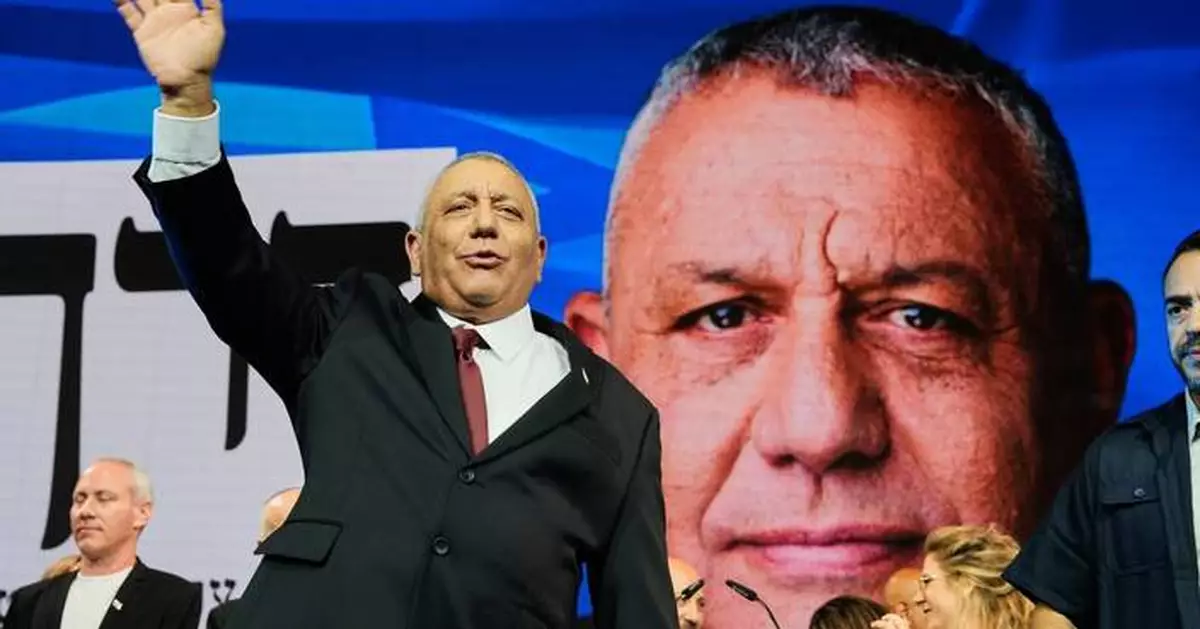
Gadi Eisenkot, leader of the Yashar ("Straight") party, speaks to supporters following the release of the first exit poll results in Israel's general election in Tel Aviv, Israel, Wednesday, Oct. 28, 2026. (AP Photo/Baz Ratner)
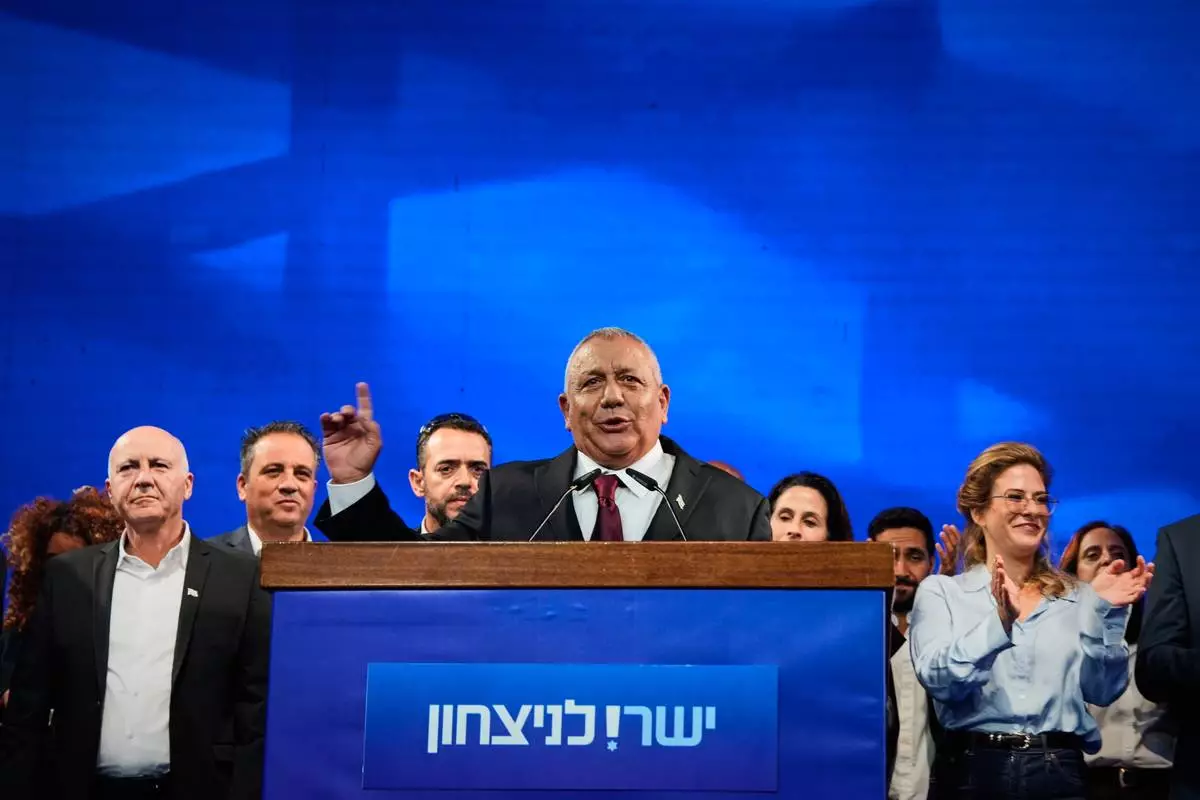
Gadi Eisenkot, leader of the Yashar ("Straight") party, speaks to supporters following the release of the first exit poll results in Israel's general election in Tel Aviv, Israel, Wednesday, Oct. 28, 2026. (AP Photo/Baz Ratner)
Gadi Eisenkot, leader of the Yashar ("Straight") party, speaks to supporters following the release of the first exit poll results in Israel's general election in Tel Aviv, Israel, Wednesday, Oct. 28, 2026. (AP Photo/Baz Ratner)

Gadi Eisenkot, leader of the Yashar ("Straight") party, speaks to supporters following the release of the first exit poll results in Israel's general election in Tel Aviv, Israel, Wednesday, Oct. 28, 2026. (AP Photo/Baz Ratner)
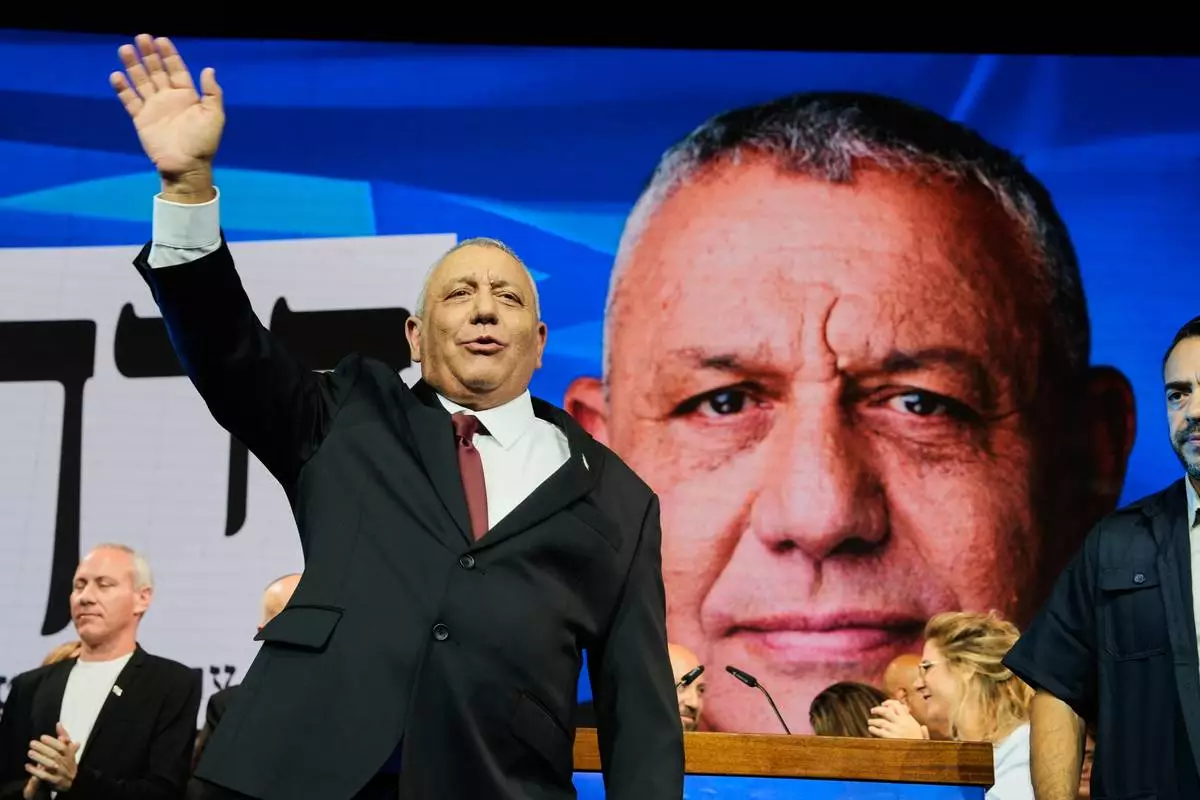
Gadi Eisenkot, leader of the Yashar ("Straight") party, waves to supporters following the release of the first exit poll results in Israel's general election in Tel Aviv, Israel, Wednesday, Oct. 28, 2026. (AP Photo/Baz Ratner)

Gadi Eisenkot, leader of the Yashar ("Straight") party, waves to supporters following the release of the first exit poll results in Israel's general election in Tel Aviv, Israel, Wednesday, Oct. 28, 2026. (AP Photo/Baz Ratner)

Iran-backed Houthi rebels say Saudi-led airstrikes have killed 14 people in a busy market in northern Yemen.

Yemeni officials, meanwhile, appealed for international support to protect civilians in Taiz as the Houthis tightened their siege of the city.

Separately, a police officer guarding the Israeli Embassy in the Serbian capital of Belgrade shot and killed a man who attacked him with a knife. Police said the incident was a “terrorist attack.”

Here is the latest news from the Middle East on Wednesday. Read our full coverage here.

Saudi-led airstrikes hit a crowded market in northern Yemen on Wednesday, killing 14 people and wounding 15 others, according to the Houthi-run Health Ministry. Three women were among the wounded, it said, adding that shops and houses nearby were heavily damaged.

The market near a gas station in al-Hazm, the capital of al-Jawf province, was packed with shoppers when the strikes hit, the ministry said in a statement. The ministry called the attack a war crime that requires an international investigation. There was no immediate statement from the Saudi-backed Yemeni government.

An Associated Press reporter in the southern city of Aden witnessed explosions that shattered windows at the airport building and nearby homes after Houthi military spokesman Yahya Saree urged everyone at the airport to evacuate.

Saree said a Saudi military cargo plane carrying weapons was there, without providing evidence.

Aden’s airport was completely deserted after the Houthi warning, airport employee Salem Al-Awlaqi told The Associated Press. A security official who spoke on condition of anonymity said no staff or security personnel remained. Flights from Cairo and Mumbai bound for Aden were diverted to Seiyun Airport in Yemen’s Hadramawt province, and a flight to Cairo was canceled, the official said.

Yemeni government officials urged the international community to help protect civilians and reopen roads into the city of Taiz as Iran-backed Houthi rebels tightened their siege of the city.

Taiz province has emerged as a major battlefront in recent weeks, including the city of Taiz — considered a gateway to the country's south. It has taken in around half of Yemen’s population displaced by fighting, straining limited resources.

The Taiz governor, Nabil Shamsan, said residents had lost access to about 3 million liters (about 793,000 gallons) of water previously available from wells in Wadi al-Dhubab, which he said is now under Houthi control. The AP couldn’t independently verify that claim.

Eshraq al-Maqtari, a legal affairs minister in Yemen’s internationally recognized government, said more than 2,000 projectiles and explosives fired by the Houthis struck Taiz city districts in recent days and called for measures to cut off the rebels' weapon supplies and funding.

Shamsan said fighting had intensified across the province as the Houthis deployed reinforcements to multiple fronts, with the city encircled on all four sides.

Health officials at Nasser Hospital said a midafternoon strike hit near a Red Cross field hospital in Rafah on Wednesday, killing three people and injuring 15 more, including five seriously. A strike earlier in the day killed one man and critically wounded a woman. Another strike wounded at least five more people.

Israel’s military did not respond to a request for comment.

More than 1,550 Palestinians in Gaza have been killed by the Israeli military since the ceasefire between Israel and the Palestinian militant group Hamas began in October 2025, according to the territory’s health ministry. The ministry maintains records and is regarded as generally reliable by U.N. agencies and independent experts.

Meanwhile, the Israeli military said it was continuing its sweeping operation in the occupied West Bank in response to an attack that killed two soldiers and wounded three others last week. The operation, centered in the city of Hebron, has displaced thousands of Palestinians and placed tight restrictions on their movement.

The two gunmen who carried out the attack were shot and killed. The military said Wednesday that it arrested six more people who were allegedly involved in planning terror attacks, including one person with ties to Hamas. It said it confiscated weapons, including an M16 rifle.

An assailant armed with knives attacked a police officer guarding the Israeli Embassy in Belgrade, Serbia, just after midnight on Wednesday, police said. The officer, who was slightly wounded in the face, responded by fatally shooting the attacker.

Serbia’s Interior Minister Ivica Dacic said police were treating the incident as a “terrorist attack” and had raised the terror threat to the highest level. Police presence at key locations was increased.

He described the attacker as a minor who had two knives. He attacked the member of the Gendarmerie, shouting Allahu Akbar, or “God is great” in Arabic.

A meeting between Iran and Saudi Arabia, Pakistan and Turkey in Tehran on Monday provided an opportunity to advance dialogue and regional peace, Iran’s top diplomat said.

Iranian Foreign Minister Abbas Araghchi said on social media that the countries should be responsible for their own security without the military presence of “extraregional powers.”

The talks came amid growing speculation about the return to all-out war and as Saudi Arabia continues to face repeated attacks from the Houthis in Yemen.

Araghchi gave no details on the meeting.

This report will be updated throughout the day as new developments emerge.

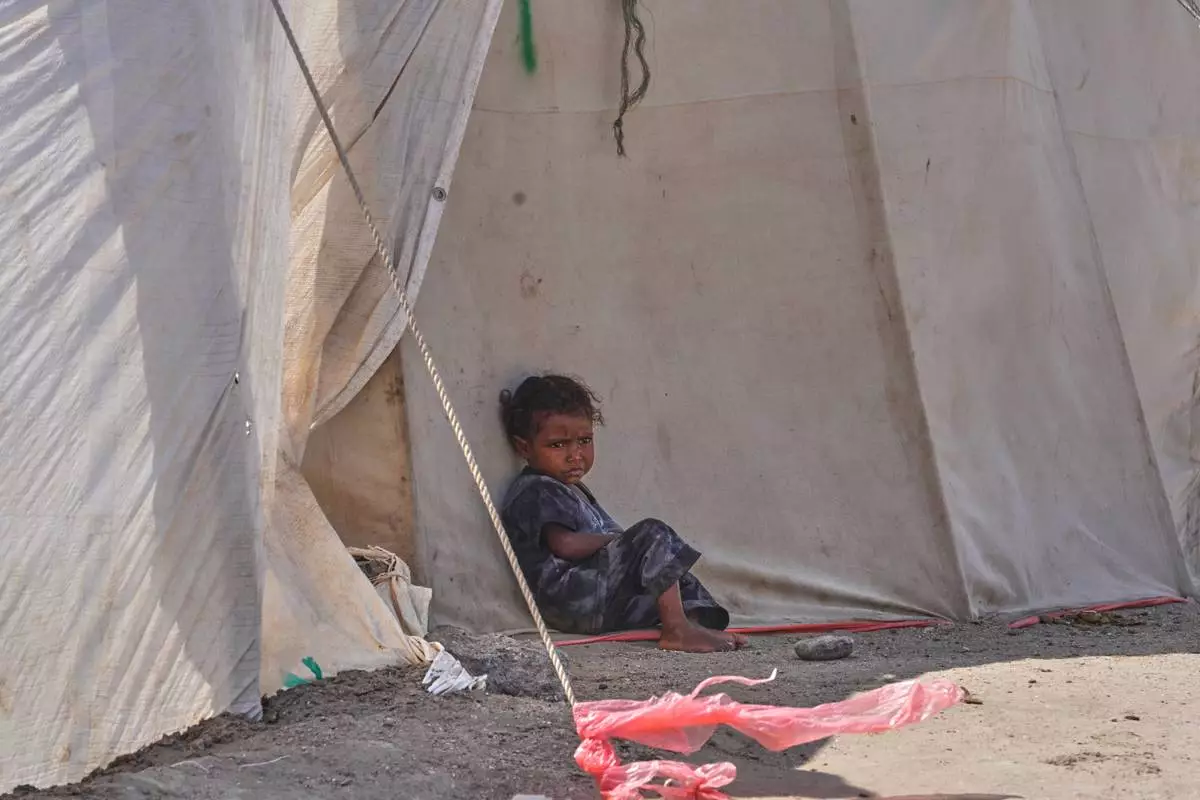
A displaced Yemeni child sits outside a tent at the Al-Fardous displacement camp in Ras Imran, on the outskirts of Aden, Yemen, Sunday, Oct. 25, 2026. (AP Photo/Abdulnasser Alseddik)

A displaced Yemeni child sits outside a tent at the Al-Fardous displacement camp in Ras Imran, on the outskirts of Aden, Yemen, Sunday, Oct. 25, 2026. (AP Photo/Abdulnasser Alseddik)

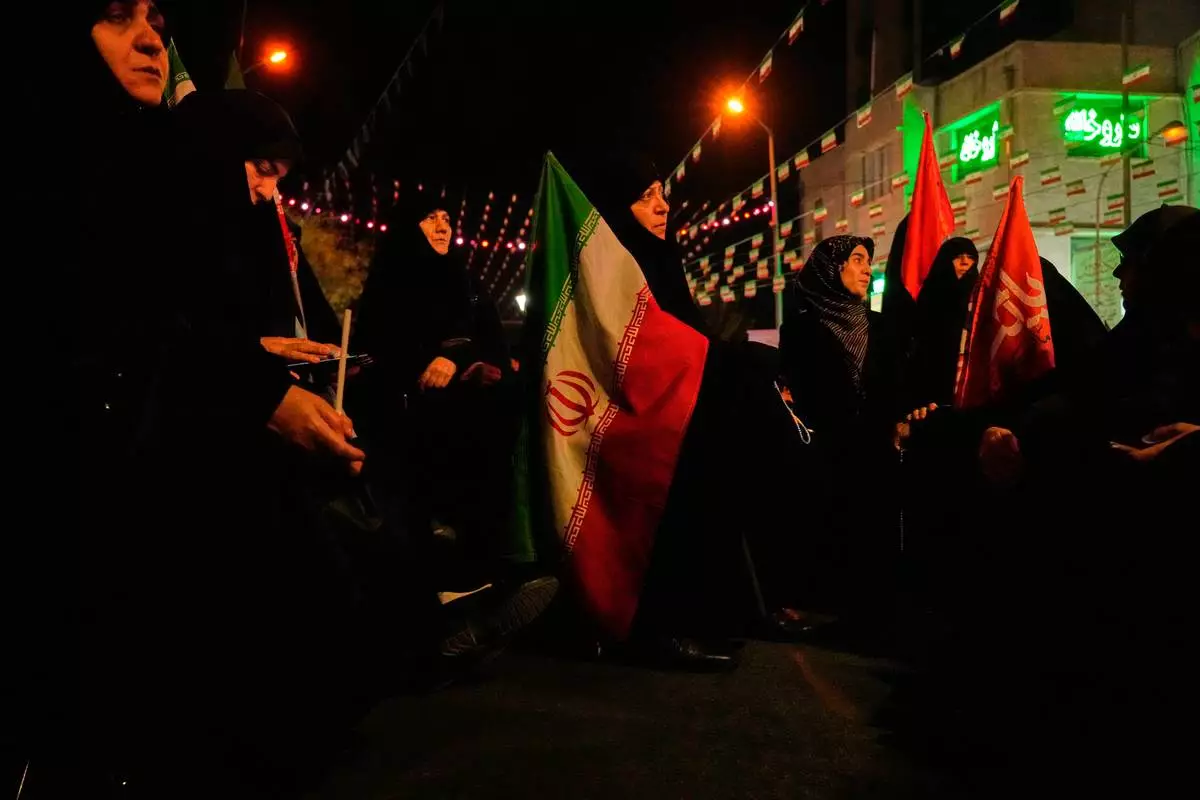
Women attend a pro-government gathering in Tehran, Iran, Tuesday, Oct. 27, 2026. (AP Photo/Vahid Salemi)

Women attend a pro-government gathering in Tehran, Iran, Tuesday, Oct. 27, 2026. (AP Photo/Vahid Salemi)

Recommended Articles