NEW YORK (AP) — A federal appeals panel has reversed a lower court decision ordering the release of pro-Palestinian activist Mohsen Mahdawi, opening the door to the re-arrest of a student protest organizer whom the Trump administration has spent more than a year trying to deport.
Tuesday's ruling from the 2nd U.S. Circuit Court of Appeals in New York overturns a previous decision by a federal judge in Vermont, which likened the government’s efforts to expel him and other activists to McCarthyist repression.
In their unanimous decision, the panel found that the judge had overstepped his authority by intervening in Mahdawi's case before it had moved fully through the immigration court system.
The ruling mirrors a separate appellate panel’s decision earlier this year against Mahmoud Khalil, a former classmate of Mahdawi’s at Columbia University.
As with the ruling against Khalil, the appeals court did not weigh in on the merits of Mahdawi's claim that he was unconstitutionally targeted for criticizing Israel. He can seek a review from the federal courts over those claims once he has exhausted his options in the immigration courts, the panel wrote.
Mahdawi, 35, is currently appealing an order of removal issued against him by the Board of Immigration Appeals.
Attorneys for the American Civil Liberties Union, which represents Mahdawi, said Tuesday that the government could not detain or deport their client as the appeals process proceeds.
In a statement, Mahdawi called the appeals court decision “a grave setback,” adding that it would hand the government “the power to intimidate, censor, and punish dissent without meaningful restraint.”
An emailed inquiry to the Department of Homeland Security was not immediately returned.
Mahdawi was born in a refugee camp in the Israeli-occupied West Bank and became a legal permanent resident of the U.S. in 2015.
He was arrested by immigration agents during a citizenship interview in April 2025, part of the Trump administration’s sweeping efforts to expel noncitizens who criticized Israel and protested against the war in Gaza. He was released two weeks later and graduated from Columbia soon after.
At a hearing in front of the 2nd Circuit last September, government attorneys argued against the release of both Mahdawi and another student, Rumeysa Ozturk, a Turkish doctoral student at Tufts University who was detained by masked federal agents after co-signing an op-ed critical of Israel.
Both students, the government said, had wrongly benefited from a form of relief, known as habeas corpus, that should be off-limits to those whose cases are moving through the immigration courts.
Attorneys for the students countered that there was little hope in seeking relief from an immigration court system overseen by President Donald Trump’s Department of Justice.
The 2nd Circuit court is expected to issue a separate ruling concerning Ozturk’s case.

FILE - Mohsen Mahdawi speaks during an interview at the ACLU of Vermont on May 8, 2025, in Montpelier, Vt. (AP Photo/Alex Driehaus, File)
WASHINGTON (AP) — JD Vance publicly broke from President Donald Trump 's defense of the Iran war Wednesday after the Republican Party's deep losses in the midterm elections, attempting to distance himself from voters' clear rebuke of the president as the vice president faces questions about his own political ambitions.
Vance, who has said he would decide after the election whether to run for president in 2028, issued a lengthy social media post blaming the unpopular conflict with Iran for the GOP's drubbing. Vance said, "If you’d like to argue it was worth it, that losing the Senate for the next 6 years was worth it, then do so.”
But arguing that the war was worth it is what Trump repeatedly did on the campaign trail, continued to do in interviews as election results came in and did again Wednesday morning. As he led reporters on an impromptu visit to the ballroom he's constructing at the White House, Trump said, “The Iran thing, we had to do and we continue to do it."
Trump said he spoke to Vance on Wednesday morning and, when asked about the vice president's post, he called it “good” and said, “I know how he feels about it," and “I think it was fine."
The president also said he “knew the war was going to impact” the midterm elections but again defended his actions.
Vance, who had long advocated for restraint in U.S. military intervention overseas, was lukewarm in his defense of the conflict after Trump launched it and even became the face of an unsuccessful attempt to end the fighting.
Democrats showed they intend to make Vance own the war.
“If Vance has felt this way all along, why didn’t he speak out forcefully?” Democratic National Committee spokeswoman Rosemary Boeglin said in a statement. “Why didn’t he resign? And most importantly, why didn’t he stand up for Americans?"
The vice president, she said, "will always do what’s most politically convenient for him in the moment — even if it means throwing Americans under the bus. Vance owns this administration’s failures.”
Democrats swept control of both the House and the Senate on Tuesday, defeating GOP candidates even in deep-red areas that Trump carried by wide margins two years ago.
“There’s no doubt this is a repudiation of the last two years," said Marc Short, who was chief of staff to former Vice President Mike Pence and worked in Trump’s White House in his first term.
He said Vance will still have a big microphone as the sitting vice president, and the election results don't mean he won't be the GOP's nominee for president in two years.
But, Short said, “It certainly doesn’t help his case, that’s for sure. I would argue it does hurt.”
When Pence was in the role, he intentionally tried not to distance himself from Trump and shared his opinions privately, Short said. But Vance’s post Wednesday seemed to be “an intentional separation” from the president despite being inherently linked to him.
“You made that bargain when you agreed to be vice president," he said.
Vance, in his post, said that Republican voters cast their ballots for Democrats because of the war, the cost of living, America not being prioritized and the U.S. relationship with Israel — a dynamic where he’s also sounded a different note than Trump.
“The real reason we lost is obvious to almost everyone," he wrote.
Unlike the president, Vance declined to endorseIsraeli Prime Minister Benjamin Netanyahu for reelection and this summer publicly chastised members of Israel’s government for opposing Trump’s efforts to resolve the war with Iran.
Vance, who has been a staunch defender of the administration’s immigration policies, also appeared to be seeking some distance from the immigration crackdown that drew a backlash.
“I’m open to the idea that we should change enforcement — by focusing more on businesses that hire illegal labor, for instance,” he wrote.
But he said he rejected any politicians who might propose amnesty for people living in the country illegally.
About 6 in 10 voters said the U.S. made the “wrong decision” in taking military action against Iran, according to The AP Voter Poll, a survey of more than 100,000 voters in the United States. Most of those voters dissatisfied with the Iran war backed the Democratic candidate in their U.S. House race, but the survey suggested the Iran war was not the leading issue for most voters.
Only about one-third of voters said the war in Iran was “crucial” to their vote for Congress, well below the roughly half who said that about the cost of living or government corruption.
Nearly all voters who backed the Democratic candidate in their U.S. House race said going to war with Iran was the “wrong decision,” while roughly 8 in 10 voters who backed the Republican candidate said it was the “right decision.”
A former Marine who served in Iraq, Vance had been critical of that conflict and said after becoming vice president that a Trump administration would not send troops into the “open-ended conflicts” of the past.
After Trump launched the war with Iran this past spring, Vance was noticeably quiet in speaking about it, a conspicuous change for a politician known for being a pugnacious defender of the president.
This summer, he tried to argue the conflict was worth it, telling conservative podcast host Megyn Kelly in an interview that, “If we transformed the Middle East, this is fundamentally worth it."
Associated Press Writer Linley Sanders in Washington contributed to this report.
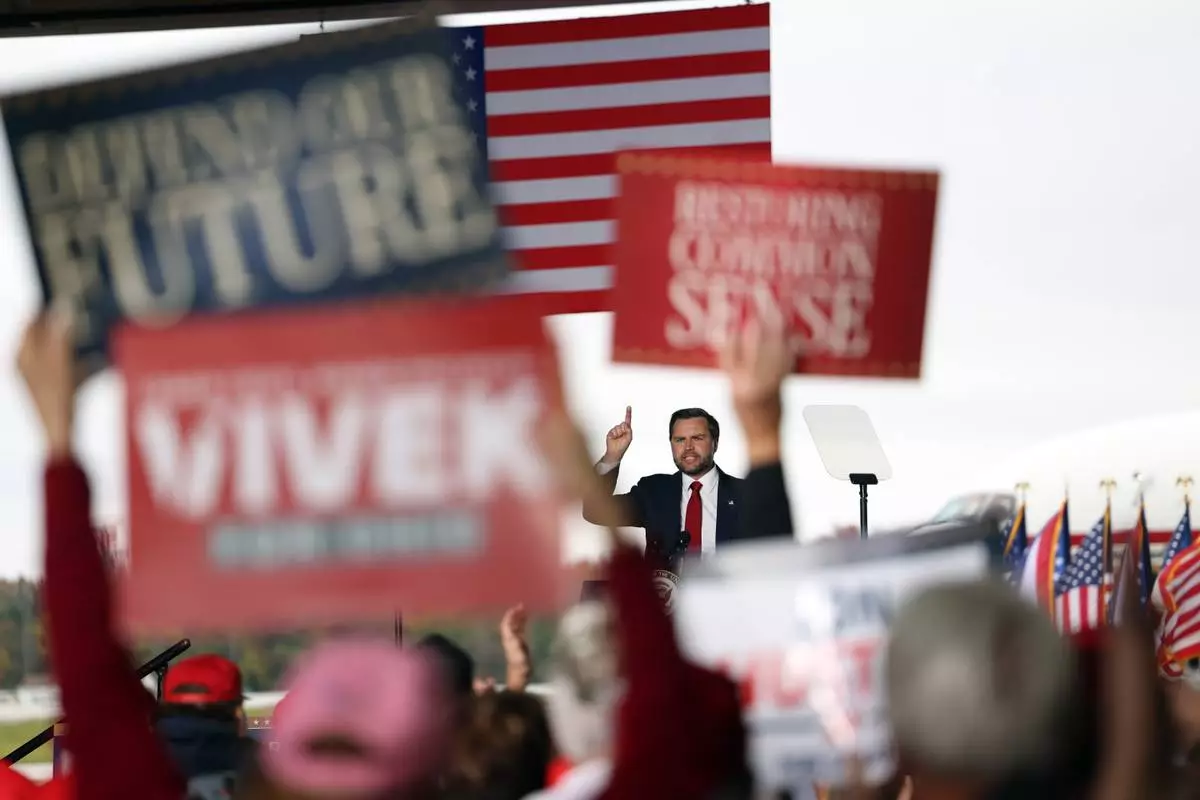
Vice President JD Vance speaks at a campaign rally at Eugene F. Kranz Toledo Express Airport, Monday, Nov. 2, 2026 in Swanton, Ohio. (Tom Brenner/Pool via AP)
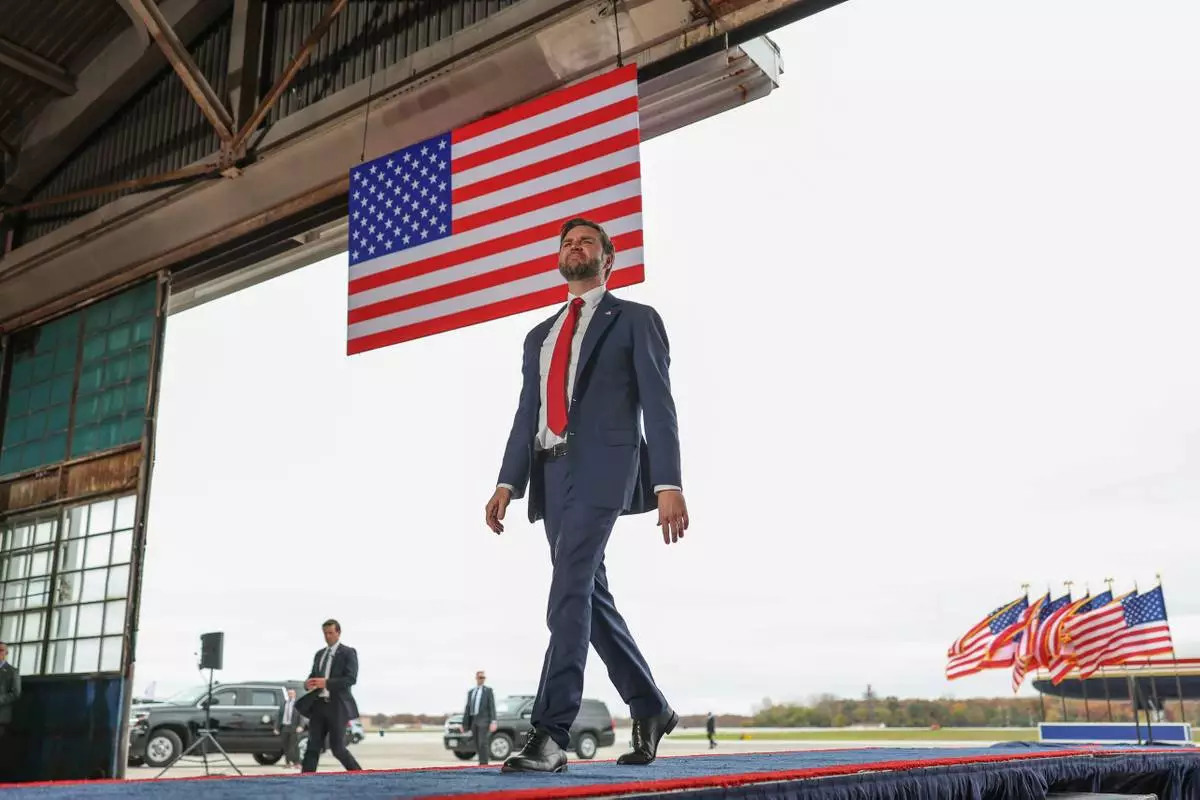
Vice President JD Vance arrive at a campaign rally at Eugene F. Kranz Toledo Express Airport, Monday, Nov. 2, 2026 in Swanton, Ohio. (Tom Brenner/Pool via AP)
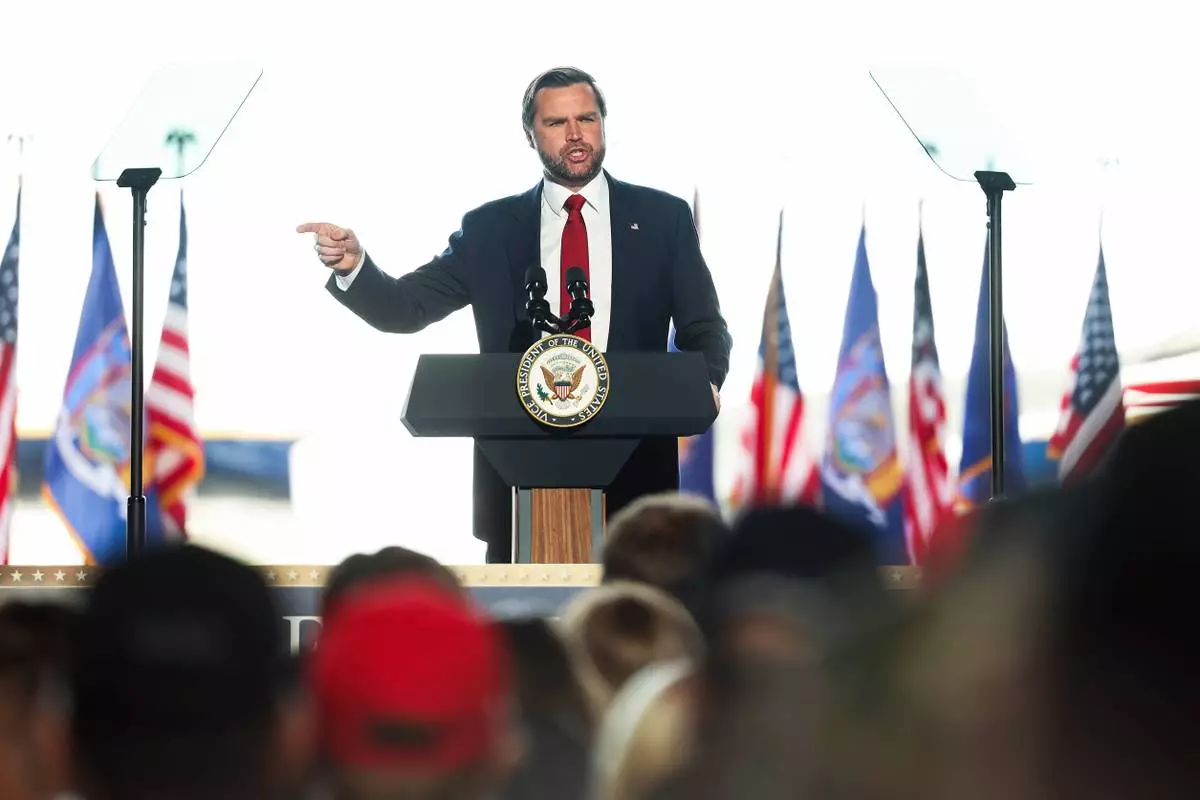
Vice President JD Vance speaks during for a campaign rally at Griffiss International Airport, Monday, Nov. 2, 2026 in Rome, N.Y. (Tom Brenner/Pool Photo via AP)