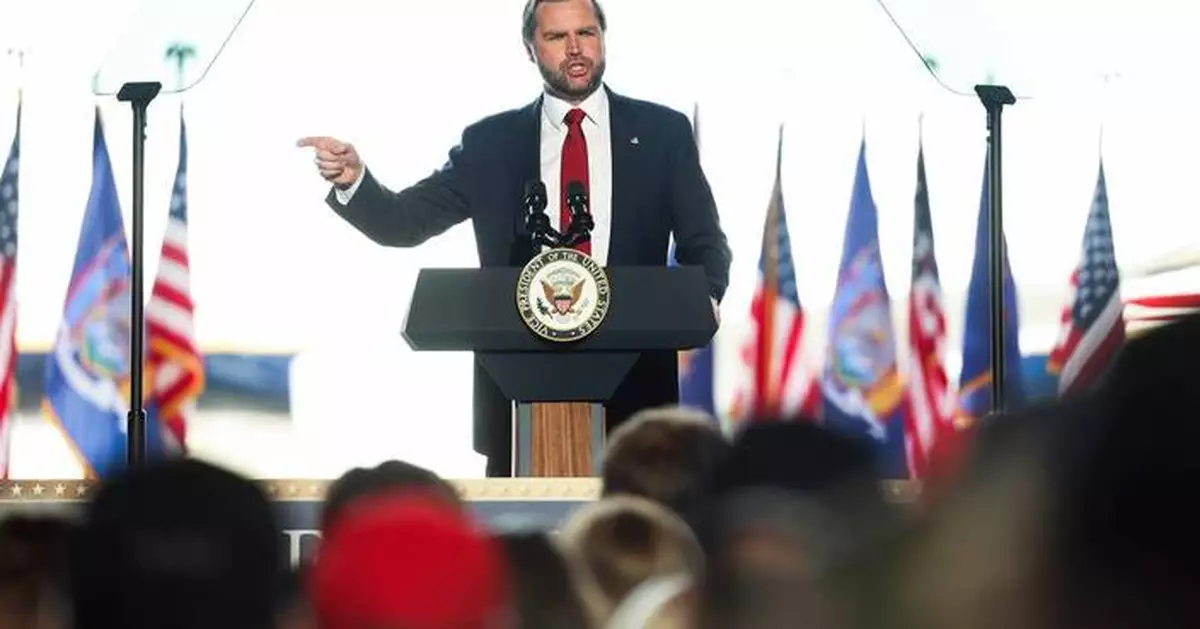
WASHINGTON (AP) — JD Vance publicly broke from President Donald Trump 's defense of the Iran war Wednesday after the Republican Party's deep losses in the midterm elections, attempting to distance himself from voters' clear rebuke of the president as the vice president faces questions about his own political ambitions.
Vance, who has said he would decide after the election whether to run for president in 2028, issued a lengthy social media post blaming the unpopular conflict with Iran for the GOP's drubbing. Vance said, "If you’d like to argue it was worth it, that losing the Senate for the next 6 years was worth it, then do so.”
But arguing that the war was worth it is what Trump repeatedly did on the campaign trail, continued to do in interviews as election results came in and did again Wednesday morning. As he led reporters on an impromptu visit to the ballroom he's constructing at the White House, Trump said, “The Iran thing, we had to do and we continue to do it."
Trump said he spoke to Vance on Wednesday morning and, when asked about the vice president's post, he called it “good” and said, “I know how he feels about it," and “I think it was fine."
He also said he “knew the war was going to impact” the midterm elections but again defended his actions.
Vance, who had long advocated for restraint in U.S. military intervention overseas, was lukewarm in his defense of the conflict after Trump launched it and even became the face of an unsuccessful attempt to end the fighting.
About 6 in 10 voters said the U.S. made the “wrong decision” in taking military action against Iran, according to The AP Voter Poll, a survey of more than 100,000 voters in the United States. Most of those voters dissatisfied with the Iran war backed the Democratic candidate in their U.S. House race, but the survey suggested the Iran war was not the leading issue for most voters.
Only about one-third of voters said the war in Iran was “crucial” to their vote for Congress, well below the roughly half who said that about the cost of living or government corruption.
Nearly all voters who backed the Democratic candidate in their U.S. House race said going to war with Iran was the “wrong decision,” while roughly 8 in 10 voters who backed the Republican candidate said it was the “right decision.”
A former Marine who served in Iraq, Vance had been critical of that conflict and said after becoming vice president that a Trump administration would not send troops into the “open-ended conflicts” of the past.
After Trump launched the war with Iran this past spring, Vance was noticeably quiet in speaking about it, a conspicuous change for a politician known for being a pugnacious defender of the president.
This summer, he tried to argue the conflict was worth it, telling conservative podcast host Megyn Kelly in an interview that, “If we transformed the Middle East, this is fundamentally worth it."
But after Democrats swept control of both the House and the Senate on Tuesday, defeating GOP candidates even in deep-red areas that Trump carried by wide margins two years ago, Vance said in his post that “the real reason we lost is obvious to almost everyone."
He said Republican voters cast their ballots for Democrats because of the war, the cost of living, America not being prioritized and the U.S. relationship with Israel — a dynamic where he's also sounded a different note than Trump.
Unlike the president, Vance declined to endorseIsraeli Prime Minister Benjamin Netanyahu for reelection and this summer publicly chastised members of Israel’s government for opposing Trump’s efforts to resolve the war with Iran.
Vance, who has been a staunch defender of the administration's immigration policies, also appeared to be seeking some distance from the immigration crackdown that drew a backlash.
“I’m open to the idea that we should change enforcement — by focusing more on businesses that hire illegal labor, for instance,” he wrote.
But he said he rejected any politicians who might propose amnesty for people living in the country illegally.
Associated Press Writer Linley Sanders in Washington contributed to this report.
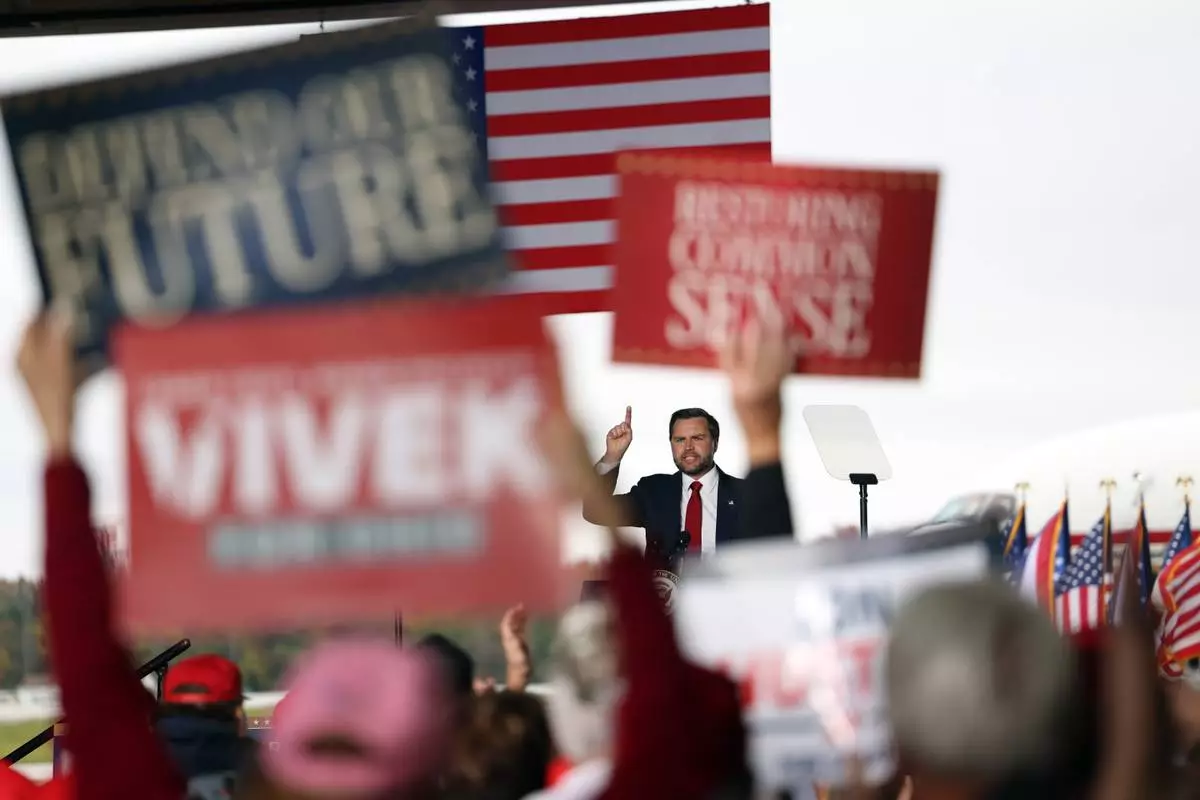
Vice President JD Vance speaks at a campaign rally at Eugene F. Kranz Toledo Express Airport, Monday, Nov. 2, 2026 in Swanton, Ohio. (Tom Brenner/Pool via AP)
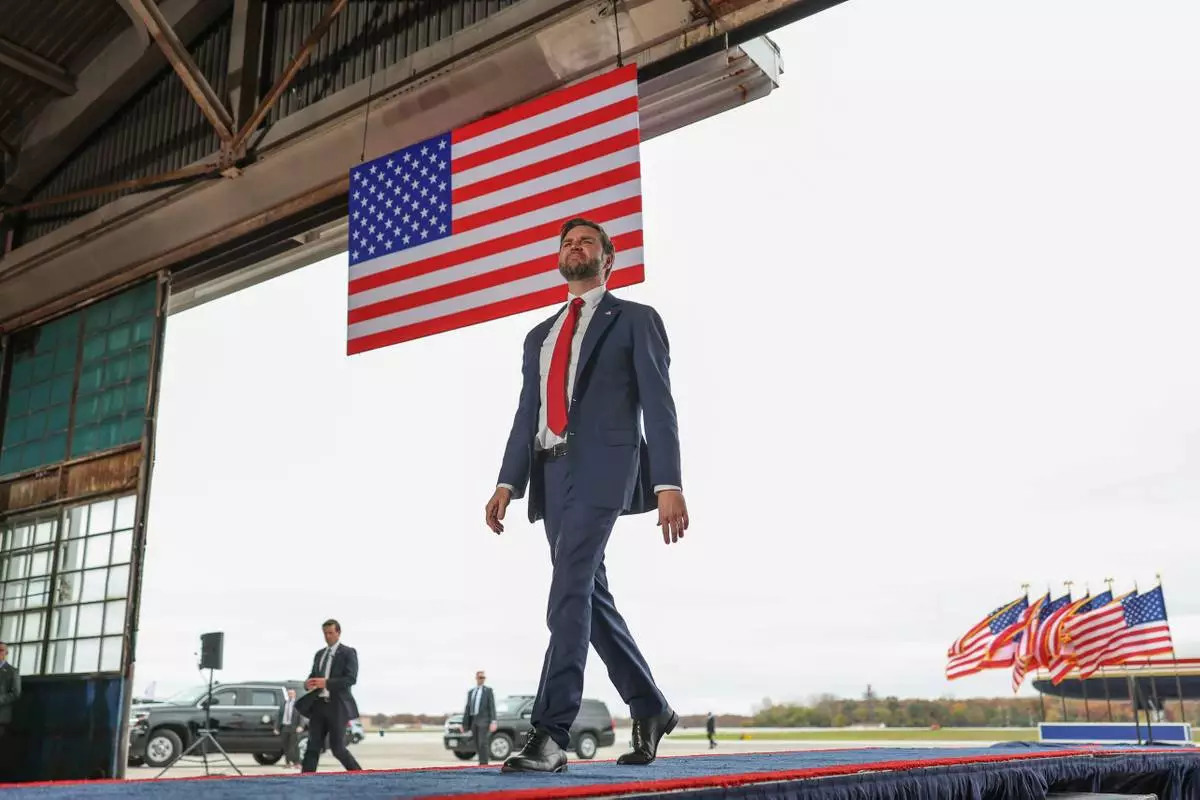
Vice President JD Vance arrive at a campaign rally at Eugene F. Kranz Toledo Express Airport, Monday, Nov. 2, 2026 in Swanton, Ohio. (Tom Brenner/Pool via AP)
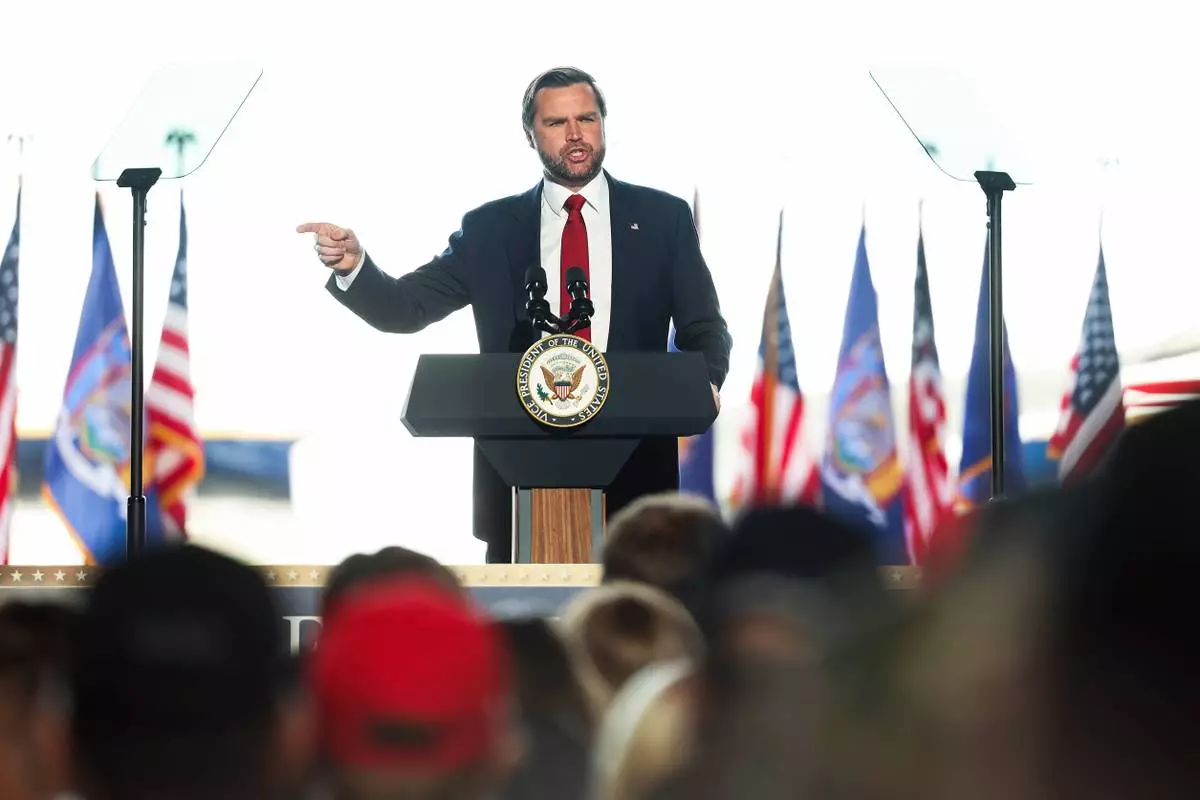
Vice President JD Vance speaks during for a campaign rally at Griffiss International Airport, Monday, Nov. 2, 2026 in Rome, N.Y. (Tom Brenner/Pool Photo via AP)
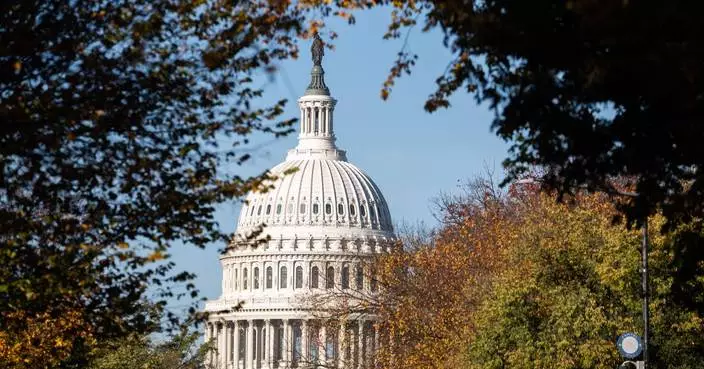
WASHINGTON (AP) — The midterm election blowout delivered a new era in Washington, with Democrats in Congress eager to meet voter demands for change while Republicans watched their majorities evaporate after a revolt against President Donald Trump and his party in power.
Democrats ousted Republicans from coast to coast, with many surprising places in between, in a decisive rejection of unified GOP control for the promise of something different for the country. Their majorities will be padded by unusually wide margins in both the House and the Senate.
The staggering results are setting up a starkly divided government, with an emboldened Congress poised to reassert itself as a coequal branch when Democrats take over in the new year. They are ready to launch a 100-day agenda to lower the costs of gas, groceries and healthcare and conduct vast oversight and investigations into Trump and his administration, with impeachment an option.
“We hear you,” said House Democratic Leader Hakeem Jeffries of New York, who would make history as the first Black speaker of the House if his colleagues elect him to the job when the new Congress begins on Jan. 3, 2027.
Jeffries called the election a “stunning rebuke of MAGA extremism” and “a great victory for the American people.”
Senate Democratic Leader Chuck Schumer acknowledged the political reality that voters may have been more willing to reject Trump's party than to embrace the Democrats.
“Many of the folks who voted for us yesterday are still skeptical, and that’s OK,” the New York senator said Wednesday at the Capitol.
He said the history-making scale of his party's wins — picking up long-shot Senate seats in South Carolina, Texas and Kansas — creates “the opportunity to prove ourselves worthy of their trust.”
All told, the results present a fundamental reshaping of power in Washington, with new openings and challenges for governing. The tally was bewildering for the scope of Democratic gains and the depth of Republican losses, which indiscriminately wiped out GOP firebrands, moderates and veteran conservatives nationwide. The swelling majorities, with some races still too early to call, underlined a deep sense of voter anger and concern over the economy and the state of democracy.
Trump struck a conciliatory tone, suggesting he could work with the Democrats, but he also warned of gridlock ahead as he threatened to use the power of the presidential veto to strike down their agenda.
“I don’t want to be just sitting there for two years vetoing everything,” he told Politico.
Later, he acknowledged the Iran war impacted the midterm elections, suggesting voters were frustrated by surging gas prices that have been a byproduct of the 8-month-old conflict.
“The Iran thing we had to do, and we continue to do it,” Trump told reporters.
He said he was not considering replacing Defense Secretary Pete Hegseth, despite voter dissatisfaction with the war, saying Hegseth was “doing a great job."
Vice President JD Vance, often eyed as Trump's likely successor at the White House, pointedly blamed the president's war in Iran for Republicans' midterm wipeout.
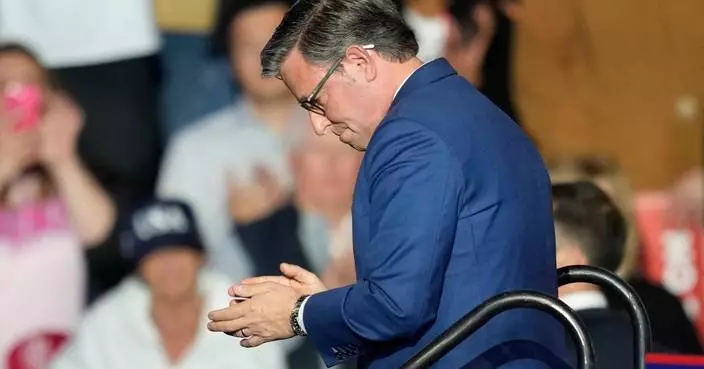
House Speaker Mike Johnson of Louisiana will not seek reelection as House Republican leader, according to two people familiar with his decision, setting up a potentially brutal leadership battle following the party's trouncing by the Democrats. The people who told The Associated Press about Johnson’s decision insisted on anonymity to disclose it.
House Democrats are planning to quickly launch efforts to reverse Trump's GOP cuts to the Affordable Care Act and Medicaid healthcare programs. They're also ready to dive into a robust oversight agenda to, as Jeffries says, “hold the crooks accountable.”
The top Democrat on the House Oversight Committee, Rep. Robert Garcia of California, issued a one-sentence warning: “Lawyer up.”
Sen. Ron Wyden, the top Democrat on the Senate Finance Committee, issued his own one-word missive: "Subpoenas."
Democrats will be under pressure to quickly show that they have solutions for voters' anger and frustration over high prices, the war in Iran and unease about the direction of the country. About 7 in 10 voters nationally say Congress is not doing enough to provide checks and balances on the presidency, according to The AP Voter Poll.
For Jeffries and his leadership team, it will be their first time in the majority, managing a class of newcomers including a handful of far-left democratic socialists.
With the majority in the 435-member House growing well past the 218 needed and the Senate Democrats holding at least 54 of 100 seats in that chamber, Jeffries and Schumer will have room to maneuver.
For Republicans, their shriveled numbers quickly launched a reckoning of their own, as they try to figure out what went so uniformly wrong.
In a lengthy online post, the vice president seemingly sought to distance himself from election results seen as a referendum on Trump that featured big Republican losses across the country.
“The reason we lost is the war,” Vance wrote, adding, “If you’d like to argue it was worth it, that losing the Senate for the next 6 years was worth it, then do so. Argue it was a worthwhile cost to pay. Agree or disagree, that’s at least honest.”
Republicans may be anxious during the post-election lame-duck sprint to accomplish as much as possible in their remaining weeks in power. But hopes for another GOP-only priority package like their big tax breaks and spending cuts bill seem dim as defeated lawmakers prepare to go home at the end of the year.
Conservatives have also eyed the opportunity for Trump to nominate more judges or even a justice to the Supreme Court while Senate Republicans still hold a majority to confirm the picks.
And the government could be headed toward a federal shutdown next month if Congress fails to pass a funding bill to keep operations running.
In the weeks ahead, the parties will hold internal leadership elections.
Johnson will stay on as a rank-and-file lawmaker in the new Congress, but rivals are lining up to replace him as GOP leader.
Jeffries will seek to shore up support as Democratic leader, before the House chooses its speaker as one of the first votes when the new Congress convenes.
In the Senate, Schumer faces a new generation of Democrats including some who have yet to support him as majority leader.
Rarely has the president’s party held on to power during midterm elections, but the Democratic tsunami carried echoes of Trump’s first term, when Republicans faced a voter revolt that sent Democrats to the House majority, and the Barack Obama era, when the Republican tea party swept to power.
This new Congress will also mark firsts and welcome trailblazers.
With the election of Democrat Juliana Stratton of Illinois, the Senate will for the first time have three Black women in office.
Democrat Peggy Flanagan of Minnesota will be the first Native American female senator, Chris Pappas of New Hampshire will become the first openly gay male U.S. senator and Abdul El-Sayed of Michigan will be the first Muslim to serve in the U.S. Senate.
This story has been corrected to show the Illinois Democrat’s name is Juliana, not Julia.
Associated Press writers Tom Beaumont, Joey Cappelletti, Jill Colvin, Kevin Freking, Mary Clare Jalonick and Will Weissert contributed to this report.
Follow the AP's coverage of the 2026 elections at https://apnews.com/hub/elections.
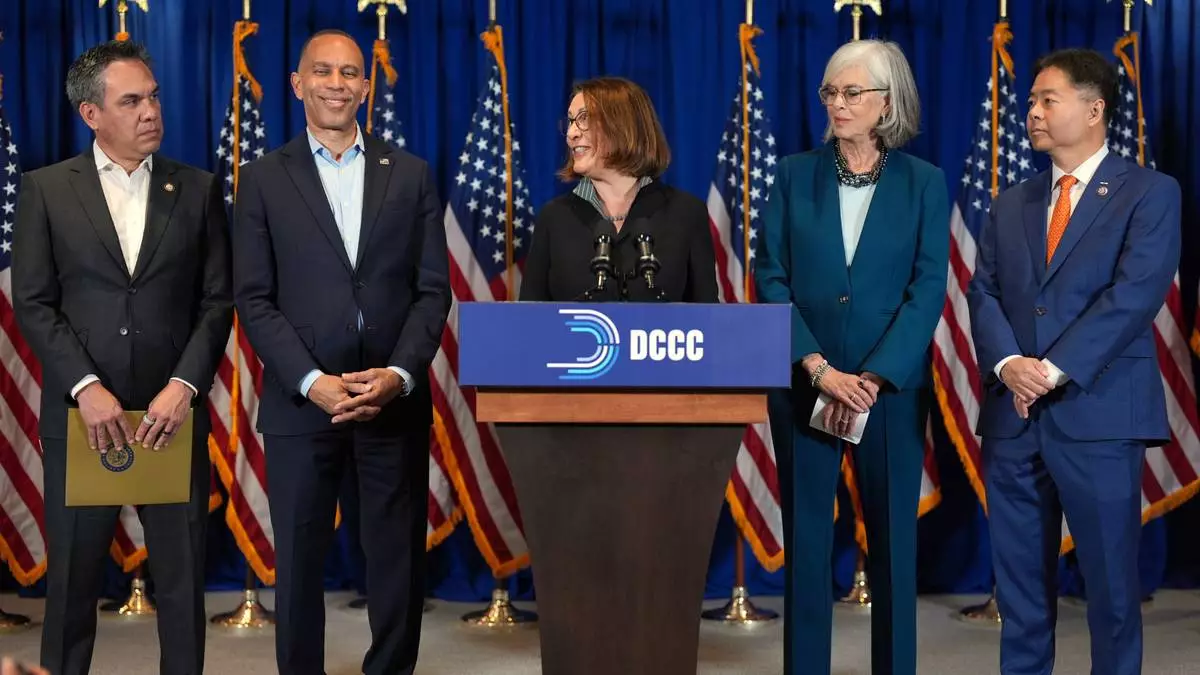
Rep. Suzan DelBene, D-Wash., speaks at a news conference in Washington, Wednesday, Nov. 4, 2026, as Rep. Pete Aguilar, D-Calif., chair of the House Democratic Caucus, from left, House Democratic Leader Hakeem Jeffries, D-N.Y., who is poised to become speaker of the House, Rep. Katherine Clark, D-Mass., the House minority whip, and Rep. Ted Lieu, D-Calif., vice chair of the House Democratic Caucus, listen. (AP Photo/J. Scott Applewhite)
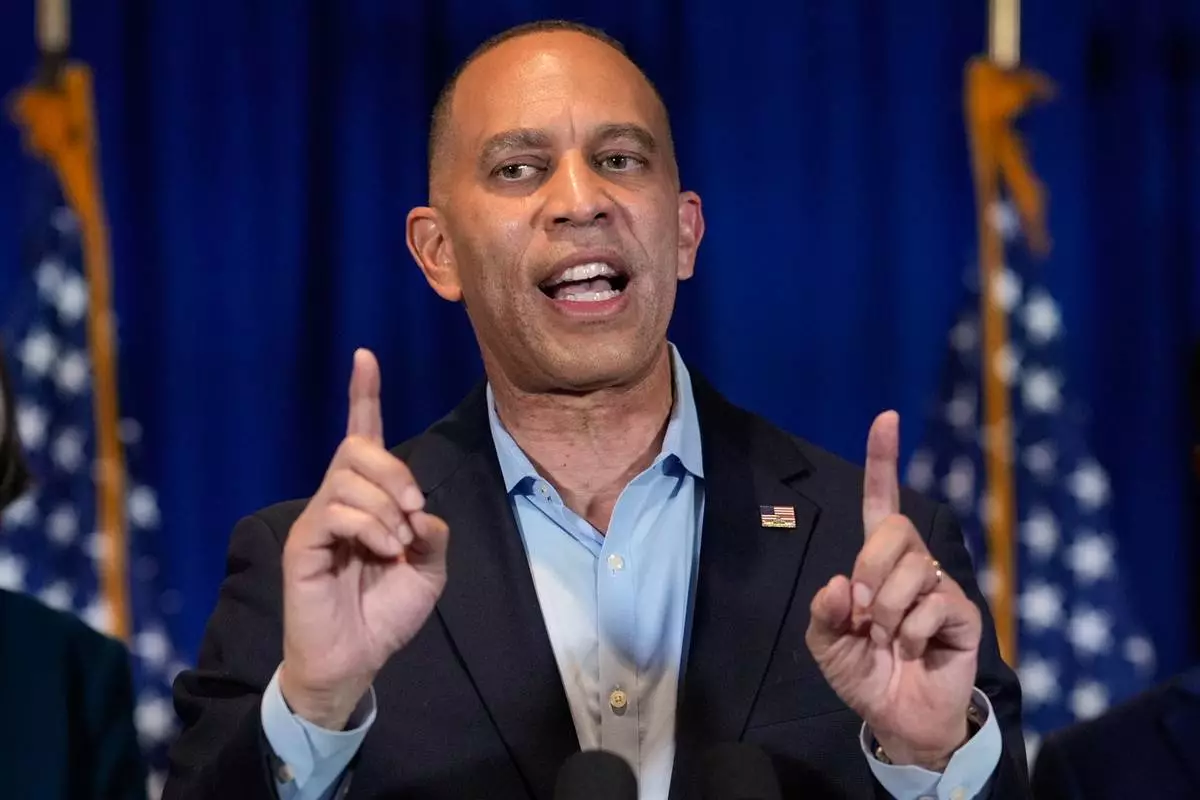
House Democratic Leader Hakeem Jeffries, D-N.Y., who is poised to become speaker of the House, speaks at a news conference in Washington, Wednesday, Nov. 4, 2026. (AP Photo/J. Scott Applewhite)

House Speaker Mike Johnson, R-La., looks on as President Donald Trump speaks with reporters, Sunday, Nov. 1, 2026, at Dubuque Regional Airport in Dubuque, Iowa, en route to a campaign rally. (AP Photo/Jacquelyn Martin)
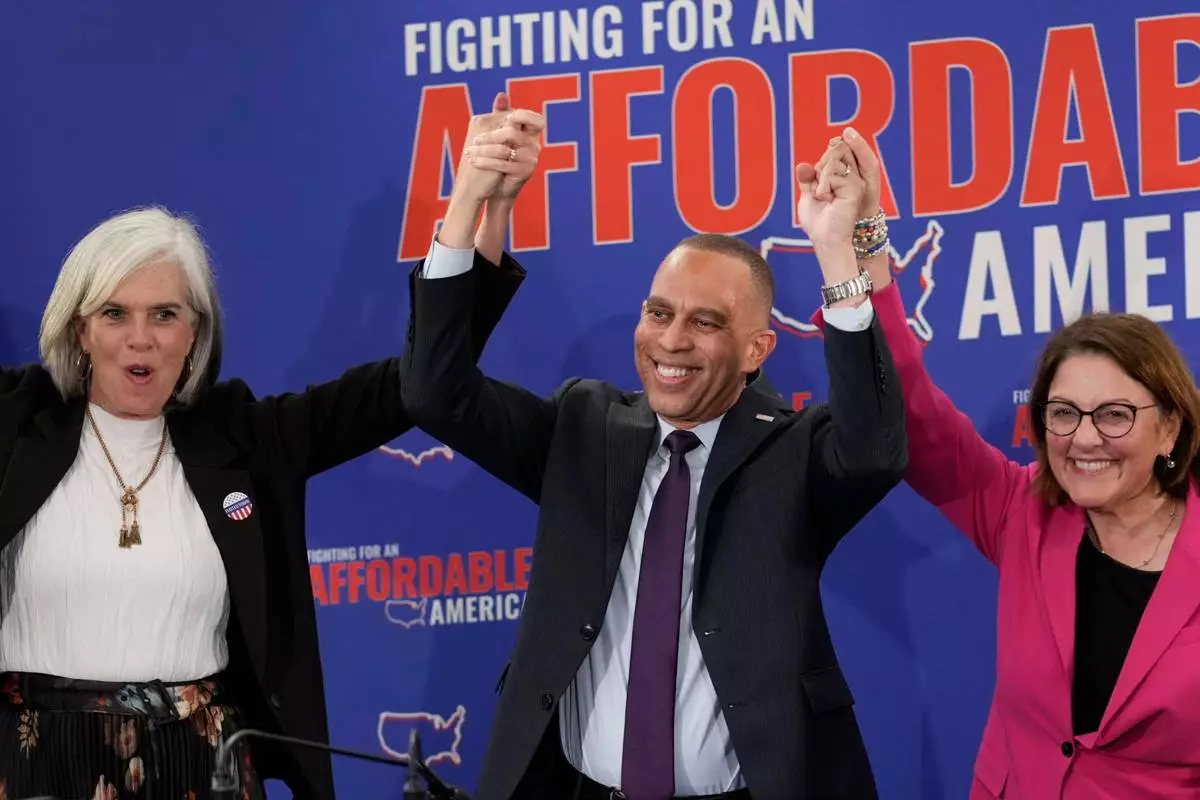
Rep. Katherine Clark, D-Mass., the House minority whip, from left, House Democratic Leader Hakeem Jeffries, D-N.Y., and Democratic Congressional Campaign Committee Chair Suzan DelBene, D-Wash., hold hands during a watch party at a hotel on Capitol Hill in Washington, Wednesday, Nov. 4, 2026. (AP Photo/J. Scott Applewhite)
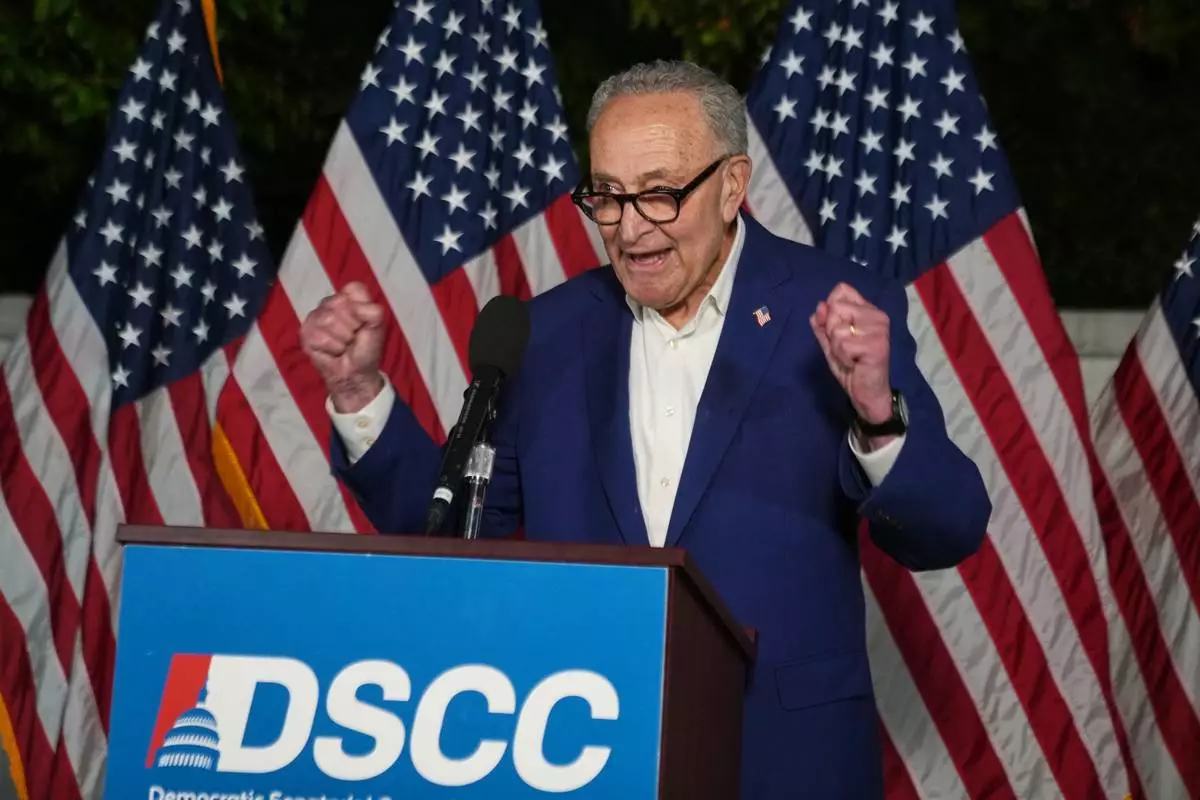
Senate Minority Leader Chuck Schumer, D-N.Y., speaks at the Democratic Senatorial Campaign Committee office, Tuesday, Nov. 3, 2026, in Washington. (AP Photo/Allison Robbert)
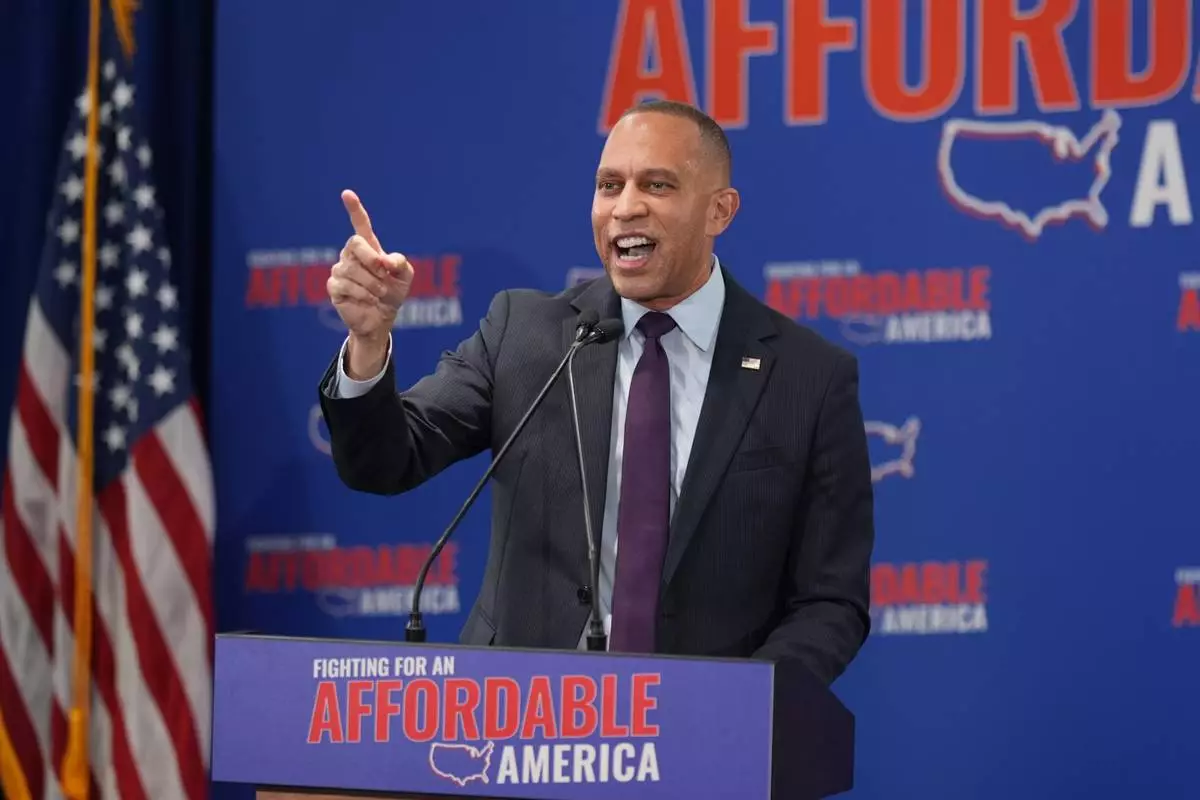
House Democratic Leader Hakeem Jeffries, D-N.Y., speaks during a watch party at a hotel on Capitol Hill in Washington, Wednesday, Nov. 4, 2026. (AP Photo/J. Scott Applewhite)

Senate Minority Leader Chuck Schumer, D-N.Y., holds his handwritten speech at the Democratic Senatorial Campaign Committee office, Tuesday, Nov. 3, 2026, in Washington. (AP Photo/Allison Robbert)
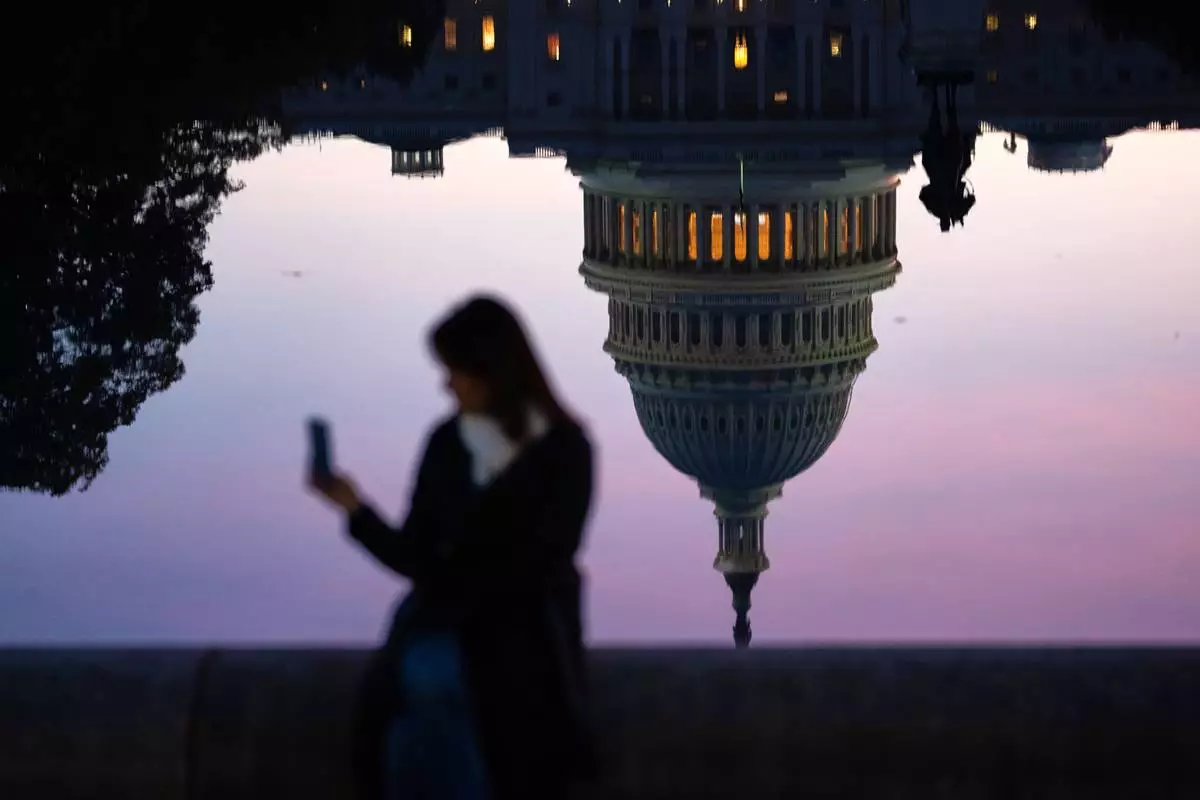
The sun rises behind the U.S. Capitol, as seen reflected in the U.S. Capitol Reflecting Pool, on Election Day, Tuesday, Nov. 3, 2026, in Washington. (AP Photo/Allison Robbert)