LOS ANGELES--(BUSINESS WIRE)--Jul 21, 2026--
Faraday Future Intelligent Electric Inc. (NASDAQ: FFAI) (“Faraday Future,” “FF” or the “Company”), a California-based global Embodied AI (EAI) ecosystem company, announced today that it will effect a 1-for-150 reverse split of its Class A common stock (the “Class A Common Stock”) and Class B common stock, each with par value of $0.0001 per share. Commencing with the opening of trading on the Nasdaq Capital Market on July 24, 2026, the Company’s Class A Common Stock will trade on a post-split basis under the same symbol, FFAI. The reverse stock split was approved by the Company’s stockholders at the annual meeting of stockholders held on May 22, 2026, with the final ratio determined by the Company’s board of directors.
This press release features multimedia. View the full release here: https://www.businesswire.com/news/home/20260721666003/en/
Additional information concerning the reverse stock split can be found in FF’s definitive proxy statement filed with the Securities and Exchange Commission on April 28, 2026.
The reverse stock split is a proactive risk management measure adopted by the Board of Directors after careful evaluation, with the following objectives:
1. Preserve the Company's Nasdaq Listing
The Company believes that maintaining its Nasdaq listing and the continued trading of its Class A Common Stock on the Nasdaq Capital Market is of material importance to both the Company and its stockholders. Under Nasdaq Listing Rules, however, if the closing bid price of the Company's Class A Common Stock falls to $0.10 or below for ten consecutive trading days, the Company would become subject to immediate delisting proceedings, and trading in its securities could be suspended. Given that the current trading price has approached this critical threshold, the Company’s board of directors believes it is imprudent to adopt a passive, wait‑and‑see approach in the face of such foreseeable and material risk. Implementing the reverse stock split at this time is designed to safeguard the Company's Nasdaq listing, preserve liquidity and access to capital, and protect the long‑term interests of all stockholders. Management is of the view that avoiding delisting risk represents the most responsible course of action for the Company’s stockholders.
2. Establish a Sustainable Compliance Buffer and Systematically Improve the Capital Structure
Through this 1-for-150 reverse stock split, the Company seeks to establish a meaningful and more durable compliance cushion. This, in turn, will allow the Company to focus on broader and more sustained capital‑structure management.
3. Enhance Attractiveness to Investors
The Company views the reverse stock split as a corrective measure, which, together with continued operational improvement, is expected to bring the per share trading price of the Class A Common Stock to a level that reduces or eliminates investment and trading restrictions imposed by certain institutional investors, professional funds, and trading platforms that generally avoid low‑priced securities. This expanded investor accessibility is expected to broaden the Company's potential stockholder base, improve its stockholder composition, and create more favorable conditions for institutional investor engagement and future capital markets activities.
Authorized Shares
The reverse split does not change the total number of authorized shares of the Company's capital stock. Maintaining an adequate pool of authorized but unissued shares provides the Company with necessary flexibility to meet contractual obligations and to pursue future financing, strategic investments, industry partnerships, merger and acquisition transactions, and other corporate purposes without the risk of delays, increased costs, or missed opportunities that could result from an insufficient number of available authorized shares. It also positions the Company to attract long‑term strategic investors when appropriate. However, it does not imply that the Company intends to issue such shares immediately.
It should be noted that the number of authorized shares represents the maximum number of shares that the Company is permitted to issue, not the number of issued and outstanding shares. In any future issuance, the Company plans to continue to adhere to a prudent approach—issuing shares only as necessary for strategic growth, and carefully balancing capital needs against dilution. In addition, any material issuance of shares will be conducted in compliance with applicable laws and regulations, and will be subject to all necessary approval procedures, including, where required, stockholders’ approval at a duly called meeting. Concurrently, the Company continues to optimize its cash flow structure by expanding sales, improving per unit gross margins, and tightly controlling costs—gradually increasing the contribution of operating cash flow and reducing the Company's strategic reliance on external financing and share issuance.
Next Steps on Business
Now that the overhang of Nasdaq minimum‑price non‑compliance risk has been addressed, management intends to remain focused on improving the Company's business fundamentals.
Looking ahead, the Company believes that long-term value growth will increasingly be driven by its business operating capabilities and strategic execution. As the global EAI industry accelerates, robotics has become one of the most closely watched AI sectors in the capital markets. FFAI, the first U.S. company to deliver both humanoid and bionic EAI robots, has surpassed 250 units in cumulative sales, shipments, and deliveries to date and continues to ramp up its delivery scale.
Beyond robot device deliveries, the Company is accelerating the buildout of its “Four-Core Full-Stack AI” ecosystem flywheel, comprising the EAI Brain, EAI Devices, Industry Productivity Solutions and Developer Platform, and EAI Data Factory. As deployments scale, real-world multimodal data will continue to accumulate and feed back into the evolution of the EAI Brain and EAI Devices, creating a positive loop of “device deployment–data accumulation–Brain evolution–solution upgrades–further deployment.” This will enable FF to create sustained value across education, industrial applications, security and inspection, and other industry use cases.
At the same time, the Company is advancing the development of its self-developed EAI Brain in the U.S., while expanding industry partnerships and the developer ecosystem. These efforts are designed to evolve the business model from one-time product sales toward platform-based, ecosystem-driven, and recurring revenue streams. As the robotics business scales, data value is unlocked, and platform capabilities mature, the Company expects to further strengthen its long-term competitiveness and create sustainable long-term value for stockholders.
ABOUT FARADAY FUTURE
Founded in 2014, Faraday Future (FF) is a U.S.-based Physical AI ecosystem company dedicated to reshaping the future of robotics and mobility solutions through AI innovation and technologies. FF focuses on two major product strategies within the Embodied AI (EAI) robotics business: EAI humanoid and bionic robots, and EAI automotive-focused robots. By building a Three-in-One ecosystem of “Device, Data, EAI Brain & Open-Source and Open Platform,” FF aims to create an evolutionary flywheel: scaled device delivery, data collection and training, continuous evolution of the EAI Brain, stronger product capability, and even larger-scale delivery and deployment. Through this flywheel, FF seeks to maximize its commercial value and lead to the advancement of Physical AI. For more information, please visit Faraday Future’s official website: https://www.ff.com/
Forward-Looking Statements
This press release includes “forward looking statements” within the meaning of the safe harbor provisions of the United States Private Securities Litigation Reform Act of 1995. When used in this press release, the words “plan to,” “can,” “will,” “should,” “future,” “potential,” and variations of these words or similar expressions (or the negative versions of such words or expressions) are intended to identify forward-looking statements. These forward-looking statements, which include statements regarding the development and commercialization of EREVs and AIHER systems, and integrating existing third-party range extender technology into the Faraday X concept vehicles, involve a number of known and unknown risks, uncertainties, assumptions and other important factors, many of which are outside the Company’s control, which could cause actual results or outcomes to differ materially from those discussed in the forward-looking statements.
Important factors, that may affect actual results or outcomes include, among others: the Company’s ability to secure the necessary funding to execute on its AI, EREV and Faraday X (FX) strategies, each of which will be substantial; the Company’s ability to design and develop EREV and AIHER technologies; the Company’s ability to design and develop AI-based solutions; competition in the AI, EREV and AIHER areas, where actual or potential competitors have or are likely to have substantial advantages relative to the Company, including but not limited to experience, expertise, funding, infrastructure and personnel; the ability of the Company to execute across multiple concurrent strategies, including the UAE, bridge strategy, or FX, EREV, AIHER, AI, and US geographic expansion; the Company's ability to secure necessary agreements to license third-party range extender technology and/or license or produce FX vehicles in the U.S., the Middle East, or elsewhere, none of which have been secured; the Company's ability to homologate FX vehicles for sale in the U.S., the Middle East, or elsewhere, the Company’s ability to timely regain compliance with Nasdaq’s minimum bid requirement; the Company’s common stock will be suspended from trading on Nasdaq if its closing price is $0.10 or less for 10 consecutive trading days; the Company’s ability to continue as a going concern and improve its liquidity and financial position; the Company’s ability to pay its outstanding obligations, which it currently lacks; the availability of sufficient share capital to meet its current obligations and execute on its strategy, which the Company currently lacks; the agreement of stockholders to substantially increase the Company’s share capital, which could result in substantial additional dilution; the willingness of convertible debt investors to fund the Company while it lacks sufficient share capital for conversions; demand for the Company’s robotics products; the ability of B2B preorder companies to locate customers to purchase our robotics products, on which their nonbinding preorders substantially depend; competition in the robotics industry, which includes companies with far superior experience, funding and name recognition; the ability of the Company to build an EAI education ecosystem that serves both the B2C consumer market and the B2B institutional education market; the acceptance by teachers and students of the Company’s robotics products in the education market; the Company’s reliance on a single OEM for most of its robotics products; the Company’s ability to get the planned robotics products to comply with all applicable U.S. rules and regulations; the ability of the robotics OEM to timely supply robotics to the Company; tariff uncertainty for imported products, particularly from China; demand from automobile dealers for robotics products; the Company's ability to homologate FX vehicles for sale; the Company’s ability to secure the necessary funding to execute on the FX strategy, which is substantial; the Company’s ability to secure an occupancy certificate covering all of its Hanford facility; the Company's ability to remediate its material weaknesses in internal control over financial reporting and the risks related to the restatement of previously issued consolidated financial statements; the Company’s limited operating history and the significant barriers to growth it faces; the Company’s history of substantial losses and expectation of continued losses; the success of the Company’s payroll expense reduction plan; the Company’s ability to execute on its plans to develop and market its vehicles and the timing of these development programs; the Company’s estimates of the size of the markets for its vehicles and cost to bring those vehicles to market; the rate and degree of market acceptance of the Company’s vehicles; the Company’s ability to cover future warranty claims; the success of other competing manufacturers; the performance and security of the Company’s vehicles; current and potential litigation involving the Company; the Company’s ability to receive funds from, satisfy the conditions precedent of and close on the various financings described elsewhere by the Company; the result of future financing efforts, the failure of any of which could result in the Company seeking protection under the Bankruptcy Code; the Company’s indebtedness; the Company’s ability to use its “at-the-market” program; insurance coverage; general economic and market conditions impacting demand for the Company’s products; potential negative impacts of a reverse stock split; potential cost, headcount and salary reduction actions may not be sufficient or may not achieve their expected results; circumstances outside of the Company's control, such as natural disasters, climate change, health epidemics and pandemics, terrorist attacks, and civil unrest; risks related to the Company's operations in China; the success of the Company's remedial measures taken in response to the Special Committee findings; the Company’s dependence on its suppliers and contract manufacturer; the Company's ability to develop and protect its technologies; the Company's ability to protect against cybersecurity risks; and the ability of the Company to attract and retain employees, any adverse developments in existing legal proceedings or the initiation of new legal proceedings, and volatility of the Company’s stock price. You should carefully consider the foregoing factors and the other risks and uncertainties described in the “Risk Factors” section of the Company’s Form 10-Q for the quarter ended March 31, 2026, filed with the SEC on May 14, 2026, and Form 10-K filed with the SEC on March 31, 2026, and other documents filed by the Company from time to time with the SEC.

Faraday Future Announces Reverse Stock Split to Preserve Nasdaq Listing and Drive Strategic Breakthroughs in Pursuit of Long-Term Stockholder Value
Defense Secretary Pete Hegseth appeared before the Senate on Tuesday to make a case for President Donald Trump’s $87.6 billion supplemental funding request, mostly intended to replenish the Pentagon after the U.S. war against Iran.
Hegseth said the war has cost $37.5 billion, so far. He provided the new estimate, up from earlier accounts, during testimony before the Senate Appropriations Committee, where his opening remarks were interrupted by protestors several times.
Meanwhile, the U.S. and Iran are back to bombing every day in a bid to control the Strait of Hormuz. And neither is backing down, showing the limitations of Trump’s reliance on escalating airstrikes to bend Tehran to his will.
While the Trump administration says it is open to diplomacy, Iran so far has refused to loosen its grip over the crucial oil shipping corridor in the Persian Gulf. It is raising questions about the strategy for the conflict's next phase. The intensifying attacks have collapsed an interim ceasefire deal, killed more American troops and sent U.S. gasoline prices back up, posing more problems for Republicans hoping to get reelected.
The Latest:
U.S. Central Command did not immediately reveal the targets being struck in the latest wave, which comes after Trump telegraphed that strikes would be intensifying.
The U.S. military has identified the service member as Sgt. Angel S. Rampersad, 28, of Ozone Park, New York.
The confirmation brings the death toll to 18 U.S. service members killed since the war began.
On Monday, the Pentagon identified Tyler James Feehan, 25, of Ewa Beach, Hawaii, and Isabella Gonzales, 19, of Carrollton, Texas, as the two other soldiers who were killed in Friday’s attack on a base in Jordan.
The soldiers were killed by Iranian ballistic missile and drone attacks in the first troop deaths from direct Iranian fire since the opening days of the war. They were deployed to support a U.S. mission against the Islamic State group, a U.S. Central Command statement said.
▶ Read more
The number of wounded personnel in the Iran war has grown to well over 500 troops, a U.S. official told The Associated Press.
The total is higher than the Pentagon’s official tally on the Defense Casualty Analysis System, which currently shows 482 wounded in the war.
The U.S. official, who was not authorized to discuss the matter with the media and spoke on condition of anonymity, said the system has a significant lag in reporting injuries. The official said that was a function of its design and not intentional.
Pentagon officials have insisted that the website shows their commitment to transparency about the number of dead and injured in the war.
Chief Pentagon spokesperson Sean Parnell posted Monday that nearly 100 U.S. service members have sustained “some degree of injury” since the U.S. restarted strikes on July 7 and that 96% of them have returned to duty.
The system said on July 6 that 413 troops had been wounded.
— Konstantin Toropin
Hegseth aggressively pushed back against questions from the Democratic senator, who pressed the secretary about the administration’s plan to win the war.
“Secretary Hegseth, despite your failure to win this war, you are back now before Congress asking for almost $70 billion in additional funding,” Peters said. “You are asking the American people for a blank check.”
Hegseth replied, “I think your characterization of this incredible effort as a failure is reckless and it is irresponsible.”
Peters reiterated that he saw Hegseth as a failure.
“You don’t have a strategy, you don’t have a long-term plan to actually win this war,” Peters said. “The men and women are going to be able to do it, but they don’t have leadership. When will you show leadership?”
Hegseth pushed back: “Why don’t you show leadership and stand up to your fellow Democrats who won’t fund the troops?”
Peters replied, “It’s not a question of money, it’s a question of leadership.”
Senate Democrats are pushing back on Hegseth’s request for more money when he and Trump claimed months ago that Iran’s military was destroyed and the U.S. military’s objectives met.
“You’re asking for literally $1.5 trillion for a war that President Trump said he already won,” Sen. Kirsten Gillibrand of New York told Hegseth. “You’re asking for $1.5 trillion — unlimited money for bombs, but insufficient money for the American people, for their health care, their food, their housing, and our farmers.”
Sen. Jon Ossoff of Georgia zeroed in on similar statements about the ongoing conflict.
“Mr. Secretary, you stated four months ago that Iran’s military had been rendered ‘combat ineffective’ for years to come,” Ossoff said.
Hegseth countered that his statements didn’t mean that Iran didn’t have any more capabilities.
Trump is expected to hold a rally outside Detroit on July 27 as early voting gets underway in Michigan’s primary election, according to a person familiar with the plans who was not authorized to discuss the event publicly.
Early in-person voting begins July 25 for the Aug. 4 primary. Michigan voters are choosing party nominees for an open U.S. Senate seat and governor.
Republican Mike Rogers is unopposed in the Senate primary, while the GOP gubernatorial contest has intensified between Trump-backed U.S. Rep. John James and business owner Perry Johnson.
Trump is expected to rally in Oakland County, an affluent Detroit suburb that for decades was one of Michigan’s premier political bellwether counties. Democrats have carried the county by widening margins in recent elections, even as Trump won Michigan in 2016 and again in 2024.
The White House did not respond to a request for comment.
— Joey Cappelletti
Gen. Dan Caine, chairman of the Joint Chiefs of Staff, acknowledged the limits of airpower after being pressed on the reliance of airstrikes alone against Iran.
“As you look across the totality of history, airpower’s got limits, and we always have to be mindful of those,” Caine said. “I think where America’s area of exclusivity is, is when we bring the totality of the diplomatic, informational, economic and pair that with the military. And there’s a lot of that work going on.”
Caine declined to say whether ground combat could be next after being pressed by Sen. Jack Reed, a Rhode Island Democrat who noted the likely costs of having boots on the ground.
The general later said: “Iran will continue to be a challenge moving forward.”
Defense Secretary Pete Hegseth said Tuesday the U.S. war against Iran has cost $37.5 billion, so far, as he is facing questions and protests at a Senate hearing ahead of a $95 billion GOP budget package to fund the military, along with aid to farmers and voting law changes that are top White House priorities.
Hegseth provided the new estimate, up from earlier accounts, during testimony before the Senate Appropriations Committee. Several times, protesters interrupted Hegseth’s opening remarks, which come days after the Pentagon announced that three more American service members have died in the conflict, bringing the death toll to 17, and that more than 100 have been injured since early July.
Hegseth said the supplemental war funding is an “urgent, necessary” injection of funds, and with Trump’s proposed $1.5 trillion defense budget a generational investment in the military.
“Without these funds, we face critical shortfalls,” Hegseth testified.
▶ Read more
Defense Secretary Pete Hegseth warned senators that troop training would have to be curtailed if the Pentagon doesn’t get the $67 billion in supplemental funds its requesting from Congress. He also raised concerns about troop pay and weapons that defend against enemy drones and missiles.
Hegseth said $46 billion is needed for munitions and expanding production lines, while $21 billion would be for military pay, fuel and replacing equipment.
“Without these funds, we face critical shortfalls that threaten our ability to also simply pay our service members,” Hegseth said.
Democratic lawmakers countered that the Pentagon is yet to spend tens of billions of dollars of money it received last year. But Hegseth doubled down on the need for the supplemental funds.
Trump said Tuesday he’ll allow American carriers to resume direct flights to Lebanon more than 40 years after the US suspended the route.
Direct flights between the U.S. and Lebanon were suspended in 1985 by President Ronald Reagan’s administration following the hijacking of TWA Flight 847.
“I am hereby directing my Administration to allow all U.S. airline carriers to fly directly to Lebanon so that Americans can easily visit this beautiful land,” Trump said in a social media post after meeting earlier on Tuesday with Lebanese President Joseph Aoun.
During a White House meeting on Tuesday with the country’s leader, Joseph Aoun, Trump pledged to help Lebanon “a lot.” Aoun came to Washington to push for long-term calm after months of war between Israel and the Iran-backed Hezbollah militant group.
▶ Read more
One after another, protestors interrupted the defense secretary’s opening remarks and were quickly removed by Capitol Police. The secretary paused four times for protestors to be removed from the room.
“Stop bombing our children, stop bombing Palestine, this is illegal,” yelled one protestor who was escorted from the room.
“We will have order in the hearing room,” Sen. Susan Collins, R-Maine, told the room after a third protestor interrupted Hegseth’s remarks.
Collins added after a fourth protester interrupted proceedings: “I would ask that the Capitol Police, whose professionalism I admire, remove those who are seeking to disrupt the hearing.”
Senators opened Tuesday’s hearing on the Iran war’s costs with ample criticism for the conflict as well as the stalled careers of Black and female military officers under Defense Secretary Pete Hegseth.
Hegseth is set to testify before the Senate Appropriations Committee as Republicans push a $95 billion budget package to fund the military.
Sen. Susan Collins, a Maine Republican and committee chair, cited news reports that women and people of color are disproportionately fired or sidelined under Hegseth’s leadership, arguing that it’s “likely to discourage well qualified women and individuals of color from joining our armed forces.”
Washington Sen. Patty Murray, the ranking Democrat, noted the war’s lack of popular support and impact on the economy as gas prices rise and economic growth slows.
Lawyers for dozens of immigrants have asked a federal judge to block the Trump administration from enforcing a policy directing the State Department to reject visa applications by citizens of 75 countries based on their nationality.
U.S. District Judge Trevor McFadden in Washington, D.C., didn’t rule from the bench on Tuesday after hearing arguments from attorneys for the government and roughly four dozen immigrants from the countries singled out by the January 2026 policy.
McFadden, who was nominated to the bench by Trump, appeared to be skeptical that the lawsuit’s plaintiffs have legal standing to challenge the policy. But the judge also said he sees some legal precedent to support arguments by plaintiffs’ lawyers.
Plaintiffs’ attorneys said it’s illegal for the State Department to enforce a blanket prohibition on issuing immigrant visas to nationals of the 75 designated countries.
Government lawyers say the plaintiffs haven’t shown how they’re irreparably harmed by the policy.
Secretary-General Antonio Guterres calls attacks on civilian infrastructure in Iran and the region, including a desalination plant and nuclear power plant under construction, “unacceptable” and a violation of international law, U.N. spokesman Stephane Dujarric said Tuesday.
Attacks on vital infrastructure for civilians including hospitals and water supplies must stop immediately, the secretary-general’s spokesman said.
The secretary-general and his personal envoy, Jean Arnault, call the current situation “teetering,” and don’t want to see a return to full-scale conflict, he said.
Guterres reiterates that there is no military solution to the conflict and calls for the immediate reopening of the Strait of Hormuz and intensified efforts toward a peaceful settlement, Dujarric said.
The president told reporters he would go to Dover for the dignified transfer of U.S. soldiers killed in the Middle East over the weekend.
“They did slip something through in Jordan,” he said, appearing to refer to the deadly Iranian ballistic missile and drone attacks there. “If we had other operators, you know, it would have not happened, unfortunately.”
He went on: “We’ve stopped almost everything, but when you let other people do your job with the United States — we let other people do the job — and sometimes it doesn’t work out so well.”
Trump did not elaborate on his comments, and it was not immediately clear who Trump was saying was responsible for protecting U.S. forces in Jordan. The White House did not immediately respond to a request for more information.
Discussing plans to stop Iran from obtaining a nuclear weapon, Trump said the United States will soon target the area near Pickaxe Mountain — a fortified underground site near one of Iran’s primary nuclear enrichment facilities.
“We’ll be hitting that area pretty soon, and very heavily,” Trump told reporters on Tuesday.
The president made the comment after being asked whether he believes Iran has moved nuclear centrifuges to the site. He said it “doesn’t mean anything” unless Iran has uranium to enrich.
“We follow the material,” he said. “That’s where the action is.”
The president is expected to attend the dignified transfer on Wednesday. It’s a ritual considered to be one of the most somber duties of the commander-in-chief.
“I’ll be going to Dover for something that I feel is — it’s a great honor for me to do it,” Trump told reporters.
Two soldiers killed in Iranian missile and drone attacks in Jordan will be returned during the dignified transfer, according to an administration official speaking on condition of anonymity because they were not authorized to discuss it publicly.
The remains of another soldier killed in Iraq during a detonation of an Iranian drone will also be returned, the official said, as well as a fourth service member whose remains have not yet been identified but who is believed to be a soldier missing after the Jordan attacks.
—- Collin Binkley
Asked about his level of concern about a blockade of the Red Sea by the Iranian-backed Houthi rebels, Trump suggested it wasn’t an immediate problem.
“So far, it hasn’t happened,” Trump told reporters in the Oval Office. “I think that if there is something like that, we’ll just have to take care of business.”
The Houthi-run SABA news agency said six ships were forced to reroute on Tuesday after being warned by the rebels, a day after they announced a maritime embargo against Saudi Arabia.
But Trump said “we’ve had no problem with the Houthis” recently, and “they’ve had no problem with us for a long period of time, including during this conflict.”
Days of smoke from wildfires in Canada drifting into the United States contributed to poor air quality in cities from Detroit to Washington, D.C.
“They’re not managing their forests properly. And the wind has a tendency to blow right over New York City,” said Trump, once a longtime resident of the city. “Michigan was really affected,” he added.
Asked about the issue during an Oval Office appearance with the president of Lebanon, Trump said Canada seems unable to manage the problem.
Speaking in the Oval Office on Tuesday, Trump gave a dim view on possible talks with Iran to end the war.
“I will tell you, they want to desperately meet. And until they’re ready to meet in a meaningful way, we have no interest in meeting,” Trump told reporters.
He said that in dialogue behind the scenes, Iranian officials have said “they want to meet desperately to try and end it, because they’re getting decimated.”
Iran and the U.S. have escalated attacks recently as their interim deal to end the war falls apart.
The rebels have opened a new front against Saudi Arabia by declaring a naval blockade of the kingdom, threatening the flow of global oil supplies and trade through the Red Sea.
With the Strait of Hormuz blocked, Saudi Arabia has been relying on a pipeline to the Red Sea to get millions of barrels of oil to market.
Six ships in the Red Sea were forced to reroute on Tuesday after they received warnings from the rebels, according to the Houthi-run SABA news agency.
Separately, three Houthi officials told The Associated Press that the rebel group warned international shipping companies on Monday to avoid transiting in the Bab el-Mandeb Strait, the gateway to the Red Sea at the southern tip of the Arabian Peninsula.
— By Jon Gambrell and Munir Ahmed
The President’s Emergency Plan for AIDS Relief, known as PEPFAR, is credited with saving at least 26 million lives since its inception in 2003. But it’s been impaired by the dismantling of the U.S. Agency for International Development and cuts to thousands of global health grants.
These disruptions to the global AIDS relief program have forced organizations to close clinics, lay off staff and cut services, seriously impeding efforts to prevent and treat the disease in dozens of countries, according to a report released Tuesday by amfAR, the Foundation for AIDS Research.
Other research, published in the journal Nature Health in June, found a 10% decline in antiretroviral treatment — nearly two million fewer people living with HIV — getting the life-saving treatment through PEPFAR.
▶ Read more
The State Department has informed Congress that it plans to move ahead with the potential re-opening of the U.S. Embassy in Libya. It’s proposing to allocate nearly $41 million to restore America’s formal diplomatic presence in the North African nation.
The effort comes amid new warnings of Iranian-related attacks against U.S. facilities and interests around the world, particularly in the Middle East.
The department told lawmakers that the money would cover “a range of security-related activities associated with plans for the potential phased resumption of embassy operations in Libya.” The embassy in Tripoli was shuttered in July 2014.
The Trump administration reopened the U.S. Embassy in Caracas, Venezuela following the ouster of former President Nicolas Maduro in January and is also seeking to reopen the closed embassy in Damascus, Syria.
More gains for makers of computer chips and other winners of the artificial-intelligence boom are carrying Wall Street higher on Tuesday after tumbling the week before.
After rocketing higher because of the boom in investment in AI chips and data centers, they’ve come under pressure in recent weeks on worries that they shot too high. Concerns are also weighing that AI investments may fall off if they don’t produce as much profit and productivity as promised.
The gains came despite more climbs for oil prices, and Brent crude oil topped $90 per barrel because of continued attacks between the United States and Iran. It rose 2.2% to $91.17, up from less than $72 early this month.
The oil price hikes threaten a reacceleration of inflation, just as it was slowing more than economists expected. That in turn could push the Federal Reserve and other central banks to raise interest rates, which would slow economies and undercut prices for stocks and other investments.
▶ Read more
Secretary of State Marco Rubio will meet with Chinese Foreign Minister Wang Yi on Wednesday in Manila, the State Department said.
The top diplomats from the world’s two largest economies are attending annual talks of the Association of Southeast Asian Nations this week in the Philippine capital.
The ASEAN summit comes amid unfolding crises led by renewed fighting between the U.S. and Iran as well as a violent skirmish in the disputed South China Sea.
The Rubio-Wang meeting could help set up the next sitdown between Trump and Chinese leader Xi Jinping.
Rubio said ahead of the summit that he expects Xi to visit the U.S. in September and that “it’s incumbent on powerful, important countries like ours to continue to talk and have a relationship.”
Secret Service Police Officer Victor Gonzales will be given a special award for exceptional service at a rescheduled White House Correspondents’ Association Dinner, the association said Tuesday.
Gonzales was at a security checkpoint during the April dinner when it was interrupted by a gunman who prosecutors say was trying to assassinate Trump. The Secret Service said Gonzales was struck in his protective vest as he engaged the gunman, who was tackled outside the ballroom.
“His swift and decisive actions assisted in deterring the gunman from proceeding any further,” the Secret Service said.
A make-up event being held Friday at the Waldorf Astoria hotel at Trump’s encouragement will also honor Washington Hilton hotel staff who helped guests in the aftermath.
The military said it was investigating the death of Sgt. Michael Emmanuel Swinton of Fayetteville, North Carolina, during a controlled detonation of an Iranian drone on Sunday at an air base in Irbil.
Swinton, 30, will get a Bronze Star, Purple Heart and Combat Action Badge, and be promoted to staff sergeant, the military said in a statement.
He enlisted in the Army in 2017, and was assigned to the 55th Air Defense Artillery Regiment, 108th Air Defense Artillery Brigade, out of Fort Bragg.
Two U.S. Army soldiers were killed in Jordan on Friday while defending against Iranian ballistic missile and drone attacks. They were the first U.S. troop deaths from direct Iranian fire since the opening days of the war.
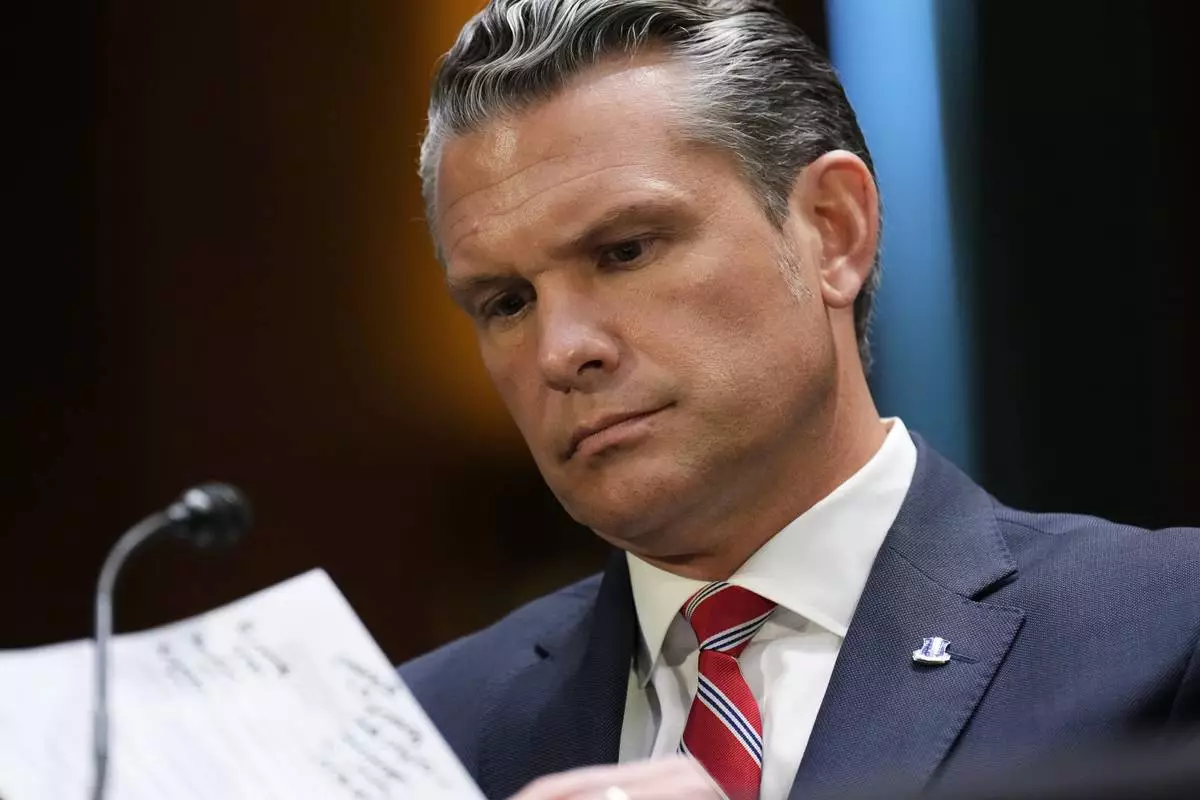
Defense Secretary Pete Hegseth looks at notes as he testifies at a Senate Appropriations Committee hearing, Tuesday, July 21, 2026, on Capitol Hill in Washington. (AP Photo/Jacquelyn Martin)
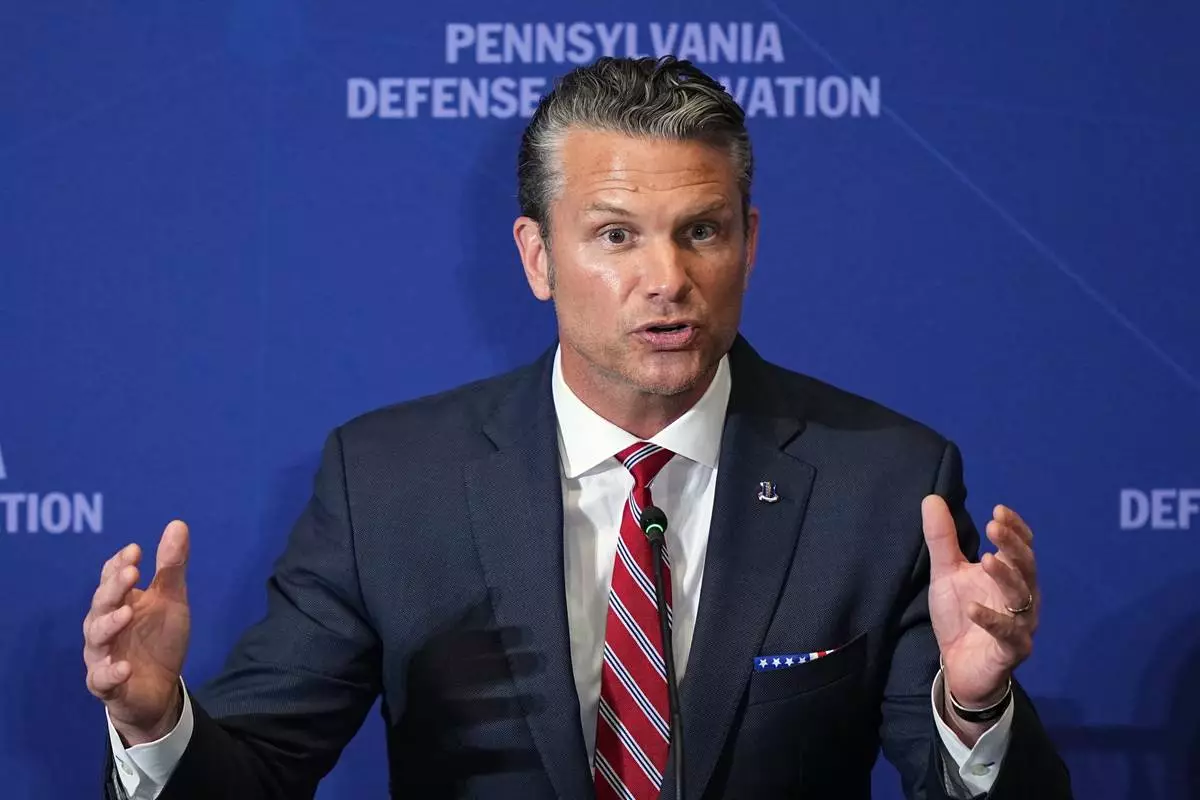
Defense Secretary Pete Hegseth speaks at the United States Army War College in Carlisle, Pa., during the Pennsylvania Defense and Innovation Summit, Wednesday, July 15, 2026. (AP Photo/Matt Rourke)
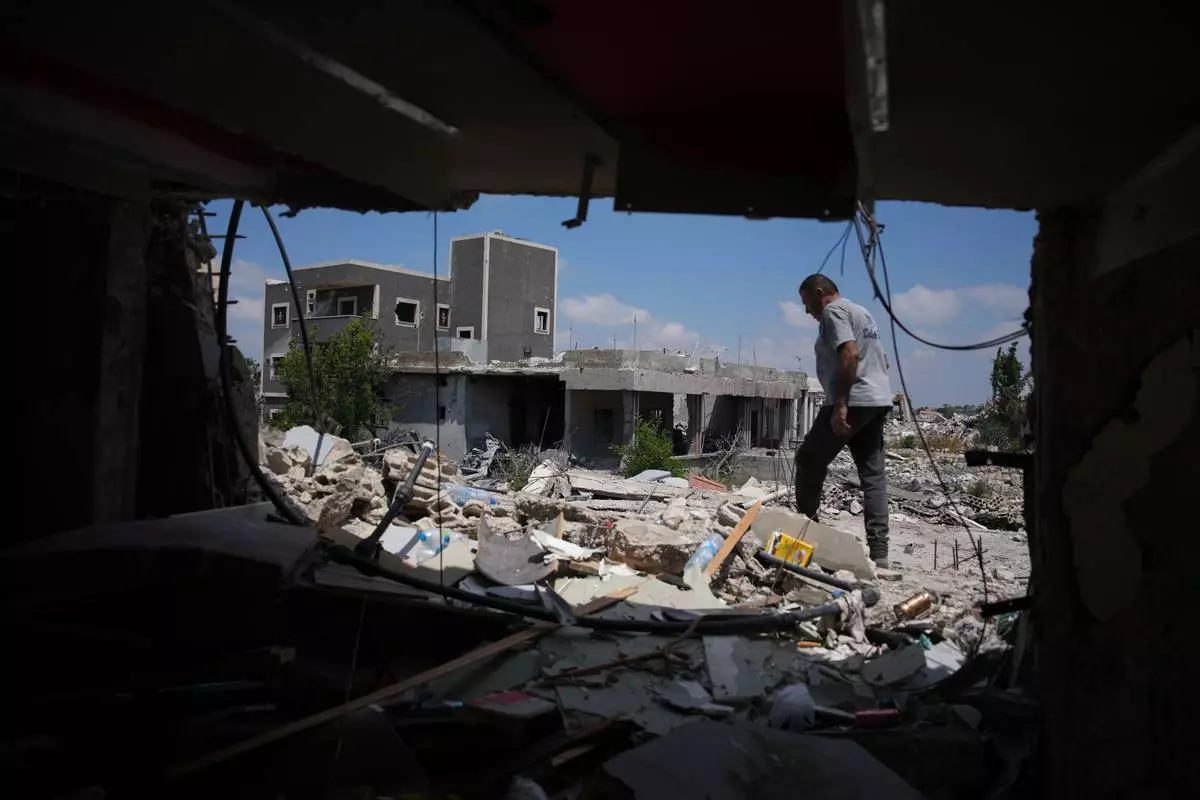
A resident inspects the damage to his home, destroyed in an Israeli airstrike during the Israel-Hezbollah war in Ghandouriyeh village, southern Lebanon, Tuesday, July 21, 2026. (AP Photo/Hassan Ammar)
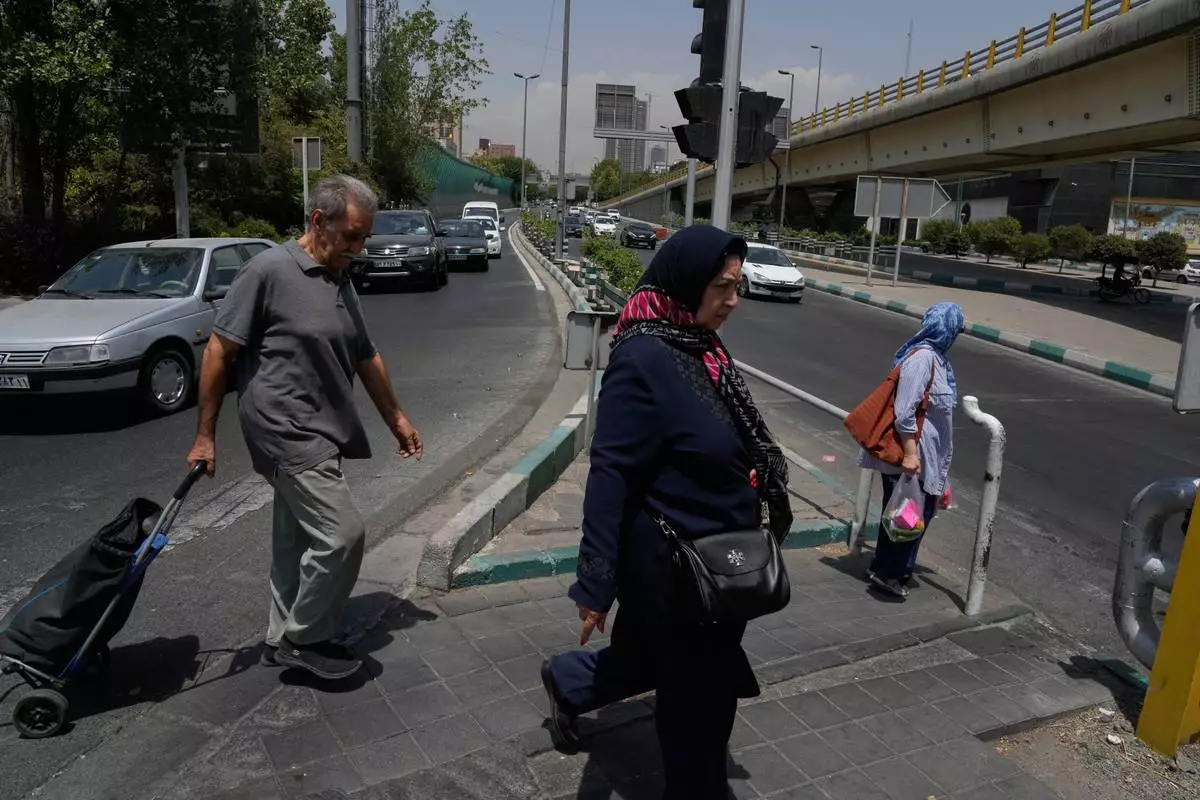
People cross a street in Tehran, Iran, Tuesday, July 21, 2026. (AP Photo/Vahid Salemi)