SYDNEY (AP) — Italy prop Marco Riccioni has been suspended for two weeks after being found guilty of unsportsmanlike conduct in his team's 57-10 loss to Australia in last Saturday's Nations Championship rugby test.
Riccioni received a red card in the 66th minute of the match at Perth, Western Australia. He had already been replaced when he got involved in a wrestle between players spilled from the field into the technical area and knocked some Italy support staff off their chairs.
The tournament's Foul Play Review committee on Wednesday announced the suspension, the third involving Italy in two weeks.
The committee said the foul play could have merited a four-week suspension but it was reduced to two because of Riccioni's admission of guilt and his previous disciplinary record.
Riccioni, who will miss two matches in August for Perpignan in France's Top 14 league, is the third Italian player or coach to be suspended on the Nations Championship tour.
Italy head coach Gonzalo Quesada had his two-match suspension reduced to one last week after facing a misconduct hearing in regard to referee criticism following Italy’s 47-17 loss to New Zealand on July 11.
And Italy lock Niccolo Cannone was suspended for four weeks after being sent off for head-butting in the loss to the All Blacks at Wellington.
Italy lost its first three games in the Nations Championship, with the defeats in Australia and New Zealand following a 27-10 loss to Japan in Tokyo on July 4.
AP rugby: https://apnews.com/hub/rugby
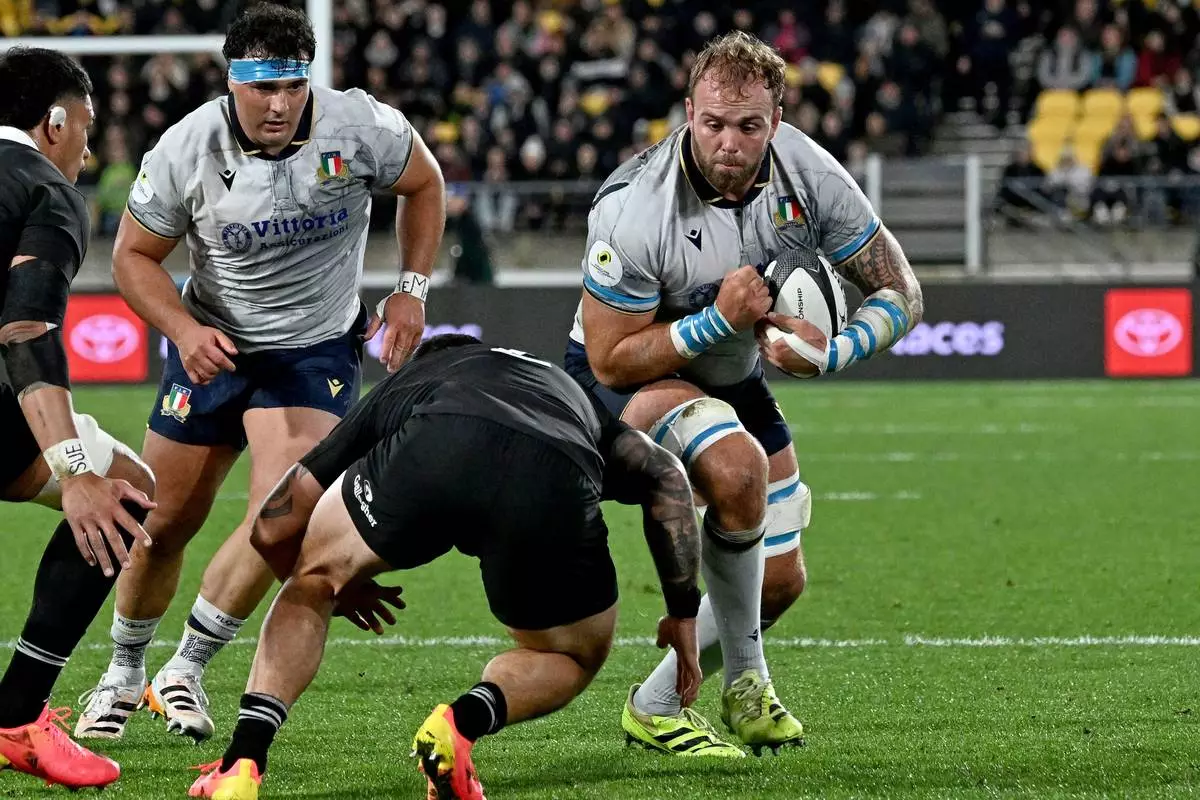
Italy's Niccolo Cannone runs at the defence during the Nations Championship rugby international between the All Blacks and Italy in Wellington, New Zealand, Saturday, July 11, 2026. (Masanori Udagawa/Photosport via AP)

Italy head coach Gonzalo Quesada watches his players warm up ahead of the Nations Championship rugby international between the All Blacks and Italy in Wellington, New Zealand, Saturday, July 11, 2026. (Marty Melville/Photosport via AP)

Italy's Marco Riccioni runs at New Zealand's Wallace Sititi during the Nations Championship rugby international between the All Blacks and Italy in Wellington, New Zealand, Saturday, July 11, 2026. (Masanori Udagawa/Photosport via AP)
PHOENIX (AP) — U.S. Rep. Andy Biggs, a fierce ally of President Donald Trump and former head of the House Freedom Caucus, won the Republican nomination for Arizona governor Tuesday.
Democrats were locked in a close primary contest for a battleground U.S. House district, with emergency physician Amish Shah leading party-backed Marlene Galán-Woods for the chance to take on Jay Feely, the former Arizona Cardinals kicker who won the Republican primary with Trump's endorsement.
A Shah victory would be another defeat for the Democratic Congressional Campaign Committee, which has occasionally struggled this year as voters seek out antiestablishment candidates.
Biggs overwhelmingly defeated fellow U.S. Rep. David Schweikert in the primary and will face Democratic Gov. Katie Hobbs in what could be one of the closest governor races in November.
By choosing Biggs, who supported Trump's failed attempt to block certification of his 2020 election loss, Republican voters risk nominating another conservative warrior who excites the party base but fails to win a general election by turning off independents. Although the GOP once dominated Arizona, Democrats now hold both U.S. Senate seats and the top three state offices.
Schweikert argued during the campaign that Biggs would continue a decade of Republican backsliding. However he struggled to raise money and did not even return to Arizona for Election Day, remaining in Washington as the House passed a government funding bill.
Biggs, who had Trump's endorsement and support from the grassroots organization Turning Point Action, said he can unite Republicans going into the general election.
“Everyone I have talked to is really conservative around here,” said Ray Roberts, a 33-year-old Republican who works as a processing engineer and knocked on doors for Biggs. “We all have mostly conservative values. I think Arizona is a red state. I think Andy will be the winner in November.”
Biggs faced travel problems leaving a Republican Governors Association meeting in Colorado, according to senior adviser Drew Sexton, and still had not reached his victory party in Scottsdale two hours after he won the race.
State Rep. Alexander Kolodin won the Republican nomination to challenge Democratic Secretary of State Adrian Fontes, defeating Gina Swoboda, the former Arizona Republican Party chair. Kolodin, a lawyer, was sanctioned by the state bar over his involvement with two 2020 election cases that courts found baseless, including one alleging the vote was marred by fraud and demanding Biden's victory in the state be overturned.
Biggs built a national profile as chair of the House Freedom Caucus from 2019 to 2022 and as a staunch defender of Trump. He assisted the president’s attempt to block the certification of his loss in the 2020 election, voting against accepting Electoral College votes from Arizona and other battleground states after the Jan. 6, 2021, riot.
He has always represented safe Republican seats and is a veteran of factional brawls within the GOP. Before going to Congress, he nearly lost his post as state Senate president during a confrontation with then-Gov. Jan Brewer, also a Republican, over her push to expand Medicaid.
“I want the border secured. I want the police and more money spent in the right places like education,” said Kate Rouleau, a 67-year-old Republican who voted for Biggs. “Biggs has the same quality as President Trump.”
Schweikert walked a tightrope with Trump, carefully keeping his distance without antagonizing him. That helped him win a string of tough races in a competitive House district but left him isolated from Trump's “ Make America Great Again ” base.
Democrats focused their attacks on Biggs, whom they plan to portray as an extremist focused on helping Trump and not Arizonans.
In a statement Tuesday night, Hobbs said: “The more Arizonans learn about Biggs, the more they’ll realize he’s one big problem they can’t afford.”
The race is likely to be another close contest four years after Hobbs narrowly beat Republican firebrand Kari Lake by less than 1 percentage point. Republicans have since expanded their advantage in the state, growing GOP registration by 6% while Democratic registration fell by 4%.
Repeating her victory will require Hobbs to again win a majority of independents and some disaffected Republicans. For his part, Biggs has attacked her as a weak leader who presided over rising costs.
Both parties had hotly contested primaries to replace Schweikert in the highly competitive 1st Congressional District, which both parties are targeting in the fight to control the House.
Feely won the Republican primary over Joseph Chaplik, a former state legislator popular with many grassroots activists, and businessperson John Trobough. Feely had Trump’s endorsement but has been dogged by criticism for living outside the district.
The Democratic Congressional Campaign Committee threw its support behind Galán-Woods, a controversial decision to get involved in a contested primary that rankled some party activists. Her late husband, Grant Woods, was the Republican attorney general in the 1990s and later became a vocal Trump critic.
Galán-Woods’ chief opponent, Shah, is a former state legislator who was the nominee in 2024 but lost narrowly to Schweikert.
“We have a long tradition in Arizona of being independent-minded and working for the benefit of people,” Shah said at his election night party in Phoenix. “I wasn’t exactly my party’s pick. And I was willing to stand up to that establishment. And that’s what the voters of this district want.”
If Shah's lead holds, he would be the third Democrat to beat a DCCC-backed rival this year following Randy Villegas in California and Matt Dunlap in Maine. Unlike the candidates in those races, Shah and Galán-Woods are largely aligned ideologically.
Linda Bandler, a 65-year-old independent who volunteered on the Galán-Woods campaign, said the party will be in good shape regardless of who wins the primary.
“There still is some sanity,” said Bandler, who like Galán-Woods is a former Republican. “I do think that the Democrats will take over the House and the Senate.”
DCCC support generally brings an influx of money and staffing, both from the party itself and from the donors and interest groups that take its cues. But this election season, substantial parts of the Democratic base are rejecting candidates that party bosses see as their best shot at winning in Congress.
“The Democratic Party needs to grow up and wake up,” said Maria Liong, a 24-year-old medical student who volunteered for Shah’s campaign. “They need to realize that they want candidates who listen to their people.”
Republicans hold a voter registration advantage in the affluent district, which includes northeast Phoenix, Scottsdale, Fountain Hills and Paradise Valley.
But it started to trend toward the center after Trump’s 2016 victory. Redistricting accelerated the trend, fueling Democratic hopes that the seat could be flipped.
In Tucson, retired Marine drill instructor JoAnna Mendoza ran unopposed for the Democratic nomination to challenge second-term Republican Rep. Juan Ciscomani, who also had no primary opponent. The seat is perennially competitive in general elections and is a top pickup target for Democrats in November.
Meanwhile, Pinal County Sheriff Mark Lamb won the Republican primary for the conservative district that Biggs is vacating. The race turned salacious as Lamb, who was endorsed by Trump, came under scrutiny for alleged sexual misconduct and abuse of power.
The county attorney cleared him of criminal wrongdoing, and Trump reiterated his endorsement this month. Lamb dismissed the allegations as “slander and lies.”
Associated Press writer Josh Kelety contributed.
This story has been updated to correct the spelling of Feely.
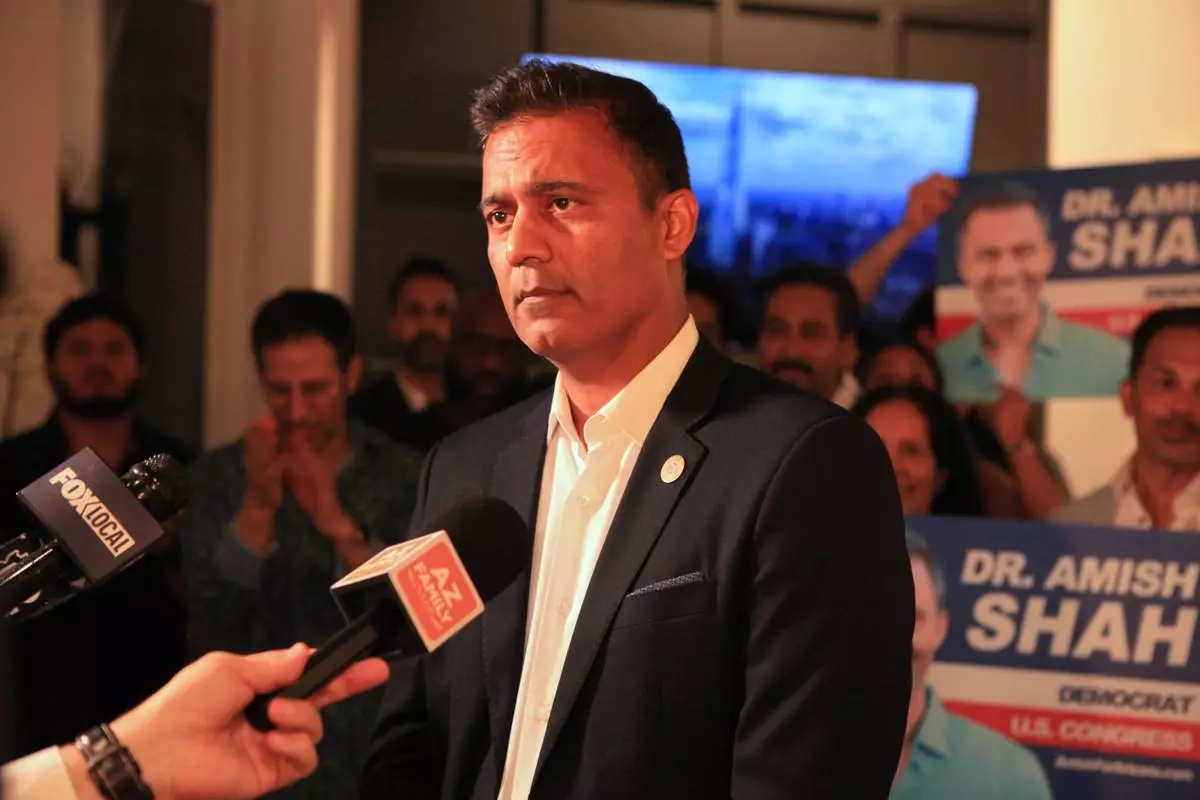
Amish Shah, who is seeking the Democratic nomination for Arizona's 1st Congressional District, speaks to supporters at a friend's home on Tuesday, July 21, 2026, in Phoenix. (AP Photo/Wufei Yu)
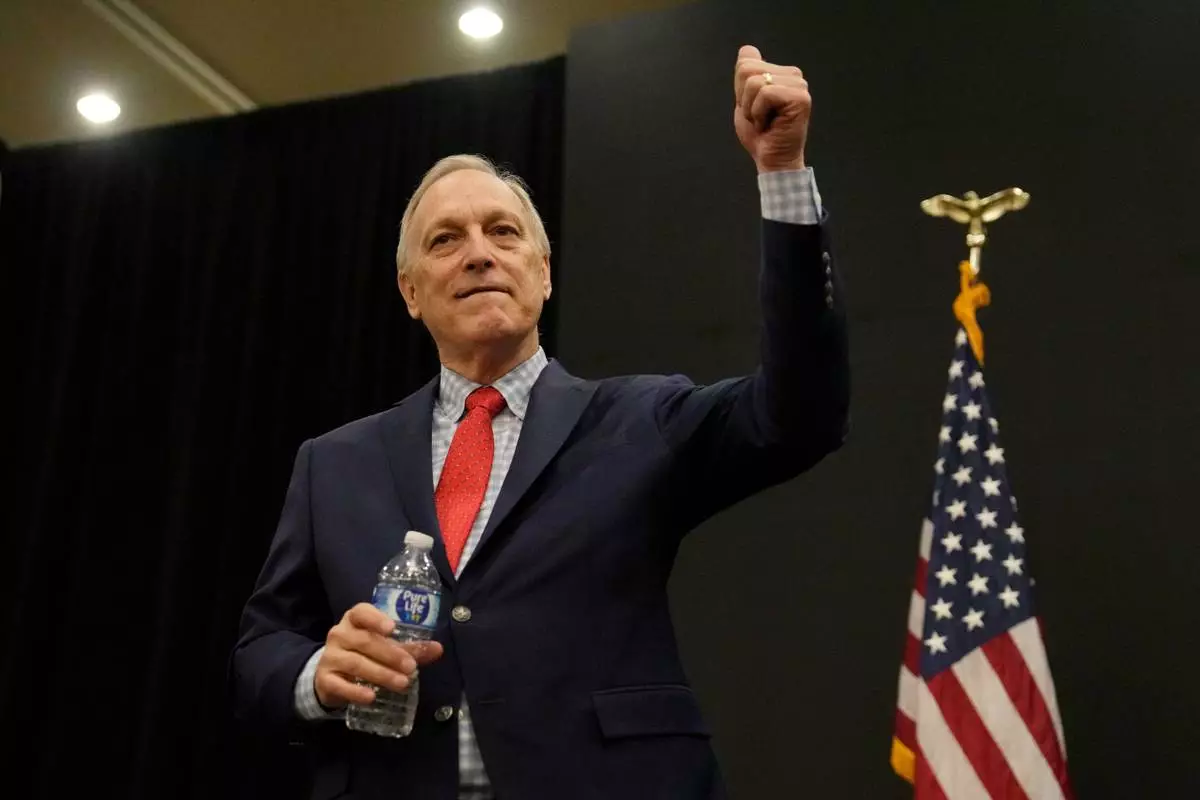
Rep. Andy Biggs, R-Ariz., who is running in the primary for Arizona governor, gives a thumbs up to supporters at a campaign event, Friday, July 17, 2026, in Gilbert, Ariz. (AP Photo/Ross D. Franklin)
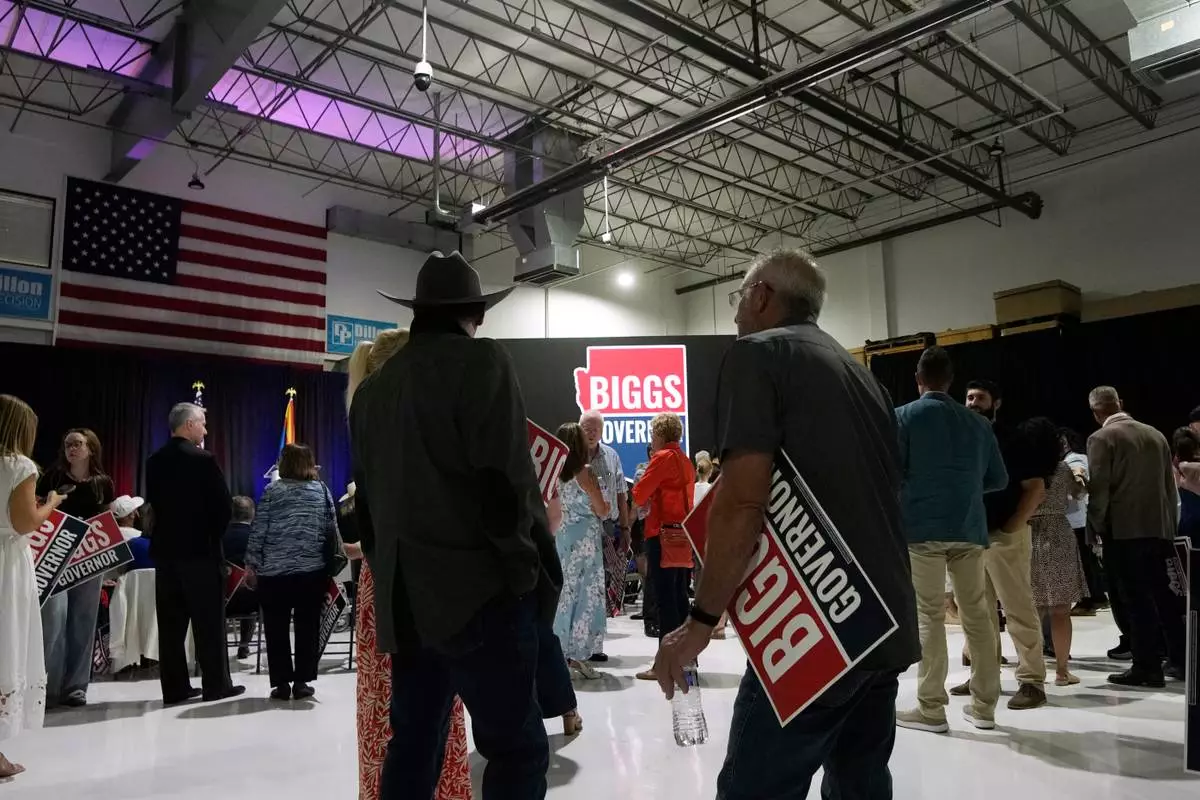
Attendees stand at a primary election night watch party for Republican gubernatorial candidate U.S. Rep. Andy Biggs on Tuesday, July 21, 2026, in Scottsdale, Ariz. (AP Photo/Ross D. Franklin)
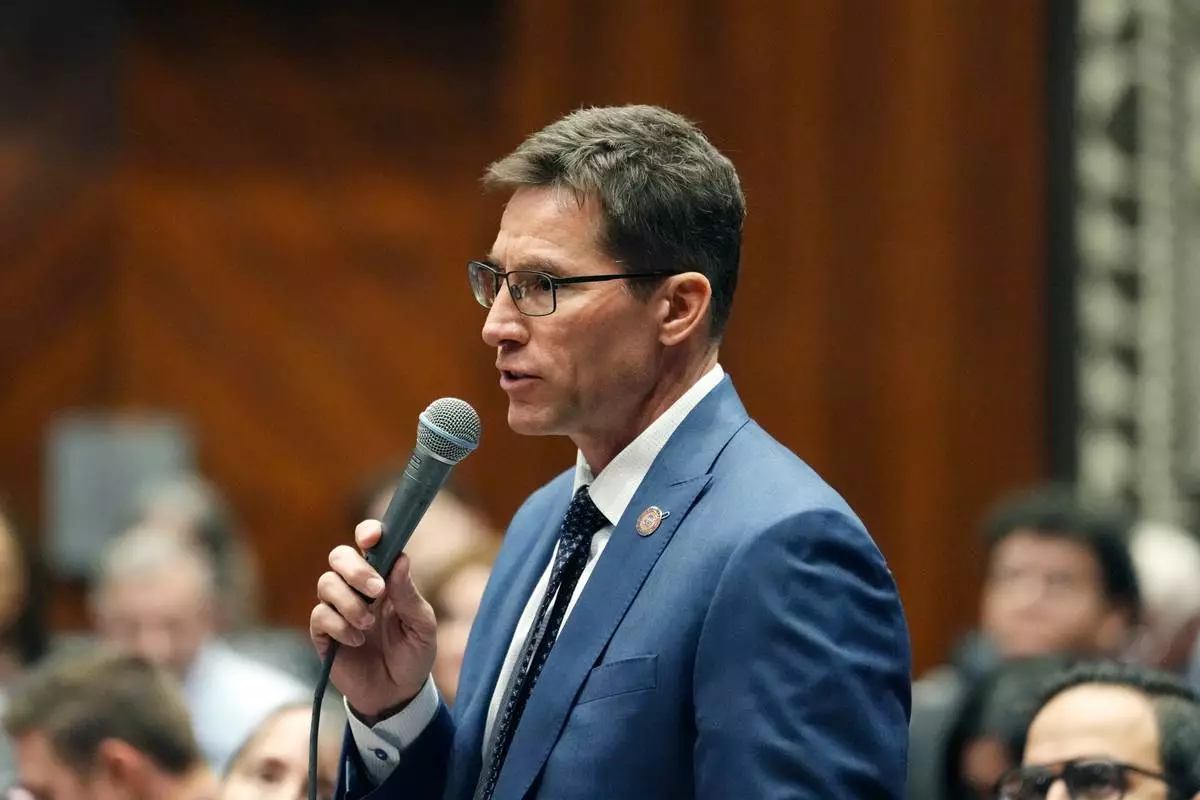
Former Arizona Rep. Joseph Chaplik, R-Scottsdale, who is running for the Republican nomination for the 1st Congressional District in the upcoming primary election, speaks at the opening of the Arizona legislature, Monday, Jan. 12, 2026, in Phoenix. (AP Photo/Ross D. Franklin)

Jay Feely, left, a Republican candidate for Arizona's 1st Congressional District, shakes hands with a voter at a polling place on Arizona primary election day, Tuesday, July 21, 2026, in Fountain Hills, Ariz. (AP Photo/Ross D. Franklin)
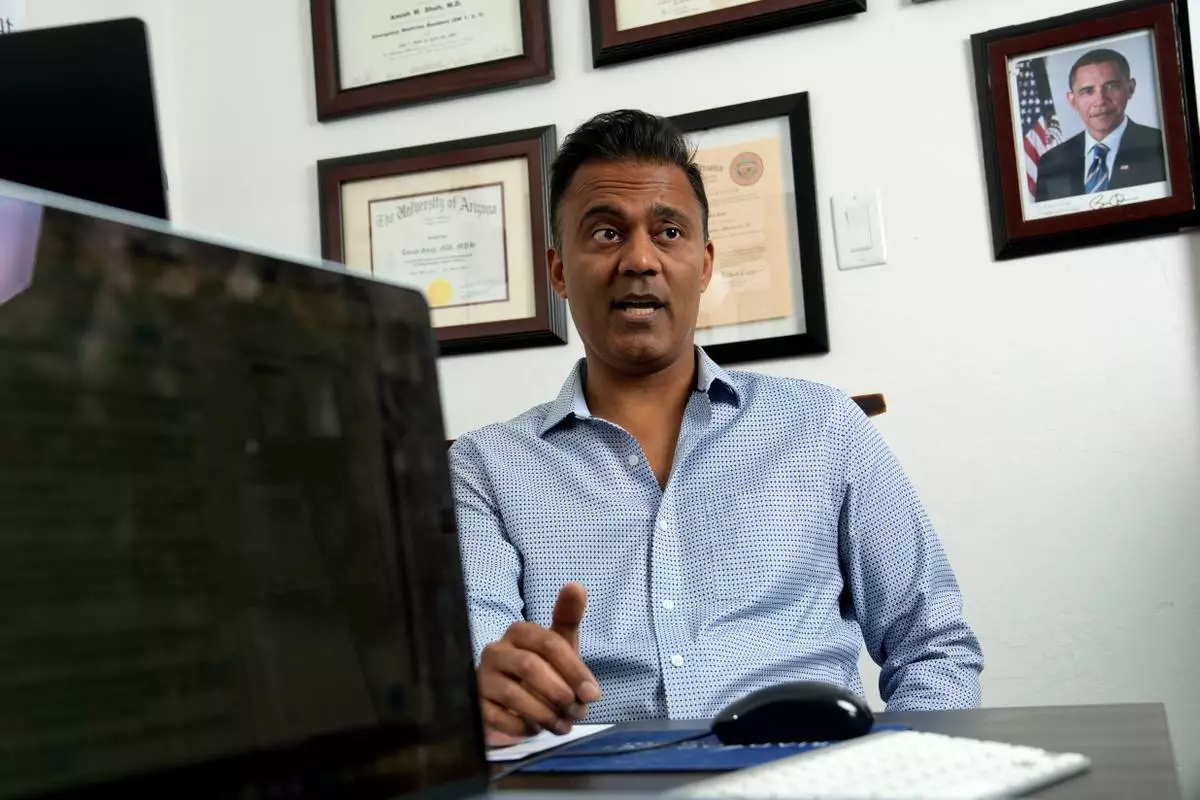
Democratic candidate for Arizona's 1st Congressional Dr. Amish Shah poses, Thursday, July 16, 2026, in Phoenix. (AP Photo/Ross D. Franklin)
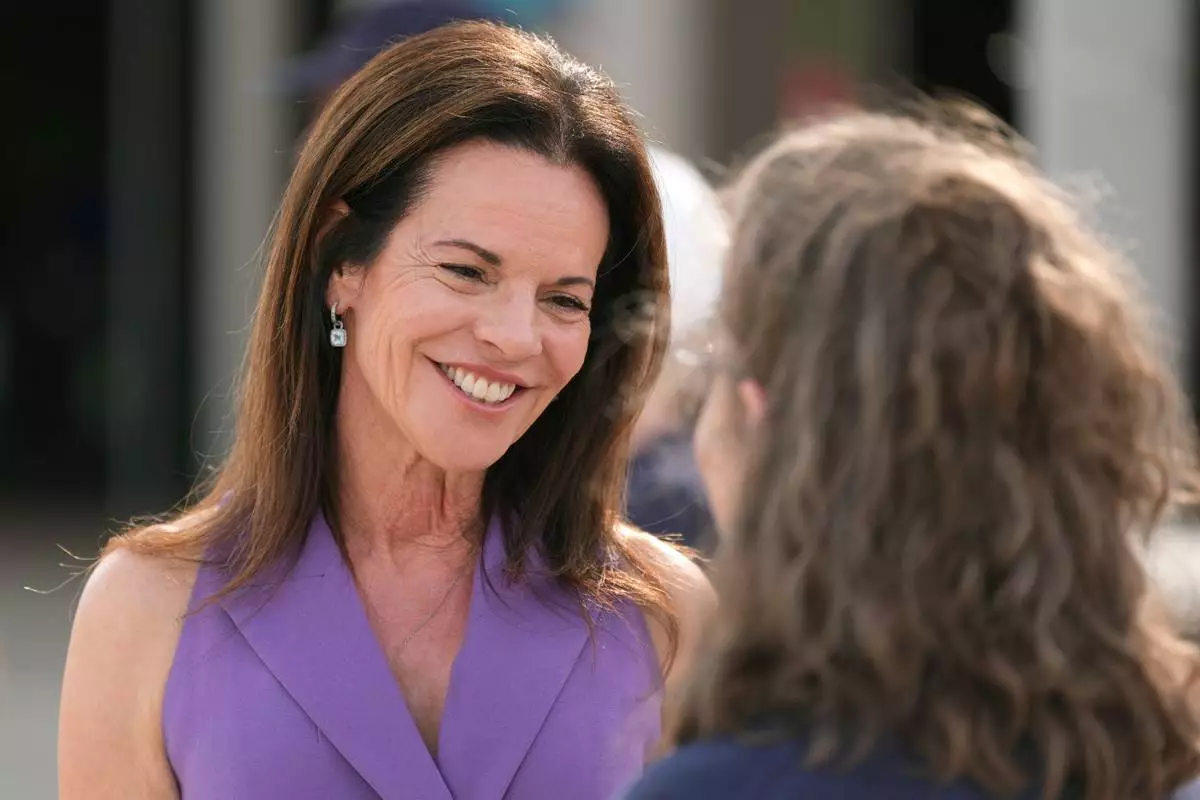
Marlene Galán-Woods, a Democratic candidate for the 1st Congressional District in Arizona, smiles as she speaks with a campaign volunteer at a voting location as voters cast their ballots on primary election day, Tuesday, July 21, 2026, in Phoenix. (AP Photo/Ross D. Franklin)
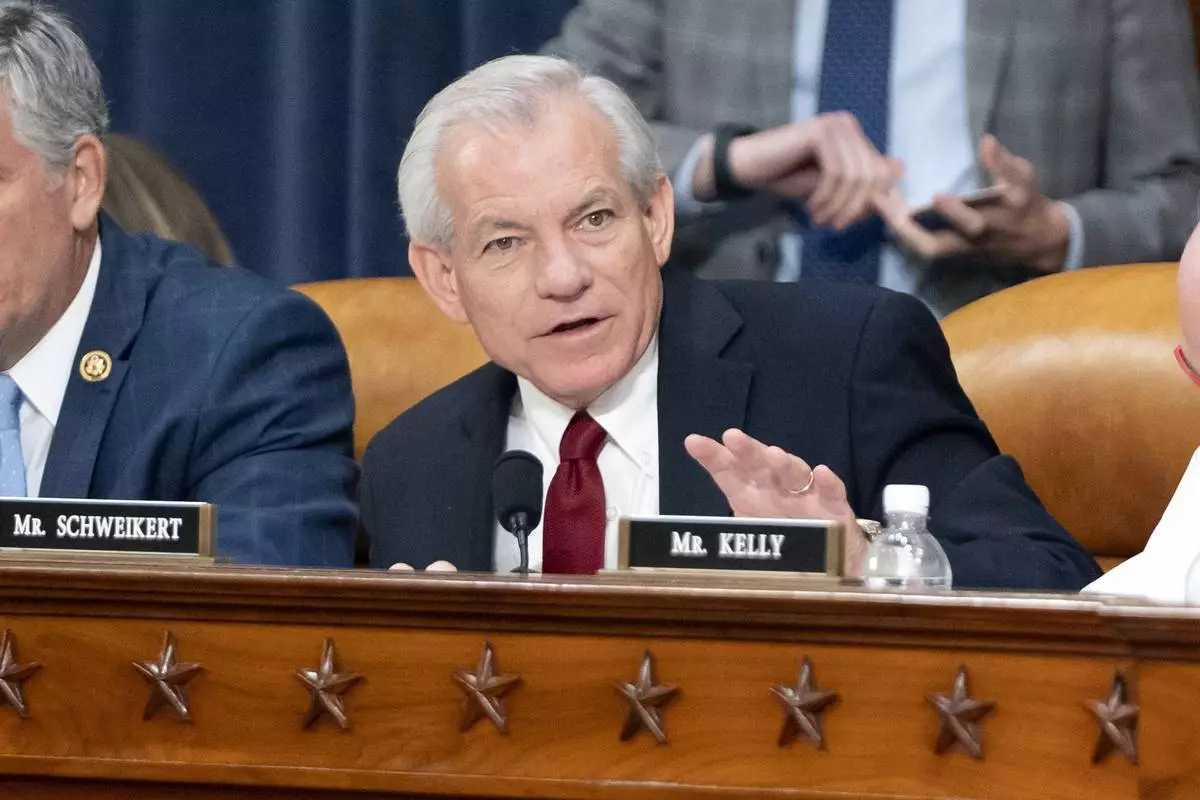
FILE - Rep. David Schweikert, R-Ariz., speaks during a hearing on Capitol Hill, Sept. 24, 2024, in Washington. (AP Photo/Mark Schiefelbein, File)
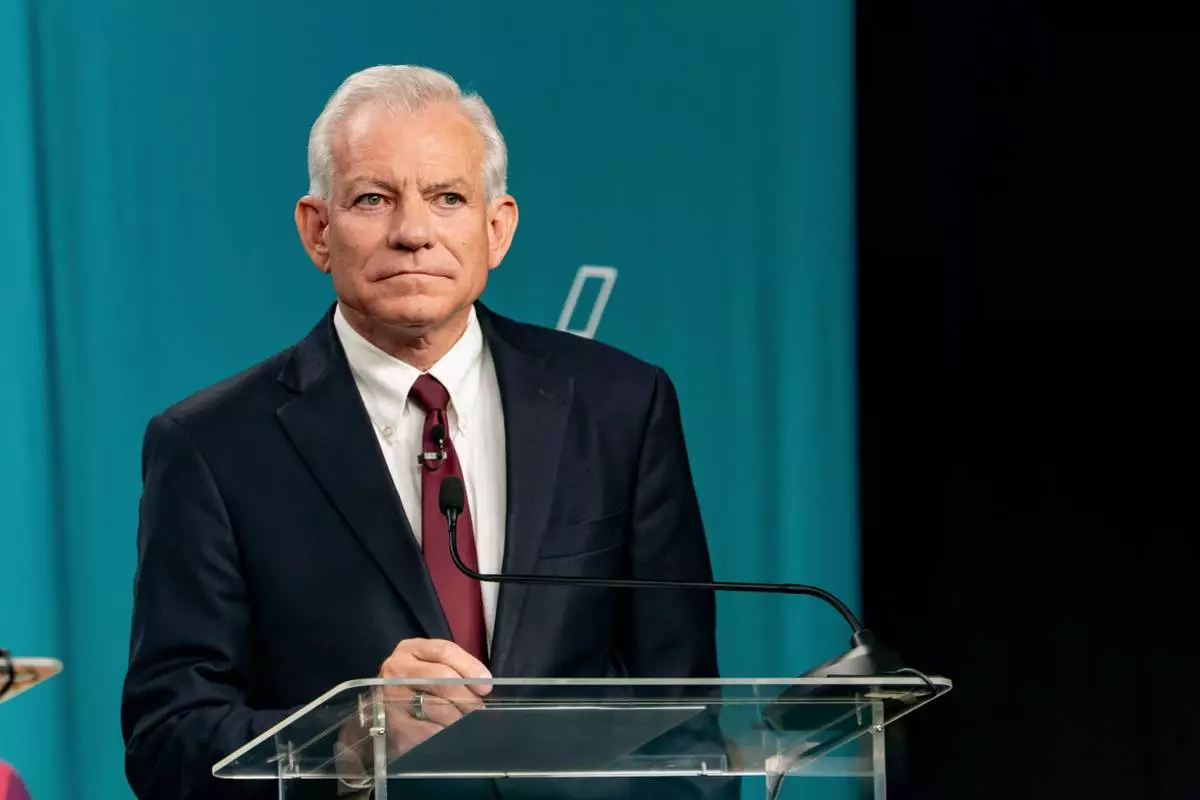
FILE - Rep. David Schweikert, R-Ariz., debates with his Republican opponents in the 2026 AZ Clean Elections governor primary debate, June 17, 2026, in Scottsdale, Ariz. (Diannie Chavez/The Arizona Republic via AP, Pool, File)