NAZARETH, Israel (AP) — The last time Mais al-Gharam saw her seven siblings was in the Gaza Strip two months before the war. That was before she left the Palestinian territory to go live in Israel and before an Israeli airstrike on the family's home killed her parents and younger brother.
But on this day, she waited hopefully outside Israel’s Kerem Shalom crossing, scanning for a glimpse of her surviving brothers and sisters as they made their way through the gates and out of Gaza.
Click to Gallery
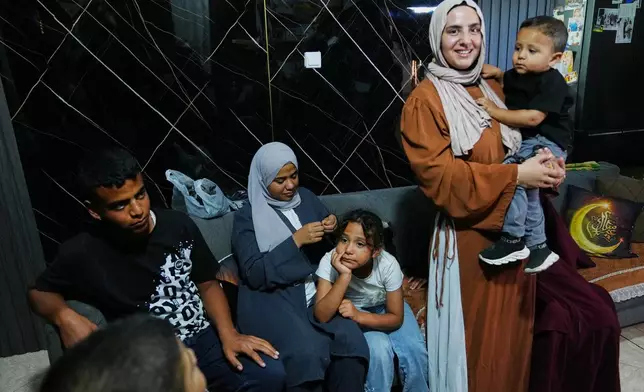
Mais Al-Gharam holds her son as she stands with her siblings from Gaza, who were granted Israeli passports, in her home in Nazareth, Israel, Wednesday, July 8, 2026. (AP Photo/Mahmoud Illean)
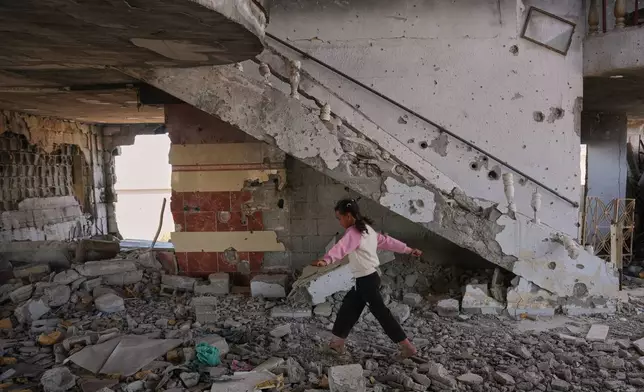
Arjwan al-Gharam walks over debris inside her home after it was damaged during the Israel-Hamas war in Nuseirat, central Gaza Strip, Thursday, June 4, 2026. (AP Photo)
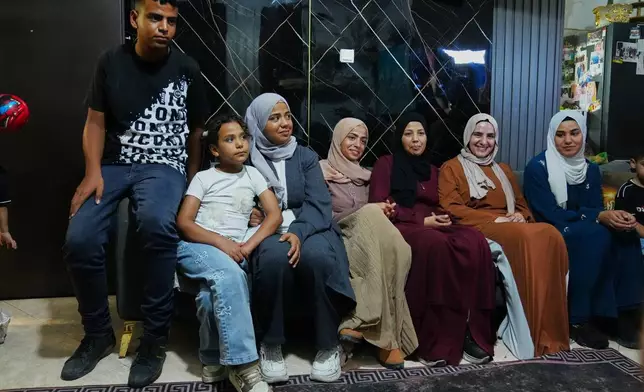
Mais Al-Gharam, second from right, poses for a photo with her six siblings from Gaza, who were granted Israeli passports, in her home in Nazareth, Israel, Wednesday, July 8, 2026. (AP Photo/Mahmoud Illean)
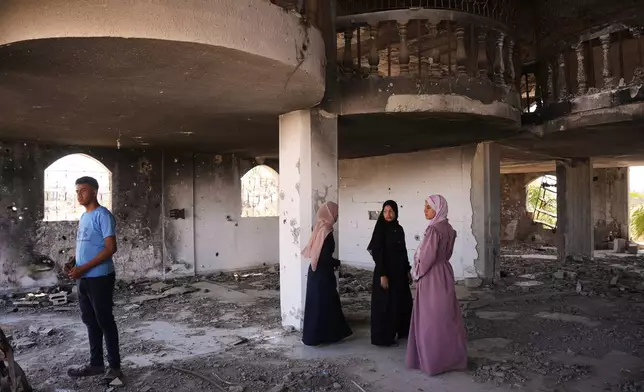
Fady al-Gharam, left, and his sisters inspect their family's home which was damaged during the Israel-Hamas war, in Nuseirat, central Gaza Strip, Thursday, June 4, 2026, while they are in the process of obtaining Israeli passports. (AP Photo)

Mais Al-Gharam hugs her 8-year-old sister Arjwan, who was granted an Israeli passport, in her home in Nazareth, Israel, Wednesday, July 8, 2026, after Arjwan's arrival from the Gaza Strip. (AP Photo/Mahmoud Illean)
“We never stopped being a family,” said Mais, who is 23 and the eldest of eight siblings born to a father from Gaza and a mother who was a Palestinian citizen of Israel. “But every day I wondered whether I’d see them again.”
The family finally reunited this month following a yearslong effort by Mais and a team of lawyers to get her brothers and sisters out. They met outside the border crossing and then drove together to the city of Nazareth, where their mother’s extended family showered the siblings with hugs and homemade food.
The reunion carried joy, grief and a quiet disbelief: Despite the odds, Mais had secured Israeli passports for her Gaza-born siblings, ages 8 to 22, and arranged for them to come live with her.
But while they had found one another again, they could never reclaim what they lost.
“It’s like coming back from the grave,” Faraj al-Gharam, their maternal grandfather, said of his grandchildren. In Gaza, he said, “human life has no value.”
The family’s story begins in 2002 when Murad al-Gharam, a native of Gaza, was working construction in Israel on a temporary job permit. There, he met and married Amal Karim, a Palestinian citizen of Israel who lived in Nazareth. Soon, they had a baby girl and named her Mais.
Decades ago, such marriages were common between Palestinians who lived in the West Bank, Gaza and Israel, before two Palestinian uprisings and Israel’s response closed off the occupied territories.
When Murad and Amal met, it was at the height of the Second Intifada. As violence raged, Israel clamped down on work permits for Palestinians, putting Murad’s status in Israel in jeopardy.
He and Amal moved to Gaza permanently, settling down with Mais in Nuseirat, a built-up refugee camp in the enclave’s central region. Murad began work as a taxi driver, and the couple had seven more children — Zuhour, 22; Jwaher, 21; Sabreen, 20; Ghfran, 17, Fady, 16; Maisara, 11; and Arjwan, 8.
“We lived here together as a family ... and never lacked anything,” Zuhour said.
On Oct. 7, 2023, everything changed.
When Hamas-led militants from Gaza attacked southern Israel, killing about 1,200 people and taking 251 others hostage, the al-Gharams were one of what rights groups estimated to be more than 300 “divided families” with members on both sides of the border.
As Israel launched its retaliatory offensive, and prepared for a full-scale ground invasion, the family had to decide what to do.
Mais had already emigrated back to Nazareth, where she found a job and married. And while the seven children who were born in Gaza had the right to apply for Israeli citizenship through their mother, their father had no such option.
Israeli law generally bars the Palestinian spouses of Israeli citizens from obtaining permanent residency status. If the rest of the family wanted to leave, he would have to stay behind.
“We said, ‘Either we all leave together, or we all stay together,’” according to Zuhour.
So they braced for war.
About 160 kilometers (100 miles) away, Mais waited anxiously each day for updates, which were infrequent after Israel cut off Gaza's electricity and took out cellphone and internet networks.
The al-Gharam family was displaced at least seven times in the first half of 2024, eventually landing in Rafah in southern Gaza, before Israel invaded there, too.
In the end, they returned to Nuseirat, about 10 kilometers (6 miles) south of Gaza City, and moved back into the home where the children grew up. The area was both a place of refuge and a site of regular airstrikes on schools and apartment buildings that Israel said were being used by Hamas.
At 6 a.m. on July 10, 2024, an airstrike tore into their home, collapsing walls and sending debris crashing through the ceiling. Dazed and wounded, the siblings ran into the street screaming for help.
Jwaher said she was in such shock that she couldn’t even feel that her leg and fingers had been fractured.
They piled into cars and rushed westward to Al Aqsa Hospital in the city of Deir al-Balah, where doctors treated them and pronounced their mother, father and brother Maisara dead.
“Suddenly the burden fell on us,” Sabreen said.
Together, they cooked, cleaned and collected firewood to boil water and keep warm. They also made money by opening a bakery in their neighborhood, while relying on charity and funds sent by relatives in Nazareth.
“We were forced — each of us — to take on a role that wasn’t ours,” Fady said.
The Israeli military did not respond to a request for comment on the strike.
As her siblings kept the family afloat in Gaza, Mais sprang into action in Israel, determined to save them as conditions there rapidly deteriorated.
She contacted HaMoked, an Israeli rights group, on the day of the strike to start the paperwork and procedures required to reunite with her siblings and bring them to Nazareth. They began drafting letters to the Israeli Interior Ministry and COGAT, the military body that oversees crossings and humanitarian affairs in Gaza.
When she learned from her siblings that their parents and brother were dead, “it was the biggest shock I think I’ve ever gone through in my life,” she said.
At the time, reuniting seemed impossible. Mais needed permits for them to enter Israel, a court order appointing Zuhour, the eldest sibling in Gaza, as legal guardian to the minor children, and six successful applications for Israeli citizenship.
According to HaMoked, the Israeli Interior Ministry initially rejected the request to apply for the divided family procedure to reunite the al-Gharams because their mother was dead.
The family then had to undergo DNA testing to prove the siblings’ relationship to Mais, an Israeli citizen. Once the test results were in, the siblings had to make another trip to Kerem Shalom to sign the paperwork for their Israeli passports.
They finally arrived in Israel on July 8, nearly two years to the date of the deadly strike on their home.
The half-day journey to Nazareth took the siblings from Gaza’s rubble past Israel’s irrigated fields and modern cities. When they arrived, they spoke mostly about ordinary hopes such as spending time with relatives, going to school and seeing doctors. They said they had fulfilled their top priority: reuniting.
“Family,” Jwaher said, “is the most important thing.”
Mednick reported from Tel Aviv, Israel. Associated Press reporters Wafaa Shurafa in Deir al-Balah, Gaza Strip; Abdel Kareem Hana in Nuseirat, Gaza Strip; and Alon Bernstein and Mahmoud Illean in Nazareth, Israel, contributed to this report.
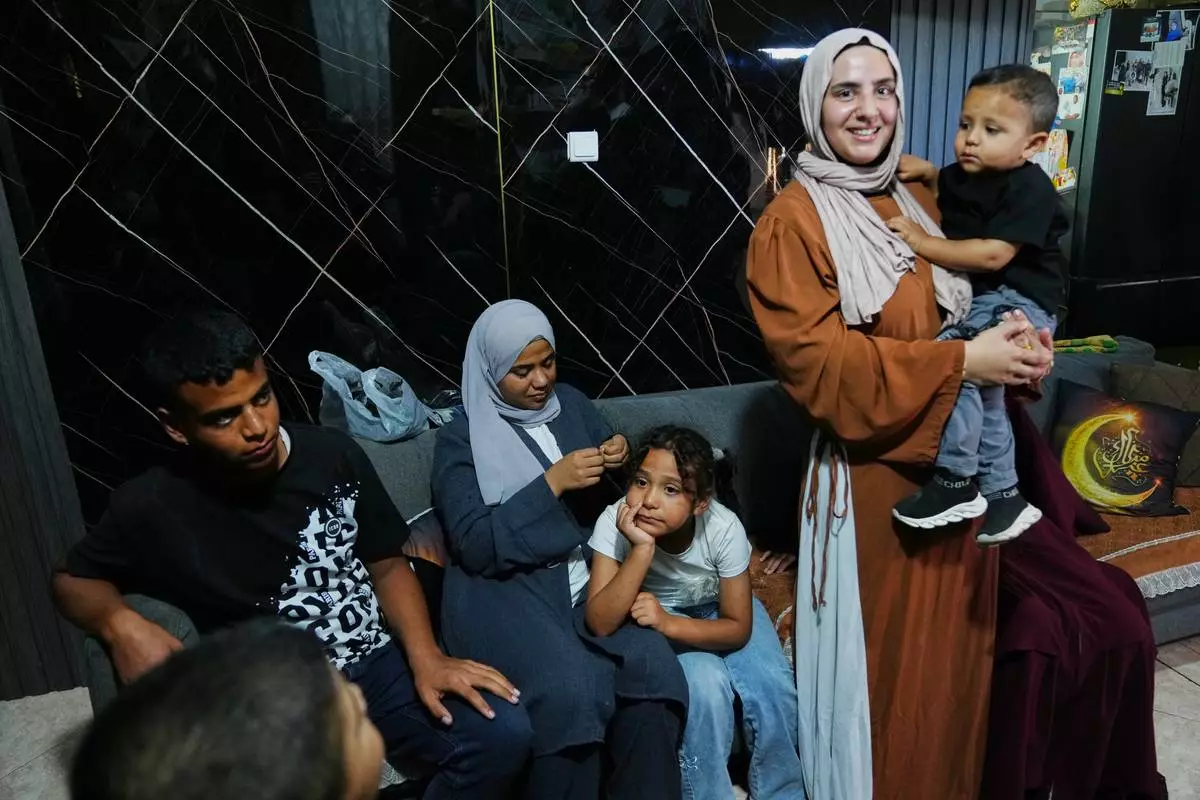
Mais Al-Gharam holds her son as she stands with her siblings from Gaza, who were granted Israeli passports, in her home in Nazareth, Israel, Wednesday, July 8, 2026. (AP Photo/Mahmoud Illean)
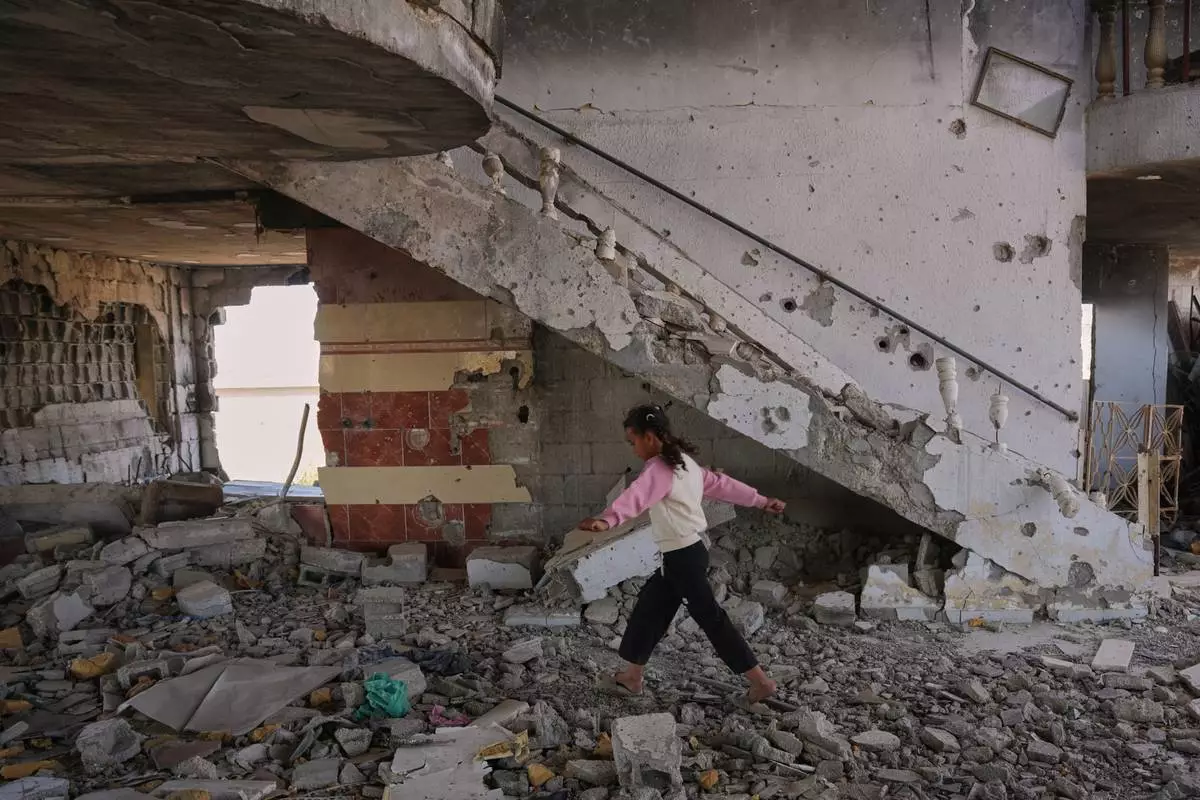
Arjwan al-Gharam walks over debris inside her home after it was damaged during the Israel-Hamas war in Nuseirat, central Gaza Strip, Thursday, June 4, 2026. (AP Photo)
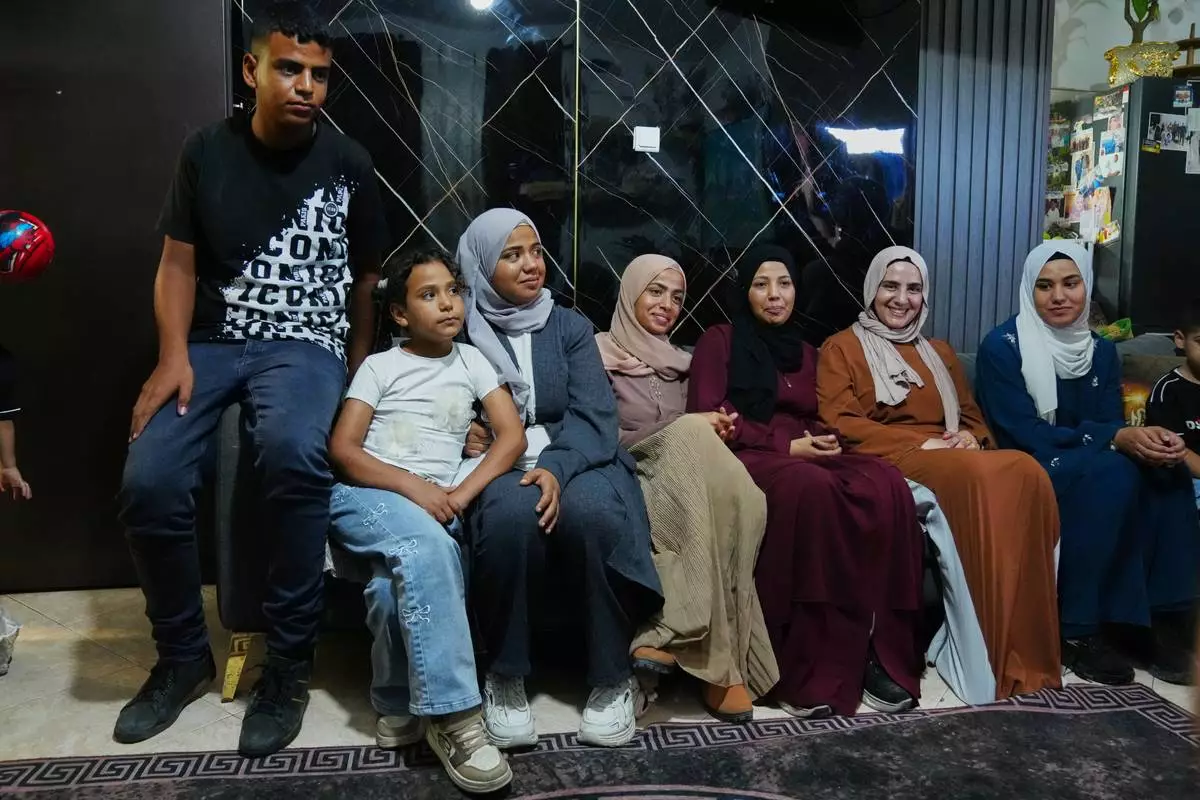
Mais Al-Gharam, second from right, poses for a photo with her six siblings from Gaza, who were granted Israeli passports, in her home in Nazareth, Israel, Wednesday, July 8, 2026. (AP Photo/Mahmoud Illean)
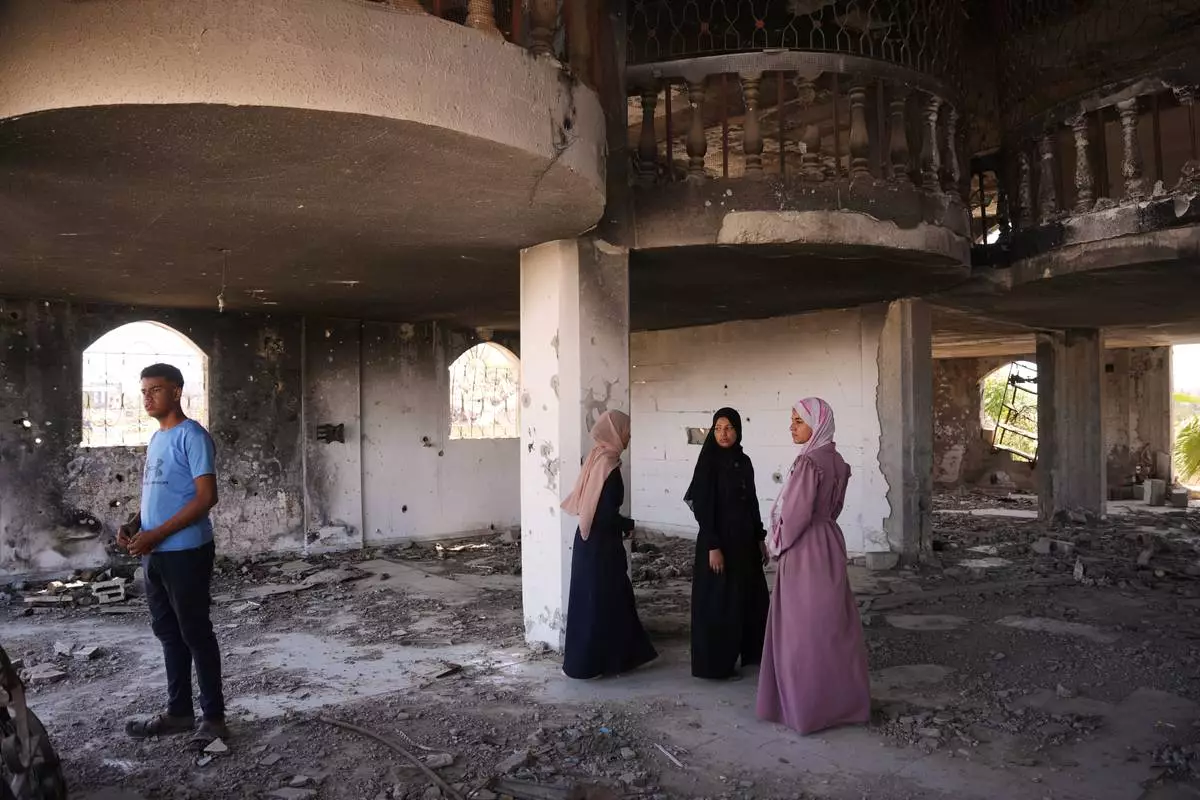
Fady al-Gharam, left, and his sisters inspect their family's home which was damaged during the Israel-Hamas war, in Nuseirat, central Gaza Strip, Thursday, June 4, 2026, while they are in the process of obtaining Israeli passports. (AP Photo)
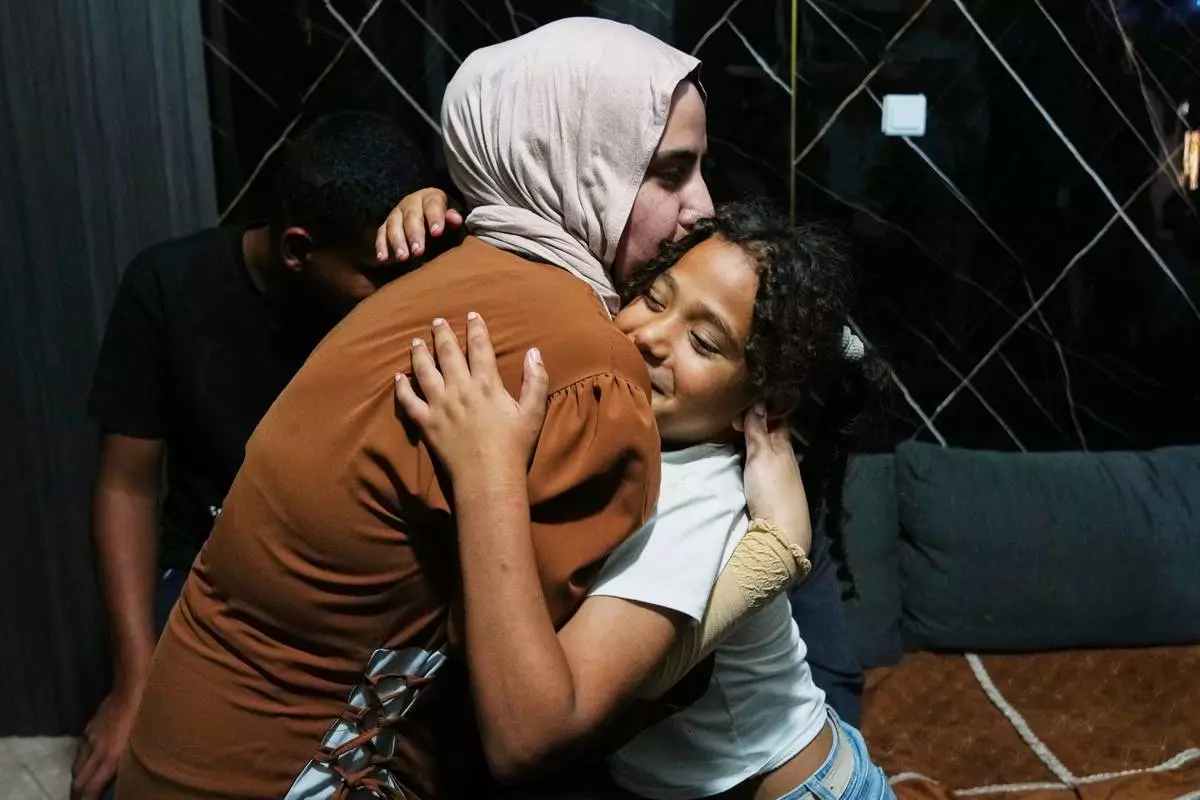
Mais Al-Gharam hugs her 8-year-old sister Arjwan, who was granted an Israeli passport, in her home in Nazareth, Israel, Wednesday, July 8, 2026, after Arjwan's arrival from the Gaza Strip. (AP Photo/Mahmoud Illean)