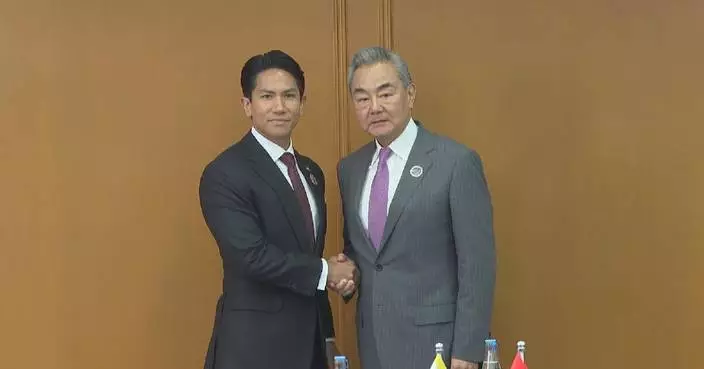
China and Vietnam should proceed from the overall interests of their respective long-term development and effectively strengthen unity and cooperation, Chinese Foreign Minister Wang Yi said in Manila Wednesday.
Wang, also a member of the Political Bureau of the Communist Party of China Central Committee, made the remarks when meeting with Vietnamese Foreign Minister Le Hoai Trung.
He noted that as socialist countries and two major developing countries, China and Vietnam must conscientiously implement the common understanding reached between the leaders of the two parties and two countries.
The two sides should continue to intensify high-level exchanges, promote practical cooperation in areas such as connectivity and artificial intelligence, and jointly maintain a good situation for regional peace and development, Wang said.
For his part, Trung said that Vietnam is willing to work with China to enhance exchanges at all levels, promote practical cooperation in railways, agriculture and other fields, and strengthen multilateral communication and coordination with China to safeguard the common interests of the two countries and the region.
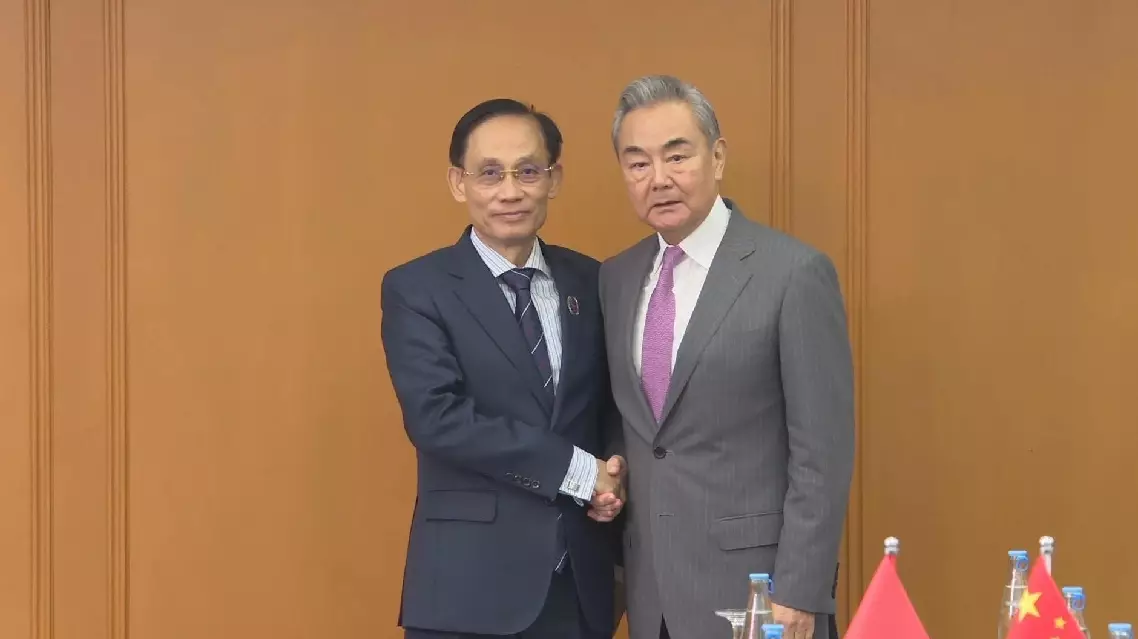
China, Vietnam should strengthen unity, cooperation: Chinese FM
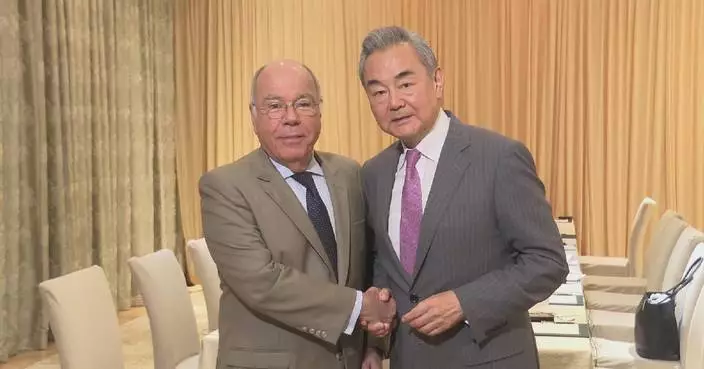
China attaches great importance to its relationship with Papua New Guinea (PNG), and is willing to see it play a greater role in international affairs, Chinese Foreign Minister Wang Yi said on Wednesday.
Wang, also a member of the Political Bureau of the Communist Party of China Central Committee, made the remarks during his meeting with PNG's Minister for Foreign Affairs Justin Tkatchenko in Manila, the Philippines.
Noting this year marks the 50th anniversary of the establishment of diplomatic relations between the two countries, Wang said China is willing to work with PNG to implement the important consensus reached by the two leaders of state to deepen cooperation in various fields and enrich the comprehensive strategic partnership between the two countries.
Wang said China appreciates PNG for closing the Taipei economic office, adding that the decision is another key measure by the PNG government to implement the one-China principle, and will further consolidate the political foundation of the relationship between China and PNG.
It also provides a model for other countries to handle issues related to Taiwan institutions, Wang said.
China's development of relations with Pacific island countries does not involve geopolitical games or seek a so-called sphere of influence, Wang said, adding that these countries have the right to independently choose their development partners and should not be interfered with by third parties.
Tkatchenko said PNG firmly adheres to the one-China principle, and believes that Taiwan is a part of China, adding that closing the Taipei economic office sent a clear and powerful message of firmly developing its relations with China. The move is a unanimous decision made by the top leadership of PNG, and the country will ensure its implementation, Tkatchenko noted.
PNG is willing to deepen its cooperation with China on areas such as trade and investment, infrastructure and medical and health care, and strengthen communication and collaboration in APEC and other multilateral platforms.
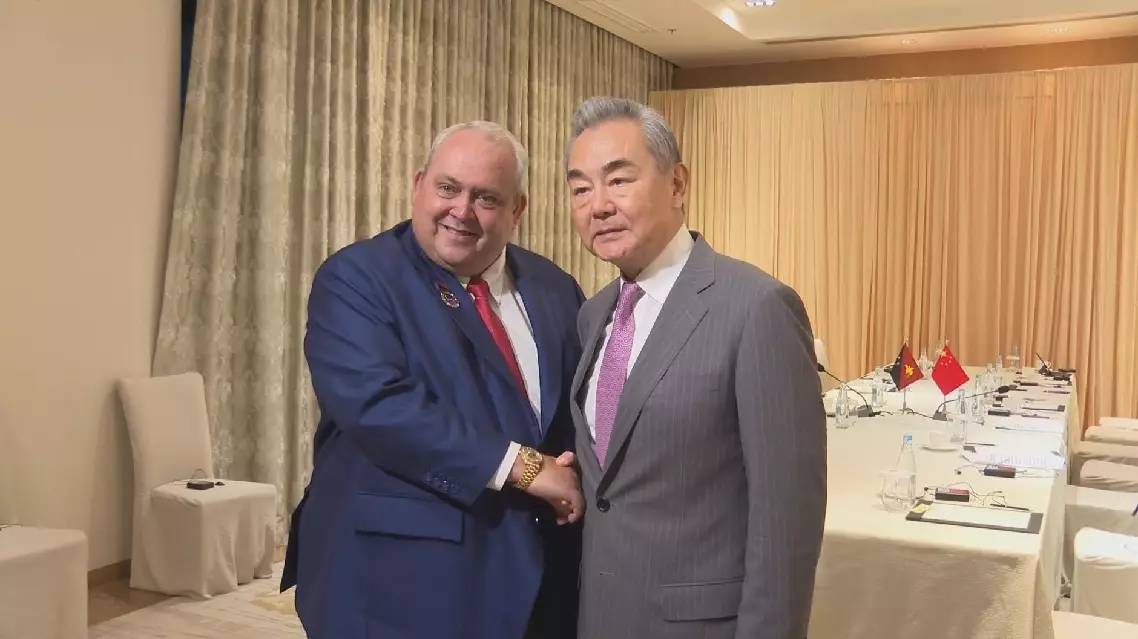
China willing to see PNG play greater role in international affairs: FM