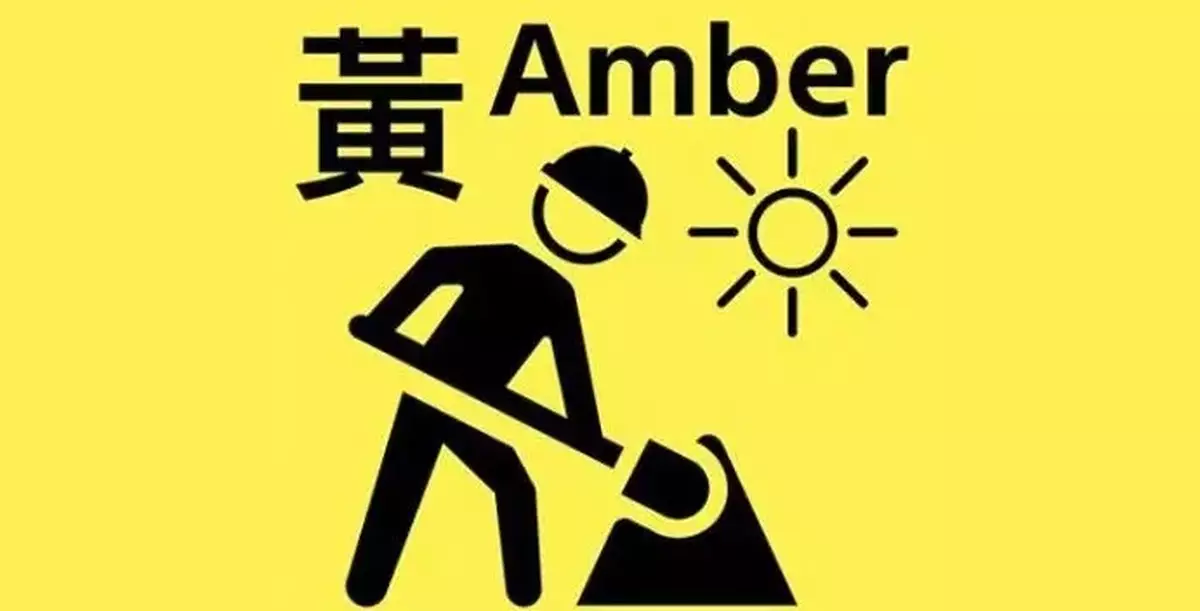
LD reminds employers and employees to take heat stroke preventive measures in times of Heat Stress at Work Warning
As the Heat Stress at Work Warning is now in effect, the Labour Department (LD) reminds employers and employees to take appropriate measures during the effective period of the warning to prevent heat stroke when working in hot weather or hot environments.
The Labour Department, Photo source: reference image
Employees who work outdoors or in non-air-conditioned indoor environments face high levels of heat stress and are at a relatively higher risk of heat stroke. Employers should assess the risk factors of heat stress for employees at work and, based on the identified risk factors, take necessary preventive and control measures, including rescheduling work periods, setting up shading covers, providing ventilation and heat dissipation equipment, and reminding employees to replenish water and rest in a timely manner.
The Heat Stress at Work Warning is formulated by the LD based on the Hong Kong Heat Index. There are three levels of the warning: Amber, Red and Black, which help employers and employees better understand the level of heat stress while working outdoors or indoors without air-conditioning systems.
A spokesman for the LD said that when the department issues the Heat Stress at Work Warning, employers must refer to the criteria and recommendations provided in the "Guidance Notes on Prevention of Heat Stroke at Work" to conduct risk assessments, according to the workloads and other relevant heat stress risk factors, for employees who work outdoors or in non-air-conditioned indoor workplaces. Appropriate rest breaks should be arranged every hour, as far as reasonably practicable, based on various levels of the Heat Stress at Work Warning, to reduce employees' risk of heat stroke.
Employees must also follow instructions to rest on time. Whenever there are any symptoms of heat-related illnesses, such as headache, dizziness, thirst, and nausea, they should rest in a cool and shady place, drink water, and inform employers/supervisors to take appropriate action immediately.
The LD issued the "Guidance Notes on Prevention of Heat Stroke at Work", detailing the various risk factors that should be considered when conducting heat stress risk assessments and recommending corresponding control measures for identified risk factors for employers' and employees' reference. For the Heat Stress at Work Warning and related guidelines, please refer to the department's thematic webpage: www.labour.gov.hk/eng/news/prevention_of_heat_stroke_at_work.htm.
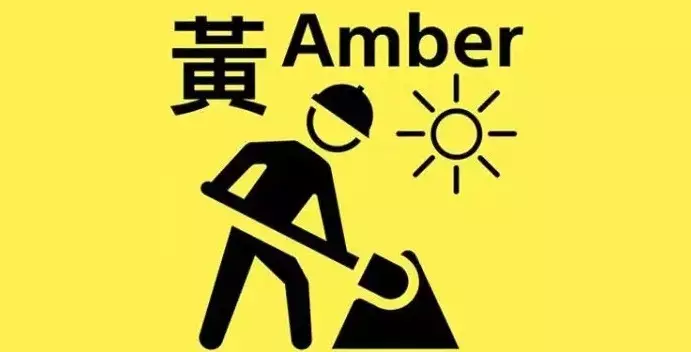
Heat Stress at Work Warning
Outcome of 2026 rent review for public rental housing
The Subsidised Housing Committee (SHC) of the Hong Kong Housing Authority (HA) today (July 23) endorsed the outcome of the 2026 rent review for public rental housing (PRH) in accordance with section 16A of the Housing Ordinance (HO).
"Section 16A of the HO provides that the HA shall conduct a rent review every two years in accordance with the mechanism stipulated therein and vary the PRH rent according to the change in the income index between the first and second periods covered by the review. The report compiled by the Commissioner for Census and Statistics (C for C&S) for the 2026 PRH rent review showed that the income index of the second period of the review (i.e. 2025) was higher than that of the first period (i.e. 2023) by 2.04 per cent. To this end, PRH rent will be adjusted upwards by 2.04 per cent with effect from October 1, 2026, " a spokesman for the HA said.
The extent of the 2026 PRH rent adjustment is mild. The average monthly rent as at March 2026 for PRH tenants was $2,519. Applying the adjustment of +2.04 per cent, the average monthly rent increase per PRH household is about $51, with the amount of monthly rent increase ranging from $10 to $128.
"After excluding the ‘well-off tenants’ and Comprehensive Social Security Assistance households whose rent is paid by the Government, the monthly rent increase for more than 60% of the remaining PRH households will be $60 or less, and about 90 per cent of the remaining PRH households have a monthly rent increase of $80 or below. We believe that the increase is within an affordable level for PRH tenants," the HA spokesman said.
The Government announced in the 2026-27Budget that rates concessions would be provided for the first two quarters of 2026-27, subject to a ceiling of $500 for each rateable property per quarter. In line with established practice, HA will pass on the rates concessions to PRH tenants. The rates concessions receivable by each PRH household in 2026-27 range from about $258 to $1,000.
In addition, rents for newly completed PRH estates are set according to the District Best Rent Levels of respective districts, which are determined per meter square of internal floor area with reference to the location and value of the estates concerned. In light of the 2026 rent review of PRH, the rent adjustments for both existing and newly completed PRH estates will take effect on October 1,2026. The HA will notify all PRH tenants in writing one month before the new rent implementation date. Meanwhile, the Housing Bureau has stated that the monthly licence fee for Light Public Housing (LPH) is set at about 90 per cent of the rents for newly completed PRH estates in the same district. Therefore, the monthly licence fees payable of LPH projects will be aligned and adjusted on October 1, 2026 according to the new PRH rental levels. All LPH occupants will be informed of the relevant details in writing one calendar month before the effective date of the new licence fee.
The HO stipulates the PRH rent adjustment mechanism, which came into effect in 2008. Under this mechanism, PRH rent is reviewed every two years. Section 16A(7)(b) of the HO provides that the C for C&S shall compute the income index for the first and second periods under a rent review. The income index is compiled by comparing the income data of about 24 000 PRH households in each of the periods. The mechanism provides an objective basis for the HA to determine when and to what extent PRH rent should be adjusted, taking into account tenants' affordability. According to the mechanism, there is a 10 per cent cap on the rate of rent increase, whereas there is no floor in the case of rent reduction.

Source: AI-found images