The second phase of this year's ecological water diversion to the lower reaches of the Tarim River in northwest China's Xinjiang Uygur Autonomous Region began on Tuesday, as sluice gates at the Daxihaizi Reservoir on the river's main stem were opened, releasing a steady flow of water into the arid downstream region.
The Tarim River, which runs along the rim of the barren Tarim Basin, is China's longest inland river, spanning a drainage area of 1.02 million square kilometers. This phase of the water transfer is scheduled to last 90 days, with 329 million cubic meters of water to be delivered. The released water will travel approximately 360 kilometers through deserts, wastelands, and natural populus euphratica forests before finally reaching the Taitema Lake in the southeastern part of the basin.
In previous decades, factors such as climate change and human activities put excessive pressure on water levels. By the early 1970s, the lower reaches had run dry, and the trees along its banks had all but disappeared.
Since 2000, Xinjiang has carried out a series of measures to address these issues. From 2000 to 2025, 26 rounds of ecological water diversion from the Tarim River to the lower reaches were completed. To date, a total of 11 billion cubic meters of water has been released. Data from the project shows that the periodic release of water has alleviated ecological degradation in the target area. The groundwater level has risen, and the number and variety of animals and plants in the area have greatly increased. "With 50 million cubic meters of water in storage, the reservoir is now set for downstream ecological releases. Using a low-flow, long-duration, dual-channel approach, we open ecological sluices along the way to direct water into poplar forests and fully sustain the vegetation on both banks," said Zhang Yu, deputy station master of Daxihaizi Reservoir. Over the years, local people have been cultivating drought-resistant plants such as populus euphratica, apocynum venetum and oleaster to improve the environment. Monitoring data from the Chinese Academy of Sciences reveal that the vegetation species in the lower reaches of the Tarim River has increased from 17 to 81. Wildlife populations along the riverbanks, including Mongolian gazelles, foxes, little egrets, and wild ducks, have rebounded significantly.
Xinjiang has carried out the ecological water transfer program annually since 2000, with each year's efforts consisting of two phases.
The first phase, conducted from March to April, provides critical moisture during the key period of seed germination and the greening of shrubs and trees.
The second phase, currently underway, leverages increased water volume from the upper reaches during the flood season to deliver much-needed replenishment to vegetation along the riverbanks and in surrounding lower reaches areas.
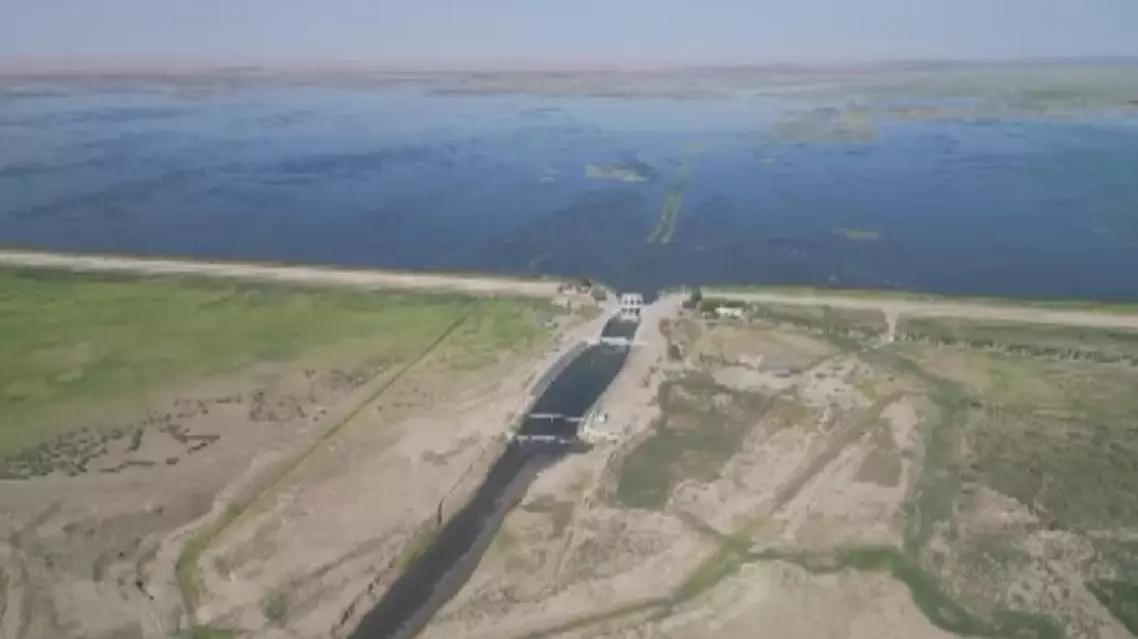
Latest round of ecological water diversion to China's largest inland river underway