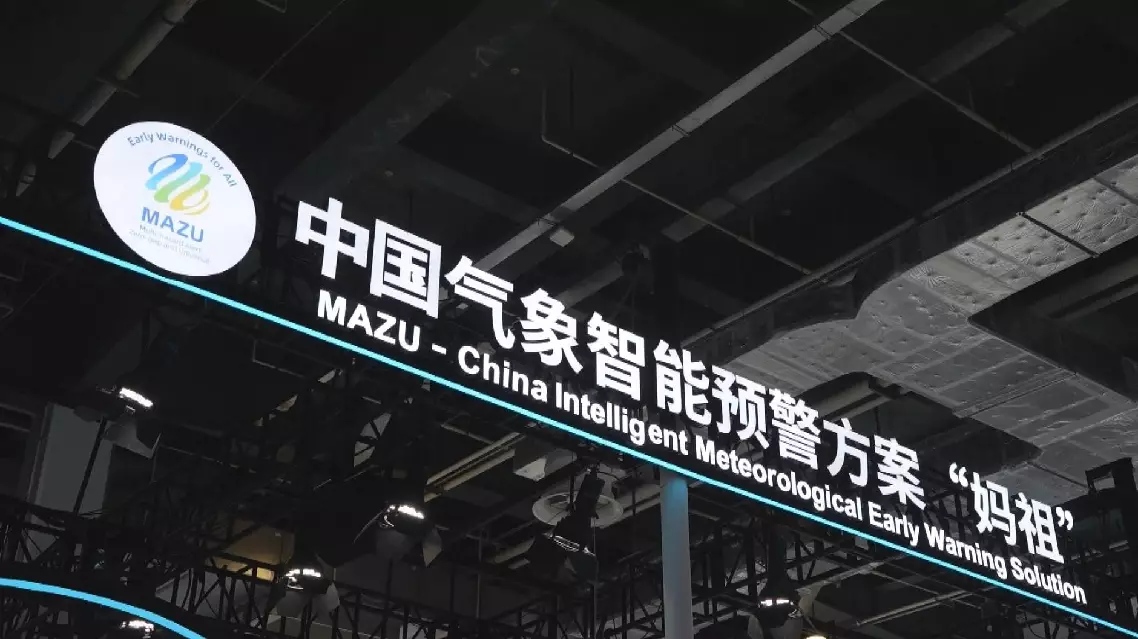
MAZU, China's artificial intelligence (AI)-powered meteorological early warning solution, will be deployed in 30 developing countries in the next five years to protect people's lives and property around the world, acting as another example of its commitment to providing international public goods relating to AI.
Faced with increasingly frequent extreme weather and climate events and uneven development in early warning capabilities worldwide, United Nations Secretary-General Antonio Guterres has launched the Early Warnings for All initiative, setting an ambitious goal that every person on Earth will be protected by life-saving, multi-hazard early warning systems by 2027.
As the first national-level solution responding to the UN initiative, MAZU, an acronym for Multi-hazard, Alert, Zero-gap and Universal, integrates state-of-the-art AI and physical forecasting models with monitoring technologies such as the Fengyun meteorological satellites to deliver more precise weather forecasts.
Inspired by the ancient Chinese goddess Mazu, the guardian of seafarers, the integrated disaster prevention system can provide more than 200 tailored services across 30 categories for climate-vulnerable communities and develop intelligent applications for specific scenarios in transportation, energy, agriculture, the low-altitude economy, and other industries.
"On the basis of cloud-based early warnings, MAZU integrates China's meteorological AI models, observation data of Fengyun satellites, and existing local observation data to provide menu-based, tailored services in line with the disaster prevention and reduction needs of various countries. This will greatly improve the effectiveness of their disaster prevention and reduction efforts," said Pan Jinjun, engineer-in-chief of the China Meteorological Administration (CMA).
As part of its efforts to help realize the UN goal, China has also launched international training sessions, scholarship programs, and visiting scholar projects to help developing countries cultivate meteorological professionals.
In recent years, nearly 1,000 people from more than 100 developing countries and regions have participated in China's meteorological early warning technological training sessions.
"I think the MAZU-Urban system is really a great tool for operational forecasters in making disaster warning decisions. Platforms like MAZU-Urban have the capacity to help forecasters to make informed decisions about the incoming weather hazards and distribute early warning to the population," said a trainee of the international training session.
Currently, MAZU has been deployed in Pakistan, Ethiopia, the Solomon Islands, Jordan, Sri Lanka, Mongolia, and Djibouti, and is being used via the cloud by meteorological departments in more than 40 other countries and regions.
On Friday, the CMA officially handed over an upgraded version of MAZU to Djibouti at a meteorological sub-forum of the 2026 World Artificial Intelligence Conference in Shanghai.
The upgraded version combines an intelligent terminal incorporating meteorological chips and forecasting models with the existing system, forming an integrated solution for weather monitoring, forecasting and warning.
It improves forecast resolution from 9 kilometers to 3 kilometers, provides forecasts up to three days in advance and updates them every six hours. It also uses phased-array radar, AI forecasting models and Fengyun meteorological satellites to improve extreme weather monitoring and early warning.
The upgraded system is expected to be put into operation in Djibouti by the end of this year. The solution can also be adapted for cities, ports, airports and other weather-sensitive areas in developing countries.
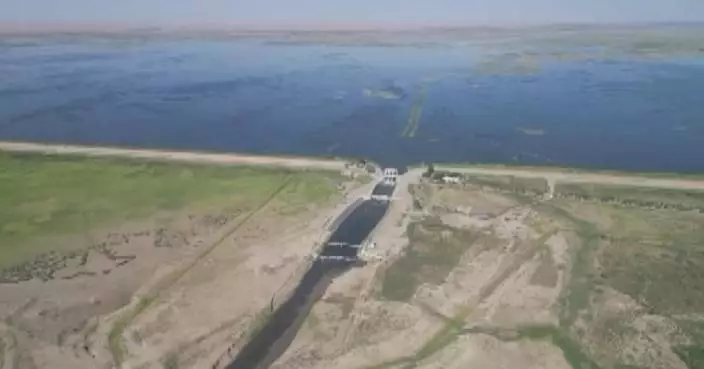
In Pakistan, where frequent glacial lake outburst floods pose a serious challenge to disaster prevention and mitigation, an early warning system jointly developed by China and Pakistan has been deployed at the Pakistan Meteorological Department to help with meteorological observation, forecasting, early warning, and emergency response.
"Taking information from the MAZU, from the AI-generated information, we can further probe into the situation, and we can give profound situational analysis to our government, so they can take steps to minimize the impact of any catastrophic situation, if we have," said Furrukh Bashir, director of the Pakistan Meteorological Department.
China's AI-powered meteorological tool to be deployed in 30 countries in 5 years