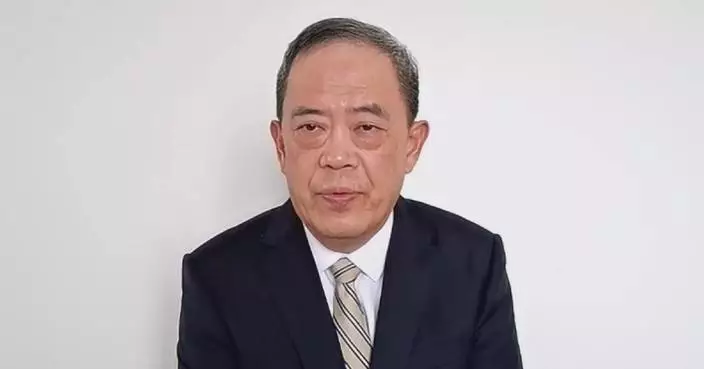
A senior World Bank official warned that the escalating conflict between the United States and Iran could push global economic growth down to just 1.3 percent this year by driving up inflation and interest rates.
In a media interview on Wednesday, Indermit Gill, Chief Economist of the World Bank Group and Senior Vice President for Development Economics, said the bank's June economic forecast modeled three scenarios based on the high uncertainty surrounding the Middle East conflict. The worst-case scenario, in which hostilities continue for six months or longer, is now close to becoming reality, he said.
Under this scenario, global inflation would reach 4.5 percent this year. Gill warned that a prolonged conflict and damage to oil infrastructure in the Middle East would also disrupt the transport of fertilizers, helium and sulfur, key inputs for agriculture, worsening food insecurity and triggering a chain reaction. Once inflation accelerates, highly indebted countries could face severe debt servicing problems within months, he added.
In its June Global Economic Prospects report, the World Bank projected global growth would slow from 2.9 percent in 2025 to 2.5 percent in 2026. If the U.S.-Iran conflict further deteriorates, growth could slide further to 1.3 percent, the bank cautioned.
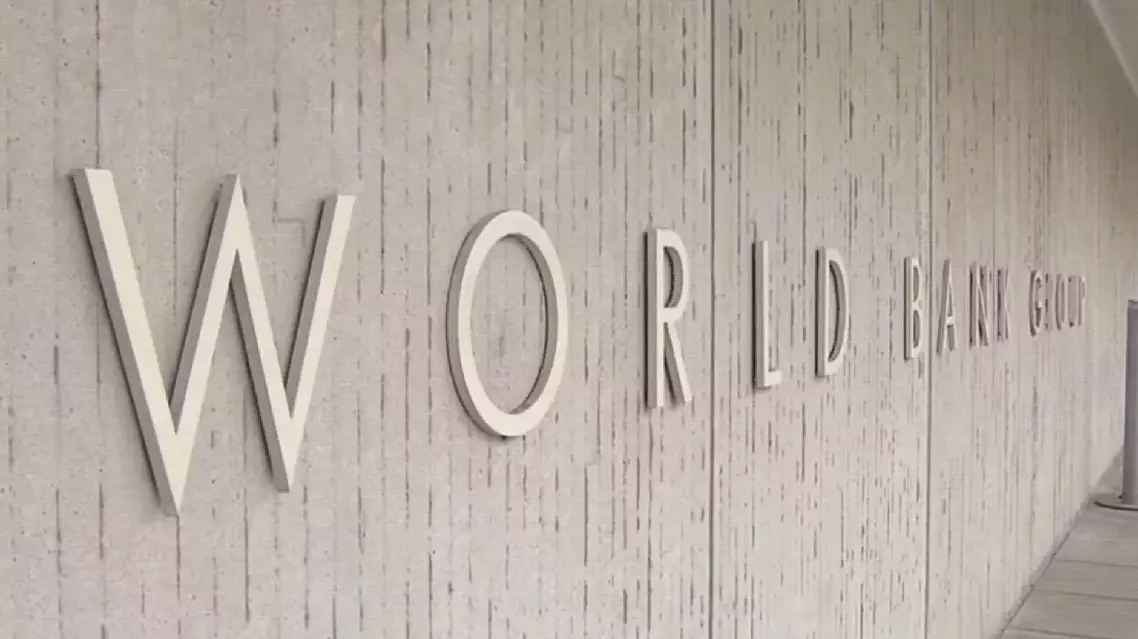
World Bank warns global growth could slip to 1.3 pct if US-Iran conflict escalates
Zhao Leji, chairman of China's National People's Congress (NPC) Standing Committee, held talks with Tomio Okamura, speaker of the Chamber of Deputies of the Czech Republic, in Beijing on Thursday.
Noting that this year marks the 10th anniversary of the China-Czech strategic partnership, Zhao, also a member of the Standing Committee of the Political Bureau of the Communist Party of China Central Committee, said China stands ready to work with the Czech side to carry forward traditional friendship, enhance mutual understanding and trust, strengthen exchanges and cooperation, and promote the sound and steady growth of bilateral relations.
Zhao called on both sides to consolidate the political foundation of their ties, sustain the momentum of improvement in bilateral relations, and resume and step up exchanges and interactions at all levels and across all fields.
Both sides should further tap cooperation potential, give full play to the role of mechanisms such as the economic joint committee between China and Czech and the China-Central and Eastern European Countries Expo, explore ways to strengthen cooperation in new energy, electric vehicles and other fields, and support enterprises of the two countries in expanding investment cooperation, Zhao added.
The NPC is ready to enhance friendly exchanges with the Chamber of Deputies of the Czech Republic, carry out mutual learning and exchanges on legislative supervision, economic development, improvement of people's livelihood, formulate, revise and ratify legal documents conducive to bilateral cooperation, and maintain close communication and collaboration within multilateral mechanisms such as the Inter-Parliamentary Union, Zhao said.
Zhao also said China is willing to work with all countries, including the Czech Republic, to strengthen exchanges and cooperation in the field of artificial intelligence and promote the establishment of a fair and equitable global governance system for AI.
Okamura said the Czech Republic adheres to the one-China policy, adding that it hopes to strengthen tourism cooperation with China and welcome more Chinese tourists to visit the Czech Republic, expand cooperation in areas such as economy and trade, cultural relic exhibitions, and direct flights, and enhance people-to-people exchanges.
The Chamber of Deputies of the Czech Republic stands ready to strengthen friendly exchanges with China's NPC and enhance the friendship between the two peoples, Okamura added.
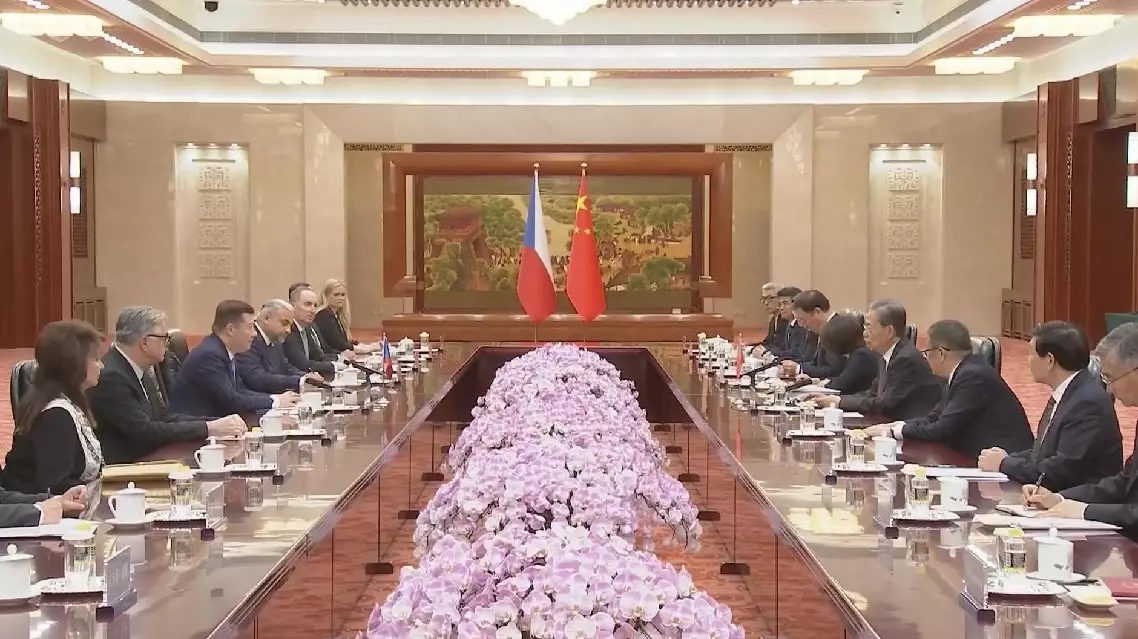
China's top legislator holds talks with speaker of Czech Chamber of Deputies